Many of our readers are under mandatory “Stay at Home” orders. And, in some states, public shooting ranges have been closed. That limits your options. If you want a break from watching TV and doing chores around the house, here is a way you can improve your hunting skills/knowledge — and it’s 100% FREE.
The National Rifle Association recently launched the NRA Experienced Hunter Education Course, a new online training program designed to help hunters brush up their skills. Free to all, this comprehensive hunting refresher course will help hunters become safer and more confident before heading out into the field. CLICK HERE for more information.
NRA’s Experienced Hunter Education Course is an online review of everything an experienced hunter should know, including a review of firearm safety and safe hunting practices. Though not a substitute for state-mandated hunter safety requirements, it will provide a solid foundation of the fundamentals.
“If you’ve taken a break from the shooting sports or haven’t hunted in a season or two, our Experienced Hunter Education Course is the perfect refresher for firearms safety and safe hunting practices,” explained Elizabeth Bush, managing director of NRA Community Engagement. “Best of all, we’re offering this service completely free of charge.”
Course Description
This online training course is specifically designed for individuals who have not hunted in the past year or more and are looking for a safety refresher before they head back out in the field. In this course, hunters will have the opportunity to refresh their skills by taking a look at safe hunting practices and firearms safety. Once completed, you will be a safer hunter in the field.
There an excellent YouTube channel, THLR.NO, that offers videos for long-range hunters and marksmen. The channel’s creator, Thomas Haugland, is a serious, knowledgeable shooter, who takes his rifles out into the field, in all conditions. The THLR.NO channel offers solid advice on scopes, reticles, wind-reading, field positions, and much more. Haugland’s team puts a wide variety of gear through serious field tests — every thing from suppressors to packs to the latest electro-optical hardware. In addition the THLR.NO channel provides good advice on stalking techniques and hunting skills. Here are some recent videos that can help any rifleman.
How to Shoot Better with a Hunting Rifle
This “must-watch” video has great practical advice for hunters. It illustrates proper hand-hold and head position, and shows how to stay steady when breaking the shot. Even competition shooters can learn a few things. One viewer notes: “This was very informative. The footage through the scope showing how one’s position moves the sight alignment was particularly helpful.”
How to Gauge Wind Speed and Hold Off Using Reticles
This field video shows how to observe natural indicators — trees and vegetation — to estimate wind velocity. Then it shows how to calculate hold-offs using the reticle hash-marks. Thomas shoots a fast-cycling Blaser R93 rifle with Norma 6XC ammunition.
If you like these three videos, there are hundreds more on the THLR.NO YouTube channel. In addition, there is an excellent long-format video, Longrange Shooting 2, available on DVD or Vimeo on Demand. This impressive outdoors video features Thomas Haugland and Ulf Lindroth. Here is a preview:
Above and below — the world’s best female Action Pistol shooter, Jessie Harrison.
The shooting sports are not a “man’s game” these days. Far from it. More and more women have taken up target shooting. A recent survey showed an 80% increase in the number of women target shooters from 2001 to 2016. In total, six million American ladies participated in target shooting in 2016. Likewise hunting has become more popular with American women. Female hunters in the USA numbered 1.1 million in 2016. That represents a 104% increase from 2001.
Recognizing that ladies are an ever-increasing part of the shooting sports, Shooting Industry Magazine published its first-ever Woman’s Issue dedicated to female shooters and huntresses. This 2019 special issue can be accessed for FREE online. CLICK HERE to READ.
While the issue is focused primarily on SELLING products to women, there is some very useful information that can help match directors and club officials. The magazine interviews many business owners and range directors who have developed female-focused shooting and training programs.
Female Participation in Shooting Sports and Hunting
The Shooting Industry Woman’s Issue spotlights female participation in target shooting and hunting. One key article summarizes a nationwide survey conducted by Southwick Associates. One interesting finding was that much of the increase in female participation can be tracked to younger ladies: “Female participation in both hunting and shooting may be highest among younger women[.]” Notably, 16% of respondents among target shooters in the 16-24 age category were female. Southwick concludes: “Future generations of hunters and shooters will contain more women than ever before”.
With days growing shorter and winter on its way — here is a great audio “infotainment” resource to help fill those long winter nights. Leupold now offers podcasts, 40-75 minutes in length, on a variety of topics of interest to hunters and precision shooters. A podcast is like a radio show that is available 24/7, at your convenience. When you want to “tune in”, via your home computer or mobile devices, just visit the Leupold Podcast Page.
One of the newest gun-oriented podcasts comes from optics-maker Leupold & Stevens (“Leupold). Oregon-based Leupold recently launched its “Core Insider” podcast series. These podcasts will deliver optics info, industry intel, tech tips, hunting advice, and tactical training guidance. Leupold’s Core Insider podcasts stream via iTunes and Spotify, and can also be accessed directly from Leupold.com. From the Leupold Podcast Home Page, you can either stream the podcasts live or download for later listening.
Premiering at SHOT Show 2018, the Leupold Core Insider Podcasts cover a wide variety of shooting and hunting topics. One early episode features Leupold team members Kyle Lamb and Buck Doyle discussing long-range shooting, while recent Episode 55 explains how Binoculars and Rangefinders function. There are now 56 Leupold Podcasts available online for FREE.
Episode 55, How Binoculars and Rangefinders Work. Click to launch Leupold Ep. 55 Podcast Page:
Among the regular Core Insider Podcast hosts is Leupold’s president and CEO, Bruce Pettet. “Our consumers are some of the most dedicated hunters and shooters in this industry – just like so many Leupold team members, both here in Oregon and across the nation,” Pettet said. “We want to reach out to our audience directly and deliver the kind of content they’ve been asking for…”
There are fifty-six (56) current Leupold Core Insider Podcasts. If you can’t access all 56 from the Leupold website, try the Apple Podcasts Page. Here are ten of our favorite episodes. Click links below to access:
Today is National Hunting and Fishing Day. To help the avid hunters among our readers, here are Twenty Tips that can help ensure a safe and successful hunt. These tips have been compiled from our AccurateShooter Hunting Forum, with help from Hunting Editor Colton Reid (who has already been out deer hunting this month). Some items are preparatory — such as working with maps, sighting in the rifle, and improving physical fitness. We also talk about equipment — having the right gear, from proper boots to a GPS for multi-day hunts.
Of course there are entire volumes written on hunting, but these 20 Tips can benefit all hunters. Follow these suggestions and you should have a safer hunting experience with greater likelihood of success. If you liked these pointers, you’ll find two dozen more helpful hints on the NSSF Website.
Preparations Before The Hunt
1. Map Your Hunt and Notify Others — Before your hunt, make a plan and notify friends and family members about WHERE you are going and your intended return date and time. Print out a Google Satellite map and locate landmarks and trailheads. Mark where you plan to park your vehicle and give a copy of this map to friend and/or family members. A hunter may injure himself by falling off a rock, or tumbling in a creek-bed. After that kind of injury the hunter may be confused or unable to walk. If you get stranded in the wilderness, you want trusted persons to know where you are. So, before you leave on a trip, provide a map to a friend or family member. Show them where you will leave your vehicle, and where you expect to be every day of your hunting adventure.
2. Licenses and Permits — Make sure you have a valid hunting licenses and all the necessary tags. Begin this process with ample time before your intended hunt(s). The NSSF adds: “If you are crossing state or national borders, find out about any special considerations you must take care of. Border crossings can mean knowing about firearm transport laws or Chronic Wasting Disease-related regulations.”
3. Work on Your Fitness — On a multi-day hunt you may be trekking many miles. You need to be in good shape. If you are out of shape you may be putting yourself in a precarious situation, particularly if you underestimate the terrain difficulty. As the NSSF says: “Not being able to handle the conditions lessens your chances of success, can turn a great experience into an agonizing one and can endanger your health.”
4. Do Your Homework — Study the area you will be hunting. Talk to other hunters. Look at satellite photos. Get a real sense of the walking and terrain challenges. For a multi-day hunt, MAKE a PLAN. The NSSF states: “Eliminate surprises. Learn as much about where you will be staying, the area you will be hunting, what the weather might be like and what you need to bring[.]”
5. Rifle and Ammo — Make sure your rifle is sighted-in and your ammo is tested. Sight-in your rifle with the ammo you plan to use on your hunt. CLICK HERE for 4-Shot Sight-in Method. After sighting-in from the bench, confirm your zero by shooting from typical hunting positions (kneeling and with forearm supported on a rock or post).
6. Shooting Positions — Practice the shooting positions you will use in the field. Practice sitting, kneeling, and prone positions. You should also practice with shooting sticks, using your day pack as a rest, and with a bipod. Try to have a rock-steady rest before taking your shot.
7. Back-Up Irons — If possible, select a rifle with back-up iron sights. While modern scopes are very durable, they can and do fail (glass can crack). If you’ve invested a lot of time and money in your hunt, back-up iron sights can keep you in the game even if your riflescope fails.
8. Communications and GPS — Bring a GPS if you are in a true wilderness area far from civilization. It’s a good idea to bring a cell phone, but you may not have any coverage if you’re quite a distance from populated areas. A smart-phone also doubles as a digital camera to record your trophies.
9. Select Good Gear — Make sure you have GOOD BOOTS that are comfortable — you’ll spend a lot of time on your feet. You may want a pack with harness for your rifle so you have both hands free. On a multi-day trip, make sure you can carry enough water, and that you will stay warm enough at night. Good practices for backpacking apply to multi-day hunts.
10. Make a Checklist — Create a complete checklist of the gear and supplies you need. That includes arms, ammunition, rangefinder, binoculars, proper clothing (including spare clothes), hunting accessories, sleeping gear (on multi-day hunts), toiletries, medications. Don’t forget a good first aid kit — lots of bad things can happen during any wilderness trip. You can cut a hand, break an ankle or worse.
During The Hunt
11. Have a Plan — know where you plan to go and when. Try to be where you want in the early morning and early evening hours when deer are likely most active.
12. Take Your Time — If you spot a deer and get too excited and don’t take your time you may spook him. Go slow and glass. If possible, wait for the animals to bed down and relax. Then work out the best way to approach your prey. Remember, “You get so few opportunities, don’t screw it up!”
13. Glass More, Walk Less — Let your eyes do the walking — get good binoculars and use them. With their heightened senses of smell and hearing, deer/elk are able to spot you way better than you can spot them. If you are walking around a lot, chances are you are getting spotted by your prey.
14. Riflescopes Are Not Binoculars — Never use a riflescope as a substitute for binoculars. The temptation to do so is real, but when one does this, one is by definition pointing the muzzle of the gun at unknown targets. We like binoculars with built-in rangefinders. When glassing at long range, try supporting your binoculars on your pack.
15. Be Sure of Your Target before Shooting — Every year during whitetail season, farmers everywhere are forced to spray-paint their cattle or risk having them “harvested” by hunters who don’t bother confirming the species in their sights. Hunters with “buck fever” can make mistakes. When in doubt, don’t shoot.
16. Know When to Unload — When finished hunting, unload your firearm before returning to camp. You should also unload your gun before attempting to climb a steep bank or travel across slippery ground.
17. Hearing Protection — While pursuing and stalking your prey you’ll want full sensory use of your ears. But when you’re finally ready to take the shot, slip in hearing protection. A shot from a large-caliber hunting rifle can exceed 170 decibels. Unprotected exposure to noise from a SINGLE 170+ dB shot can cause permanent hearing damage. (Source: ASHA.org). If you make a follow-up shot, you double that noise hazard. Therefore a hunter with a non-suppressed rifle should have hearing protection available.
You can keep a pair of quick-insert plugs on a cord around your neck. Or, get the Howard Leight Quiet Band QB2HYG. This is a plastic ring with earbuds, you can keep around your neck.
“Once a hunter is successful, the REAL work begins.” — Colton Reid
18. Harvesting the Animal — When dressing your animal, be careful with the meat. You’ll want very sharp knives. Some hunters prefer knives with replaceable, razor-sharp blades. Don’t rush the task. Make sure you don’t get moisture or dirt on meat. The three spoilers of meat are heat, moisture, and dirt.
19. Pace Yourself When Packing Out — If you DO succeed, and bring down a big buck, will you be able to dress the animal and carry out the meat? Always be prepared to hike out with extra weight. If you are successful, make sure not to waste the meat you worked so hard for. Choose a pack that can help you carry a heavy load. Remember, this is not an insignificant challenge — you may be carrying 60 to 100 extra pounds in addition to your other gear. Again, take your time. Rest as needed. Don’t hurt yourself.
20. Remember to Enjoy the Experience — Our Hunting Editor, Colton Reid, offers this sage advice to all hunters, but particularly to novices: “Have fun, and appreciate your hunt, whether you bag a buck or not. It is a privilege to experience the wilderness and to get away from the city. Enjoy it while you’re out there. And keep your spirits up. You may get tired, but remember that ‘comes with the territory’. At the end of the day, yes you may be exhausted. And you may want to quit and go home. But stay positive, stay focused. Be patient, the experience is worth it.”
CLICK HERE for Hunter Training/Mentoring Programs State-by-State.
Prepare For Your Hunt — Get Fit and Practice Positions
As part of the NRA’s Tips & Tactics video series, Kristy Titus explains how to prepare for a hunt. Titus, co-host of the Team Elk TV show has hunted around the globe. She grew up in the outdoors, running pack mules in Oregon with her father. In this video, Kristy discusses fitness training and demonstrates field positions that can be employed during a hunt.
Kristy explains: “Hunting can lead you into some steep, rough country. It’s really important that you train both your body and your mind to handle the elements and the rigors of hunting So, if you plan on going on a mountain hunt, get out and train your body. Train with your firearm. Get off the bench and have some fun with this. Do some positional shooting or, if you want to add a stress dynamic… have someone put you under a time parameter.”
Visit WhereToHunt.org
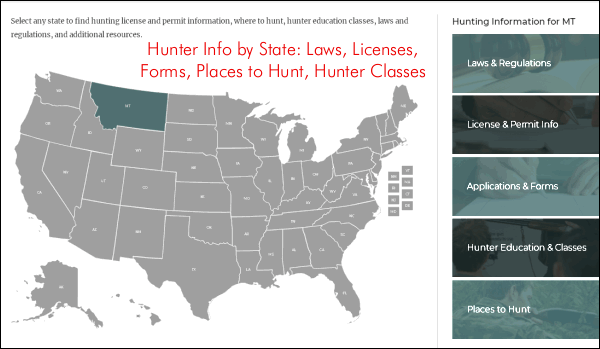
There’s a great online resource for hunters that will help you find game locations in your state and ensure you have all the proper permits and game tags. WheretoHunt.org features an interactive map of the country. For all 50 states, the NSSF has compiled information about hunting license and permits, where to hunt, hunter education classes, laws and regulations and more. For each state you’ll also find a link for required applications and license forms.
National Hunting and Fishing Day (NHF Day) takes place on Saturday, September 28, 2019. The annual celebration, on the 4th Saturday of September, serves as a reminder that conservation succeeds because of leadership and funding from hunters, shooters and anglers. National, regional, state and local organizations will run thousands of “open house” hunting- and fishing-related events around the country. Events will include Fishing Derbys, Hunting Expos, Wing-shooting tournaments, and much more. Over four million Americans will participate.
Find Events in Your State
For info on NHF Day, visit www.nhfday.org. To find NHF Day events in your state, click links below:
Hunters Aid Conservation Efforts
The contributions of hunters, in the form of excise taxes paid on firearms, ammunition, and archery equipment, benefit every state. These taxes have generated approximately $5.6 billion for wildlife conservation since 1939.
Origins of National Hunting & Fishing Day
National Hunting and Fishing Day dates back to the 1960s. In 1972, by Senate Joint Resolution 117, Congress requested the President to declare the fourth Saturday of September 1972 as National Hunting and Fishing Day. On May 2 of the same year, President Richard Nixon signed proclamation 4128 designating the Fourth Saturday in September National Hunting and Fishing Day.
Hunting Season has already started in some states, and is right around the corner in other locations. For readers who plan to hunt game this fall, we recommend you brush up on hunter safety and learn the laws in your jurisdiction. Here are some helpful resources for hunters: Safety Tips, Hunter Eduction, License Requirements, and Where-to-Hunt interactive map. Top photo courtesy Horn Fork Guides, Ltd., in Colorado.
Hunter Safety Tips NRAFamily.org has a good article listing seven salient safety tips for hunters. Anyone preparing for a fall hunt should read this article before heading into the field. Here are three key bits of advice:
1. Be Positive of Your Target before Shooting
This might sound overly simplistic, but the fact remains that, every year during whitetail season, farmers everywhere are forced to spray-paint their cattle or risk having them “harvested” by hunters who don’t bother confirming the species of the large ungulate in their sights. Why does this happen? The most likely explanation is “buck fever,” meaning that the hunter wants so badly to see a nice big buck that sometimes his eyes deceive him into thinking that there’s one there. When in doubt, don’t shoot.
2. Scopes Are Not Binoculars
Never use a riflescope as a substitute for binoculars. The temptation to do so is real, but when one does this, one is by definition pointing the muzzle of the gun at unknown targets.
3. Know When to Unload
When finished hunting, unload your firearm before returning to camp. You should also unload your gun before attempting to climb a steep bank or travel across slippery ground.
Visit WhereToHunt.org
There’s a great online resource for hunters that will help you find game locations in your state and ensure you have all the proper permits and game tags. WheretoHunt.org features an interactive map of the country. For all 50 states, the NSSF has compiled information about hunting license and permits, where to hunt, hunter education classes, laws and regulations and more. For each state you’ll also find a link for required applications and license forms.
Click Map to Get State-by-State Hunting INFO
Hunting Affiliation Groups
There are many good organizations dedicated to promoting hunting and preserving our hunting habitats. These groups all offer valuable information for hunters:
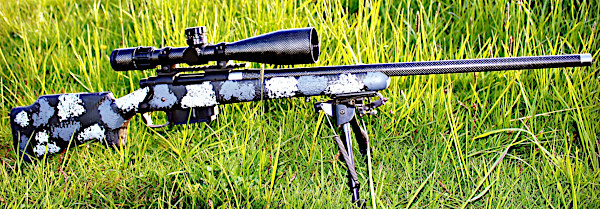
Are you looking to shave POUNDS from your hunting rig or varmint rifle? There is a new option for folks looking for a weight-saving, carbon fiber-wrapped barrel. You’ve probably heard about Proof Research. That’s a good company that crafts good products. But now Proof Research has some competition — Helix 6 Precision in Washington State.
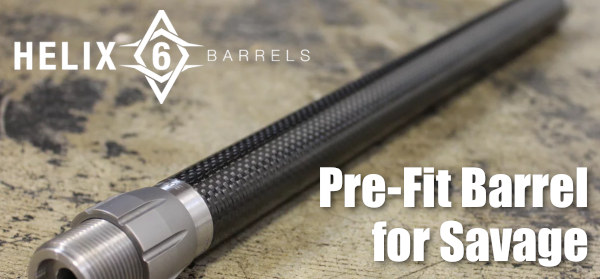
Helix 6 Precision crafts button-rifled, carbon-wrapped barrels in both conventional and “pre-fit” configurations. Pre-fits are offered for Savage rifles as well as the Ruger Precision Rifle (RPR) series. These pre-fit barrels are not cheap. A 6.5 Creedmoor RPR pre-fit costs $995.00, while the Savage pre-fits are also just under a grand. The conventional barrel blanks cost $895.00 in .224, .243, .264, .284, and .308 calibers. The larger .338 caliber barrels run $945.00.
While Helix 6 barrels do offer significant weight savings, the founders of Helix 6 say low mass wasn’t the number one design goal: “Accuracy was paramount and weight reduction was secondary. We’ve taken the industry’s most advanced carbon fiber engineering and pushed the technology further with our proprietary … carbon fiber process.”
The founders of Helix 6 Precision say they build some of the best carbon/steel hybrid barrels on the market: “Our unique carbon fiber-layup design dampens barrel harmonics for better accuracy. Each barrel is cut from a 416R stainless steel core, and carbon fiber-wrapped using the Helix 6 Precision’s advanced process. This creates match-grade accuracy barrels with high heat dispersion that are 30% lighter than a steel barrel of the same contour. The bores are … hand-lapped for precision accuracy.” Helix 6 claims its barrels are “lighter, stronger, and faster cooling than anything else available on the market.”
Myth vs. Reality — What Carbon Can and Cannot Do
Carbon fiber is formed using thin strands of carbon bonded together with a plastic polymer resin. The resulting material is very strong and light weight. There’s a reason Formula 1 cars are crafted with carbon-fiber composites. But is a carbon-wrapped barrel the right option for you? Here are some factors to consider:
Weight Savings — There’s no doubt that a carbon-wrapped barrel will weigh less than an unfluted stainless steel barrel with identical length and contour (outside diameters). Helix 6 claims a 30% weight reduction compared to a conventional stainless steel barrel. That’s significant.
Accuracy — Carbon-wrapped barrels are NOT commonly being used for F-Class or Benchrest competition. However, Proof Research carbon-wrapped barrels have performed well in PRS competitions in the hands of top shooters. So, we can conclude that carbon accuracy is good enough for the PRS/NRL tactical game, at least at the local club level.
Heat Dispersion — Carbon-wrapped barrel-makers claim their hybrid design disperses heat better than an all-steel barrel. Some independent testers disagree, saying: “hold on now — the carbon actually acts as an insulator, so more heat is retained in the barrel”. The jury is still out. One thing that is true is that the carbon barrels seem to generate less mirage from barrel heat. Ask yourself, “if less heat is coming OFF the barrel, where is that heat retained?” But the reduced mirage could be a function of the black woven surface which may release heat differently than polished steel.
Standard, Pre-Fit, and Custom Barrel Options
Helix 6 Precision barrels are available as pre-fit barrels for both Savage and the Ruger Precision Rifle in many popular long-range cartridges. Barrel blanks are sold in five calibers from .224 to .338. Helix 6 can also thread and chamber a barrel for any precision rifle. Helix 6 Precision also builds one-off barrels to fit individual needs.
When hunting or when competing in a field tactical match, you need to be able to shoot from a variety of positions. While the prone position is normally the most stable, hunters (and tactical marksmen) will encounter situations that demand the ability to shoot from a higher position.
In this NSSF Video, Ryan Cleckner, a former Sniper Instructor for the 1st Ranger Battalion, explains how to shoot from sitting, kneeling, and standing positions. Cleckner demonstrates both rested and non-rested variations of these three positions. Cleckner explains: “When you’re out hunting, often times you’re going to have grass or obstacles in your way, so [prone is] not practical — you’re going to have to get higher up off the ground. However, the problem with getting higher off the ground is that you are less stable. As a rule, the closer we are to the ground, the more stable we are… so we are going to [encounter] problems as we get taller up. I’m going to teach you some tricks to get you as stable as possible….”
Cleckner demonstrates the proper kneeling/sitting/standing body positions and he shows how to use your sling for extra support. This video also demonstrates the use of “field expedient” rests that provide a front support point for the rifle. Both hunters and field tactical shooters should find this 7-minute video very informative, and well worth watching.
These British Army shirts feature moisture-wicking mesh plus padded shoulders, elbows, and forearms.
Are you planning some serious hunts this year? Good camouflage clothing can help with your stalking. Or maybe you just need some good, durable togs for hiking and camping. This week high-quality military surplus camo gear is on sale at Sportsman’s Guide. Choose a comfortable British military zip-front shirt, or get an Italian military jacket and pants set. Two British Shirts (shown above) are available — the Desert DPM Shirt for $18.99 ($17.09 SG Club Price) and the UBAC Combat Shirt for $20.09 ($18.09 Club).
With these great deals, you can put together a complete, durable camo outfit for under fifty bucks. All these items (both British and Italian) are NEW, NEVER ISSUED condition. We like these BDU pants for general “rough-duty” wear, such as doing yardwork, trail-hiking, or orienteering. And the UBAC shirt is great for cool-weather camping trips.







 When hunting or when competing in a field tactical match, you need to be able to shoot from a variety of positions. While the prone position is normally the most stable, hunters (and tactical marksmen) will encounter situations that demand the ability to shoot from a higher position.


