|
|
October 18th, 2010
Gear Review by Germán A. Salazar, Contributing Editor
All of us have at one time or another struggled with glare in the front sight at certain ranges and certain times of year. There are a lot of ways to deal with glare, shade tubes being the most commonly seen. I prefer to avoid any type of extension on the front or rear sight, especially anything that hangs past the muzzle where the muzzle blast can cause damage and in any event, I haven’t found those tubes to be very effective. However, the need to do something about the glare at our south-facing range at the Phoenix Rod & Gun Club has become essential for me. At this time of year, the sun is directly in front at this range and I really struggle to get a clear sight picture.

The photo above, taken on 10/16/2010 clearly illustrates the problem at PRGC as the early morning sun is from the left and front. Note the backlit flag and the direction of the shadows. As the sun continues to rise, it aligns itself right down the range towards the shooters. Apart from the glare, the bull is hard to see on the targets once they’re up because the light is coming from behind the target, not from the front. A very challenging set of light conditions which will worsen from now through February as the sun stays lower in the sky month by month.
 Anti-Glare Filters from Art Neergaard Anti-Glare Filters from Art Neergaard
I recently spoke to Art Neergaard about this problem. Art manufactures a number of innovative products for rifle sights through his company ShootingSight LLC and he had an idea for me. The idea was simple in concept, a “donut” filter for the front sight with a hole in the middle so as not to darken the already dim bull and yet, it would cut the glare that otherwise enters the front sight. The picture at left shows the filter mounted on the sight. When you’re looking through the sights, there isn’t the large gap around the aperture, it’s actually a very close match. Sticking the camera right into the sight obviously changes the perspective a bit.
I wanted to evaluate the Centra Goliath 30mm sight on my new Palma tubegun. Since Art intended to make the filters for the 30mm size, this was a good time to begin that evaluation as well. My last match score with this rifle, five weeks ago before the light got bad, was a 600-42X, since then, I’ve had a couple of poor matches with other rifles as the light and glare have really troubled me. With the 600-42 as a “good condition baseline” with this rifle I was eager to see how the filters would work.
Art sent me a few items: two filters (one gray, one orange), and one filter-holder for them, as well as a fixed aperture cut in the same material as the filters, with a beveled edge like the ones available for many years for smaller sights. The filters are interchangeable in the holder and can be changed in a minute or so. The aperture, however, is fixed as the hole is drilled in a lathe after mounting the disc in the holder — this ensures perfect concentricity for the aperture.

 Gray Filter Preferred Gray Filter Preferred
Arriving at the range, I mounted the high-contrast orange filter first and looked through it. Frankly, although it cut glare well, I hate the look of an orange world! A quick change of filter and another look through the sights showed a good, glare-free and natural-looking sight picture with the gray filter. At right is a photo that shows the relative glare-cutting effect of the gray filter.
Scores Improved with Anti-Glare Filtration
Shooting a good mid-range .308 load with Winchester brass, Federal primers, IMR 4064 (manufactured in 1960, just like me) and moly-coated Sierra 190 gr. bullets, the rifle showed it’s good breeding giving me a 200-12X, 200-15X and 200-14X for a 600-41X, my 22nd score of 600! Well, quite a dramatic improvement over the last couple of weeks when I struggled to shoot 590, and back to the score I shot five weeks ago when the light was still good. Hooray! So yes, I’m very satisfied with the concept of the filter with a hole in it. All the extraneous glare that was hurting my sight picture was gone and the bull remained unimpaired. Not that the bull was too good to begin with as all I can see is a fuzzy gray blob out there, but keeping the center unfiltered was better than some solid filters I’ve tried in the past.
Clear Rain Filters for Front Sights
Art plans to make clear donut filters to use as rain shields for shooters with a front lens in their sight. That would keep raindrops off the lens — especially the middle of the lens where a drop could destroy the shooter’s ability to see the bull properly.
 Filter Works with Fixed & Variable Apertures Filter Works with Fixed & Variable Apertures
Although I intended to try the fixed aperture also, I ended up shooting the entire match with the filter and the Centra variable aperture. I’ll try to use the fixed aperture (photo at left) next week. The value of a fixed aperture shouldn’t be underestimated. It provides a lower cost way to use a 30mm sight, an important consideration given the current $175 price of the adjustable aperture. Perhaps just as important, the fixed aperture is something that should be in every high-end shooter’s kit in case of failure of the adjustable, which has been known to happen. If I were traveling across the country or around the world to a match, you can be sure there would be a set of fixed apertures of various sizes in my kit to back up the adjustable iris.
Art Neergaard
ShootingSight LLC
www.ShootingSight.com
eMail: shootingsight@nuvox.net
Phone: 513-702-4879
August 19th, 2010
A new NRA record in the team Palma event was set yesterday at Camp Perry by the Litz-Gallagher team. The new record of 1796-119X was set by Brian Litz (Captain and Shooter), Michelle Gallagher (Coach and shooter), Nancy Tompkins (Coach and shooter), Bob Gustin (shooter). Shooting the Palma course of fire at 800, 900, and 1000 yards, these four beat the 1796-112X mark set in July at Raton, NM by an all-female ‘dream team’ of shooters coached by Steve Conico. (Both Michelle Gallagher and her mother Nancy Tompkins were member of the Raton ‘Dream Team’). Bryan Litz reports: “At Perry, Michelle and Nancy did an outstanding job shooting, and coaching Bob and myself to very high scores especially at the 1000-yard-line where the conditions were extremely difficult.”

Team member Bob Gustin also won the Individual Palma match with a 450-33X, not dropping a point. That’s remarkable considering Bob shoots right-handed while sighting with his left eye through off-set rear and front sights. Congrats to Bob and all the team members. Bryan Litz won’t take any time off after his team’s record-breaking performance. Bryan reports: “I’m on my way to Canada now for the America Match this Sunday — a bi-annual international fullbore match.” Good luck Bryan.
August 4th, 2010
 by Steve Cooper, CMP Online by Steve Cooper, CMP Online
The CMP Rimfire Sporter Match is now one of the most popular events at Camp Perry, drawing hundreds of entries. The Rimfire Sporter Match, first held in 2002, was designed to accommodate a novice shooter with nothing more than a store-bought .22 caliber rifle (and no fancy competition gear). The Rimfire Sporter Match is a recreation-oriented, 3-position competition using off-the-shelf .22 caliber sporter rifles. Rifles may be manually operated or semi-automatic and competitors are broken into three classes: open sights, telescopic sights, and tactical rifle. Read AccurateShooter.com’s detailed Guide to Rimfire Sporter Matches
Blustery Conditions Challenge Rimfire Sporter Shooters
While some shooters dealt with a driving rain, wildly-fluctuating crosswinds and the accompanying delays, others enjoyed bright sun and calm conditions during the 9th annual Rimfire Sporter Match on Sunday, July 25th. Chalk it all up to “The Camp Perry Experience”. Veteran shooters know that weather is almost always a factor here and newcomers received received a classic introduction to it Sunday. Nonetheless, the shooters battled through the conditions to post some fine scores.

Command Sergeant Major (CSM) Steven Slee, 46, U.S. Army Reserve, won the Open Sights class with an aggregate score of 578-23X out of 600 possible. Charles Opalewski II, 20, was second in open sights with an aggregate score of 574-14X. Opalewski was also the high ranking overall junior and 4-H junior shooter. Nick Takacs, 61, was the high senior competitor in open sights class with an aggregate score of 569-17X. In Telescopic Sights class (T-class), Lucas Boord, 20, finished first, using a Kimber Hunter to score 593-27X. Placing second in T-class was CSM Steven Slee with a 592-31X. Natalie Harper was the High Woman, High Junior and High 4-H Junior shooter in the Telescopic Sights Class with an overall score of 588-14X. The top senior shooter in T-class was Steve Gossage, 63, with an aggregate of 586-32X. READ More …

July 30th, 2010
 Shooting an impressive 4790-355X, SSG Shane Barnhart earned the title of National Smallbore Rifle Prone Champion, while competing this week at Camp Perry, Ohio. Finishing second and third, respectively, were 1LT Christopher Abalo, and Charles Kemp. Abalo and Kemp had identical 4786 scores, but 1LT Abalo had the higher X count. Abalo scored 344X compared to Kemp’s 338X. Shooting an impressive 4790-355X, SSG Shane Barnhart earned the title of National Smallbore Rifle Prone Champion, while competing this week at Camp Perry, Ohio. Finishing second and third, respectively, were 1LT Christopher Abalo, and Charles Kemp. Abalo and Kemp had identical 4786 scores, but 1LT Abalo had the higher X count. Abalo scored 344X compared to Kemp’s 338X.
Army Shooters Top the Field
Story by Danielle Sturgis, The NRA Blog
SSG Shane Barnhart has been to Camp Perry since 1992, minus two years. This year is his best smallbore rifle performance. Did he come expecting to win? “I was hoping (to place in top 3),” he said. “I knew going into Any Sight that I had Abalo and Kemp, both very fine shooters, to keep up with.” What was the biggest challenge of the week? “Battling the wind,” Shane said. When asked if he had any advice for young people thinking about shooting competitively, Barnhart responded: “You can get a free ride to college,” he said.
First Lieutenant Christopher Abalo practiced for the national smallbore prone championships for just one month, yet still managed a strong second-place finish. “I took a two-year break from competitive shooting, so this feels good,” he said. “I feels great, actually. I expected to shoot well, and I would say I met my expectations.” Below are photos from the 2010 Smallbore Prone Championships.
Gunny Zins Wins his 10th Pistol Championship
In related news, retired Gunnery Sergeant Brian Zins of Poland, Ohio, was named national champion at the NRA National Pistol Championships held July 13-17 at Camp Perry. This was Zins’ 10th National Championship. Zins shot consistently high scores throughout the event, winning the .22 Caliber Championship and placing in the top three for both the Center Fire and .45 Caliber Championships. Zins’ Aggregate score of 2650-134X placed Brian at the top of the leader board for the tenth time in his shooting career — a record number of National Pistol Championships. CLICK HERE to learn more about Zins and other pistol competitors.
July 9th, 2010
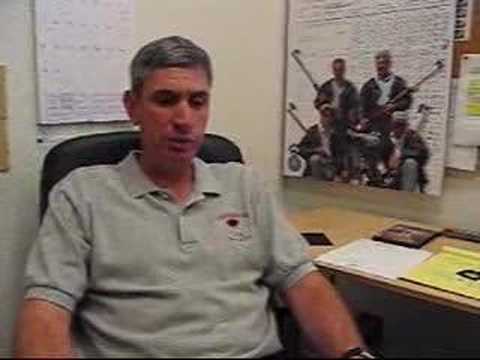
Dennis DeMille is a past Camp Perry National Champion, and one of the nation’s top High Power shooters. Since retiring from the U.S. Marine Corps, Dennis has served as the General Manager of Creedmoor Sports in Oceanside, California. With his decades of competitive experience, Dennis has a wealth of knowledge. In this three-minute interview, Dennis shares insights into the High Power shooting game. He discusses the most effective ways to train for competition, the fundamentals of good marksmanship, and how to recognize and perfect your natural point of aim. Dennis also offers solid advice on how to get the best “bang for your buck” when choosing shooting accessories for High Power and Across the Course competition.
Creedmoor Sports Now Carries Phoenix Sights and Accessories
Phoenix Precision builds high-quality, affordable sight systems for iron sights competitors. Phoenix products have become popular as they deliver excellent precision and repeatability, while costing considerably less than some other premium sights.
 The Phoenix Precision rear sight, offered as either top-mount or side mount, costs $379.95. This unit offers three (3) minutes per knob revolution, with quarter-minute clicks, 70 minutes of elevation adjustment and 60 minutes of windage. It features stainless guide pins and lead screws, with a black anodized aircraft aluminum body. The Phoenix rear sight accepts Anschutz and Gehmann accessories. The Phoenix Precision rear sight, offered as either top-mount or side mount, costs $379.95. This unit offers three (3) minutes per knob revolution, with quarter-minute clicks, 70 minutes of elevation adjustment and 60 minutes of windage. It features stainless guide pins and lead screws, with a black anodized aircraft aluminum body. The Phoenix rear sight accepts Anschutz and Gehmann accessories.
Phoenix offers a companion front sight system in three different heights: ultra-high for T2K and Eliseo tubeguns, medium-high for AR spaceguns, and low for traditional prone rifles. The $184.95 Phoenix front sight features a fully adjustable 360° leveling bubble which may be positioned either above or below the aperture. The front sight mounts on any barrel with an end diameter of .750″ (call for .812″ or .920″), and accepts all standard 22mm inserts. As shown below, Phoenix also offers extra clamp-mounts for $59.95, and a 2″-long Delrin front shade for $17.50 that easily attaches to any 22mm iris.
June 28th, 2010
 In May, we reported on the new MicroSight invented by engineer (and shooter) David Crandall of the Idaho National Laboratory (INL). The MicroSight keeps both near and far objects in sharp focus, simultaneously imaging two distinct focal planes. This break-through technology allows the shooter to see a sharp image of the target and a sharp image of his iron sights at the same time. In May, we reported on the new MicroSight invented by engineer (and shooter) David Crandall of the Idaho National Laboratory (INL). The MicroSight keeps both near and far objects in sharp focus, simultaneously imaging two distinct focal planes. This break-through technology allows the shooter to see a sharp image of the target and a sharp image of his iron sights at the same time.
The MicroSight is not a lens per se. Rather it is a phased Zone Plate that focuses light beams through diffraction. Zone Plates, first studied by Frenchman Augustin-Jean Fresnel in the 1800s, focus light via a set of concentric rings that alternate between transparent and opaque. The transparent sections let some light waves pass through unchanged, focusing objects that are far away (basically, at infinity). But light passing the edges of the opaque rings gets diffracted, which brings nearby objects into focus. This produces a seemingly impossible result — sharp images of distant and near objects, simultaneously.

The MicroSight is not just a laboratory experiment. Prototype versions have been crafted and placed on test rifles. INL has licensed the technology to Apollo Optical Systems which is right now working with gunsight manufacturers to adapt the MicroSight design to a variety of products. In the future, some MicroSight-equipped products might add refractive power to the Zone Plate, allowing target magnification as well as focusing.
WATCH the VIDEO below to see the MicroSight in Use and to learn how it works…


May 11th, 2010
 New optical technology from the Idaho National Laboratory could make a big improvement in non-telescopic iron sights. INL’s new “MicroSight” uses a Zone Plate design to focus light so that BOTH front sight-blade AND the target appear in sharp focus. This technology could be a major breakthrough for iron sights shooters, particularly older shooters whose eyes have difficulty focusing at multiple distances. The INL MicroSight’s wafer-thin optical element is only about 1/4″ in diameter, and it has been successfully adapted for match-type rear iris sight systems. Initial tests show the MicroSight can help iron sights users shoot better scores, with less eye fatigue. The technology could aid hunters and soldiers, too, either as a primary aiming device or as a lightweight backup for other types of sights. New optical technology from the Idaho National Laboratory could make a big improvement in non-telescopic iron sights. INL’s new “MicroSight” uses a Zone Plate design to focus light so that BOTH front sight-blade AND the target appear in sharp focus. This technology could be a major breakthrough for iron sights shooters, particularly older shooters whose eyes have difficulty focusing at multiple distances. The INL MicroSight’s wafer-thin optical element is only about 1/4″ in diameter, and it has been successfully adapted for match-type rear iris sight systems. Initial tests show the MicroSight can help iron sights users shoot better scores, with less eye fatigue. The technology could aid hunters and soldiers, too, either as a primary aiming device or as a lightweight backup for other types of sights.
By Mike Wall, INL Communications and Governmental Affairs
The human eye has trouble focusing on both a firearm’s front sight blade and the much more distant target at the same time. Idaho National Laboratory’s innovative gunsight technology, the MicroSight, helps the eye solve this problem. The MicroSight, a disc smaller than a dime, brings both the target and the iron sight into simultaneous focus, giving marksmen a better sight picture. The new sight has national-security applications, as it could improve safety and performance for American soldiers. Millions of target shooters and hunters should also benefit.
“The MicroSight gives you much of the performance you’d get out of a holographic or telescopic sight,” says INL engineer David Crandall, who developed the technology. “But it’s more reliable, much lighter-weight and much cheaper.” The alternating rings on zone plates bring faraway and nearby objects into focus simultaneously.
The Magic of Zone Plates — Concentric Rings Using Diffraction
Crandall is not an optics specialist. Most of his past work tended toward infrastructure engineering, like nuclear projects with INL’s Advanced Test Reactor. But Crandall is a highly accomplished target shooter — he’s a member of the U.S. national long-range rifle team — and he’s come up with several other shooting-related inventions. He patented a rifle-stabilizing shooting sling, and a small, powerful breaching shotgun that could help law-enforcement personnel storm buildings more effectively.

One day, Crandall was leafing through an optics textbook, and he stumbled across a section on “zone plates.” Zone plates are optical devices that resemble lenses. But whereas lenses focus light using refraction — essentially, changing the direction of light waves by changing their speed — zone plates use diffraction. Diffraction describes how waves bend, break up, spread out and interfere with each other as they encounter obstacles. The diffraction of sound waves, for example, explains how you can hear someone’s voice from around a corner.
Zone plates focus light via a set of concentric rings that alternate between transparent and opaque. The transparent sections let some light waves pass through unchanged, focusing objects that are far away (basically, at infinity). But light passing the edges of the opaque rings gets diffracted, which brings nearby objects into focus. The seemingly impossible result: sharp images of distant and near objects, simultaneously.

Zone plates aren’t new. Frenchman Augustin-Jean Fresnel worked out their underlying scientific principles in the early 1800s. [Editor’s NOTE: A.J. Fresnel also invented the Fresnel lenses used in light-houses and theatrical spotlights.] But it took Crandall, with his shooter’s eye, to recognize the potential zone plates held for improving gunsights. “Competitive shooters are always looking for an edge, for something better,” Crandall says. “You have to, when you’re going against the best in the world.”
Crandall took his idea to INL’s technology transfer division, which also saw the promise and agreed to fund his research. He eventually found his way to phased zone plates. Phased zone plates replace the opaque rings with transparent glass of varying thickness. This accomplishes the same goal — diffraction — but does so without losing as much light, yielding brighter images. After much tinkering, Crandall came up with the MicroSight. CLICK HERE for giant-sized photo of MicroSight element.
A Smaller, Cheaper, More Robust Sight
Without help from zone plates, the human eye cannot focus on two different planes at the same time. So shooters using only standard-issue iron sights see either a blurry target or a blurry sight. The MicroSight isn’t the only gunsight technology that can overcome this problem, of course. Telescopic sights magnify targets, bringing them into close, crisp focus. And holographic sights project a red dot onto an image of the target, showing clearly where the shot will land.
But telescopic and holographic sights have their drawbacks. For one thing, they tend to be bulky. Both types of sight can add one or two pounds to the weight of a rifle — not a trivial concern for hunters or soldiers who must lug their weapons for miles over rough terrain. Further, both are complex instruments with fragile components. They can break, especially if dropped or banged against a rock or tree. Red-dot sights require batteries, which can die. And neither one is cheap: most red-dot sights cost more than $100, and high-quality telescopic ones can run $1,000 or more.
 MicroSight Should Be Versatile and Affordable MicroSight Should Be Versatile and Affordable
The MicroSight, on the other hand, is tiny — its zone plate is thin and only about 1/4″ in diameter — and relatively cheap. Crandall says the sight should cost significantly less than red-dot and telescopic sights when Apollo Optical Systems, which licensed the technology, takes it to market. The company is currently working with gunsight manufacturers to design and develop various MicroSight versions. In the future, some of these versions might add refractive power to the zone plate, achieving some level of target magnification. Crandall foresees other possible applications as well, such as in handguns and night-vision goggles. In any situation that requires taking the long and the short view at the same time, this new INL technology could provide a major advantage.
Article and graphics courtesy Idaho National Laboratory (INL), www.inl.gov.
March 23rd, 2010
In everyone’s inventory of rifles, we think there should be at least one basic utility rifle with decent iron sights. Tech-SIGHTS, a small company in Hartsville, South Carolina, produces high-quality, yet affordable front post/rear aperture sights that fit popular rifles such as the Ruger 10/22, Marlin 60, SKS, and the CZ 452. We were particularly impressed with the new CZ200 sight set for the CZ 452, a very popular .22LR and 17HMR training and varmint rifle.
For CZ 452s sold without iron sights, the $69.00 CZ200 sight package provides both an easily-adjustable rear aperture sight and a durable, hooded front sight. The Tech-SIGHTs, designed to fit the dovetail on top of the CZ receiver, can be quickly fitted to CZ 452s. Both the rear aperture and the front post (with protective ears) can be installed easily with no drilling or tapping. For CZ 452s equipped with factory iron sights, the Tech-SIGHTs will replace the rear tangent sight with a more precise micro-adjustable aperture sight, increasing sight radius by 6.5 inches.

Ruger Sight Set Features AR-style Front Sight
The Ruger 10/22 Tech-SIGHTs mount on the rear of the receiver utilizing the existing, tapped scopebase holes. Two versions are offered, the TSR100 with dual leaf (flip-adjust) apertures, and the TSR200 with a single (non-flip) aperture with enhanced elevation adjustment. Both TSR100 ($59.00) and TSR200 ($69.00) sight sets come with a front sight tower fitted with AR15-spec detent-adjustable post. This allows the shooter to swap in a variety of front sight posts made for ARs.

For more information, close-up product photos, mounting instructions, and user testimonials, visit www.tech-sights.com. The Tech-SIGHT website has a secure shopping cart system so you can order direct from the manufacturer.
September 2nd, 2009
Phoenix Precision, based in Elk River, MN, crafts precision target sights for long range target shooters. Known for their outstanding reliability and repeatability, Phoenix rear sights are gaining popularity among competitors in prone, Palma, and High Power disciplines. Some of the top “sling and irons” shooters in the country have switched to Phoenix sights.
Gary LaValley, owner of Phoenix Precision, crafts his rear sights using advanced CNC machinery. The sight housings are anodized, aircraft-grade aluminum. For precise repeatability, the sights feature stainless guide pins and lead screws, plus oil-impregnated bronze guide and thread bushings. The sights offer 70 MOA of elevation, 60 MOA of windage, with 1/4-MOA clicks. Knob rotations for elevation and windage are either NRA match rifle (Counter-CW) or service rifle (CW). Quarter-minute clicks are standard, but on request for the Palma shooters, 1/2-MOA windage detent plates are available at no extra charge. Phoenix sights accept both Anschutz and Gehmann accessories.
 |
 |
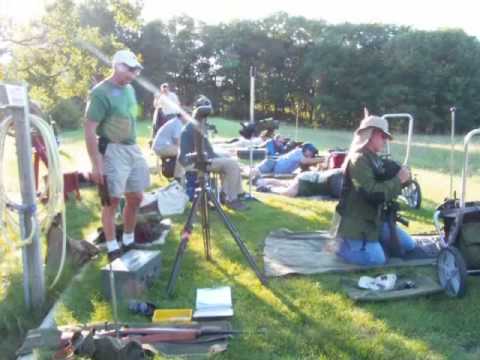
Phoenix Precision micrometer rear sights are offered in two basic models: top mount ($380.00), and side mount ($355.00). Both types are available in either right- or left-hand configuration (no extra charge for lefties). Top mount models are designed for use on rail-equipped AR flattops, tube guns, Tubb 2000s, and Gary Eliseo stocks. Side mount models are most commonly used on bolt action rifles, but they also work on Picatinny or Weaver-style rails with the use of an adaptor. So, if you have both an older-style Palma rifle and a new, rail-topped tube-gun, you can use the sight on both rigs. Many shooters do use the same Phoenix rear sight on multiple rifles, as shown in the video below. In the video, when real competitors talk about their Phoenix sights, you hear two things time and again: “quality” and “repeatability”.
For more information about Phoenix Target Sights and Scope Rails, visit www.PhoenixPrec.com, or call Gary LaValley at (763) 263-3327.
|


