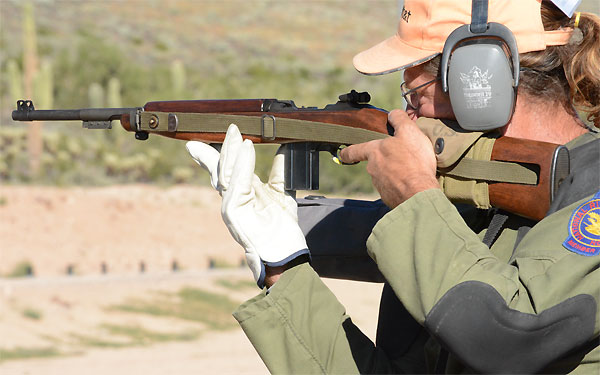
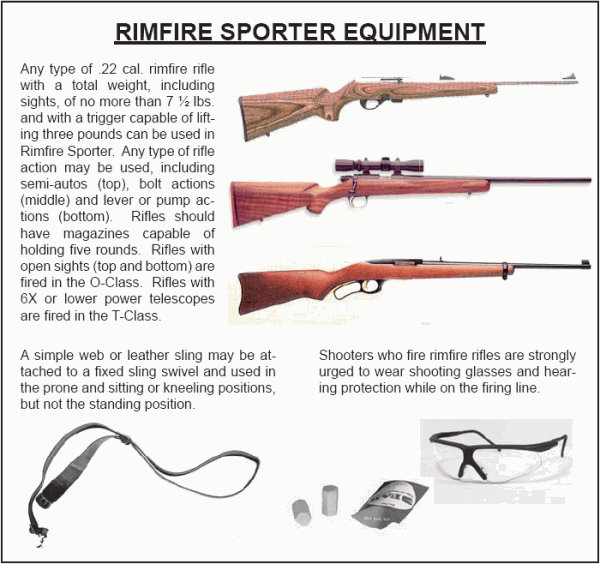
The U.S. Army Marksmanship Unit (USAMU) has published a great series of reloading “how-to” articles on its Facebook Page. This post covers key factors to consider when loading ammunition for Match Rifles and Service Rifles, with a particular focus on self-loading “gas guns”. Visit the USAMU Facebook Page regularly for other, helpful reloading and marksmanship tips.
We offer some “cardinal rules” to help new gas-gun handloaders with safety and efficiency. These address both Match Rifle and Service Rifle versions of the AR15, M1 Garand, M1A, and M110. However, they can also improve safe reloading for many other auto-loaders such as M1 Carbines, FALs, SIGs, etc. The author distilled these principles many years ago to help focus on the essential aspects of these rifles.
RULE ONE: Service Rifles Are Not Benchrest Rifles
Gas-guns require a relatively loose fit between ammunition and chamber (vs. bolt actions) for safe, smooth operation. Many techniques, such as neck sizing and keeping cartridge headspace quite tight, are popular in the extreme bolt gun accuracy realm. However, they are of little value with Service Rifles, and some could even be hazardous. Before adopting a specialized technique, seriously consider whether it is appropriate and beneficial in a gas-gun.
RULE TWO: Never Compromise Safety to Obtain Accuracy
Example: If choosing a brand of great, but ultra-sensitive match primers offers possibly better accuracy at the risk of slam-fires in your design of rifle, don’t do it! You are issued exactly two eyes and ten fingers (best-case scenario). Risking them trying to squeeze 0.25 MOA better accuracy out of an M1A, etc. simply isn’t worth it.
RULE THREE: Tailor the Precision to Your Individual Skill and Your Rifle’s Potential
This has been addressed here before, but bears repeating for newcomers. If you are struggling to break out of the Marksman Class, or using a CMP M1 “As-Issued,” then laboriously turning the necks of your 600-yard brass is a waste of time. Your scores will improve much faster by practicing or dry-firing. On the other hand, if the reigning champions anxiously check your scores each time you fire an event, a little neck-turning might not be so far-fetched.
Verifying Load Improvements — Accuracy hand-loading involves a wide variety of techniques, ranging from basic to rather precise. Carefully select those which offer a good return on investment for your time and labor. In doubt? Do a classic pilot study. Prepare ammo for at least three or four ten-shot groups with your new technique, vs. the same with your standard ammo. Then, pick a calm day and test the ammo as carefully as possible at its full distance (e.g. 200, 300, or 600 yards) to verify a significant improvement. A little testing can save much labor!
This video explains the procedure for ordering an M1 Garand from the CMP.
RULE FOUR: Be Your Own Efficiency Expert
Serious Service Rifle shooters generally think of ammunition in terms of thousands of rounds, not “boxes”, or even “hundreds”. Analyze, and WRITE DOWN each step in your reloading process. Count the number of times each case is handled. Then, see if any operations can be dropped or changed without reducing safety or accuracy. Eliminating just two operations saves 2000 steps per 1000 rounds loaded. Conversely, carefully consider any measurable benefits before adding a step to your routine.
RULE FIVE: In Searching for Greater Accuracy with Efficiency, Look for System Changes
For example, instead of marking your 300-yard rounds individually to differentiate them from your 200-yard ammo, would a simple change in primers work? If accuracy is maintained, using brass-colored primers for 200 and silver for 300 provides an indelible indicator and eliminates a step! Similarly, rather than spending hours selecting GI surplus brass for weight and neck uniformity, consider splurging on some known, high-quality imported match brass for your 600-yard loads. Results should be excellent, time is saved, and given limited shooting at 600 yards, brass life should be long.
RULE SIX: Check All Your Primers Before Packaging Your Loaded Ammo
This seems simple and even intuitive. However, many slam-fires (which were much more common when M1s and M1As were the standard) are due, at least in part, to “high” primers. Primers should be seated below flush with the case head. The USAMU has addressed this at length in a previous column, but each round should be checked for properly-seated primers before they are packaged for use.
Past NRA President Allan Cors’s favorite firearm is this unique M1 Garand, originally given to John C. Garand by the Springfield Armory. Images courtesy NRA Museum (top) and NRA Publications.
Allan Cors, who served as NRA President 2015 to 2017, has a very special M1 Garand in his firearms collection. This unique M1 rifle was originally owned by none other than its inventor, John C. Garand. This historic Springfield Armory M1 rifle bears the serial number 1,000,000. This rifle, which came complete with a walnut-fitted case, silver-plated clip and gold-plated cartridges, was originally presented to its designer John C. Garand as a retirement gift in 1953. Remarkably, this gift was the only reward the famous gun designer received for his contribution to the Allied victory in the Second World War.
Upon his passing, Garand’s family offered the rifle for sale. As the M1 was one of his passions and realizing the extraordinary historic significance of this particular gun, Allan Cors made an offer on the M1. The Garand family accepted.
“I felt very good that they trusted me to do the right thing. Let’s face it: we are only temporary custodians of these things,” Cors said. “They are here in our hands for a while, and then they are passed on to the next generation.”
About John C. Garand
Jean Cantius Garand, also known as John C. Garand, was a Canadian designer of firearms who created the M1 Garand, a semi-automatic rifle widely used by the U.S. Army and U.S. Marine Corps during both World War II and the Korean War. Garand’s fondness for machinery and target shooting blended naturally into a hobby of designing guns, which however took a more vocational turn in 1917. That year the United States Army took bids on designs for a light machine gun, and Garand’s design was eventually selected by the War Department. The U.S. government employed Garand as an engineer with the Springfield Armory from 1919 until he retired in 1953. Born in 1888, John C. Garand died in 1974.
Credit: NPS Photo, public domain
In Springfield, Massachusetts, Garand was tasked with designing a basic gas-actuated self-loading infantry rifle and carbine that would eject the spent cartridge and reload a new round based on a gas-operated system. Designing a rifle that was practical in terms of effectiveness, reliability, and production, stretched over time; it took fifteen years to perfect the M1 prototype model to meet all the U.S. Army specifications. The resulting Semiautomatic, Caliber .30, M1 Rifle was patented by Garand in 1932, approved by the U.S. Army on January 9, 1936, and went into mass production in 1940. It replaced the bolt-action M1903 Springfield and became the standard infantry rifle known as the Garand Rifle. During the World War II, over four million M1 rifles were manufactured. The Garand Rifle proved to be an effective and reliable weapon and was praised by General MacArthur. General Patton wrote, “In my opinion, the M1 rifle is the greatest battle implement ever devised.” Source: Wikipedia.com.
We think everyone should have a Garand in their gun collection…
Tomorrow is Christmas. In our AccurateShooter Forum, you’ll find a popular thread: “Anybody Get Gun Stuff for Christmas?”. One notable post featured a very special Christmas-week arrival — an M1 Garand barreled action. A Forum member received this CMP-sourced barreled action from a friend and then transformed it with a stunning wood stock and other components. We’d say this is a very successful and handsome holiday project. And get this — the skilled owner, who works as a volunteer armorer, assembled his new M1 Garand in record time: “Well, it took three weeks in-transit for my [Christmas] gift to myself to arrive, but I picked her up at 1400 hours yesterday. Had her built into a complete rifle by 1530….”
If you would like to put together a handsome M1 Garand like the Christmas rifle shown above, you’ll need to start with a barreled action. You can order these, as well as complete M1 Garand rifles, from the Civilian Marksmanship Program (CMP). Below we explain how to order an M1 Garand from the CMP, and how to select the right grade for your needs and budget.
If you have questions about assembling a Garand, contact us and we will put you in touch with the builder of the Christmas M1 Garand rifle. He is a CMP-trained armorer who works to maintain ceremonial rifles for VFW, American Legion, and Disabled Veterans Posts throughout Kentucky.
Ordering an M1 Garand from the CMP — Qualifications
How to Order an M1 Garand from the CMP
To purchase an M1 Garand through the CMP, you must be an adult U.S. Citizen, and a member of an affiliated organization who has participated in a “Marksmanship Activity”. This basically means you need to join a gun club and participate in a clinic or match. Proof of club membership and citizenship is mandatory for all ages. However, the marksmanship requirement is waived for those over 60 years of age. M1 Garands must be ordered by mail or through official CMP Auctions.
It’s not that difficult to order an M1 Garand from the CMP. Along with mail-order sales, the CMP has two stores where M1 Garands can be ordered over the counter and then transferred via your FFL (in compliance with state law). The three CMP stores are located in Anniston, Alabama, Talladega, Alabama, and Port Clinton (Camp Perry), Ohio.
Ordering a Barrel — If you already have an M1 Garand, but the barrel has seen better days, you can order a pre-chambered Criterion barrel in .30-06 Springfield. Criterion tell us: “This is a direct replacement barrel for the M1 Garand rifle, manufactured to mil-spec print #6535448. It has the original G.I. contour and Parkerized finish. Receiver threads are timed, all milling cuts are made, and all M1 Garand barrels are hand-lapped.” NOTE: Each barrel is .010 short-chambered and should be properly headspaced by a qualified gunsmith. These Criterion .30-06 Springfield replacement barrels, priced at $295.00, are legal for use in Service Rifle and John C. Garand matches.
How to Maintain the M1 Garand
Once you have an M1 Garand in your collection, you’ll want to keep it in tip-top condition so it works flawlessly for vintage military matches and fun shooting. Below we’ve linked two good SSUSA articles on M1 Garand maintenance. Following that you’ll find two excellent videos covering M1 Garand Disassembly, Cleaning, and Lubrication. Finally there are links to recommended print manuals for the M1 Garand. If you need spare parts for your M1 Garand, we recommend visiting Garand Gear which carries many key items.
M1 Garand Service and Maintenance
Shooting Sports USA (SSUSA) published an excellent article on Service and Maintenance of M1 Garand Rifles. This offers some smart tricks, such as using smoke from burning masking tape to darken the front sight post. There is also an older SSUSA article that covers basic cleaning and servicing and also explains how to upgrade the performance of your Garands. READ Article HERE.
M1 Garand Disassembly, Cleaning, and Lubrication
This Brownells video shows how to disassemble your M1 Garand.
This TekMat video explains how to clean and lubricate your M1 Garand.
Recommended M1 Garand Service Manuals
Among the many M1 Garand manuals available, we recommend the CMP’s U.S. Rifle, Caliber .30, M1: ‘Read This First’ Manual. This booklet covers take-down, reassembly, cleaning, lubrication, and operation. The manual comes with CMP rifles or can be purchased for $3.25 from the CMP eStore. The author of Garand Tips & Tricks says: “It’s one of the best firearms manuals I’ve seen and I highly recommend it.” The CMP also offers many other M1 Garand print resources including:
Do you own an M1 Garand, or have you always wanted to acquire one of these legendary semi-auto battle rifles? Well then here is a valuable new resource: The Essential M1 Garand: A Practical and Historical Guide for Shooters and Collectors. This new book by Jim Thompson covers the history of the M1 Garand, and offers practical advice for Garand owners, along with complete parts lists. The book includes annotated military and National Match manuals, a troubleshooting chart, and a section on hand-loading for the Garand. The final Section addresses common questions about the rifle and offers detailed instructions for maintaining this wartime classic. First published in February, 2020, The Essential M1 Garand is available in Print Paperback and Kindle eBook versions. View Table of Contents.
Last week, on 12/8/23, the Civilian Marksmanship Program (CMP) hosted the Alabama Army National Guard (ALARNG) Best Warrior Mystery Event at the Talladega Marksmanship Park in Alabama. This was the final event in a week-long competition.
A total of 14 competitors had the opportunity to fire the M1 Garand Rifle in this mystery/surprise event. Each competitor received basic instruction and a safety briefing before shooting the CMP Garand Match course of fire: 35 rounds at 200 yards on Talladega’s electronic targets. Only one of the 14 competitors had previously fired an M1 Garand. The CMP provided all rifles and ammunition for the competition.
At the conclusion of the Garand Match course of fire, the Best Warrior awards ceremony was held on the CMP Talladega Marksmanship Park clubhouse patio stage, where each competitor was given CMP challenge coins, ALARNG challenge coins, and overall ranking awards for the week. The CMP was honored to host this event and looks forward to increased partnership with the ALARNG. ALARNG leadership present included the Adjutant General of Alabama, Maj. Gen. Sheryl Gordon, and Command Sgt. Maj. Elmore.
About the Talladega Marksmanship Park Talladega Marksmanship Park is one of the USA’s top shooting centers. The 500-acre facility boasts advanced electronic targets with scoring monitors at the firing lines. Talladega hosts rifle, pistol, and shotgun events through out the year. Talladega’s Unknown Distance Range at also allows guests to practice their skills with over 100 steel targets, placed out to 625 yards. Talladega also has a 20-lane, life-size 3D target Archery Range.
The public is welcome all year long, to test out their firearms or to simply explore the grounds. Off the firing line, the Club House holds a fully stocked Pro Shop with rifles, ammunition, marksmanship accessories and CMP memorabilia. CLICK HERE to learn more about Talladega Marksmanship Park.
The CMP Western Games “Fall Classic” event — featuring CMP Highpower Rifle and CMP Pistol Matches — takes place next week, October 10-15, 2023 at the Ben Avery Shooting Facility near Phoenix, Arizona. This year, the CMP decided to move the Western CMP Games back to its original October timeslot. Although the CMP’s most recent Western Games were held in March of 2023, there will also be a fall Western Games this year, as was the tradition in past years.
The decision to move Western Games back to October was reached after the CMP conducted a survey of competitors. Though the results (155 submissions) indicated spring was favorable (65%) versus fall (34%), the final decision was based on cost to host the event. Spring training for baseball causes inflated expenses for hotels, rental cars, and flights in the earlier months of the year. An October event allows more affordable travel/accommodations for Western Games participants. That should allow more competitors to enjoy the events at Ben Avery.
The 2023 October Western Games will have a condensed schedule of events:
Garand, Springfield, Vintage & Modern Military Matches
Carbine Match
Rimfire Sporter Match
Mid-Range 3X600
80 Shot Rifle
2-Man Rifle Team
EIC Service Rifle
CMP Match Pistol 2700
EIC Service Pistol
.22 Rimfire Pistol
EIC Service Revolver
Military & Police Service Pistol
and 1911 As-Issued Pistol Match
The Western CMP Games will feature three days of Garand/Springfield/Vintage & Modern Military Matches, a Carbine Match, a Rimfire Sporter Match, a Vintage Sniper Match, and a Rifle Basic Class. The CMP Highpower Rifle Matches include the CMP Team HP Clinic with Live Fire, a 4-Man Team Match, three days of CMP 800 Aggregate Matches and a CMP Service Rifle EIC Match. The Highpower Rifle portion of the Western Fall Classic will include a 2-Man Team Match, two days of CMP 800 Aggregate Matches, a CMP Service Rifle EIC Match and a Mid-Range 3×600 event. For educational purposes, a Rifle & Pistol Marksmanship 101 Classes with introductory EIC Matches are also part of the October lineup. There will also be a GSM New Shooter Clinic, a Highpower Rifle Clinic, and an M1 Maintenance Clinic.
Handgun shooters can compete in 4 days of Pistol Matches including CMP Match Pistol 2700, CMP .22 Rimfire Pistol EIC Match, CMP EIC Service Pistol Match, CMP 1911 As-Issued Pistol Match, Military & Police Service Pistol Match and the NEW CMP Service Revolver EIC Match.
M1 Garand
Line-up of M1 Garands at the CMP Sales tent.
This CMP Video Explains the Process for Ordering an M1 Garand from the CMP:
M1 Carbine
CMP M1 Carbine Matches — Growing in Popularity
The CMP M1 Carbine Match is part of the CMP Games program that already includes Garand, Springfield and Vintage Military Rifle Matches. “As-issued” U. S. Military M1 Carbines are fired over a 45-shot course of fire at 100 yards on either the old military “A” target or the “SR” target. The course includes 5 sighters and 10 shots for record prone slow fire in 15 minutes, a 10-shot rapid fire prone series in 60 seconds, a 10-shot rapid fire sitting series in 60 seconds and 10 shots slow fire standing in 10 minutes.
Modern Service Rifle (AR15 Family)
Vintage Sniper Match Rifles
All competitors firing on the Highpower range will be firing on Kongsberg Electronic Targets (KTS) (see above center). The KTS system registers each shot and relays the location and score value to a monitor beside each shooter.
M1 Garand Springfield Armory July 1941 production. Facebook photo by Shinnosuke Tanaka.
Want an authentic surplus M1 Garand? You can get these classic battle rifles from the Civilian Marksmaship Program (CMP) through direct sales as well as online auctions. If you are looking to obtain an authentic, safe-to-shoot M1 Garand, the CMP is your best bet. Each M1 Garand rifle sold by the CMP is an genuine U.S. Government rifle that has been inspected, head-spaced, repaired if necessary, and test fired for function. Each rifle is shipped with safety manual, one 8-round clip, and chamber safety flag.
This CMP Video Explains the Process for Ordering an M1 Garand from the CMP:
M1 Garand Manufacturer Codes: SA (Springfield Armory), HRA (Harrington & Richardson Arms), IHC (International Harvester Co.), WRA (Winchester Repeating Arms)
The federal law that established the new CMP authorizes the Corporation to sell surplus .30 and .22 caliber military rifles, parts and ammunition to qualified U.S. citizens “for marksmanship”. Accordingly, the CMP sells government-surplus M1 Garands, .22 caliber target rifles, and small quantities of other rifles to qualified purchasers. CMP operations, warehousing, inspection, repair, test firing, sales order processing and distribution activities are headquartered in Anniston, Alabama.
M1 Garands at CMP Retail Store in Anniston, Alabama.
How to Order an M1 Garand from the CMP
To purchase an M1 Garand through the CMP, you must be an adult U.S. Citizen, who is a member of an affiliated organization, and who has participated in a “Marksmanship Activity”*. This basically means you need to join a a gun club and participate in a clinic or match. Proof of club membership and citizenship is mandatory for all ages. However, the marksmanship requirement is waived for those over 60 years. Garands must be ordered by mail or through official CMP Auctions. Orders are filled on a first-come, first-serve basis. Rifles of all grades are packed for shipment purely by “luck of the draw”. Most orders ship within 2-4 weeks. If price has changed after an order has been received, customers will be notified before new prices are charged. CLICK HERE for ordering information.
Now through Sunday, July 30th, 2023, classic military rifles will fill the firing lines at Camp Perry. The National John C. Garand, Springfield, Vintage and Modern Military Match (GSMM) commenced on the 26th, and will run through this upcoming Sunday the 30th, with the one-day Springfield M1A Match on Sunday only. (See CMP Camp Perry 2023 Calendar.) Some participants will shoot just one rifle type, but there is also a combined GSMM 4-Gun Aggregate. This GSSM Agg encompasses a series of position shooting matches on NRA SR targets at the CMP Nationals. As the matches are completed, day by day, results will be posted on the CMP National Matches Results Page.
This video shows the Garand Match at Camp Perry. The rifles are still the same a decade later…
The annual GSMM event is one of the most popular events at Camp Perry, drawing participants from around the nation. One of America’s top GSSM shooters is Brian Williams, who was profiled in our Daily Bulletin. The 4-gun Aggregate includes Garand, 1903 Springfield/1917 Enfield (or similar bolt rifle), M1 Carbine, and AR-type rifle for “Modern Military”. Remarkably, Brian has won the GSMM 4-Gun at the CMP National Matches in Camp Perry three years in a row — the inaugural 2017 4-Gun Agg, plus 2018 and 2019. Below, Brian offers some thoughts on the classic wood-stocked rifles used in GSMM competition.
The Classic Wood Guns of CMP 4-Gun Competition
Perspectives on M1 Garand, M1903A3, M1917, and M1 Carbine
Brian provides perspectives on the “Wood Gun” game, with suggestions on how to improve your performance with the M1 Garand, M1903 Springfield, M1917 Enfield, M1 Carbine, and other 20th Century military rifles. Brian explains what to look for
Q: What should one look for when acquiring older rifles for CMP 4-Gun Games — M1 Garand, M1903/1903A3, M1917, M1 Carbine? What are realistic budgets for these firearms? What kind of accuracy can one expect? What upgrades are important?
Brian: All of these military surplus rifles are out there, but they are getting harder to get your hands on. And, just like everything else, the prices continue to rise. Not that long ago you could get your hands on a M1 Garand for four or five hundred dollars. In today’s market they are usually about double that price. But understand that these rifles are all unique and all have a story to tell. No two are alike, or have the same story. Just like the guns themselves, there are fewer and fewer dedicated gunsmiths for these vintage rifles. But I promise if you look for a good smith, they are out there and they are some of the most interesting people you will ever meet.
M1 Garand — Of the four (4) centerfire guns I shoot in the CMP games, my favorite has to be the M1 Garand. There were over 6 million of them produced in a very short time period, and every single one has its own unique story, and that is just cool. M1 Garands are capable of good accuracy. I believe that a well-maintained M1 with at least a replacement barrel is capable of shooting between 1 and 1.5 MOA.
M1903A3 Springfield — I find that the sights on a M1903A3 are a little easier to see than the sights of the M1903, but both are very accurate rifles. Like most military rifles in the current climate the prices have risen dramatically, but there are some gems out there that can be had for far less than $1000. The nice thing about the Springfield rifle is that almost all of the accuracy than you would want can come from just replacing a worn out 80-year-old barrel. In terms of accuracy, I think a good M1903A3 can shoot 1 MOA most of the time.
M1917 Enfield — This rifle is the newest of my collection and it shoots very well, with just a new Criterion barrel — again about 1 MOA with iron sights. These rifles are very close in price to the M1903 Springfield. But if you do your homework and keep your eyes open, there are always great deals to be found. I actually prefer shooting the M1917 to my M1903A3, due primarily to the M1917’s cock-on-close bolt which allows smoother cycling.
Public domain photo from Armémuseum (The Swedish Army Museum).
M1 Carbine — By 1945 there had been more M1 Carbines built than Garands. Today the Carbine can be harder to find, and due to the scarcity the price has shot up and most military M1 Carbines are going for more than $1000 at this point. The great thing about the M1 Carbine is that as long as you have a good ammo supply this rifle can shoot. Honest. I have had countless numbers of people that tell me that there is not an M1 carbine that will shoot. I can tell you from experience that they will, but you are going to have to put in some time with one to learn how to get it to shoot where you want it.
The M1 Carbine shoots the .30 Carbine round, with 110gr bullet going about 1990 FPS. In comparison, the .30-06 Springfield round used in the M1 Garand is almost three times more powerful than the .30 Carbine.
Jerry Miculek is the best action revolver shooter who has ever lived. Miculek is also a true master with rifle and shotgun. This guy shoots hundreds of thousands of rounds every year in all types of firearms. Through that process, he has discovered common mistakes many shooters make. Those mistakes can harm the guns, or threaten the safety of the operator. Here Jerry offers some vital gun handling and safety advice in his “Never Do This” video series.
Jerry Miculek has won multiple revolvers championships, and has set amazing records for revolver speed shooting (with reloads). Yes Jerry, “Mr. Revolver”, knows a thing or two about wheelguns. In this video, Jerry explains how you can damage your revolver by using the wrong methods to open and close the cylinder and extract ammo. Jerry shows what NOT to do, and then he very carefully explains the proper procedure to release the cylinder, and swing it out of the frame. In addition, Jerry shows how best to swing a loaded cyclinder back into place. If you own a revolver, ANY revolver, you should definitely watch this video.
In this second video, Jerry explains common mistakes people make when handling and shooting three classic, semi-auto firearm types — the M1 Garand, the SKS carbine, and the M1911 pistol. Jerry shows handling faults that can cause out-of-battery detonation or early primer strikes, or cause jams in the Garand and SKS. Then Jerry explains why you should never release the slide on a M1911 pistol with a round already in the chamber. This is a must-watch video for Garand owners.
Here Jerry demonstrates of the most common jams that can happen with AR-platform rifles. Miculek reveals the cause of the issue and then shows how to prevent it. Jerry notes: “This is one of those malfunctions that you won’t see coming! I’ve seen it … on the range and it can be devastating to your time in a match. All ammo used in the video were dummy rounds and intentionally loaded for training without powder or primers.”
Report based on story by Ashley Dugan, CMP Writer
This summer the Civilian Marksmanship Program (CMP) will celebrate the 25th Anniversary of the John C. Garand Match at the annual National Matches at Camp Perry. The event has been one of the CMP’s most popular competitive shooting events, attracting hundreds of competitors from around the country each year. The John C. Garand match runs July 27-30, 2023, at the Viale Range and Rodriguez Range (Saturday only) at Camp Perry. CLICK HERE for CMP National Games Matches information and full 2023 schedule.
The roots of the John C. Garand Match date back to 1998 when the CMP introduced the competition into its target competition schedule. The Garand Match is a unique event where participants use vintage “as-issued” M1 Garand rifles over a course of fire with 10 shots prone slow-fire, 10 shots prone from standing rapid-fire, and 10 shots standing, all at 200 yards.
In response to the growing popularity of the Garand Match, the CMP went on to establish other rifle events of the same type, including the Springfield, Vintage Military, Rimfire Sporter, M1 Carbine, Vintage Sniper Team, and Modern Military matches. Collectively, these have come to be known as “CMP Games Matches”.
Camp Perry M1 Garand Competition — Vintage Military Rifle
The John C. Garand match is a Camp Perry classic. Note the signature Garand clip in the air.
The unique “Ping” of the ejected en-bloc clip is music to the ears of Garand fans. Some folks own an M1 Garand for the history, while others enjoy competing with this old war-horse. The CMP’s John C. Garand Match is one of the most popular events at Camp Perry every year.
Approximately 40% of each year’s Garand Match competitors receive coveted gold, silver, or bronze Achievement Medals with neck ribbons. Medal presentations are decided by competitors scores. In 2023, competitors who fire 279 x 300 or higher will receive gold medals, scores of 272 to 278 will receive silver medals; 260 to 271 will receive bronze medals. Medal presentations typically take place on the range immediately after competitors finish.
The John C. Garand Trophy, awarded to the top competitor at the John C. Garand Match at Camp Perry, was donated to the National Trophy collection by the Garand Collectors Association in 2001. Nick Till is the latest winner of the trophy (2022). Brad Diehl is the current national record holder of the match with a score of 294-9X (set in 2018), while Steven Skowronek is the only individual to win the National John C. Garand Match as a junior, back in 2005. Skowronek returned to win the match again over a decade later in 2017.
DCM Emeritus Gary Anderson, who served as the DCM from 1999 through 2009, played a major role in getting the Garand Match established and in growing the CMP’s as-issued military rifle program into one of the CMP’s largest shooting sports disciplines. He recalled, “The Garand Match had 325 competitors in 1998, but it quickly grew to over 1,300 competitors in the years that followed. It succeeded because M1 rifles were affordable and readily available and because we adopted a simple 30-shot as-issued military rifle course of fire. Plus, there was a special appeal to being able to shoot rifles in competitions that had already served in the national defense of our country.”
History of the M1 Garand Rifle
Jean Cantius Garand, also known as John C. Garand, was a Canadian designer of firearms who created the M1 Garand, a semi-automatic rifle that was widely used by the U.S. Army and U.S. Marine Corps during World War II and the Korean War. The U.S. government employed Garand as an engineer with the Springfield Armory from 1919 until he retired in 1953. At Springfield Armory Garand was tasked with designing a basic gas-actuated self-loading infantry rifle and carbine that would eject the spent cartridge and reload a new round. It took fifteen years to perfect the M1 prototype model to meet all the U.S. Army specifications. The resulting Semiautomatic, Caliber .30, M1 Rifle was patented by Garand in 1932, approved by the U.S. Army on January 9, 1936, and went into mass production in 1940. It replaced the bolt-action M1903 Springfield and became the standard infantry rifle known as the Garand Rifle. During the World War II, over four million M1 rifles were manufactured.
After World War II ended, thousands of M1 Garand rifles were put into storage while others were loaned to allies during the Cold War. Production resumed in 1950 when North Korea attacked South Korea, making the rifle the main infantry firearm used during the Korean War. Nearly 1.5 million new M1 rifles were produced between 1952 to 1957.
How to Order an M1 Garand from the CMP
In 1996, a federal law established the Civilian Marksmanship Program and authorized the CMP to sell surplus .30 and .22 caliber military rifles, parts, and ammunition to qualified U.S. citizens. The CMP currently sells the famous M1 Garand and other vintage rifles through mail order and through its stores in Alabama and Ohio. To purchase an M1 Garand through the CMP, you must be an adult U.S. citizen, who is a member of an affiliated organization, and who has participated in Marksmanship Activity. This basically means you need to join a gun club and participate in a clinic or match. Proof of club membership and citizenship is mandatory for all ages. The CMP does not accept telephone, fax, or online orders for firearms — you must order by mail or in person. CLICK HERE for ordering information.
M1 Garands at CMP Retail Store in Anniston, Alabama.
CMP Guide to Target Shooting with Vintage Military Rifles
The Civilian Marksmanship Program (CMP) has released VMR: Target Shooting With Vintage Military Rifles, a detailed book by Gary Anderson, Director of Civilian Marksmanship Emeritus. Gary himself was a world-class marksman who earned two Olympic Gold medals in rifle shooting.
The CMP says this 284-page illustrated book is “likely the most comprehensive manuscript ever written about the methods of training and competing with popular American and foreign vintage military rifles.” Fans of vintage military rifles will likely find this 18-chapter book “to be the most complete coverage of the topic, from a competitor’s and historian’s point of view”, said Christie Sewell, CMP Programs Chief.
Anderson definitely has the credentials — he won Olympic Gold Medals in Tokyo and Mexico City in the 1960s. Gary also set multiple U.S. and international records. The originator of the CMP’s competitive vintage rifle program, Anderson set out to present a detailed manual covering all aspects of shooting vintage military rifles. The book covers 1903 Springfield, U.S. Krag, 1917 U.S. Enfield, M1 Garand, M1 Carbine and many more, including rifles from “across the pond.”
Target Shooting With Vintage Military Rifles Topics:
Origins and Fundamentals of Marksmanship
Operation, Cleaning, Loading & Unloading
Sight Adjustment, Zeroing & Fine Tuning
Highpower Rifle Match Procedures
Firing Rifles in Competition
Prone, Sitting and Standing Position Building
Using a Scorebook/Databook
Strategies for Improvement
Critical Value of the Sling
Rifle and Range Safety
Purchase Online at CMP E-Store
This excellent Gary Anderson book is sold through the CMP E-Store for $29.95. You can also print out and submit the CMP Publications order form (order item NLU # 792, $29.95). The CMP stores in Alabama and Ohio will also carry this Gary Anderson book.





 Credit: NPS Photo, public domain