Are you thinking, “Snow’s on the ground, winter’s here, I won’t be competing until spring.” Well think again — there are opportunities to compete indoors during these cold months.
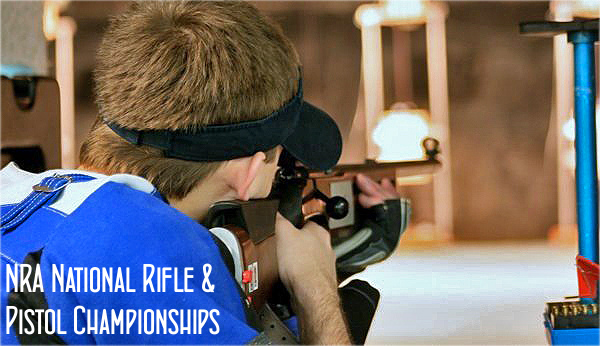
The 2014 NRA National Indoor Rifle & Pistol Championships start January 1, 2014. There will be indoor matches around the country with a variety of disciplines including Air Pistol, Rimfire Pistol, Air Rifle, and Rimfire Rifles. There is even a BB gun class for Juniors. The Indoor Championships involve multiple sectional tournaments, held in a variety of states from January through mid-April. This is like a super-duper postal match. Your results are sent to the NRA where they’re compared to other shooters. Winners are determined in late May. It’s a fun way to compete with many other shooters and it’s easy to get involved. There will be nearly 300 sectionals in 2014, so you’ll probably find an event close to home. Here are dates for 2013:
For more information contact these NRA staffers: Dian Bullock, (703) 267-1482 (Rifle); Ann Boyd, (703) 267-1452 (Pistol); Tori Croft, (703) 267-1473 (Collegiate).
The 50m Free Pistol is one of the events in the NRA National Indoor Championship. It takes skill — the pistol is shot one-handed, with iron sights, and the Ten-Ring is only 50mm (about 1.97″) in diameter. A competitive world-class score is 560 or better out of 600 possible points. Learn more about this challenging discipline in this USA Shooting video:
The National Rifle Association celebrates its 142nd birthday this month. First chartered in New York state in November, 1871, the NRA was originally created to train citizens in marksmanship. Here’s an interesting account of the history of the NRA in the late 18th and early 20th century:
How the NRA Got Started in the 1870s
Dismayed by the lack of marksmanship shown by their troops, Union veterans Col. William C. Church and Gen. George Wingate formed the National Rifle Association in 1871. The primary goal of the association would be to “promote and encourage rifle shooting on a scientific basis,” according to a magazine editorial written by Church.
After being granted a charter by the state of New York on November 17, 1871, the NRA was founded. Civil War Gen. Ambrose Burnside, who was also the former governor of Rhode Island and a U.S. Senator, became the fledgling NRA’s first president.
An important facet of the NRA’s creation was the development of a practice ground. In 1872, with financial help from New York state, a site on Long Island, the Creed Farm, was purchased for the purpose of building a rifle range. Named Creedmoor, the range opened a year later, and it was there that the first annual matches were held.
Political opposition to the promotion of marksmanship in New York forced the NRA to find a new home for its range. In 1892, Creedmoor was deeded back to the state and NRA’s matches moved to Sea Girt, New Jersey.
The NRA’s interest in promoting the shooting sports among America’s youth began in 1903 when NRA Secretary Albert S. Jones urged the establishment of rifle clubs at all major colleges, universities and military academies. In February 1903, an amendment to the War Department Appropriations Bill established the National Board for the Promotion of Rifle Practice (NBPRP). This government advisory board became the predecessor to today’s Corporation for the Promotion of Rifle Practice and Firearms Safety, Inc. that now governs the CMP. The 1903 legislation also established the National Matches, commissioned the National Trophy and provided funding to support the Matches. By 1906, NRA’s youth program was in full swing with more than 200 boys competing in matches at Sea Girt that summer.
Camp Perry Site Acquired in 1906
Due to the overwhelming growth of NRA’s shooting programs, a new range was needed. Gen. Ammon B. Crichfield, Adjutant General of Ohio, had begun construction of a new shooting facility on the shores of Lake Erie, 45 miles east of Toledo, Ohio. The original land for Camp Perry was purchased in 1906, and the reservation was named after Commodore Oliver Hazard Perry, the American naval commander who won the Battle of Put-in-Bay during the War of 1812.
On August 19, 1907, Cpl. L. B. Jarrett fired the first shot at the new Camp Perry Training Site. And that year, 1907, Camp Perry held its first National Pistol and Rifle Championship events. This location has hosted the annual NRA National Matches ever since. Today, over 4,000 competitors attend the National Matches, making it the most popular shooting competition in the western hemisphere.
Here’s a feel-good story about a talented young shooter.
Article based on report by Lars Dalseide, forNRA Blog.
Finding the X-Ring while taking part in NRA’s National Rifle and Pistol Championships can be challenging enough. Finding the X-Ring from three positions during the smallbore rifle phase of the championships can be even more trying. But Amy Fister, winner of this year’s NRA 3-Position Rifle High Woman title, found it with no trouble at all. A surprising result given her wry self-description.
“I’m a nerd,” she said with a laugh. “I’m very dedicated to my studies.”
Based out of Kutztown, Pennsylvania, Fister walked away from the 3-Position Awards Ceremony with three titles: High Woman with Metallic Sights, High Civilian with Metallic Sights, and High Woman Overall. Fister finished with a score of 2374 – 140X (good for 7th overall). “Last year I was close but not close enough,” said Fister. “I guess this year it was my time.” Seeing her on stage, winning award after award, it’s hard to believe that it almost didn’t happen — she nearly fell victim to the summer heat at Camp Perry.
Fighting Dehydration at Camp Perry
About halfway through the National Championship match, Fister was setting up targets when she realized something was wrong: “I was delusional, seeing things,” Fister explained. “After setting up my target, it wasn’t there. I started chasing down the target guy for another one. It was an interesting and a little bit scary of an experience.”
She was dehydrated. Heartbeat rapid, extremely lethargic, unsteady on her feet — she recognized the signs and started back for the line. Pulling a bottle of Gatorade out of her bag, she gulped until it emptied. Feeling a touch steadier, she made for the water coolers behind the line. A few cups later and she was ready to proceed. “Luckily it happened during prone,” she said with a laugh. “Standing would have been a different story.”
How a Nerd Became a World-Class Rifle Shooter
Starting as far back as she can remember, Fister was out shooting with her dad. First as the official gear porter, then as a huntress. “Deer and goose, that’s what we went for,” she said. “I go out deer hunting whenever I can, but it cuts into my shooting time. You’ve got to find a happy medium.”
Though it was dad who first put a rifle in her hand, it was her sister Valerie who started her down the competitive trail. Like most stories of sibling rivalry, big sister joined the rifle team so little sister (Amy) wanted to also. A little practice, a little patience, and it all came together — so well in fact that Amy has earned a shooting scholarship to the University of Memphis. But her ambitions don’t stop there. They reach as far as Rio de Janeiro, site of the 2016 Olympics.
“I missed a spot on the U.S. Team by two points. Now the goal is to be part of the Olympic Rifle Team in 2016. Problem is that I don’t want my scores to drop and I don’t want my grades to drop.
“My goal is to become a pediatrician and an Olympian. Guess I’ll just find a way.”
To learn more about the NRA’s Competitive Shooting Programs, visit compete.nra.org.
The NRA has joined in an ACLU lawsuit challenging the Federal government’s vast domestic telephone surveillance program. Currently the National Security Agency (NSA) captures billions of telephone call records in a vast data-mining operation. As those records could reveal every person who makes a call to the NRA, shooting club, or gun store, the NRA claims the NSA call-tracking program could be used to create a de factonational gun registry. The NSA and/or other government agencies could easily create a list to identify and locate gun owners: “The government could simply demand the periodic submission of all firearms dealers’ transaction records, then centralize them in a database indexed by the buyers’ names for later searching.”
The NRA argued: “It would be absurd to think that the Congress would adopt and maintain a web of statutes intended to protect against the creation of a national gun registry, while simultaneously authorizing the FBI and the NSA to gather records that could effectively create just such a registry”.
The NRA claims the Federal Government’s telephone surveillance programs is unconstitutional: “The mass surveillance program threatens the First Amendment rights of the NRA and its members. The mass surveillance program could allow identification of NRA members, supporters, potential members, and other persons with whom the NRA communicates, potentially chilling their willingness to communicate with the NRA.”
The ACLU’s lawsuit, ACLU vs. Clapper, seeks an injunction to halt the NSA’s phone-surveillance program and also force the Federal Government to expunge all of its phone call records. Named defendants in the ACLU lawsuit the National Security Agency, the FBI, the Department of Defense, and the Department of Justice. The ACLU has welcomed the NRA’s participation in the lawsuit: “The range of voices joining the protest against mass government surveillance — not to mention the bipartisan storm that has swept Congress since the recent NSA disclosures — is a real testament to the fact that the government’s dragnet surveillance practices are offensive to Americans from across the political spectrum”.
Along with the NRA, other organizations have joined in the ACLU lawsuit against the NSA’s surveillance programs. These include the Reporters Committee for Freedom of the Press and several news organizations including Fox, National Public Radio, Bloomberg News and The New Yorker. In fact even Republican Rep. James Sensenbrenner of Wisconsin filed supporting briefs. Sensenbrenner is a co-author of the 2001 Patriot Act, which the NSA has cited as authority for its data-gathering program. Sensenbrenner believes that NSA’s vast phone-logging operations have gone well beyond anything contemplated by Congress in passing the Patriot Act.
Today marks the fourth and final day of the NRA Long Range Rifle Championship. The USAMU’s SSG Shane Barnhart is in the lead but other shooters are definitely within striking distance. Barnhart’s position atop the leaderboard has been a surprise to some, because he has been primarily a smallbore shooter in years past. But in 2013 he has demonstrated outstanding capabilities with a centerfire rifle at long range. Watch this video for a wrap-up of Long Range Day 3 at Camp Perry.
Michelle Gallagher Wins Leech Cup
Michelle Gallagher turned in a great performance earlier this week, winning the Leech Cup in a shoot-off with Ty Cooper of the USAMU. Michelle Gallagher finished with a top score of 100-6X (X stands for bullseye) to beat USAMU’s Ty Cooper by a single X.
Michelle received congratulations from SSG Brandon Green after winning the Leech Cup at the NRA Championships. “This is the first time I’ve shot this year in a sling at a 1,000 yard match,” said Gallagher. “I’ve been shooting F-Class, so this is pretty special.”
Tired of those whimpy nature calendars your wife gives you — or those obnoxious corporate motivation calendars they hand out at work? Then get yourself a bold, manly calendar featuring classic firearms every month. And you don’t have to wait ’til January to start using it. The new NRA Museum Calendar starts with September 2013. There are 16 months worth of full-color, high-rez photographs of over 20 historic firearms. On the right side of each month’s grid display you’ll find short histories of the featured arms, plus close-up photos.
You can order this calendar at the NRA Store, item number BK 02300. At $15.95, this calendar is overpriced, but it IS printed on very nice heavy, glossy stock. This calendar also makes a nice gift item for a friend or family member who enjoys shooting.
With a B-25 fly-over, music from the 122nd U.S. Army Band, a Flag ceremony, and the roar of a replica 1812-era cannon, the 2013 NRA National Rifle and Pistol Matches got underway at Camp Perry (Port Clinton, OH) on July 8th. Over 2000 competitors will participate in the matches in July and August.
Ohio’s Lt. Governor Mary Taylor, speaking to a crowd of over 400 attendees, noted that the National Match venue has been significantly upgraded. Over $2.9 million has been spent to improve infrastructure, fix sidewalks, and upgrade the lodging available for shooters at Camp Perry. Master of Ceremonies Judy Legerski stated that: “The matches at Camp Perry have given us some of the finest competitors and friends we will ever know.”
Shouldering a match-grade M1 Carbine, U.S. Army Lt. Gen. John S. Crosby fired the first shot downrange, officially opening this year’s event. The National Matches are hosted jointly each year by the NRA, CMP, and Ohio National Guard. The five-week event is a major operation. A combined legion of 6,000 civilian and military competitors, volunteers, spectators, vendors, and family members come to the Camp Perry Joint Training Center (CPJTC) each summer.
On August 2, 2013, the new NRA National Sporting Arms Museum will open its doors at the Bass Pro Shops flagship store in Springfield, Missouri. The new 7500-square-foot Sporting Arms Museum will have over 1000 guns on display, including some of the most historically significant firearms from the NRA Museum Collection. The value of the collection is over $20,000,000!
Exhibits include original prototypes and paintings from the Remington Arms Company, shotguns from the American Trapshooting Association’s Hall of Fame, and the full collection of guns from the Pachmayr Foundation. There are many special displays, including a diorama showing replicas of firearms used on the Lewis & Clark expedition.
“Visitors to the NRA National Sporting Arms Museum are in for a treat. They’ll see firearms that figure significantly in the history of our country and trace the evolution of hunting and conservation,” said Bass Pro Shops founder Johnny Morris. “This museum houses a fantastic collection, from the firearms of Theodore Roosevelt and John Wayne to historic U.S. military pistols and engraved Colt revolvers of the Old West. It has something for every firearms enthusiast.”
“We are thrilled to bring such a wonderful collection of firearms to Bass Pro Shops Outdoor World,” said NRA museum director Jim Supica. “Featuring treasured guns from the NRA collection along with special exhibits from Remington and others, this museum promises to showcase a sporting arms collection the world has never seen.”
Museum Admission is Free
To see this one-of-a-kind collection, come to the grand opening of the NRA National Sporting Arms Museum at Bass Pro Shops in Springfield, Missouri on August 2, 2013.
The museum, located at 1935 S. Campbell in Springfield, Missouri, will be open every day from 10 a.m. to 7 p.m. with extended hours during Bass Pro’s Fall Hunting Classic. Admission is FREE and parking is free as well. To see a preview of the National Sporting Arms Museum, with many photos of the soon-to-be-opened exhibits, go to www.basspro.com/nramuseum.
Are you an NRA member? Think you have $2500 ArmsCare insurance coverage for your firearms, as a benefit of membership? Well there’s a catch. If you fail to ACTIVATE your NRA insurance, your claim will almost certainly be rejected if you suffer a loss. The NRA insurance webpage states:
“As a benefit provided by the National Rifle Association, [members] are automatically eligible for $2,500 ArmsCare Firearm Insurance. This firearms coverage … must be activated to take effect.”
Many NRA members are not aware of the activation requirement. That’s not surprising, as there’s no mention of this in many NRA membership solicitations. While the activation clause is disclosed in printed materials mailed to members, we bet that a large percentage of NRA members are not aware that their NRA insurance is essentially useless until “activated”. Just signing up for an NRA membership (and paying the dues) is not enough. You must activate the insurance or your claims can be rejected. Even if you have been a dues-paying NRA member for decades, you need to activate your insurance.
This is the real deal. Forum members (with current, active NRA memberships) have had 2013 gun loss claims rejected because they had not “activated” their NRA insurance. Don’t suffer the same fate. If you are an NRA member, you should activate your ArmsCare insurance right now. Don’t delay. Your NRA ArmsCare insurance won’t become effective until you activate it!
This item should make you guys smile. An anti-gun organization, StopNRA.org, has shot itself in the foot, figuratively speaking. The StopNRA group, which opposes the NRA and seeks to curtail Second Amendment freedoms, put up a reader poll on its StopNRA.org website. The poll asked: “Do you agree or disagree with NRA gun policies?” Well it turns out that over 71% of respondents AGREE with NRA policies. So, the anti-gun poll has back-fired, big time. View poll results here:


 An important facet of the NRA’s creation was the development of a practice ground. In 1872, with financial help from New York state, a site on Long Island, the Creed Farm, was purchased for the purpose of building a rifle range. Named Creedmoor, the range opened a year later, and it was there that the first annual matches were held.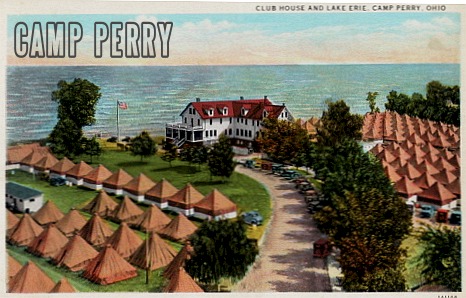


 Though it was dad who first put a rifle in her hand, it was her sister Valerie who started her down the competitive trail. Like most stories of sibling rivalry, big sister joined the rifle team so little sister (Amy) wanted to also. A little practice, a little patience, and it all came together — so well in fact that Amy has earned a shooting scholarship to the University of Memphis. But her ambitions don’t stop there. They reach as far as Rio de Janeiro, site of the 2016 Olympics.


 Tired of those whimpy nature calendars your wife gives you — or those obnoxious corporate motivation calendars they hand out at work? Then get yourself a bold, manly calendar featuring classic firearms every month. And you don’t have to wait ’til January to start using it. The new

 On August 2, 2013, the new


