|
|
February 25th, 2009
Throughout 2009, Sightron is offering purchasers a $50.00 rebate on Sightron SII Big Sky™ riflescopes. To qualify, just purchase any Sightron SII Big Sky™ Series riflescope before December 31, 2009. These scopes feature the ExacTrack™ windage and elevation system, a Broadband lens coating process, one-piece main tubes, and Sigtron’s Lifetime Warranty.
CLICK HERE for Rebate Application Form.

The Fine Print
This offer is valied in the USA only. Purchase of an SII Big Sky™ scope must be made between January 1, 2009 and December 31, 2009. To qualify for the rebate, purchaser must submit Sightron coupon with original sales receipt, warranty card and UPC sticker by March 31st 2010. Rebate offer cannot be combined with any other discounts or offers.
January 30th, 2009
We checked out the latest flyers from MidwayUSA and Natchez Shooters Supplies and found some great deals. How about $12.99 for a set of digital calipers?
 Digital Calipers, $12.99 Digital Calipers, $12.99
MidwayUSA item 604242
No these are not the finest calipers you can buy, but they work as well as many digital calipers costing thirty bucks or more. This $12.99 price is the lowest we’ve seen on the MidwayUSA electronic calipers in a LONG time. For $12.99, pick up these calipers as a back-up, or for your range kit. Having a spare set of calipers at the range makes it easy to measure targets or check your case growth.
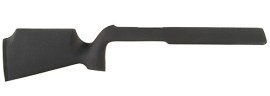 Bell & Carlson Anschutz-Style Stock for Ruger 10/22 Bell & Carlson Anschutz-Style Stock for Ruger 10/22
MidwayUSA item 500223, $154.99
We know the Ruger 10/22 is popular in the new Tactical Rimfire game, but the factory stock is less than ideal. Here’s an inexpensive stock that works great both prone (with bipod) and standing. The B&C 10/22 Stock is rigid, cleared for a .920″ barrel, and has a nice, no-slip black finish. We have a similar-shaped stock on our Anschutz Biathlon rifle and it is functions great from bipod, sitting position, or standing. You may want to add spacers to increase length of pull for prone work.
 Hornady A-Max Bullets, Natchez Hornady A-Max Bullets, Natchez
Natchez is listing great prices right now on Hornady A-Max match bullets. The popular 6mm 105gr A-Max is sale priced at $18.28/100, but unfortunately is out of stock. You might ask for a “rain check” on that price. Likewise, Natchez has V-Max bullets at great prices, but most items are showing “out of stock.” Here are some other good deals on available inventory:
– 22 Cal., 80gr A-Max, HO22832, $15.74/100
– 6.5 mm, 140gr A-Max, HO26332, $24.68/100
 Neoprene ScopeCoat, $9.99 Neoprene ScopeCoat, $9.99
Natchez item F01SXSCL50HT
Large ScopeCoat for target scopes (50mm objective). These thickly-padded covers provide superior protection for expensive optics. The quoted item is 12.5″ x 50mm, but smaller sizes are available for the same $9.99 price. ScopeCoats sell elsewhere for up to $20.00. Right now Natchez also has flip-up Butler Creek lens covers for just $5.94 (that’s 20% off).
January 21st, 2009
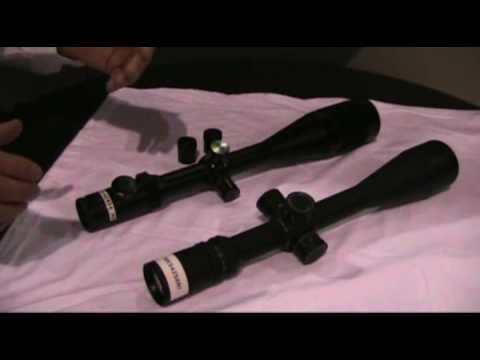
Nightforce Benchrest and NXS scopes are very popular among our readers. The Nightforce 12-42×56 BR model is the scope of choice for top F-Class and 1000-yard shooters. It offers sharp glass, big-time magnification, precision parallax control (via a rotating front objective), plus a wide choice of reticles. The NXS offers these same qualities, but it uses a side-parallax adjustment. Many shooters building their first long-range rifle ask: “Which should I get–the Nightforce BR model or the NXS?” Nightforce Sales Manager Kyle Brown helps answer that question in the video below. Kyle explains the major (and minor) differences between the BR and NXS scope lines. You’ll find this video very informative.
CLICK HERE to download Nightforce Optics 2009 Catalog (Large 5mb .pdf file).
New First Focal Plane 3.5-15×50 F1 Scope
The new NXS 3.5-15×50 F1 was created at the request of U.S. military and other professional sharpshooters. They wanted a rugged scope that offers a choice of elevation/windage click values, plus a ranging reticle in the First Focal Plane (FFP). A reticle located in the first focal plane remains in the exact same ratio to the target across the scope’s entire magnification range. The FFP design (designated by “F1″) is optimal for rangefinding purposes, since the reticle’s markings remain consistent relative to target size at all magnification settings. The 3.5-15×50 F1 scope will be offered with three click-value options: 1/4 MOA, 0.1 Mil Radians, or 1.0 MOA elevation + 0.5 MOA windage clicks.

CLICK HERE to download NXS 3.5-15×50 F1 Scope Spec Sheet (.pdf file).
HOT NEWS: If you like the NXS 3.5-15×50 F1, take note that a Nightforce 5.5-22×56 FFP NXS is coming in the fall of 2009. Plus Kyle told us that the Nightforce Compacts and First Focal Plane scopes now have their scope bodies (main tubes) crafted in Idaho. So, you’ll notice that they are now stamped “Made in USA”.
New Ballistic-Compensating Reticles Offered for 2009
Nightforce will offer a variety of NEW ballistic reticles that provide “hold-over” hashmarks corresponding to the trajectories of popular hunting rounds. With these new christmas-tree style reticles, hunters and varminters can rapidly adjust to different ranges without cranking-in elevation with the top turret. The reticles also include horizontal hash marks corresponding to calculated wind drift in mph (not MOA or mils). There are three basic options, one each for low, medium, and high velocity cartridges. In addition, Nightforce may offer Horus ballistic-compensating reticles, and possibly the Holland ART reticle, later in the spring of 2009.
 New Ring-Top Bubble Level and Level/ADI New Ring-Top Bubble Level and Level/ADI
Nightforce has introduced the Top of Ring Bubble Level, a low-profile level built directly into the top half of a scope ring. This fits in place of the upper half of a Nightforce Ring (e.g. Unimount, Direct Mount, and Nightforce Mil-Spec). Like other anti-cant devices, the NF bubble level helps the shooter avoid canting his rifle left or right, which can throw off the shot significantly at long ranges. The level also helps ensure your reticle is plumb when mounting the scope.
The Top of Ring Bubble Level is available in three versions: 1) Ring Level alone; 2) Ring level with integrated mount for the Nightforce ADI (Angle Degree Indicator); 3) Ring level with mount plus ADI unit (complete system). You’ll want the ADI if you often have to make shots at steep angles. Calibrated in degrees, the ADI instantly gives the shooter the up or down angle for the shot. Plug that number into a ballistics calculator (or angle drop chart) and you’ve got your corrected drop for the true range to the target.
We definitely recommend an ADI for hunting, and for competition disciplines where up/down angle shots are required. The ADI is simple, robust, and requires no batteries. Mounting the ADI directly to the scope ring is the slickest installation yet for this useful device. This mounting set-up was a collaboration between Shawn Carlock (Defensive Edge), Ward Brian (Sniper Tools ACI), and Nightforce.
For more info, contact Nightforce Optics, Inc., 1040 Hazen Lane, Orofino, ID 83544, tel (208) 476-9814, or visit NightforceOptics.com
January 19th, 2009
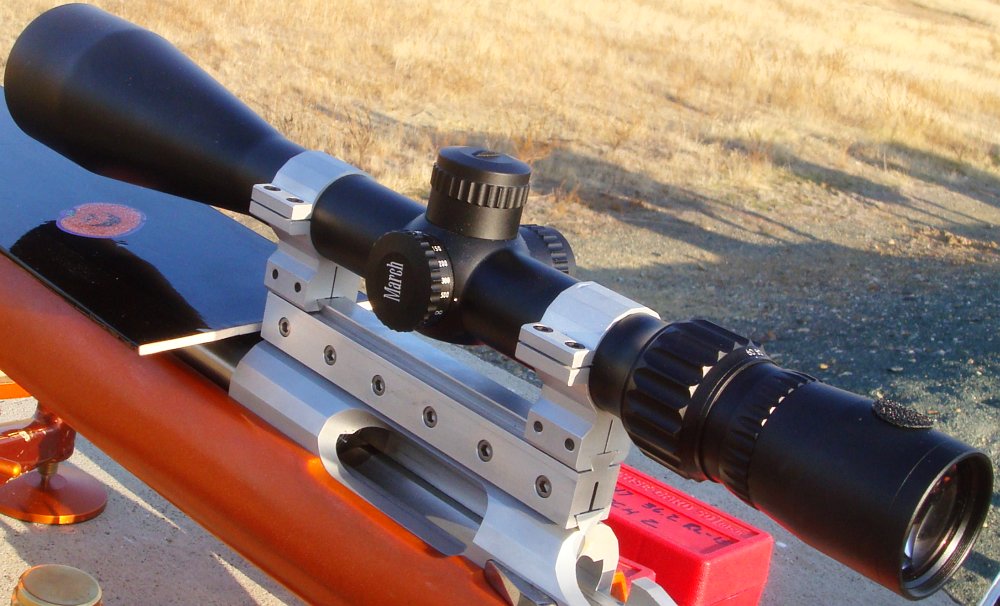
 Kelbly’s rolled out a remarkable new March benchrest scope at SHOT 2009: a completely new 36-55x52mm zoom, quite unlike anything on the market. Produced by Japan’s DEON Optical, the design was inspired, in part, by suggestions from ace shooter Lou Murdica. Lou looked at the current benchrest disciplines, from point-blank (100/200) BR, all the way to the 1000-yard game. He found that most benchresters (both short-range and long-range) rarely dialed their scopes below 30-power, and most wanted more magnification than their current scopes offered, for times when the conditions were good. Lou asked DEON’s designers if they could build a high-quality BR scope with about a two-times zoom ratio. But he also wanted the reticle to be super-stable, so it didn’t move at all when adjusting the magnification. Kelbly’s rolled out a remarkable new March benchrest scope at SHOT 2009: a completely new 36-55x52mm zoom, quite unlike anything on the market. Produced by Japan’s DEON Optical, the design was inspired, in part, by suggestions from ace shooter Lou Murdica. Lou looked at the current benchrest disciplines, from point-blank (100/200) BR, all the way to the 1000-yard game. He found that most benchresters (both short-range and long-range) rarely dialed their scopes below 30-power, and most wanted more magnification than their current scopes offered, for times when the conditions were good. Lou asked DEON’s designers if they could build a high-quality BR scope with about a two-times zoom ratio. But he also wanted the reticle to be super-stable, so it didn’t move at all when adjusting the magnification.
Six months later, DEON (March) sent Lou a prototype. It was very different that other scopes on the market because the zoom function is done in the eyepiece — similar to a spotting scope. In fact DEON dubbed the new scoped the “EP” zoom, with the “EP” referring to “eye piece”. Lou has tested the new March 36-55X and he says “The cross-hair absolutely doesn’t move when you zoom because everything is taking place behind the cross-hairs at the eyepiece. For a benchrest shooter this is a BIG deal — if you don’t like the mirage, you can change from 55 power to 36 power in the middle of your group, and know that point of impact will not change.” The other great feature of the scope is the near-constant eye relief — it changes only about 1/2″ from 36 power to full 55X magnification. Lou says, “you can zoom through the entire range and barely need to move your head at all.” Lou has worked with all the March BR scopes, from the early 40X through the lastest zooms. He feels that the new 36-55 may be the best yet for short-, medium-, and long-range benchrest shooters. As Lou explains: “It takes care of 100 to 1000-yard shooting with one scope. What more would you ever need?”


Click Here to download March 36-55×52 Spec Sheet.
Revolutionary March 1:10 Ratio Zooms Amaze Optics Experts
March pulled off a major coup at SHOT Show. The new March 1-10x35mm and 2.5-25x42mm zooms were the talk of the Show. This is the first time ANY major manufacturer has been able to achieve a 10 times zoom ratio. March’s booth was mobbed as engineers from other optics companies came to see how March “achieved the impossible”. And the optics guys had to fight past a line-up of military personnel — from the USA, Canada, Israel, and Germany. Lou Murdica was there and he reports: “Once word of these scopes hit the show’s Tactical area, March had more military and law enforcement people from the U.S. and other countries than you could imagine.”
 Apparently, the U.S. Military has been asking domestic manufacturers to perfect a 1-10X zoom for years, and the response was always: “It can’t be done.” Well, starting from a blank page, the engineers at Japans’ DEON Optical Design Corp. (makers of the March), figured it out. For the military this is a HUGE technical breakthrough because a 1-power optic is ideal for close quarters combat (or house-clearing) while 10-power is a good setting for long-range sniper work. The two 1:10 ratio zooms both feature 1/4 MOA clicks, illuminated plex or MTR2 reticles, 30mm tubes, and a huge elevation range: 180 MOA for the 1-10×35 and 100 MOA for the 2.5-25×42. Both these scopes are slated for June 2009 deliveries. The 1-10×35 scope is expected to sell for $1500.00 while the 2.4-25×42 will cost about $2400.00. Apparently, the U.S. Military has been asking domestic manufacturers to perfect a 1-10X zoom for years, and the response was always: “It can’t be done.” Well, starting from a blank page, the engineers at Japans’ DEON Optical Design Corp. (makers of the March), figured it out. For the military this is a HUGE technical breakthrough because a 1-power optic is ideal for close quarters combat (or house-clearing) while 10-power is a good setting for long-range sniper work. The two 1:10 ratio zooms both feature 1/4 MOA clicks, illuminated plex or MTR2 reticles, 30mm tubes, and a huge elevation range: 180 MOA for the 1-10×35 and 100 MOA for the 2.5-25×42. Both these scopes are slated for June 2009 deliveries. The 1-10×35 scope is expected to sell for $1500.00 while the 2.4-25×42 will cost about $2400.00.

We are told that David Tubb will be working on adapting a specialized long-range reticle for the 2.5-25×42. Representatives of the U.S. Navy SEALs showed great interest in the 2.5-25x42mm March. In addition to the two smaller tactical scopes, March displayed 5-32x52mm and 10-60x52mm tactical scopes. These feature 1/8-MOA clicks and an MTR1 reticle.
January 19th, 2009
 Every year, the high-end Spotting Scopes from the major optics-makers seem to get bigger, better, and, unfortunately, more expensive. Leica rolled out its new flagship spotting scope, a black-bodied 82mm Televid with APO glass. A smaller version with a 65mm front objective will also be available in Spring 2009. These babies are expensive — the 82mm (body only, no eyepiece), carries a $3,195.00 MSRP, while the 65mm (body only, no eyepiece) retails for $2,295.00. Every year, the high-end Spotting Scopes from the major optics-makers seem to get bigger, better, and, unfortunately, more expensive. Leica rolled out its new flagship spotting scope, a black-bodied 82mm Televid with APO glass. A smaller version with a 65mm front objective will also be available in Spring 2009. These babies are expensive — the 82mm (body only, no eyepiece), carries a $3,195.00 MSRP, while the 65mm (body only, no eyepiece) retails for $2,295.00.
What justifies the high price is Leica’s superb APO (apochromatic) glass. This is formulated to give enhanced light transmission with less chromatic aberration. Other manufacturers offer “ED”, “HD” or “LD” low-dispersion glass, but the Leica APO glass is probably about as good as it gets. (Both the new 65mm and the 82mm are offered at a lower price with HD flouride glass, with APO lenses an extra-cost upgrade.) Leica claims the optical performance of the new spotting scopes is significantly better than the preceding models. The High Definition (HD) versions use specialized glass in a newly designed lens arrangement for improved clarity and contrast.
Jason checked out the new 82mm Televid with angled body. It was fitted with a 25-50x Wide Angle eyepiece. Jason noted the eyepiece offered good eye relief, and the clarity and sharpness was outstanding. The scope is fairly compact (front to rear) for an 80mm-class optic. Is the 82mm APO Televid better than the Big Zeiss or Swarovski (or the new ED-glass Kowa)? Only field tests can reveal that. “You’d have to get the Leica 82mm in the field with a couple other premium spotters with low dispersion glass and see how they perform side by side.” The Leica Televid 82 and Televid 65 spotting scopes are both available with straight or angled eyepiece housing, with either HD or APO glass.

Leice also announced that, for 2009, it will offer HD (High Definition) lenses in its popular Geovid Laser-Range-Finding Binoculars. MSRP on the HD Geovids starts at $2395.00.
For more information, visit www.leica-camera.com.
January 16th, 2009
SHOT Show 2009 officially opened yesterday, with thousands of gun industry professionals, wholesalers, retailers, and media persons streaming through the gates of the Orlando Convention Center in the morning. Check out the SHOT Flickr PhotoStream for a bird’s eye view inside the Convention Hall. CLICK HERE to see the crowd on opening day.

No “Super-Zoom” From Sightron
 Our Asst. Editor Jason Baney continued his quest for cool, new stuff at the 2009 SHOT Show in Orlando. Sadly, he had to report that the rumored 10-50×56 Sightron competition scope was nowhere to be seen. We know that Sightron is working on a 10-50X and maybe even 10-60X zoom scope as a followup to its very popular 8-32×56 scope unveiled at the 2008 Shot Show. However, the ultra-high-power zoom is still in the development stages. There ARE prototypes, we know that, but when (and if) the Sightron “super-zoom” gets finalized is still uncertain. Given the outstanding performance of the 8-32×56 30mm Sightron (as tested by Jason), we’re hoping its “big brother” will make it into production. Message to Sightron: If an 8-32 is good, a 10-50 might be even better… Our Asst. Editor Jason Baney continued his quest for cool, new stuff at the 2009 SHOT Show in Orlando. Sadly, he had to report that the rumored 10-50×56 Sightron competition scope was nowhere to be seen. We know that Sightron is working on a 10-50X and maybe even 10-60X zoom scope as a followup to its very popular 8-32×56 scope unveiled at the 2008 Shot Show. However, the ultra-high-power zoom is still in the development stages. There ARE prototypes, we know that, but when (and if) the Sightron “super-zoom” gets finalized is still uncertain. Given the outstanding performance of the 8-32×56 30mm Sightron (as tested by Jason), we’re hoping its “big brother” will make it into production. Message to Sightron: If an 8-32 is good, a 10-50 might be even better…
 During gaps in his busy interview schedule, Jason was able to meet with some of our “friends of the site”. At left, Jason meets Jim Scoutten, host of the very popular ShootingUSA TV series. This past year, AccurateShooter.com helped connect the ShootingUSA production team with leading long-range benchrest and F-Class shooters. We look forward to continued cooperation with ShootingUSA and other leading shooting sports broadcasters. During gaps in his busy interview schedule, Jason was able to meet with some of our “friends of the site”. At left, Jason meets Jim Scoutten, host of the very popular ShootingUSA TV series. This past year, AccurateShooter.com helped connect the ShootingUSA production team with leading long-range benchrest and F-Class shooters. We look forward to continued cooperation with ShootingUSA and other leading shooting sports broadcasters.
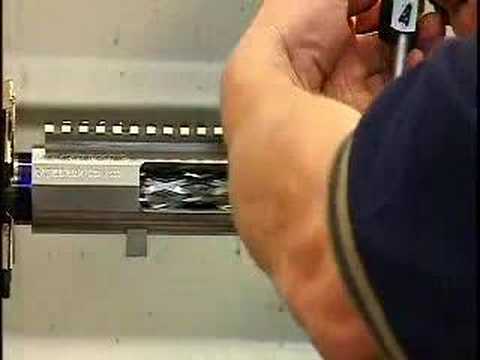
Jason also met up with Gordy Gritters, one of our recommended gunsmiths. As he did at last year’s SHOT Show, gunsmith Gordy was holding forth in the Grizzly booth, demonstrating chambering and barrel-fitting to a wide-eyed crowd of on-lookers. In cooperation with Grizzly Industrial, Gordy is working on a series of gunsmithing DVDs. These will be a far cry from the typical smithing videos that show you how to tap a receiver or install a buttpad. Gordy’s DVDs cover the advanced methods used to produce precision competition and varmint rifles. In one video segment, Gordy shows how to chamber and headspace a match barrel using a Grizzly G0509G 3-Phase Gunsmith Lathe. Below is a segment from the DVD showing Gordy fine-tuning the headspace as he fits a BAT Machine ‘MB’ action to the barrel. Working with precise indicators, you can see Gordy set the headspace to within a few ten-thousandths of an inch.
Ken Lunde — The Ansel Adams of SHOT Show
While Jason was roaming the floor, our friend Ken Lunde was doing his usual, masterful job of photographing new firearms at the show. Check out Ken’s 2009 SHOT Show Report. It has dozens of great images of guns on display in Orlando. A very gifted photographer, Ken is also a serious varmint shooter and the owner of multiple Cooper rifles (one of which was featured as Gun of the Week). Naturally, then, Ken’s “first stop was the Cooper Arms booth”. There, Ken got a great photo of a sectioned (cut-away) Cooper m21 action. This is a “must-see”. The Cut-away shows the inside of the chamber, tenon section, and even the inside of the bolt. It’s like having X-Ray vision. Click on the Larger Image button to see even more details.


Photo copyright Ken Lunde, used by permission.
December 27th, 2008
 The technical staff of MidwayUSA has created a series of useful “how-to” articles for the NRA’s Guns and Hunting website. These stories cover many basic operations that can be done in a home workshop without expensive tools. The articles available online include: The technical staff of MidwayUSA has created a series of useful “how-to” articles for the NRA’s Guns and Hunting website. These stories cover many basic operations that can be done in a home workshop without expensive tools. The articles available online include:
 Fitting a Recoil Pad Fitting a Recoil Pad
Scope Mounting Made Easy
Glass-Bedding a Rifle Stock (Part 1) | (Part 2)
Applying a Baked-On Gun Finish
How to Shorten and Crown a .22 LR Barrel
How to Install Sling Swivel Studs
Working with Polishing Stones
July 24th, 2008
Sightron just delivered to Jason Baney an SIII 6-24×50 Mildot, the latest in the new SIII line-up of side-focus, 30mm Sightron scopes. This follows on the hot-selling 8-32×56, which was the subject of our recent Scope Test. Jason will be testing the scope’s optical qualities soon and using it in an upcoming tactical match.
The new 6-24×50 scope is also offered with a fine cross-hair with target dot reticle. Both mildot and FCH versions are 14.96″ overall with a near-constant 3.6-3.8 inches of eye relief. Clicks are 1/4 MOA (15 MOA per revolution), and total elevation (and windage) adjustment is listed as 100 MOA (50 MOA on either side of center). That’s a class-leading amount of elevation which should make the new 6-24×50 popular with long-range shooters.

Shown above and below is the Sightron 6-24×50 Mildot, flanked by a Leupold 8-25×50 LRT and the Sightron 8-32×56. The controls on the 6-24 Sightron are identical to those of its big brother, but it is shorter, with a smaller objective. The shorter length and 50mm front objective allow a 2.8 ounce weight savings over the larger model (21.9 oz. vs. 24.7 oz.).


Below are reticle specs for Fine Cross-Hair + Target Dot Version

June 11th, 2008
Right now the March line of scopes represent the “state of the art” in high-magnification Benchrest scopes. They are unexcelled for brightness, sharpness, and perhaps most importantly, shot-to-shot reliability. Many top short-range benchrest shooters, who can’t tolerate even a tiny shift in the scope’s reticle moving the point of impact a few hundreths of an inch, are using the March 40X, 50X, and 60X, and now the new 10-60X Zoom.
CLICK HERE for complete MARCH SPECIFICATIONS


March scopes are made in Japan by DEON. In the USA they are sold exclusively by Kelbly’s. Jim Kelbly reports: “Some 40s and 50s are in stock now. The 10-60X zooms will be in stock in about two months unless the back order list gets longer as it is everyday. If you want a March scope you should not wait till they are in stock. We have a waiting list and you should get on it if you would like one in next two months.”
Current March Scope pricing:
40×52, 50×52, and 60×52 fixed focal length: $2100.00
10-60×52 Zoom: $2400.00


May 22nd, 2008
Jon Jackoviak of The Optic Zone reports that his first shipment of Bushnell Elite 6500 4.5-30×50 scopes has arrived. These come with a Fine Multi-X reticle and 1/4-MOA clicks, and are priced at $739.00. (A mildot reticle version may arrive in a few weeks.) Other dealers may be stocking this scope soon.

These scopes have been anxiously awaited, ever since they were announced at SHOT Show earlier this year. The 6.5x magnification range is the widest in the industry, and the scope’s 30mm main tube and side-focus parallax adjustment puts it in the running with Leupold’s 8-25×50 LRT. The new scope also features Bushnell’s patented, Rainguard® hydrophobic (water-repellant) lens coating. This coating prevents fogging by causing condensation to bead up into much smaller droplets.
The question mark remaining about the new Bushnell 6500 is the actual elevation range. The Optic Zone (and some other vendors) are claiming 80 MOA each of Windage and Elevation Adjustment, but the Bushnell website says there are only “50 inches” total Elevation on the 4.5-30×50. Right now we’re betting on Bushnell’s lower number, which is significantly less than the 75 MOA offered by the new Sightron 8-32×56, which we have confirmed.

|