Gun Digest will be producing a new quarterly print magazine, called Modern Shooter. It appears that the magazine focuses mostly on AR-platform rifles, AR accessories, and defensive shooting. The new magazine parallels the new Modern Shooter television show, which debuts on the Sportsman Channel next January. Look for Modern Shooter magazine on newsstands in April. The new magazine will also be available in digital format at www.gundigeststore.com.
Each issue of Modern Shooter will focus on a popular firearms category. For example, the premier issue explains how to maintain an AR rifle, and how to “Defend Your Castle” with an AR. This first issue features Richard Mann’s 12 training drills for AR-platform rifles, plus reviews of AR accessories: optics, sights, rails, and adjustable stocks. The premiere edition of Modern Shooter profiles Colt manufacturing, discussing the history of the company. Colt’s new LE6920MP-USA and AR15A4 rifles will be reviewed.
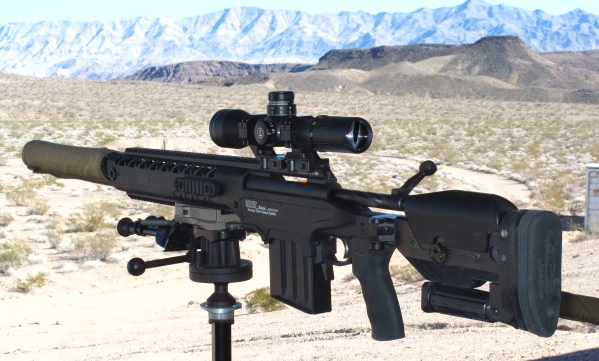
Ashbury Precision Ordnance (APO) has introduced a new line of modular SABRE chassis systems for Savage model 10 and 110 rifles. These chassis systems are completely modular, upgradeable, and reconfigurable. Sporter models start at $995.00. APO President Morris Petersen explains: “Our customers said ‘Hey, you need to build a line for Savages’. So we built a series of SABREs for Savage [short action and long action rifles]. We have a composite version (Sporter), the Super-Sport Alloy, and the Carbon Fiber version. They are all fully adjustable (as all of the SABRE Platforms are) so they can fit any type of shooter.” New model calibers include .308 Win, .300 Win Mag, .338 Lapua Mag in Sporter Composite and Quattro Alloy series with 5-round and 10-round AICS-type magazines.
New Savage SABRE Chassis System (SVS-A3, MOD-1 Alloy Series SuperSport)
APO has been selling the Savage SVL-A2 MOD-1 for the 110 BA for nearly 2 years. The new Savage 10 and 110 models will begin deliveries to APO dealers in the Spring of 2014. Sporter models will come first, followed by the Alloy Series.
APO Showcases the New SABRE Chassis Line for Savage 10 and 110 Rifles
Shooting with APO During Media Day at the Range
Media Day at the Boulder Pistol and Rifle Club was busy all day long. The APO crew let reporters test drive three precision rifles: an ASW .338 Lapua Magnum, a custom M700 .300 Win Mag, and the new Savage 10 FCP/SVS-A3. The winds kicked up quickly and reached 25 mph at times. But everyone still had fun.
Tab Gear Pollok Mats shown above with Tab Gear Bag below.
Here is a cool product we saw at SHOT Show, the TAB Pollok Shooting Mat. This 72″x30″ mat rolls up into a compact package about 8″ long and 4.5″ in diameter. Once rolled, the mat is secured with either Snap Buckles or D-rings (buyer’s choice). The bottom of the mat has a waterproof, urethane coating. You can stuff the mat inside your pack or strap it to webbing. For comfort, there’s a 12″-wide section of closed-cell foam in the area contacted by elbows. Loops are provided so the mat can be staked down in high winds. This is a good product for hunters or varmint shooters who need to take prone shots on the ground. The mat is light and easy to stow in a day-pack. The D-ring version is $65.00, while the buckled version is $72.50. Order through the Tab Gear Webstore. For more information visit TabGear.com.
Size is 72″ x 30″
Rolled up size approximately 4″ x 8″
Made from 1000 Denier Cordura Nylon
Webbing is all 1″ Milspec
Padded Elbow Rest Area
Stake-down loops on each corner
Watch Video Demo with Tab Gear Roll-up Shooting Mat
The “Top Guns” of the tactical shooting world will be heading to the PRS Finale this upcoming weekend. This event, the culmination of the 2013 Precision Rifle Series, runs December 6-8, 2013 at the K&M Precision Rifle Training facility in Florida. The PRS Finale is a unique championship-style match for the nation’s best tactical shooters, competing with bolt-guns in four divisions: Pro, Semi-pro, Military, and Law Enforcement. To learn more about the PRS, visit PrecisionRifleSeries.com. You’ll find a good article on the ModernServiceWeapons.com (MSW) website, that outlines PRS rules, spotlights PRS match venues, and lists recommended gear. READ MSW PRS Article.
Below is a great video covering the 2012 PRS Finale from start to finish. Held at the Rifles Only range in Texas last December, the 2012 event drew 55 of the nation’s top tactical shooters, who competed for glory… and thousands of dollars worth of cash and prizes. If you like the tactical game, you’ll love this professionally-edited video. Because this video is over 29 minutes long, we’ve provided a timeline so you can quickly find the highlights:
AUDIO: Click Button to hear Rich Emmons Talk about the Precision Rifle Series.
Video TimeLine:
Registration:1:56
Chrono Work: 2:25
Night Briefing: 3:10
Day One: 4:00+
Running Wire: 5:15
Prone Mover: 6:48
Tower Challenge: 7:12
Net Challenge: 8:43
Tri-Level Barricade: 11:28
1/4-Miler Berzerker: 11:52
Mound Shot: 12:57
Platform: 13:14
Platform Mover: 13:42
5-Target Speed Dot: 14:26
The Rat Trap: 15:00
End of Day One Brief: 16:42
Day Two Start: 17:22
Ace Challenge: 17:30
Know Your Limits: 18:54
Non-Supported Engage: 19:25
Culverts Only: 20:25
Awards Ceremony: 23:15
Sponsor Credits: 26:50
Interviews with Competitors: 27:24
How did the PRS get started? Rich Emmons, PRS President, explains that the concept was to “accumulate ten or so matches and create a point series” that would determine “who was the best [tactical] rifle shooter in the country”. Rich says that: “It’s a points race, but it’s also a big Finale that brings the ‘best of the best’ all together in one ‘monster’ match.” The winner of the 2012 PRS Series was Wade Stuteville, who also took first in the 2012 Finale. Runner-up in the 2012 Series (with a third-place Finale finish) was Team GAP’s Chase Stroud. Jeff Badley of Team GAP finished third in the PRS 2012 Series (and second in the Finale). SEE 2012 PRS Pro Shooters Equipment List.
How to Get Started in Tactical Matches
If this fun and challenging tactical discipline appeals to you, head out to the range and get involved. Begin with local matches and develop your skill set. You don’t have to invest in $6000.00+ worth of rifle and optics. GAP’s George Gardner says you don’t need ultra-expensive gear: “The most important piece of gear is yourself. A one-minute rifle [can] win these matches every time… so you’ve got to bring it. You don’t get good overnight, so for someone trying to get into this, just shoot — you’ve got to get out there and shoot. My advice would be to get out and shoot one of these matches. It doesn’t matter how you place — just do it. You have to have a starting point. If you don’t start, you’ll never finish.”
Harris swivel-model bipods allow you to adjust the cant of your rifle. This is useful if you are shooting on side-sloping ground. But what if you want to traverse from side to side, say to switch from one critter to another during a prairie dog safari? Well normally you would have to pick up the entire rifle and reposition it to the left or to the right. Now you have an option. The Upriser Arms Bipod Swivel Mount allows you to traverse your rifle left to right, without moving the bipod legs.
Video Shows How Traversing Bipod Mount Works, with Locking Plunger Knob:
This rugged, machined-aluminum bipod mount lets you swing your aim point from side to side without having to reposition the bipod. The rubber-padded Upriser Arms Bipod Mount accepts any bipod that attaches to a forward sling swivel stud. There is also a version that fits on tactical rails.
It is easy to engage or disengage traversing capability via the plunger knob on the front of the unit. When you pull down on the plunger (and twist to lock in “down” position), the rifle can swing smoothly on an internal, precision-bearing pivot. To go back to non-traverse mode, simply center the fore-arm and then twist and release the knob so the plunger pops up, securing the bipod in the “dead-center” position. Note: This unit adds approximately 1¼” to bipod height.
This $69.99 bipod mount comes with a 100% satisfaction guarantee when purchased through Brownells or Sinclair Int’l. User feedback has been positive. One purchaser wrote: “I take this [traversing bipod mount] on all my hunts and it has impressed me immensely. The part is built strong and has improved my shooting. It is really smooth, easy to use, and helps me stay on scope when my game is on the move instead of having a shaky swivel or having to move the whole bipod. I have recommended this product to all of my friends[.] — Adam, Missoula, MT
Many styles of bipods were used by F-TR shooters at the F-Class U.S. Nationals and World Championships recently held in Raton, NM. Most featured angled arms — either left/right arms or parallel pairs of arms on either side. With such designs, vertical height is controlled by adjusting the angle of the arms (and hence the distance between the feet). Widen the track and the gun goes down; narrow the track and the gun goes up. One bipod design, Dan Pohlabel’s FLEX Bipod, was very different than the norm. On the FLEX, there are no angled arms — the main blade is a solid piece of metal. Each leg has independent control for height via adjustable “feet” on either ends of the main piece. A ratcheting locking lever controls the cant.
Click photo below for full-screen version
Monte Milanuk, who tested an early version of the FLEX Bipod, explains: “The FLEX bipod is a very simple design — no Mariner’s wheel for vertical adjustment, no joystick head, no changing width as it goes up and down. And the FLEX bipod is very light (as are most, these days), but also very durable. An added bonus is that it breaks down very flat for airline travel. Once I take the feet off, remove the ratchet lever (with screw), the whole bipod nestles very nicely in the bottom layer of foam in my gun case (with cuts for the head etc. in the foam). If someone bashes the case hard enough to damage what is essentially a plate of spring steel, then I’ve got bigger worries.”
Monte likes the FLEX Bipod, but notes that it works best if you lean into the gun when shooting: “Not everyone wants a bipod that slides around like a hog on ice. Some people manage to get things tracking straight back and forth, almost like it was constrained by a front rest. Personally, I have a hard time doing that in a repeatable fashion. While the FLEX Bipod shoots quite well with a [loose] hold, it was designed for those of us who like to ‘lean’ into the gun a bit. Quite literally, the idea is that you get the feet to dig in slightly, and push against the rifle butt with your shoulder and the bipod will ‘flex’ or bow forward slightly. It is one of those things that sounds wonky until you try it. It may take a few times to get a feel for it, but once you do, it is surprisingly repeatable.”
The FLEX bipod’s designer, Dan Pohlabel, offers these instructions:
The bipod feet are shipped loose. Note there is a left foot and a right foot. Determine the balance point of your rifle and mount the bipod approximately two inches forward of that point. You may want to move it further forward after shooting. Experiment with its placement to minimize movement of the bipod. When setting up, first grab each foot and ‘dig’ them in to the shooting surface, dirt, gravel, grass, carpet — it doesn’t matter. After making sure each foot has a hold, raise or lower the bipod to your target and use the cant adjustment to level your rifle. Loading the bipod with your shoulder is the preferred method of position. For more info, visit Kreativ-Solutions.com or email flex-bipods [at] kreativ-solutions.com .
Bushnell Outdoor Products has introduced a new compact, roof prism spotting scope. The new Bushnell Elite Tactical 8-40x60mm Lightweight Modular Spotting Scope (LMSS) features a rubber-armored housing, ED Glass, and an optional (extra cost) H32 ranging reticle. A Picatinny rail is supplied that fits to the bottom of the LMSS.
The Elite Tactical 8-40x 60mm LMSS features ED Prime glass, BAK-4 prisms and fully multi-coated optics. The LMSS is available in both a standard (clear view) model or with the Horus Vision H32 reticle, a highly-regarded ranging reticle. With a minimum 8X magnification, and a maximum of 40 power, the LMSS is extremely versatile.
Sheathed in rubber armor, the LMSS spotting scope is fog-proof and meets IPX7 waterproof standards. It also features the water-repellant RainGuard HD lens coating, a patented Bushnell technology that we have found works very well.
The spotting scope includes a detachable picatinny rail, giving users the ability to quickly and easily mount the spotter to a firearm or tripod system. The Elite Tactical 8-40x 60mm LMSS is available for an estimated retail price of $1699.99 or $2,199.99 with the Horus H32 reticle.
Bushnell Bulletproof 100% Money-Back Guarantee
Every product in the Elite Tactical series is covered by the Bushnell limited lifetime warranty. The entire product line is also backed with the new one-year, no-risk Bushnell Bulletproof Guarantee. The 100% money-back guarantee is valid up until one year from date of purchase.
Some times nice guys do finish first. Our buddy Vu Pham, co-founder of the NorCal Practical Precision Rifle Club (NCPPRC) took top honors in the NCPPRC monthly tactical long range match on the 1000 yard range at the Sacramento Valley Shooting Center. Shooting his .260 Remington in a McMillan A5 stock, built by Spartan Rifles, topped with a Bushnell 4-30x50mm from CS Tactical, Vu beat a competitive field on a breezy day that saw the top 6 shooters separated by only 15 points. The Course of Fire had 27 of the 50 rounds shot from 800 to 1000 yards, where the fast-switching winds at 1000 yards were the deciding factor in the outcome. Vu tells us: “This LR Match win has eluded me for seven years now with these guys. I’ve been in the top five quite a few times, but never took home the win. Our matches are so close these days that it usually comes down to one or two bad trigger presses or ‘blown’ wind calls to separate the Top 10 shooters.”
NCPPRC long range tactical matches are held the first Sunday of each month, and are open to anyone 18 or older. No membership in any organization is required. Registration is at Range 12 of the Sacramento Valley Shooting Center from 07:30 to 08:30 in the morning. Cost is $25. To learn more about the match visit the NCPPRC Long Range Match webpage.
New Bushnell 4.5-30x50mm Tactical Scope
Vu Pham was running an all-new Bushnell front focal plane 4.5-30x50mm XRS scope with an amazing 6.7 times zoom range. This 34mm-tube scope features Bushnell’s G2 DMR Reticle. For a scope offering 30X magnification, is it compact at 14″ OAL (only 3/4″ longer than the HDMR). The elevation turret provides 10 mils per revolution with a zero stop. The scope sells for $2149.00 at CS Tactical.
Vu liked the new Bushnell scope and, obviously, it performed well for him. Vu tells us: “I believe this optic just hit the market… and is still pretty new. After having a few days behind the Bushnell XRS 4.5-30, I believe this optic will be a very viable option for the tactical precision rifle game. One of my favorite features of this scope is the mil-based G2DMR reticle. It makes holding over (and holding for windage) fast and easy. I will be doing a full test and evaluation in the next week or two after I get more time behind the optic.” Mike Cecil with CS Tactical provided the scope for this T&E.” Mike notes: “This is not the 4-30 tactical that’s listed as an XRS in the Bushnell online catalog — that’s a 30mm in the 6500 series line. This 34mm-tube XRS is a whole new animal!”
Mirage shields really do help you hit your targets more reliably. Novice shooters may wonder “Why does that guy have a venetian blind attached to his barrel?” Here’s why. As the barrel gets hot, the heat from the barrel rises up, cooking and distorting the air directly in front of the scope’s front lens. In essense, the rifle creates its own nasty visual mirage, right in the worst possible place. You can have a $4000.00 custom rifle and a $2500.00 scope but if the air in front of your scope is distorted, it can literally move your apparent point of aim on the target relative to your cross-hairs, causing you to miss the shot.
As our friend Boyd Allen observed: “Varminters should use mirage shields. Think about it. You’ve invested thousands of dollars in a fancy varmint rifle and quality scope. You may have spent hundreds of dollars traveling to the varmint fields and spent dozens of hours loading up your ammo. Without a mirage shield on your barrel, once that barrel gets hot, you WILL get mirage effects that can make you miss a shot.”
So, we’ve established you need a mirage shield to shoot your best when the barrel gets hot. You can make your own shield from a scrap blind, or purchase a ready-made plastic or aluminum shield. Sinclair Int’l offers 2″-wide, white mirage shields in 18″ (#06-7200) or 24″ (#06-7300) lengths for $4.95. Shotmaster 10X offers a variety of Patterned Mirage Shields, starting at $6.00. These include a Patriotic theme and even Tiger Stripes:
Camo Mirage Shields for Tactical Shooters and Hunters
Though tactical shooters should use mirage shields for long-distance, slow-fire stages, for the most part, tactical shooters don’t bother. One reason is that mirage shields CAN detach if you’re crawling around in the bush. However, for many tactical shooting situations, a mirage shield IS both practical and recommended. And now, for the first time, tactical shooters can get mirage shields in camo patterns to match their rifles. These camo shields should also be popular with varminters and long-range hunters.
At the request of AccurateShooter.com, Shotmaster 10X created a line of camo-pattern mirage shields (see above). Made of 2″-wide aluminum strips, these are available in 18″, 20″, and 24″ lengths. The camo-pattern shields come complete with Velcro attachments, and start at $8.50 for the 18″ length. The 20″ models are $9.50, while 24″ shields are $11.00.
SHOT Show 2013 kicks off in two weeks in Las Vegas. One of our top priorities is to talk with the bullet makers from Berger, Hornady, Lapua, and Nosler.
At SHOT Show 2012 we chatted with Berger Ballistician Bryan Litz about Berger’s popular line of Hybrid bullets. Berger now offers a wide range of Hybrids in multiple calibers and weights. In fact, for .30-Caliber shooters, Berger now offers six different Hybrid match bullets, with weights from 155 grains up to 230 grains. New .338 Cal Tactical Hybrids were released in 2012 and big .375 Cal, and .408 Cal Hybrids are in the works (read more below).
Bryan tells us: “The hybrid design is Berger’s solution to the age old problem of precision vs. ease of use. This design is making life easier for handloaders as well as providing opportunities for commercial ammo loaders who need to offer a high performance round that also shoots precisely in many rifles with various chamber/throat configurations.”
For those not familiar with Hybrid bullets, the Hybrid design blends two common bullet nose shapes on the front section of the bullet (from the tip to the start of the bearing surface). Most of the curved section of the bullet has a Secant (VLD-style) ogive for low drag. This then blends in a Tangent-style ogive curve further back, where the bullet first contacts the rifling. The Tangent section makes seating depth less critical to accuracy, so the Hybrid bullet can shoot well through a range of seating depths, even though it has a very high Ballistic Coefficient (BC).
In the video we asked Bryan for recommended seating depths for 7mm and .30-Caliber Hybrid bullets. Bryan advises that, as a starting point, Hybrid bullets be seated .015″ (fifteen thousandths) off the lands in most barrels. Watch the video for more tips how to optimize your loads with Hybrid bullets.
Berger is Developing New Large-Caliber and Hunting Hybrids
In related news, Berger announced that it will be offering a series of .338-caliber Hybrids. First Berger is reintroducing the Gen 1 .338 Cal, 300gr Hybrid bullet in Berger’s Hunting line. Berger will also be making a 250gr Hybrid Hunting bullet using the same type of jacket as the original Gen 1 300gr Hybrid bullet. In addition, Berger has released a .338 Cal 250gr Match Hybrid OTM Tactical bullet, along with a 300gr Match Hybrid OTM Tactical projectile.
More big bullets are on the drawing board. Our source says “.375 Caliber and then .408 Caliber are the next new calibers to be made at Berger”. These are in the design phase, and Berger needs to build a new machine, so the .375s and .408s will not be available until 2013 at the earliest.


 Gun Digest will be producing a new quarterly print magazine, called Modern Shooter. It appears that the magazine focuses mostly on AR-platform rifles, AR accessories, and defensive shooting. The new magazine parallels the new Modern Shooter television show, which debuts on the Sportsman Channel next January. Look for Modern Shooter magazine on newsstands in April. The new magazine will also be available in digital format at www.gundigeststore.com.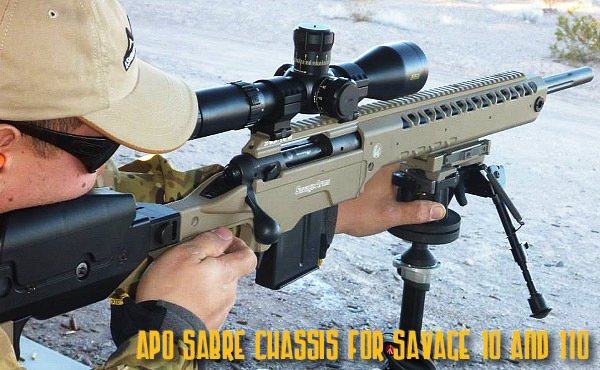




 Here is a cool product we saw at SHOT Show, the


 How to Get Started in Tactical Matches
 This rugged, machined-aluminum bipod mount lets you swing your aim point from side to side without having to reposition the bipod. The rubber-padded Upriser Arms Bipod Mount accepts any bipod that attaches to a forward sling swivel stud. There is also a version that fits on tactical rails.

 Many styles of bipods were used by F-TR shooters at the F-Class U.S. Nationals and World Championships recently held in Raton, NM. Most featured angled arms — either left/right arms or parallel pairs of arms on either side. With such designs, vertical height is controlled by adjusting the angle of the arms (and hence the distance between the feet). Widen the track and the gun goes down; narrow the track and the gun goes up. One bipod design, Dan Pohlabel’s


 Bushnell Outdoor Products has introduced a new compact, roof prism spotting scope. The new Bushnell Elite Tactical 8-40x60mm Lightweight Modular Spotting Scope (LMSS) features a rubber-armored housing, ED Glass, and an optional (extra cost) H32 ranging reticle. A Picatinny rail is supplied that fits to the bottom of the LMSS.

 Mirage shields really do help you hit your targets more reliably. Novice shooters may wonder “Why does that guy have a venetian blind attached to his barrel?” Here’s why. As the barrel gets hot, the heat from the barrel rises up, cooking and distorting the air directly in front of the scope’s front lens. In essense, the rifle creates its own nasty visual mirage, right in the worst possible place. You can have a $4000.00 custom rifle and a $2500.00 scope but if the air in front of your scope is distorted, it can literally move your apparent point of aim on the target relative to your cross-hairs, causing you to miss the shot.


