Among 7mm shooters at the F-Class World Championships (FCWC), Berger’s 180gr 7mm Match Hybrid Target bullet was probably the most popular projectile. And a fair percentage of shooters were running the older Berger 180gr 7mm Match VLD. However, there were some very good scores shot with another .284-caliber 180-grainer that you may not know about, namely Sierra’s 180gr MatchKing (item # 1980). When some FCWC competitors couldn’t find sufficient quantities of Berger Hybrids or VLDs, they sourced the Sierra 180s. We heard many positive reports about these Sierras. The guys who took the time to sort and tip the 180gr MatchKings seemed very happy with how these bullets shot. That is not surprising, given the 180gr MatchKing’s modern shape and high BC.
This slippery new 180-grainer from Sierra has a claimed 0.660 G1 Ballistic Coefficient (at 1650 fps and above). That is virtually the same as the claimed 0.659 G1 BC for Berger’s 180gr VLD and it is very close to the 0.674 stated G1 BC for the Berger 180gr Hybrid bullet. (Sorry we don’t have a G7 BC value for Sierra’s 180gr MK).
Sierra says it developed this bullet expressly for long-range competition: “The 7mm 180 grain HPBT MatchKing was created in response to requests from top-level F-Class shooters. Sierra has designed this MatchKing to provide a higher weight/higher BC alternative in our 7mm line. This bullet’s 12-caliber secant ogive and lengthened boat-tail make it the perfect choice for the discerning 7mm long range shooter.” Sierra recommends a 1:8″ twist for this projectile.
OK, perhaps now we have your attention. But you may be thinking, “What good does this do me if I can’t find any 180gr SMKs to buy?” Well friends, take heart. These bullets ARE available right now from major vendors. Powder Valley Inc. (PVI) has the Sierra 180gr 7mm MatchKings in stock in 100-count boxes for $33.97. And Midsouth Shooters Supply has the 180gr SMKs in stock right now in 100-count boxes for $34.60. Based on part numbers, we believe Midsouth also has 500-count boxes of the 180gr SMKs for $171.03.
Note: On Midsouth’s website, the 500-count box is listed as “7mm 180gr HPBT Match Pro-Hunter 500 Count”, but we believe it is the same MatchKing bullet, NOT a Pro-Hunter. Sierra does not produce a 7mm (.284 diameter) 180gr Pro-Hunter. Midsouth’s listed part number, 1980C, is the Sierra stock code for the 500-count box of 180gr 7mm MatchKings. Before placing an order, have Midsouth check the label on the boxes to confirm the inventory is correct.
In our Shooters’ Forum, there was an interesting discussion of the 6.5×47 Lapua case necked down to .22 caliber. Forum members discuss the pros and cons of a “22×47 Lapua” wildcat versus the classic 22-250 or a 22-250 AI.
Forum member SkeetLee asked: “I am considering a 22x47L or a 22-250 AI. I like the Lapua brass and I have heard some good accuracy reports from the 6.5×47 Lapua case whether it be chambered as a 6.5mm or necked down to 6mm or even 22 caliber. I don’t know too much about the 22-250 AI except that it’s pretty popular and it’s fast…. I don’t see much offered for reloading dies for the 22x47L. I know I can use a bushing die to neck size but what about full length sizing and seating dies? Does it make better sense to just go with the 22-250 AI?”
Respected Savage Gunsmith Fred Moreo, posting as “Medicineman”, offered this interesting advice: “Why not get the best of both worlds? I built a 22×47 Improved for my coyote gun. It is easy as just running the 22-250 AI reamer in .050″ short, and trimming the same amount off the dies. It is actually a little more efficient than the 22-250 AI. My best load for coyotes is a 65gr Sierra GameKing pushed by 39.4 grains of H4350 for 3750 fps. The Lapua brass will take more pressure than any 22-250 brass available, and last four times as long. The 65 Sierra GKs hit like a sledge-hammer, and were originally designed for shooting red kangaroos — they’re pretty tough from what I hear.”
Forum member Vic C. from Oklahoma has experience with the 22-250 AI, and has recently built a 22×47 Lapua. Comparing the 22-250 AI with the 22x47L, Vic tells us: “Accuracy should be very good from either caliber in custom barrels.” Vic continues: “I have two 22-250 AI barrels and a new 22X47 Lapua barrel that I’ve just started load testing. The 22X47 Lapua case capacity is slightly more than a standard 22-250 Rem and less than the 22-250 AI (fireformed). The advantage of the 22X47 L, of course, is the availability of Lapua brass. I have Remington, Winchester and Federal brass for the 22-250 AIs and prefer Remington which I’ve found to be quite good, but not up to Lapua standards of course.
Recently I’ve been shooting some reformed Norma 6XC brass in the 22-250 AI and find it to be of excellent quality. [Editor’s Note: Lapua also now makes 22-250 brass though it is currently hard to find.] Dies for the 22-250 AI are much easier to come by than for the 22X47 Lapua. For a coyote rifle, if you’re not saving the hides, I think either caliber would be a great choice. For a PD rifle I would go with the 22-250 AI because of much less work prepping the hundreds of cases needed.”
Rem 700 Action Sale
Need an action for your next varmint, hunting, or tactical rifle project? How about a brand new, short action Remington 700 receiver for $389.99? Sound good? Then visit Brownells.com to take advantage of this special offer. These .308-size-bolt, blued-finish Rem 700 actions have been marked down from $449.99 to $389.99 — a $60.00 savings. (Brownells also has Rem 700 Long Actions priced at $499.99). You should act soon, as supplies are limited. FFL is required for purchase.
Factory-Original, Current Production Actions with X-Mark Pro Triggers
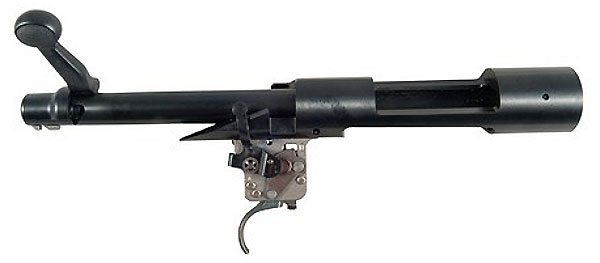
These receivers are from a current factory production run and meet the latest design specifications and quality control standards at the Remington factory. The $389.99 versions have a .308-Win diameter bolt face. Each is precision-machined from either carbon steel or stainless steel barstock for uniform strength, drilled and tapped for scope bases, and ready to accept your choice of barrel and bottom metal. Remington’s bolt assembly features two, up-front bolt lugs for tight lockup and reliable pressure retention, plus 2-panel checkering on the bolt handle. A rivetless, circlip-type extractor and spring-loaded plunger ejector provide positive case extraction. Each action is equipped with Remington’s new X-Mark Pro trigger for improved trigger pull and easy adjustment. The easy-to-reach, two-position thumb safety engages quietly, and allows unloading while in the “safe” position.
EDITOR’s NOTE: The following commentary by Brownells explains why the availability of new production Rem 700 actions is unpredictable, and why Rem 700 actions are a good choice for a rifle build.
Remington 700 Actions — Availability
It’s been many years since Brownells has been able to offer Remington 700 actions in its catalog. The problem has been unsteady supply: Remington Arms Co. will release actions to the commercial market only when it is sure it has enough supply to satisfy its own production needs for complete guns. Now, however, through a new arrangement with Remington, we are able to offer both Long and Short 700 actions (but supplies are limited).
Why The Rem 700 Action?
It’s simple. For 50 years, the Remington 700 has been the flagship of commercial rifle actions, providing proven reliability, fine accuracy, plus the largest selection of aftermarket bolt action parts in the industry. The Remington 700 action has proven itself for hunters and target shooters alike. The Rem 700 action still ranks as the number one choice of custom gun makers. Consequently, you will find a large selection of Rem-700 inletted stocks, along with aftermarket triggers, bottom metal, scope rails, and other accessories.
When They’re Gone…
There is, indeed, a limited number of commercial suppliers for these actions, and we are proud to be one of them. Although steadier now, the supply is still not certain enough that we’re ready to catalog them in our Big Book. We can only offer what we have in stock — and simply cannot guarantee permanent availability in the future. If they sell out, we all may be back to scrounging the gun shows and searching the Internet for a lucky deal on something used, or pirating the action from a brand new gun.
In a world where too many companies have down-graded product quality and durability, we’re lucky there are some fanatical Finns who build great stuff for shooters. For serious handloaders, the cartridge brass of choice is made by Lapua in Finland. Lapua brass lasts longer than most other brands of cartridge brass, with industry-leading case-to-case uniformity. How do the Finns manage to make such good brass and loaded ammo? This informative video provides insights into Lapua’s “passion for precision”. This “must watch”, 12-minute video contains a surprising amount of “hard” info on Lapua products, with segments showing Lapua brass and rimfire ammo being produced. Watch carefully and you’ll see most of the processes used for forming and loading brass. Another short segment shows a Lapua technician inspecting a case for run-out.
The video spotlights some of the important American and international records set with Lapua ammo. You’ll see top 300m and Olympic rifle shooters in action, and there are also short comments from many champions, including American Benchrest legend Tony Boyer.
NOTE: This is long video — you may need to let it buffer (pre-load) for 10 seconds before playback. If that doesn’t work, let the entire video load, then hit the replay button. Please enable Javascript and Flash to view this VideoPress video.
Yes, this video is first and foremost a marketing tool, but that doesn’t lessen that fact that it is fascinating to watch. Lapua’s video also does a great job making our sport seem important and exciting — NRA take note! We suspect many of you will want to save the video to your computer for future viewing. That’s easy to do. Just click on the link below. (Note: After downloading, we suggest that PC users play it back through Windows Media Player. You can then drag the Media Player corners to expand the video viewing size.)
The National Benchrest Shooters Association (NBRSA) has adopted new rules, loosening restrictions on the Sporter Class of benchrest rifles. Now a Sporter fore-arm may be any width (or angle), and the underside of the buttstock can have any angle. Previously, fore-arm width was limited to three inches, and the bottom of the buttstock had to be angled up. (NBRSA Rules will continue to require this “up-angle” geometry for all Light Varmint (LV) and Heavy Varmint (HV) rifles). In addition, the NBRSA opened the Sporter Class to any caliber “no larger than .308 Winchester”.
The idea behind these changes is to allow greater innovation in at least one class of benchrest bag guns, and to avoid “redundancy”. Currently a 10.5-lb Light Varmint can be shot as a Sporter, so long as the LV complies with caliber rules. For practical purposes, that meant Sporter Class was redundant with the Light Varmint Class, and there was no real reason for the Sporter Class to exist anymore.
The Sporter weight limit remains unchanged at 10.5 pounds (including optics). All current LV and Sporter rifles will remain 100% legal under the new rule, so no one is forced to go out and build a new rifle to shoot in Sporter class. But if you want to try a more radical stock design, now you have the opportunity to do so. Here is the text of the new rule:
NBRSA Rule Book (New Sporter Rule)
B. Definitions: 2. Equipment (d) Sporter Rifle
A Sporter Rifle is defined as any rifle having a safe manually and mechanically operated firing Mechanism and must not weigh more than 10.5 lbs, inclusive of sights. The stock can be flat, or convex, but not concave. The Forearm can be any width and have any angle. The butt stock can have any angle including a reverse angle, the barrel shall not be less that 18″ long forward of the bolt face and can be any diameter or configuration including a straight taper or a reverse taper. The Sporter Rifle can be no larger than .308 Winchester. Sporter Rifles do not have to conform to the Varmint Rifles diagram. All sand bag rules apply to the Sporter Rifle.
Bukys Explains the Thinking Behind the Sporter Rule Change
On Benchrest Central, leading benchrest shooter Gene Bukys discussed the new NBRSA Sporter Rule Changes: “[This] does not create a new rifle or an experimental class — it simply removes most of the restrictive rules from the existing Sporter class. Every existing LV rifle and every existing Sporter Rifle in this whole world is still legal, and competitive, under these changes.
My purpose in all of this is to make the Sporter class, and the LV rifle, no longer redundant classes, and to have a class where we can have some innovation in Benchrest. If there is a better stock configuration out there or a better barrel profile shouldn’t we benchrest shooters be the leading edge of this innovation? Benchrest used to be the leading edge of virtually all accuracy innovation. I’m not sure if that’s true anymore. I would like that to be… true again.
For right now, I don’t see this as making any huge radical changes to benchrest, but given time and a venue to work in (Sporter Class) there may be some really meaningful innovation that comes about. Let’s have some fun with this.”
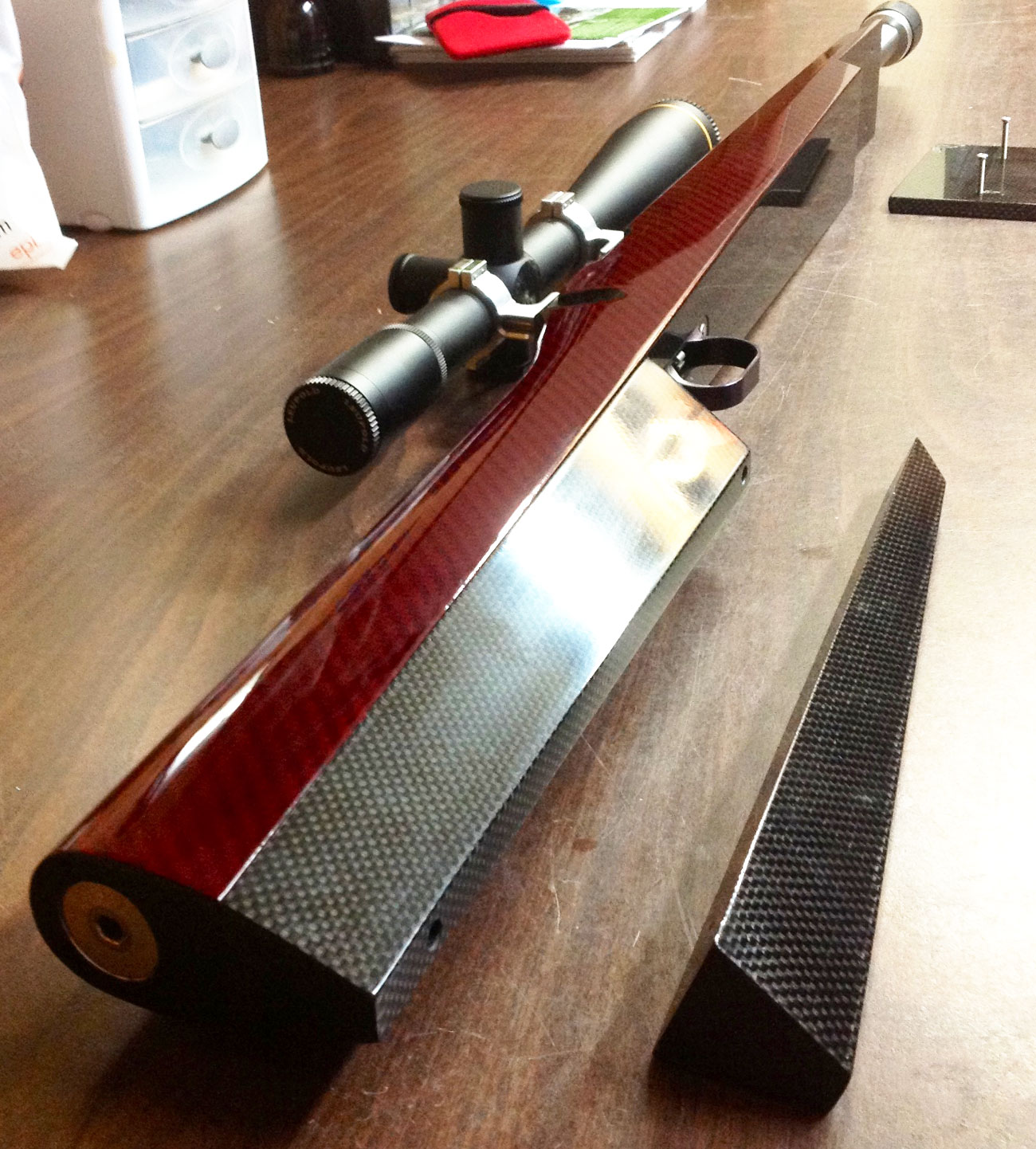
Gene Bukys Commissions New Convertible Sporter/LV Stock by Bob Scoville
Under the new NBRSA Sporter standards, stock designers/fabricators can now experiment with a wider variety of stock shapes and geometry. Gene Bukys commissioned a new stock from Bob Scoville that shows what can be done under the new liberalized Sporter stock rules.
Gene’s latest NBRSA Sporter rifle features a stepped forearm that can fit a 5-inch wide bag rider plate. In the rear, this stock can run different size/shape “keels” (buttstock underbellies). The larger keel, shown attached in the photos, exhibits the flatter angle now allowed under the new NBRSA Sporter rule. (In fact, this keel may have a slight reverse angle, i.e. lower in the front than in the back). At any time, this Scoville stock can be switched back to a 100%-legal Light Varmint configuration by: 1) removing the 5″ front bag-rider plate; and 2) changing to the smaller, up-angled rear keel piece.
About 24 miles east of Oceanside, California (near the Camp Pendleton Marine base) is the Pala Reservation. On that Native American land you’ll find a Casino Resort, plus an excellent shooting range. Each month, shooters come to Pala for the Varmint Silhouette Match hosted by the North County Shootist Association. Normally the match is held on the first Sunday of the month. But this October, the match will be held Sunday, October 20th. Matches start around 9:00 am and finish around noon.
Course of Fire: Five Yardages, 50 Critters
At five different yardages, ten steel “critter” targets are set as follows: 200 Meters – Field Mice (“pikas”); 300 meters – Crows; 385 meters – Ground Squirrels; 500 meters – Jack Rabbits; 600 yards – Prairie Dogs. The folks at Pala run a tight ship, cycling multiple relays efficiently, so everybody gets to shoot 50 targets (10 each at five different yardages), and the show is usually completed by 1:00 pm. A one-hour sight-in period starts at 8:00 am, and the match starts at 9:00 am sharp. Newcomers should definitely arrive no later than 7:45 am, because you may need the full sight-in period to get good zeros at all five yardages. CLICK HERE for full match INFO.
What to bring to Pala You’ll need an accurate rifle, plus at least 80 rounds of ammo (bring 100 rounds if you have no idea about your come-ups at these distances). You can shoot either rested prone (F-Class style), from bipod, or from a portable bench with front pedestal and rear bag. Most guys shoot from benches. Any rifle 6.5 caliber or under is allowed (max bullet weight is 107 grains). With no weight restrictions, any good varmint rifle, bench gun, or F-Class rifle can be competitive. Muzzle brakes are permitted. Spotter assistants are allowed, so bring a friend along — he/she can shoot in a different relay. Bring cleaning gear if your rifle can’t run 80+ rounds without losing accuracy. Pastry snacks are often provided, but bring water, and a lunch. You’ll spend some time in the sun helping to set targets, so bring a hat, sunglasses, and sunscreen.
Fun Weekend for the Whole Family There is a deluxe Indian Casino/Spa a half-mile from the range. So don’t hesitate to bring the wife. If she’s not a shooter, she can enjoy a fancy brunch or spa treatment while you’re having fun mowing down metal critters. Pala is a 30 minutes from the Pacific Ocean and beautiful beaches, so you can make this a weekend holiday for the whole family — kids love sand and surf.
Need Primers? Wideners.com has received a large shipment of Wolf Primers. Made in Russia, Wolf primers have worked well for many shooters. In many cartridge types Wolf primers have shown very good accuracy, and competitively low ES and SD. You should read our Shooters’ Forum threads about Wolf Primers to see if they would be a good option for you. We have generally heard positive feedback, with a few comments that Wolf primers may require a little more force to be seated properly, when compared to domestic-made primers. Current inventories are shown below.
Wolf Primers at Wideners.com (All In Stock as of 10/17/2013 at 10:00 am ET)
Prices do NOT include shipping and HazMat fees. Wideners says that up to 50,000 primers primers (That’s 10, 5000-count boxes) can go with one hazmat tag.
NOTE: Some shooters prefer the Wolf Small Rifle Magnum primers over the standard Wolf Small Rifle Primers because the cups are harder on the SR Magnum versions. Wideners does NOT currently have the Wolf Small Rifle Magnum primers in stock.
Product Tip from EdLongrange. We welcome reader submissions.
Forum member Kenneth Skorpen (aka “Sal”) from Norway sells a variety of shooting products through the www.Vertebrae.no website. Among the more interesting products offered by Skorpen are a series of muzzle brakes that can be installed on your barrel with no gunsmithing required — if the barrel tip has already been threaded. Crafted in Norway by Vektor Maskin, these muzzle brakes employ an internal inside/outside threaded bushing with a stop nut that fits on the barrel. With the threaded bushing in place, you simply screw the muzzle brake onto the bushing, align it so the ports are horizontal, then set the stop nut and set-screws. (Note, the set-screws touch only the bushing — they do not impinge on the barrel itself.) The video below shows how Vektor spin-on muzzle brakes are installed:
There are compact, standard, and large size Vektor muzzle brakes. Adjustment and installation is the same for all three sizes. The small, compact model, with two rows of opposed horizontal ports, is designed for .223-caliber rifles. The medium (standard) size, with either double or triple sets of opposed ports, is suited for 6.5mm or .308 calibers. The largest size, with three rows of large ports, is configured for the .338 magnum calibers. Skorpen claims that all three sizes of Vektor brakes can reduce felt recoil by 70% to 80% The brake itself is SIS1914-04 steel with an oiled zinc phosphate finish. The internal socket is AISI 303 (SUS 303) stainless steel.
If your barrel is already threaded at the muzzle, the Vektor brakes can be installed with no metal-work or gunsmithing required. Otherwise, you will need a gunsmith to thread the muzzle end of the barrel. The Vector bushings can be machined to a variety of thread types: 1/2″-20/UNF, 1/2″-28, 5/8″-18/UNF, 5/8″-24, m14x1, m14x1.5, m15x1, m16x1, m17x1, and m18x1. Just indicate the thread pitch you require when ordering.
How to Order Vektor Muzzle Brakes
Skorpen’s company, Vertebrae Sikkerhet & Teknikk, exports these Vektor brakes at reasonable prices. With one (1) supplied bushing, the compact brake is $131.43 USD, standard brake is $167.64 USD, and the large (magnum) brake costs $198.49 USD. Extra bushings are available for around $20.00. While the website lists .223, 6.5mm, .308, and .338 caliber brakes, Vetebrae can produce brakes in other calibers on request (add 5 days to delivery time).
You can also purchase Vektor muzzle brakes by emailing joachim [at] vertebrae.no. (It may be cheaper to order direct via email.) Just send an email stating your desired caliber and thread pitch. Normal delivery time to the USA is one to two weeks.
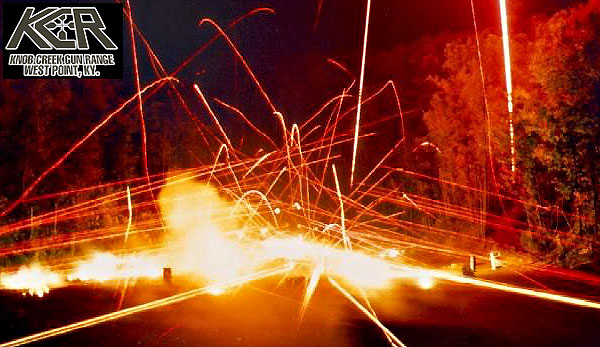
Twice a year, select-fire fans head to the Knob Creek Gun Range in West Point, Kentucky, for the nation’s largest Machine Gun Shoot. A bi-annual event, tThe Machine Gun Shoot is typically held on the second weekend of April and October. The latest Machine Gun Shoot took place October 11-13, 2013. The highlight of every Machine Gun Shoot is the Saturday Night event, where scores of guns send regular and tracer bullets down-range. This year, an estimated 1.25 million rounds were expended during the October Night Shoot.
This October, Top Shot Season 4 Champ Chris Cheng was on hand to record the firepower. Chris writes: “About an hour before dark, folks are out on the range setting up all sorts of explosives while a crowd builds, anxiously awaiting what we all know is coming. The lights go out, and the next thing you know machine guns are going off for almost 20 straight minutes. This year’s October 2013 edition did not disappoint. Check out the video below — other than the beginning, my favorite part is at the 5:50 mark [when a Mini-Gun opens fire from the right].”
Click Triangle to Watch Knob Creek Machine Gun Shoot Video (Warning: Very Loud Audio)
Sebastian (“Seb”) of SEB Coaxial wanted a compact, transportable reloading press he could take to the range. So he made one himself, and it’s a beauty. Seb tells us: “The press is made from 7075 aircraft-grade aluminum, and it measures 9.5″ tall x 4.2″ wide x 1.5″ thick when folded. The press features a bronze bushing surrounding the main stem and a stainless threaded insert on the top for the screw-in dies”. Seb included a positive ‘stop’ between the cam units and the bottom body of the press. The lever arm is easily removable, as is the grip shaft. Seb used a golf ball for the grip, noting that “it’s comfortable to grip and looks funny”. Spent primers exit through a hole in the back of the press, Seb explains: “The main column has a hole drilled on the back (at an angle), so when the primer is punched it passes through the hole and out through the back.”
We have to say, this guy is a wizard with design and fabrication. And if you’re wondering — yes Seb is considering putting this press into production if there is enough interest. He is also planning to craft a small tray to go with the press.


 OK, perhaps now we have your attention. But you may be thinking, “What good does this do me if I can’t find any 180gr SMKs to buy?” Well friends, take heart. These bullets ARE available right now from major vendors. Powder Valley Inc. (PVI) has the Sierra 180gr 7mm MatchKings in stock in 100-count boxes for $33.97. And Midsouth Shooters Supply has the 180gr SMKs in stock right now in 100-count boxes for $34.60. Based on part numbers, we believe Midsouth also has 500-count boxes of the 180gr SMKs for $171.03.
 Forum member Vic C. from Oklahoma has experience with the 22-250 AI, and has recently built a 22×47 Lapua. Comparing the 22-250 AI with the 22x47L, Vic tells us: “Accuracy should be very good from either caliber in custom barrels.” Vic continues: “I have two 22-250 AI barrels and a new 22X47 Lapua barrel that I’ve just started load testing. The 22X47 Lapua case capacity is slightly more than a standard 22-250 Rem and less than the 22-250 AI (fireformed). The advantage of the 22X47 L, of course, is the availability of Lapua brass. I have Remington, Winchester and Federal brass for the 22-250 AIs and prefer Remington which I’ve found to be quite good, but not up to Lapua standards of course.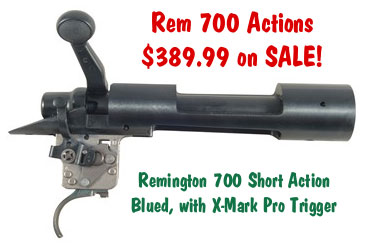

 In a world where too many companies have down-graded product quality and durability, we’re lucky there are some fanatical Finns who build great stuff for shooters. For serious handloaders, the cartridge brass of choice is made by
  On
On 




 You’ll need an accurate rifle, plus at least 80 rounds of ammo (bring 100 rounds if you have no idea about your come-ups at these distances). You can shoot either rested prone (F-Class style), from bipod, or from a portable bench with front pedestal and rear bag. Most guys shoot from benches. Any rifle 6.5 caliber or under is allowed (max bullet weight is 107 grains). With no weight restrictions, any good varmint rifle, bench gun, or F-Class rifle can be competitive. Muzzle brakes are permitted. Spotter assistants are allowed, so bring a friend along — he/she can shoot in a different relay. Bring cleaning gear if your rifle can’t run 80+ rounds without losing accuracy. Pastry snacks are often provided, but bring water, and a lunch. You’ll spend some time in the sun helping to set targets, so bring a hat, sunglasses, and sunscreen.
 There is a deluxe Indian Casino/Spa a half-mile from the range. So don’t hesitate to bring the wife. If she’s not a shooter, she can enjoy a fancy brunch or spa treatment while you’re having fun mowing down metal critters. Pala is a 30 minutes from the Pacific Ocean and beautiful beaches, so you can make this a weekend holiday for the whole family — kids love sand and surf.
 There are compact, standard, and large size Vektor muzzle brakes. Adjustment and installation is the same for all three sizes. The small, compact model, with two rows of opposed horizontal ports, is designed for .223-caliber rifles. The medium (standard) size, with either double or triple sets of opposed ports, is suited for 6.5mm or .308 calibers. The largest size, with three rows of large ports, is configured for the .338 magnum calibers. Skorpen claims that all three sizes of Vektor brakes can reduce felt recoil by 70% to 80% The brake itself is SIS1914-04 steel with an oiled zinc phosphate finish. The internal socket is