Here is some serious Saturday “gun glamour” from the folks at Star Shooter Precision, a bipod-builder and stock-maker based in Montreal, Canada. This stunning .308 Win F-TR rifle features a carbon-wrapped Star Shooter stock, angle-adjustable tubular bag-rider, star-shaped escutcheons, and a Kelbly Panda action. Up front is Star Shooter’s signature lightweight bipod.
Click Each Image for Large, Full-Screen Version
About the Rifle Builders Star Shooter Precision is a company located on the south shore of Montreal, Quebec, Canada. Fred Harvey is the designer. Fred says: “Our goal is to perfect the art of competition shooting the best we can with our custom bipods. The Star Shooter bipod is designed for shooters in F-Class competition, varmint hunting, load testing, tactical shooting and sighting in rifles.”
Rick Jensen, Captain of the U.S. F-Open Rifle Team, recently tested some of the new IMR 4451 powder. Rick and other team members were looking for a good powder that could replace Hodgdon 4350 which is difficult to obtain currently. The makers of IMR 4451 claim that it is not sensitive to temperature and that it delivers competitive accuracy. So far, Rick’s tests, done with a .284 Winchester and 180gr Berger Hybrids, appear to confirm those claims. Rick posts:
“I did a little informal powder comparison of H4350 versus the new IMR 4451. Rifle used was a Kelbly Panda with a 30″, 1:8.75″ twist 5R Bartlein barrel [chambered in .284 Win]. All charge weights were 50.0 grains using CCI BR2 primers. I was very impressed with this new powder and I believe it to be equal to H4350 as far as temperature sensitivity.
I did not test for accuracy but I will tell you my groups were pretty much equal between the two and all were in the .2-.3 MOA range. I will defiantly be shooting more of this powder in the weeks to come, assuming the supply chain will allow. It looks very encouraging to finally have a alternative to H4350 that we might actually be able to buy.”
Chronograph Results with Temps from 23° F to 101°
Here are chronograph results of a comparison test between IMR 4451 and H4350. Rick’s rifle was cleaned and allowed to cool between each test. Five fouling shots were fired before each test. Important: Note that for both Test #1 and Test #2, the powder order is reversed in the mid-temp fields (IMR 4451 first, then H4350). For the low and high temp entries, H4350 is listed first.
Here are the IMR 4451 fired cases, displayed Left to right, coldest to the hottest (in terms of case temp when fired). All charge weights were the same: 50.0 grains.
How would you like to “reach out and touch” someone 110 nautical miles away? Well America’s Navy may soon be able to do exactly that with an amazing new, high-tech weapon system. BAE Systems has developed (and successfully test-fired) an electro-magnetic rail gun that fires a 23-lb projectile at Mach 7 — (about 5300 mph or 7800 fps). This futuristic weapon can send its projectile 110 nautical miles (126 mi / 203 km), five times the range of the big 16″ guns on WWII-era battleships. This railgun has serious “knock-down” power — at Mach 7, that projectile carries a whopping 32 megajoules of energy. BreakingDefense.com says: “23 pounds ain’t heavy. But it sure hurts when it hits you going at seven times the speed of sound.”
Watch Video to See Navy Rail-Gun in Action:
The latest prototype of the railgun developed by defense contractor BAE, in conjunction with the Office of Naval Research, can accelerate a projectile up to Mach 7 within 10 milliseconds. The gun uses no gunpowder to generate propelling force. Compared to an item on a smaller scale, the railgun projectiles resemble crossbow darts, except they deliver such massive Kinetic Energy they don’t need to carry explosive ordnance. The railgun can strike targets 110 nautical miles away.
To prepare a charge, the ship stores electricity in the pulsed power system. Next, an electric pulse is sent to the railgun, creating an electromagnetic force accelerating the projectile. Because of its extreme speed, the projectile eliminates the hazards of storing high explosives in the ship. Each shot costs about $25,000 — but that’s cheap compared to the price of a missile.
“It’s like a flux capacitor,” chief of Naval research Rear Admiral Mathias Winter said in a video posted by Reuters Friday. “You’re sitting here thinking about these next generation and futuristic ideas, and we’ve got scientists who have designed these, and it’s coming to life.”
The Electromagnetic Railgun Innovative Naval Prototype (INP) was initiated in 2005. The goal during Phase I was to produce a proof-of-concept demonstration at 32 mega-joule muzzle energy, develop launcher technology with adequate service life, develop reliable pulsed power technology, and assess component risk reduction for the projectile.
Phase II, which started in 2012, advanced the technology to demonstrate a repeatable-rate fire capability. Thermal-management techniques required for sustained firing rates will be developed for both the launcher system and the pulsed power system. The railgun will begin testing at sea in 2016.
If you have been patiently waiting to acquire a Forster Co-Ax® reloading press, now’s the time to strike. These popular presses have been out-of-stock for months, but now Grafs.com has Co-Ax presses in the warehouse and ready to ship. Price is $319.99. That includes shipping charges (but there is a flat $7.95 additional handling charge per order).
If you aren’t familiar with the unique design and function of the Forster Co-Ax Press, watch this video by Forum member Erik Cortina:
Getting tutored by Olympic-class experts — now that’s a rare opportunity in the shooting world. ELEY Ltd., makers of precision rimfire ammo, has announced a special contest. Two lucky marksmen (one pistol shooter and one rifle shooter) will win the chance to train with the U.S. National Team at the Olympic Training Center in Colorado Springs. All ammunition for the one-day training session (in June, 2015) will be supplied by ELEY. (The winners must supply their own firearm.) The lucky winners will even be able to use the elite Olympic Training Center strength/conditioning facilities.
Training day sessions will be conducted by top coaches/atheletes from the U.S. National squad. Rifle coaches may include: Bryant Wallizer, Thomas Csenge, Michael Liuzza, Justin Tracy (2013 Prone National Champion), Dempster Christenson, Sarah Beard, Sarah Scherer, Emily Holsopple, Amy Sowash, Reya Kempley, and former National Rifle Coach Dave Johnson.
Pistol coaches may include: Keith Sanderson, Nick Mowrer, Jason Turner, Teresa Chambers, Morgan Wallizer (2004 rifle Olympian now training pistol), National Pistol Coach Sergey Luzov.
How to Enter Contest
For more information, or to enter the Training Day Contest, visit ELEY’s Training Contest Page on Facebook. NOTE — the deadline for contest entries is March 16, 2015.
Trijicon is out, and Magpul is in (as lead sponsor), so the much-ballyhooed NRA World Shooting Championship (WSC) will continue — at least for one more season. Held at the Peacemaker Nat’l Training Center in West Virginia, the inaugural 2014 “World Shooting Championship” left some folks shaking their heads after match directors made a few puzzling rule changes on the fly. In addition, it was hard to call last year’s NRA event a true “World Championship”. In 2014, almost all the WSC shooters were American, and, what’s more, a real ISSF World Championship was staged at the very same time last year in Granada, Spain. That important ISSF event in Spain had shooters from 40+ countries and many Olympic medalists.
Nonetheless, we’ll see more WSC action this fall. The 2015 NRA World Shooting Championship will be held September 24 – 26, 2015 at Peacemaker in WV. This will once again be a “big money” event, with a $200,000 prize table and $50,000 in cash awards. With a quarter-million dollars worth of cash and hardware prizes up for grabs, this is probably the richest shooting event in the world. And, as before, the match organizers will provide all the guns and all the ammo.
Competitors at the 2015 NRA World Shooting Championship will compete in three divisions: Pro, Amateur, and Junior. The event will feature twelve (12) stages drawing from a variety of firearm disciplines, such as Cowboy Action, F-Class, and Smallbore standing.
“We’ve created the NRA World Shooting Championship to be the top competitive shooting event in the world,” said NRA General Operations Executive Director Kyle Weaver. “Not only will providing all firearms and ammunition help level the playing field, but it will alleviate competitors needing to buy new equipment and simplify international and domestic travel.”
Here’s the best use of a convention center we’ve seen yet, thanks to the CMP. A section of the Phoenix Convention Center was transformed into an indoor shooting range for the 2015 JROTC Service Championship. This week (February 19-21), approximately 231 JROTC cadets will compete in Phoenix utilizing the CMP “Mobile Range”. This is a complete 60-station air rifle range that can be trucked from venue to venue and set up in a few hours. That’s pretty slick. Concurrently with the Phoenix event, USMC and NAVY JROTC cadets will be competing in Anniston, Alabama. Results from Phoenix and Anniston will be posted at on the CMP Competition Tracker webpage.
The CMP’s state-of-the art, mobile air gun range boasts 60 electronic MEGAlink targets produced in Norway. MEGAlink is the same target system used at CMP North and South stationary air ranges. The MEGAlink target “boxes” are each connected to a lift system than can raise and lower the targets for 3-position shooting. All of the components are designed so that the range can be quickly assembled by 3-4 workers. A large trailer can haul all 60 targets plus all the related monitors, computers, tables, chairs, and hardware in one load-out.
Man does not live by long-guns alone. We know that many of our readers own .45 ACP handguns and load for this extremely accurate “classic” cartridge. When selecting a powder for the .45 ACP, there are many good options. All the major powder manufacturers make propellants with appropriate density and burn rate characteristics for the .45 ACP. Popular powder choices include: AA #5 (Accurate Powder); Bullseye (Alliant); Clays, HP-38, and Titegroup (Hodgdon); VV N310, N320, N340 (Vihtavuori); and WW 231 and WST (Winchester). We’ve tried these powders in a variety of .45 ACP handguns. When we consider the factors that make for a good pistol powder, we think N320 is one of the best available propellants for the .45 ACP. Vihtavuori N320 is very accurate, it meters well, and it burns clean, with minimal smoke and flash. If you haven’t tried VV N320 yet, you should.
Pros/Cons of Different Powders for .45 ACP
This Editor has personally tried out eight or more different powders for the .45 ACP. Bullseye works but it is very dirty (both smoke out the barrel and sooty powder fouling on case). Though it otherwise burns clean, Titegroup leaves a singular (and nasty) high-temp flame streak on your brass that is hard to remove. AA #5 is a good choice for progressive press newbies as you use more powder so a double charge will (usually) be obvious. I like AA #5 but N320 was more accurate. Clays burns clean but some powder measures struggle with flake powders like this. WW 231 offered excellent accuracy and metered well, but it kicked out sparks with little pieces of debris that would hit me in the face. Who wants that?
I personally tried all the powders listed above with lead, plated, and jacketed bullets. After testing for accuracy, consistency, and ease of metering, I selected VV N320 as the best overall performer.
Vihtavuori N320
No powder tested was more accurate (WW 231 was equally accurate).
Meters very well in all kinds of powder measures.
Produces very little smoke from muzzle.
Does not put nasty burn streak on brass like Tite-Group does.
Low Flash — you don’t get particles and sparks flying out like WW 231.
Cases come out from gun very clean — so you can tumble less often.
Forum member and gunsmith Michael Ezell agrees that N320 is a good choice for the .45 ACP. Mike has also found that WW 231, while accurate, produces sparks and a large flash. Mike writes: “I first started using N320 after my first night shoot, while shooting IDPA/IPSC matches. It was astonishing how much of a fireball the WW 231 created. I was literally blinded by the flash while trying to shoot a match. As you can imagine, that didn’t work out very well. I went from WW 231 to N320 and never looked back…and the flash from it was a fraction of what a kid’s sparkler would give off. I have nothing but good things to say about [N320] after using both. Night shoots are a real eye-opener! When it comes to a personal protection… there is, statistically, a very high chance that if you ever have to use a gun to protect yourself or your family, it’ll be in the darkness[.] Being blinded by muzzle flash (and deafened by the noise) are things that should be considered, IMO.”
This Editor owns a full-size, all-stainless S&W 1911. After trying numerous powders, I found VV N320 delivered the best combination of accuracy, easy metering, consistency, clean burning qualities, and low muzzle flash. My gun has proven exceptionally accurate using N320 with bullets from 180 grains to 230 grains — it will shoot as accurately as some expensive customs I’ve tried. At right is 5-round group I shot offhand at 10 yards with my 5″ S&W 1911. The bullet hole edges are sharp because I was using semi-wad-cutters. Rounds were loaded with Vihtavuori N320 and 200-grain SWCs from Precision Bullets in Texas.
Horizontal Wind-Drift vs. Distance
OK, here’s a challenge question for you.
Let’s see if you get it right.
Q: If the wind is blowing 10 mph from 9 o’clock and if my horizontal wind deflection is 0.7 inches at 100 yards, what is the horizontal drift at 1000 yards?
You may be thinking, “Well, since the target is ten times more distant, the wind-drift should be around 7 inches, maybe a little more since the bullet will be slowing down.” That sounds reasonable, right?
WRONG.
As you move from near to far, the increase in lateral deflection (from a 90° crosswind) is (roughly speaking) a function of the square of the multiple of distance. If your target is two times farther away, you use the square of two, namely four. If your target is five times farther away, you use the square of five, or twenty-five. In this example, the increased wind drift (from 100 to 1000 yards) is at least 0.7″ times (10 X 10) — over 70 inches (give or take a few inches depending on bullet type). We call that the Rule of the Square. This Rule lets you make a quick approximation of the windage correction needed at any yardage.
Precision Shooting and the Rule of the Square
I was going through some back issues of Precision Shooting Magazine and found many references to the Rule of the Square. This made me curious — I wondered how well the Rule really stacked up against modern ballistics programs. Accordingly, I ran some examples through the JBM Ballistics Trajectory Calculator, one of the best web-based ballistics programs. To my surprise, the Rule of the Square does a pretty good job of describing things.
EXAMPLE ONE — .308 Win (100 to 400 Yards)
For a 168gr Sierra MK (.308), leaving the muzzle at 2700 fps, the JBM-predicted values* are as follows, with a 10 mph, 9 o’clock crosswind (at sea level, 65° F, Litz G7 BC):
Drift at 100: 0.8 MOA (0.8″)
Drift at 200: 1.6 MOA (3.3″)
Drift at 400: 3.4 MOA (14.4″)
Here you can see how the Rule of the Square works. The rule says our drift at 200 yards should be about FOUR times the drift at 100. It the example above, 0.8″ times 4 is 3.2″, pretty darn close to the JBM prediction of 3.3″. Quoting Precision Shooting: “Note that the deflections at 100 yards are typically a quarter of those at 200; lateral deflections increase as the square of the range”. Precision Shooting, June 2000, p. 16.
EXAMPLE TWO — .284 Win (100 to 1000 Yards)
For a .284 Win load, with the slippery Berger 180gr Target Hybrids, the Rule of the Square still works. Here we’ll input a 2750 fps velocity, Litz G7 BC, 10 mph, 9 o’clock crosswind, (same 65° temp at sea level). With these variables, JBM predicts:
Drift at 100: 0.5 MOA (0.5″)
Drift at 500: 2.5 MOA (13.3″)
Drift at 1000: 5.9 MOA (61.3″)
Again, even with a higher BC bullet, at 1000 yards we end up with something reasonably close to the 100-yard deflection (i.e. 0.5″) multiplied by (10×10), i.e. 50 inches. The Rule of the Square alerts you to the fact that the effects of crosswinds are MUCH greater at very long range. In this example, our JBM-calculated drift at 1000 is 61.3″ — that’s over 100 times the 100-yard lateral drift, even though the distance has only increased 10 times.
Note that, even with a 5 mph 90° sidewind, the “Rule of the Square” still applies. The 1000-yard lateral deflection in inches is still over 100 times the lateral deflection at 100 yards.
Why This All Matters (Even in the Age of Smartphones) Now, some would say, “Why Should I Care About the Rule of the Square? My iPhone has a Ballistics App that does all my thinking for me”. Fair enough, but knowledge of this basic Rule of the Square enables a shooter to make an informed guess about necessary windage even without a come-up sheet, as long as he knows the distance AND can fire a sighter at 100 or 200 yards as a baseline.
For example, if I see empirically that I need 1″ windage correction at 100 yards, then I know that at 600 yards I need at least roughly (6 x 6 x 1″) or 36 total inches of drift correction, or 6 MOA. (To be precise, 1 MOA = 1.047″ at 100 yards). I can figure that out instantly, even without a ballistics chart, and even if my Smartphone’s battery is dead.
*Values shown are as displayed on the JBM-figured trajectory tables. The numbers can be slightly imprecise because JBM rounds off to one decimal place for both inches and MOA.
The 2015 Berger Southwest Nationals are now history. It was a remarkable event, one of the best-run matches in the country. Over 350 shooters enjoyed generally fine conditions, with sunny skies and warm temps. Records were set, and there were some remarkable performances. The talk of the tournament was Derek Rodgers’s stunning F-TR score. Derek served notice that F-TR rifles can run with the F-Open rigs (at least when piloted by a wizard). Rodgers shot superbly to finish at 1234-56X, just two points shy of F-Open winner Bob Sebold, who shot 1236-63X. In fact, Derek’s score would have placed him third overall in the F-Open division, one point behind Christine Harris (1235-45X). In sling division, shooting a Palma rifle, Trudie Fay won with 1242-64X. Two points back (at 1238-66X) was last year’s sling winner Bryan Litz.
Brilliant F-TR performance by Derek Rodgers shocked some F-Open shooters…
F-Open Winner Bob Sebold loved the bling, but for Sling winner Trudie Fay, “Cash was King”.
The Harris Clan — Top Shots
Christine Harris was one of four talented Harris family members shooting at the event. Husband Scott Harris (1220-46X) took second in F-TR, and son Devon Harris (1203-29X) was F-TR High Junior. Twelve-year-old Adrian Harris also shot well, piloting a .223 Rem in F-TR. Adrian did great in the mid-range match, beating most of the adults. Dad Scott Harris says Adrian may have set an Age Group record during the SWN.
The Harris Clan: Scott Harris (2d Place F-TR), Christine (2d Place F-Open), and Adrian (600-yd High Junior)
INDIVIDUAL RESULTS
F-OPEN
F-TR
SLING
Bob Sebold – 1236-63X
Christine Harris – 1235-45X HW
Dan Bramley – 1230-54X
David Mann – 1229-57X HSR
William Wittman – 1227-48X
Derek Rodgers – 1234-56X
Scott Harris – 1220-46X
Matt Schwartzkopf – 1216-38X
Jade Delcambre – 1214-44X
Daniel Lentz – 1213-35X
Trudi Fay – 1242-64X P
Bryan Litz – 1238-66X
John Whidden – 1237-76X
Justin Skaret – 1235-63X P
Phil Hayes – 1234-56X
FINAL TEAM RESULTS
F-OPEN
F-TR
SLING
Third Gen. Shooting – 2551-100X
Lapua/Brux – 2544-108X
Spindle Shooters -2544-90X
Team Berger – 2542-92X
U.S. F-TR Team Blue – 2513-67X
Mich. Rifle Team F-TR – 2498-60X
Team Savage – 2492-68X
U.S. F-TR Development -2487-67X
U.S. Nat’l Tompkins – 2563-127X
Team Phoenix -2562 -122X
Team Challenger – 2555-112X
Two Worlds – 2550- 113X
The Guns of the Southwest Nationals
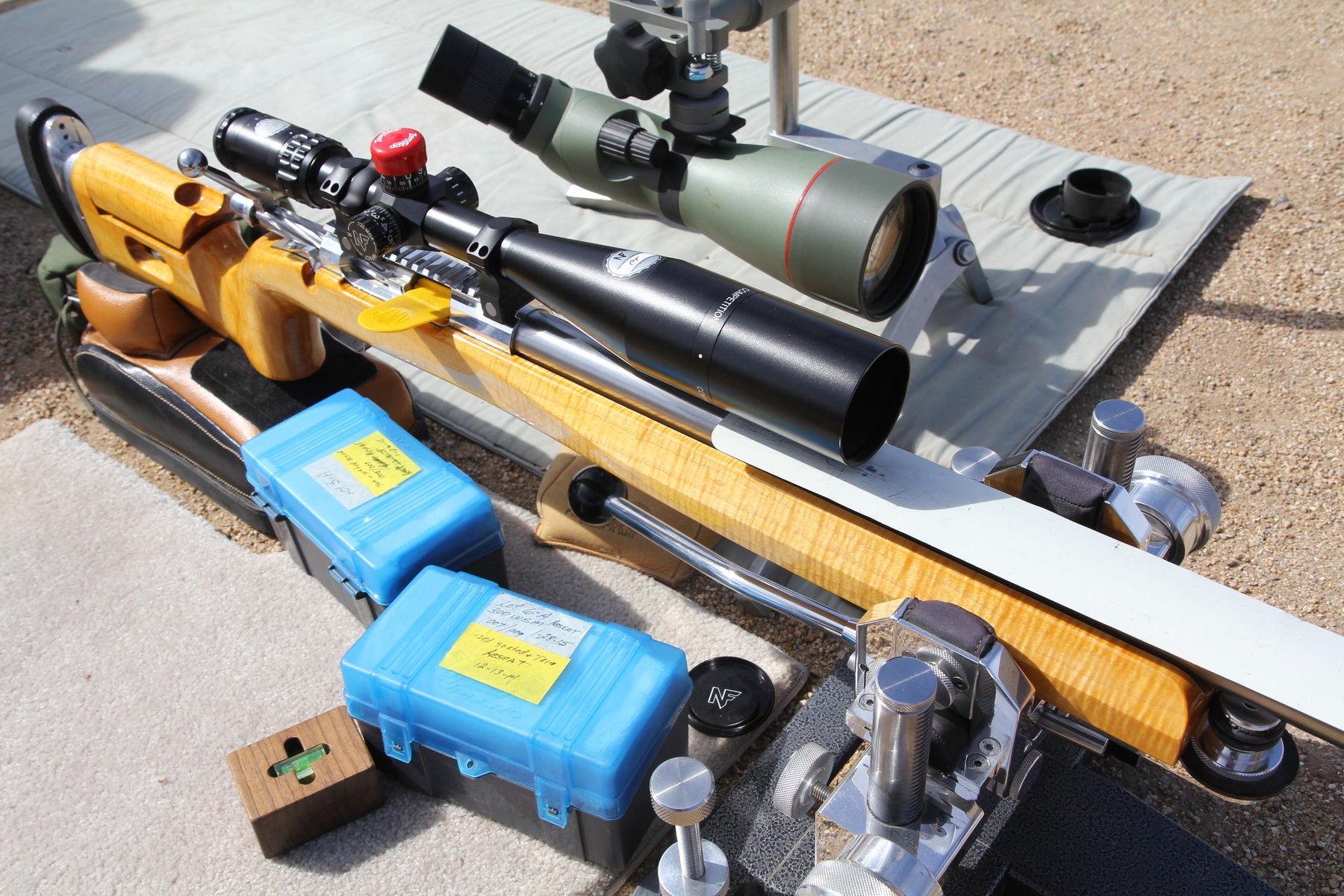
We saw some serious hardware on display at Ben Avery. Here is a beautiful maple-stocked F-Open rig. We believe this belongs to David Mann of Texas. This gun shoots as good as it looks. David Mann scored 1229-57X to finish fourth overall (and High Senior) in F-Open Division.
Click Photo to View Full-screen Version
Stunning Phoenix sunset after Sunday’s awards ceremony…
NOTE: Scores listed may be subject to final correction.


 About the Rifle Builders

 “I did a little informal powder comparison of H4350 versus the new IMR 4451. Rifle used was a Kelbly Panda with a 30″, 1:8.75″ twist 5R Bartlein barrel [chambered in .284 Win]. All charge weights were 50.0 grains using CCI BR2 primers. I was very impressed with this new powder and I believe it to be equal to H4350 as far as temperature sensitivity.


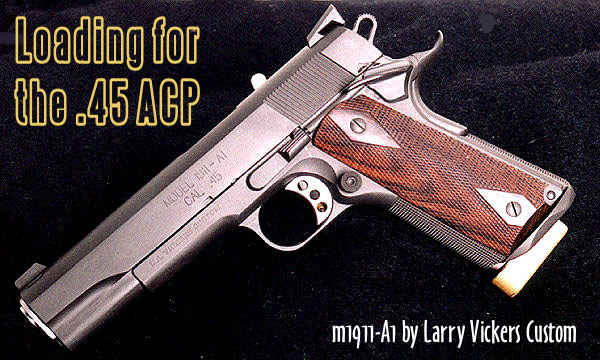
 Man does not live by long-guns alone. We know that many of our readers own .45 ACP handguns and load for this extremely accurate “classic” cartridge. When selecting a powder for the .45 ACP, there are many good options. All the major powder manufacturers make propellants with appropriate density and burn rate characteristics for the .45 ACP. Popular powder choices include: AA #5 (Accurate Powder); Bullseye (Alliant); Clays, HP-38, and Titegroup (Hodgdon); VV N310, N320, N340 (Vihtavuori); and WW 231 and WST (Winchester). We’ve tried these powders in a variety of .45 ACP handguns. When we consider the factors that make for a good pistol powder, we think N320 is one of the best available propellants for the .45 ACP.
  This Editor owns a full-size, all-stainless S&W 1911. After trying numerous powders, I found VV N320 delivered the best combination of accuracy, easy metering, consistency, clean burning qualities, and low muzzle flash. My gun has proven exceptionally accurate using N320 with bullets from 180 grains to 230 grains — it will shoot as accurately as some expensive customs I’ve tried. At right is 5-round group I shot offhand at 10 yards with my 5″ S&W 1911. The bullet hole edges are sharp because I was using semi-wad-cutters. Rounds were loaded with Vihtavuori N320 and 200-grain SWCs from
  Horizontal Wind-Drift vs. Distance
 Now, some would say, “Why Should I Care About the Rule of the Square? My iPhone has a Ballistics App that does all my thinking for me”. Fair enough, but knowledge of this basic Rule of the Square enables a shooter to make an informed guess about necessary windage even without a come-up sheet, as long as he knows the distance AND can fire a sighter at 100 or 200 yards as a baseline.