2020 has been a challenging year for the shooting sports. The CMP National Matches at Camp Perry and NRA National Championships at Camp Atterbury were cancelled due to Pandemic health concerns. Other major matches have been dropped from the calendar due to COVID-19. That’s why we are pleased to report that the IBS was able to conduct the 2020 Benchrest for Score 100/200 Meter National Championships. Attendance was solid, and competitors had a good time. Here is the match report from IBS member Todd Payseur.
IBS 100/200 Score Nationals at Mid-Carolina Gun Club
Report from Todd Payseur
The morning light breaks and shooters begin to set the final touches on their wind flags. Yes, it’s time for the Nationals! For what has been a crazy COVID-impacted year with a lot of cancelled matches, dates being changed, and some states still not able to hold matches, many shooters had cabin fever for the Nationals.
Several people had concerns beforehand with even having a match in August at the Mid-Carolina Gun Club because of how brutal our summers can be, but Mother Nature really blessed us with a calm weekend. Saturday started with overcast skies and projected highs around 87 degrees, which for August is almost unheard of. A few showers during the day, but nothing that really amounted to much or effected any of the relays. The winds stayed calm and 20 VFS shooters stayed clean and 2 Hunter guns went for 250-10X with Peter Hills creedmooring Ronnie Milford for the top 6-power at 100 meters. In VFS a familiar face, Wayne France shot a great 250-21X edging out rookie shooter Will Till at 250-20X.
Lisa Moore, grandmother of Gage and Remy Logsdon, prepares for the next relay with bolt removed.
This is Will’s second season in VFS and he has steadily improved. His second place finish at 100 meters is the start of many great finishes ahead for this young man. Speaking of young people, I’m pleased to say we had a great showing of Junior shooters this year and they all deserve to be mentioned. Defending rookie of the year Tori Allen (below right) was the top junior, followed by first-year rookie Remy Logsdon. Gage Logsdon rounded out the top three junior shooters. With such young talents coming into the benchrest game, we are very optimistic about the future of our sport.
Wayne France (Left) with 100-yard 1st Place Agg patch. Tori Allen (Right) was the top Junior shooter.
Sunday at 200 meters was the Lin Smith show! Lin shot both a Heavy and a Light Varmint rifle and turned in a very impressive 500-17X for the day. This fine work led him to two of the top three places at 200 meters and a first and fourth in the Grand Agg. I can’t say enough about how happy everyone is for Lin. He is one good man that those of us in the southeast region are honored to compete with and call a friend.
Grand Agg winner Lin Smith really put on a display of fine shooting this weekend.
In the 6-power Hunter Rifle class, Jim Cline turned in an impressive 249-5X at 200 meters for the win and that led him to his first place finish in the Grand Agg followed by a solid 245-4X by Ronnie Milford who took second-place in the Grand Agg.
Here are all the winners with their wood. Left to Right: Will Till, Gage Logsdon, Lee Martin, Tori Allen, John Bosley, Lin Smith, Peter Hills, John Ridgeway, Remy Logsdon, Wayne France, Jim Cline and Ronnie Milford.
CLICK Chart for Full Spreadsheet with Results for ALL Shooters
View back to the benches from the 100-meter targets at Mid-Carolina Gun Club. the Orangeburg swirl is lurking in those trees… just waiting to push bullets where they just shouldn’t go!
Great Competition, Great Food, Great Location
Overall we had a good turnout with 35 VFS guns and 8 V/VH guns on Saturday and 34 and 7 on Sunday. Competitors came from as far away as Maine and Michigan and everywhere in between. The food was outstanding with meals available both Friday and Saturday evenings at the range along with lunches Saturday and Sunday. One thing is for certain, if you enjoy great food and great company, then the IBS VFS circuit is something you should come check out, I’m sure you won’t be disappointed!
About the Mid-Carolina Gun Glub in South Carolina CLICK HERE for more information on the Mid-Carolina Gun Club in Orangeburg, South Carolina. This club boasts a great facility with plenty of room for cleaning/loading, plus a large, covered eating area with serving line. There is also parking for campers on the club property. I would like to personally thank Jim Cline and the whole Mid-Carolina Crew for another great weekend and cherished memory!
Jerry Powers from the Ashe County gang setting up a SEB MAX. SEB rests, both MAX and NEO, are very popular with score BR shooters.
Sierra BulletsBallistic Technician Gary Prisendorf has written a nice essay about how reloading can become a life-time hobby, a rewarding pastime that can bring together a father and son…
Memories of My Father — Reloading As a Life-Time Hobby
by Gary Prisendorf
For as long as I can remember I have been around reloading. I have tons of childhood memories of my father reloading and shooting. I remember how he would let me help him load his ammunition, by letting me clean primer pockets or wipe the sizing lube off of his cases. I really thought I was doing something. Well, I guess I was, I was spending quality time with my father doing something that would become a great hobby and eventually land me a great job working for Sierra Bullets.
If you are a reloader, teach someone. You may just give them a hobby for the rest of their life and who knows, you could help them find an enjoyable career, doing something that they love.
— Gary Prisendorf
I remember watching my father sizing cases on his Herters press, dropping his powder charges with a Belding & Mull powder measure and weighing powder charges with his Texan scales. Heck, I can even remember when he would buy powder at a local pawn shop, and they would weigh it out and put it in a paper sack. He would save his empty powder cans, wrap them with masking tape and write what the powder was on them with a black magic marker.
When I was in Junior High, I got my first shotgun, a 20 gauge Mossberg 500 and within a couple of weeks my father came home with a 20 gauge Lee Load-All and a pound of Blue Dot. He gave me a crash course on how to use it, and got me up and running with a couple of safe loads. I put a lot of shells through that old 20 gauge.
From that day forward I was hooked. If I got a new gun, I was loading ammunition for it. I don’t buy factory ammunition unless I just want to shoot it up so I can get some once fired brass. I reload everything that I shoot, except for rimfire stuff, and if I could figure out how to do that safely, I would probably load that too.
Through the years I have learned to appreciate things — such as once-fired military .30-06 cases that can be converted to obscure cartridge types. And I know the value of a five-gallon bucket of lead wheel weights that will be melted down and cast into bullets.
I remember finding 19 once-fired Norma 7.7×58 Arisaka cases laying on the ground at a public shooting range, and it was like Christmas came early. I must have looked for that 20th case for about thirty minutes, but I never did find it.
I can’t thank my father enough for getting me started in reloading, he gave me a great hobby, many wonderful memories and taught me the skills that gave me a career doing something that I love.
SUMMARY: Powder can have a very long shelf life. You need to watch for changes in smell and color. A reddish tinge, almost like rust on the powder, is a bad sign, as is a foul odor, not to be confused with a normal chemical smell. Either of these signs indicate it is time to dispose of your powder by means other than shooting.
Ever wondered about the stability of the propellants in your reloading room? There are some important things you should know about powder storage, to ensure consistent powder performance and safety. On its website, Western Powders (vendors of Accurate, Norma, and Ramshot powders) published an informative Q & A series entitled Dear Labby: Questions for our Ballistics Lab. Here are some excerpts that pertain to powder storage and shelf life. Worried that your powder may be too old? Western’s experts explain how to check your propellants for warning signs.
Proper Powder Storage
Q: I live in southern Arizona where it is very hot. I am told powders will become unstable if stored in an area not air-conditioned. My wife says no powder or primers in the house. Can powder be stored in a refrigerator? What about using a fireproof safe? I would appreciate your ideas. — M.C.
Lab Answer: SAAMI guidelines are pretty clear on issues of storage. They recommend storing smokeless powder in containers that will not allow pressure to build if the powder is ignited — ruling out gun safes and refrigerators.
In their original containers smokeless powder’s lifespan is quite long, even in your hot, arid climate, typically longer than the average handloader would need to store them. Stored safely in a garage or outbuilding, your powder should last years. If you see the powder developing a reddish tint, or giving off a foul odor, it is time to discard it.
Clumps in Powder Container
Q: I ordered some of your Accurate 1680 powder back about in December. I just now opened it … and it is full of clumps. My knowledge tells me that means moisture. Am I wrong? I just now broke the seal and it has been stored in a ammo can with desiccant packs around it and a dehumidifier running 14-16 hours a day. I can’t imagine this being my fault, if this does indicate moisture. I don’t know if the pink part on the label is suppose to be red or not, but it is definitely pink, so if it was red I am wondering if I was shipped an old container? I hope that this isn’t bad and I am stuck with it…
Lab Answer: All powder contains a certain amount of moisture. When the powder is stored or during shipping, it can go through temperature cycles. During the cycling, the moisture can be pulled to the surface and cause clumping. Clumping can also be caused by static electricity if too dry or the powder has limited graphite content. You can break up the clumps before metering and they shouldn’t be a problem. This will not affect the powder performance, so your product is fine. Accurate 1680 labels are designed in Pink. As a side note, specification for testing powder is at 70° F and 60% humidity.
Shelf Life and Packaging Dates
Q: Does powder ever get to old to use and what identifying marks does your company put on the canister for when it is made, You have helped me out a while ago when I asked about keeping my cowboy shooting under 950 fps and it works great less stress on the hand and the recoil is very minimum. — R.B.
Lab Answer: On one pound bottles, the number is on the corner in a silver box. If the powder was poured today, it would read 012815 followed by a lot number. The whole number would look something like 012815749. Eight pound bottles have a sticker on the bottom with an obvious date code. The lot number appears above the date.
At the request of our readers, we provide select “Deals of the Week”. Every Sunday afternoon or Monday morning we offer our Best Bargain selections. Here are some of the best deals on firearms, hardware, reloading components, optics, and shooting accessories. Be aware that sale prices are subject to change, and once clearance inventory is sold, it’s gone for good. You snooze you lose.
1. Midsouth — 105gr Nosler RDG Bullets, $119.99 for 500
⏺ High-BC 105gr 6mm bullets — Great for PRS and other gun games
If you shoot PRS, NRL, Silhouette, or any of the disciplines where high-BC 6mm bullets are popular, here is a great deal. Right now you can get 500 Nosler 6mm 105gr RDF (Reduced Drag Factor) bullets for just $119.99, a $55 savings off the regular price. That works out to out to just $24.00 per 100 — half the price of some of other 6mm match bullets. These are high-quality BTHP bullets with impressive 0.571 G1 and 0.280 G7 BCs. They will certainly do the job for PRS/NRL competitors running 6mmBRAs, 6 Dashers, 6mm GTs, and 6mm Creedmoors. Stock up now before the price goes back up.
2. Grafs.com — Universal Case Trimming System, $59.99
⏺ Indexes off shoulder — works on cases from .17 Rem to .460 Wby
If you’ve got an old fashioned manual case trimmer that is finicky to set up and slow to use, check out this new Universal Case Trimming System from Frankford Arsenal. This micro-adjustable tool indexes on case shoulders for precise trim lengths. The multiple collet system works with all shouldered cartridges from .17 Remington to .460 Weatherby. This works with almost every 1/2″ drill or drill press, and the system comes complete with collets and collars in a fitted storage case. If you need to trim a wide variety of cartridge types, this could really increase your efficiency. Originally $71.99, this Case Trimmer System has been discounted to $59.99 this week!
⏺ Excellent FFP scope with 5X Zoom Ratio and good controls — $399 savings!
Need glass for your varmint rifle? Here’s a great optics choice, hundreds off normal retail. This 5-25x50mm FFP Burris Veracity features 25 max power and 5X zoom range — ideal for the varmint fields. Multi-turn target knobs offer up to 15 MOA of adjustment per rotation with a handy zero stop. The large 50mm front objective brings in plenty of light. We like the reticle — the Progressively Thick Crosshairs (PTC) are thicker away from center, for ultra-fast target engagement. This is a very good optic that sells elsewhere for up to $899.00. This fully-guaranteed “blemished” model is a steal at $499.99.
⏺ Fine new press and all you need to reload — just add dies and components
The RCBS Rebel Master Reloading Kit features the new Rebel Press plus Uniflow III powder measure, pocket digital scale, hand priming trickler, powder funnel, fold-up hex key set, deburring tool, brush set, case loading block, spray lube, and a Speer Loading Manual. Midsouth’s Rebel Kit sale price is $379.99. But note — this Kit qualifies for a $75.00 RCBS rebate, lowering your net cost to $304.99 — a killer deal. Don’t delay — the RCBS Summer Rebate expires 8/31/2020.
5. CDNN Sports — Browning .22 LR Buck Mark Pistol, $269.88
⏺ Accurate .22 LR pistol with nice trigger — Save with Rebate
The Browning Buck Mark is a classic, and for good reason. These pistols are reliable, accurate, well-balanced, and have a good trigger. And now you can get one for under $270! CDNN Sports has the Browning Buck Mark UFX with 4″ Barrel on sale for $294.88, discounted from $379.99. But it gets better, this Buck Mark qualifies for a $25 Browning Bucks rebate, lowering your net cost to just $259.88. While we prefer Buck Marks with longer barrels, this is a killer deal for the basic 4″-barrel model.
6. MidwayUSA — Pro Series Competition Shooting Mat, $34.99
⏺ Very high quality mat for the price — big discount
The MidwayUSA Pro Series Competition Shooting Mat is now on sale for just $34.99, 36% off the basic price. The Pro Series mat measures a full 73.5″ x 35.5″. Zippered pockets on the front flap hold ammo or log books. And there are webbing “pockets” for bipod feet so you can pre-load your bipod with forward pressure. This quality mat boasts 0.35″ thick padding, multiple pockets, 6 grommets for staking, and a nice carry strap. It’s easy to transport, rolling up to about nine inches in diameter. User reviews of this $34.99 Shooting Mat have been very positive.
7. Amazon — RifleKuhl and BarrelCool Portable Cooling Units
⏺ Get Barrel Coolers for hot summer months, extend Barrel Life
In summer it can be tough to keep your barrel at moderate temperatures. But a handy, compact cooling fan device can really help. Two of the best barrel coolers on the market are the RifleKuhl from Magnetospeed and the original Barrel Cool from BarrelCool. Both of these units can double as empty chamber indicators, feature high power fans and can cool your barrel down to a decent, usable temperature in about 10 minutes.
8. Amazon — Tipton Universal Bore Guide, $12.95
⏺ Very inexpensive but versatile for full range of chamber sizes
Bore cleaning is critical for rifle longevity and accuracy. But you need a good bore guide to avoid potential damage to your chamber and bore. This handy Tipton Universal Bore Guide ships with multiple chamber adapters. Three tapered tips are included (small fits calibers .17-.24, medium fits most calibers .25-.30, and large fits most calibers over .30). This Universal Bore Guide includes an action collar for AR rifles.
⏺ Try before you buy — A-Tips offer high, consistent BCs
Many of our readers have been curious about Hornady’s A-Tip bullets, but don’t want to spend $75-$85 to try out a full box. In addition, many of the more popular calibers and bullet weights are sold out. Now, thanks to Midsouth Shooters, you can try an A-Tip Sample Pack to see if A-Tips work in your barrel. Choose from four options: 110gr 6mm; 135gr 6.5mm (back-order); 153gr 6.5mm; and 250gr .308 caliber. All Sample Packs contain 10 bullets, and cost $9.99 at Midsouth.
Running out of space in your gun safe? Here’s a clever product that will allow you to store more long guns in your current vault. The plastic Rifle Rods from Gun Storage Solutions slip in long-gun barrels and then grip the shelf above using Velcro pads. This allows you to nestle your rifles and shotguns much closer together than with the conventional racks provided with most gunsafes.
The handy Rifle Rods are offered in bright orange or basic black. We prefer the orange rods (shown above with the Velcro “receiver” shelf liner provided with the Rod Kit).
Rifles with narrow furniture (such as lever guns) can be placed very close together, saving lots of space. For benchrest or varmint rifles with wider fore-ends, you won’t benefit as much. Note that, in the photo above, all of the guns are fairly slim — none have wide fore-ends. Still we think these Rifle Rods could open up 12″ or more horizontal clearance in a medium-sized safe — that could easily allow you to store six (6) more guns in two rows, as shown.
Rifle Rod Kits Starting at $24.95
A kit with 5 Rifle Rods and loop fabric shelf liner costs $24.95 on Amazon.com, while the 10-Rod Kit with liner costs around $34.95. That’s a lot cheaper than buying a new safe. A six-pack of additional Rifle Rods costs $17.95 on Amazon. You can also purchases rods and fabric directly from Gun Storage Solutions.
WARNING: Always REMOVE Rod from barrel before taking gun to the range. Never place live ammunition in a gun with storage Rod in the barrel!
Product tip from EdLongrange. We welcome reader submissions.
This feature story comes from 5-time NRA National Long-Range Champion John Whidden. In this article John, who runs Whidden Gunworks, talks about the Palma rifle he has used at the Camp Perry and Camp Atterbury National Matches and other major competitions. This unique .308 Win prone rifle features a Barnard “P” action in a converted aluminum Anschutz “Precise” smallbore (rimfire) stock. The combo of Barnard action and Anschutz ergonomics is hard to beat, says John, who told us: “this is easily the best Palma rifle I’ve ever had.”
As a bonus, the Barnard “drop-in” required no modification of the Anschutz Precise stock. This means John can actually swap in his rimfire barreled action and shoot smallbore with the same stock.
Whidden’s Perfect Palma Match
Whidden secured his 2017 NRA Long Range National Championship title by shooting “clean” (not dropping a point) in the tough Palma competition. In the NRA Palma match, rifles must be .223 Rem or .308 Winchester, with metallic sights (no scopes). The match is conducted at three yardages, 15 shots at each distance of 800/900/1000 yards, with unlimited sighters at 800 and two sighters at 900 and 1000.
Whidden’s Championship-Winning Rifle
Since John captured his fifth Long Range crown with a superb performance in the Palma match, we thought we’d give readers a look at John’s very special Palma rifle. This unique .308 Win prone rifle features a Barnard “P” action in a converted aluminum Anschutz “Precise” smallbore (rimfire) stock. John told us this gun handles like no other: “After recoil, with this Anschutz stock, the sights fall right back on target — better than any other prone rifle I’ve shot”.
As a bonus, the Barnard “drop-in” required no modification of the Anschutz Precise stock. This means John can actually swap in his rimfire barreled action and shoot smallbore with the same stock.
Sling Rifle Evolved: The Ultra-Accurate Hybrid Palma Rifle
by John Whidden
The mental component of Long Range competitive shooting is always challenging but having tremendous confidence in the accuracy of your equipment is a huge benefit. There’s nothing to start your Palma match off well like knowing that you are shooting the most accurate Palma rifle you’ve ever owned.
After winning an NRA Long Range National Championship at Camp Perry, there are always plenty of questions about the equipment used by those at the top. Shooters are always looking to learn what is the best equipment at any given time so that when the time comes to spend our own hard earned dollars we can make the best choices. Even if you shoot an entirely different discipline knowing which manufacturers are making winning gear is very valuable.
Whidden .308 Winchester Palma Rifle
Action: Barnard “P” (three lugs, 60° bolt lift)
Barrel: Bartlein 32″, Light Palma contour, cryo-treated by 300 Below
Stock: Anschutz Precise aluminum smallbore stock, set up for centerfire barreled action
Trigger: Barnard Two-Stage adjustable
Whidden’s Wonder-Gun: German Stock, New Zealand Action, American Barrel
The Palma rifle I shot this year at Camp Perry is one that I have been super pleased with. I built the rifle early this year and the major components are a Barnard P action, Anschutz Precise smallbore stock, and Bartlein barrel. The caliber is .308 Win, as dictated by the Palma rules. Palma matches are fired from 800, 900, and 1000 yards utilizing iron sights only. No optical sights are allowed.
The Anchutz Precise stock is so well-designed that once I finished adjusting the details, I realized that my hold was about 1/3 smaller than with the stocks I shot previously. While in recoil the gun will track vertically and fall back down right on my own target just as it should. In the past, with my other Palma rifles, it was frankly sometimes a struggle to get them to settle back on target after a shot.
Whidden Gunworks has installed a variety of different actions in the Anschutz Precise stocks. Though the stocks are designed for the .22 LR caliber 2013 action rifles, we’ve successfully installed Barnard, Kelbly, Bat, Nesika, and Remington clone actions into them. The Barnard Model P makes a particularly simple installation because there is no modification necessary to the stock at all. A competitor can then shoot both his centerfire rifle as well as his smallbore gun in the exact same stock. The location of the trigger and bolt handle on the Barnard are positioned just right to make this work. Other actions do require at least some amount of modification to the stock, and we have found the Barnard works the best.
Barnard manufactures several models of actions as part of their lineup. All of the actions in the lineup use three lug bolts which give a shorter 60-degree bolt lift when opening and closing. All of the critical surfaces are machined after heat treating. This means that they are exceptionally true and square, more so than other actions. The Model P action is most familiar to Palma and F-Class shooters and are commonly seen on the firing line. The fact that Model P actions include an excellent two-stage trigger makes also the pricing very attractive.
Based on my previous excellent experiences, I selected Bartlein barrels for this rifle. When shooting internationally in the Palma matches we are restricted to 155 grain .308 bullets, but I made the unusual choice of a 1-10″ twist for these bullets. I’ve shot this fast twist for some years with the 155s with good success and it’s pleasing to know that Bryan Litz is finding benefits in some cartridges to shooting faster twist rates than we previously thought we needed. The chamber is the 2011 Palma and the barrel is a Light Palma contour finished at 32” length. The barrel was cryo-treated by 300 Below. The point of impact isn’t changed at all by barrel heating and the accuracy is incredible regardless of the temperature of the barrel. This can’t be said of all the barrels I’ve owned.
Get Your Own Wonder-Gun from Whidden Gunsworks
Like what you see? Whidden Gunworks can build you a rig like this, fitting a centerfire barreled action in the Anschutz Precise stock. John tells us: “Call us to find the current all-up price for a special rifle like this with Barnard or other suitable custom action, and Anschutz stock. We attempt to keep all of the parts except the stock in inventory, so lead time should be under eight (8) weeks.”
Stock Offers Great Adjustability One thing that is quickly noticed about the Anschutz Precise stock is its adjustability. The engineers did a very good job of allowing many of these adjustments to be made while in the shooting position, most notably the cheekpiece adjustments. When a shooter picks up a Precise stock for the first time they also notice how narrow the fore-end is. This really contributes to reducing the pain in the forward hand in prone when shooting with a sling. This stock is, by far, the most comfortable sling stock I’ve ever handled.
This rifle was very accurate right away and very comfortable to shoot. I’ve built some really good shooting Palma rifles but this is easily the best Palma rifle I’ve ever had. The Barnard action with its superb quality and excellent two-stage trigger has been the best choice I could have made. When you can go to the firing line knowing that you have the very best, the foundation for success has been set.
Sniper’s Hide offers a training class for novice shooters getting started in the PRS/NRL precision rifle game. This Precision Rifle Fundamentals course covers equipment selection, using shooting supports, rifle handling, SFP scope basics, and much more. The Precision Rifle Network video below covers a Sniper’s Hide class offered at the Sure Shot Range, near Vinton, Iowa. This video covers the class both in the field and in the classroom, and has interviews with participants.
One participant praised the course: “As a novice shooter, this [Sniper’s Hide Class] was probably the best money I have spent. It helped me learn all my equipment, how to use rear bags, how to figure out dope… and for the dollar, it’s the best money I’ve spent so far.”
Another student concurred: “I’ve been through all kinds of training, including the military and law enforcement, and I have to say the is one of the best, if not THE best class I’ve ever been in.”
Joel from the Precision Rifle Network stated: “At the end of four days, from two back-to-back precision rifle courses, we sent approximately 4500 rounds down-range. All in all, I would say this is some of the finest precision rifle training you can find ANYwhere.”
Another Video from Frank Galli of Sniper’s Hide
Frank Galli, aka “Lowlight”, is the head honcho of Sniper’s Hide. In the video below, Galli offers a series of shooting tips he calls the “Long Range Shooting W.T.F”. No that’s not what you think it is — no cuss words are involved. “W.T.F.” stands for Wind, Trajectory, and Fundamentals of Marksmanship. To shoot well, Frank says, you first must gauge the wind correctly. Second, you must know the trajectory of your load in your rifle — i.e. know your ballistics. If you want to hit a target at long range, you must start with a rock-solid zero, determine an accurate muzzle velocity, and know the Ballistic Coefficient of the bullet. Plug all that into a good ballistic program (along with elevation, temp, and air pressure) and you should have your point of impact (within a click or two) out to 1000 yards.
Watch Video for Tips about Wind-Reading, Ballistics, and Shooting Fundamentals:
The third element of “W.T.F” is “F” for “Fundamentals of Marksmanship”. This actually involves multiple factors — body position (relative to the rifle), finding your natural point of aim, proper head alignment behind the scope, pre-loading the bipod, breathing modulation, trigger control, follow through, recoil management and more. Frank addresses all these “fundamentals” in the second half of the video, starting at the 3:40 time-mark.
Books for Precision Rifle Training
Along with the Videos above, here are two recommended print publications. These both offer a wealth of useful information for PRS competitors and those interested in tactical/practical style shooting. In addition these books will also benefit hunters. They provide good tips on shooting positions, ranging, supports (bipod, tripod, bags) and more.
Practical Shooter’s Guide
Thinking of getting started in the Practical/Tactical shooting game? Looking for ways to be more stable when shooting from unconventional positions? Then you may want to read Marcus Blanchard’s Practical Shooter’s Guide (A How-To Approach for Unconventional Firing Positions and Training). Unlike almost every “how to shoot” book on the market, Blanchard’s work focuses on the shooting skills and positions you need to succeed in PRS matches and similar tactical competitions. Blanchard provides clear advice on shooting from barricades, from roof-tops, from steep angles. Blanchard says you need to train for these types of challenges: “I believe the largest factor in the improvement of the average shooter isn’t necessarily the gear; it’s the way the shooter approaches obstacles and how they properly train for them.”
Long Range Shooting Handbook
Ryan Cleckner’s Long Range Shooting Handbook is the best-selling modern book on practical rifle skills. A former U.S. Army sniper instructor, Cleckner is knowledgeable, and his text is well-organized and chock full of good information. You can view Sample Chapters on Amazon.com.
Ryan Cleckner’s highly-regarded Long Range Shooting Handbook is designed as an intro to important fundamental concepts such as MOA vs. Mils, External Ballistics, and Environmental Effects. Included are personal tips and advice based on Cleckner’s years of experience as a sniper instructor and special operations sniper.
The Long Range Shooting Handbook is divided into three main categories: What It Is/How It Works, Fundamentals, and How to Use It. “What It Is/How It Works” covers equipment, terminology, and basic principles. “Fundamentals” covers the theory of long range shooting. “How to Use It” gives practical advice on implementing what you’ve learned, so you can progress as a skilled, long range shooter. This book will benefit any long-range shooter, not just PRS/NRL competitors.
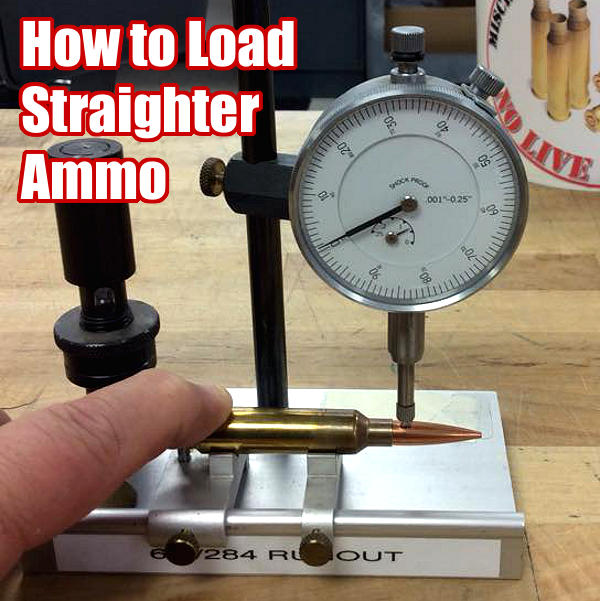
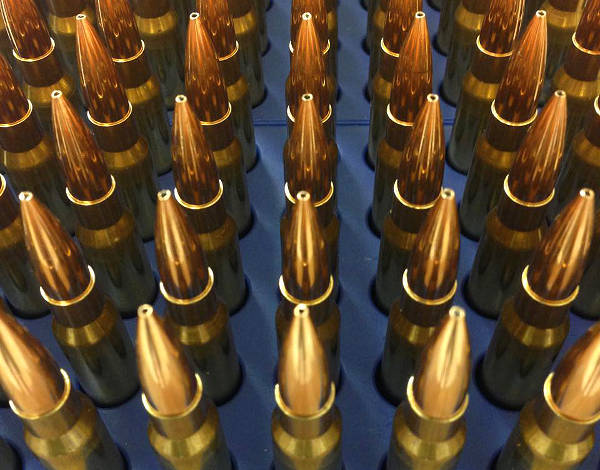
Each Wednesday, the U.S. Army Marksmanship Unit publishes a reloading “how-to” article on the USAMU Facebook page. A while back the USAMU’s reloading gurus looked at the subject of cartridge run-out and what can be done to produce straighter ammo. Tasked with producing thousands of rounds of ammo for team members, the USAMU’s reloading staff has developed smart methods for improving concentricity, even with budget=price dies. For other hand-loading tips, visit the USAMU Facebook page.
Minimizing Runout with Standard Seating Dies
This USAMU article explains how to set up standard bullet seating dies dies to minimize Total Indicated Run-out (TIR). The loading process is described using a single-stage press since most handloaders have one. A high-quality run-out gauge is essential for obtaining consistent, accurate results.
Having sized, primed, and charged our brass, the next step is bullet seating. Many approaches are possible; one that works well follows. When setting up a standard seating die, insert a sized, trimmed case into the shellholder and fully raise the press ram. Next, back the seating stem out and screw the die down until the internal crimping shoulder touches the case mouth.
Back the die out ¼ turn from this setting to prevent cartridge crimping. Next, lower the press ram and remove the case. Place a piece of flat steel (or window glass, which is quite flat) on the shellholder and carefully raise the ram.
Place tension on the die bottom with the flat steel on the shellholder. This helps center the die in the press threads. Check this by gently moving the die until it is well-centered. Keeping light tension on the die via the press ram, secure the die lock ring. If one were using a match style, micrometer-type seating die, the next step would be simple: run a charged case with bullet on top into the die and screw the seating stem down to obtain correct cartridge OAL.
However, with standard dies, an additional step can be helpful. When the die has a loosely-threaded seating stem, set the correct seating depth but don’t tighten the stem’s lock nut. Leave a loaded cartridge fully raised into the die to center the seating stem in the die. Then, secure the stem’s lock nut. Next, load sample cartridges and check them to verify good concentricity.
One can also experiment with variations such as letting the seating stem float slightly in the die to self-center, while keeping correct OAL. The run-out gauge will show any effects of changes upon concentricity. However, this method has produced excellent, practical results as evidenced by the experiment cited previously. These results (TIR Study 2) will reproduced below for the reader’s convenience.
First, however, let’s examine run-out figures of some factory-loaded match ammunition. This should give readers who are new to TIR gauges some perspective about the TIR ranges one might encounter.
TIR Study 1: 50 rounds Lake City M852 Match 7.62mm
(168 gr. Sierra MatchKings)
0.000” – 0.001” = 2%
0.001” – 0.002” = 30%
0.002” – 0.003” = 16%
0.003” – 0.004” = 22%
0.004” – 0.005” = 14%
0.005” – 0.006” = 14%
0.006” – 0.007” = 0%
0.007” – 0.008” = 2%
TIR Study 2: 50 rounds of .308 match ammo loaded using carefully-adjusted standard dies, vs. 50 using expensive “Match” dies from the same maker.
Standard dies, TIR:
0.000” — 0.001” = 52%;
0.001”– 0.002” = 40%;
0.002”– 0.003” = 8%.
None greater than 0.003”.
Note: both samples were loaded using the O-Ring method, i.e. with a rubber O-Ring placed under the locking ring of the Full-length sizing die to allow that die to float.
These tips are intended to help shooters obtain the best results from inexpensive, standard loading dies. Especially when using cases previously fired in a concentric chamber, as was done above, top-quality match dies and brass can easily yield ammo with virtually *no* runout, given careful handloading.
We’re told the 6.5 Creedmoor is now the best-selling chambering in new bolt-action rifles sold in the USA. Accurate, versatile, with moderate recoil, the 6.5 Creedmoor serves hunters, paper punchers, and PRS shooters equally well.
As part of its online Load Data Center, Nosler offers very complete load data for the popular 6.5 Creedmoor cartridge. This medium-sized cartridge has become one of the most popular chamberings for tactical and PRS shooters. The 6.5 Creedmoor combines excellent accuracy, good mag-feeding, good barrel life, moderate recoil, and reasonable component cost. That’s why this cartridge has caught on quickly. GET ALL 6.5 Creedmoor Load Data.
How does barrel length affect 6.5 Creedmoor Muzzle Velocity? CLICK HERE for RifleShooter.com barrel cut-down velocity test.
According to the Sierra Load Manual: “Developed in 2007 by Dennis DeMille and Dave Emary, the 6.5 Creedmoor is a shortened and improved 30 TC cartridge case that was inspired by the .308 Winchester design. This short action design was created to maximize case capacity and a wide range of loading lengths, while still fitting in standard short action magazines. With the correct twist barrel, the versatile 6.5 Creedmoor can take advantage of the wide range of bullet weights available in 6.5 mm (i.e. .264 caliber). Reloaders should keep in mind that the 6.5 Creedmoor works best with medium to medium-slow powders such as H4350, Varget, Win 760, and RE-17.”
Click Each Image to Load PDF File for Listed Bullet Weights
The inaugural Hornady Precision Hunter Steel Challenge took place in Colorado August 8 and 9. This unique competition involved lots of hiking with various shooting positions in challenging natural terrain. The unique match was hosted at the Cameo Shooting Complex near Grand Junction, CO.
There were 135 registered competitors — quite a turn-out for a physically demanding match in a fairly remote location. Congrats to Heavy Class and Overall Winner Brian Black who topped the field with 140 Match points (100% of possible). Brian shot a 6.5×47 Lapua with Berger 6.5mm 140gr Hybrids. Brian’s winning rig featured a Lone Peak Arms Fuzion action, Benchmark barrel, and XLR Element chassis. Behind Brian was Serger Ducourneau in second with 134 points (95.71%). Eric Anderson finished third overall with 129 points (92.14%).
Overall and Heavy Class winner Brian Black (center) with trophy.
The Hornady Precision Hunter Steel Challenge tests a rifleman’s fitness and skills as marksman and hunter. The stages were blind with a 4-minute time limit to move to the shooting area, locate, range, and engage targets. Shooters could choose between two rifle weight classes (light or heavy) and had to meet a minimum power factor cartridge requirement that helped even the playing field. The match featured a diverse course of fire with a good mix of prone and natural terrain shooting positions. Look at the images — this was no ordinary shooting match, and natural terrain features were employed much more than at any PRS match.
Hornady wanted to thank Match Director, Scott Satterlee, the Cameo Shooting Complex and all of the volunteers and sponsors that made this match possible.




 One thing that is quickly noticed about the Anschutz Precise stock is its adjustability. The engineers did a very good job of allowing many of these adjustments to be made while in the shooting position, most notably the cheekpiece adjustments. When a shooter picks up a Precise stock for the first time they also notice how narrow the fore-end is. This really contributes to reducing the pain in the forward hand in prone when shooting with a sling. This stock is, by far, the most comfortable sling stock I’ve ever handled.