Sunday GunDay: Oregon Sage Rat Safari — 20 VarTarg & .17 HMR
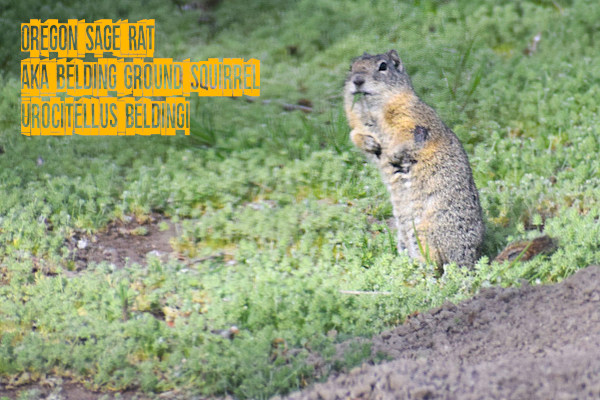
Our AccurateShooter.com Forum has an active section for hunting and varminting. One of the notable varminting threads in recent weeks was an account of a varmint hunt in Eastern Oregon. Forum member “Rick in Oregon” spent a week this past April nailing small varmints — known as “Sage Rats”, aka Belding ground squirrels (Urocitellus beldingi). Rick did most of his shooting with his handsome Cooper M38 rifle chambered for the 20 VarTarg wildcat, which is basically a .221 Fireball case necked down to .20 caliber. Here is Rick’s report on his successful Sage Rat Safari.
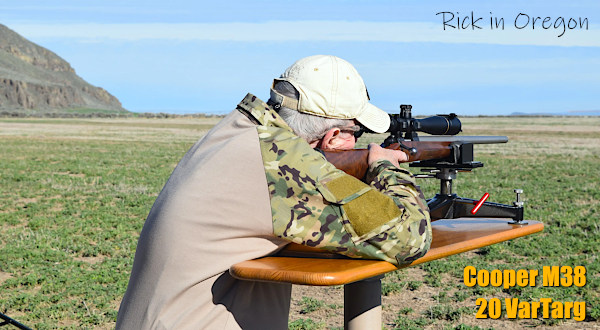
Forum member Rick in Oregon with his 20 VarTarg Cooper M38 rifle.
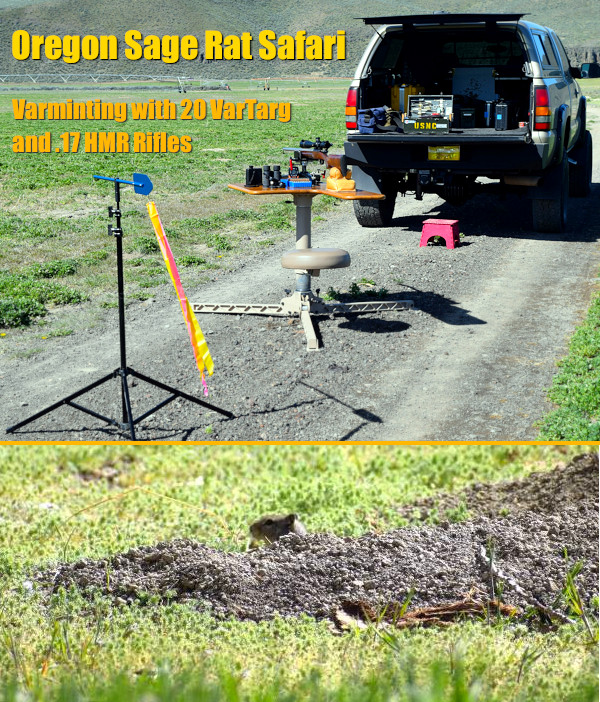
We just returned from a week-long sage rat shoot in the Orygun outback. Decent weather this time, no blowing snow, just plenty of sunshine and our buddy “Skippy the Flying Squirrel” to enhance our shooting enjoyment. Our rancher host refuses to use poison, so he welcomes us with the ability to hook our trailers to power and water, and a nice place to park them while we rid him of his sage rat problem. A true win-win situation for all. Out of respect for the rancher, we did not drive out into the fields. Instead we parked on the perimeter two-tracks, placed our portable benches, set up our windflags, then had at it.
For shooting these small critters, you need accurate rifles that shoot less than 0.5 MOA. The sage rats are small and they may be partially concealed inside their relatively flat mounds. I took my custom M700 .204 Match 1:11-twist rifle, but there were no long range opportunities to justify burning over 25 grains of powder, as no elevated positions were available to take advantage of it. Shooting from the flat terrain gets much mirage, making any hits past 350 yards virtually impossible, so my 20 VarTarg got the most action out to 350 yards. Then inside of 200 yards I used my Anschutz 1715D HB in .17 HMR which did a very fine job of rat launching.
Rick is a definite 20 VarTarg devotee: “For years I thought my .223 AI was the ideal Prairie Dog cartridge. It may well be, but for sage rats, the 20 VarTarg has few equals when efficiency and performance is considered. This makes 15 years of 20 VT sage rat medicine for me, and I do not see any changes on the horizon. It also works quite well on rockchucks!”
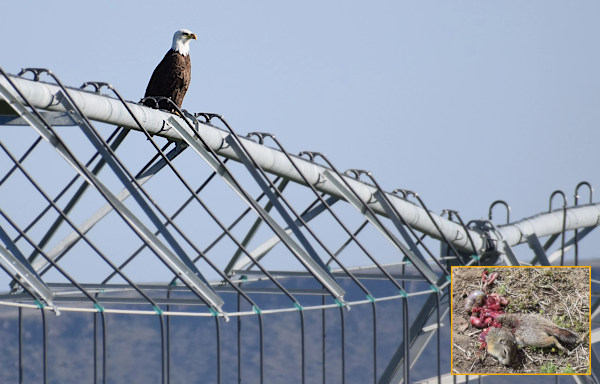
As usual when the “Eastern Oregon Raptor Feeding Society” shows up, so do the raptors. In fact bald eagles, golden eagles, hawks, and ravens all feast on the generous sage rat meals we provide. The terminal effects of the .20-Cal 32-grain bullets can’t be overstated. It sure makes it easy for the birds to do their thing. CLICK HERE for dead critter “blood and guts” close-up photo.
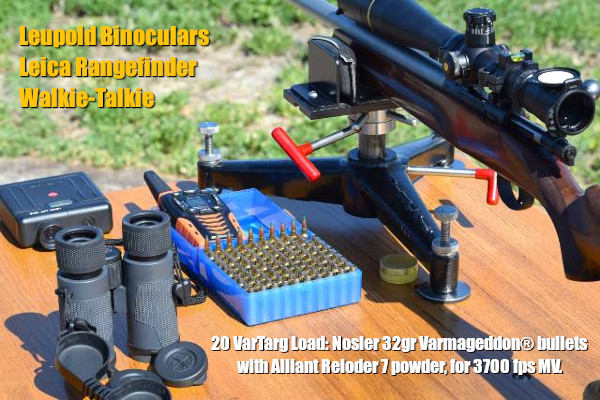
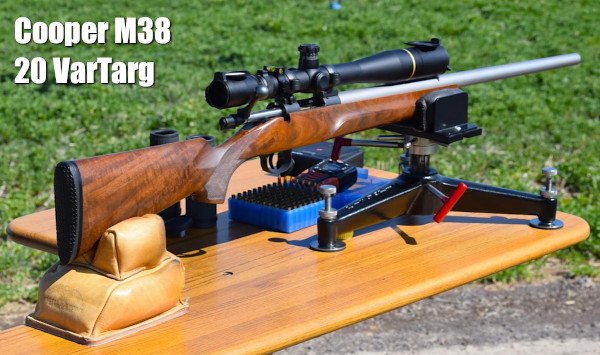
Above is Rick’s Cooper M38 chambered for the 20 VarTarg wildcat on his rotating field bench. Rick tells us: “My Cooper M38 VR 20 VarTarg is basically a stock offering from Cooper Firearms of Montana with a Jard 10 oz. trigger added. The barrel is a 1:12-twist 24″ Wilson chambered by Cooper. The bedding was perfect so I have not touched it in that regard.”
Rick’s load with Nosler 32gr Varmageddon bullets runs 3680 FPS — wicked fast. He loads Alliant Reloder 7 in Lapua or Nosler brass with Rem 7½ primers. Rick says this rig is VERY accurate, delivering groups in the sub-quarter-MOA range.
The scope is a Leupold VX3 6.5-20x40mm LR, with Varmint Hunter Reticle, factory-installed M1 elevation turret, EGW scope level, carried in Leupold rings. Rick notes: “My come-up chart in the scope’s ocular cover was developed using Sierra Infinity ballistics software based on my actual load. The chart has proven to be deadly spot-on at all suitable ranges I encounter the rats and rockchucks.”
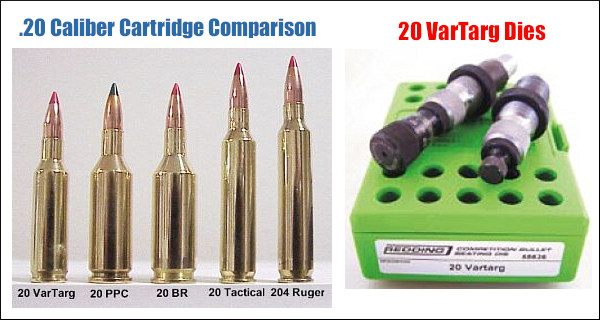
EDITOR: The 20 VarTarg cartridge is based on the .221 Fireball case, necked down to .204 and slightly modified for extra capacity. This very efficient cartridge offers low recoil and great accuracy. It’s one of our first choices for ground squirrels and P-dogs out to 300 yards.
Tailgate Cleaning Set-Up — Brush That Barrel Back at Camp
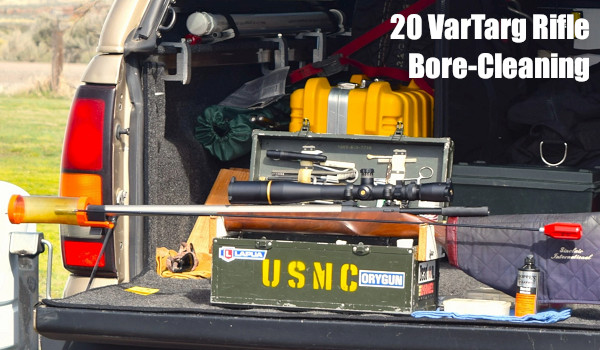
Rick notes: “When the winds get up, cleaning in the field is problematic, blowing patches about, so cleaning back at camp on the tailgate is the hot setup.”
Anschutz 1715D HB in .17 HMR
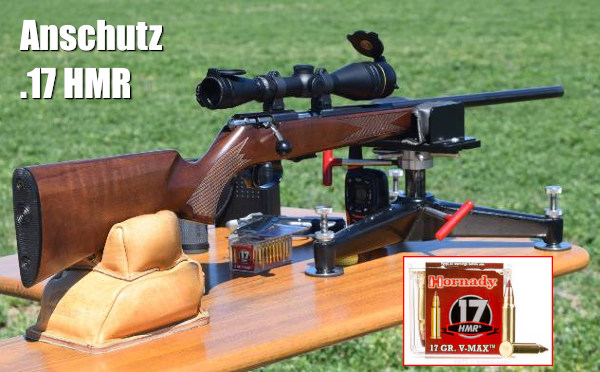
For shots inside 200 yards, the .17 HMR works well. Rick notes: “The little ones were out, so inside of 200 yards, my Anschutz .17 HMR was the perfect medicine for that work. It really thumps those guys [doing] a very fine job of rat-launching.”
The .17 Hornady Magnum Rimfire (HMR)
The .17 Hornady Magnum Rimfire (HMR) was introduced in 2002 by Hornady as a high-velocity, rimfire cartridge derived from the .22 Magnum case necked down to .17-caliber. The .17 HMR gained popularity among varmint hunters and target shooters for its good accuracy and hitting power out to 200 yards or more — all with low recoil and relatively low cost (compared to centerfire ammo).
Most .17 HMR ammo runs 17-grain or 20-grain hollow-point or plastic-tipped bullets at speeds around 2375-2550 FPS (lower for 20-grainers). Though lightweight, these small projectiles do deliver a powerful impact on small game while maintaining low recoil. Compared to the .22 LR, the .17 HMR offers superior ballistic performance, with flatter trajectories and higher energy at extended distances. It’s good for shooting prairie dogs, ground squirrels, sage rats, and other small critters.
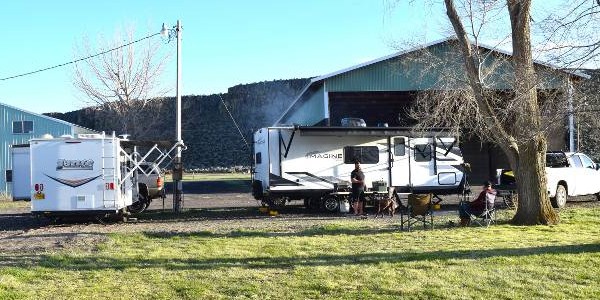
During his sage rat safari in Oregon, Rick stayed in his trailer (see above). Rick noted that one critter “was frolicking about my trailer, so he made a good subject for a 300mm telephoto lens, shot out my dinette window. I can never get that close to them when in the field.”