Planning a Prairie Dog hunting adventure this summer? Consider bringing a .17 HMR rimfire rifle. Of course, for long shots you’ll definitely want a centerfire. We like the 20 Practical in an AR and a 22 BR/BRA in a bolt-action. That will have you covered out to 700 yards. But for shorter shots on small critters — say inside 150 yards — it makes sense to have an accurate .17 HMR rimfire rig. Today’s 17 HMRs are capable of surprising accuracy, rivaling a good centerfire rig, but with less recoil and much lower cost per shot. And the .17 HMR offers more than double the velocity of a .22 LR — up to 2650 fps with a 17-grain bullet.
Top Shot former Champion Dustin Ellerman likes his Volquartsens, and we can see why. With one of his favorite .17 HMR rimfire varmint rigs, he’s seen some outstanding accuracy with CCI ammo. A few seasons back, on his Facebook page, Dustin reported: “Prepping for prairie dogs and I’m floored by this cold, sub-half-inch group shot with the Volquartsen Custom .17 HMR at 100 yards.” This thumbhole-stock rifle features a Bowers Group USS suppressor, and 3-12x56mm Meopta Scope. Dustin tried different types of CCI .17 HMR ammo. This small group was shot with CCI A17 ammo.
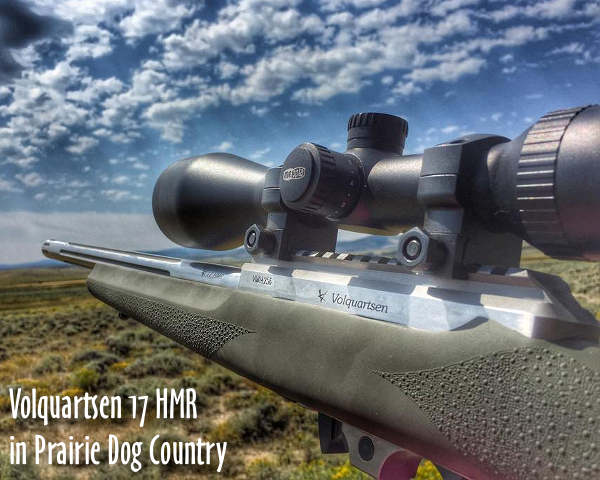
What’s the effective range of a .17 HMR on prairie dogs? You might be surprised. in 2015, Dustin took another Volquartsen .17 HMR on a Prairie Dog hunt in Wyoming. He was impressed with the rifle (shown below) and the little rimfire cartridge. Dustin says the effective range of the .17 HMR is farther than one might expect: “I made hits out to 300 yards. 200 yards was easy as long as the wind wasn’t too bad.”
Here’s the Volquartsen .17 HMR Dustin used in Wyoming in 2015:
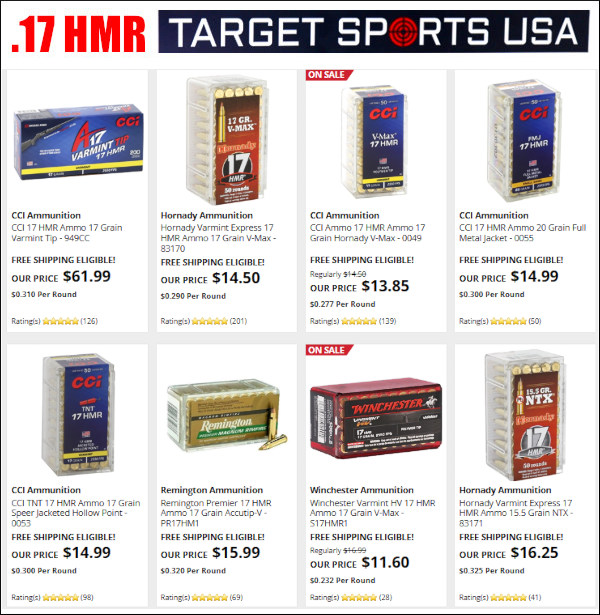
After that 2015 P-Dog expedition, Dustin became a fan of the .17 HMR cartridge: “Never paid it much attention before now because the ammo is five times more expensive than .22 LR and I mostly target shoot. However, for prairie dogs, the .17 HMR is amazing!” Consider this — Hornady’s .17 HMR ammo pushes a 17gr V-Max bullet at 2550 fps, twice as fast as typical .22 LR rounds.
Prairie Dog Adventure with Savage A17
This video shows a successful Prairie Dog hunt. Watch and you’ll see hits out to 160 yards (00:50), proving the effective range of the .17 HMR cartridge. The host is shooting a Savage A17 semi-auto .17 HMR rifle in a Boyds laminated stock.
Things to Know about .17 HMR Ammunition
Bullet Type & Weight: The standard bullet weight for .17 HMR is 17 grains, with options up to 20 grains for improved wind resistance and penetration. Polymer-tipped bullets expand rapidly on impact, while jacketed hollow points (JHP) offer deeper penetration.
Which is more powerful, .22 Mag or .17 HMR? While the .22 WMR (Magnum) may offer slightly more raw energy, .17 HMR delivers superior velocity and flatter trajectory, giving it better accuracy at long distances. For precision shooting, .17 HMR generally has the edge.
How does .17 HMR ammo compare to other rimfire cartridges? Compared to .22 LR or .22 WMR, .17 HMR shoots flatter, faster (typically 2500+ fps), and with greater accuracy at extended distances. It’s a top choice for rimfire shooters who demand high performance beyond 100 yards.
What is the effective range of .17 HMR? Good .17 HMR ammo is highly accurate up to 150–200 yards for small game and varmints. Some experienced shooters can push it beyond 200 yards with the right optics and wind conditions.
What is the best barrel length for .17 HMR rifles? A barrel length between 20–22 inches is optimal for .17 HMR, balancing velocity, maneuverability, and accuracy. Shorter barrels are lighter but may lose some velocity, while longer barrels offer slightly better ballistics at the cost of weight.
Is the .17 HMR good for beginners? Yes .17 HMR has low recoil, flat trajectory, and simple handling for new shooters. It’s an easy-shooting round that offers good performance with low recoil.
An Oregon anti-hunting ballot initiative opposed by NSSF®, The Firearm Industry Trade Association, failed to gather enough certified signatures to be considered by voters. Oregon’s Initiative Petition 28 (IP 28), called the “People for the Elimination of Animal Cruelty Exemptions (PEACE) Act,” was proposed to prohibit and criminalize hunting, trapping and livestock production.
The proposed ballot initiative was disqualified by the Oregon Secretary of State’s Elections Division for consideration by voters on November 3, 2026, after it gathered just 104,262 valid signatures, below the threshold requirement of 117,173 required signatures.
“This radical anti-hunting plan was clearly, and correctly, rejected by Oregonians who wanted no part of this attack on the heritage of outdoorsmanship and proven conservation efforts that managed hunting requires,” said Lawrence G. Keane, NSSF Senior Vice President & General Counsel. “The proposal would have, without question, destroyed Oregon’s rural communities, outdoor economy and abundant wildlife. Hunters are the original wildlife conservationists and are crucial to sustained propagation of managed wildlife for future generations. Oregonians are correct to reject this short-sighted and politically-driven agenda that would have annihilated over a century’s work to restore wildlife across Oregon’s landscape.”
NSSF strongly opposed IP 28, which was pitched to voters as a measure to strengthen state animal cruelty laws. However, Oregon already punishes animal cruelty. IP 28 would have removed legal protections for regulated hunting, fishing, ranching and other lawful activities that are critical for wildlife management, culturally rooted and economically important across the state.
Further, IP 28 would have threatened the funding structure that supports wild game and nongame species alike. In fact, 85 percent of Oregon’s wildlife money comes from the combination of excise taxes paid by firearm and ammunition manufacturers and hunting license, permit and stamp fees. The U.S. Fish and Wildlife Service (USFWS) apportioned $1.3 billion to state wildlife agencies last year. Over $804 million of that is sourced directly from the Pittman-Robertson excise tax paid by firearm and ammunition manufacturers. Oregon received over $9.7 million from that apportionment.
The Oregon Department of Fish and Wildlife (ODFW) reports that hunting, fishing and wildlife watching accounted for $1.2 billion in spending in 2019, or $1.47 billion when adjusted for inflation. Oregon’s outdoor recreation economy generated $9 billion in economic impact in 2024, supporting more than 76,000 jobs and accounts for 2.7 percent of state gross domestic product.
Do you compete in rimfire benchrest, silhouette, or NRL22 matches? Then you’ll want to check out the Shooting Sports USA .22 LR Ammo Roundup on the SSUSA.org website. That article covers .22 LR ammunition from Lapua, ELEY, SK, RWS, Norma, Wolf, and Aquila. Notably there’s a detailed discussion of Lapua’s new Long Range and Super Long Range ammo. In addition, SSUSA confirms that SK ammo (made in Germany by Nammo, parent of Lapua) and Wolf Match Target ammo (made by ELEY) both offer quite good performance for a moderate price.
The article notes that there is a much wider range of .22 LR ammo types available now than a few years ago. It’s not just a choice between cheap products and high-end match ammo. As SSUSA explains: “It used to be that .22 LR was either quite expensive match grade ammo, or it was cheap plinking or hunting ammo. Today, competitors have choices in grades of .22 LR match ammunition to suit their pocketbook or firearms.” We’ve seen good results with relatively inexpensive Norma Tac-22, and the SSUSA article says that SK performs well above its price level.
Seven Brands of .22 LR MATCH AMMUNITION
Lapua Super Long Range and Long Range .22 LR
Lapua Super Long Range and Long Range ammunition comes from Finland, and is designed for the growing long-range rimfire disciplines with targets at 100-300 yards. Lapua says this ammo delivers very low ES and SD numbers. Our friend F-Class John has tested this ammo and confirmed it performs very well (SEE video above). “Each production lot of Lapua’s new rimfire products are test-fired in 50-round groups for dispersion”, Capstone’s Marketing Director, Geoff Esterline, said. “The results determine whether it makes Super Long Range or Long Range packaging.”
ELEY .22 LR Ammunition
ELEY has long been a top choice for .22 LR competition — both position shooting and benchrest. ELEY now offers 11 different varieties of .22 LR match ammunition, ranging in price from $8.50 (Benchrest Outlaw) to $20 (ELEY Tenex). If you compete in the rimfire benchrest, you should definitely try some ELEY ammo.
SK .22 LR Ammunition
Numerous .22 LR ammunition types are offered by SK, suitable for a variety of disciplines — from NRL22 to Biathlon. Generally cheaper than ELEY Match ammo, SK offers good “bang for the buck”. F-Class John says it performs great considering the price. The SSUSA article notes that: “German manufacturer SK has eight match-grade .22 LR offerings, including two for pistols, one for semi-automatic rifles, and one for frigid, wintertime conditions.”
RWS .22 LR Ammunition
Sometimes hard to locate at vendors in the USA, RWS is popular among European competition shooters. The top-tier RWS ammo is a choice of many competitive shooters. RWS currently offers nine Premium Line .22 LR varieties and three Professional Line offerings. The SSUSA tester noted that RWS Rifle Match ammo shot great in his Bergara BMR, shooting one-ragged-hole groups at 50 yards and about one MOA at 100 yards. That’s great performance for $10/box ammo.
Norma .22 LR Ammunition
Norma also offers XTREME LR-22, a new type of competition rimfire ammo with a radical new bullet. This unique, patented bullet design has a special base with a cone (see diagram). Norma claims that this “rocket tail” design reduces drag by creating less negative pressure at the back end of the bullet. It will be interesting to see how this new bullet design works in rimfire ELR competition.
Wolf .22 LR Ammunition
SSUSA says that Wolf Match Target is a top performer in the under-$10 per box category. This is because, according to SSUSA: “It is manufactured by ELEY in England (and loaded with Vihtavuori powder) and re-branded, if online information is correct.” Wolf Match Target is available from Target Sports USA for $70.83 for a 500-pack ($0.142 per round). Or you can get single 50-rd boxes from Champion’s Choice for $7.50/box ($0.15 per round).
Aguila .22 LR Ammunition
Made in Mexico, Aguila .22 LR rimfire ammo is the bargain item among the seven ammo-makers featured by SSUSA. It is usually available at very affordable prices.
We wouldn’t choose Aguila for a benchrest or three -position match, but it could work for a local NRL-22 match or a steel-target competition at relatively short range. Aguila .22 LR ammo starts at under $3.80 per box. Right now many low-cost Aguila .22 LR ammo types are out-of-stock. But you can still find some more expensive varieties such as the Aguila Interceptor High Velocity HP, available for $8.99/50 rounds from Midsouth.
Report from Brandon Green at Camp Perry
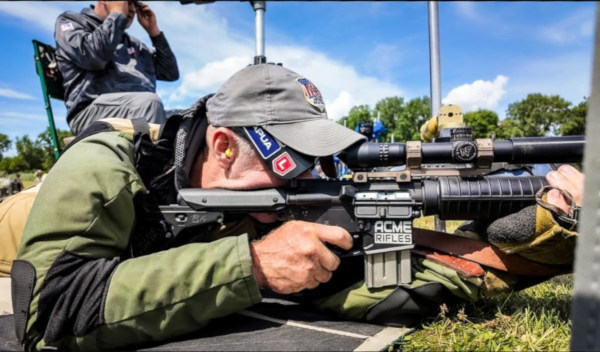
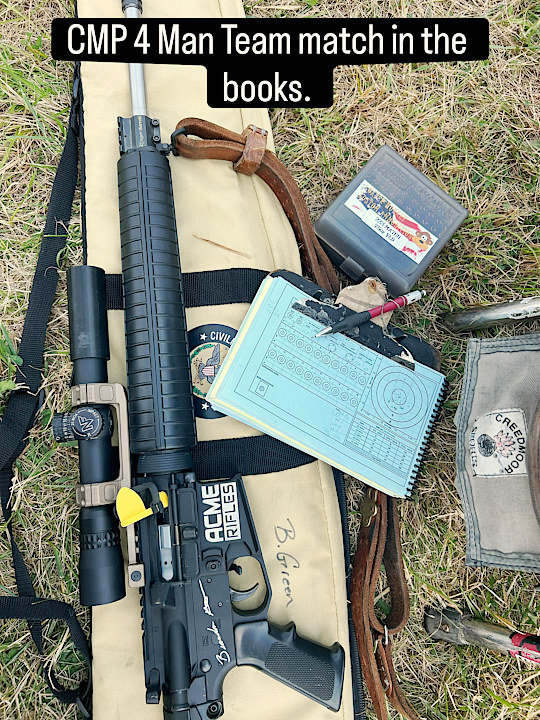
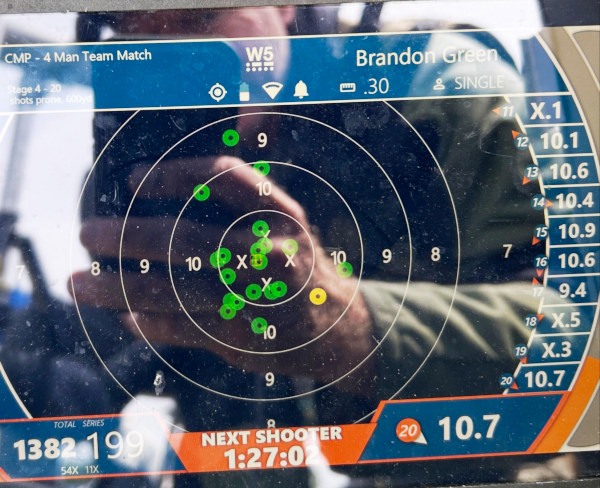
Brandon Green — a multi-time Nat’l High Power and Long Range Champion — recently completed a 4-Man Team Match at the CMP Championships at Camp Perry, Ohio. His team did well but Brandon is hoping to do better in individual competition. Brandon posted: “Now on to the Civilian Marksmanship Program National Rifle Matches. I just want to thank TJ Jones and Krieger Barrels for cutting hammer barrels and building a lights out upper receiver! I didn’t point it as well as I should have, but the rifle wasn’t the problem! Also a big thank you to ACME Rifles/ACME Machine for a new lower and engraving my signature on the side! How cool is that! And thank you to Jack Abrams and Loader Monkey LLC for the ammo! Hopefully I can hold a little harder tomorrow!”
Rifle Training Clinics
The Junior and Advanced Rifle Clinics are in full swing. If you want to learn the finer points of highpower competition this is a good place to start! Thank you to VFB, ACME Rifles, and Civilian Marksmanship Program for getting events like this together. Iron sharpens iron! I also want to thank Krieger Barrels, Creedmoor Sports, and Berger Bullets.
Video from CMP Range with Junior and Advanced Rifle Clinics in Progress
Winner of President’s Shoot-Off
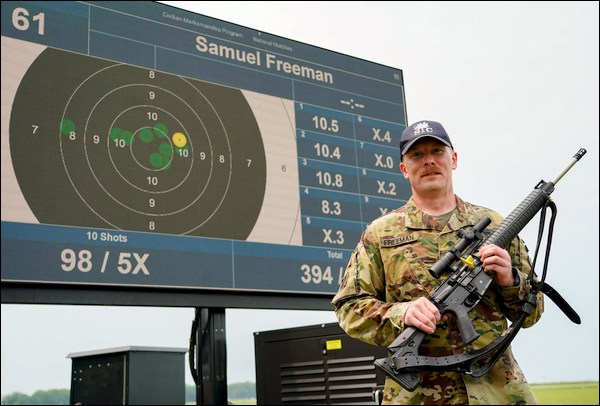
Congratulations to MAJ Samuel Freeman, who was the top competitor in the 2026 President’s Shoot-off! Each year, the top 20 competitors of the President’s Rifle Match meet on the firing line for a 10-shot shoot-off to determine the overall winner. This is the second time MAJ Freeman will be bringing home the President’s Rifle Trophy. Congrats to Samuel.
In recent years, the ranks of first-time gun buyers have grown dramatically. Millions of Americans have purchased their first-ever handgun. With so many handgun options (from derringers to Desert Eagles) many first-time buyers have trouble making a choice. What should those millions of new gun buyers have acquired first? Perhaps it should have been a rimfire revolver. Here is why…
The .22 LR revolver remains one of the most fun, affordable, and versatile firearms you can own, and in 2026, manufacturers are offering excellent wheelguns for plinking, training, target shooting, small-game hunting, and collecting. From classic cowboy-style six-shooters to high-capacity double-action revolvers, today’s rimfire revolvers deliver reliability, accuracy, and the ability to last a lifetime.
This video covers ten popular .22 LR revolvers. It features rimfire wheelguns from Smith & Wesson, Colt, Ruger and other respected manufacturers.
The Argument for a Rimfire Revolver
Some years back, a close relative contacted this Editor. Wanting to get started in handgunning, he sought my advice on purchasing his very first handgun. “Should I get a Glock?”, he asked. “No” was my response. “Well how about an M&P?” he inquired. “Better ergos” I said, “but ‘No’ is still my reply.” “OK, how about a KelTec, they’re cheap…” “Absolutely not”, I replied.
I could tell he was getting annoyed, when he said “OK, Mr. know-it-all, so what handgun should I get?” Calmly, I replied: “Get a .22-caliber rimfire revolver. You will never out-grow it. You will learn sight alignment and trigger control. You can practice with inexpensive ammunition. A good .22 revolver will be considerably more accurate than 90% of the self-loading pistols you could buy. If you get a Smith & Wesson, you will keep the gun for the rest of your life and pass it on to your kids. If you or your heirs ever wear out the barrel or cylinder, Smith & Wesson will replace the parts for free, forever.”
Don’t own a quality .22 LR wheelgun yet? Well start saving those pennies. Every serious gun aficionado should have a quality rimfire revolver. A rimfire wheelgun is also very good choice for a first handgun. Indeed, a strong argument could be made that a .22 LR revolver is THE best choice for a new shooter’s first handgun. A .22 LR revolver is easy to shoot, easy to maintain, and will last a lifetime. Once you have mastered the basics of shooting with a .22 LR, you can move on to larger caliber handguns.
TOP FIVE Reasons to Own a Rimfire Revolver:
1. Rimfire .22 LR Ammunition is cheap, and now plentiful again.
2. A good, full-size .22 LR revolver will be MORE ACCURATE than the vast majority of semi-auto rimfire handguns. With no magazines to jam, a good wheelgun will also be more reliable than most self-loading rimfires.
3. A rimfire revolver can shoot tens of thousands of rounds, with just routine maintenance. This gun can last a lifetime and then you can pass it on to your kids.
4. On a S&W revolver, it is very easy to tune the pull weight. You can have a safe double-action pull with a very light, crisp single-action release.
5. It is easy to change grips and sights to suit your preference. You can also mount a scope on the top-strap.
1. Smith & Wesson Model 617, 6″ or 4″ BBL, $1019.00 MSRP
10-Shot, Stainless Steel, 44.1 Oz. (6″ barrel), 39 Oz. (4″ barrel)
First Handgun Choice — Consider a .22 LR Wheelgun
A very good choice for a first handgun is a Smith & Wesson .22 LR revolver, such as the S&W Model 617. The model 617 is extremely accurate, with a crisp trigger and good sights. Choose either a 4″ or 6″ barrel. The current model has a handy, 10-round cylinder.
This Editor’s first really accurate handgun was a .22 LR Smith & Wesson Model 617 that could easily stack ten shots in a dime at 10 yards. It remains my favorite and most-used handgun. What can we say about the Model 617? The single-action trigger pull is superb, and the accuracy surpasses most any semi-auto rimfire pistol, except for a few, very expensive target pistols. We like the 6″ version for the longer sight radius, but the 4″-barrel 617 is also very accurate, and it balances better.
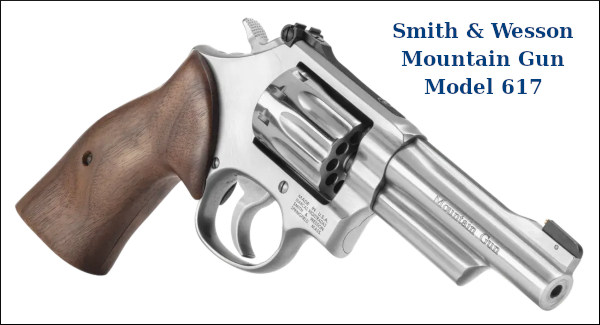
Smith & Wesson’s Model 617, offered with either 6″ or 4″ barrels, is extremely accurate, with a very crisp trigger, and good sights. Accuracy is better than most shooter can hold. You can learn all the fundamentals with this ultra-reliable K-Frame handgun, shooting inexpensive .22 LR ammo. The 6″ version has a longer sight radius, so it’s superior for bullseye work. But the 4″ version balances much better. There is also a Mountain Gun version with a stepped barrel and wood grip (see below). The choice is yours.
617 Mountain Gun Variant
The Model 617 is rugged, durable, and can give you a lifetime of shooting fun. Your Editor has owned a 4″ ten-shot Model 617 for over 25 years, and it’s still going strong. Here is a video showing the 4″-barrel version of Smith & Wesson’s popular model 617.
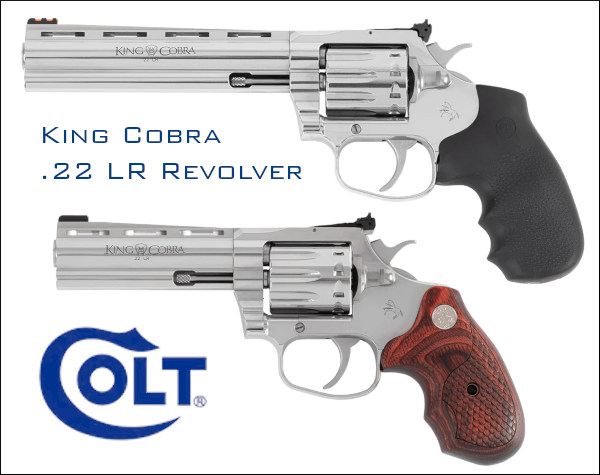
A handsome, very accurate wheelgun with a superb trigger, the Colt .22 LR King Cobra Target is offered with five (5) barrel sizes: 8″, 6″, 4.25″, 3″, and 2″. For general slow-pace target work, we recommend the 6″ barrel, which offers the longer site radius. The 4.25″ version is also good for ladies and juniors as it is lighter. And if you prefer dark-tone handguns, Colt also offers a Blued version of the King Cobra target in all five barrel lengths for $1149.00 MSRP.
Ruger introduced the .22 LR GP100 two years ago. Since then, it has become a good seller. This 10-shot revolver with 5.5″ barrel has a comfortable grip and triple-locking cylinder (locked into the frame at the front, rear and bottom). Many shooters like the fact that the 5.5″-barrel GP100 carries its heft more to the rear than S&W’s 6″ 617. However, we’d give the edge to the 617’s trigger. NOTE: Davidson’s also has a limited edition GP100 with shorter 4″ barrel. This Davidson’s exclusive edition 4″ GP100 is handier to carry and balances better.
4. Smith & Wesson Model 17 Masterpiece, $1169.00 MSRP
6-Shot, Carbon (Blued) Steel, 39.9 Oz., 6″ Barrel
Smith & Wesson re-introduced its Model 17 Masterpiece revolver a few years back. This blued 6-shot classic was “re-released” with a retro-style grip. It still offers outstanding accuracy and a sweet trigger pull. For those who like the look of the original K-22 revolvers this can fill the bill. With a non-underlug 6″ barrel, this is 4.2 ounces lighter than the 6″ Model 617. The price, $1169.00 MSRP, is pretty steep. This is currently out of production but available at some vendors. And if you look around you may be able to find an original K-22 for a few hundred dollars less. We’ve seen some decent examples on Gunbroker in the $800 range, but pristine K-22s are selling for over $1000 now.
5. Smith & Wesson Model 63, 3″ BBL, $909.00 MSRP
8-Shot, Stainless Steel, 25.8 Oz., 3″ barrel
The 8-Shot Smith & Wesson Model 63 may be one of the most versatile revolvers on the market. With a 3″ barrel, it balances well and is easy to hold. This makes this a great training pistol for a new shooter, even a junior or a lady with small hands. The latest 8-shot version offers nice big sights with fiber-optic front insert. While we consider this a great training and plinking handgun, it can also do double-duty for concealed carry or as a camping trip option.
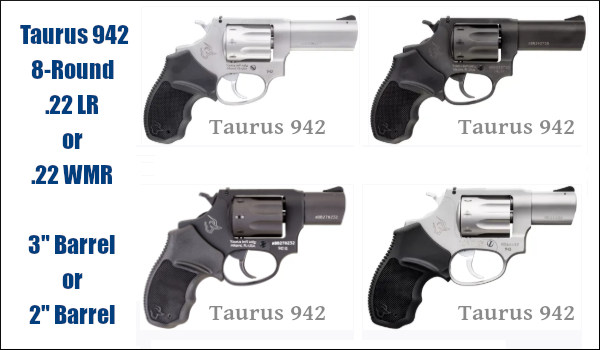
The Taurus 942 Ultra-Lite is a small-frame, double-action/single-action rimfire revolver featuring an 8-shot capacity, stainless barrel and aluminum alloy frame. It is offered with either a 3″ barrel or a 2″ barrel. With its ultra-compact size and light 17.8-oz. weight, this is a decent choice for CCW use. The Taurus 942 Ultra-Lite is offered in both .22 LR and .22 WMR chamberings with either a silver (as shown) or flat black finish. We’d get the .22 WMR version for CCW use.
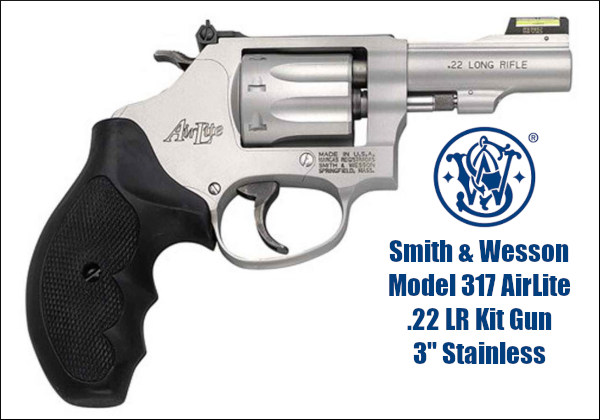
7. Smith & Wesson Model 317 AirLite Kit Gun, $889.00 MSRP
The Smith & Wesson Model 317 AirLite Kit Gun look similar to its S&W Model 63 brother, but it is considerably lighter in weight. With aluminum alloy frame and cylinder components, the 3″-barrel Model 317 weighs just 11.8 oz. unloaded. That makes this a 8-shot wheelgun a very suitable pistol to take on a backwoods hike or camping trip, hence the name “Kit Gun”.
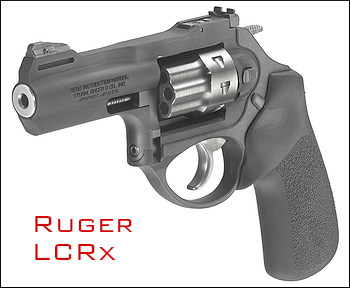
The Ruger LCRx Revolver combines traditional wheelgun features with modern composite construction. The 3″ barrel and cylinder are steel. The “frame” housing the barrel and cylinder are aerospace-grade aluminum. The rear/lower section of the pistol, what Ruger calls the “fire control housing”, is made of polymer. This cuts weight. That fire control housing holds the hammer/trigger assemblies and provides a mount for the interchangeable grips. Thanks to its weight-saving features, Ruger’s LCRx is 8.5 ounces lighter than S&W’s Model 63, though both have 3″-long barrels. The LCRx is currently out of production, but still available.
Over the years, the U.S. Army Marksmanship Unit (USAMU) published a series of reloading articles on its Facebook Page. In this article, the second in a 3-part series, the USAMU covers the process of loading competition pistol ammunition. The authors focus on two key elements — the taper crimp and the quality/uniformity of the original brass. If you shoot pistol competitively, or just want to maximize the accuracy of your handguns, read this article. The taper crimp tips are very important.
Loading Accurate Competition Pistol Ammunition — Part 2 of 3
One often-overlooked aspect of handloading highly-accurate pistol ammunition is the amount of taper crimp used, and its effect on accuracy. (NOTE: this article pertains to loading for semi-autos — revolver crimp techniques involve some quite different issues.) Briefly, different amounts of taper crimp are used with various handloads to obtain best accuracy. The amount is based on bullet weight, powder burn rate and charge, plus other factors such as case neck tension. During machine-rest testing of experimental Service Pistol ammunition, many variables are examined. Among these, our Shop often varies a load’s crimp in degrees of 0.001″ when re-testing for finest accuracy.
How to Measure Taper Crimp on Pistol Cartridges
One question that often arises is, “How do I measure the taper crimp I’m putting on my cartridges?” Using the narrow part of one’s dial caliper jaws, carefully measure the case diameter at the exact edge of the case mouth on a loaded cartridge. It’s important to take several measurements to ensure consistency. Also, be sure to measure at several places around the case mouth, as case wall thickness can vary. After measuring 2-3 cartridges with a given crimp setting, one can be confident of the true dimension and that it can be repeated later, if needed.
However, for good results, one must use brass from one maker due to variances in case wall thickness. For example, the same degree of crimp that imparts a measurement of 0.471″ with Brand X brass may result in 0.469″ with Brand Y. Thus, for best accuracy, using brass from the same manufacturer is important — particularly for 50-yard Slow Fire. In a perfect world, it is better still to use brass from one lot number if possible. With the popularity of progressive presses using interchangeable tool heads, keeping separate tool heads adjusted for each load helps maximize uniformity between ammunition lots.
Brass Uniformity and Accuracy
Brass is important to pistol accuracy. While accurate ammunition can be loaded using brass of mixed parentage, that is not conducive to finest results, particularly at 50 yards. It is important for the serious competitor to pay attention to his brass – even if only for the 50-yard “Slow Fire” portions of “Bullseye” matches and practice. By segregating brass as described above, and additionally keeping track of the number of times a given batch of cases has been fired, one can ensure case neck tension and case length are at their most uniform.
Given the large volumes of ammunition consumed by active pistol competitors, using inexpensive, mixed surplus brass for practice, particularly at the “short line” (25 yards), is understandable. In NRA Outdoor Pistol (“Bullseye”), the 10-ring is relatively generous — especially for a well-trained shooter with an accurate pistol and load. However, for the “long line” (50 yards), purchasing and segregating a lot of high-quality brass to be used strictly for slow-fire is a wise idea. To keep track of your brass on the line, use a unique headstamp marking with 1 or 2 colors of marking pen ink.
Uniform Cartridge Overall Length is Important
Cartridge case Overall Length (OAL) uniformity as it comes from the factory is important to achieving utmost accuracy. More uniform case lengths (best measured after sizing) contribute to greater consistency of crimp, neck tension, ignition/burn of powder charge, headspace (rimless cartridges), etc. Cartridge case-length consistency varies noticeably by maker and, with lesser manufacturers, also from lot to lot. Some manufacturers are more consistent in their dimensions than others, and also in the hardness/ductility of their brass. Similarly, pay attention to primer brands, powder lot numbers, etc.
Consider Using a Lock-Out Die with Progressive Presses
When reloading pistol ammo with a Progressive press, we strongly recommend the use of a lock-out die, or other system that can detect double charges or low charges. If your progressive is manually advanced, the possibility of a double charge is very real — and that can have disastrous consequences.
On UltimateReloader.com website you’ll find an excellent two-part series on the function and set-up of the RCBS Lock-Out Die. This die prevents loading if a high or low powder charge is detected. The video below shows setup of the RCBS Lock-Out Die on the Dillon XL-650 progressive press.
Lyman’s popular Case Trim Xpress is an affordable, variable-speed case trimmer with a razor-sharp CARBIDE CUTTER. The Case Trim Xpress can quickly and accurately trim brass at a rate of approximately 15 cases a minute. The unit has its own power source — a strong variable-speed motor. Using the 10 provided bushings, the unit indexes off the case shoulder — that’s simple, fast and reliable. Plus a precision trim adjustment wheel allows case lengths to be easily “dialed in” to 0.001″ increments. To trim your brass, simply push the case against the carbide cutter until the shoulder stops on the bushing (with precise case OAL set by the wheel). The Case Trim Xpress comes with 10 bushings that fit the most popular bottleneck rifle cartridges, so no pilots are needed. This is available now for $150.28 on Amazon.
The Lyman Case Trim Xpress is an accurate, easy-to-adjust, shoulder-indexing, carbide-bladed, and SPEEDY case trimmer for $150.28 on Amazon.
Lyman Case Trim Xpress “Hands-On” Review
Review by F-Class John
Case trimming can be one of the most boring and tedious steps in the reloading processes. This is largely because of outdated tools that either require manual turning, clunky pilot systems, or difficult adjustments. In order to overcome these obstacles, you might have to spend $500 for some premium systems. But Lyman’s bright orange Case Trim Xpress delivers premium trimming performance at an affordable price. Available for around $150, this trimmer offers an easily-adjustable cutting head plus a smart, shoulder-indexing bushing system to improve consistency and speed up the trimming process.
CLICK photo for full-screen view of Case Trim Xpress unit.
Video Shows How Carbide Cutter Head Adjusts Easily with Index Wheel
The Lyman Case Trim Xpress comes with the main trimming unit, power cord, and 10 bushings in a storage case. These 10 orange bushings let you trim more than 50 popular cartridge types (yes including the 6mmBR, 6.5 Creedmoor, and .308 Win of course). Set-up was simple and straight-forward. Install the bushing you need, turn the unit on and slowly push a piece of brass towards the cutting head. Once the brass is fully depressed, you can start adjusting the dial one click at a time until the case makes contact. Then you start making progressive adjustments and trim until you reach your desired length. The process is so simple that it’ll leave you wondering how you ever used anything else.
Most gun guys know that the NRA publishes a monthly magazine called American Rifleman. What you may not know is that NRA also offers a series of American Rifleman videos with recent American Rifleman TV episodes on the Outdoor Channel and over 4000 videos on the NRA Publication YouTube Channel. For today’s Saturday Showcase we offer seven noteworthy NRA-produced gun videos currently hosted on YouTube. CLICK HERE to access all NRA Videos.
Highlights from American Rifleman TV Episodes
Currently on YouTube you can access dozens of past episodes of the American Rifle television series, along with many recent gun/gear reviews. Here are eight NRA videos featuring important or interesting rifle types plus a Remington ammunition factory tour.
Remington Model 700 ADL and BDL
After Winchester came out with the Model 70, Remington Arms answered with the Model 700, one of the most recognized bolt-action designs of all time. The design emerged in 1962, as Remington sought to improve on its previous Models 721 and 722. Two versions of the Remington Model 700 existed at launch: ADL and BDL models. “You know, you could have it two ways. You had the ADL and the BDL,” said NRA Publications Editorial Director Mark Keefe. “You had the plainer ADL at a better price point, then you had the BDL and that had fleur-de-lis checkering and white spacers and a gloss finish and, you know, it was shinier.” The commercial market wasn’t the only area where the Model 700 was successful, as it was also adapted into the U.S. Army as the M24 sniper rifle. To this day, the Model 700 continues to be a popular bolt-action rifle platform for both commercial and military use.
CMP M1 Garand Matches
The Civilian Marksmanship Program (CMP) runs matches throughout the country, including the major summertime Camp Perry matches. This American Rifleman video covers the CMP’s M1 Garand Match, one of the most popular matches at Camp Perry every year. The Garand shoots the .30-06 Springfield cartridge. It is a surprisingly accurate semi-auto rifle, when fitted with an aftermarket barrel. The CMP recently started a program where the CMP is producing M1 Garands with completely new actions and barrels.
Rifleman Review: Tikka T3X Ace Target
Tikka’s T3x line of rifles is very popular, and Tikka currently offers the T3x Ace Target model, specifically designed for tactical competition. If you are looking for a good factory rifle for PRS/NRL centerfire competition, the T3x Ace Target is definitely worth checking out. It has been produced in multiple chamberings: .223 Rem, .22-250, 6mm Creedmoor, 6.5 Creedmoor, and .308 Win. Current selling price is $1799.99 – $1959.00 at EuroOptic, making this rifle eligible for PRS Factory Class. This is a recent up-to-date video, released on July 22, 2026.
Springfield M1A — Popular .308 Win (7.62×51) Semi-Auto Rifle
The M1A is one of the most popular rifles sold today by Springfield Armory. The M1A is a semi-auto version of the select-fire military M14 rifle developed in the 1950s. Designers adapted the action of the M1 Garand with a different gas system and dropped the 8-round internal magazine for 20-round detachable box magazines. Chambered for the 7.62×51 NATO cartridge, the M14 was adopted by the military in 1959, replacing the M1 Garand. However, its term as the official U.S. service rifle was short-lived, as Armalite was developing the M16, which evolved into the semi-auto AR15 for civilian use. Despite the M14 having a short-lived career as a service rifle, the semi-auto M1A remains quite popular for CMP rifle matches.
Model 1903-A3 Springfield — History of Wartime Rifle
While the U.S. Army’s Model 1903 Springfield rifle is one of the most well-recognized small arms of the 20th century, a lesser-known variant served as an important stop-gap rifle in the early years of World War II. Thanks to the efforts of engineers and arms designers at Remington, the U.S. Army eventually adopted an official pattern of the Springfield termed the “Model of 1903A3.” This NRA video covers the interesting history of the Springfield model 1903-A3.
Henry U.S. AR-7 Survival Rifle
This is an interesting video of a compact rimfire rifle originally issued to U.S. Air Force crews. In the event a crew was downed in a wilderness area, the rifle could be assembled and used to shoot game for food. Civilian versions of this ultra-lightweight 3.5-lb rifle are also available. In this video, American Rifleman contributor Jeremiah Knupp puts the Henry U.S. AR-7 Survival Rifle to the water test. The civilian version is sold by Henry as the Henry U.S. Survival Rifle. With the action, barrel, and magazines housed INSIDE the stock assembly, this rifle can easily be carried in a pack or stowed in a vehicle.
Revival of Remington Ammunition Production by Vista Outdoor
Remington Ammunition filed for bankruptcy in July 2020. Vista Outdoor, owner of Federal, CCI, and Speer, purchased the assets of Remington Ammunition. This video explains how Vista Outdoor revived Remington’s Lonoke, Arkansas plant. “This is one of the largest ammunition manufacturing plants in the world. It was set up in 1969 by DuPont, who owned Remington at the time” notes Mark Keefe, NRA Publications editorial director. Over the first 18 months of Vista’s ownership of Remington Ammunition, the facility added more than 1500 employees and increased centerfire-handgun ammunition production more than 40 percent, while shotshell production increased 15 percent.
The Tactical Hyve YouTube channel currently hosts over 1,100 videos! Here are three of our favorite Tactical Hyve videos focusing on pistol marksmanship. These videos cover basic essential techniques as well as advanced handgun skills used in competition. These videos feature highly-skilled handgun experts.
1. How to Aim a Pistol with Iron Sights or Red Dot
We recommend this video for persons training for a CCW permit, or who are getting started in pistol shooting competition. The video shows proper technique for using iron sights. In addition, it offers some important advice for shooting with Red Dots. Shooting with Red Dot sights can be easier than with iron sights because you only have to put the dot on the target, rather than align front blade with rear notch. But it does take some familiarization to get things right. And persons with astigmatism can have challenges with Red Dot sights.
2. Get Your Sights Back On Target Fast
This popular video covers a very important skill for both pistol competition and defensive handgun use — getting your sights back on target quickly. This informative video covers grip, sight picture, trigger control, and how to handle recoil and muzzle rise. If you’re considering action pistol or 3-gun matches, definitely watch this video.
3. Five Most Common Pistol Shooting Mistakes
In this video, Myles, the founder of Tactical Hyve, talks about the five most common pistol shooting mistakes he sees in classes and how to correct them. Many folks begin pistol shooting without a qualified instructor. Or they try to imitate what they see on TV. This can lead to new pistol shooters forming bad habits. This video helps handgunners correct those bad habits. This popular video has 1.9 million views.
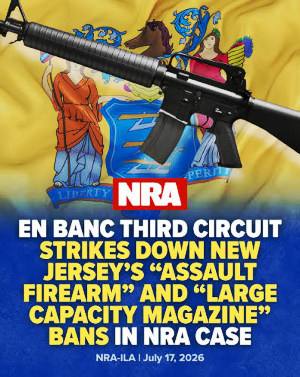
In a landmark Second Amendment victory, on 7/17/2026 the U.S. Court of Appeals for the Third Circuit has held that New Jersey’s bans on semi-automatic rifles and magazines capable of holding more than ten rounds violate the Second Amendment. The court declared the state’s so-called “assault-firearm” ban unconstitutional as it applied to the full class of semi-automatic rifles, not just the AR-15, and also struck down New Jersey’s restrictions on magazines capable of holding more than 10 rounds. READ Decision.
Sitting en banc, the Third Circuit struck down New Jersey’s bans on “assault firearms” and “large capacity ammunition magazines,” applying the text-and-history test set forth by the U.S. Supreme Court in the NRA’s landmark victory, NYSRPA v. Bruen.
The U.S. Court of Appeals for the Third Circuit held that New Jersey’s “assault firearm” ban on semi-automatic rifles violates the Second Amendment. The decision comes just weeks after the Supreme Court granted review in FPC’s Viramontes v. Cook County case, which challenges a similar ban in Illinois and has the potential to strike down these unconstitutional bans nationwide.
Beginning with the Second Amendment’s text, the court concluded that both semiautomatic firearms and magazines qualify as “Arms” protected by the Second Amendment: semiautomatic firearms because they are firearms, and magazines because they are necessary to operate many firearms.
The Third Circuit court determined that both “assault firearms” and magazines holding 10+ rounds are “in common use,” noting that Americans lawfully possess at least 24 million AR-platform rifles and more than 100 million 30-round magazines. Because these arms are commonly owned and, as the Supreme Court held in District of Columbia v. Heller (2008), there is no historical tradition that supports banning arms in common use, the Third Circuit held that New Jersey’s bans violate the Second Amendment.
In striking down New Jersey’s bans, the Third Circuit — which covers Delaware and Pennsylvania in addition to New Jersey — became the highest-level court in the country to invalidate such laws. The decision represents a long and hard-fought victory for the NRA and Firearms Policy Coalition, which have litigated New Jersey cases, alongside the state Association of New Jersey Rifle & Pistol Clubs, since 2018.
NSSF’s General Counsel Lawrence Keane praised the Third Circuit’s opinion: “Today’s ruling by the Third Circuit vindicates what NSSF has argued for decades. The [Semi-auto Modern Sporting Rifle] is a commonly used firearm that is protected for legal sale and lawful ownership under the Second Amendment. Additionally, standard-capacity magazines are ‘arms’ that are also protected by the Second Amendment.
The case now returns to the district court for further proceedings consistent with the Third Circuit’s ruling, including entry of an order implementing the decision and further litigation over New Jersey’s bans on semi-automatic pistols and shotguns, which the court did not address. New Jersey may also petition the U.S. Supreme Court to review the case.