Let’s face it, AR-platform rifles run dirty, at least compared to typical bolt-action rifles. The AR-15 works by piping gas from the barrel back into the bolt carrier, causing the bolt to unlock and the carrier to move the bolt backward. The “exhaust gas” from the barrel contains soot and carbon. The carbon will form hard deposits on the bolt. In addition, the carbon can combine with lube on the bolt carrier to make a nasty, paste-like sludge. This can be particularly problematic when the black paste pollutes the ejector and extractor recess.
This Editor has inspected dozens of ARs over the years. Other than mag-related malfunctions, the most common cause of AR cycling problems I found was oily gunk in the extractor and ejector areas. Many AR owners overlook these critical areas. Look at an AR that hasn’t been cleaned properly and you’ll probably find black gunk (and small brass shavings) in the ejector and extractor recesses.
If you want to keep your black rifle running smoothly and reliably, you must clean it regularly and follow the correct maintenance procedures. Here are three videos that explain how to properly disassemble and clean AR-platform rifles. And then they cover the essential lubrication ARs need to run reliably.
Take-Down and Full Cleaning of AR15 by Jerry Miculek
Here ace shooter Jerry Miculek takes down and cleans an AR-platform rifle belonging to his daughter Lena. This is a good video because Lena’s rifle was “run hard and packed up dirty” so you can see where carbon and grease build up. This 35-minute video is very thorough. Jerry is one of the nation’s top action carbine shooters, so listen carefully to his advice on cleaning and lubrication.
General AR-15 Maintenance and Lubrication
There are various schools of thought on AR lubrication. Some guys like to run “wet” with lots of CLP, while others choose to focus lubrication on the key spots that receive the most friction and wear, such as the contact point for the bolt carrier. We do advice check the ejector recess and extractor spring recess frequently as gunk can get in there, causing malfunctions. Here is a good video from Pew Pew Tactical — a 7-minute guide to cleaning and lubricating AR-platform rifles. This shows important details for both the upper and the lower.
How to Clean Your AR-15 Bolt Carrier Assembly
This video offers very specific advice on the bolt carrier group, which receives the dirty gas directly from the barrel. Be sure to check the extractor and ejector recesses. That’s where old lube, brass shavings, and carbon accumulate. Follow the directions in this video for lubrication, and don’t over-lubricate the bolt carrier — that will only capture more carbon.
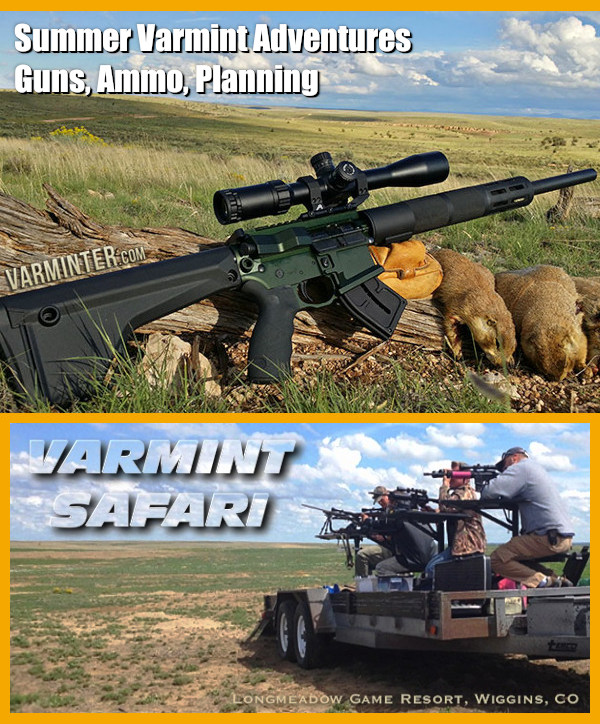
It’s the height of summer now, just two weeks after the nation’s 250th birthday on July 4th. Will you head to the varmint fields this summer? Proper planning is key to a safe, satisfying, and productive varmint holiday. Definitely make a check-list of all the gear and supplies you need. Bring a variety of rifles if possible — you’ll need to switch off as one barrel gets hot, and the chambering that works best for your close shots may not be ideal for those longer shots out past 400 yards.
Here are some tips from our Forum members that can help you shoot more effectively, and avoid problems on your varmint hunt. Here’s one key tip: at your shooting station, put a strip of surveyor’s tape on a tall stake to show the wind direction. Then shoot in the direction the wind blows. This will minimize the effect of cross-winds.
This photo is from a Dan Eigen TV Show video featuring a P-Dog hunt.
Varmint Safari Planning, Equipment, and Shooting Advice
From PatchHound: “The gear you bring will make or break a trip out to Prairie Dog land. A lot has to do with where you going and how far you are from [civilization]. For starters, bring lots of water. It will be hot in Wyoming in a few more weeks but it don’t hurt to bring warm clothes in case it snows. It’s best to wear leather boots unless you’re real good at dodging cactus while walking around. Good sunscreen [and a wide-brimmed hat] will save the day too. [What you need to bring] really depends on whether you’re shooting on some friendly ranch or 100 miles in the middle of [a wilderness area]. Good survival gear is a good thing to have for the latter!”
From Stoner25mkiv: “I’d suggest an adjustable bipod if you are going to do any walking. A laser rangefinder is a huge asset. Have a fanny pack or backpack for extra ammo, water, bore-snake, etc. when you go on your walkabouts. We also take a couple pivoting benches, heavy movers’ pad/blanket, sandbags (Uncle Bud’s Bulls Bag) for shooting from near the vehicle. Boonie hat for blocking the sun, sun glasses, sunscreen. High leather boots.
From CTShooter: “The .204 [Ruger] is a laser beam and good to 400 yards easy. Forget the rimfire! Do you have a portable bench that pivots? Bring bipod, binocs. Bring a LOT of water. I have a milspec sniper shooter’s mat/drag bag with shoulder straps. It is good to carry everything when you want to wander off and shoot prone with bipod. Here’s a view through my 6BR in ND.”
From RJinTexas: “In most of the locations that we’ll be shooting we’ll usually set up a minimum of 200 yards from the edge of a major dog town. We’ll start by working over the close-in dogs and shooting our way out, some of these towns may run in excess of 500/600 yards deep. [A .204 Ruger] will work well out to 300/400 yards unless the wind is blowing hard. We classify a 10-mph crosswind as a very calm day and what makes it a little more challenging is that it is usually also gusting.”
From Wes (P1ZombieKiller): “[For my first PD trip] there are so many things I was not ready for. The one thing that I did bring (that no one told me about) was a canopy. I’m glad I did. Even though the weather was [near perfect], I know that sun can humble you real fast. With my pop-up canopy, I could shoot all day without getting killed by the sun. You had to tie the canopy down real well or the wind would blow it across the pasture.
We sat on shooting benches that pivot 360°, and are fast and easy to set up. Most all shots were 175-250 yards. I just felt comfortable at that range. It was more fun for me to be able to film the hits, and the camcorder I was using just did not get good video past 350 yards. The digital zoom distorted the image too much. I knew I would only get this one chance to film my first P-dog outing, and I wanted to get it on film for [posterity].”
Bring Multiple Rifles on Your Varmint Adventures
On our P-Dog adventures, we like to have multiple rifles — a .17 HMR for close work, then maybe a .20 Practical AR for 150-250 yards, then a larger caliber such as 22 BR, 6BRA, 6 Dasher or 6-6.5×47 for those long shots. The classic .22-250 is also a wickedly effective varmint cartridge.
We like to have a Rimfire varmint rig for the closer shots, inside 150 yards. The .17 HMR or .17 WSM are good choices. With a rimfire you save on ammo costs and you don’t waste precious centerfire barrel life. This video shows a successful Prairie Dog hunt with a .17 HMR. Watch and you’ll see hits out to 160 yards (00:50), proving the effective range of the 17 HMR cartridge. The host is shooting a Savage A17 semi-auto 17 HMR rifle in a Boyds laminated stock.
.17 WSM Rimfire in Franklin Armory F17-L
What’s the ultimate rimfire varmint rifle? An AR chambered for the .17 WSM could be the answer. Eric Mayer of Varminter.com states: “The Franklin Armory F17-L in .17 Winchester Super Magnum (WSM) has a lot of firsts. It is the first semi-automatic rifle in .17 WSM now available to the general public. It is the first gas-piston system, AR-15 rimfire rifle built in partnership between Franklin Armory and Osprey Defense.”
Eric has used the .17 WSM AR shooting ground squirrels, rock squirrels, prairie dogs, and rabbits. Eric notes: “The report of the .17 WSM is nowhere near as loud as most of the centerfire [varmint] cartridges. I found that when I shot the FA-17, it did not cause the other ground squirrels… to run for cover. The lack of recoil … allowed me to see right where I hit [and] if I happened to miss, [low recoil] made for quick corrections for wind, or distance.” READ Full Report
The .17 WSM is a much larger, more powerful round than the .17 HMR. See the size difference above.
.20 Practical (20-223 Rem) AR-Platform Varminter
Here is a .20 Practical built by Robert Whitley. Whitley’s Ultimate Prairie Dog Rifle (PDR) features a 24″ Bartlein 1:11″-twist cut-rifled barrel, DPMS side-charging upper, and a Jewell trigger. It is chambered in 20 Practical, a cartridge popularized by Warren “Fireball” Brookman.
This .20 Practical cartridge is simply the .223 Remington necked down to .204. You can use your existing .223 Rem brass — no special case-forming required! The 20 Practical is accurate, flat-shooting, and has almost no recoil. The advantage over the standard .223 Remington is that, grain for grain, the bullets have a higher BC and travel at a higher velocity for more dramatic effect on a small varmint. The ultra-low recoil allows you to easily see your hits, even without a muzzle brake. The 20 Practical, launching 40-grainers at about 3750 fps, shoots flatter than a .223 Rem with 55gr hollowpoints.
.204 Ruger AR-15 (Suppressed) for Cottontail Rabbit Hunting
As a varmint hunting tool, the .204 Ruger in an AR-15 is a versatile, worthy cartridge/rifle combo for the job. This video covers a cottontail rabbit hunt. The host states that “We were contacted by a farmer who was being slammed with cottontail rabbits eating out huge portions of his alfalfa fields.” This suppressed .204 Ruger AR-15 proved seriously effective on the rabbits, driving high-velocity rounds with impressive accuracy. See more details on the Varminter.com website.
.22 BR Savage Varminter — Accuracy on a Budget
This .22 BR Savage, with upgrades from Sharpshooter Supply, is the “pride and joy” of Forum member Maynard. Note the heavy-contour custom barrel with brake. That .22 BR cartridge is a very effective choice for varmint work, as the ground hog in the photo proves. The .22 BR and .22 Dasher are capable of outstanding accuracy with a large variety of bullets and powders. A .22 Dasher can rival the ballistics of a 6mmBR out to 500+ yards, but with reduced recoil.
Avid varmint hunter Bill White (aka “CT10Ring” in our Forum) concurs about the effectiveness of the .22 BR Cartridge: “.22 BR — My .22 BR is my first choice for most prairie dog missions. Accuracy is superb with necked-down 6mmBR Lapua brass — quarter-MOA and blazing fast. With the right twist rate, this chambering can shoot anything from 40gr FB bullets to 80gr VLDs. Load development is easy. Below is my .22 BR ammo for another varmint trip. I use 55gr Sierra BlitzKings with Varget in my 1:12″-twist Shilen-barreled rifle. 60gr Bergers are very accurate with a fairly flat trajectory for useful distances.”
6mm Dasher for Voldoc’s 2024 Prairie Dog Safari
Respected Forum member Voldoc has a long thread about his 2024 Prairie Dog Safari, his 20th trip of this kind. He reported: “After the 1st day of shooting with 30+ MPH wind, we settled down on a High Point, and set up the Benches the second day for a ‘Shooting Gallery’ of non-stop shooting. PDogs were in play from 125 to 1,000 yards.” Voldoc’s rifle features these components: Nesika J RBRP action, 1:12″-twist Krieger barrel chambered by Mike Bryant for the 6 Dasher, 2 oz. Jewell trigger, Thunder Beast Suppressor, Nightforce ATACR 7-35X FFP optic. He usually shoots 87gr V-Max bullets in annealed Lapua brass pushed to 3240 FPS by Vihtavuori N135 powder. To spot critters, Voldoc uses Vortex Fury 5000 AB Rangefinding Binoculars.
More Power — 6-6.5×47 Lapua for Longer Range Varmint Shots
Soon after Lapua released the 6.5×47 cartridge, wildcatters recognized the potential of a necked-down 6mm version of the case. The 6-6.5×47 has emerged as a great, do-it-all cartridge that performs well in High Power competition, 600- and 1000-yard benchrest, and PRS tactical matches. But the 6-6.5×47 is not just for paper-punching. An efficient cartridge with great inherent accuracy, the 6-6.5×47 can be an excellent, flat-shooting, long-range varmint round. Here we feature Stan Stewart’s BAT-actioned 6-6.5×47 varminter. Fitted with a Krieger 1:10″ barrel, Stan’s rifle excels with a wide variety of varmint bullets. Whether driving 70-grainers at 3700 fps, or pushing the Berger 88gr High-BC FB bullet at 3400 fps, this 6-6.5×47 delivers half-MOA (or better) accuracy, in a well-balanced, easy-handling rifle. He has developed very accurate loads with Varget, Vihtavuori N550, and Reloder 15.
Six Tips for Novice Long Range Varmint Hunters
1. Take twice as much ammo you think you may need. The fields could be particularly rich, or, because of wind or other variables, you may have far more misses than expected.
2. When possible, set up with the wind at your back (or, alternatively, directly ahead). This will minimize the effect of cross-winds. Set up a stake with a ribbon to show wind direction.
3. Bring at least two rifles. Ideally one would be a low-recoil rifle with cheaper components for the closer shots. Then bring a rifle with higher-BC bullets for longer shots where wind is a bigger factor.
4. Check the weather before you head out. Prairie dogs like sunshine and calm conditions. If a cloudy, very blustery day is predicted, considering staying in town and cleaning the rifles.
5. Bring plenty of water on a trip. An adult male should be drinking at least 64 ounces of water (or other liquid) every day — more if it’s very hot or you are sweating a lot.
6. Preferably always hunt with a companion. If you do go out solo, have a Garmin inReach SatComm/GPS for emergencies if there is no cell coverage in your location.
If you will be flying with firearms this summer, here are six videos you should watch before you travel. You need to familiarize yourself with current Federal Regulations on gun transport before you get anywhere near an airport. Thankfully, the Transportation Security Administration (TSA) has an official INFO page that states the important requirements for airline passengers traveling with firearms and/or ammunition.
You’ll want to visit the TSA Firearms and Ammunition webpage, and read it start to finish. In addition, before your trip, you should check the regulations of the airline(s) with which you will fly. Some airlines have special requirements, such as weight restrictions.
We have two other key tips: 1) WEIGH Your Guns and ammo (as packed) BEFORE you get to the airport — so you comply with all airline flight limits without being surcharged; 2) Carry a printed copy of TSA and airline baggage regulations pertaining to firearms — this can help when dealing with airline personnel.
TSA offers this general advice: “You may transport unloaded firearms in a locked, hard-sided container as checked baggage only. Declare the firearm and/or ammunition to the airline when checking your bag at the ticket counter. The container must completely secure the firearm from being accessed. Locked cases that can be easily opened are not permitted. Be aware that the container the firearm was in when purchased may not adequately secure the firearm when it is transported in checked baggage.”
Traveling by Air with Firearms — Advice from Legal Expert
This is a good video by a very knowledgeable attorney. Washington Gun Law President William Kirk goes over everything you need to know in order to fly safely, and legally, with a firearm if you travel domestically. Kirk states: “While many believe this is a complicated formula of various state laws, in actuality TSA regulations govern all travel domestically with a firearm. There are very specific rules which must be followed in order to do this correctly.”
Colion Noir — Air Travel with Packed Firearms
Popular YouTube host and lawyer Colion Noir has created a good video that shares important points about traveling with firearms. Colion says: “Don’t risk making costly mistakes — get informed and ensure your firearm journey is hassle-free and lawful.” In this video, Colion covers these key points:
1. Bag Check: Learn the crucial pre-flight checklist to avoid any unwanted surprises at the TSA checkpoint.
2. Airline Check: Discover the differences in airline policies and ensure a smooth journey by reviewing your chosen carrier’s firearm guidelines.
3. Law Check: Stay on the right side of the law by understanding the gun regulations in every state you’ll visit during your trip.
4. The Gun Case: Explore the essential details about the TSA-required hard-sided lockable case and find out which one is my top choice.
5. Ammo Transport: Learn the correct way to transport ammunition separately from your firearm, all while staying within the weight limit.
Step-By-Step Guide to Gun Transport — Good Tips
This 18-minute Spiritus Systems video provides some very valuable practical tips for gun owners traveling by air. The host explains what to look for in a rifle case and locking system. He also explains how to pack the rifle and gear efficiently and how to label and track your gun/ammo cases. If you’re new to airline travel with guns, this video is worth watching start to finish. Here are highlights are listed by video times:
00:01 Introduction and Regulations
00:51 Storage Container Options
2:50 Type of Lock You Should Use
6:25 Tape Tip
7:16 Contact Information, and Labeling Your Bag
8:07 Firearm Considerations / Configuration
10:03 Documents
12:30 Tracking Your Bag
13:20 Packing Your Ammo
16:00 Prepping Your Magazines
How to Efficiently Pack Your Rifles and Gear
Our friend F-Class John often travels by air to major F-Class matches (most recently to the V2 Finale in Texas). John has learned how to transport valuable match rifles and optics most efficiently and economically. In these two videos F-Class John shows how to pack your rifles and equipment, and how to employ carry-on bags to secure optics and other non-regulated equipment.
TSA Video about Airline Travel with Guns and/or Ammo
This is the latest official TSA video covering gun/ammo transport via airlines. When packing for a flight be sure to start with an empty bag (make sure there are no forgotten gun parts or ammo inside before you pack). If you’re planning to travel with a firearm, follow the tips in this video and remember that you may NEVER bring a firearm in your carry-on bag. Also make sure you are not “packing” when entering the airport even if you have a CCW permit. TSA.gov Firearms/Ammo Transport INFO Page.
Official TSA Guidelines for Airline Travel with Firearms and Ammo
When traveling, comply with the laws concerning possession of firearms as they vary by local, state, and international governments.* Declare each firearm each time you present it for transport as checked baggage. Ask your airline about limitations or fees that may apply.
Firearms must be unloaded and locked in a hard-sided container and transported as checked baggage only. As defined by 49 CFR 1540.5 a loaded firearm has a live round of ammunition, or any component thereof, in the chamber or cylinder or in a magazine inserted in the firearm. For civil enforcement purposes, TSA also considers a firearm to be loaded when both the firearm and ammunition are accessible to the passenger.
Only the passenger should retain the key or combination to the lock unless TSA personnel request the key to open the firearm container to ensure compliance with TSA regulations. You may use any brand or type of lock to secure your firearm case, including TSA-recognized locks.
Bringing an unloaded firearm with accessible ammunition to the security checkpoint carries the same civil penalty/fine as bringing a loaded firearm to the checkpoint. You may find information on civil penalties at the Civil Enforcement page.
Firearm parts, including magazines, clips, bolts and firing pins, are prohibited in carry-on baggage, but may be transported in checked baggage. Replica firearms, including firearm replicas that are toys, may be transported in checked baggage only.
Rifle scopes are permitted in carry-on and checked baggage.
TSA Guidelines for Transporting Ammunition on Flights
Ammunition is prohibited in carry-on baggage, but may be transported in checked baggage. NOTE: Check with your airline for quantity limits for ammunition.
Firearm magazines and ammunition clips, whether loaded or empty, must be securely boxed or included within a hard-sided case containing an unloaded firearm. Read the requirements governing the transport of ammunition in checked baggage as defined by 49 CFR 175.10 (a)(8).
Small arms ammunition (up to .75 caliber and shotgun shells of any gauge) must be packaged in a fiber (such as cardboard), wood, plastic, or metal box specifically designed to carry ammunition and declared to your airline.
Ammunition may be transported in the same hard-sided, locked case as a firearm if it has been packed as described above. You cannot use firearm magazines or clips for packing ammunition unless they completely enclose the ammunition. Firearm magazines and ammunition clips, whether loaded or empty, must be boxed or included within a hard-sided, locked case.
*INTERNATIONAL: If you are traveling internationally with a firearm in checked baggage, please check the U.S. Customs and Border Protection website for information and requirements prior to travel.
We really like rimfire revolvers here at AccurateShooter.com. A good .22 LR wheelgun will be fun, accurate, reliable, and inexpensive to shoot. Rimfire revolvers also offer much less recoil and noise than a centerfire pistol. Your Editor has owned a Smith & Wesson Model 617 for over 20 years. That old S&W has probably fired more rounds than all the other handguns I own, combined — yet it still runs flawlessly and still delivers excellent accuracy.
Ruger offers a big stainless .22 LR wheelgun to compete with the S&W Model 617. This rimfire wheelgun is based on Ruger’s trusted GP100 platform. The Ruger GP100® chambered in .22 LR is a good firearm — strong, versatile, and intelligently engineered. A while back, the late Jeff Quinn of Gunblast.com tested the Ruger revolver and gave it high marks: “It’s a good hefty gun [42.6 oz.], but not overly large or heavy for a good trail gun. It’s just a really nice, well-made revolver from Sturm Ruger.” The gun Jeff tested had a 3.7-lb Single action trigger pull and a 9.8-lb Double action pull.
The .22 LR GP100 features a windage and elevation adjustable rear sight with a white outline, a light-gathering fiber optic front sight and the original full-size GP100 rubber grips with hardwood inserts. With all stainless-steel construction, the rimfire GP100 is easy to maintain. Just keep the cylinder chambers and barrel clean and this gun should run forever.
This Review of the .22 LR GP100 by Hickok45 has over 6.9 Million Views:
The 10-shot Ruger GP100 in .22 LR is a durable, well-engineered wheelgun. Ruger’s engineers optimized the GP100’s innards to deliver a smooth double-action pull: “The new GP100 has an improved fire-control system that uses a lighter mainspring than previous Ruger double-action .22 LR revolvers … we’ve done a lot of development on the firing pin location and geometries so that we’re able to put a lighter trigger pull in this gun than you would find in other .22 LR [handguns]. We’ve got a half-underlug barrel, and it’s a smaller diameter so the gun balances real well. We’ve added a narrow-spur hammer and a smooth trigger.”
“Science tells us that exposure to continuous noise of 85 dB for eight hours is enough to cause permanent hearing loss, and worse, spikes of 130 dB and more can result in permanent hearing damage instantly.” Source: NRA Blog.
The Risk of Hearing Loss
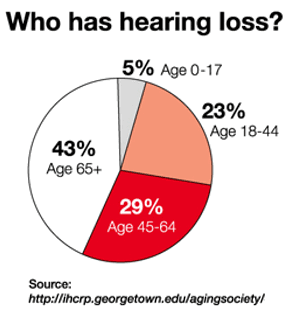
Hearing loss can be progressive and irreversible. If you are a shooter, this is serious business. As the NRA Blog cautions: “You may not even realize you’re harming your hearing. Hearing loss occurs gradually, and can go effectively unnoticed until symptoms become severe. By then, the damage is done.”Effective hearing protection is a must whenever you are shooting firearms or when you are in the vicinity of gun-shots. For ultimate protection, we recommend a good set of tapered foam earplugs, topped by ear-muffs. However, there are situations when you may prefer lighter-weight hearing protection that can be quickly removed. For example, if you are standing well behind the firing line as an observer, or if you are working as a rangemaster or waddie some distance away from the shooters.”
Sound Levels for Common Noises:
9mm Luger pistol: 160 dB
Jet aircraft engine (near): 140 dB
.22 LR pistol: 134 dB
Normal human pain threshold: 120 dB
Noisy Nightclub: 110 db
Riding Motorcycle at 65 mph: 103 db
Power Lawnmower: 95 dB
Hearing damage possible: 85 dB (sustained for 8+ hours)
Ringing Telephone: 80 dB
Normal conversation: 60 dB
What about suppressors? If you use a suppressor is it OK to dispense with hearing protection? Not really. Even the most effective suppressors, on the smallest and quietest calibers (.22 LR), reduce the peak sound level of a gunshot to between 110 to 120 dB. To put that in perspective, according to the National Institute for Occupational Safety and Health (NIOSH), that is as loud as a jackhammer (110 dB) or an ambulance siren (120 dB). For normal caliber handguns and rifles, suppressed sound levels routinely exceed 130 dB, just shy of OSHA’s “hearing safe” threshold of 140 dB. Accordingly, we recommend use of hearing protection even when shooting suppressed.
Compact, Low-Profile NRR 27 dB-Rated Ear Muffs
Many hunters and competitive shooters prefer low-profile ear muffs such as the Walker Razor Slim Muffs (above). As these typically have a lower Noise Reduction Rating, perhaps NRR 22-27, we recommend running earplugs under muffs. If you use low-profile electronic muffs, such as Howard Leight Impact Sport Muffs, you should still be able to hear range commands even with plugs underneath.
Another good option for hunters and range visitors are hearing bands, basically earplugs connected with a semi-rigid plastic band. These banded products provide “quick access” hearing protection for hunters. You can keep them handy around the neck while spotting game, and then insert the plugs before shooting.
Howard Leight MAX NRR 33 Earplugs — Effective& Comfortable
These Howard Leight NRR 33 Max-1 Plugs are your Editor’s favorite foam earplugs. Between shooting, motorcycling and mowing lawns, I probably have Howard Leight foam plugs in my ears 3-4 days a week. They are comfortable and the flared outer edge helps the NRR. You can get 20 pairs for $8.95 on eBay. There is also a Max-30 corded version, with the same excellent 33 dB Noise Reduction Rating. Get 5 pairs of Max-30 Corded Plugs for $4.49 on Zoro.com, or 100 pairs of Max-30s for $48.95 on Amazon.
Note, if you prefer thin, light-weight earmuffs, we recommend running earplugs underneath for double protection while shooting firearms (or when you’re on the firing line). Sound experts tell us that running plugs and muffs together can effectively improve your effective noise reduction by 4-7 dB NRR.
Today we share some smart tips from a past F-Class and Sling Champion who is both a great shooter AND a ballistics wizard. Founder of Applied Ballistics LLC, Bryan Litz is the author of multiple books and creator of advanced Ballistics Software.
Bryan is also a highly skilled competitor. In 2015, Bryan Litz won the F-TR Mid-Range AND Long-Range National Championships hosted at Ben Avery. And at the 2014 Berger SW Nationals (SWN), Bryan took top honors among all sling shooters. If you only know Bryan Litz from his Applied Ballistics Books and DVDs, you may not realize that this guy is a also great marksman along with being an actual rocket scientist!
Given his impressive track record in both F-Class and Palma (Fullbore) out to 1000 yards, we asked Bryan if he had any advice for other long-range competitors.
First Bryan provided three tips concerning Ballistics, his special area of expertise. Next Bryan offered three more general tips about long-range competition — how to analyze your shooting, how to choose your ‘wind strategy’, and how to avoid the most costly mistakes, i.e. how to avoid the “train-wrecks”.
Bryan Litz won the 2015 F-TR Mid-Range and Long-Range Championships with this sleek rig:
Litz Ballistics Tips
Ballistics TIP ONE. If you’re having trouble getting your ballistic software to match actual drops, you need to look at a number of possible reasons. Here are some common issues that can cause problems.
Click Values Are Not Exact. Scopes and iron sights don’t always produce accurate adjustments. In other words, if your ballistics program predicts 30 MOA of drop, and you dial 30 MOA but hit low, it might be that your sight actually only moved 28 MOA (for example). To see if your sight is adjusting accurately, shoot a tall target at 100 yards and measure group separation when dialing your sight.
Barometric vs. Station Pressure. This is a commonly misunderstood input to ballistics programs. You can avoid this pitfall by remembering the following: station pressure is the actual measured pressure at your location, and you don’t need to tell the program your altitude when using station pressure. Barometric pressure is corrected for sea level. If you’re using barometric pressure, you also have to input your altitude.
Muzzle Velocity. Chronographs are not always as accurate as shooters think they are — your true MV may be off by 10-20 fps (or more). If your drop is different than predicted at long range, it might be because your muzzle velocity input is wrong.
Mixing Up BC (G1 vs. G7). Knowledgeable long range shooters know that the G7 standard is a more representative standard for modern LR bullets. However, using G7 BCs isn’t just a matter of clicking the ‘G7′ option in the program. The numeric value of the BC is different for G1 and G7. For example, the G1 BC of the Berger 155.5 grain Fullbore bullet is .464 but the G7 BC is .237. If you were to enter .464 but click on G7, the results would be way off.
Ballistics TIP TWO. A properly installed level is absolutely essential for long range shooting. Without a good level reference, your long range wind zero will be off due to minor canting of the rifle from side to side. You can verify that your level is installed correctly on a 100-yard ‘tall target’. Draw a plumb line straight up the target and verify that your groups track straight up this line as you go up in elevation.
Ballistics TIP THREE. If your long range ballistic predictions aren’t tracking, always come back and verify your 100-yard zero. Sometimes a simple zero shift can be misconstrued as errors in long range ballistics predictions.
Litz Competition Shooting Tips
Competition TIP ONE. Improving your scores in long range competition is a constant process of self-assessment. After each match, carefully analyze how you lost points and make a plan to improve. Beginning shooters will lose a lot of points to fundamental things like sight alignment and trigger control. Veteran shooters will lose far fewer points to a smaller list of mistakes. At every step along the way, always ask yourself why you’re losing points and address the issues. Sometimes the weak links that you need to work on aren’t your favorite thing to do, and success will take work in these areas as well.
Competition TIP TWO. Select your wind shooting strategy carefully. For beginners and veterans, most points are typically lost to wind. Successful shooters put a lot of thought into their approach to wind shooting. Sometimes it’s best to shoot fast and minimize the changes you’ll have to navigate. Other times it’s best to wait out a condition which may take several minutes. Develop a comfortable rest position so you have an easier time waiting when you should be waiting.
Competition TIP THREE. Actively avoid major train wrecks. Sounds obvious but it happens a lot. Select equipment that is reliable, get comfortable with it and have back-ups for important things. Don’t load on the verge of max pressure, don’t go to an important match with a barrel that’s near shot out, physically check tightness of all important screws prior to shooting each string. Observe what train wrecks you and others experience, and put measures in place to avoid them.
Looking down-range with F-TR rifle at Ben Avery Shooting Facility in Phoenix, Arizona.
Bullet Stability and Twist Rates
In this video, Bryan Litz talks about bullet in-flight stability and how to calculate barrel twist-rate requirements for long-range bullets. Bryan explains that bullet stability (for conventional projectiles) is basically provided by the spinning of the bullet. But this spin rate is a function of BOTH the nominal twist rate of the barrel AND the velocity of the projectile. Thus, when shooting the same bullet, a very high-speed cartridge may work with a slower barrel twist rate than is required for a lower-speed (less powerful) cartridge. For match bullets, shot at ranges to 1000 yards and beyond, Bryan recommends a twist rate that offers good stability.
You’ll find more expert information on long-range shooting and ballistics on the Applied Ballistics website and the Bryan Litz Ballistics Facebook page. Bryan’s most recent Facebook post talks about the Coriolis effect — the apparent drift of a rifle trajectory due to the rotation of the earth.
To learn more, we recommend you subscribe to the Applied Ballistics Science of Accuracy — with in-depth articles, brilliant podcasts, exclusive videos and more.
After purchasing a new set of dies from Forster, Hornady, Redding, or Whidden Gunworks, you’ll want to disassemble the dies, inspect then, and then remove the internal grease and/or waxy coatings placed on the dies by the manufacturer. Below are two videos that show how to de-grease and clean dies as they come “out of the box” from the manufacturer. The videos also explain how to clean your dies after regular use. Cleaning your dies helps remove carbon, brass shavings, lube residues and other stuff that can get inside the dies.
In the first video, from Creedmoor Sports, Bill Gravatt (Creedmoor’s President) shows various methods for cleaning dies both when new and after they have accumulated carbon and lube after use. This video is definitely worth watching. In the second video, a Hornady technician shows the method for degreasing dies before first use. A convenient aerosol spray cleaner is used in the video. You can also use a liquid solvent with soft nylon brush, and cotton patches. NOTE: After cleaning you may want to apply a light grease to the external threads of your dies.
Creedmoor Sports Die Cleaning Video with Bill Gravatt
Hornady Video Showing Aerosol Cleaner
Clean Your Sizing Dies and Body Dies Regularly
These same techniques work for cleaning dies after they have been used for reloading. Many otherwise smart hand-loaders forget to clean the inside of their dies, allowing old case lube, gunk, carbon residue, and other contaminants to build up inside the die. You should clean your dies fairly often, particularly if you do not tumble or ultrasound your cases between loadings. It is most important to keep full-length sizing and body dies clean. These dies accumulate lube and carbon residue quickly.
Henry Rifle serial number 1, the first production Henry rifle, is now the most valuable long gun ever made. This historic rifle, Henry serial number 1, recently sold for $5.875 million, the highest price ever paid for a rifle. This wasn’t a rare prototype — Henry Rifle serial number 1 was the very first production Henry, built by New Haven Arms Company in the 1860s.
The Most Expensive Rifle Ever Sold | Henry Serial No. 1 | ($5.875 MILLION)
Technological Innovation — 16-round Lever-Action Rifle
Patented by Benjamin Tyler Henry in 1860, this lever-action rifle chambered in .44 rimfire was a massive breakthrough, allowing soldiers to rapidly fire 16 rounds without reloading one round at a time. This design directly paved the way for the Winchester dynasty. The auction description noted: “Serial number 1 is not merely an early production example but the genesis of an entire technological and cultural legacy. Every Winchester that followed traces its lineage to this [rifle] that launched a company and helped define an era. As the starting point of the Winchester story … this rifle stands at the beginning of a legend, where Oliver Winchester’s vision took form and the repeating rifle that would shape the American West was born.”
The Birth of America’s Lever Action Rifle
It can be argued that EVERY lever-action rifle built in the 160-plus years since Henry serial number 1 was crafted — every model, every maker, every variation on that under-barrel magazine and swinging lever — traces its lineage back to this one gun.
The 1860 Henry was the design that proved a repeating rifle could actually work in the field, and it set the template that the entire lever-action category has followed ever since. Since its creation a century and a half ago, the lever-action rifle has been the rifle of hunters, ranchers, and everyday Americans who needed a dependable repeater they could trust with their lives.
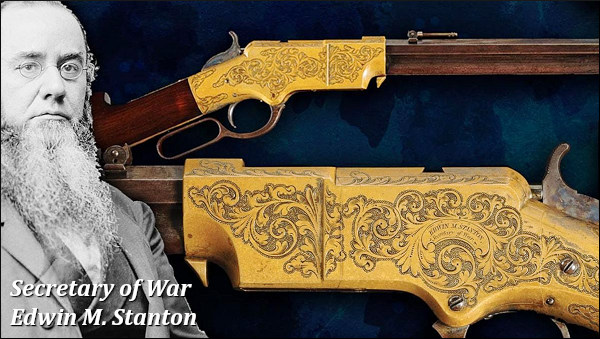
Henry Rifle serial number 1 was presented to President Abraham Lincoln’s Secretary of War, Edwin Stanton during the Civil War. This rifle is part of an exclusive trio of factory-engraved Henry rifles presented by Oliver Winchester to high-ranking Union officials to secure military contracts. The other two include Lincoln’s rifle (Serial No. 6, now in the Smithsonian National Museum of American History) and Secretary of the Navy Gideon Welles’ rifle (Serial No. 9, housed at the Autry Museum of the American West).
Henry Rifle serial number 1 is not simply the first Henry rifle ever made — it is arguably the most important lever action rifle in existence. Manufactured during the American Civil War and presented to President Abraham Lincoln’s Secretary of War, Edwin Stanton, this historic Henry repeating rifle launched the era of metallic cartridge repeating long guns in America produced by Winchester Repeating Arms. Every legendary Winchester rifle that followed the Henry — from the Model 1866 to the famed Model 1873 — owes its existence to the Henry lever-action rifle.
This rifle features elaborate engraving and an inscription to Secretary Stanton.
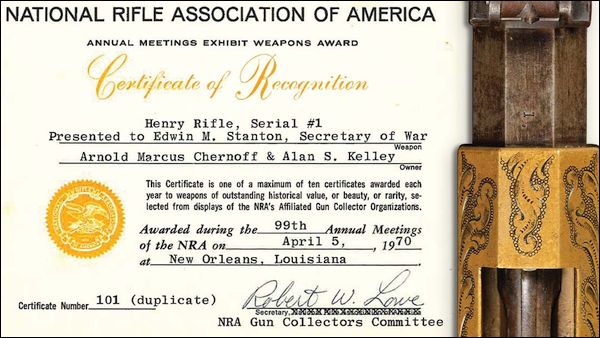
Henry Rifle Serial Number 1 Henry Rifle serial number 1 was awarded a certificate of recognition from the National Rifle Association at the NRA annual meeting in New Orleans in 1970.
Presented alongside other famous “Lincoln Cabinet” Henry rifles gifted to Abraham Lincoln and Gideon Welles, this extraordinary Civil War firearm represents a pivotal turning point in American military and technological history. Featuring factory engraving by Samuel J. Hoggson, with early production features unique to the first Henry rifles, the Henry serial number 1 remains one of the most coveted and historically important American firearms ever made.
This video includes footage from the auction where Henry Rifle Serial Number 1 was sold.
Rifle Was Gift for Lincoln’s Right Hand Man — Secretary of War Stanton
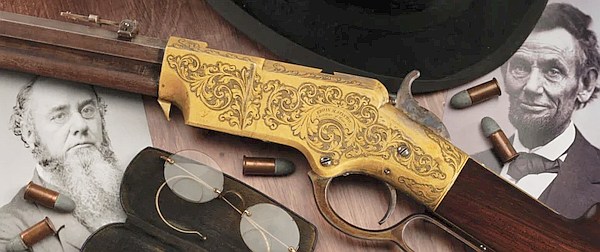
In the 1860s, arms-makers often gave their finest work to key government leaders. After Benjamin Tyler Henry had introduced his lever-action repeating rifle that could fire 16 rounds without reloading, there was good reasons to showcase this for the government. This rifle represented a major breakthrough that could dramatically change how military operations could be conducted. So the company presented engraved Henry rifles to three men close to President Lincoln: Secretary of War Edwin Stanton received serial no. 1, Lincoln himself received serial no. 6, and Secretary of the Navy Gideon Welles received serial no. 9.
Engraved brass rifle shown with portraits of Edwin Stanton and Abraham Lincoln.
Today, collectors know these three rifles as the Lincoln Cabinet Guns. Lincoln’s rifle now sits in the Smithsonian, while the Welles rfle is at the Autry Museum of the American West. The Stanton rifle, Henry serial no. 1, was the last of the three still in private hands, and the only one anyone could actually buy. Stanton is best remembered for the words he spoke at Lincoln’s deathbed: “Now he belongs to the ages.”
Henry No. 1 Is Highest Priced Rifle, But NOT the Most Expensive Gun Ever Sold
Is Henry serial number 1 the most valuable gun ever sold? Actually not. It is the most expensive rifle, but a famous handgun, a Colt revolver, represents the most expensive gun ever sold. Sheriff Pat Garrett’s Colt Single Action Army revolver, which he seized from gang member Billy Wilson in 1880 and used to kill Billy the Kid (William Bonney) in 1881, sold at a Bonham’s Auction on August 27, 2021, for a record-breaking $6,030,313 (including buyer’s premium).
Details of Rifle (from Auction Description):
Condition: Extremely fine overall with crisp original barrel address and serial number “1” on the barrel. The engraving and historic inscription are all crisp and of extraordinary detail. 85% plus original vibrant case colors remain on the hammer. 40% of the original blue finish mixed with attractive even brown patina remains on the barrel. Significant patches of original silver plating are found in the protected areas of the frame such as the lower tang as well as on the heel extension of the buttplate, attractively aged patina on the exceedingly attractive brass, a mostly even brown patina on the lever, and generally minimal overall wear consistent with the rifle’s age[.] The stock is also fine and has attractive natural grain and color, with an overcoat of protective varnish, faint flakes at the edges of the wrist, a tight hairline crack follows the grain in the butt, and slight storage dings and scratches. Mechanically excellent.
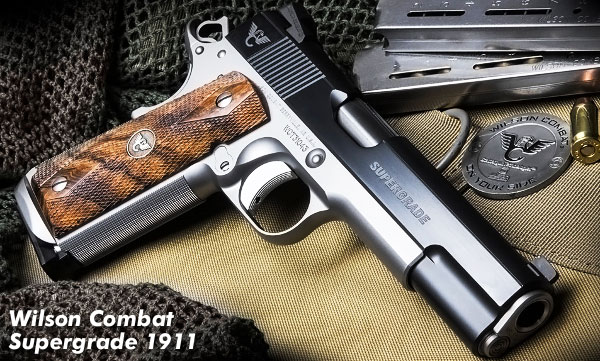
These three videos show how the classic Model 1911 pistol works, a pistol that will be featured in the CMP National Matches starting today, July 12, 2026. The famous 1911 pistol requires the hammer to be cocked in order to fire. Watch the video to see the operation of the trigger, hammer, firing pin, and slide. After the round is fired the slide retracts and the cartridge ejects. Then, a new round rises in the magazine and chambers as the slide moves forward back into battery. With the hammer cocked when the slide came back, the m1911 is ready for the next shot.
We enjoy shooting steel targets with rifle, pistols, and shotguns. Hitting a steel target provides instant gratification with a loud “ping” and possible movement. You can shoot small, low-cost reactive steel targets with rimfire guns at short range. Or get the stronger high-grade AR500 steel targets for centerfire shooting at 50 yards and beyond. We’ve enjoyed varmint matches with steel targets placed at 100-yard intervals from 200 to 700 yards.
Action pistol and rifle matches are typically conducted with steel targets, some that spin, and others that may even be set on moving tracks. Dueling trees are another popular type of steel targets. These have multiple plates that swing horizontally from side to side. For long-range rifles, self-resetting targets are popular. These typically have a tombstone-style steel plate set with a spring-loaded base. When hit, the target goes down, but then pops back up again after a few seconds.
Dustin Ellermann’s Steel Target Playground
In this video, popular Top Shot champion Dustin Ellerman shows his entire Steel Target facility with dozens of targets. This range has one of the most diverse collections of steel targets in any single location.
Know Your Limits Portable Steel Targets
Know Your Limits (KYL) target sets typically provide a series of swinging targets of multiple sizes, running from larger to smaller. This provides increasing challenge with each shot. This Guns and Guitars Channel video showcases two portable KYL target sets you can easily transport in your car/truck. The host states: “I love how portable and easy to set up it is, I love how many targets you get… and most importantly, I love that Shooting Targets 7 offer the best price for AR500 steel targets on the internet.”
Ten Good Steel Target Offerings — Product Reviews
This 8-minute video shows steel targets in various sizes from multiple vendors/manufacturers. This is a good starter video if you are looking to purchase your first steel targets. The video covers a wide selection of shapes, sizes, and metal ratings. In order, the featured steel targets and target accessories are:
Highwild 6″ x 3/8″ Steel Target Set
Hotop Shooting Target Pipe Hang Hooks
Do-All Outdoors Steel Shooting Target
HD Targets AR500 Steel Shooting Targets
Do-All Outdoors Steel Auto-Reset Spinner Target
Do-It-Yourself REBAR Target Stands — Very Low Cost
This Guns and Guitars Channel Video shows how to make making the CHEAP and sturdy target stands from REBAR. The host says: “These things are basically bullet-proof and would probably stand up against a charging rhino. You can build these stands using a 10-foot length of 1/2″ rebar from your local hardware store. Bending it is not super easy, but it can be done without a rebar bender, just watch the video!”
If you are thinking of crafting your own target, you may also want to watch a good Tactical Rifleman channel video about building a range on your own property. The host notes: “There is so much more to it than just pushing up a berm and buying some steel targets. Med plan, legal restrictions, drainage, targetry, and 50 other things should be planned out BEFORE you start digging. CLICK HERE for “How to Build Make Your Own Shooting Range” video.
Steel Target Arrangements for Action Shooting Matches
This video from Tactical Hyve shows a variety of steel targets used in action shooting scenarios. The host is a knowledgeable gear analyst and a very good shooter. If you are looking to get started in action pistol disciplines this is a good video to watch.
Steel Target and Target Stand Varieties
This video reviews the key features and functions of a variety of steel targets — from large torso silhouettes to reactive dueling trees. The video also reviews various target stands and supports. This is worth watching if you are considering buying steel targets for your shooting club or home range.
Shooting Steel Targets Safely — Tips from Hickok45
In this video, YouTube host Hickok45 offers valuable safety tips on shooting steel targets, based on his 30+ years of steel shooting experience. This guy knows his stuff — as proven by the fact that he now has over 7.6 million subscribers to his Hickok45 YouTube channel.
TOP SHOT: The steel targets in the top photo are part of the extensive facility operated by Big Daddy Hoffman 1911. See more on his popular YouTube Channel, now with 315,000 subscribers.




 From Wes (P1ZombieKiller): “[For my first PD trip] there are so many things I was not ready for. The one thing that I did bring (that no one told me about) was a canopy. I’m glad I did. Even though the weather was [near perfect], I know that sun can humble you real fast. With my pop-up canopy, I could shoot all day without getting killed by the sun. You had to tie the canopy down real well or the wind would blow it across the pasture.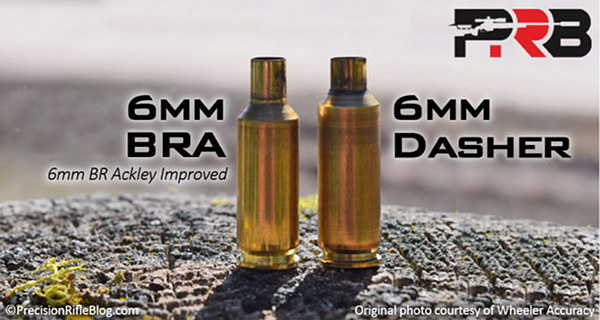


 Respected Forum member Voldoc has a long thread about his


 The Risk of Hearing Loss