Keith Glasscock is one of America’s very finest F-Class shooters. This talented trigger-puller took second in F-Open division at the F-Class National Championships three years in a row. A smart engineer with aviation knowledge, Keith is a master wind reader, who has served as the wind coach for top F-Class teams. In fact Keith is in Arizona right now coaching a team at Ben Avery.
Keith shares his wind-reading expertise on his popular YouTube Channel — Winning in the Wind. This channel provides intelligent advice on multiple topics including reloading, load development, shooting strategies, and yes, reading the wind.
Keith has the credentials to back up the advice he offers in his video lessons. A High Master, Keith finished second overall at the 2021 NRA F-Class Long Range Championship in F-Open division. He also finished second at the 2020 Nationals, and he took second place at the 2019 Nationals. His consistency is unrivaled, which means he definitely knows the secrets of long-range wind calling and loading ultra-accurate ammo.
Today we feature two of Keith’s latest YouTube videos, both focused on wind reading.
Wind Direction vs. Wind Speed — Which is More Important
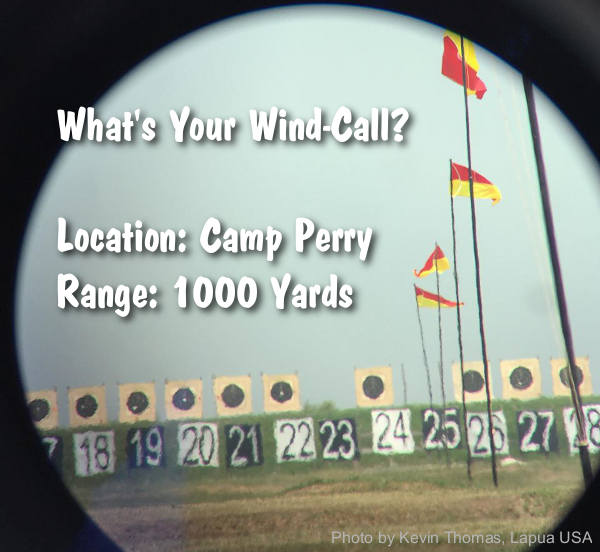
Most shooters find wind reading somewhat intimidating. That is understandable. The wind can change constantly during a match, with variations in both wind velocity and angles. Sometimes you think you have a cycle figured out, but then there can be an unexpected lull. Or you may start a string in what you think is a stable condition, but then a surprise shift changes everything. In addition, wind flows can be influenced by terrain features, such as berms, which have varying effects depending on wind angle (e.g. a tailwind hitting a berm will act differently than a 90-deg crosswind). That is why a good wind reader needs to identify both the wind speed AND the wind angle. In this video, Keith explains when to focus primarily on direction and when to pay most attention to velocity. With headwinds and tailwinds, Keith notes, you should monitor angle changes carefully. With crosswinds, speed is the key variable to watch.
KEY Points to Remember
— Small changes in wind direction changes alter POI drastically at long range
— During head or tailwinds, focus on wind direction
— During crosswinds, focus more on wind speed
— The wind is cyclic — always be aware of the pattern
Determining Wind Direction with Precision
Many shooters try to read the wind merely using whatever wind flags might be aloft on the range. Flags are important of course, but there are other vital factors that a wise wind-watcher will monitor. You want to watch mirage, and the movement of grass and trees. In looking for angle changes, Keith says the spotting scope is a very important tool. His tripod is equipped with angle markings on the rotating tripod head. This allows him to ascertain wind angles with great precision.
In the video below, Keith shows how to use a spotting scope to read the wind. He explains how he uses his spotting scope in his role as a wind coach. But a spotting scope can also be used effectively by competitors shooting prone or from a bench. Many top shooters use their spotting scopes to watch mirage during their relays. Keith notes that smart competitors can also use their spotters BETWEEN relays to scout natural wind indicators (moving grass, trees etc.), check for boils, watch mirage, and estimate wind velocity cycles.
KEY Points to Remember
— Wind flags leave a lot to be desired in precision wind direction reading
— Precision wind direction can be obtained with a spotting scope
— There is a boil both directly upwind and directly downwind
— Angle indicator on your tripod helps with angular precision in wind readings
— Scouting with a spotting scope before your turn to shoot can be fruitful
Questions and Answers with Keith Glasscock
Q. How did you get started as a wind coach, and what were the most important stages in your progress in wind-reading?
Keith: I started coaching this team in 2017. I was looking for a team to shoot on, but they needed a wind coach. I’ve been a backseat driver ever since. I learned the most about reading the wind from shooting when the conditions are absolutely miserable – flags popping, wind switching, people missing the targets entirely, and there I was, having to make the big call. I learn from my own mistakes, and it shows. I still make mistakes, but try to limit them to ones I haven’t already made. In essence, I am in the most important stage now. Humbly looking at the wind knowing its power and mystery, while learning new things every day.
Q. What are the most common wind-reading mistakes you see people make at matches?
Keith: The most common, in a word, is UNDER-confidence. Most shooters can make that wind call with accuracy. But their fear prevents them from doing that, and prevents them from learning or taking advantage of smooth, solid conditions. The second common mistake is failure to anticipate changes. That comes from not gauging the wind pattern. It’s all about patterns in a sport where wind changes so small have such profound impacts on score.
Q. What’s more important — wind flags, or mirage (or maybe the unexpected horizontal that appears on the last shot recorded on target).
Keith: Both flags and mirage lie. The only thing that tells the truth is a bullet. Unfortunately, the wind can switch faster than you can shoot in most cases. I take a fluid approach. I look for what on the range right now tells me what the wind is doing.
Q. When are conditions so bad/unpredictable that it is necessary to just stop shooting and wait for things to get better?
Keith: This is situational, and comes down to what you are observing. I never like to shoot in the top of a gust condition, even when I know what the hold is. The drop off is what gets you that surprise 8.
Q: What type of wind meters do you recommend?
Keith: While Kestrels are inexpensive and quite serviceable, they are directional in nature. If I want absolute wind speed, an omnidirectional style unit is preferred.
Q. Are there ways to practice reading the wind (and judging wind speeds) when one is away from the range?
Keith: I really concentrate on seeing mirage any time I’m outside, without optics. I can, many times, see the boil of the mirage, and wind direction with the naked eye. My time in aviation has my eye tuned to see things like shear zones and venturis in the airflow. I take a moment, anytime the air is moving, to feel the air on my skin, see the trees and grass moving, and areas where the wind does funny things. Trees and grass tend to get too much credit as precision wind indicators. I use them as wind change indicators. It also gives me an opportunity to humble myself and realize how dependent I am on mirage and flags.
Happy Halloween
Hickok45 Carves Pumpkins with Handguns
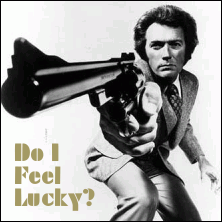
To celebrate Halloween, here’s an example of master wheelgun marksmanship. Popular YouTube host Hickok45 skillfully creates a smiling face on a pumpkin using a S&W Model 29 .44 Magnum revolver. This is the classic blued, double-action revolver popularized by Clint Eastwood as Dirty Harry. This has become a tradition for Hickok 45 — every year he puts a face on a pumpkin using a different firearm, typically a pistol, but he’s used a couple rifles as well. The latest pumpkin-carving effort, in October 2020, was done with a SIG M17 pistol. SEE PUMPKIN Shooting Playlist. Happy Halloween to all our readers.
Want to see more? Hickok45 has also carved pumpkins with a dozen firearms. Here is a pumpkin carved with a genuine, WWI-era Colt 1911 carried by an American soldier in the Pacific theater.
And here is a rather grim-looking face applied using the .40 SW Glock 23.
Today, October 20, 2021 Shooting USA TV features the Talladega 600 held this past January. Shooting USA notes: “Competition is back, as America gets back to normal again. For the Civilian Marksmanship Program … the Talladega 600 brought competitors from across the country — all glad to be back shooting. Dozens of competitors are on the line at the Talladega Marksmanship Park, the impressive home range of the CMP.”
Shooting USA noted that this event was a welcome return to normalcy: “After a year of cancelled competition, the Talladega 600 offered days of shooting in matches for most everything you might own, from rimfire to High Power. That had shooters from across the country emptying their gun-safes, and driving down to Alabama to shoot.” After being postponed due to storm damage from Hurricane Zeta, the CMP’s 2020 Talladega 600 event was rescheduled to January 2021.
SHOOTING USA TV Air Times
View Shooting USA on the Outdoor Channel: Wednesdays 9:00 PM (Eastern and Pacific); 8:00 PM Central.
NOTE: If you miss the 10/20/2021 broadcast, you can still view the show on Vimeo for a small 99-cent fee, or just $1.99 per month unlimited. LINK HERE: Shooting USA on Vimeo.
About the Talladega 600 — Southern Classic
The Talladega 600, “A Southern Classic”, is held annually. Though typically fired in November, the 2020 Talladega 600 was rescheduled to January 2021, due to storm damage from Hurricane Zeta. This year, matches included Garand, Springfield, M1A, Carbine and Vintage/Modern rifle events, and versions of prestigious National Trophy Rifle Matches. There was also an Excellence-In-Competition (EIC) match, 4-Man Team match, and .22 Rimfire Sporter match.
NEW Garand Benchrest and Rimfire Sporter Benchrest Matches
Two new types of matches were conducted at January’s Talladega 600: a Benchrest Garand Match and a Rimfire Sporter Benchrest Match. Competitors at these events can use sandbags to support their rifles. The Benchrest Garand match was very popular, and is likely to become a regular event.
Pistol Matches Were Popular
The Talladega 600 included .22 Rimfire EIC and Service Pistol EIC matches, along with As-Issued 1911 and Military & Police matches.
State-of-the-art Kongsberg target systems are used at the CMP’s Talladega Marksmanship Park.
About Talladega Marksmanship Park
The 500-acre CMP Talladega Marksmanship Park is one of the most advanced outdoor shooting facilities in the Western Hemisphere. The facility includes a 600-yard rifle range, a 100-yard multi-purpose range, and a 50-yard pistol range, equipped with Kongsberg electronic targets and scoring monitors. Since the 54 targets at each line register hits and calculate the scores instantly, no pit duty is required at Talladega. The park regularly hosts rifle, pistol and shotgun events throughout the year.
Teslong Borescopes Update — WiFi and Rigid Rod Versions Product Report by F-Class John
Not more than a few months after the Teslong corded borescope hit the market to massive applause they’ve released a cordless WiFi-enabled corded version as well as a rigid rod model — two new models with important new features/functionality. When I originally reviewed the Teslong borescope I was blown away with the value, clarity, and ease of use. SEE Review HERE. That original Teslong really was a game changer in the borescope market. The large number of forum threads springing up since the Teslong release shows that that digital borescopes have finally found a large and enthusiastic customer base.
IMPORTANT: Guys — Watch the Videos!!! John does a great job showing the set-up and use of these Borescopes. You really need to WATCH THE VIDEOS! They show much more than we can illustrate with still images.
NOTE: Teslong Borescopes (Standard, Rigid, WiFi, Screen-Equipped) can also be ordered from the Teslong Webstore. If you can’t find what you want on Amazon, go to Teslong.com.
WiFi Teslong Works with SmartPhones and Tablets
Despite all the love people have shown for the original, plug-in Teslong borescope, one common complaint was that it could not be used with smartphones or small tablets. With that in mind, Teslong surprised the market with the release of a cordless WiFi version that works with just about any device that has a WiFi connection. The new WiFi unit, which is in very high demand, costs around $75, just $25 more than the original plug-in version. NOTE –YES this WiFi unit DOES work with both iOS (Apple) and Android smartphones and tablets. However, you may wish to try a couple different Apps.
WATCH Teslong WiFi Borescope Video Review
To use the WiFi Teslong, simply download Teslong’s viewer App, turn the unit on and connect to the Teslong WiFi in your device settings. While it does take a couple steps to connect each time, you are rewarded with a cordless version that can be used at home or the range equally well. Watch the video and you can see how the Wifi unit is set up and how it is used to inspect both a barrel and a sizing die. Do watch the video — it explains all. Along with live video feed, the WiFi control handle has a button to record still images.
Important — some guys had initial problems getting the WiFi image to display on their smartphones but that was normally just a software configuration issue. If you are patient, and follow the instructions, you should be fine. Some older guys had to enlist the aid of a 10-year-old grandkid. Note, as of 1/29/2020, the WiFi Version is temporarily out of stock on Amazon, but it can be ordered for $74.99 from the Teslong Webstore.
New Teslong Rigid Rod Borescope
Along with the WiFi version, Teslong has also released a borescope with the lens mounted on the end of a rigid metal shaft — a configuration similar to classic optical borescopes such as the Hawkeye. This new “shafty” Teslong has the same electro-optical sensors, connectors, and adjustable light as the original Teslong. However, this new rigid rig now uses a solid rod instead of a flexible cable. Having a solid rod makes using the unit much easier since you’re not fighting the cable. The rod also makes rotating the unit inside the bore more intuitive as it lacks the cable spring back of the flexible version.
Located on the borescope is an inch scale allowing the user to easily to measure how far into the bore they’ve gone for easy identification of any issues later. The whole unit comes in a nice heavy-duty cardboard tube that makes it easy to store and I can see it lasting as long as the unit itself.
WATCH Teslong Rigid Borescope Video Review
Why choose the rigid Teslong? Importantly, the lack of a tethered cord allows you to rotate the unit more easily inside the barrel. Compared to the original corded Teslong, I did find that running the rigid borescope down the barrel without the mirror provided a larger view. That may be beneficial to some users. Overall, the optical clarity and definition remain excellent — certainly on par with the original unit.
General Teslong Borescope User Tips
The new Wifi and Rigid Teslong borescope share some basic features with the original plug-in, corded Teslong. All three devices feature a mirror on the end that screws on and has a jam nut to keep it in place and can be adjusted for focal length based on the caliber and they’re now including several extras in case of damage or loss. While they’ve always been good about replacing them free of charge there is a wait time, so the inclusion of extras is a nice bonus.
SUMMARY — Both WiFi and Rigid Teslong Borescopes Perform Well, Are Great Values
Overall these two new units are great additions to Teslong’s lineup giving users two great units to choose from. While most folks may gravitate to the WiFi version, I think there’s room for all three models (WiFi, Corded Plug-in, Rigid Plug-in).
Many people may find the corded or rigid versions more practical for around the house where they don’t necessarily need the cordless version and don’t want to worry about keeping it charged all the time. For any range use or out of town matches the WiFi with its smaller footprint and ability to work with any electronic device will probably make more sense and will help justify the additional cost. In the end, the amazing thing is that no matter which version you choose you’ll have a great borescope that will help improve your shooting.
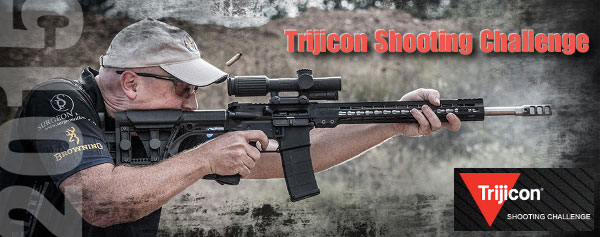
In October 2015, the legendary Jerry Miculek won the Trijicon Shooting Challenge at the Rockcastle Shooting Center. That impressive victory earned Jerry big bucks — a $50,000 grand prize. By any measure, that’s some serious cash — mucho dinero.
To celebrate his October Trijicon Challenge victory, Jerry Miculek decided to do some pumpkin carving — with a .50 BMG Barrett rifle.
Shooting the 30-lb rifle off-hand, Jerry blasted some serious holes in Mr. Pumpkin. Needless to say, the results were dramatic, if somewhat messy. Advancing the science of terminal ballistics, Jerry (not surprisingly) confirmed that “the 663-grain bullet did manage to penetrate the pumpkin all the way.”
Jerry Miculek earned $50,000 as the winner of the 2015 Trijicon Challenge.
New Zeiss Scopes Raise the Bar for First Focal Plane Optics
Here is big news for PRS/NRL competitors, and all shooters who favor FFP (First Focal Plane) scopes. ZEISS has released two all-new, state-of-the-art FFP scopes, and they are mighty impressive, with superb glass, and best-in-class elevation travel. The new LRG S5 Series Scopes, the LRP S5 318-50 (3-18x50mm) and LRP S5 525-56 (5-25x56mm) are precise and tough. Choose either Milliradian (MRAD) or Minute-of-Angle (MOA) reticles/click values. Both models boast a 34mm main tube, European-style fast-focus eyepiece, Ballistic Stop elevation turret (with 40.7 MRAD or 140 MOA of total elevation travel), and an external locking windage turret. The LRP S5 318-50 costs $3299.99, while the LRP S5 525-56 sells for $3599.99.
Here is the big news — The SCHOTT glass in these scopes is amazing. We mean unrivaled clarity and sharpness for a tactical scope. The turrets offer great repeatability and precision, and these LRP S5 optics are tough — really tough. Engineered and built in Germany, LRP S5 series scopes are engineered to withstand a 1500 G-force of recoil.
ZEISS FFP Scopes Advanced Features
The ZEISS LRP S5 318-50 and 525-56 scopes are available in four configurations, all with 34mm main tubes. The optical system delivers exceptional image quality and renders the finest of details. The premium optical design utilizes ZEISS Fluoride lens elements, SCHOTT glass and ZEISS’s proprietary T-Star lens coatings for optimum color fidelity, image brightness, exceptional resolution and edge-to-edge sharpness within the entire field-of-view. The scopes deliver 90% light transmission to the eye, clearer visuals, and faster target identification down range. The exterior facing lenses are final coated with ZEISS LotuTec protective lens coating process for anti-fogging and to repel water, dust, dirt, fingerprints and more.
High Performance Optics: Fluoride lens elements, SCHOTT glass, and ZEISS T-Star coatings
Best-In-Class Total Elevation Travel: 40.7 MRAD or 140 MOA total elevation travel value
Highly Repeatable and Tactile Turrets: 0.1 MRAD and .25 MOA precise click adjustment
Daylight Visible Illuminated Reticle: Digitally controlled, diffractive reticle illumination
Compact and Heavy-Duty Riflescope: Able to withstand up to 1,500 G-force of shock testing
The MOA-based turrets are adjustable with .25 MOA click values and offer 30 MOA of travel per rotation. Each click is audible and provides a tactile confirmation for every adjustment. The MRAD turret features a more pronounced click at whole MRAD intervals. The 3-18x50mm and 5-25x56mm scopes offer best-in-class 140 MOA or 40.7 MRAD total elevation adjustment which enables shooters to engage targets up to 1500 yards and beyond.
“For longer-range shooting, precision is crucial. With our new ZEISS LRP S5 we have decisively expanded our product line to provide an elite riflescope that can dominate at every competition” states Kyle Brown – Director of Marketing and Product for Carl Zeiss SBE, LLC. “With the compact and heavy-duty design of these riflescopes we have validated and proven that they are ready to tackle the toughest shooting competitions and the most difficult hunts”, emphasized Brown.
Illuminated MOA and MRAD Reticles
Both new ZEISS FFP scopes offer daytime visible illuminated reticles. Two new illuminated reticles — ZF-MOAi and ZF-MRi — provide intuitive aiming solutions. The ZF-MOAi and the ZF-MRi illuminated reticles represent MOA and MRAD smart reticle designs respectively. Each incorporate distinct, clean, and easy-to-understand reference marks along the main horizontal and vertical lines of the reticle. And these reticles offer relevant windage hold-offs in the field-of-view below centerline. Both offer fine line reticle subtensions and floating center dots to serve the demands of precision shooters and long-range hunters alike. At right is the LRP S5 318-50’s MRAD Reticle at 18-power. The MOA reticle also has central illumnination.
ZEISS FFP Scopes Have Been Tested by Top Tactical Shooters
ZEISS LRP S5 riflescopes have been developed with significant input from top PRS Pro Series competitors. Their comments helped ZEISS developed FFP optics that set new standards for lens quality, elevation travel, and durability. These scopes are not inexpensive ($3299+) but we expect they will be in high demand among top PRS/NRL shooters.
Phil Cashin, PRS Pro Competitor and owner of MasterPiece Arms states: “I think ZEISS has hit a home run with this optic. Excellent turret design, easy to read markings, huge amounts of elevation travel and an outstanding reticle. The ZF-MRi reticle is perfectly designed for PRS/NRL style shooting: floating center dot, 0.2 subtensions and the diffractive illumination provide unique contrast, so the shooter does not get lost in the reticle. Plus the clutter-free tree design makes it easy to spot impacts and misses for follow-up shots.”
Full Overview of LRP S5 525-56 — 7:55 min Video
ZEISS LRP S5 Scopes Also Perform Well for Hunters
While we will soon see these ZEISS LRP S5 scopes on the firing lines at PRS/NRL matches, these superb optics are NOT just for competition. With their exceptional low-light performance and rugged durability, these scopes are also a great choice for hunters. Shown below is the 518-50 model with MOA reticle.
You can never be too safe when hand-loading your own ammunition. This helpful Brownells video outlines the Seven Fundamental Reloading Safety Tips. This is important information for novice hand-loaders and a good refresher for those with reloading experience!
Summary of the Seven Safety Tips:
1. Store your reloading supplies in a safe and dry location, away from children and away from any possible source of ignition. It is also smart to keep your powder and primers separate.
2. Get and use respected reloading manuals, especially for new cartridges. Start low and work up slowly while watching for warning signs of pressure and/or case fatigue.
3. Locate your reloading activity where you will not be distracted. If you get interrupted, stop. (Distractions will eventually lead to mistakes.)
4. Do NOT mix powders. Keep your powders clearly marked and dated. You can use masking tape to write the date on the container.
5. If you load the same cartridge type for different firearms, make sure your ammo headspaces properly in each gun.
6. Check cases frequently. Look for split necks, case head separation or other signs of fatigue and excessive pressure.
7. If reloading military brass, be aware that case capacity is usually reduced, and initial loads should be at least 10-15% lower than published data.
Here are some other tips that will help your avoid making costly mistakes (such as using the wrong powder, or undercharging a case):
Powder Type — Always double-check the label on your powder containers. After placing powder in the powder measure, put a piece of tape on the measure with the powder type written on it. Some guys write the powder type on a card and place that right in the hopper.
Scale Drift — Electronic balances can drift. If you are using a digital powder scale, calibrate the scale with a test weight every 50 rounds or so.
Case Fill — If you throw more than one charge at a time, look INSIDE every case before seating a bullet. Squib charges can be dangerous if you don’t notice them before firing the next round.
Progressive Presses — When using a progressive press, consider using an RCBS Lock-Out Die. This will detect a low charge and stop the machine. These dies will work with RCBS, Hornady, and Dillon progressives.
Are you considering a small 9mm handgun for concealed carry (CCW) and self-defense? Then you should read an excellent 5-gun comparison review released recently by Guns America Digest. This detailed article and accompanying video cover what the author calls the “Miracle 9 category” — 9mm micro-compacts that hold 10 or more rounds without the use of extended magazines. All these five pistols are very easy to conceal and all are striker-fired. The pistols compared are: Ruger MAX-9, SIG Sauer P365, Smith & Wesson M&P Shield Plus, Springfield Armory Hellcat, and Taurus GX4.
Here are key, short highlights of the Guns America 5-pistol roundup review. This is a start, but we strongly recommend you read the full comparison review on Guns America Digest.
L to R: Ruger MAX-9, Springfield Armory Hellcat, S & W M&P Shield Plus, Taurus GX4, SIG Sauger P365.
Ruger MAX-9
“The Ruger MAX-9 is the only pistol in this class to come standard with a slide cut that is ready for a mounted red-dot optic. The MAX-9 [also has] an impressive pair of sights. The front sight is a long one that houses a florescent yellow fiber optic[.] The slide stop control is small and can be quite difficult to use as a slide release – a common trait for Ruger handguns.”
SIG Sauer P365
“The P365 was the first Miracle-9 to market and literally knocked the industry on its butt. Despite rumors of intermittent problems or QA concerns, the marketplace beat a path to SIG’s doorstep and bought this pistol in droves. Being first to market has its rewards. The P365 is available in about a half-dozen variations, some significantly distinct — like the XL with its longer barrel and slide.” [Note: in this article, the reviewer focuses on the P365 SAS model with flush-mount fiber-optic sights.]
Smith & Wesson M&P Shield Plus
“The Shield is most likely the best-selling micro-compact 9mm handgun in the past decade. The Shield Plus [is] a gun with millions of rounds of experience and credibility, proven popular ergonomics, and the presumption of staunch reliability. It is available in several variations that included sight upgrades and [optional] manual safety switch.”
Springfield Armory Hellcat
“The Hellcat is well-appointed, with an excellent set of sights called ‘U-Dot’ and a very nice trigger. Absent on the Hellcat is the rear grip safety that is found on XD models. The Hellcat is available in two variations – with or without the slide cut for an optic (and the inclusion of an optic is a further option).”
Taurus GX4
“The GX4 follows closely to the very popular TX22 in terms of ergonomics and grip texture. The controls are well placed and function very nicely. Similar to the P365 SAS, there is no takedown lever that protrudes from the frame, just a rotating pin. This reviewer has found the trigger of the GX4 to be less than ideal.”
Should the Five Miracle 9mms Be Six? (Adding a Glock 43X)
One Sheriff’s Deputy posted this comment on the Guns America review, suggesting that the Glock 43X should have been added to the comparison: “I’ve had a SIG P365 from the release. Love it. I’m a Deputy Sheriff and it is my constant off duty companion for years. Tried Hellcat, nice gun but paper and shot timers don’t lie, I was less accurate and slower. Other officers were better with it than Sig. So like we all know, shoot what suits you. Now I have two Glock 43X MOS. Factory night sights and just a trigger connector for add-ons. Those guns surprised me, I beat my Sig times and accuracy was same, excellent. So I’ve been carrying a 43x more. The 43x is definitely a contender to look at.” Here is the Glock 43X, silver slide version (10+1 3.39″ barrel):
In our most recent Sunday GunDay story featuring 2021 QUEEN of 2 Miles Lindsey Paul, we provided a full equipment list for Lindsey’s winning .375 CheyTac rifle. Readers noted that this big rig was equipped with a Nightforce Wedge Prism mounted forward of the riflescope. Lindsey used the Wedge Prism on her two most distant targets in the KO2M finals, which were placed at 3166 (1.8 miles) and 3520 yards (2 miles). Readers were curious about the Wedge Prism and wondered how to get one.
Basically the device, which is offered in +50 MOA and +100 MOA versions, allows a major increase in elevation over what is available by cranking the elevation knob on the scope. Even with an angled rail offering +40 MOA elevation, few, if any, conventional scopes have enough elevation to put the reticle on targets two miles away. The Nightforce Wedge Prism is the answer. The Wedge Prism optically shifts the incoming image to the scope, effectively augmenting the scope’s vertical elevation travel.
Nightforce Wedge Prism — Gain Elevation for ELR Shooting
The Nightforce Wedge Prism is offered in two variants, 50 MOA or 100 MOA, that install forward of the riflescope to increase the effective elevation travel. The Wedge Prism optically shifts the incoming image to the riflescope by a precise elevation value, which directly adds to the available elevation travel within the riflescope. The Wedge Prism is designed to work optimally with 56mm front objectives. Nightforce says you can position two Wedge Prisms in parallel for maximum effect — up to 200 MOA total. These NF Wedge Prisms are pricey — MSRP is $990.00 for either the 50 MOA or 100 MOA version. However EuroOptic does currently have 50 MOA Demo models for $769.00.
The Knob Creek Machine Gun Shoot ends after 50 years.
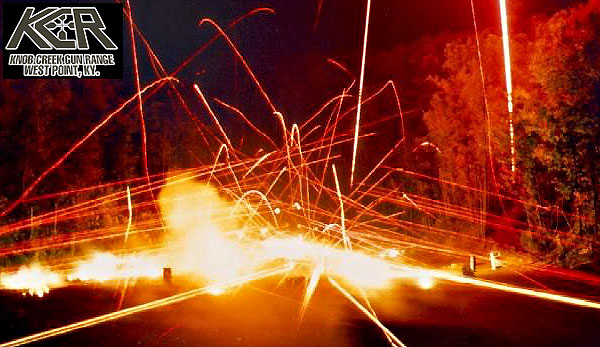
Folks in Kentucky enjoyed a special event this past weekend — the Knob Creek Machine Gun Shoot. This event, a Kentucky tradition, is ending after 50 years. Sadly, this was the last-ever event of its kind. Held Friday, October 8 and Saturday, October 9, the famed event concluded with a signature massive display of tracers and flames.
Final Saturday Evening Display at Last-Ever Knob Creek Machine Gun Shoot
Local news outlet WRDB.com reported: “LOUISVILLE, Kentucky — A Bullitt County tradition comes to an end this weekend with the final Knob Creek Machine Gun Shoot. The Knob Creek Gun Range is staying open, but it is wrapping up its longtime spectacle of machine guns, flamethrowers, and heavy artillery. It hasn’t given a reason, but in the past, the machine gun shoot happened twice a year.”
The April 2021 shoot was canceled due to pandemic restrictions, so crowds were big for this October shoot — the last-ever at Knob Creek. Here is a video from Day One, October 8, 2021:
In years past, twice a year, select-fire fans headed to the Knob Creek Gun Range in West Point, Kentucky, for the nation’s largest Machine Gun Shoot. A bi-annual event, The Machine Gun Shoot was typically held on the second weekends of April and October. The highlight of every Machine Gun Shoot was the Saturday Night event, where scores of guns send regular and tracer bullets down-range. In years past, an estimated 1.25 million rounds were expended during a typical October Night Shoot.
Back in 2013, Top Shot Season 4 Champ Chris Cheng was on hand to record the firepower. Chris writes: “About an hour before dark, folks are out on the range setting up all sorts of explosives while a crowd builds, anxiously awaiting what we all know is coming. The lights go out, and the next thing you know machine guns are going off for almost 20 straight minutes. This year’s October 2013 edition did not disappoint. Check out the video below — other than the beginning, my favorite part is at the 5:50 mark [when a Mini-Gun opens fire from the right].”
Click Triangle to Watch Knob Creek Machine Gun Shoot Video (Warning: Very Loud Audio)




 Happy Halloween




 Illuminated MOA and MRAD Reticles
 Phil Cashin, PRS Pro Competitor and owner of MasterPiece Arms states: “I think ZEISS has hit a home run with this optic. Excellent turret design, easy to read markings, huge amounts of elevation travel and an outstanding reticle. The ZF-MRi reticle is perfectly designed for PRS/NRL style shooting: floating center dot, 0.2 subtensions and the diffractive illumination provide unique contrast, so the shooter does not get lost in the reticle. Plus the clutter-free tree design makes it easy to spot impacts and misses for follow-up shots.”


 The Knob Creek Machine Gun Shoot ends after 50 years.