The National Shooting Sports Foundation (NSSF) has prepared tips for gun owners transporting firearms in their vehicles. Whenever you are driving with guns (of any kind), the firearms should be transported securely. In some states, the firearms must be in locked cases inside the vehicle. And, with the rise of break-ins on parked vehicles, it’s important to keep gun cases out of sight if possible. This article has tips on safe and secure gun transport.
HERE Are Key Guidelines for Safe, Secure Handling of Firearms in Vehicles:
• Take note of and safely control the muzzle direction of firearms in vehicles. This is one of the main rules of gun safety and applies to the inside of vehicles as well as any other location.
• When finished using your firearm outside your vehicle, unload it before you re-enter your vehicle.
• Even after a long hunt or a day in the sun at the range, always check, and then double check, that guns are unloaded before placing them in a car or truck.
• Be very careful if you must unload a firearm in the confined space of a vehicle so as not to have an accidental discharge. If your location allows, it is safer and easier to unload the firearm outside the vehicle.
• Never leave firearms in parts of the vehicle accessible to children or pets.
• Keep firearms and ammunition out of sight to avoid tempting thieves.
• Use secure temporary storage for firearms in vehicles.
• A lockable gun case or a lock box may be the most practical choice to securely store a gun in a vehicle. These come in a range of prices and models.
• If you’re concerned about quick access to your firearm, many types of lockable safes allow for extremely fast access of your gun while at the same time helping to prevent unauthorized access.
• Secure the lock box to the vehicle, if possible. Some companies make custom concealed compartments for specific model vehicles.
Storing Firearms in Vehicles to Prevent Theft and Misuse
We travel with our firearms all the time, taking them to the range, on hunting trips or carrying them on our person, as permitted by law. When you are transporting guns, the last thing you want is to have your gun stolen and potentially misused by a criminal. In some states, you could even be subject under the law to serious penalties and fines for failure to properly secure a firearm. Unfortunately, thefts of firearms from vehicles are on the rise. Thieves commonly steal cars and trucks even when they don’t obviously contain firearms — a reminder that vehicle door locks are not totally secure.
When you are not in your vehicle, all firearms should be placed in locked storage and out of sight. Locking the doors on your vehicle does not constitute secure firearm storage. As one writer put it: As one writer put it: “Cars and trucks aren’t safes. And they’re not holsters. They’re not storage containers.”
The glove compartment or console of your vehicle, even if lockable, should not be considered a secure storage device either, as it can be pried open quickly and is the first place a thief might look. If you need to leave a handgun in a vehicle, we recommend putting the guns in secure case, preferably out of sight. Many vehicles have a compartment, above the spare tire storage recess, which can be secured.
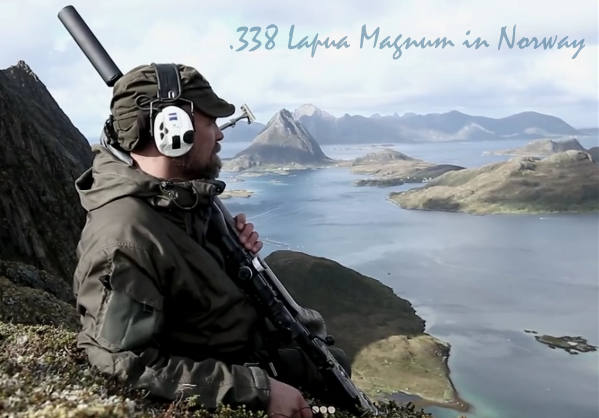
For our readers who are stuck at home under government orders, we are reprising a video feature about hunting in Norway. For those whose horizons have been limited due to the “shelter at home” response to the Coronavirus pandemic, we offer this getaway to scenic Vesterålen in northern Norway…
This is one of the finest shooting videos we’ve ever seen. Set in the scenic Vesterålen archipelago of northern Norway, this high-quality 15-minute video is part National Geograhic travelog, part ballistics lesson, part gear review. Given the current COVID-19 lockdowns, we wish we had the opportunity to join Ulf Lindroth and Thomas Haugland on their remarkable shooting adventure. This video was originally created for Great Britain’s Fieldsports TV Channel.
This is an outstanding video, recommended for anyone interested in long-range hunting.
Long range shooters Lindroth and Haugland traveled to the Arctic Circle to field test a new .338 LM Blaser R8 (in GRS stock) fitted with a Zeiss Victory V8 4.8-35x60mm scope. (Ammo is Norma-brand .338 Lapua Magnum). The video shows how they confirm the ballistics of the Norma factory ammo in the Blaser R8 rifle system.
Ulf and Thomas initially test out the system confirming drop at multiple yardages, and then use the rifle for practical accuracy. Ulf says: “If you know your hunting will demand a long shot, and you want to push the limit but still be sure to make the first-shot kill… If you want to do an ethical hunt, if you want to push that limit, you have to do [this kind of testing].”
Ulf Lindroth (above) observed: “We shot [at 808 meters] observed the misses, clicked our way into the target, and now we have the true drop at that distance… in this air pressure, in this temperature. From there we can start working to find our TRUE trajectory. And when we have THAT… we can get serious about some target shooting.”
.338 Lapua Magnum — Big-Bore High-Performance Cartridge
From WikiPedia: The .338 Lapua Magnum (aka 8.6×70mm) is a rimless, bottlenecked, centerfire rifle cartridge. It was developed during the 1980s as a high-powered, long-range cartridge for military snipers. Due to its use in the War in Afghanistan and the Iraq War, the cartridge has become widely available. The loaded .338 LM cartridge is 8.6 mm (0.34″) in diameter and 93.5 mm (3.68″) long. Muzzle velocity is dependent on barrel length, seating depth, and powder charge, and varies 2,890 fps to 3,000 fps for commercial loads with 250gr bullets.
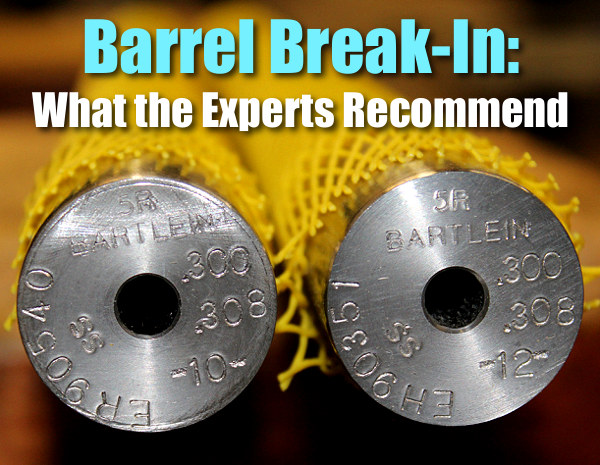
The question of barrel break-in is controversial. Some folks advocate an elaborate, lengthy cycle of shooting and brushing, repeated many times — one shot and clean, two shots and clean and so on. This, it is argued, helps barrels foul less and shoot more accurately. Others say minimal break-in, with patching and brushing after 10-15 rounds, is all you need. Still others contend that break-in procedures are a total waste of time and ammo — you should just load and shoot, and clean as you would normally.
We doubt if there will ever be real agreement among shooters concerning barrel break-in procedures. And one must remember that the appropriate break-in procedure might be quite different for a factory barrel vs. a custom hand-lapped barrel. This Editor has found that his very best custom barrels shot great right from the start, with no special break-in, other than wet patches at 5, 10, and 15 rounds. That said, I’ve seen some factory barrels that seemed to benefit from more elaborate break-in rituals.
What’s the best barrel break-in procedure? Eric Mayer of Varminter.com decided to ask the experts. Eric interviewed representatives of three leading barrel manufacturers: Krieger, Lothar-Walther, and Shilen. He recorded their responses on this video. In order of appearance, the three experts are:
Shilen, Krieger, and Walther Experts Talk about Barrel Break-in
Do I Need to Break-In a New Rifle Barrel?
Eric Mayer of Varminter.com says: “That is a simple question, [but it] does not necessarily have a simple answer. Instead of me repeating my own beliefs, and practices, on breaking-in a new rifle barrel, I decided to answer this one a bit differently. While we were at the 2016 SHOT Show, we tracked down three of the biggest, and most popular, custom barrel makers in the world, and asked them what they recommend to anyone buying their barrels, and why they recommend those procedures. We asked the question, and let the camera run!” Launch the video above to hear the answers — some of which may surprise you.
Barrel Break-in — Initial Inspection and Cleaning
This video explains that you should always inspect and clean the bore of your barrel before sending rounds through it. There may be remnants of the production process, such as lapping residues, that you’ll want to get out of the bore. We’ve even seen a few tiny metal pieces in some factory barrels. And it’s always wise to borescope a new barrel to see if there are visible defects in the rifling such as lands that have flawed edges — we’ve seen that on some cheaper barrels.
Barrel Break-In — Ian Klemm’s Surprising Observations
Here’s a 10-minute Vortex Nation interview with Ian Klemm. Ian, a 4-Time F-TR National Champion is one of America’s best long-range shooters. In this video, Ian explains his approach to barrel break-in, which may surprise you. Does barrel break-in even matter? Conventional wisdom says “Yes” and perhaps there’s some truth to that, but Ian argues that break-in is NOT nearly as important as the internet wants you to believe. Ian believes that you don’t need to waste a ton of time/ammo to get your barrel ready to shoot extremely accurately. This may be particularly true with premium hand-lapped custom barrels.
Barrel Break-In Procedures with Keith Glasscock
Keith Glasscock is also one of America’s greatest F-Class shooters who has finished second at the Nationals multiple times. Keith is also a highly-respected wind coach who has a popular YouTube video channel, Winning in the Wind. In this video, Keith explains his procedure for breaking-in his match barrels. He starts by bore-scoping the barrel and cleaning it. If he finds some burrs he may use some JB Bore Paste, a patch, and a worn brush and “give that throat a little scrub” (See 1:30 time-mark). He used different stroke lengths to avoid putting a “step” in the throat. When he’s satisfied he goes to the range. He fires the first five rounds, then cleans. He then fires quite a few rounds before cleaning the barrel again and beginning load development (See 8:25 time-mark).
General Barrel Break-in Procedures Recommended by Brownells
Brownells Gun Techs Steve Ostrem and Caleb Savant tackle a thorny topic: breaking in a new barrel. What IS breaking-in a barrel? And WHY do it? The rifling of a freshly machined barrel has microscopic burrs and sharp edges. “Breaking-in” is the process of putting bullets down the bore to smooth out those rough spots. The goal is to round down the sharp edges so they’re not stripping copper off a bullet as it travels the bore, which leads to fouling that leads to reduced accuracy and inconsistent groups. In a very minor way, you’re actually lapping the barrel. The breaking-in process works best on cut-rifled and button-rifled barrels. Cold hammer-forged, chrome-lined, or nitrided barrels — such as commonly found on AR-15s — may not benefit much from the process. Pistol barrels really don’t need to be broken in because larger-diameter bullets are not so much affected by tiny variations in the bore. Likewise, break-in is more helpful for a .17, .20, or .22 caliber rifle than a .45 caliber rifle.
George Gardner of G.A. Precision Talks About Barrel Break-In
G.A. Precision’s George Gardner is a leading figure in the PRS/NRL world. In this video, George makes the valid point that not all barrels require the same amount of break-in. George says some barrels require very little break-in, while others benefit from a more elaborate break-in process that helps reduce future copper and powder fouling. He calls this “seasoning” the barrel so it fouls less. For a typical barrel, George’s recommended process (4:25 time-mark) starts with one shot, then clean for three one-round cycles. This is followed by three shots then clean, with repeat 3-shot cycles if need. For cleaning George prefers nylon brushes (5:50 time-mark). NOTE: George also makes a very important point — you MUST swab the chamber and get it dry between cleaning cycles (5:30 time-mark).
Mark your calendars for the return of the Civilian Marksmanship Program’s Bianchi Cup International Pistol Tournament. The second longest-running pistol championship in the world, the 2025 CMP Bianchi Cup is set to run May 20-23, 2025 at the Green Valley Rifle & Pistol Club in Hallsville, Missouri.
About the CMP Bianchi Cup
The Bianchi Cup International Pistol Tournament was first held in 1979, making it the second longest running pistol championship in the world. This year, it will be hosted by the CMP May 20-23, 2025, at the Green Valley Rifle & Pistol Club in Missouri. The Bianchi Cup has been called the most prestigious pistol tournament in the world. Due to the high accuracy required in each stage of the Bianchi Cup, the tournament is considered one of the most difficult handgun championships on the planet.
The Bianchi Cup is Comprised of Four Events:
Practical Event: Competitors fire at distances from 10 yards to 50 yards under varying time limits from the shooting line.
Barricade Event: Competitors fire at targets on either side of the barricade at different distances and under varying time limits from within shooting boxes and behind barricades.
Falling Plate Event: Competitors fire at eight-inch round steel plates arranged in banks of six at distances from 10 to 25 yards under varying time limits.
Moving Target Event: Competitors fire from within shooting boxes at distances ranging from 10 to 25 yards at a target moving from left to right, with the target exposed for six seconds.
Bianchi Cup Open Class Pistol — Features in Review
Above an Australian lady competitor shoots Open Class pistol. Note the large flared grip extension, ported muzzle compensator, and elevated optic. Open pistols may also have special custom fittings: wings for barricades, mover base for leads, and prone pad for stability. Open Class pistols rule at the Bianchi Cup: “Unlike USPSA, all divisions compete heads up at Bianchi. While Bianchi recognizes wins in other divisions, only the absolute top score can win the Cup. Since Bianchi is typically won only with a perfect score, and often by X count, guns other than open are not really competitive.” See Pistol-Training.com.
Position Shooting with Pistols at Bianchi Cup
Competitors shoot from both standing and prone positions and are also required to shoot with both strong and weak hands at various stages. There are no make-up shots in the Bianchi Cup, adding to the difficulty.
Bianchi Cup 1911 Pistol Giveaway
Looking for a 1911 pistol? The Civilian Marksmanship Program (CMP) is giving away a vintage 1911 pistol (plus mags, holster, and ammo) for competitors who register for the upcoming 2025 CMP Bianchi Cup.
The 2025 Bianchi Cup match runs May 20-23 in Hallsville, Missouri. Those who sign up for the CMP Bianchi Cup BEFORE April 27, 2025 will be automatically entered to win.*
To have a chance to win, you must officially register for the 2025 Bianchi Cup. ALL paid registrants will be automatically entered for the raffle. To learn more and REGISTER for the 2023 Bianchi Cup, go to the CMP 2025 Bianchi Cup Web Page.
* The raffle is open to U.S. citizens only. If a non-U.S. citizen is drawn, he or she will receive $500 in place of the 1911 pistol. Those who have already purchased a pistol are still permitted to win.
Through the passage of Proposition KK last November, Colorado adopted a 6.5% state excise tax on the sale of firearms, ammunition, and certain firearm parts to Colorado consumers. Colorado’s new 6.5% guns/ammo tax took effect on April 1, 2025. The tax, codified by Colo. Rev. Stat. § 39-37-101, is levied on vendors (see below), but the amount is passed through to law-abiding Coloradans every time they purchase guns and ammo. The law also imposes burdensome registration and recordkeeping requirements on vendors and subjects them to harsh punishments for violations.
Legal experts believe this new law is unconstitutional and otherwise legally improper. Thankfully, this new Colorado gun tax is being challenged in the courts. The Second Amendment Foundation (2AF) has filed a lawsuit, Langston v. Humphreys, in Denver County District Court challenging Colorado’s Proposition KK as an unconstitutional tax on the exercise of a fundamental constitutional right. Joining SAF in Langston v. Humphreys are the National Rifle Association (NRA), Firearms Policy Coalition (FPC), Magnum Shooting Center, the Colorado State Shooting Association (CSSA), and a private citizen, Zachary Langston. Named as defendants are Heidi Humphreys, executive director of the Colorado Dept. of Revenue and Michael J. Allen, district attorney of El Paso County.
The complaint argues that Colorado’s new excise tax on guns and ammo violates the Second Amendment. Plaintifs seek a declaratory judgment that the tax is unconstitutional and plaintiffs further seek a permanent injunction forbidding the enforcement of the gun excise tax.
“Colorado’s firearms excise tax is an overt assault on the Second Amendment rights of law-abiding Coloradans and a deliberate attempt to discourage the exercise of constitutionally protected freedoms”, said John Commerford, Executive Director of the NRA Institute for Legislative Action (NRA-ILA). “Recently, anti-gun activists in Colorado have been adopting California’s radical gun control agenda to systematically erode gun rights in the state. We are pleased to join with other Second Amendment advocates in this lawsuit to protect and defend the fundamental right to keep and bear arms.”
The SAF, NRA and other plaintiffs contend that the state’s 6.5% excise tax on the retail sale of any firearm, firearm precursor part, or ammunition is unconstitutional in that it impermissibly singles out the exercise of a constitutional right for special taxation. There have been several rulings by the U.S. Supreme Court prohibiting such a tax scheme.
“Colorado’s new law impermissibly taxes an enumerated constitutional right”, said SAF Executive Director Adam Kraut. “Not only does the tax lack any basis in our nation’s history and tradition of firearms regulation, it violates Supreme Court precedent that states the exercise of constitutional rights cannot be targeted through taxation.”
“You simply cannot tax the exercise of a constitutionally-protected fundamental right” noted SAF founder and Executive V.P. Alan M. Gottlieb, who added that: “Federal legislation to prevent this sort of tax was introduced just days ago in both the House and Senate.”
New Requirements for Firearms Manufacturers, Gun Dealers, and Ammo Sellers
For the new guns/ammo tax Colorado defines a “Vendor” as a person or company doing business as an ammunition seller, firearms dealer, or firearms manufacturer. All Colorado Vendors must register with the Colorado Department of Revenue by April 1, 2025, and file annual registration renewals. After registration, Vendors are required to file monthly excise tax returns based on taxable products and submit excise tax payments to the state.
The 2025 NRA Annual Meetings & Exhibits will take place at the Georgia World Congress Center (GWCC) on April 24-27, 2025 in Atlanta, Georgia. The Exhibit Hall is open all three days and will showcase over 14 acres of guns and gear. There will also be numerous special events, plus entertainment. If you would like to attend, register for the event and book your hotel soon. The GWCC is the fourth-largest convention center in the United States.
The 2025 NRA Annual Meetings & Exhibits has events on the 24th and the convention hall will officially open at 9:00 AM on April 25. NRA members and immediate family receive free entry. Non-members can join online or at the door for immediate access. Visit NRAam.org for more information and to purchase tickets for special events.
The 154th NRA Annual Meetings & Exhibits will be held at the Georgia World Congress Center (see map below). Thousands of NRA members and their families will gather for a celebration of freedom and American values. The 14-acre exhibit hall will feature the latest guns and gear from firearm industry companies. The schedule of events also includes educational seminars, product demonstrations, and fundraising banquets to supprt Second Amendment rights.
Event Registration
CLICK HERE to REGISTER for the 2025 NRA Annual Meetings and Exhibits. NOTE: NRA Members and their immediate family get FREE ENTRY.
CLICK HERE for EVENT Schedule. There will be a powerhouse line-up of political speakers this year. In addition there will be major fundraising events featuring top brand giveaways.
MidwayUSA is Official Sponsor of 2025 NRA Event
The National Rifle Association of America is pleased to announce MidwayUSA as the official sponsor of the 2025 NRA Annual Meetings & Exhibits to be held in Atlanta, Georgia, on April 25-27. MidwayUSA has been a longtime sponsor of NRA’s annual flagship event.
“We’re pleased to continue our support of the NRA Annual Meetings and Exhibits and look forward to joining our customers in Atlanta,” said Adam Augustine, MidwayUSA VP of eCommerce.
Spring Groundhog Hunting — Fun and Challenging
Springtime is the right time for groundhog hunting in the Northeast USA. Groundhog hunting is both fun and challenging. In today’s Saturday Showcase, we feature three videos showing successful groundhog hunts. Then there is a video about checking your equipment and verifying your varmint rifle zero.
We’ve even included a good video offering cooking tips for groundhog/woodchuck.* Yes groundhog meat can be quite savory — used in stews, sandwiches, or tacos. Last but not least we’ve included a section on groundhog shooting matches. These are fun matches with paper and/or steel groundhog targets.
Groundhog Hunt Report — Successful Stalk and Shoot
Here’s a great Realtree.com video showing successful groundhog hunts. This covers the process of spotting and tracking groundhogs on farmlands. Woodchucks are sensitive creatures that get easily spooked. This video shows that groundhog hunters need patience and skill, plus an accurate rifle.
Groundhog Hunting on the Family Farm with .17 HMR
In this video, the host employs his CZ 457 rifle chambered in .17 HMR to hunt groundhogs on his farm. The video provides a hunter’s POV with excellent Scope-Cam footage. This young shooter has 280 videos on his popular Blocketh Outdoors Channel including videos showing how to stalk groundhogs successfully. These critters go to ground quickly if they see or hear the hunter. NOTE: The lead photo for this Saturday Showcase comes from another Blocketh Outdoors groundhog video.
Groundhog Killshot Compilation Video
Here’s a classic “killshot” video showing multiple hits on groundhogs. If you want to see how a well-aimed varmint bullet can flip, spin, and elevate a groundhog, this video will keep you entertained. While we like explosive hits on prairie dogs, it may be better to use a solid, non-expanding bullet if you plan to harvest the groundhog (aka woodchuck) meat.
Groundhog Hunting — Importance of Confirming Your Zero
This AR15 Hunter channel video covers getting ready for spring groundhog season. This is a helpful video that shows how to confirm your zero on your varmint rifle. If you have an AR-platform Modern Sporting Rifle, this video is worth watching.
If you don’t have groundhogs in your part of the USA, don’t fret. You can still have fun hunting smaller varmints such as ground squirrels and Prairie Dogs. Here’s a good video covering P-dog hunts with a suppressed .223 Rem AR. The video covers recommended equipment including bipod, tripod, and optics.
Groundhog Matches — Fun Shooting at Paper and Steel ‘Hogs
Along with actual groundhog hunting, many shooters like to shoot paper and/or steel groundhogs in club groundhog competitions. These are fun matches that you can shoot with a variety of rifles. Our first choice would be a 22 BR for ranges out to 450 yards or a 6 BRA if targets are farther out. One popular match in the Northeast is the St. Thomas Ground hog shoot in Pennsylvania (see below).
At clubs across the country, varmint fun shoots (also known as “groundhog matches”) are becoming more popular every year. In these matches, usually shot from the bench, you engage paper targets, clay pigeons, steel “critter” silhouettes, or some combination of paper and reactive targets. Shooters like these matches because you can shoot a wide variety of rifles, you don’t have to spend a fortune to be competitive, and there is fun for the whole family. Rules are inclusive — you won’t be turned away because your rifle is two ounces overweight. A large percentage of the match fees usually go back to shooters in the form of cash prizes. And the level of camaraderie is high.
St. Thomas Groundhog Shoot, Report by Jonathan Trivette
Nestled at the base of a mountain in south-central Pennsylvania is the St. Thomas Sportsmen’s Association. On a cool Saturday morning you’ll find some of the area’s best shooters at the monthly Groundhog Match. The match attracts shooters from Virginia, Maryland, West Virginia, and of course Pennsylvania.
It may not be the longest-yardage match in the area, but it can be the one of the toughest. The range is sloped up the mountain a little so the winds can be very tricky. Often times the three wind flags at 200, 300, and 400 yards will all be blowing in different directions.
* “Groundhog” and “Woodchuck” are simply two different names for the same animal. Both terms have been used in the English language since the 1600s. In many places, the terms are used interchangeably, but “groundhog” is now increasingly more common in the USA.
A new Vortex video series, Cartridge Talks Comparisons, looks at multiple variables along with ballistics gel tests to determine the comparative performance of popular cartridge types. Each Month, Cartridge Talks will examine and test two popular cartridges, comparing their head to head performance. In Episode 1, Vortex Nation™ hosts Mark Boardman and Ryan Muckenhirn pit the 6.5 Creedmoor and .308 Winchester cartridges against each other, examining projectile performance. Mark and Ryan then make conclusions about the applications best suited to each cartridge type.
Cartridge Comparison 14-minute video, Highlighting Ballistic Gel Testing
This first Cartridge Talks Episode pits the 6.5 Creedmoor against the .308 Winchester in a head-to-head, ballistics gel-induced bullet battle. Ballistics (drop/drift), penetration ability, terminal performance and other variables are tested with a variety of tools and tests. Viewers are invited to check out Episode 1, and suggest future cartridge battles in the comments section.
Here is the full 67-minute 6.5 Creedmoor vs. .308 Win Cartridge comparison video:
“With the myriad of cartridges available to the big game hunter, picking which chambering is best for you and your application can be a daunting task,” says Muckenhirn. “In Cartridges Talks, we put our biases on the shelf and put as much scientific process to this as possible. From ‘shootability’ and accessibility, to terminal performance as observed in ballistics gel, Cartridge Talks wades through the numbers and figures with you, loads you up with the pertinent information, and helps you select the ideal cartridge for your next hunt!”
For today’s Saturday at the Movies special, we provide a selection of videos showcasing rifle and pistol cartridge types — from tiny .17 caliber cases to huge 20mm cases. Two of the videos use advance computer animation to provide 3D views of dozens of cartridge types. Then there are some expert commentaries by Jerry Miculek and Ron Spomer discussing the characteristics and performance of various cartridge types. Finally, we provide two videos that discuss rimfire cartridges and show how .22 LR rounds are produced in a modern CCI factory.
90 Different Rifle Cartridge Types in Computer Animation
In this rifle ammunition comparison animation there are 90 different cartridge types, from very small (.22 Flobert) to very, very big (20mm Vulcan). This video employs sophisticated, 3D CAD animation to showcase 90 different rifle cartridges, one after the other, in sequence. It covers from .17 Caliber up to 20mm. Obviously a lot of time and effort went into this video, but it really is cool to see so many different cartridge types in one 3.5-minute video.
After the full line-up is complete at 1:41, the video then provides other smaller comparison, such as multiple large hunting cartridges (2:15) and .22 Caliber cartridges (2:45, see above). All the cartridge models are made using Autodesk Inventor software, and then the “line-up” animation was completed with Autodesk Showcase.
Cartridge Types Included (in Caliber Order, then Metric Order):
1) .17 HM2
2) .17 HMR
3) .204 Ruger
4) .218 Bee
5) .22 Flobert
6) .22 Hornet
7) .22 LR
8) .22 Magnum
9) .22 PPC
10) .22 Short
11) .220 Jaybird
12) .223 Rem/5.56x45mm
13) .223 WSSM
14) .224 Weatherby Magnum
15) .225 Winchester
16) .240 Weatherby Magnum
17) .243 Winchester
18) .25 Remington Auto
19) .250 Savage
20) .25-06 Remington
21) .256 Winchester Magnum
22) .257 Roberts
23) .260 Remington
24) .264 Winchester Magnum
25) .270 Weatherby Magnum
26) .270 Winchester
27) .280 British
28) .280 Remington
29) .284 Winchester
30) .30 Carbine
31) .300 H&H Magnum
32) .300 Rem Ultra Magnum
33) .300 Savage
34) .300 Winchester Magnum
35) .300 Win Short Mag (WSM)
36) .30-06 Springfield
37) .303 British
38) .30-30
39) .308 Norma Magnum
40) .308 Winchester
41) .32 Winchester Special
42) .325 WSM
43) .338 Lapua Magnum
44) .35 Whelen
45) .350 Remington Magnum
46) .375 H&H Magnum
47) .376 Steyr
48) .408 Cheyenne
49) .416 Remington Magnum
50) .416 Weatherby Magnum
51) .444 Marlin
52) .450 Marlin
53) .450 Nitro Express
54) .458 Win Magnum
55) .45×70
56) .460 Weatherby Magnum
57) .465 H&H Magnum
58) .470 Nitro Express
59) .50 BMG / 12.7×99 NATO
60) .500 jeffery
61) .505 Gibbs
62) .577 Nitro Express
63) .577 Tyrannosaur
64) .600 Nitro Express
65) .700 Nitro Express
66) .950 JDJ
67) 4.6×30 mm
68) 4.6x30mm
69) 5.6×50 Magnum
70) 5.7x28mm
71) 5mm/SMc
72) 6mm LEE
73) 6.5×55 Swedish
74) 6.5×6 mm Schuler
75) 6.8mm Remington SPC
76) 6mm PPC
77) 6×45 mm
78) 7mm Weatherby Magnum
79) 7mm Remington Magnum
80) 7mm Rem Ultra Magnum
81) 7.62×39 mm FMJ
82) 7.7×58 Arisaka
83) 7.95×57 Mauser
84) 8mm Remington Magnum
85) 9.3×62 mm
86) 9.3×64 Brenneke
87) 14.5×114 mm
88) 20mm Vulcan
89) 25mmx137mm
90) 30mmx173 mm
Ammunition Size Line-Up — from Tiny to Massive
This animation video shows the size comparison of ammunition from a 2.34mm rimfire caliber to the massive 800mm caliber shell of the Schwerer Gustav railway cannon used by German forces in World War II. This video includes many common rifle and pistol cartridges/calibers, but also includes large artillery ammunition. This video has very good CGI Graphics. Below is part of the line-up from the .17 Remington Fireball (far left) to the famed .50 BMG (far right):
Ammunition Types Showcased in this video:
2.34mm rimfire
2.7mm Kolibri
3mm Kolibri
4.25 mm Liliput
.17 Hornady Mach 2
.17 Remington Fireball
.17 Hornady Magnum Rimfire
.22 Long Rifle
.22 Winchester Magnum Rimfire
HK 4.6×30mm
4.6×36 Loffelspitz
5.45mmx18 MPTs
5.7×28mm SS190
.280 British 7×43
.297/230 Morris Short
.297/230 Morris Long
.30 Pedersen 7.65×20mm
7.92×33mm Kurz
.300 Winchester Short Magnum
8×50mmR Mannlicher
.499 LWR
.577/450 Martini–Henry
.600 Nitro Express
.470 Nitro Express
.50 Beowulf
.50 BMG
20×102 M55A3
25×137 M793
Popular Cartridges/Calibers for Self-Defense and Hunting
This video focuses on popular calibers/cartridges used for self-defense and hunting. It provides a quick but informative overview of the capabilities (and intended uses) of many types of pistol, rifle, and shotgun ammunition. The video discusses the pros/cons of various cartridge types and explains how you would select ammo for a particular purposes (e.g. skeet loads vs. defense shotshells). If you are considering buying a carry pistol and are undecided about caliber choice, this is a good video to watch.
Flattest-Shooting Cartridges by Caliber (Ron Spomer)
In this 15-minute video, hunting expert Ron Spomer examines a variety of standard and wildcat cartridges from .17 caliber all the way to .338 caliber. For each caliber, Ron picks a flat-shooting “winner” and provides some ballistics comparison tables. This video is quite popular, with over 550,000 views on YouTube.
Ammo Types and Calibers — Jerry Miculek Explains the Basics
In this video, legendary shooter Jerry Miculek talks about popular types of pistol and rifle ammunition and the various bullet options used for plinking, competition, and self-defense. Jerry, one of the greatest pistol shooters on the planet, provides useful insights on cartridge selection and bullet choices. Jerry notes: “There are a TON of different types of ammunition” so he explains the basics. And Jerry answers common questions such as: “What is the difference between ball and hollow-point bullets?” and “What type of gun takes rimmed cartridge versus rimless?”.
.22 Caliber Rimfire Cartridges — Some Key Facts Revealed
We recommend all .22 rimfire shooters watch this video from Old English Outfitters. It explains some important facts and clarifies some common misconceptions about to .22 caliber ammunition. To learn more about modern .22 LR rimfire ammo, we also recommend the video below, which shows how CCI .22 LR ammunition is manufactured, start to finish.
BONUS Video — How .22 LR Ammunition Is Made
YouTube host 22Plinkster toured the CCI/Speer production facility in Lewiston, Idaho. While touring the plant, 22Plinkster was allowed to capture video showing the creation of .22 LR rounds from start to finish. This is a fascinating video, well worth watching.
This revealing video shows all phases of .22 LR ammo production including cupping, drawing, annealing, washing, drying, head-stamping, priming, powder charging, bullet seating, crimping, waxing, inspection, and final packaging. If you’ve got ten minutes to spare, we really recommend you watch the video from start to finish. You’ll definitely learn some new things about rimfire ammo.
Ruger Super GP100 Revolver in 9mm Luger (9x19mm)
Wouldn’t it be cool if you could shoot your 9mm semi-auto pistol ammo in an ultra-accurate revolver? Well you can. Ruger adapted its existing Super Redhawk frame to create the Super GP100 9mm Luger (9x19mm) revolver. As you can see, the Super GP100 9mm features a stubby 8-round PVD-coated cylinder to better fit the 9x19mm round. According to Guns.com the 9mm GP100 “uses a cylinder and extractor cut for moon clips to speed up reloading [and] sports a 6-inch half-lug sleeved and shrouded barrel with an 11-degree target crown[.]”
Watch this GunBlast video review to see how this unique Ruger 9x19mm wheelgun performs. Reviewer Boge Quinn said this a “competition grade gun” with nice fit and finish. Out of the box the Super GP100 9mm had a 9.5-lb double-action pull and a 4.5-lb single action trigger pull. It took a while for the pull to smooth out Quinn noted. Also, he said that if you do NOT use the supplied moon-clips it is awkward to remove the spent cartridges: “You don’t have to use a moon clip, but I don’t know why you wouldn’t… it just works great that way.”
The 9×19mm Parabellum (aka 9mm Luger) cartridge was introduced in 1902 by German weapons manufacturer Deutsche Waffen und Munitionsfabriken (DWM) for the Luger semi-auto pistol. Now 120 years later, Ruger brings us a sturdy, 6″-barrel revolver for this popular cartridge. Ruger adapted its existing Super Redhawk frame for this Super GP100 9mm revolver. In this video, Ruger engineer Mark Gurney explains the features of the Super GP100 9mm revolver:
Super GP100 9x19mm Features
Triple-locking cylinder locked into the frame at front, rear and bottom for more positive alignment and dependable operation.
High-strength stainless steel cylinder is fluted and shortened to reduce overall mass and increase rotational speed. Cylinder has PVD finish for durability and ease of extraction.
Polished and optimized internals, a centering boss on the trigger, and centering shims on hammer deliver a smooth double-action trigger pull with crisp/consistent let-off.
Cylinder and extractor are cut for moon clips to speed reloading during intense competition. Ships with three full moon clips and moon clip tool. The ejector and chamber mouths have a light chamfer to aid loading with moon clips.
Hogue hardwood grip is hand-finished for a smooth, polished feel. Grip frame accommodates a wide variety of custom grips.
Transfer bar mechanism provides security against accidental discharge.
Cold hammer-forged barrel has precise rifling for accuracy and longevity.
Barrel features 11° target crown for competitive-level accuracy.




 We doubt if there will ever be real agreement among shooters concerning barrel break-in procedures. And one must remember that the appropriate break-in procedure might be quite different for a factory barrel vs. a custom hand-lapped barrel. This Editor has found that his very best custom barrels shot great right from the start, with no special break-in, other than wet patches at 5, 10, and 15 rounds. That said, I’ve seen some factory barrels that seemed to benefit from more elaborate break-in rituals.





 Spring Groundhog Hunting — Fun and Challenging
 Along with actual groundhog hunting, many shooters like to shoot paper and/or steel groundhogs in club groundhog competitions. These are fun matches that you can shoot with a variety of rifles. Our first choice would be a 22 BR for ranges out to 450 yards or a 6 BRA if targets are farther out. One popular match in the Northeast is the St. Thomas Ground hog shoot in Pennsylvania (see below).


