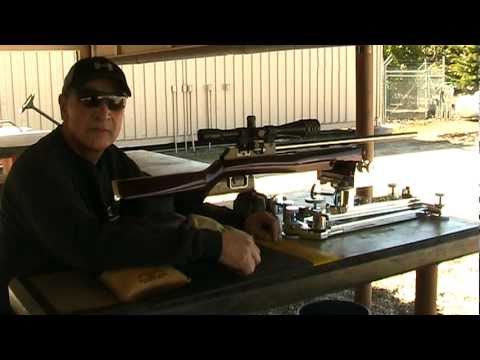
At SHOT Show 2013 we had the chance to chat with legendary barrel-maker John Kreiger of Krieger Barrels. In this wide-ranging interview, John addressed a number of questions our readers often pose…. What is better for a 6mm, 0.236″ land or 0.237″ land? What are the pros/cons of various barrel types: 3-groove, 4-groove, 6-groove, 8-groove, and 5R? What types of land/groove configurations clean up more easily? (John says the 5R might be the winner there).
John also discusses barrel cleaning and he explains why it’s unwise to pull a dirty brush back across your delicate crown: “The problem comes from the fact that abrasive materials — powder and primer residues in particular — get embedded in the brush. Essentially that is how a lap works.”
When we suggested that Krieger Barrels might want to offer three-groove barrels in the future, John surprised us by revealing that he has been considering putting a 3-groove design into production. John says that, in theory at least, a canted-land 3-groove holds a lot of promise. John hopes to build some prototype 3-grooves to test. Krieger Barrels has a 300-yard underground tunnel where barrels with various land/groove configurations and calibers can be tested using a return-to-battery fixture. John admits that tunnel testing of barrels is “on the back burner” as his company focuses on filling orders. But he says that he has a strong personal interest in testing different land/groove configurations, different amounts of choke, and different internal dimensions. We hope we’ll be able to share some results from the Krieger Barrels test tunnel in the near future.
Sinclair Int’l has released a 7-part series of video interviews with Walt Berger (founder of Berger Bullets) and Eric Stecker (Berger’s Exec. VP and Master Bulletsmith). The series is hosted by Sinclair’s President, Bill Gravatt. You can watch Parts 1 and 2 of the interview here, and we’ve provided links to the remaining Parts 3 through 7. All seven interview segments offer interesting material. Part 6 mentions up and coming stuff like the reloading manual. Part 7, over 13 minutes long, contains interesting discussions of bullet testing and the hunting performance of Berger VLDs. NOTE: You can view this entire video series (and many other videos) on Sinclair’s YouTube Channel Page.
If you’ve never visited SHOT Show, you may not know what a huge operation it represents. Filling the Sands Expo and Convention Center in Las Vegas with 1600 exhibits covering 630,000 square feet is like building a small indoor city from scratch. Starting from bare floors and walls, workers labor furiously to assemble 1600+ booths before Show attendees storm the gates. And then, a few days later, all those exhibits must be torn down, boxed up, and shipped out. It’s a Herculean task. And here, with the aid of time-lapse photography, you can experience the entire SHOT Show in just 96 seconds.
In this short video filmed at SHOT Show 2012, time-lapse photography is used to compress the entire SHOT Show into one 96-second montage. Watch a small section of the Show floor from start to finish (including prep time) at this year’s event. It’s a fun video to watch — you can “experience” an entire Show day in a mere 10 seconds. For example, Tuesday starts at the 0:33 second mark and Wednesday begins just 10 seconds (of video time) later. Appropriately, the soundtrack is “Flight of the Bumblebee” by Nikolai Rimsky-Korsakov.
SHOT Show 2013 kicks off in two weeks in Las Vegas. One of our top priorities is to talk with the bullet makers from Berger, Hornady, Lapua, and Nosler.
At SHOT Show 2012 we chatted with Berger Ballistician Bryan Litz about Berger’s popular line of Hybrid bullets. Berger now offers a wide range of Hybrids in multiple calibers and weights. In fact, for .30-Caliber shooters, Berger now offers six different Hybrid match bullets, with weights from 155 grains up to 230 grains. New .338 Cal Tactical Hybrids were released in 2012 and big .375 Cal, and .408 Cal Hybrids are in the works (read more below).
Bryan tells us: “The hybrid design is Berger’s solution to the age old problem of precision vs. ease of use. This design is making life easier for handloaders as well as providing opportunities for commercial ammo loaders who need to offer a high performance round that also shoots precisely in many rifles with various chamber/throat configurations.”
For those not familiar with Hybrid bullets, the Hybrid design blends two common bullet nose shapes on the front section of the bullet (from the tip to the start of the bearing surface). Most of the curved section of the bullet has a Secant (VLD-style) ogive for low drag. This then blends in a Tangent-style ogive curve further back, where the bullet first contacts the rifling. The Tangent section makes seating depth less critical to accuracy, so the Hybrid bullet can shoot well through a range of seating depths, even though it has a very high Ballistic Coefficient (BC).
In the video we asked Bryan for recommended seating depths for 7mm and .30-Caliber Hybrid bullets. Bryan advises that, as a starting point, Hybrid bullets be seated .015″ (fifteen thousandths) off the lands in most barrels. Watch the video for more tips how to optimize your loads with Hybrid bullets.
Berger is Developing New Large-Caliber and Hunting Hybrids
In related news, Berger announced that it will be offering a series of .338-caliber Hybrids. First Berger is reintroducing the Gen 1 .338 Cal, 300gr Hybrid bullet in Berger’s Hunting line. Berger will also be making a 250gr Hybrid Hunting bullet using the same type of jacket as the original Gen 1 300gr Hybrid bullet. In addition, Berger has released a .338 Cal 250gr Match Hybrid OTM Tactical bullet, along with a 300gr Match Hybrid OTM Tactical projectile.
More big bullets are on the drawing board. Our source says “.375 Caliber and then .408 Caliber are the next new calibers to be made at Berger”. These are in the design phase, and Berger needs to build a new machine, so the .375s and .408s will not be available until 2013 at the earliest.
This Christmas Eve day, amidst the shopping frenzy, let’s not forget the scores of American military personnel, volunteers all, who remain deployed overseas, thousands of miles from home. In this video, Marine Master Sgt. Robert Allen sings a Christmas song he wrote for his wife back home. Allen is one of the thousands of service men and women still deployed in Afghanistan. His song helps us remember the many soldiers, sailors, Marines, and airmen who serve this nation in battle zones far, far from home. MSG Allen hopes his song “will help people understand that though we’re willing to do it, it’s still heart-breaking”.
We live in a digital, electronic era. The very story you’re reading right now consists of digital data packets transmitted electronically around the globe. Because of cost factors, 99+% of shooting matches in the USA still rely on old-fashioned manual scoring methods. However, target scoring can be done faster and more precisely with electronic scoring systems. Olympic and international CISM shooting competitions now employ electronic target systems. And electronic scoring is widely used in Europe. Virtually all the rifle and pistol events at the recent ISSF World Championships in Munich featured electronic scoring — complete with large, overhead digital displays so the audience could track the action, shot for shot.
Below is a video showing an electronic scoring system developed by Norway’s Kongsberg Mikroelektronikk AS. Watch as a prone shooter puts five rounds on a 300m target. You can see the group form on the video screen at his shooting station. He’s a good shooter (with an accurate rifle). The first three shots are touching.
As you can see from the video, viewing shots on the monitor is easier than using a spotting scope and waiting for targets to be marked. And, electronic targets eliminate the need for target pullers in the pits.
The Kongsberg target systems, like the electronic systems produced by Sius Ascor of Switzerland, do more than just display shot locations to the shooter. The target units automatically calculate scores, which are transmitted to a central computer. This can provide updated competitor rankings, and can even display the results to event spectators on large view screens.
CLICK HERE for a longer streaming Flash VIDEO showing how electronic target systems work. This video, produced by Sius Ascor, shows Olympic target systems in action.
FMG Publications has partnered with renowned firearms instructor Clint Smith in a timely video covering the precepts of safe gun-handling. Commonly known as the “Four Gun Safety Rules,” these simple steps act as a safeguard, helping to prevent tragedy.
“I was heartbroken to read about the father who accidentally shot his son in Mercer, PA, earlier this week,” said FMG Publications Director Randy Molde. “If he would have observed just one of the four gun safety rules, his son would still be alive. It’s a sobering reminder that we can never take gun safety for granted. Hopefully our viewers will share this video and, more importantly, remind friends and family of the four gun safety rules.”
Clint Smith, Director of the Thunder Ranch training facility in Oregon, is widely recognized as one of the top shooting instructors in the nation.
Yamil Sued provides expert photography tips in Capturing the Action, an instructional DVD from Panteao Productions. In this new DVD, Yamil reviews camera options, camera settings, which lens to use, support gear, range etiquette, positioning and composition, shooting in low light, shooting staged shots, post-production, and much more. Yamil, who also competes in action shooting matches, explains how to get great action photos and memorable images of your fellow shooters. Yamil knows his stuff — he regularly works for Smith & Wesson, Dillon Precision and other top-tier gun industry companies.
Though Yamil is probably best known for his action photography, Yamil is also a gifted studio photographer — you’ve seen his work on numerous magazine and catalog covers.
Watch Preview Trailer for Yamil Sued Photography DVD
Yamil Sued has been a working professional photographer for 27 years. He is a graduate of Brooks Institute of Photography in Santa Barbara, California, with a Major in Illustration Photography and Color Technology.
If you’re looking to achieve pro-quality results when photographing action shooting matches, this video is worth getting. Right now, as a holiday promo good through December 26th, you can pre-order the DVD for $37.49 — that’s 25% off the regular $49.99 price. Order direct from PanteaoProductions.com.
Our friend and product tester Joe Friedrich is the proud owner of a spectacular front rest from James Pappas. This rest is used for both air rifle and rimfire benchrest matches. The fancy Pappas front rest is a shortened, front-support-only version of the Pappas one-piece rest, which is popular with rimfire benchresters. Pappas engineered this rest to comply with air rifle benchrest rules which do not allow use of integrated (one-piece) front and rear rests. The end result was a 30.8-lb masterpiece of machining.
The workmanship on this Pappas front rest is astounding. Accurately described as a “work of art” by Joe Friedrich, this rest, crafted of aircraft-grade aluminum, sets new standards for “Benchrest BLING”. It looks like it should be on display in an art museum. Nearly all components of this rest, including the adjustment controls, have been polished to a mirror finish.
Convenient Rear Windage and Elevation Controls
The Pappas front rest features separate fine-tuning controls for windage and elevation, plus a central gross-elevation control. Normally, once the rest is centered-up on the target, you can make all needed elevation and windage adjustments with the rear (fine-adjustment) controls. In the video below, Joe explains how the controls work as he practices with his modified Theoben Rapid MFR air rifle. Joe hopes to use this new Pappas rest in the upcoming Air Rifle Benchrest Worlds to be held in South Carolina this summer. (Note: In the last minute of the video, the back-lighting was so intensely bright that we lost detail in the foreground. We apologize for that flaw, but you can still hear the audio.)
Price for this Masterpiece? Don’t Ask…
If you are interested in getting a similar rest, visit PappasRimfireProducts.com, or call James Pappas directly at (817) 735-9883. Be forewarned — James said “If you need to ask about the price, you probably can’t afford it.” This is truly the “Rolls-Royce” of front rests, and it will be priced accordingly.
The NRA’s popular Guns & Gold TV Series returns to The Sportsman Channel for ten (10) new episodes in 2013. Season Two kicks off Monday, January 7th and future episodes of Guns & Gold will air Monday nights at 9:00 pm ET/PT. Guns & Gold was the #1-rated show on The Sportsman Channel in early 2012. This season’s 10 all-new episodes will feature “more guns, cooler guns and weirder guns”.
During Guns & Gold’s new season, NRA National Firearms Museum experts travel around the country, making a circuit of important gun shows (including the NRA Annual Meeting). At each venue, Museum Director Jim Supica and Senior Curator Phil Schreier appraise collectible and unusual firearms brought in by show attendees. Think of this as a PBS-style “Antiques Roadshow”, but with antique and unusual arms as the centerpiece. For more info, visit NRAgunsandgold.com.
Watch the video below to see a Guns & Gold sample from 2012 covering Teddy Roosevelt and the Winchester Model 1895. Roosevelt loved the 1895. He famously referred to his 1895, chambered in .405 Winchester, as his “Big Medicine” rifle. Did you know T.R. took a crate of 1895s to Africa for his safaris?
Report based on story by Kyle Jillson in NRAblog.com


 At SHOT Show 2013 we had the chance to chat with legendary barrel-maker John Kreiger of Krieger Barrels. In this wide-ranging interview, John addressed a number of questions our readers often pose…. What is better for a 6mm, 0.236″ land or 0.237″ land? What are the pros/cons of various barrel types: 3-groove, 4-groove, 6-groove, 8-groove, and 5R? What types of land/groove configurations clean up more easily? (John says the 5R might be the winner there).
 If you’ve never visited SHOT Show, you may not know what a huge operation it represents. Filling the Sands Expo and Convention Center in Las Vegas with 1600 exhibits covering 630,000 square feet is like building a small indoor city from scratch. Starting from bare floors and walls, workers labor furiously to assemble 1600+ booths before Show attendees storm the gates. And then, a few days later, all those exhibits must be torn down, boxed up, and shipped out. It’s a Herculean task. And here, with the aid of time-lapse photography, you can experience the entire SHOT Show in just 96 seconds.

 This Christmas Eve day, amidst the shopping frenzy, let’s not forget the scores of American military personnel, volunteers all, who remain deployed overseas, thousands of miles from home. In this video, Marine Master Sgt. Robert Allen sings a Christmas song he wrote for his wife back home. Allen is one of the thousands of service men and women still deployed in Afghanistan. His song helps us remember the many soldiers, sailors, Marines, and airmen who serve this nation in battle zones far, far from home. MSG Allen hopes his song “will help people understand that though we’re willing to do it, it’s still heart-breaking”.
 We live in a digital, electronic era. The very story you’re reading right now consists of digital data packets transmitted electronically around the globe. Because of cost factors, 99+% of shooting matches in the USA still rely on old-fashioned manual scoring methods. However, target scoring can be done faster and more precisely with electronic scoring systems. Olympic and international CISM shooting competitions now employ electronic target systems. And electronic scoring is widely used in Europe. Virtually all the rifle and pistol events at the recent ISSF World Championships in Munich featured electronic scoring — complete with large, overhead digital displays so the audience could track the action, shot for shot.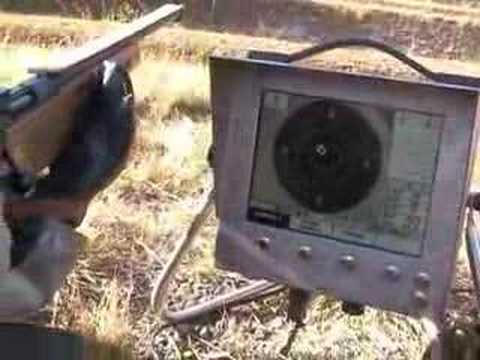


 FMG Publications has partnered with renowned firearms instructor Clint Smith in a timely video covering the precepts of safe gun-handling. Commonly known as the “Four Gun Safety Rules,” these simple steps act as a safeguard, helping to prevent tragedy.
 Yamil Sued provides expert photography tips in

 Yamil Sued has been a working professional photographer for 27 years. He is a graduate of Brooks Institute of Photography in Santa Barbara, California, with a Major in Illustration Photography and Color Technology.