“Better living through chemistry”? How about better ballistic protection through a new ceramic-based “Spinel” bullet-proof transparent material. Spinel Ceramic Armor, though transparent like glass, is a completely new compound that starts as a powder. Produced by ArmorLine, the amazing new “Spinel Transparent Ceramic Armor” is HALF the thickness and HALF the weight of conventional, laminated “bullet-proof glass” with similar ballistic protection. Being much lighter than “bullet-proof glass”, the Spinel Transparent Armor is ideal for use in vehicles and aircraft where weight is an important factor. By replacing laminated glass with Spinel Transparent Armor plates, hundreds of pounds could be shaved from the weight of a troop transport vehicle without sacrificing any ballistic protection.
As shown in the above video, a “Spinel” ceramic plate can survive a direct hit from a .50 BMG round fired at close range. By all indications, this is an important new technology that should find its way into military vehicles in the near future. ArmorLine’s manufacturing facility, scheduled to come on-line in the first quarter of 2011, will supply transparent Spinel ceramic plates to window, lens, and optical system suppliers and end-users.
Nancy Tompkins will be bringing out a new Second Edition of her popular book: Prone and Long-Range Rifle Shooting. Nancy hopes to have Second Edition books available by mid-June, 2012. The enhanced Second Edition will feature updates to the current chapters, more photos, plus an entirely new chapter on F-Class Shooting. The Second Edition will be issued as a hardback only, for increased durability. Price isn’t set yet, but Nancy hopes to keep the price “under $40.00″. The book will be available from Sinclair Int’l and direct from Nancy who plans to have a new website for the book running by the end of May.
While visiting the new Lapua Rimfire Test Center in Mesa, Arizona, we had a chance to chat with Nancy, and learn about the Second Edition of Prone and Long-Range Rifle Shooting. Watch the video to hear Nancy talk about her plans for the updated version of her book.
Tompkins Book a Must-Read for Long-Range Shooters
Nancy’s updated treatise is a must-read for serious Palma, F-Class, and High Power shooters. The sections covering Mental & Physical training and Reading Wind & Mirage will benefit all precision shooters, regardless of discipline. Other topics include Shooting Fundamentals, International Competition, and Loading for Long Range. Nancy Tompkins has won the National Long Range Championships four times, and is the first woman ever to win the National High Power Championship. (The second was Nancy’s daughter SGT Sherri Gallagher.) Nancy has also won the prestigious Wimbledon Cup, and is a 5-time Leech Cup winner. Nancy has been on six Palma Teams (as both a shooter and a coach). (Note: photo shows First Edition of book.)
Our story on Gary Eliseo’s “Mad Minute” drill drew comments from readers worldwide, including C. Lemmermann from Denmark, who wrote: “In Scandinavia we have this competition called ‘Stangskyting’. It’s similar to the ‘Mad Minute’ but we only have 25 seconds to hit the target [at] 200-300m distance with a 6.5×55 [target rifle].” In the Stangskyting video below a shooter named Børklop puts 16 rounds on target in just 25 seconds. (He starts with a round in the chamber and cycles through three, 5-round magazines). Børklop’s performance, with just a sling and iron sights, is impressive. He’s shooting a Sauer 200 STR target rifle with 5-round magazine. Note that Børklop manipulates the Sauer’s bolt with his thumb and index finger, while pulling the trigger with his middle finger.
This Guy Could Break the “Mad Minute” Record
Børklop’s rate of fire, 16 rounds in 25 seconds, is the equivalent of 38.4 rounds in 60 seconds. That’s a notable number because the record for the “Mad Minute”, a British Army marksmanship drill, is 38 rounds in one minute. That record was set in 1914 by Sergeant Instructor Alfred Snoxall, and still stands. So as you watch Børklop, keep in mind that Snoxall shot that fast for a full minute with a Lee-Enfield nearly 100 years ago!
Børklop has an average cycling time of 1.56 seconds per shot, starting with a round in the chamber. To beat the record of 38 rounds, he would need to make seven mag changes in sixty seconds. All those mag swaps could reduce his average time per shot, making it difficult to achieve 38 hits in a minute. But, if Børklop could use 10-round mags with his Sauer STR, this guy has the skills to break the record.
To emphasize the capabilities of the WWI-era British shooter who set the record, Snoxall shot as fast as Børklop does, but Snoxall reloaded with stripper clips. Snoxall’s SMLE (Lee-Enfield) rifle also had relatively crude open sights and the stock was far less ergonomic than Børklop’s Sauer STR stock.
Here’s another Stanskyting video showing John O. Ågotnes shooting rapidfire with his Sauer 200 STR (Scandinavian Target Rifle) chambered in 6.5×55. By our count, Ågotnes manages 17 shots within the 25-second time period. That rate of fire (17 in 25 seconds) equates to 40.8 rounds in one minute!
The Top Shot TV show recently featured the “Mad Minute”, a high-speed drill requiring shooters to place as many hits as possible on a steel plate set at 200 yards. The time limit was one minute, and shooters were using historic Lee-Enfield bolt-action rifles. Top Shot’s “Mad Minute” was based on a British Army training drill. Soldiers were expected to get at least 15 hits on an bullseye target at THREE hundred yards. Top Shot cheated a bit, placing the target at 200 yards (instead of 300 in the real British Army “Mad Minute” drill). Still the two Top Shot shooters managed only six (6) shots each in one minute. Consider that a “passing score” for a Brit soldier was 15 hits, you have to give credit to those WWI-era Tommies.
Watch Gary Elesio Shoot the ‘Mad Minute’ (Starts at 4:47 on Video)
Elesio Gets 24 hits on 300-yard Target in One Minute
Using an Eliseo RTM Tubegun chambered in .308 Winchester, Gary Elesio attempted the “Mad Minute” last weekend. Gary ended up with 24 hits on a bull target set at 300 yards. That’s four times as many hits as the Top Shot competitors. Gary actually had 25 hits in 25 rounds fired, but the last round hit just after the 60-second time period expired. Note how Gary pulls the trigger with the middle finger of his right hand. This allows him to work the bolt faster, using his thumb and index finger. The straight-through (inline stock) design of the Tubegun allowed Gary to maintain his cheekweld and head position throughout the minute-long drill.
Gary told us: “This isn’t easy. I came away very impressed with the training of the Tommy soldiers if they could make 15 hits in one minute. We had some skilled shooters who brought their own Lee-Enfields and they only did as well as the guys on Top Shot — making six or seven hits in a minute. The problem is that, with the cock-on-close operation of the Lee-Enfield, the gun would push away when the shooter closed the bolt, so the shooter would lose his sight picture, and have to re-center the rifle. I am truly astounded that the record for the ‘Mad Minute’ is 38 shots. That is hard to do with an AR, much less any bolt gun.”
Gary Hopes to Beat the ‘Mad Minute’ Record in the Future
The record for the “Mad Minute” — 38 shots on target at 300 yards — was set in 1914 by Sergeant Instructor Alfred Snoxall*. In the subsequent 98 years, that record has never been broken by any shooter with a conventional bolt-action rifle. Gary told us: “As long as that record still stands, I’m going to keep working at it. I know I lost a few seconds with mag changes. I think with some additional training, I can increase my score. Still, 38 hits is phenomenal. I am very, very impressed at what that guy did — it’s really mind-boggling to do that with an Enfield. Contrary to what has been written, those old Enfields are not that easy to shoot fast. Our club shooters found that out.”
* There is some uncertainty concerning the size of the target used by Snoxall. Some internet reports say the target was 12″ x 12″. Other posts, from England, suggest the target was 36″ by 36″. If the target was a 12″-diameter bull, Snoxall’s achievement is even more amazing.
‘Mad Minute’ and British Marksmanship with the SMLE (Lee-Enfield) Commentary by Laurie Holland
The original military requirement of the ‘Mad Minute’ saw the soldier ready to fire with a round in the chamber, 9 in the magazine, safety on. This course of fire is still followed by the GB Historic Breechloading Arms Association and other bodies in their recreated ‘Mad Minute’ competitions.
The first 10 would go quickly, but reloads were critical, this not done by a magazine change as Gary did with the RTM or in a modern tactical or semi-auto rifle, but through slick use of ‘chargers’. It is this aspect which fouls so many of my colleagues up as it’s very easy to cause a jam and a large part of 60 seconds can go in sorting it out!
As well as the training Gary mentions and commends, there were pay incentives / penalties for certification or failure, and there were valuable monetary and kudos benefits in achieving very high hit counts in the 20 + range. Tommies could draw their rifles from the armoury any time when off duty and spent hours in barracks practising using inert rounds and dry firing. For instance, a common practice was to balance a halfpenny coin on the foresight blade between the sight protecting ears and take shot after shot prone on the barracks floor until the trigger was pressed and the ‘shot taken’ without the coin falling off its perch.
Charger clips were selected for those that just held the rounds firmly enough to stop then falling out, were sand-papered and polished with a stove / fireplace polish called ‘Zebrite’ so that the rimmed rounds would slip through the clips like corn through a goose.
If you’re unfamiliar with the cock-on-closing Enfield action, it seems clumsy. With intensive practice it is very smooth and can be operated incredibly quickly. The trick is to whip the bolt back onto its stop and initiate a rebound movement that takes it and the cartridge well into the chamber thereby reducing the effort required to close the bolt and chamber the round.
None of this is to detract from the skill many of these guys had and the fantastic results they got both in rate of fire and accuracy out to 500/600 yards. That came from long days of live firing at full distances — far more practice than I’ll warrant US doughboys got at that time. The result was when the small British Expeditionary Force acted a blocking force against two advancing German infantry corps in Belgium in the autumn of 1914. Kaiser Wilhelm predicted confidently that his highly trained ‘Landsers’ would sweep this ‘contemptible little army’ aside. Instead, the Germans advancing in the open at ranges they felt was safe from rifle fire ran into a wall of lead of such a rate and accuracy that regimental commanders explained their failure to advance and massive casualties through the British having far more automatic weapons than their intellignce had briefed. The British survivors of that period adopted the self-styled title of ‘Old Contemptibles’ as an ironic rebuke to Wilhelm, one still used today. By Christmas 1914 that small and highly professional British army had been destroyed through attrition and army rifle competitions aside never achieved those riflecraft standards again — but of course that’s what a machinegun is for and it was criminal that BEF battalions (600-1,000 men) went to war with an establishment of only two Vickers-Armstrong machine-guns — a fraction of that in the opposing German units.
This video by Mark Dalzell demonstrates the long-range capabilities of the Savage 110 BA chambered in .338 Lapua Magnum. Mark took his “BadAss” rig out to the southwest Nevada desert just north of Jean Dry Lakes. He placed a 2’x3′ target way, way out there — a full mile (1760 yards) away. At that range, flight time to target was 3.75 seconds! Sighting with a Nightforce 5-22x50mm NXS scope, Mark needed a few shots to get on target, but eventually made multiple hits, using 67 MOA of elevation and 2.25 MOA left windage. You can view the hits starting at 1:56 time-mark on the video. (Mark had a second camera set up closer to the target — this displays frame in frame in the video, and if you watch carefully you can see the strikes.) The ammo was HSM 250gr HPBT match with a 3.600″ COAL. The shooting was done at 8:13 in the morning, with clear conditions, very light winds. Temp was 57°, humidity 24.5, Density Altitude 3666. Video soundtrack is La Grange by ZZ Top.
— CLICK to hear Mark Dalzell TALK about his .338 LM Savage 110 BA and how he scored hits at 1760 yards.
Good Shooting Mark. That’s darn good for a factory rifle. You also had the elevation dialed in real close before the firing started! That shows a good knowledge of your ammo’s long-range ballistics. We also noticed how effective that muzzle brake was. Recoil looked about the same as an un-braked .308 Win.
People enjoy shooting and hunting for a variety of reasons. For some it is the challenge, and the satisfaction of performing a difficult task with mastery. For others the appeal is the camaraderie — the fellowship of other shooters. Some folks enjoy the mechanical aspect — the process of reloading and just “tinkering around with guns”.
For this Editor, one of the main reasons I enjoy shooting is the chance to experience nature — to get away from the city, to a place “far from the madding crowds”. With that spirit in mind, here is an amazing time-lapse video (with music soundtrack) filmed from many vantage points in Yosemite National Park. We challenge you to watch the full video and not long to go out into the “wild places”. As John Muir said: “Going to the woods is going home.”
Everybody needs beauty as well as bread, places to play in and pray in, where nature may heal and give strength to body and soul alike. John Muir, The Yosemite (1912)
Photo from Spectacular Yosemite book by Stuart Booth and Photographer Quang-Tuan Luong.
You have to love a gun company CEO who actually gets behind the trigger. In this “behind the scenes” video made during the filming of a Savage Arms commercial in Utah, Team Savage Captain Stan Pate guides Savage CEO Ron Coburn in the use of the Savage Palma rifle chambered in .308 Winchester. Despite the somewhat wobbly shooting platform, Ron successfully hits targets at 1200 yards. Ron comes away smiling, as do members of the film crew who get “trigger time” at the end of the video.
The video has a very positive vibe and does a great job illustrating why it’s fun to shoot accurate rifles at long range. Hat’s off to Savage for putting its CEO behind the trigger. We love Stan Pate’s closing line. With a big grin, he says that the Savage rifle’s accuracy makes long-range shooting “So easy — even the Boss can do it“.
In this NSSF Video, Ryan Cleckner, a former Sniper Instructor for the 1st Ranger Battalion, defines the term “MilliRadian” (Milrad) and explains how you can use a mildot-type scope to range the distance to your target. It’s pretty simple, once you understand the angular subtension for the reticle stadia dots/lines. Cleckner also explains how you can use the milrad-based reticle markings in your scope for elevation hold-overs and windage hold-offs.
Even if you normally shoot at known distances, the hold-off capability of milrad-reticle scopes can help you shoot more accurately in rapidly-changing wind conditions. And, when you must engage multiple targets quickly, you can use the reticle’s mil markings to move quickly from one target distance to another without having to spin your elevation turrets up and down.
GOOD RESOURCE: If you want to learn more about using Milliradians and Mildot scopes, we suggest the excellent article The Truth about Mil Dots by Michael Haugen. This article explains, in considerable detail, the use of U.S. Army and U.S.M.C. Mildot scopes. Haugen begins with basic definitions: 1 radian = 2 PI; 1 Milliradian (Milrad or ‘Mil’) = 1/1000th of a radian; 1 Milliradian = .0573 degrees.
AccurateShooter.com field tester Kelly Bachand returns to Top Shot on the History Channel next week. Kelly is one of two “alumni experts” tasked with helping competitors attempt a 1500-yard shot. Along with fellow Top Shot alumnus George Reinas, Kelly guides Season 4 competitors through the longest-range marksmanship challenge ever undertaken on the Top Shot series. The show will air Tuesday, April 10th at 10:00 pm. Kelly tells us: “OK — I can finally talk about it! I’ll be on Top Shot again [next week]. I’ll be there trying to teach the shooters how to read wind so they can make a 1500-yard shot.” We asked Kelly if he was going to get one of those $2K Bass Pro gift cards for his efforts. Unfortunately the answer was ‘no': “No gift cards….Yeah I wish they gave me four of them to make up for all the elimination challenges in Season One!”
Kelly instructs this season’s competitors in the skills needed to make a hit at 1500 yards. At right, you’ll see Kelly doing something he’s becoming very familiar with — looking through a spotting scope. At the World Long Range Championships in Australia, Kelly’s spotting skills helped keep the USA Young Eagles in the center to win both Gold and Silver. The teaser for next week’s Top Shot episode shows competitors using an Accuracy Int’l AX 338 to engage a target 1500 yards away. To make shots at that distance successfully, you need to have rock-solid fundamentals, wind-reading abilities, and ballistics info. Tune in next Tuesday to see how Kelly works with competitors trying to make the longest shot ever attempted on Top Shot.
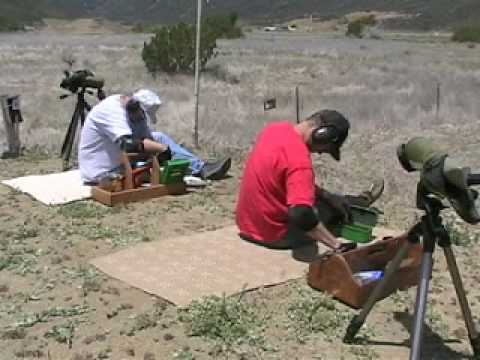
This 8-minute video, filmed at the Ojai Valley Gun Club in California, shows a 200m metallic silhouette match for handguns. Noted IHMSA shooter Jim Harris describes the course and shooters demonstrate their technique. With these iron-sight, single-shot centerfire pistols, when shooting “freestyle”, most shooters prefer the lying down, feet-first Creedmoor position. This allows them to steady their pistols along the side of the front leg. In the 1800s, long-range rifle shooters also commonly used a Creedmoor position, sometimes resting the barrel on the toes of their boots.
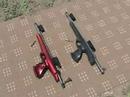
In this second video, Jim compares two “Unlimited” pistols, one in 6.5 BR and the other in 7mm BR. Jim explains the pistols’ features and chamberings. Then the video offers a “shooter’s eye” view of Jim and Scott Mann firing the pistols at half-size pig silhouettes. Watch Jim and Scott both “clean” all five of their respective targets at 100m.
Shown below is an Anschütz Model 1416 MSP E Silhouette pistol, similar to the custom pistols you’ll see in the video. The Anschütz 6836 rear sight was specifically developed for handgun silhouette competition. The folding rear sight cover and anti-glare front sight tube greatly improve the sight picture. This 4.1-lb, single-shot pistol has a trigger pull weight of about 300 grams, roughly 10 ounces.
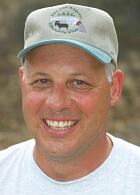
Jim Harris (“Gunzorro”) has posted many other shooting videos, which you’ll find on the “related videos” section of the YouTube page to which we’ve linked. Jim Harris has won several NRA National and IHMSA International championships in metallic handgun silhouette competition. He is also active in High Power Rifle Silhouette and Black Powder Cartridge Silhouette. In the silhouette arena, he helped popularize the 6.5BR, 6.5PPC, 6.5TKS (improved BR), .260 Remington and .22 PPC, and pioneered the use of Vihtavuori powders in the mid-90s. Jim is also a successful professional freelance photographer, specializing in commercial photography and architecture. Contact Jim at JimHarrisPhotography.com.


 Nancy Tompkins will be bringing out a new Second Edition of her popular book: Prone and Long-Range Rifle Shooting. Nancy hopes to have Second Edition books available by mid-June, 2012. The enhanced Second Edition will feature updates to the current chapters, more photos, plus an entirely new chapter on F-Class Shooting. The Second Edition will be issued as a hardback only, for increased durability. Price isn’t set yet, but Nancy hopes to keep the price “under $40.00″. The book will be available from
 Tompkins Book a Must-Read for Long-Range Shooters

 The


 In this NSSF Video, Ryan Cleckner, a former Sniper Instructor for the 1st Ranger Battalion, defines the term “MilliRadian” (Milrad) and explains how you can use a mildot-type scope to range the distance to your target. It’s pretty simple, once you understand the angular subtension for the reticle stadia dots/lines. Cleckner also explains how you can use the milrad-based reticle markings in your scope for elevation hold-overs and windage hold-offs.
 Kelly instructs this season’s competitors in the skills needed to make a hit at 1500 yards. At right, you’ll see Kelly doing something he’s becoming very familiar with — looking through a spotting scope. At the World Long Range Championships in Australia, Kelly’s spotting skills helped keep the USA Young Eagles in the center to win both Gold and Silver. The teaser for next week’s Top Shot episode shows competitors using an Accuracy Int’l AX 338 to engage a target 1500 yards away. To make shots at that distance successfully, you need to have rock-solid fundamentals, wind-reading abilities, and ballistics info. Tune in next Tuesday to see how Kelly works with competitors trying to make the longest shot ever attempted on Top Shot.


 Jim Harris (“Gunzorro”) has posted many other shooting videos, which you’ll find on the “related videos” section of the YouTube page to which we’ve linked. Jim Harris has won several NRA National and IHMSA International championships in metallic handgun silhouette competition. He is also active in High Power Rifle Silhouette and Black Powder Cartridge Silhouette. In the silhouette arena, he helped popularize the 6.5BR, 6.5PPC, 6.5TKS (improved BR), .260 Remington and .22 PPC, and pioneered the use of Vihtavuori powders in the mid-90s. Jim is also a successful professional freelance photographer, specializing in commercial photography and architecture. Contact Jim at


