Are you looking to get started in tactical/practical competitions? Or perhaps you already have have some PRS/NRL experience but want to upgrade your equipment and enhance your match results. Here are eight videos that can help you improve your game. These videos feature top PRS/NRL competitors and knowledgeable manufacturers’ representatives. You’ll find other related videos on the Long Range Precision Shooters YouTube channel.
How Accurate Are the Top PRS Shooters?
In this video, MDT put three top centerfire PRS shooters to the test, running them through some of the most difficult stages. The goal? To showcase the level of accuracy and precision these top shooters can achieve. From shooting off barricades to hitting targets from rooftops and rocks, these shooters demonstrate why they are considered among the best in the world. Top-tier modern PRS/NRL rifles when shot prone from a bipod at 100 yards can do 1/3-MOA or better for three shots.
Building a Custom PRS/NRL Rig
Action, trigger, barrel, chassis, rails, and optics — this video from Burris covers all the key components of the modern PRS/NRL rifle. This video discusses the pros/cons of various configurations and the explains what to look for in a PRS/NRL riflescope.
PRS Tactical Division Explained
In this video MDT Shooter Matt Stiner explains the basics of competition in the PRS Tactical division. The video covers rifle, cartridge choice, optics, and key accessories. He also explains how to set up your PRS Tactical rig for best results. In addition Matt talks about bullet and brass options.
Shooting a PRS Match for the First Time
Here’s an amusing video from the land Down-Under — Australia. The video covers a club PRS match, showing various shooting positions. Around the world, the PRS discipline is growing rapidly, particularly with younger marksmen under 35. The matches are fun and fast-paced and the sport is much more dynamic and physically challenging than benchrest or F-Class competition.
Building Your Rig — Gear and Cartridge Selection for PRS/NRL
Part of a Firearms Depot PRS mini-series, this video covers gear and cartridge. Host Adam delves into the core elements that craft a winning setup. The video covers factors to consider when choosing a cartridge. The video also discusses chassis and barrel selection. Along with the gear talk, the video covers factors to consider when selecting a smith to help with chambering and rifle building.
Road to the PRS
This video from Kestrel offers good advice on getting started in PRS/NRL shooting. Experts demonstrate multiple shooting positions and offer advice on shooting from barricades. Topics covered include rate of fire, scope use, and equipment selection.
Savage 110 Elite Precision — Good Production Class Choice
This Alabama Arsenal video shows the Savage 110 Elite Precision on PRS Match stages using bags, tripods, and bipods, firing from stone barriers, field frames, and wood platform supports. If you are in the market for a PRS rifle, this video, which now has 355,000 views, is well worth watching. It covers specific features including trigger, chassis, magazines, and Atlas attachment. NOTE: The price limit for Production Class has risen significantly over the years, with a current MSRP max of $3000 for the rifle and $2500 for the optic.
PRS on a Budget — Converting a Basic Rifle for PRS Use
Top of the line rifles for competition are exceedingly expensive, but there is another option if you have a rifle in the safe that doesn’t get much use. Top F-Class shooter and wind coach Keith Glasscock notes: “I converted my .223 Remington varmint rifle into a Tactical class/PRS training rifle to save costs on ammunition and barrels so I can get better, faster.” Keith shows a very logical way to get started in the PRS/NRL game.
All shooters, even rimfire enthusiasts, should always wear ear protection when at the range. A typical rifle gunshot is very loud — in the region of 140 to 170 decibels (the pain threshold is 130-140 db). Without ear protection, you can permanently damage your hearing during a single shooting session. We all know older shooters who are partially deaf, or who suffer from Tinnitus, because they didn’t use earplugs or muffs when they were younger.
How Humans Hear Sounds — Amazing Video Reveals All
The human sense of hearing involves multiple delicate internal membranes, bones, organs, and nerves. Shooters understand the importance of protecting their hearing, but they may not understand the bio-mechanics of human hearing. We hear sounds through Auditory Transduction. Sound waves vibrate the ear drum (tympanic membrane), but that is only the beginning. These vibrations are passed along via tiny rocker-arm-like bones to be “processed” in a spiral chamber, the cochlea.
This remarkable VIDEO explains how humans hear sounds. We strongly recommend you take the time to watch and learn. The hearing you save may be your own!
Click Speaker Icon to turn on the video’s soundtrack.
Vibrations moving through the cochlea are separated into frequencies and then sent as neural messages to the brain. It is an astonishingly complex process, one that truly seems miraculous when you examine the bio-engineering involved. In the Video above, the process of human Auditory Transduction is explained and illustrated with 3D animation. You really should watch this amazing video. By the end you will have a new-found appreciation for your ability to hear.
⏺ Dual-function electronic muffs — great for range communications
Electronic earmuffs protect your hearing while allowing you to hear range commands. With these Walkie-Talkie muffs you also get 2-way communication capabilities. The Walker Razor Slim Low Profile Electronic Earmuffs (NRR 23dB) with Walkie Talkie allows you to communicate with other FRS radios. These are now just $59.99 (40% Off) with FREE Shipping. If you don’t need the two-way functionality, you can get Walker’s NRR 23 Razor Slim Electronic Muffs for $37.00 (#ad) — 54% off the list price.
Every shooter should own a pair of Electronic muffs, even if you prefer shooting with earplugs and/or standard muffs. Electronic muffs are great when you are spotting for other shooters or are working near the firing line. They let you hear ordinary conversations while still providing vital hearing protection. You can also wear ear-plugs under muffs for extra sound attenuation.
Plugs PLUS Ear-Muffs — The Benefits of “Doubling-Up” Your Hearing Protection
According to OHS Online: “The combined attenuation of an ear plug and an ear muff is not simply the algebraic sum of the performance of each individual protector. This is due to an acoustic and vibratory interaction between the ear muff and the ear plug that causes them to behave together as a system rather than as independent hearing protectors.
Generally speaking, when you combine two hearing protectors, ear muffs over ear plugs, you can expect an increase [in noise reduction] of between 3 and 10 dB over the higher-performing hearing protector. OSHA [now advises] 5 dB as the [typical] benefit offered by combining hearing protectors.” Source: OHSonline.com
Mike Kurtz’s Competition Machine F1 “Pro-Mod” F-Open Rifle
Today’s Sunday GunDay article showcases a modern F-Open Rifle built on a Competition Machine Aluminum Chassis. This is quite a bit different than a typical F-Open rifle with a laminated wood or wood/carbon stock. But the rifle shoots extremely well, and has already won some mid-range F-Open matches.
The rifle’s owner, a highly respected vehicle mechanic, explained his objective with this rifle: “I wanted to build a second F-Open rifle to shoot primarily 600-yard Mid-Range and also serve as my back-up long range rifle. That way I can use the same brass, bullets, and primers. So it would be chambered in 7mm-6.5 PRC, the same as my other F-Open rifle. That rig is a 7mm-6.5 PRC with Cerus XR stock, BAT Neuvo action, and Bartlein 1:9-8.7″ gain-twist barrel. I absolutely love that rifle and it has achieved several top honors. But for this project, I wanted to try some different rifle components to see how they performed in this same caliber. So I decided to go with Brux barrels, BAT Neuvo aluminum action (but see below), and an Eliseo Competition Machine F1 aluminum alloy chassis.”
BARREL SPECIFICATIONS: I ordered two Brux 7mm x 33″ barrels with 1:8.5″ twist. The contour was supposed to be 1.350″ diameter for 5″, tapered-down to 1.150″ diameter at the muzzle end. However, when the barrels arrived they were tapered down to 1.050″, a bit smaller. The folks at Brux admitted the work order was mis-read and offered to take back the barrels and make me two more. Or, I could keep the barrels with nice discount. I contacted my gunsmith, Omar Alonzo, for his advice and he said to keep them, they would shoot just fine. That turned out to be a blessing because the total rifle weight is now just three ounces under 22 pounds with one of these barrels. Omar chambered it with his 7mm-6.5PRC “no-turn” reamer that was used on my Cerus rifle. The Brux barrel was finished at 32″ with the muzzle end threaded for a V2 tuner.
ACTION and TRIGGER: I intended to use an aluminum BAT Neuvo action because I anticipated weight may be a concern, but they were on back-order with no lead time in sight. So for now I went with a used steel BAT Model M, 1.47 Octagon action that I acquired via the AccurateShooter Forum marketplace. This is a RBLP Right Eject action with magnum bolt face and 20 MOA integral Picatinny rail. The trigger is a Bix’N Andy Competition also scored on the Forum, set at 3 ounces. [NOTE: I now have an aluminum Neuvo AL in my possession. However, the F1 rifle is shooting so well, I’ll save the aluminum Neuvo for a future build.]
STOCK and FINISH: When I was planning my second F-Open 7mm-6.5 PRC rifle build, Gary Eliseo’s F1 aluminum chassis was my immediate choice. I was already familiar with Gary’s products since I started out three years ago with a used 6BR-chambered R1 tube gun. I purchased it from a Forum member and I adapted it for Mid-Range F-Open very successfully. Being a long-time drag racer and fabricator piqued my interest in these aluminum chassis combos. I contacted Gary Eliseo at Competition Machine and ordered his F1 F-Open Chassis System with one of his custom-machined bedding blocks for the Bat M action I acquired off the Forum.
Video of F1 Chassis Rifle in Action
Turn-around time was just about eight weeks, including aligning and epoxying the action bedding block into the chassis. Gary Eliseo offers full custom Cerakote services for his customers but I had something else in mind so I had the chassis sent to me “raw”, i.e. with a bare aluminum finish. At first I thought about polishing some or all the entire chassis but that would be too high maintenance. I decided to go with anodizing as I have done in the past with many race car components. Anodizing is an electrochemical process that converts the metal surface into a decorative, very durable, corrosion-resistant, anodic oxide finish that’s pretty tough and looks great!. This finish is available in many colors and in clear.
While I was surfing the internet looking for some color/combo ideas I stumbled on a local custom anodizer who had dozens of some really wild and crazy anodizing patters and color mash-ups. I messaged Stephen @ Caustic Customs and told him about my project. He replied that his specialty is paint-ball guns and this would be his first long gun but, hey, it’s aluminum! I gave him all the pieces of my F1 chassis. There were a couple of his patterns I really liked so I asked his opinion which he thought might look best for my project. He replied why not both? So I instructed him take both patterns and “run with it”. The end result is the Icy-Hot blue/red finish as seen in the pictures.
It all came together at Alonzo’s Custom Rifles in Pasadena, Texas. Omar hand-lapped the action bedding block surface to smooth-out some tiny high spots. He then skim-bedded the action with an epoxy filler to make sure the action made 100% contact with the bedding block. Barrel chambering, action fitting, trigger tuning, and final assembly was performed by Omar.
I finished the rifle with a hydraulic recoil pad from Falcon Strike and Anarchy Outdoor’s Penguin Precision Grip. Gary designed the F1 to utilize AR15-style grips. The Falcon Strike pad is not as sexy as the R.A.D. unit I have on my Cerus-stocked rifle, but I think its recoil-absorbing performance is up there with the R.A.D. unit. So, if a RAD is not in your budget or if weight is a concern, you can’t go wrong with a Falcon Strike recoil pad.
SCOPE/RINGS: My intention was to switch my March-X 8-80x56mm Majesta High Master scope between my two rifles. However the hefty stainless Bat M action nixed that idea. So to ensure the new rifle would be F-Open legal weight I went with a used March-X 10-60x56mm High Master scope that I acquired through the AccurateShooter Forum Marketplace. That 10-60X March, shown in the video, is almost 11 oz. lighter that my 8-80X March-X Majesta HM. NOTE: In some of the photos here, the rifle is fitted with an older March 8-80X scope (NOT the latest Majesta). The rings are March Superlight Titanium Ghost Rings — under 5 oz. for the set, the lightest I could find.
F-Open F1 Chassis Rifle Specifications
Chambered for: 7mm-6.5 PRC Wildcat
Stock: Competition Machine F1, F-Open Chassis, Falcon Strike Recoil Pad, Anarchy Outdoors Penguin Grip. Custom anodizing by Caustic Customs.
Trigger: Bix’N Andy Competition trigger
Action: Bat Model M — Right Bolt, Left Port, Right Eject with 20 MOA scope rail
Barrel: Brux 7mm, 1:8.5″ twist, 32″ overall, 1.350″ x 5″, tapering down to 1.050″, V2 Tuner
Scope: March-X 10-60 High Master, MTR-1 reticle. March Ultra-Lite Titanium Ghost scope rings.
Gunsmith: Alonzo Custom Rifles
CARTRIDGE COMPONENTS and LOADING METHOD: I use Lapua 6.5 PRC brass, Berger 180gr Hybrid bullets and Federal 210M primers. New brass necks are expanded to 7mm and skim-turned to get a consistent .014″ neck thickness. I use a 35-degree cutter and go just a slight bit into the shoulder to ward off donuts. I then chamfer the flash holes, uniform the primer pockets, full-length size the cases, then expand and trim/chamfer the necks. My fired brass gets annealed, wet-tumble cleaned, full-length sized/expanded, and trimmed in that order. Bullets are pointed and then sorted by OAL. Primers are sorted by height and then by weight. I apply Neo-Lube to the inside of the necks with a foam Q-Tip for consistent seating psi.
This is from a 600-yard match shot with the F1 rifle a few months ago. Despite a strong wind from behind constantly switching right to left, I scored a 200-12X — good enough for Second Place.
LOAD DEVELOPMENT PROCESS: Thanks to some good 7mm-6.5 PRC load data posted on AccurateShooter.com, it helped me with a starting point to find a nice velocity node at 2865 fps using Hodgdon H4350. I did this by shooting some 2-shot groups seated .010″ off the lands. my focus was to find a node where the velocity leveled-out in at least two 0.5 grain increments in the 2850-2880 fps range. I then did a seating depth test at 100 yards to find my ideal seating depth which ended up at .024″ jumped. Next, I did some 3-shot groups at 100 yards to dial-in he barrel tuner until I got at least two consecutive ultra-tight groups. I verified that setting with a one-hole, three-shot group.
About Mike Kurtz
Michael Kurtz is owner/operator of Century Automotive & Transmission. An ASE Master L1 Technician since 1983, Mike has been an avid drag racer over the last 40 years. Mike notes: “I never owed any kind of rifle until I retired from racing. Got bit by the accuracy bug and learned about F-Class in 2021. I read several reloading and long range shooting books while I scoured the AccurateShooter Forum Marketplace for a rifle, scope, rests, and reloading equipment for my first F-Open rig. Most all of my major components I acquired via online Forums. I have to attribute the early success of my F-Open accomplishments to the vast content found on AccurateShooter.com.
I am also a member at Bayou Rifles Inc. in Houston Texas where I’ve learned from some of the best shooters in the country. The competition here is fierce but the camaraderie is second to none!”
We note there are regular threads in our Shooter’s Forum asking about the new compact radar chronographs — especially the hot-selling Garmin Xero C1 and the new small LabRadar LX. Members want to know how well each works. Today’s video showcase can help answer those questions. After the hugely successful release of the compact Garmin Xero C1 Pro chronograph, two competitors are now playing “catch-up” with all-new compact radar chronographs. LabRadar has an impressive new unit, the LX Compact, while Caldwell introduced its midsized VelociRadar which employs innovative Chirp Radar technology. For today’s Saturday Video Showcase, we feature video reviews of these three notable Compact Radar Chronographs.
Garmin Xero C1 Pro Chronograph
The Garmin Xero® C1 Pro chronograph has already been a big success. After great initial test reports, this compact $599.99 chronograph has been selling out at vendors nationwide. With the performance and quality of the Xero C1 Pro, many LabRadar owners are putting their older orange radar chronos up for sale. Check out the features of this new compact radar chrono in this official product launch video from Garmin:
Introduced in late 2023, the Xero C1 Pro radar chronograph has been an instant hit. Measuring just 3.03″ x 2.38″ x 1.36″, the Xero C1 Pro is compact and easy to transport. Using Doppler radar, the Xero C1 Pro accurately records projectile velocities from 100 fps to 5,000 fps, so it works with all kinds of projectiles. Setup is simple and intuitive, thanks to the button-operated design. SEE FULL RecoilWeb Review.
Garmin offers a modern ShotView™ smartphone app and lets you compare velocities for all shots fired, track ES/SD, and record total sessions. The rugged Xero C1 Pro chrono has a IPX7 water-resistant rating and boasts up to 6 hours of battery life. The unit ships with a compact tripod mount, and the screen is described as “sunlight-visible, transflective, monochrome” so it is easy to view in all conditions.
Above is a recent video review from our friends at Area 419. This review confirms that the Garmin is very reliable, extremely easy to set-up, and the provided Smartphone App works great. User reports have been very positive, and our testers note that the Garmin works better on air rifles than the original LabRadar.
LabRadar LX Compact
LabRadar announced its new LabRadar LX compact Doppler radar chronograph at the 2024 SHOT Show. This is a truly compact unit, measuring just 2.5″ X 2.75″ X 2.75″. The LabRadar LX comes with a tough metal case, lifetime battery, and ships with a tripod. The unit has a velocity range of 65 to 5000 FPS and it can display Average, ES, SD, Min, and Max Velocity.
Observers at SHOT Show noted the LabRadar LX has a very bright, high-contrast LCD Screen for outdoor viewing. Overall, the exterior design and specs are impressive. Definitely watch both videos to understand the difference in features between the Garmin and this ultra-compact new LabRadar LX. If you’re shopping for a compact chrono it’s worth looking at all the options. The Garmin Xero C1 Pro is currently $599.99, while the new Labradar LX is $599.95.
Caldwell VelociRadar
Caldwell showcased its all-new VelociRadar chronograph at SHOT Show 2024. This is quite a bit bigger than the Garmin Xero C1 Pro or the new LabRadar LX compact. But it is still relatively small compared to the original orange LabRadar unit.
Notably, the Caldwell VelociRadar uses a different mode of radar (Chirp Radar vs. Doppler) than other chronos, which offers some advantages. Caldwell states: “The Caldwell VelociRadar Chronograph is precision redefined with cutting-edge Chirp radar technology. This is no standard chronograph, while most chronographs stop at only providing muzzle velocity the VelociRadar tracks bullets downrange offering the full picture of ballistic performance. Using these downrange velocity measurements, the VelociRadar calculates true muzzle velocity, the bullet’s ballistic coefficient, and downrange energy.” Note that point about BCs — Caldwell says this new machine will let you calculate the true Ballistic Coefficients of your bullets as fired from your rifle.
BONUS Video: Garmin vs. Large LabRadar vs. Magnetospeed
This interesting video features a head-to-head comparison with the Garmin Xero C1 Pro chronograph, the Magnetospeed barrel-attached chrono, and the full-size LabRadar chrono. The Primal Rights team tested the three chronos with a dozen different cartridge/bullet combinations. NOTE: We have used the Magnetospeed with considerable success. However, the placement of the device on your barrel can affect accuracy, so you may have to finalize load development with the unit removed. With a Garmin or LabRadar, you can tune for accuracy while monitoring your ES and SD.
Camdyn Powers won the Ladies Division at the 2024 National Rimfire League (NRL22) Championships held June 21-23, 2024 in Frederic, Wisconsin. Along with winning the Ladies Division Title, Camdyn secured an impressive 7th place overall finish. Camdyn said the match was tough: “This match pushed my mental and physical abilities, but I managed to navigate the challenges and make wind adjustments effectively on the clock. It was my best two-day match performance with achieving a 95% hit percentage of the top shooter.” She noted that her Lapua rimfire ammo was accurate and reliable.
With this major 2024 title, Camdyn has secured her status as the top woman in NRL22 competition — in 2023 she was the 2023 NRL22 Ladies Division Season Champion, as well as the 2023 Ladies Match Winner.
Powers competes with a Vudoo V22 bolt-action rifle with a 20″ MTU-V contour Bartlein barrel in an XLR Envy Pro Chassis. On top is a Burris XTR Pro 5.5-30X FFP competition scope, with illuminated reticle. Camdyn’s sponsors include Lapua (ammunition), Burris Optics, Vudoo Gun Works, and WieBad Gear Bags.
Camdyn praised her Burris XTR Pro competition scope: “With my XTR PRO, I could see the target clearly and bullet trace for accurate adjustments that led to impacts.” Burris Optics Marketing Director Jordan Egli stated: “We are incredibly proud of Camdyn Powers and her outstanding success at the NRL22 Championship. Her victory is a testament to her hard work and determination[.]”
About NRL22 Rimfire Competition
The National Rifle League (NRL) started off sponsoring major centerfire tactical matches, similar to PRS competitions. The NRL then added a .22 LR Rimfire series, called NRL22, which is now the premier precision rimfire league in the country. The NRL22 rimfire discipline has been a huge success, as rimfire guns are fun to shoot and ammo is very affordable. NRL22 is now the most active type of NRL competition by far, with a vast selection of matches around the country. Popular NRL22 matches have drawn up to 170 rimfire competitors. Divisions may include: Open, Base, Ladies, Air Rifle, Old Guns, and Young Guns. Get more info at NRL22.org.
About NRL22 Tactical/Practical Competition The goal of NRL 22 is to make Precision Rifle competitions more available to every community. A significant percentage of American cities do NOT have nearby ranges where you can shoot to 500 yards and beyond. However, most Americans can access 100-yard ranges within a relatively short drive and most shooters own a .22 LR rifle. The NRL22 program is designed so any facility with a 100-yard range can host matches. Participants at local NRL22 events can then attend the National Championship. NRL22 started with four classifications: Open, Base, Ladies, and Young Guns (8-18 age). Air Rifle is the new fifth class.
Creedmoor Sports is a leading vendor of products for competitive shooters and serious hand-loaders. Along with great gear, Creedmoor Sports provides informative content for its customers. The Creedmoor InfoZone provides Reloading Tips, Gear Reviews, Shooting News, and basic gunsmithing information.
Bill Gravatt, President of Creedmoor Sports, is an expert on reloading processes and gear. He developed many of the popular tools marketed by Sinclair Int’l, and he brings that expertise to Creedmoor Sports. Bill hosts a series of “how-to” videos produced for the Creedmoor InfoZone.
In this video, Bill Gravatt demonstrates several methods to clean your cases. Bill tells us: “Powder residue should be removed before you insert your cases into your reloading dies. There are several ways to clean your cases. Many shooters use a combination of various methods…”
1. Manual Cleaning — You can use 0000 Steel wool for the outside of the case and a Case Neck brush for the inside. A paper towel can remove any remaining residue. This is a handy way to clean if you load at the range.
2. Vibratory Tumbling — This traditional method works well, particularly for pistol brass. Experiment with both Corn Cob and Walnut media. You can get a brighter shine by putting a small amount of liquid brass polish in the media.
3. Wet Tumbling with Stainless Media — This process can get your brass clean inside and out. Do check to ensure no pins are stuck in the flash-holes. Watch for peening of case mouths that can occur over time.
4. Ultrasonic Cleaning — Ultrasonic cleaning works great for small parts as well as brass. The ultrasonic process removes all carbon and traces of lube, which can leave the inside of case necks too dry. To smooth bullet seating, try putting a tablespoon of Ballistol in the cleaning solution.
Cleaning Reloading Dies
Cleaning your reloading dies is something that many hand-loaders neglect. In this 60-second Tech Tip, Bill Gravatt provides some smart advice on cleaning your dies. Bill notes: “After heavy use, case lube and carbon can build up in your reloading dies. It’s important to keep them clean. Also, with new dies, give them a good cleaning before first use, because they ship with a corrosion inhibitor.”
1. Step 1 — Prior to cleaning, disassemble the die and spray it with a good degreaser. Do this with brand new dies too.
2. Step 2 – Take a patch and run it in the die to remove old lube and gunk. Don’t forget the decapping assembly and other internal parts.
3. Step 3 — After cleaning the die, but before reassembly, spray the die with a good corrosion inhibitor, such as Corrosion-X or Starrett M1.
Tumblers and walnut/corncob media are old school. These days many shooters prefer processing brass rapidly with an ultrasonic cleaning machine. When used with the proper solution, a good ultrasonic cleaning machine can quickly remove remove dust, carbon, oil, and powder residue from your cartridge brass. The ultrasonic process will clean the inside of the cases, and even the primer pockets. Tumbling works well too, but for really dirty brass, ultrasonic cleaning may be a wise choice.
Our friend Gavin Gear has evaluated an RCBS Ultrasonic cleaning machine using RCBS Ultrasonic Case Cleaning Solution (RCBS #87058). To provide a real challenge, Gavin used some very dull and greasy milsurp brass: “I bought a huge lot of military once-fired 7.52x51mm brass (fired in a machine gun) that I’ve been slowly prepping for my DPMS LR-308B AR-10 style rifle. Some of this brass was fully prepped (sized/de-primed, trimmed, case mouths chamfered, primer pockets reamed) but it was gunked up with lube and looking dingy.”
UltimateReloader.com Case Cleaning Video (7.5 minutes):
Gavin describes the cleaning exercise step-by-step on UltimateReloader.com. Read Gavin’s Cartridge Cleaning Article to learn how he mixed the solution, activated the heater, and cycled the machine for 30 minutes. As you can see in the video above, the results were impressive. If you have never cleaned brass with ultrasound before, you should definitely watch Gavin’s 7.5-minute video — it provides many useful tips and shows the cleaning operation in progress from start to finish.
Ultra Dry Necks After Ultrasonic Cleaning — Some Suggestions
The Ultrasonic cleaning process gets cartridge brass so “squeaky clean” that increased force may be required to seat your bullets, or they may “grab” as they go in the necks. To reduce bullet-seating effort, you may benefit from adding a little dry case lube inside the case-neck before loading (use a nylon brush). Another trick is adding a teaspoon of Ballistol lube to the cleaning solution. That provides a trace lubricant inside the necks, but does not interfere with powder ignition in any way.
The latest Gen2 RCBS ultrasonic cleaning machine has a large 6.3-quart capacity. That’s nearly 100% larger than the first generation machine in Gavin’s video. The Gen2 machine, $399.99 on Amazon, features a second ceramic heater and transducer to better clean brass cases and firearm parts. The LED is easily programmable, and the timer can be set for up to 30 minutes of cleaning. The original 3.2 quart-capacity RCBS ultrasonic machine, as shown in Gavin’s video, is still available for $189.99 at Midsouth Shooters.
This custom war wagon hauls varmint hunters around the Longmeadow Game Resort in Colorado.
We’re at the height of summer now — summer Solstice was on June 20, 2024. Will you be heading to the varmint fields this summer? Proper planning is key to a safe, satisfying, and productive varmint holiday. Of course you’ll be busy reloading, but you should make a check-list of all the gear and supplies you need. Bring a variety of rifles if possible — you’ll need to switch off as one barrel gets hot, and the chambering that works best for your close shots may not be ideal for those longer shots out past 400 yards.
Here are some tips from our Forum members that can help you shoot more effectively, and avoid problems on your varmint hunt. Here’s one key tip: at your shooting station, put a strip of surveyor’s tape on a tall stake to show the wind direction. Then shoot in the direction the wind blows. This will minimize the effect of cross-winds.
This photo is from a Dan Eigen TV Show video featuring a P-Dog hunt.
Varmint Safari Planning, Equipment, and Shooting Advice
From PatchHound: “The gear you bring will make or break a trip out to Prairie Dog land. A lot has to do with where you going and how far you are from [civilization]. For starters, bring lots of water. It will be hot in Wyoming in a few more weeks but it don’t hurt to bring warm clothes in case it snows. It’s best to wear leather boots unless you’re real good at dodging cactus while walking around. Good sunscreen [and a wide-brimmed hat] will save the day too. [What you need to bring] really depends on whether you’re shooting on some friendly ranch or 100 miles in the middle of [a wilderness area]. Good survival gear is a good thing to have for the latter!”
From Stoner25mkiv: “I’d suggest an adjustable bipod if you are going to do any walking. A laser rangefinder is a huge asset. Have a fanny pack or backpack for extra ammo, water, bore-snake, etc. when you go on your walkabouts. We also take a couple pivoting benches, heavy movers’ pad/blanket, sandbags (Uncle Bud’s Bulls Bag) for shooting from near the vehicle. Boonie hat for blocking the sun, sun glasses, sunscreen. High leather boots.
From CTShooter: “The .204 [Ruger] is a laser beam and good to 400 yards easy. Forget the rimfire! Do you have a portable bench that pivots? Bring bipod, binocs. Bring a LOT of water. I have a milspec sniper shooter’s mat/drag bag with shoulder straps. It is good to carry everything when you want to wander off and shoot prone with bipod. Here’s a view through my 6BR in ND.”
From RJinTexas: “In most of the locations that we’ll be shooting we’ll usually set up a minimum of 200 yards from the edge of a major dog town. We’ll start by working over the close-in dogs and shooting our way out, some of these towns may run in excess of 500/600 yards deep. [A .204 Ruger] will work well out to 300/400 yards unless the wind is blowing hard. We classify a 10-mph crosswind as a very calm day and what makes it a little more challenging is that it is usually also gusting.”
From Wes (P1ZombieKiller): “[For my first PD trip] there are so many things I was not ready for. The one thing that I did bring (that no one told me about) was a canopy. I’m glad I did. Even though the weather was [near perfect], I know that sun can humble you real fast. With my pop-up canopy, I could shoot all day without getting killed by the sun. You had to tie the canopy down real well or the wind would blow it across the pasture.
We sat on shooting benches that pivot 360°, and are fast and easy to set up. Most all shots were 175-250 yards. I just felt comfortable at that range. It was more fun for me to be able to film the hits, and the camcorder I was using just did not get good video past 350 yards. The digital zoom distorted the image too much. I knew I would only get this one chance to film my first P-dog outing, and I wanted to get it on film for [posterity].”
Bring Multiple Rifles on Your Varmint Adventures
On our P-Dog adventures, we like to have multiple rifles — a .17 HMR for close work, then maybe a .20 Practical AR for 150-250 yards, then a larger caliber such as 22 BR, 6BRA, 6 Dasher or 6-6.5×47 for those long shots. The classic .22-250 is also a wickedly effective varmint cartridge.
We like to have a Rimfire varmint rig for the closer shots, inside 150 yards. The .17 HMR or .17 WSM are good choices. With a rimfire you save on ammo costs and you don’t waste precious centerfire barrel life. This video shows a successful Prairie Dog hunt with a .17 HMR. Watch and you’ll see hits out to 160 yards (00:50), proving the effective range of the 17 HMR cartridge. The host is shooting a Savage A17 semi-auto 17 HMR rifle in a Boyds laminated stock.
.17 WSM Rimfire in Franklin Armory F17-L
What’s the ultimate rimfire varmint rifle? An AR chambered for the .17 WSM could be the answer. Eric Mayer of Varminter.com states: “The Franklin Armory F17-L in .17 Winchester Super Magnum (WSM) has a lot of firsts. It is the first semi-automatic rifle in .17 WSM now available to the general public. It is the first gas-piston system, AR-15 rimfire rifle built in partnership between Franklin Armory and Osprey Defense.”
Eric has used the .17 WSM AR shooting ground squirrels, rock squirrels, prairie dogs, and rabbits. Eric notes: “The report of the .17 WSM is nowhere near as loud as most of the centerfire [varmint] cartridges. I found that when I shot the FA-17, it did not cause the other ground squirrels… to run for cover. The lack of recoil … allowed me to see right where I hit [and] if I happened to miss, [low recoil] made for quick corrections for wind, or distance.” READ Full Report
The .17 WSM is a much larger, more powerful round than the .17 HMR. See the size difference above.
.20 Practical (20-223 Rem) AR-Platform Varminter
Here is a .20 Practical built by Robert Whitley. Whitley’s Ultimate Prairie Dog Rifle (PDR) features a 24″ Bartlein 1:11″-twist cut-rifled barrel, DPMS side-charging upper, and a Jewell trigger. It is chambered in 20 Practical, a cartridge popularized by Warren “Fireball” Brookman.
This .20 Practical cartridge is simply the .223 Remington necked down to .204. You can use your existing .223 Rem brass — no special case-forming required! The 20 Practical is accurate, flat-shooting, and has almost no recoil. The advantage over the standard .223 Remington is that, grain for grain, the bullets have a higher BC and travel at a higher velocity for more dramatic effect on a small varmint. The ultra-low recoil allows you to easily see your hits, even without a muzzle brake. The 20 Practical, launching 40-grainers at about 3750 fps, shoots flatter than a .223 Rem with 55gr hollowpoints.
.204 Ruger AR-15 (Suppressed) for Cottontail Rabbit Hunting
As a varmint hunting tool, the .204 Ruger in an AR-15 is a versatile, worthy cartridge/rifle combo for the job. This video covers a cottontail rabbit hunt. The host states that “We were contacted by a farmer who was being slammed with cottontail rabbits eating out huge portions of his alfalfa fields.” This suppressed .204 Ruger AR-15 proved seriously effective on the rabbits, driving high-velocity rounds with impressive accuracy. See more details on the Varminter.com website.
.22 BR Savage Varminter — Accuracy on a Budget
This .22 BR Savage, with upgrades from Sharpshooter Supply, is the “pride and joy” of Forum member Maynard. Note the heavy-contour custom barrel with brake. That .22 BR cartridge is a very effective choice for varmint work, as the ground hog in the photo proves. The .22 BR and .22 Dasher are capable of outstanding accuracy with a large variety of bullets and powders. A .22 Dasher can rival the ballistics of a 6mmBR out to 500+ yards, but with reduced recoil.
Avid varmint hunter Bill White (aka “CT10Ring” in our Forum) concurs about the effectiveness of the .22 BR Cartridge: “.22 BR — My .22 BR is my first choice for most prairie dog missions. Accuracy is superb with necked-down 6mmBR Lapua brass — quarter-MOA and blazing fast. With the right twist rate, this chambering can shoot anything from 40gr FB bullets to 80gr VLDs. Load development is easy. Below is my .22 BR ammo for another varmint trip. I use 55gr Sierra BlitzKings with Varget in my 1:12″-twist Shilen-barreled rifle. 60gr Bergers are very accurate with a fairly flat trajectory for useful distances.”
6mm Dasher for Voldoc’s 2024 Prairie Dog Safari
Respected Forum member Voldoc has a long thread about his 2024 Prairie Dog Safari, his 20th trip of this kind. He reported: “After the 1st day of shooting with 30+ MPH wind, we settled down on a High Point, and set up the Benches the second day for a ‘Shooting Gallery’ of non-stop shooting. PDogs were in play from 125 to 1,000 yards.” Voldoc’s rifle features these components: Nesika J RBRP action, 1:12″-twist Krieger barrel chambered by Mike Bryant for the 6 Dasher, 2 oz. Jewell trigger, Thunder Beast Suppressor, Nightforce ATACR 7-35X FFP optic. He usually shoots 87gr V-Max bullets in annealed Lapua brass pushed to 3240 FPS by Vihtavuori N135 powder. To spot critters, Voldoc uses Vortex Fury 5000 AB Rangefinding Binoculars.
More Power — 6-6.5×47 Lapua for Longer Range Varmint Shots
Soon after Lapua released the 6.5×47 cartridge, wildcatters recognized the potential of a necked-down 6mm version of the case. The 6-6.5×47 has emerged as a great, do-it-all cartridge that performs well in High Power competition, 600- and 1000-yard benchrest, and PRS tactical matches. But the 6-6.5×47 is not just for paper-punching. An efficient cartridge with great inherent accuracy, the 6-6.5×47 can be an excellent, flat-shooting, long-range varmint round. Here we feature Stan Stewart’s BAT-actioned 6-6.5×47 varminter. Fitted with a Krieger 1:10″ barrel, Stan’s rifle excels with a wide variety of varmint bullets. Whether driving 70-grainers at 3700 fps, or pushing the Berger 88gr High-BC FB bullet at 3400 fps, this 6-6.5×47 delivers half-MOA (or better) accuracy, in a well-balanced, easy-handling rifle. He has developed very accurate loads with Varget, Vihtavuori N550, and Reloder 15.
Six Tips for Novice Long Range Varmint Hunters
1. Take twice as much ammo you think you may need. The fields could be particularly rich, or, because of wind or other variables, you may have far more misses than expected.
2. When possible, set up with the wind at your back (or, alternatively, directly ahead). This will minimize the effect of cross-winds. Set up a stake with a ribbon to show wind direction.
3. Bring at least two rifles. Ideally one would be a low-recoil rifle with cheaper components for the closer shots. Then bring a rifle with higher-BC bullets for longer shots where wind is a bigger factor.
4. Check the weather before you head out. Prairie dogs like sunshine and calm conditions. If a cloudy, very blustery day is predicted, considering staying in town and cleaning the rifles.
5. Bring plenty of water on a trip. An adult male should be drinking at least 64 ounces of water (or other liquid) every day — more if it’s very hot or you are sweating a lot.
6. Preferably always hunt with a companion. If you do go out solo, have a Garmin inReach SatComm/GPS for emergencies if there is no cell coverage in your location.
The CMP National Matches at Camp Perry, Ohio commence July 8, 2024 with 3P Air Rifle events. The Camp Perry matches are historic, having been held since 1907 at this location on the shores of Lake Erie. The 2024 First Shot Ceremony takes place Monday, July 15 on the grounds of Camp Perry. Air Force Academy shooting coach and former Olympian Launi Meili is the 2024 First Shot Speaker. Launi will address the crowd and make the traditional First Shot to officially open the National Matches.
For this week’s Saturday at the Movies, we offer seven videos from Camp Perry. These cover both rimfire and centerfire shooting, team matches (including the famous “Rattle Battle”), along with pistol shooting. If you’re heading to Camp Perry this summer, today’s video showcase provides an informative preview. And watch the video above for a great short preview of the event.
CMP National Matches at Camp Perry — Ranges, Events, Training
This 3-minute video above shows the Camp Perry ranges and shooting facilities and explains the programs scheduled, including training courses. The video also covers nearby accommodations and explains how to register for the National Matches on the CMP website.
NTIT Team Match — “Rattle Battle” at Camp Perry
The CMP’s National Trophy Infantry Team Match (NTIT) has been a staple at the National Matches since 1922. Also known as the “Rattle Battle,” the event is one of the most unique in the competitive rifling world — scoring is based on how many hits six-person teams can score on a bank of targets during a series of 50-second firing periods at four yardages.
Watch CMP ‘Rattle Battle’ Video — 50 Seconds of Rapid Fire…
Teams fire upon eight silhouette targets from 600, 500, 300 and 200 yards during successive 50-second periods. After each rapid-fire string, team members move forward (to the next-closest distance) carrying all equipment from firing line to firing line. The video shows the California Grizzlies, one of the top junior squads. The lead photo shows the U.S. Army Reserve (USAR) Team in action during the NTIT match. See more in USAR “Rattle Battle” Video.
Camp Perry M1 Garand Competition — Vintage Military Rifle
The John C. Garand match is a Camp Perry classic. Note the signature Garand clip in the air.
The CMP hosts the popular M1 Garand Match as well as the Springfield M1A Match. This writer’s father carried a Garand in WWII — reason enough for me to want one. But I also loved the look, feel, and heft of this classic American battle rifle. And the unique “Ping” of the ejected en-bloc clip is music to the ears of Garand fans. Some folks own an M1 Garand for the history, while others enjoy competing with this old war-horse. The CMP’s John C. Garand Match is one of the most popular events at Camp Perry every year. There are other vintage military rifle matches.
Rimfire Sporter Event Draws Hundreds of Competitors
If there is a single CMP event at Camp Perry every summer that draws the most competitors and offers the lowest cost of entry, that would be the annual Rimfire Sporter Match. This year’s match will be held on Saturday, July 13th at the Viale Range. There will also be a CMP Sporter Live-fire Training Clinic on Friday the 12th. One of the most popular annual Camp Perry events, the Rimfire Sporter Rifle match features .22 LR competition in open sights (O-Class), telescopic (T-Class) and tactical/unlimited (TU) classes, fired at 25 and 50 yards. A CMP Rimfire Clinic will be held prior to the match.
Each year, the Rimfire Sporter Match attracts hundreds of shooters to the shore of Lake Erie at Camp Perry. The CMP National Rimfire Sporter Rifle Match offers shooters a recreation-oriented competition where they use affordable, smallbore sporter rifles with either scopes or iron sights. All you need are a .22 LR rifle, sling, and ammo.
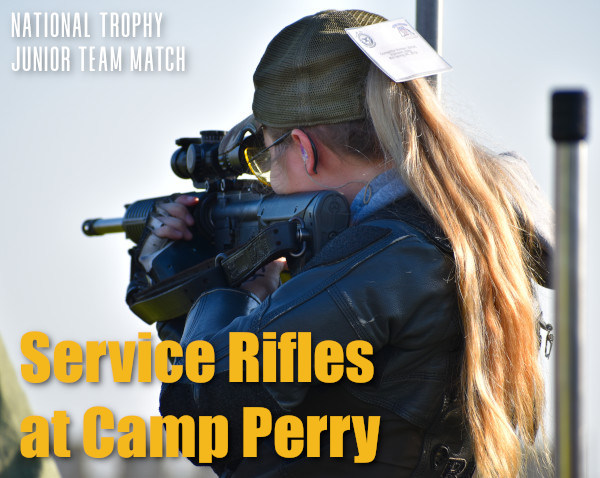
Service Rifle Matches — AR-Platform Rifles, Now with Optics
Service Rifle shooting is fun yet challenging. You need to develop skills with multiple positions and be able to make rapid wind calls. However, the modern AR-based service rifle is affordable and has relatively low recoil. Highly-customizable, modern service rifles can be fitted with adjustable stocks and optional magnified optics. Older military rifles, such as the M1A and M1 Garand, offer different challenges with heavier-recoiling cartridges, greater weights, and classic iron sights. Hi-Lux asked competitors at Camp Perry during CMP’s 2021 summer games what they enjoyed most about competition with service rifles and Military rifles such as the M1 Garand. The shooters’ responses had four key themes: Self-Improvement, Comradery, History (enjoying shooting rifles with heritage), and Challenge.
Camp Perry Bullseye Pistol Competition
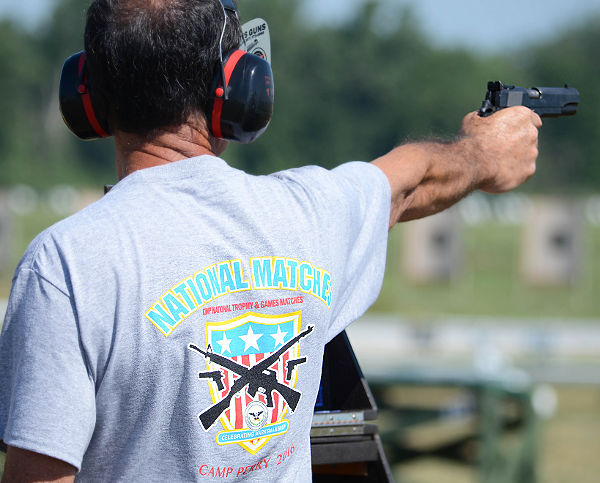
Camp Perry hosts the most prestigious annual trophy matches in our nation’s history. And in a venue renowned for service rifle matches, the sport of precision pistol is no less important, no less challenging, and no less respected. The National Trophy Pistol Matches are all about traditional handgunning — the stance, the intense concentration, and of course, the one-handed grip. It’s all unmistakable as the game of Bullseye Pistol. Every year there are 20+ match trophies for the top Bullseye Pistol shooters, both military and civilian. And the very best will claim National Match Trophies and receive the President’s 100 Tab.
CMP Camp Perry National Matches Registration Links
The 2024 CMP National Matches at Camp Perry officially commence Thursday July 11, 2024. The summer schedule concludes Saturday, August 10 with the Palma Match and awards. Here is the full CMP schedule (click to zoom):
NOTE: This CMP Calendar is hosted online in spreadsheet format. This allows you to increase display size, and also to search for specific words. CLICK HERE to view full spreadsheet calendar.
History of Camp Perry
“In the year 1907 the machinery of the National Matches, now grown to immense proportions, was moved to the mammoth new range at Camp Perry.”
—James Drain, Arms and the Man, August 1911
Federal legislation originally launched the National Matches. The 1903 legislation also established the National Matches, commissioned the National Trophy and provided funding to support the Matches. The National Matches have been held at Camp Perry since 1907. The range is located along the shores of Lake Erie in northern Ohio near Port Clinton. The site was first acquired in 1906, in response to the need for a larger facility for military training and the NRA’s shooting programs. The original land for Camp Perry was purchased in 1906, and the reservation was named after Commodore Oliver Hazard Perry, the American naval commander who won the Battle of Put-in-Bay during the War of 1812.
On August 19, 1907, Cpl. L. B. Jarrett fired the first shot at the new Camp Perry Training Site. And that year, 1907, Camp Perry held its first National Pistol and Rifle Championship events. This location has hosted the annual National Matches ever since. Typically over 4,000 competitors attend the National Matches each year, making it the most popular shooting competition in the western hemisphere.
The 2024 National Pistol Matches take place July 14-21 at the Camp Perry National Guard Training Site in Port Clinton, Ohio. These matches are run by the Civilian Marksmanship Program (CMP) and Ohio National Guard. If you want to shoot in the National Pistol Matches this year, it’s not too late to register (links below). CLICK HERE for more information about the National Pistol Matches.
The National Pistol events, open to adults and juniors of all experience levels, include several traditional matches like the President’s Pistol (President’s 100), National Trophy Individual, and National Trophy Team events alongside a series of 900 Aggregate matches for .22, .45, and centerfire pistol. The CMP Games competitions, such as the Military & Police and 1911 As-Issued Matches, will also be part of the National Matches schedule (see Calendar below). The last pistol matches run on Sunday the 21st, with Pistol Games Awards at the end of the day.
The GSSF GLOCK National Challenge returns to the schedule in 2024, while the Service Revolver EIC Match has been renamed the Philip Hemphill Memorial Service Revolver EIC Match in honor of Philip Hemphill, a celebrated national champion who passed in 2023. There will be plenty of talent on the firing line. In recent years, over 90% of the top 50 Service Pistol shooters were Distinguished.
CMP will also conduct indoor Air Pistol National Matches at the Gary Anderson CMP Competition Center. Rental air pistols are available for a modest fee.
This video shows .45 ACP centerfire pistol competitors at Camp Perry
Interested in competing in the Camp Perry Pistol Matches this summer with either a .22 LR rimfire pistol or centerfire pistol? It’s not too late to register. CLICK HERE for Pistol Match Online Registration.
In connection with the National Matches, a Pistol Small Arms Firing School (SAFS) will be held July 15, 2024. Participants in SAFS are instructed by some of the top military marksmen and women in the country on firearm safety and competition basics, both within the classroom and on the range. All firearms and ammo are provided for the live-fire portion of the clinic.
The 2024 National Matches will include a Pistol Small Arms Firing School.
For those looking for a little extra time on the range before competing, be sure to sign up for Pistol Practice on July 15 and 16 (cost: $5.00 per practice time). Competitors will receive a Pistol Practice card at check-in, with additional practice time open for purchase (if available).
About the National Matches:
The annual National Matches have been held at the Camp Perry National Guard Training Site since 1907. The month-long series is comprised of the CMP National Trophy Pistol and Rifle Matches, National Games Matches, National Smallbore Matches, National Air Gun Championships, and the National Mid-Range and Long Range Matches. The National Matches also include educational clinics for shooters of all experience levels. View National Matches schedule and programs at: Thecmp.org/cmp-national-matches.


 All shooters, even rimfire enthusiasts, should always wear ear protection when at the range. A typical rifle gunshot is very loud — in the region of 140 to 170 decibels (the pain threshold is 130-140 db). Without ear protection, you can permanently damage your hearing during a single shooting session. We all know older shooters who are partially deaf, or who suffer from


 I am also a member at


 Camdyn Powers won the Ladies Division at the
 The goal of NRL 22 is to make Precision Rifle competitions more available to every community. A significant percentage of American cities do NOT have nearby ranges where you can shoot to 500 yards and beyond. However, most Americans can access 100-yard ranges within a relatively short drive and most shooters own a .22 LR rifle. The NRL22 program is designed so any facility with a 100-yard range can host matches. Participants at local NRL22 events can then attend the National Championship. NRL22 started with four classifications: Open, Base, Ladies, and Young Guns (8-18 age). Air Rifle is the new fifth class.


 From Wes (P1ZombieKiller): “[For my first PD trip] there are so many things I was not ready for. The one thing that I did bring (that no one told me about) was a canopy. I’m glad I did. Even though the weather was [near perfect], I know that sun can humble you real fast. With my pop-up canopy, I could shoot all day without getting killed by the sun. You had to tie the canopy down real well or the wind would blow it across the pasture.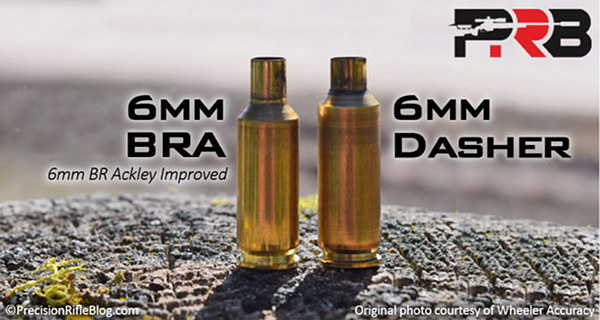


 Respected Forum member Voldoc has a long thread about his




 The National Pistol events, open to adults and juniors of all experience levels, include several traditional matches like the President’s Pistol (President’s 100), National Trophy Individual, and National Trophy Team events alongside a series of 900 Aggregate matches for .22, .45, and centerfire pistol. The CMP Games competitions, such as the Military & Police and 1911 As-Issued Matches, will also be part of the National Matches schedule (see Calendar below). The last pistol matches run on Sunday the 21st, with Pistol Games Awards at the end of the day.


