Sierra Bullets has released load data for the 6.5 Grendel, a popular cartridge that works equally well in bolt guns and AR15-platform gas guns. Sierra published comprehensive 6.5 Grendel load data, covering 19 powders and eight (8) different bullets from 85 to 130 grains. NOTE: Hornady-brand brass (see below) was used for Sierra’s 6.5 Grendel tests, not the stronger Lapua 6.5 Grendel brass. Hand-loaders using Lapua 6.5 Grendel brass may need to adjust their loads. Also Winchester WSR primers were used. We imagine most precision hand-loaders will prefer CCI or Federal primers.
Sierra Bullets Tested for 6.5 Grendel Load Data
85gr HP (#1700)
100gr HP (#1710)
107gr HPBT (#1715)
In developing its 6.5 Grendel load data, Sierra tested a very wide selection of propellants, 19 in all. For the 85gr to 100gr varmint bullets, modern powders such as XMR 2230, Power Pro Varmint, and Ramshot TAC offered the best velocity in the 24″ test barrel. For the heavier 120gr to 130gr match bullets, Sierra tested a selection of powders. Highest velocities came with Power Pro Varmint and TAC. If you’re looking for best accuracy, consider the slower burn-rate powders such as IMR 8208 XBR and Varget — but you’ll sacrifice some speed. Overall, Sierra’s latest 6.5 Grendel load data is an excellent addition to the 6.5 Grendel knowledge base. Thanks Sierra!
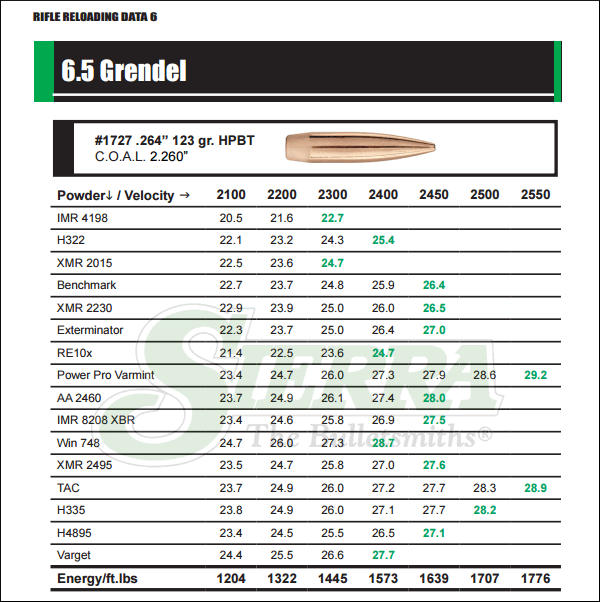
Here are Sierra’s 6.5 Grendel Load Data Charts for Sierra’s 123gr HPBT, 130gr HPBT, and 130gr TMK. There are a five other tables for lighter-weight Sierra bullets.
History of the 6.5 Grendel Cartridge
The 6.5 Grendel originated as a 6mm PPC necked up to 6.5 mm. After Alexander Arms relinquished the “6.5 Grendel” Trademark, the 6.5 Grendel was standardized as an official SAAMI cartridge. It has become popular with target shooters and hunters alike because it is accurate, efficient, and offers modest recoil. Good for small to medium game, the 6.5 Grendel is available in lightweight hunting rifles, such as the Howa Mini Action Rifle. And the 6.5 Grendel is one of the most accurate cartridges suitable for modern AR-15 platform rifles.
On the Applied Ballistics Facebook Page, there was a fascinating series of posts showing traces of bullets at various speeds from Mach 0.86 to Mach 3.0. At the slowest speed, Mach 0.86, i.e. 962 FPS, there is turbulence behind the bullet, but no clear shockwave. At the highest velocity, Mach 3.0 (3375 FPS at sea level, 68° F), there is a dramatic double nose and tail wave formation.
To learn more, visit TheScienceofAccuracy.com. On that site you’ll find exclusive video content and you can subscribe to member’s only Podcasts. And you can purchase Applied Ballistics books on the Science of Accuracy webstore.
Mach 3.00 Bullet Flight Image
At Mach 3 (3355 FPS) this bullet now has a strong and well established shock wave forming at the tip, and at the base. Unlike the transition through Mach 1.0, nothing really interesting happens to the aerodynamics or shock waves meaning the aerodynamics and stability are: continuous, easy to predict, and model. As you go faster, the shockwaves make a shallower angle because the bullet is moving forward 3X faster than the shock wave is moving away from it. So the shock wave makes an angle that has a rise/run ratio of 1/3.
If a bullet flew within 10 feet of you traveling this fast, it would be about as loud as a 22 magnum. You’d certainly want hearing protection as the energy contained in a Mach 3 shock wave is high! How high…? Well, in 10 yards, this bullet slows from 3355 FPS to 3334 FPS in a time of 0.0090 seconds. The 55 ft-lb of kinetic energy lost during this 10 yards is due to aerodynamic drag on the bullet, which is comprised of wave, base, and skin friction drag components with the majority of the drag being due to shock wave formation. Expending 55 ft-lb of energy in 0.0090 seconds requires a power output of 6111 ft-lb/sec = 11.1 horsepower, most of which goes into creating the shock wave. Remember it’s a 3-D cone that travels great distance, and it gets its energy by stealing velocity from your bullet!
Mach 1.00 Bullet Flight Image
Many shots were fired to capture an image of the transonic shockwave structure at exactly Mach 1.00. With the bullet now moving at the speed of sound, the local airflow on some parts of the bullet exceeds Mach 1.0. Anytime something is moving thru the air faster than the air can get out of the way, you get a compression wave, aka “shock wave”. That’s what’s visible in this image — the areas where the air density changes rapidly (in the compression wave) are visible as near vertical lines and a detached bow wave out front. As the bullet progresses through transonic speed, this shockwave structure develops which has strong effects on the drag (wind sensitivity) and stability of the bullet.
The exact development of the shockwaves and the resulting effects are unique and sensitive to the bullet geometry, and become very difficult to predict through the transition from subsonic (incompressible flow without shock waves) to supersonic (compressible flow with shock waves). Each bullet geometry does this differently which is why it’s difficult to determine transonic stability criteria for bullets of different shapes.
Mach 0.86 Bullet Flight Image
Here’s a bullet at Mach 0.86 (86% the speed of sound, which is 962 FPS at 61° F). As you can see, this 0.86 Mach is not fast enough to make any discernable waves but you can see turbulence in the bullet wake (right side in photo). The beginning of small shock waves can be seen on the bullet tip, and at the bearing surface/boat tail juncture. For the most part, all of the airflow around this bullet is subsonic. You wouldn’t hear a supersonic ‘crack’ from this bullet flying past the observer.
The famed Bianchi Cup pistol match is featured today on Shooting USA television. This event, the top action pistol match on the planet, celebrates its 45th year in 2025. The CMP Bianchi Cup attracts the world’s leading pistol shooters, and this year the Cup added a new .22 LR rimfire pistol division. Adding rimfire competition is a big, positive update to this venerable competition.
Shooting USA TV Broadcast Times on the Outdoor Channel
Wednesday 12/3/25 at 9:00 PM Eastern and Pacific, 8:00 PM Central on Outdoor Channel. If you miss the broadcast you can view the episode at any time for $0.99 on Vimeo. Or, subscribe to see all Shooting USA shows on Vimeo as often as you wish for $2.99 per month.
Bruce Piatt Wins 2025 Bianchi Cup
At the 2025 Bianchi Cup competition, Legendary competitive shooter and Team Vihtavuori member Bruce Piatt claimed his eighth Bianchi Cup title, securing victory at the 2025 Bianchi Cup with the only perfect score of 1920 in the match.
The Civilian Marksmanship Program (CMP) now oversees the Bianchi Cup competition, previously run by the National Rifle Association. The 2025 Civilian Marksmanship Program (CMP) Bianchi Cup, known as the gold standard in action pistol shooting, was hosted once again at the Green Valley Rifle and Pistol Club in Hallsville, Missouri, May 20-23, 2025. Participants from all over the world competed in the Falling Plates, Moving Target, Barricade, and Practical events.
This video features the 2025 CMP Bianchi Cup at the Green Valley Rifle and Pistol Club in Hallsville, Missouri. This video showcases the new class for .22 LR pistols. Watch talented rimfire pistol competitors firing .22-caliber pistols at steel plates. The new rimfire class allows much more affordable competition. High quality .22 LR match ammo is available for $11.50 for 50 rounds (just 23 cents/round). By contrast, a good box of .38 SPL match ammo can cost $0.60 to $1.10 per round (or more).
What if you could see a speeding bullet in the milliseconds it exits the muzzle of a pistol? How cool would that be… Well, the Mythbusters folks (Adam Savage and Jamie Hyneman) have made that possible. Using an exotic Phantom super-high-speed camera running at 73,000 frames per second, the Mythbusters recorded a .45 ACP bullet being fired from a 1911-type handgun.
Watch Mythbusters Super-Slow-Motion Pistol Video:
Watch this FULL SCREEN to see the amazing details of the flame and smoke exiting the muzzle.
What unfolds is spectacular. First you see a ball of flame as the bullet emerges from the barrel of the 1911, then two distinct, separate swirling clouds form as the bullet races toward the target. Watch the video a couple times — it’s mesmerizing.
Co-host Adam Savage is nearly rendered speechless by the remarkable slow-motion footage from the Phantom. Filmed at 73,000 frames per second, the video reveals a dance of pressure and fire that would otherwise be missed by the unaided eye.
NOTE: Some deals may disappear at 11:59 PM EST on Monday 12/1/2025.
At the request of our readers, we provide select “Deals of the Week”. Every Sunday afternoon or Monday morning we offer our Best Bargain selections. Here are some of the best deals on firearms, hardware, reloading components, optics, and shooting accessories. Be aware that sale prices are subject to change, and once clearance inventory is sold, it’s gone for good. You snooze you lose.
Tomorrow, December 1, 2025, is officially “Cyber Monday” following Black Friday, a great time for gun gear discounts. Today we showcase notable Cyber Monday sales, and we spotlight 15 products — great deals that are available right now.
MidwayUSA is running a major Cyber Monday Week Sale, with significant discounts on a wide range of products including optics, gun parts, reloading equipment, hunting gear, ammunition, camping gear, and more. CLICK HERE for Midway USA Cyber Sale deals.
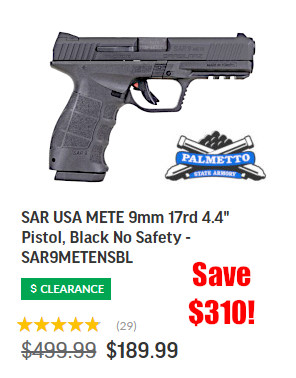
If you’re looking for a new handgun, rifle, or shotgun, definitely check out the Cyber Monday deals at Guns.com. This site has a vast selection of firearms from nearly all popular gun-makers. Some pistols and rifles are discounted $300 or more.
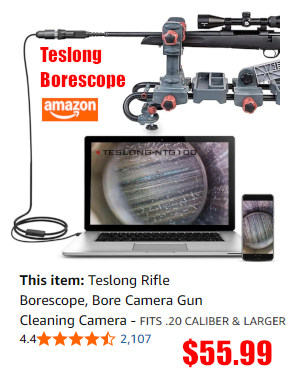
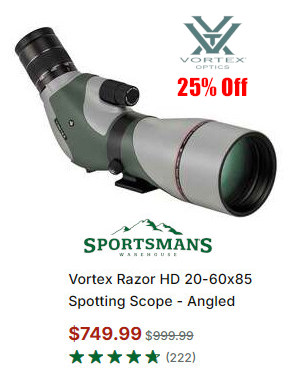
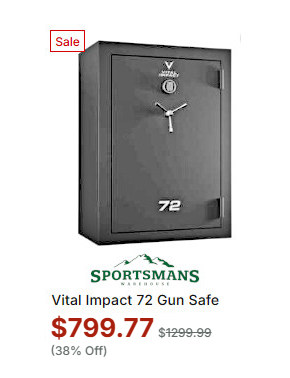
Cyber Monday is a huge event at Amazon, with big discounts on a vast selection of merchandise. Shooting sports enthusiasts can get big savings on optics, reloading tools, gun cases, gun vises, ultrasonic cleaners, priming tools and more. Shown above are notable Cyber Monday Deals now offered on Amazon, with discounts up to 41%.
CYBER MONDAY Specials — Fifteen Hot Bargains
For our previous Black Friday feature stories last week we listed multiple websites that offered a variety of discounts. For this 2025 Cyber Monday + Deals of the Week, we feature 15 select items — all great deals. Click on each to get the current deal on the seller’s site, and then you can shop other Cyber Monday bargains at that vendor.
NOTE: All listed products are for sale to persons 18 years of age or older. No products are intended for use by minors. As an Amazon affiliate, this site can earn revenues through sales commissions.
Shown is the Redding Model 15-P Competition Piloted Inside Chamfering Tool with pilot rod that centers in the case flash hole. Also shown is a Forster 45° Rocket Tool.
There are a wide variety of reloading tools designed to cut a slight chamfer in case necks and deburr the edge of the case mouth. You don’t need to spend a lot of money for an effective tool. A basic “rocket-style” 45° chamfering tool, such as the Forster, actually does a pretty good job taking the sharp edge off case mouths, particularly if you use a little scotch-pad (or steel wool) to smooth the edge of the cut. The Forster chamfer tool, shown below, is a nicely-made product, with sharper cutting blades than you’ll find on most other 45° chamferers. It costs $26.99 at Brownells.com.
Redding sells a handy piloted chamfering tool with a 15° inside cutting angle and removable accessory handle. This Redding Model 15-P chamferer works really well, so long as you have consistent case OALs. The pilot rod (which indexes in the flash hole) is adjustable for different cartridge types (from very short to very long). This ensures the concentricity of the inside neck chamfer to the case mouth. This quality tool works with cases from .22 to .45 Caliber, and retails for $42.99 at MidwayUSA.
Sinclair International offers a 28° carbide chamferer with many handy features (and sharp blades). The $29.99 Sinclair Carbide VLD Case Mouth Chamfering Tool will chamfer cases from .14 through .45 caliber. This tool features a removable 28° carbide cutter mounted in the green plastic Sinclair handle.
Many folks feel they can get smoother bullet seating by using a tool that cuts at a steeper angle. We like the 22° cutter sold by Lyman. It has a comfortable handle, and costs just $19.99 at Cabelas.com. The Lyman tool is an excellent value, though we’ve seen examples that needed sharpening even when new. Blade-sharpening is easily done, however.
K&M makes a depth-adjustable, inside-neck chamferer (“Controlled Depth Tapered Reaper”) with ultra-sharp cutting flutes. The latest version, which costs $64.40 at KMShooting.com, features a central pin that indexes via the flash hole to keep the cutter centered. In addition, the tool has a newly-designed handle, improved depth-stop fingers, plus a new set-screw adjustment for precise cutter depth control. We caution, even with all the depth-control features, if you are not careful, it is easy to over-cut, slicing away too much brass and basically ruining your neck. We think that most reloaders will get better results using a more conventional chamfer tool, such as the Forster or Redding 15-P.
One last thing to note — tools like the K&M and the Sinclair chamferer are often described as VLD chamferers. That is really a misnomer, as bullets with long boat-tails actually seat easily with very minimal chamfering. In reality, these high-angle chamferers may be most valuable when preparing brass for flat-base bullets and bullets with pressure rings. Using a 22° or 28° chamferer can reduce the risk of cutting a jacket when using VLD bullets though — so long as you make a smooth cut.
If you need factory-loaded ammunition for your rifles and handguns it pays to comparison shop. Smart shooters can benefit by price-shopping to get the best deals on factory-loaded ammunition, particularly for popular cartridge types such as .22 LR, 9x19mm (9mm Luger), .357 Mag, .223 Rem (5.56×45), and 6.5 Creedmoor. It this article we list 15 reliable online sources for factory-loaded ammo. You may want to bookmark this page so you can quickly scan and price-check multiple vendors. In addition, you can use a service such as AmmoSeek.com.
Why Should You Shop for Ammo Online?
By shopping online for ammo, you can save money, get a wider selection, and get bulk discounts. GunDeals.com explains: “Online purchases [can] save you a lot of money [and can] also save your time… one of the most important advantages is definitively the huge selection.” With online retailers you can quickly compare prices, and you will often get a discount on a large order (300 rounds or more) that is not available in local stores. Note, with some large vendors such as Cabela’s and Sportsman’s Warehouse you can order online then pick up in a local store.
Are There Restrictions on Online Ammo Purchasing?
In most (but not all) U.S. states is it legal to order ammunition online to be shipped to your residence. However, you MUST check your State and local laws and regulations. In some states and/or cities, it is ILLEGAL to purchase ammunition online for shipment across state lines with direct delivery. For example, in California, all ammo must be purchased from a licensed ammo dealer/vendor with a state background check (so much for the Second Amendment)*. Likewise Washington DC, and Hawaii do not allow online ammunition purchases. And there are restrictions in New York City. In Alaska there are multiple shipping regulations that impact ammo deliveries from online sales so many vendors do not ship to Alaska.
*In some instances ammo can be purchased online from an out-of-state seller who will then ship to an authorized, in-state California vendor who may transfer the ammo for a fee with background checks as required by CA law.
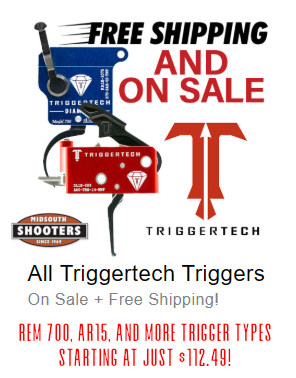
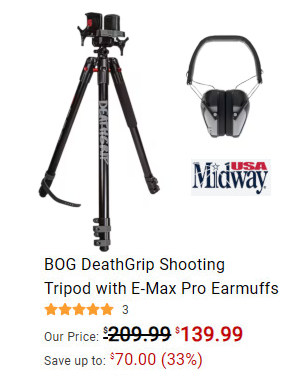
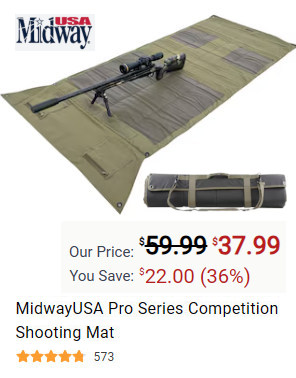
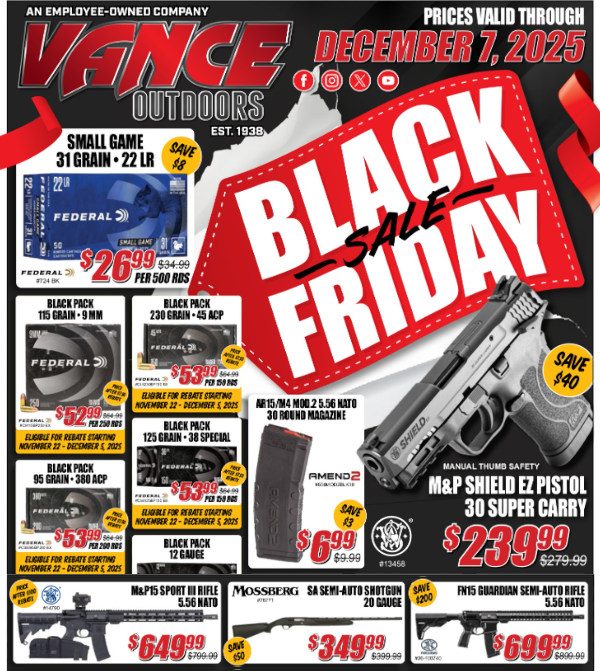
Happy Thanksgiving folks. Major gun and optics makers, tool crafters, and large outdoor gear vendors are offering great bargains for Black Friday week. Expect discounts from 5% to 30% on a wide range of quality products.
While some sales are set for Friday, November 28th only, most of the featured Black Friday Sales have already started. And some of these promotions run through 11:59 pm on Cyber Monday (12/1/2024). Find other sales at Gun.Deals.
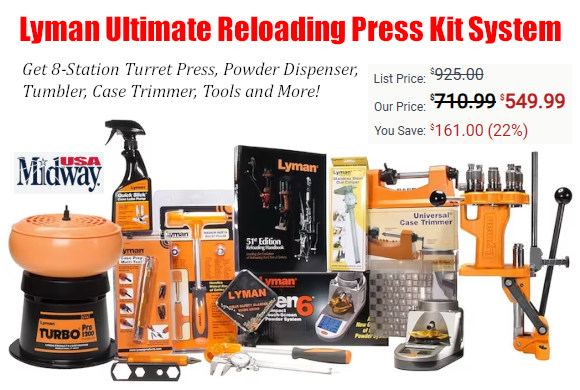
Most of the showcased vendors offer discounts on a large inventory selection — in some cases, everything in stock is discounted 10%, 15%, 20% or more. For other sellers, only specific items are on sale, so we’ve identified those particular deals. In addition to the 9 sellers showcased below, Brownells is offering big Discount Code savings on nearly all products. Get 15% OFF your Brownells orders with Code SHOPBF15.
Come back tomorrow for Part Two of our Black Friday Sales Showcase!
Optics Planet Black Friday Sale
Powder Valley Outdoors Black Friday Sale
NOTE: In addition to this special powder sale, Powder Valley Outdoors is offering 5% off your whole cart if you purchase more than $299.00 of non-sale items.
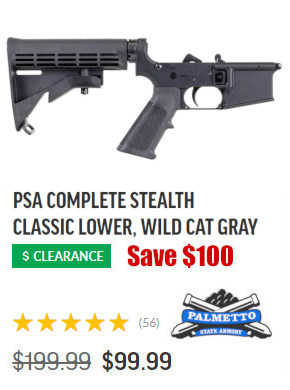
Black Friday is the day after Thanksgiving. Around the country major shooting sports retailers will be offering significant savings on a wide variety of products — from reloading dies to complete, high-end rifles. Some of the major players, such as Brownells, MidwayUSA, and Palmetto State Armory, have already started their Black Friday/Cyber Monday Week sale programs, with discounts up to 35% on some products. With Brownells Use Promo Code SHOP15BF to save 15% sitewide — plus you can also get FREE Shipping with $47+ orders.
Find More Black Friday and Cyber Monday Sales at Gun.Deals
Gun.Deals has also found some great Black Friday Week bargains from Amazon, as well as major online shops such as GrabAGun, LockedandLoaded, Sportsman’s Warehouse, Optics Planet and more. You’ll find popular items highlighted with product images and sales links. NOTE: These deals may expire quickly, so you should check often on the Gun.Deals Black Friday Specials Page.
The anvil is the tripod-shaped thin metal piece protruding above the bottom of the primer cup. Getting the primer sitting fully flush on the bottom of the case primer pocket, without crunching it too much, requires some keen feel for the progress of primer seating.
In two informative Midsouth Blog articles, the late Glen Zediker* offered helpful advice on priming. First he examined what happens to the primer itself as it is seated in the cup. Glen explained why some “crush” is important, and why you never want to leave a high primer. Glen also reviewed a variety of priming tools, including his favorite — the Forster Co-Ax Bench Primer Seater. Then he offered some key safety tips. Glen provides some “rock-solid” advice about the priming operation. There are many other smart reloading tips in Glen’s excellent Top-Grade Ammo book (now out of print).
Priming Precision vs. Speed
Glen writes: “The better priming tools have less leverage. That is so we can feel the progress of that relatively very small span of depth between start and finish. There is also a balance between precision and speed in tool choices, as there so often is.”
Benchtop Priming Tools — The Forster Co-Ax
Glen thinks that the best choice among priming options, considering both “feel” and productivity, may be the benchtop stand-alone priming stations: “They are faster than hand tools, and can be had with more or less leverage engineered into them. I like the one shown below the best because its feeding is reliable and its feel is more than good enough to do a ‘perfect’ primer seat. It’s the best balance I’ve found between speed and precision.”
Load Tuning and Primers
Glen cautions that you should always reduce your load when you switch to a new, not-yet-tested primer type: “The primer is, in my experience, the greatest variable that can change the performance of a load combination, which is mostly to say ‘pressure’. Never (never ever) switch primer brands without backing off the propellant charge and proving to yourself how far to take it back up, or to even back it off more. I back off one full grain of propellant [when I] try a different primer brand.”
Priming Safety Tips by Zediker
1. Get a good primer “flip” tray for use in filling the feeding magazine tubes associated with some systems. Make double-damn sure each primer is fed right side up (or down, depending on your perspective). A common cause of unintentional detonation is attempting to overfill a stuffed feeding tube magazine, so count and watch your progress.
2. Don’t attempt to seat a high primer more deeply on a finished round. The pressure needed to overcome the inertia to re-initiate movement may be enough to detonate it.
3. Don’t punch out a live primer! That can result in an impressive fright. To kill a primer, squirt or spray a little light oil into its open end. That renders the compound inert.
4. Keep the priming tool cup clean. That’s the little piece that the primer sits down into. Any little shard of brass can become a firing pin! It’s happened!
* Glen Zediker — Sadly, in 2020 Glen Zediker passed away. We covered his career and his accomplishments as a marksman, reloading guru, and gun industry writer in this memorial article: Glen Zediker, 1959-2020, In Memoriam





 Bruce Piatt Wins 2025 Bianchi Cup











 Happy Thanksgiving folks. Major gun and optics makers, tool crafters, and large outdoor gear vendors are offering great bargains for Black Friday week. Expect discounts from 5% to 30% on a wide range of quality products.













 In two informative Midsouth Blog articles, the late Glen Zediker* offered helpful advice on priming. First he examined what happens to the primer itself as it is seated in the cup. Glen explained why some “crush” is important, and why you never want to leave a high primer. Glen also reviewed a variety of priming tools, including his favorite — the


