For this Saturday Showcase, we feature some top-tier products that have set new standards for quality and effectiveness. First off is the impressive new NEXUS single-stage press from Short Action Customs. Then we feature Bix’N Andy triggers, which have found favor with competitors in many disciplines from short range Benchrest to ELR competition. Now that Jewell triggers are becoming harder to source, Bix’N Andy units will be seen on more rifles than ever. For those who turn case-necks, we feature the remarkable IDOD machine from F-Class Products — simply the best automated neck-turner ever created.
As a bonus we offer two very informative interviews from SHOT Show 2024. The first covers the product line at Bullet Central, while the second reviews the latest and greatest rifle actions from BAT Machine.
Short Action Customs NEXUS Press
Short Action Customs (SAC) has crafted a very impressive and innovative single-stage press. The innovative $875 NEXUS press has impressive design features. The NEXUS Press boasts dual cam-over pucks, which precisely stop the movement of the floating die block. SAC explains: “We wanted to have the Nexus press cam-over independently of the shell holder. Every single cycle of the press, your hard cam-over pucks limits the travel, which gives you the same amount of cam over every single cycle.” The press can adapt to various diameter dies with floating inserts in the top section (see video). The NEXUS also has a floating shell holder system, which is quick change and tool-less. SAC states that this shell holder system “allows .010″ more sizing than all other shell holders on the market”.
Bix’N Andy Triggers
German-made Bix’N Andy triggers, available from BulletCentral.com, are among the very best you can buy. Available in both single-stage and two-stage designs, Bix’N Andy triggers are extremely precise, repeatable, and smooth. The unique internal, friction-reducing roller ball system allows for extremely low reset force, yielding an ultra-crisp let-off. Bix’N Andy triggers can be fitted with a variety of trigger shoes according to shooter preference. Bullet Central is currently the exclusive official USA importer for Bix’N Andy triggers.
Bryan Blake, a very clever machinist and gunsmith, has created an ultra-precise and speedy neck-turning machine. Bryan, who runs Blake Machine, Blake Barrel, and F-Class Products has created a system that uses twin precision cutter tips to turn case necks inside and out quickly and efficiently, with superior precision. This advanced IDOD Neck Turning Machine holds cases securely in a precision-machined spindle attached to an electric motor. Twin blades move precisely during the cutting process, milling the necks inside and out. The turned necks come out perfect every time, with the shoulders trimmed exactly (with doughnut removed) as well.
If you turn hundreds of cases during a shooting season, you may want to buy an IDOD from F-Class Products. The secret to the efficiency of the Blake IDOD is a vibration-free motor, high-mass case-holder, precision OD/ID-adjustable cutter, along with an advanced tracking system that moves the cutter heads towards the case neck (and back again) with absolute, 100% repeatable precision.
Bullet Central — Major Product Lines
This F-Class John video features a lengthy interview with Bullet Central representative Zachery, covering the many products Bullet Central offers. Products featured include Bix’N Andy triggers (0:55 time-mark), Micron Dies (5:20); Dual-Ram Press (8:08); Custom Barrels (12:00); BAT Actions (14:57). During this video Zachery also explains the wide range of rimfire ammo Bullet Central carries.
BAT Machine Actions — Showcasing Different Sizes and Features
This video features the impressive, latest generation BAT Machine actions. The video covers the full range of actions from the smaller SV/DS actions, to Model B, then Model M with integral lug and Picatinny Rail. The BAT representative then explains the features of BAT’s Nuevo actions (2:28 time-mark), which BAT builds for Bullet Central. For ELR and large Magnums BAT makes the model L and Model EXS. You can see all the current BAT actions at BatMachine.com/bat-actions. NOTE: From that page, scroll down and then select your particular discipline, such as Short-Range Benchrest, F-Class, Long-range Benchrest. You can also select repeater actions for hunting and/or PRS/NRL.
Ruger Super GP100 Revolver in 9mm Luger (9x19mm)
Wouldn’t it be cool if you could shoot your 9mm semi-auto pistol ammo in an ultra-accurate revolver? Well you can. Ruger adapted its existing Super Redhawk frame to create the Super GP100 9mm Luger (9x19mm) revolver. As you can see, the Super GP100 9mm features a stubby 8-round PVD-coated cylinder to better fit the 9x19mm round. According to Guns.com the 9mm GP100 “uses a cylinder and extractor cut for moon clips to speed up reloading [and] sports a 6-inch half-lug sleeved and shrouded barrel with an 11-degree target crown[.]”
Out of the box the Super GP100 9mm has a 9.5-lb double-action pull and a 4.5-lb single action trigger pull. Reviewers say the trigger pull is a little uneven initially but smooths out over time. A Gunblast tester, Boge Quinn, also observed that if you do NOT use the supplied moon-clips it is awkward to remove the spent cartridges: “You don’t have to use a moon clip, but I don’t know why you wouldn’t… it just works great that way.”
The 9×19mm Parabellum (aka 9mm Luger) cartridge was introduced in 1902 by German weapons manufacturer Deutsche Waffen und Munitionsfabriken (DWM) for the Luger semi-auto pistol. Now 120 years later, Ruger brings us a sturdy, 6″-barrel revolver for this popular cartridge. Ruger adapted its existing Super Redhawk frame for this Super GP100 9mm revolver. In the YouTube video posted below, Ruger engineer Mark Gurney explains the features of the Super GP100 9mm revolver:
Super GP100 9x19mm Features
Triple-locking cylinder locked into the frame at front, rear and bottom for more positive alignment and dependable operation.
High-strength stainless steel cylinder is fluted and shortened to reduce overall mass and increase rotational speed. Cylinder has PVD finish for durability and ease of extraction.
Polished and optimized internals, a centering boss on the trigger, and centering shims on hammer deliver a smooth double-action trigger pull with crisp/consistent let-off.
Cylinder and extractor are cut for moon clips to speed reloading during intense competition. Ships with three full moon clips and moon clip tool. The ejector and chamber mouths have a light chamfer to aid loading with moon clips.
Hogue hardwood grip is hand-finished for a smooth, polished feel. Grip frame accommodates a wide variety of custom grips.
Transfer bar mechanism provides security against accidental discharge.
Cold hammer-forged barrel has precise rifling for accuracy and longevity.
Barrel features 11° target crown for competitive-level accuracy.
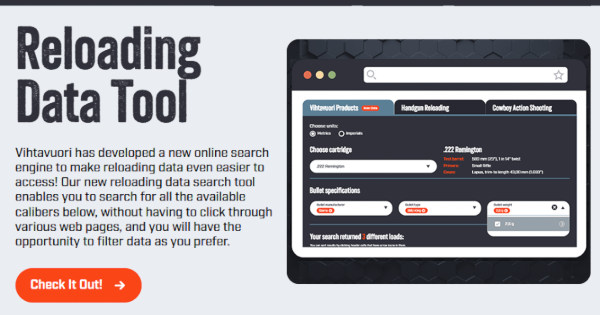
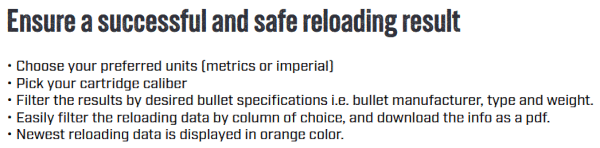
Vihtavuori offers an updated, user-friendly reloading data center on its website. This data page works well with all formats — smartphones, tablets, and desktop computers. On this page you can find recommended loads for 80+ cartridge types all in one place. You don’t have to click through multiple web pages.
In addition, the Vihtavuori reloading website has a very handy Burn Rate Chart (see below). While you can get all the load info you need through the website, Vihtavuori also offers a very good FREE reloading Mobile App. Vihtavuori’s online Reloading Center has links to the handy Vihtavuori Reloading App for both Apple and Android devices.
Burn Rate Chart is Online
CLICK HERE to view full-screen Vihtavuori Burn Rate Table.
Vihtavuori offers a comprehensive burn rate chart that lists all Vihtavuori powders for rifles and pistols. This includes Vihtavuori powders in the left column and ranks them with powders from other brands: Norma, RWS, VECTAN, Reload Swiss, IMR, Hodgdon, Accurate, W-W Alliant, and Ramshot. CLICK HERE to see the full-size chart, which can be downloaded in PDF format.
NOTE: The listed powders are displayed in order of approximate burning rate. Vihtavuori cautions: “This list is for reference only and NOT to be used for developing loads.”
Find Optimal Loads with Reloading Data Tool
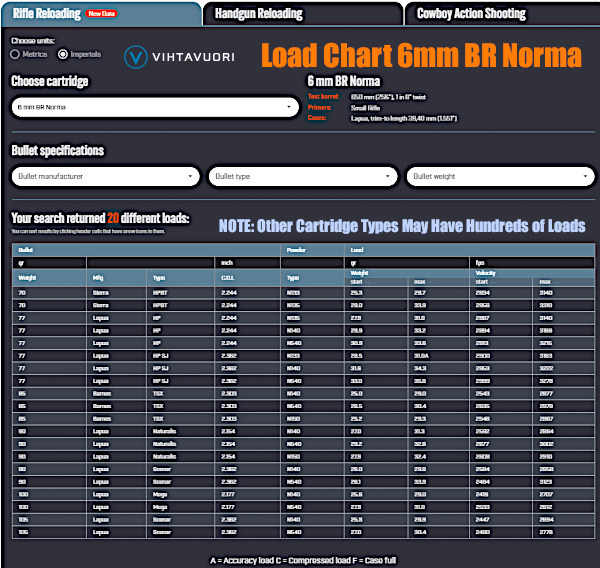
Example of Vihtavuori Load Data for Popular Cartridge
Here are the load results for the 6mm BR Norma (aka “6BR”) cartridge. Vihtavuori has full PDF tables like this for over 80 cartridge types. With the most popular cartridge types, such as .223 Rem, 6.5 Creedmoor, and .308 Winchester, the PDF tables have over 350 entries. In fact the .308 Win table has 641 loads!
Vihtavuori Procedures and Methods for Generating Load Data
Vihtavuori generates hundreds of new reloading data entries every year. But how is the load data actually produced? This video provides insight into how Vihtavuori professionals work with advanced equipment to provide reliable load data for handloaders.
How about a game of “Cartridge Chess”, with chess pieces sourced from your own ammunition collection? We think the concept of a Cartridge Chess Set is pretty clever, and it’s bound to be a conversation-starter at home or at the hunting lodge. With a little creativity, our readers could make their own Chess Sets like this, using a variety of cartridge types.
Create Your Own Cartridge Chess Set
This is a 3-D rendering originally found on the Cheaper Than Dirt Facebook page. We’d like to see a chess set with actual cartridges (assembled without powder or primers), perhaps with .32 ACP pawns and the 50 BMG and .338 LM as King and Queen.
Challenge: How many cartridge and shotshell types can you identify? The Pawns look like 9mm or 40sw pistol cartridges, while the Rooks (Castles) are obviously 12ga shotgun shells.
What’s Wrong with This Picture?: How many of you sharp-eyed chessmasters noticed a mistake in the placement of the “Royals” in the Cheaper Than Dirt 3-D rendering. Hint — look at the grid layout (top left) for the correct placement of Kings and Queens.
Many shooters prefer to deprime their brass before resizing. That way they can tumble cases or keep primer debris off their main press. To deprime cases before sizing or cleaning you can use a Decapping Die. This pushes out the spent primer without changing the neck or body of a case. Such decapping dies work fine, but they do require the use of a press. Here is a handy alternative — a cool tool that allows you to deprime brass anywhere — no press needed.
Handheld Primer Removal Tool From Frankford Arsenal
This cleverly-designed Hand Deprimer Tool allows you to deprime cartridge cases without a press. This hand-tool from Frankford Arsenal will deprime brass and capture primers conveniently. You can deprime your cases while watching TV or relaxing in your favorite chair.
This device lets you remove spent primers anywhere — no press needed and all the mess (cups/anvils/residue) stays in the capture chamber. This tool comes works with nearly all common case types up to .338 Lapua Magnum. With good leverage, this tool does the job quickly and efficiently. Forum members have praised this handy tool, but recommend wearing a thick glove if doing more than 100 cases in a session.
How to Adapt Tool for Small Flash Hole Brass
The Frankford Arsenal Deprimer Tool was designed for LARGE flash-hole brass. To deprime brass with small (1.5mm/0.59″) small flash-holes, as found on Lapua .220 Russian and 6mmBR cases, you will need to reduce the pin diameter. Frankford Arsenal currently recommends purchasing a replacement pin and “sanding it down” to the smaller diameter. NOTE: This is NOT difficult — simply spin the stock pin in some sandpaper.
This handy depriming tool is very versatile. With a universal, cylinder-style cartridge-holder, the tool can deprime a wide variety of cartridge types from .20 caliber up to .338 caliber. Three different plastic collets are provided to handle for different diameter cases. Spent primers are captured in a removable spent primer catch tube. Simply twist off the clear catch tube to dump the spent primers. With die-cast metal construction, this tool should last through many thousands of depriming cycles. MSRP is $65.99. Right now it is $47.99 on Amazon with 82% 5-star ratings.
Long-term User Review
One owner of this depriming tool has posted: “I have owned one of these for about eight years and deprimed over 10,000 cases with this tool. I have never had to replace a single part on it. You will have to adjust the return spring every so often, but that is a very easy task. If you are depriming a LOT of brass, the handle can tear up your hand a bit. Solution: Wear a Mechanics Glove. Easy Peasy! You will NOT regret this purchase.”
User Modifications — Grip Padding and High-Volume Capture
Many users recommended putting some kind of padding on the grip and front lever to reduce pressure on the fingers. This can be done with a wrap or a rubber covering. In addition, users have adapted the unit with an attached hose and large primer capture jug. If you depriming hundreds of cases at a time, this hose conversion may make sense.
Most of us own a .223 Rem rifle. Now, thanks to our friends at Rifleshooter.com we can assess exactly how velocity changes with barrel length for this popular cartridge.
Rifleshooter.com performed an interesting test, cutting the barrel of a .223 Rem rifle from 26″ all the way down to 16.5″. The cuts were made in one-inch intervals with a rotary saw. At each cut length, velocity was measured with a Magnetospeed chronograph. To make the test even more interesting, four different types of .223 Rem/5.56 ammo were chron’d at each barrel length. The Rifleshooter.com team that conducts these tests has a full-service gun shop, 782 Custom Gunworks — visit 782guns.com.
Test Barrel Lost 25.34 FPS Per Inch (.223 Rem Chambering)
How much velocity do you think was lost, on average, for each 1″ reduction in barrel length? The answer may surprise you. The average speed loss of the four types of .223/5.56 ammo, with a 9.5″ shortening of barrel length, was 240.75 fps total (from start to finish). That works out to an average loss of 25.34 fps per inch.
5.56/.223 Barrel Cut-Down Speed Test 26″ to 16.5″
Start FPS at 26″
End FPS at 16.5″
Total Loss
Average Loss Per Inch
UMC .223 55gr
3182*
2968
214
22.5 FPS
Federal M193 55gr
3431
3187
244
25.7 FPS
Win m855 62gr
3280
2992
288
30.3 FPS
Blk Hills .223 68gr
2849
2632
217
22.8 FPS
*There may have been an error. The 25″ velocity was higher at 3221 fps.
Rifleshooter.com observed: “Cutting the barrel from 26″ to 16.5″ resulted in a velocity reduction of 214 ft/sec with the UMC 223 55-grain cartridge, 244 ft/sec with the Federal M-193 cartridge, 288 ft/sec with the Winchester M855 cartridge and 217 ft/sec with the Back Hills 223 68-grain match cartridge.”
How the Test Was Done
The testers described their procedure as follows: “Ballistic data was gathered using a Magnetospeed barrel-mounted ballistic chronograph. At each barrel length, the rifle was fired from a front rest with rear bags, with five rounds of each type of ammunition. Average velocity and standard deviation were logged for each round. Once data was gathered for each cartridge at a given barrel length, the rifle was cleared and the bolt was removed. The barrel was cut off using a cold saw. The test protocol was repeated for the next length. Temperature was 45.7° F.”
See More Barrel Cut-Down Tests on Rifleshooter.com
Rifleshooter.com has performed barrel cut-down tests for many other calibers/chamberings including 6mm Creedmoor, .308 Winchester, and .338 Lapua Magnum. See these test results at Rifleshooter.com.
Much Different Results with 6mmBR and a Longer Barrel
The results from Rifleshooter.com’s .223/5.56 test are quite different than the results we recorded some years ago with a barrel chambered for the 6mmBR cartridge. When we cut our 6mmBR barrel down from 33″ to 28″ we only lost about 8 FPS per inch. Obviously this is a different cartridge type, but also our 6mmBR barrel end length was longer than Rifleshooter.com’s .223 Rem start length. Velocity loss may be more extreme with shorter barrel lengths. And, of course, different cartridge types and powder/bullet combinations will yield different results.
If you load pistol ammo you should have a case gauge (aka “gage”) for each cartridge type you reload. Caliber-specific, precision-machined cylindrical gauges perform many important functions. They will instantly reveal if your rounds are too long or have excessive headspace. They will also show if your case is bulged or otherwise too fat to chamber easily. You can use the gauge with sized brass as well as loaded rounds.
Case gauges are a “must-have” for anyone loading handgun ammunition, particularly if you crank out large quantities of pistol ammo with a progressive press. An oversize round can cause a misfeed, jam, or other problem. That can ruin your day if you are in the middle of a shooting match. If you are relying on your handgun for self-defense, the last thing you want is a malfunction of any kind. This Editor personally runs every pistol round through a gauge before it goes into the ammo box.
UltimateReloader.com Video Shows How to Use Pistol Case Gauges:
Our friend Gavin Gear of UltimateReloader.com has prepared an excellent video that explains the benefits of pistol case gauges and shows how to use them. Gavin uses the quality gages produced by L.E. Wilson. These are available for the most popular handgun cartridges, both autoloader cartridges, and rimmed revolver cartridges. Gavin demonstrates gage use with .40 SW and .44 magnum cases.
Gavin states: “Using a case gage is very simple, and I would recommend that you add one of these gages to your reloader’s tool chest for each of the pistol cartridge types you reload. It may just save you a lot of time and hassle. Peace of mind is hard to put a price on!”
We are well into spring 2026. That means folks will be getting ready for varmint safaris into prairie dog country. Todays’ story may help you choose a cartridge for your next varmint rifle. This Sunday we feature a Cooper chambered for the .204 Ruger — an impressive cartridge with way more speed that a .223 Rem, plus a flatter trajectory.
For many years, Ken Lunde journeyed to South Dakota to visit with his father, and do a little varmint hunting. This article features Ken’s Cooper Model 21 Montana Varminter chambered in .204 Ruger. During past varminting holidays in South Dakota, Ken had a chance to try the speedy .204 against his “old reliable” .223. He came to favor the .204 for its accuracy, flat trajectory, and superior performance in the wind. Ken told us: “I love my .223, but the .204 has the edge for Dog-Town duty.”
The Cooper Montana Varminter in .204 Ruger
Story and photos by Ken Lunde
I’ve been a big fan of Cooper Arms rifles ever since my dad introduced them to me a few years ago. I prefer Cooper Arms rifles over others because they perform as they should out-of-the-box, and have outstanding workmanship and beauty. You get form and function. You don’t need to choose one over the other. For the price one pays, Cooper Arms rifles are a great bargain. I mount a quality scope, usually a higher-end Leupold with a 40mm objective, go through barrel break-in, and they always perform extraordinarily well. I should state that all of my rifle shooting is geared towards hunting. In other words, any shooting I do on paper is treated as preparation for using the same rifle for hunting, whether it’s for varmints such as prairie dogs, or for larger game.
Cooper Varmint Rifles–Components and Variations
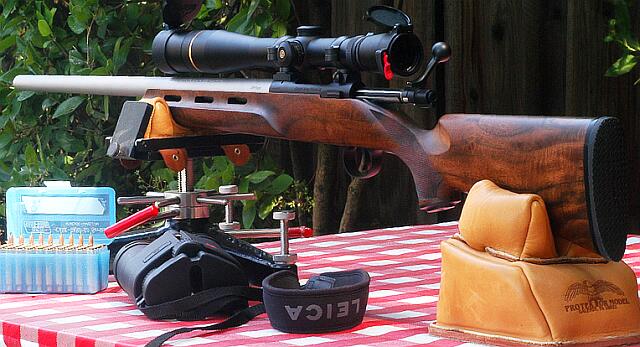
The featured rifle is a Cooper Arms M21 Montana Varminter (aka “MTV”) chambered in .204 Ruger. It has a 24″ varmint-taper stainless steel barrel with a 1 in 12-inch twist. This twist rate seems to be typical of .204 Ruger barrels from other manufacturers. The stock is AA+ grade Claro Walnut, and has the varmint fore-end, “Buick” vents, and steel grip cap that are standard on the Montana Varminter configuration. Among Cooper’s three wood-stocked varmint rifle configurations — Varminter, Montana Varminter, and Varmint Extreme — I prefer the Montana Varminter as it seems to be the best balance of value versus features. Plus, I like the “Buick” vents. They’re very pleasing, at least to my eyes. Maybe that’s why I own seven of them, in M21 and M22 actions, and in a variety of calibers. [Editor: Ken’s father has a near-identical .204 Ruger Cooper, with consecutive serial number.]
For this rifle, I decided to mount a Leupold VX-III 6.5-20×40 LR scope with the Varmint Hunter reticle. The rifle came with Leupold STD bases in Matte finish, and I used Leupold 30mm STD rings in Medium height and Matte finish. I took the time to align the bottom rings on the bases, and properly lapped them. Other than mounting the scope, no custom work was done, because none was necessary. The trigger is superb out-of-the-box, which is typical of Cooper rifles.
Load Development and Accuracy I first tried factory ammo, loaded with Hornady 32gr and 40gr V-Max. The 32gr load shot the best — five-shot groups were slightly larger than a half-inch at 100 yards. My dad heard that Alliant Reloder 10X was a good powder for this cartridge, and he worked up a load using the Sierra 32gr BlitzKing bullet. He found that 26.5 grains was the right amount for his rifle. Considering that my rifle was probably made on the same day, having a consecutive serial number, I decided to try my Dad’s load, along with a half-grain up and down: 26, 26.5, and 27 grains of powder. I, too, found that my rifle prefers 26.5 grains of RL 10X. With this load, I could shoot consistent quarter-inch, five-shot groups at 100 yards. Cartridge OAL is 2.353″, or 1.990″ measured from the ogive.
I am using Winchester brass, Federal 205M primers, Alliant Reloder 10X powder, and Sierra 32gr BlitzKing bullets. I use Forster dies, and load with a Forster Co-Axial single-stage press. Here are two typical targets. As you can see, this .204 can shoot.
WARNING: Current lots of Reloder 10X powder may be somewhat different. 26.5 grains of RL 10X may be TOO HOT for your rifle and 32gr bullets. Seating depth, throat length, and COAL will affect pressures dramatically. START LOW at 24.5 grains and work up.
Cartridge Smack-Down — .204 Ruger vs. .223 Remington
Ken made these comments when he first tested his .204 Ruger vs. his trusty (and very accurate) .223 Remington: “I brought along two rifles. The first was my ‘proven’ varmint rifle, the one chambered in .223 Rem. It has stunning wood, and clearly escaped the factory with AAA grade Claro Walnut. That rifle also shoots consistent five-shot, quarter-inch groups at 100 yards. For the .223, my preferred load uses Winchester brass, Federal 205M primers, Hornady 40gr V-Max bullets (non-moly), and 26.2gr of Vihtavuori N133 powder.
I found that I very much enjoyed shooting the .204 Ruger rifle, which explains why I used only the .204 Ruger during the second trip, although I also brought along the .223. Why did I favor the .204? Well, those little 32gr bullets really zing out of the barrel, with a very flat trajectory, like a .22-250. And, to my surprise, they buck the wind very well, perhaps even better than .223. While I am no ballistics expert, I think that this may be due to its high velocity, clearly over 4,000 fps.
Related to the flat-shooting characteristics of the .204 Ruger cartridge, I found that I was able to depend on my Leupold’s Varmint Hunter reticle for both bullet drop and wind compensation. It was a very pleasing experience. For determining ranges in the field, I used a new set of optics for this trip, Leica’s new Geovid 8×42 BRF range finder.
Comparative Ballistics: .204 Ruger vs. .223 Remington vs. 22-250
Cartridge
Bullet
BC
Powder
Max Load
Muzzle Vel
400yd Drop
400yd 10mph Wind
.204 Ruger
32gr V-Max
.210
Benchmark
28.0
4047 fps
25.50″
17.88″
.204 Ruger
40gr V-Max
.275
H4895
27.7
3741 fps
26.93″
14.10″
.223 Rem
40gr Nosler BT
.221
Benchmark
27.3
3666 fps
30.67″
19.02″
.223 Rem
50gr Nosler BT
.238
BL-C(2)
28.0
3428 fps
34.21″
19.01″
22-250
40gr Nosler BT
.221
H4895
37.0
4060 fps
24.73″
16.67″
Load data from Hodgdon.com, for 24″ barrel. 2.250″ COAL .204s, Fed 205s. 2.210″ COAL for .223 Rem, Winch SR. 2.350″ COAL for 22-250, Winch LR. Always start 10% low and work up. Calculated at 1000′ altitude, 80° F.
This 2022 third-party video records the performance of .204 Ruger Hornady factory ammunition with both 32gr and 40gr V-Max bullets.
Dakota Dog-Town Adventures with Dad
Editor: When this story was originally written, Ken Lunde made two summer trips to South Dakota to hunt prairie dogs with his father. Here is his account of those summer-time adventures.
I drove to South Dakota twice [that year]. For the first trip, I brought two Coopers, both M21 MTVs, in .223 and .204 Ruger. My .223 Cooper was already proven during previous trips to South Dakota. I fired a total of 300 rounds, 200 from the .204 Ruger and 100 from the .223. I found the .204 Ruger to be flatter-shooting than .223, and it also seemed to buck the wind better, even with the light 32gr bullets.
For the second trip, I ended up shooting 301 rounds, all from the .204 Ruger rifle. I had discovered the importance of accuracy when hunting prairie dogs — and the .204 Ruger had exceptional accuracy. There are many variables with which to contend while shooting: wind speed, wind direction, variable distance to target, bullet drop, steadiness, and the accuracy of the load in the rifle. I find that the more of these variables I can control or compensate for, the greater the success.
I estimate I bagged about 250 prairie dogs during each trip, meaning about 500 in total for this season. There were misses, of course, but those are generally 400 yards and beyond, when wind becomes too much of a factor, or shooter error. And, for each trip, I managed to get two or three “doubles,” which is lingo that means that a single bullet results in two dead prairie dogs. Prairie dogs tend to congregate, and when they do, “doubles” become possible, and “triples” are not out of the question. One of these “doubles” was clearly visible through my scope.
The best part of these trips is spending quality time with my dad, doing something that both of enjoy: shooting and hunting. I grew up in Wisconsin, and my parents moved to South Dakota in December of 2004. South Dakota, and sometimes Wyoming, have come to be our preferred hunting states, because they’re superb hunting destinations. It is great that my parents have decided to settle in one of those states. In fact, the drive from California is not bad. It takes a little over one day. I also brought my teenage son along. He enjoyed the chance to go fishin’ with Grand-Dad, and one day “teen-angler” managed to catch us six fine trout.
My first trip to South Dakota, at the end of June, offered a unique oppor-tunity, since First Stop Guns was having a show that coincided with my time in the area. Dan Cooper, founder and owner of Cooper Arms, was present at the show. My dad and I decided to host a small dinner at my parents’ new home, and we invited Dan Cooper and others. I brought tenderloin steaks from California for this. In addition to Dan Cooper, Mark and Steve Blote of First Stop Guns, along with Paulette Kok of Dakota Arms, attended the dinner. It was a pleasure and honor to be in their company. They’re all very personable.
My father has a rather vast collection of Cooper Arms rifles, so I naturally invited Dan Cooper to check them out. A couple of them turned out to be special. One turned out to be the very first .22-250 rifle that Cooper Arms built. It is a Model 22 Varmint Extreme with ebony fore-end tip. Another is an Model 21 Classic with Schnabel fore-end, and according to Dan, less than 30 such rifles were ever crafted. It’s in the rack picture at left. Two of Dad’s rimfires are also very early Coopers, with two-digit serial numbers. They were made before Cooper started using the magazine insert supplied by Anschütz. And check out the middle rifle in the rack. It’s a Dakota Arms Model 97 Deluxe Hunter that I bought for Dad. He hand-picked the amazing wood blank, and it turned into an outstanding rifle stock. You can see how it stands out in the photo. Interestingly, the day before our dinner, I used Dad’s M21 with the Schnabel stock, chambered in .222, to hunt prairie dogs in the 9,000 acres of public hunting land bordering the eastern side of my Dad’s 56-acre “recreational” property, situated just north of Hot Springs, SD. Here’s a photo. Yes, I’d say this is a great place to hunt and “get away from it all”.
Spring Groundhog Hunting — Fun and Challenging
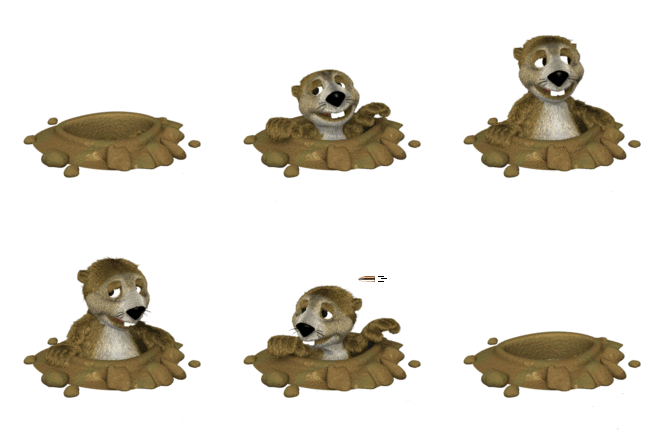
Springtime is the right time for groundhog hunting in the Northeast USA. Groundhog hunting is both fun and challenging. In today’s Saturday Showcase, we feature three videos showing successful groundhog hunts. Then there is a video about checking your equipment and verifying your varmint rifle zero.
We’ve even included a good video offering cooking tips for groundhog/woodchuck.* Yes groundhog meat can be quite savory — used in stews, sandwiches, or tacos. Last but not least we’ve included a section on groundhog shooting matches. These are fun matches with paper and/or steel groundhog targets.
Groundhog Hunt Report — Successful Stalk and Shoot
Here’s a great Realtree.com video showing successful groundhog hunts. This covers the process of spotting and tracking groundhogs on farmlands. Woodchucks are sensitive creatures that get easily spooked. This video shows that groundhog hunters need patience and skill, plus an accurate rifle.
Groundhog Hunting on the Family Farm with .17 HMR
In this video, the host employs his CZ 457 rifle chambered in .17 HMR to hunt groundhogs on his farm. The video provides a hunter’s POV with excellent Scope-Cam footage. This young shooter has 280 videos on his popular Blocketh Outdoors Channel including videos showing how to stalk groundhogs successfully. These critters go to ground quickly if they see or hear the hunter. NOTE: The lead photo for this Saturday Showcase comes from another Blocketh Outdoors groundhog video.
Groundhog Killshot Compilation Video
Here’s a classic “killshot” video showing multiple hits on groundhogs. If you want to see how a well-aimed varmint bullet can flip, spin, and elevate a groundhog, this video will keep you entertained. While we like explosive hits on prairie dogs, it may be better to use a solid, non-expanding bullet if you plan to harvest the groundhog (aka woodchuck) meat.
Groundhog Hunting — Importance of Confirming Your Zero
This AR15 Hunter channel video covers getting ready for spring groundhog season. This is a helpful video that shows how to confirm your zero on your varmint rifle. If you have an AR-platform Modern Sporting Rifle, this video is worth watching.
If you don’t have groundhogs in your part of the USA, don’t fret. You can still have fun hunting smaller varmints such as ground squirrels and Prairie Dogs. Here’s a good video covering P-dog hunts with a suppressed .223 Rem AR. The video covers recommended equipment including bipod, tripod, and optics.
Groundhog Matches — Fun Shooting at Paper and Steel ‘Hogs
Along with actual groundhog hunting, many shooters like to shoot paper and/or steel groundhogs in club groundhog competitions. These are fun matches that you can shoot with a variety of rifles. Our first choice would be a 22 BR for ranges out to 450 yards or a 6 BRA if targets are farther out. One popular match in the Northeast is the St. Thomas Ground hog shoot in Pennsylvania (see below).
At clubs across the country, varmint fun shoots (also known as “groundhog matches”) are becoming more popular every year. In these matches, usually shot from the bench, you engage paper targets, clay pigeons, steel “critter” silhouettes, or some combination of paper and reactive targets. Shooters like these matches because you can shoot a wide variety of rifles, you don’t have to spend a fortune to be competitive, and there is fun for the whole family. Rules are inclusive — you won’t be turned away because your rifle is two ounces overweight. A large percentage of the match fees usually go back to shooters in the form of cash prizes. And the level of camaraderie is high.
St. Thomas Groundhog Shoot, Report by Jonathan Trivette
Nestled at the base of a mountain in south-central Pennsylvania is the St. Thomas Sportsmen’s Association. On a cool Saturday morning you’ll find some of the area’s best shooters at the monthly Groundhog Match. The match attracts shooters from Virginia, Maryland, West Virginia, and of course Pennsylvania.
It may not be the longest-yardage match in the area, but it can be the one of the toughest. The range is sloped up the mountain a little so the winds can be very tricky. Often times the three wind flags at 200, 300, and 400 yards will all be blowing in different directions.
* “Groundhog” and “Woodchuck” are simply two different names for the same animal. Both terms have been used in the English language since the 1600s. In many places, the terms are used interchangeably, but “groundhog” is now increasingly more common in the USA.
Lapua and Berger, two leading companies with great products for competitive shooters and skilled hunters, will have multiple new and enhanced products on display at the 2026 NRA Annual Meetings & Exhibits in Houston, Texas, April 16-19, 2026. Lapua will showcase its new MaxRange Target Bullets and TRX polymer-tipped solid copper bullets and ammunition designed for long-range precision shooters and hunters. And Berger will display a variety of new bullets and hunting ammunition offerings.
New Lapua Products for 2026
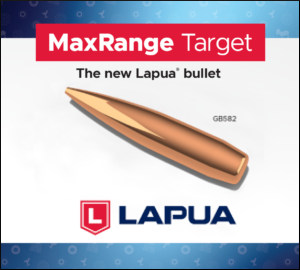
New MaxRange™ Target Bullets
This year, Lapua is expanding its MaxRange™ Target bullet line, engineered for extreme‑precision shooters competing in today’s long‑range disciplines, including PRS, F‑Class, Fullbore, and other formats where targets extend beyond 1000 meters.
New additions to the MaxRange™ Target lineup include the 6.5mm 144gr MaxRange Target, offering an impressive 0.335 G7 ballistic coefficient, and the .30 caliber 175gr MaxRange Target, engineered to deliver outstanding long‑range performance while unlocking renewed precision potential for the .308 Winchester. These bullets will be on display at the Lapua Booth at the NRA Houston event.
New TRX™ Tipped Solid Copper Bullets & Ammunition
Lapua will also showcase its TRX™ polymer‑tipped, solid copper bullets, developed for hunters and precision shooters who demand superior exterior ballistics and reliable terminal performance. TRX bullets deliver industry‑leading long‑range precision, featuring some of the highest ballistic coefficient values in their class.
In addition to 6.5mm 120gr, .30 caliber 150gr, and .30 cal 165gr TRX projectiles, Lapua will offer factory‑loaded TRX ammunition in the following chamberings: 6.5 Creedmoor. 6.5×55 Swedish, .308 Winchester, .30‑06 Springfield, .300 Win Magnum.
Berger — New Products for 2026
Berger will showcase new precision bullets and ammunition at the 155th NRA Annual Meetings & Exhibits in Houston, TX this week. New offerings include 7mm PRC Elite Hunter ammunition, .22 caliber 69gr OTM bullets, 300 PRC 217 Grain Elite Hunter ammunition, and 1500-count Competition Packs designed for long-range accuracy and competition shooting.
New Berger Competition Bullet Packs
This year Berger will sell 1500‑count Competition bullet packs. This allows handloaders to secure large quantities of bullets from the same production lot. That helps assure load accuracy and consistency when loading hundreds of rounds for many matches. This helps PRS, Fullbore, F‑Class, NRL Hunter, ELR, and other disciplines maintain consistent accuracy at 1,000 yards and beyond. The following Competition Packs are available now at authorized Berger retailers:
6mm 105gr Hybrid Target
6mm 109gr Long Range Hybrid Target
.25 caliber 135gr Long Range Hybrid Target
6.5mm 140gr Hybrid Target
6.5mm 144gr Long Range Hybrid Target
7mm 180gr Hybrid Target
7mm 184gr F-Open Target
.30 caliber 200.20X Hybrid Target
New .22 caliber 69 Grain OTM Bullets and .223 Rem OTM Ammunition
Berger is releading new 69gr OTM bullets. These are optimized for AR-style rifles with a 1:9″ (or faster) twist used in 200- and 300-yard competition. Berger also introduces .223 Remington 69gr OTM ammunition, loaded with premium components, including Vihtavuori powder. This new OTM ammo should deliver great precision and reliability.
New 7mm PRC Elite Hunter Ammunition
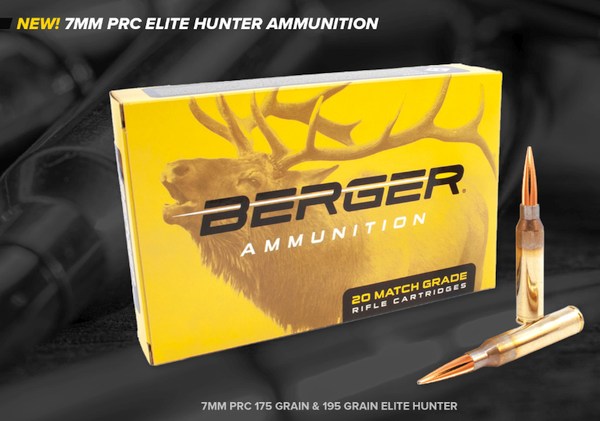
Berger introduces new 7mm PRC Elite Hunter loads featuring heavy-for-caliber options that deliver exceptional external ballistics and long-range terminal performance. Available in 175-grain and 195-grain Elite Hunter offerings, both loads are optimized for modern, fast-twist rifles.
New 300 PRC 217 Grain Elite Hunter Ammunition
Berger’s new 217gr Elite Hunter 300 PRC ammunition offers a heavy-for-caliber solution that maximizes energy and terminal performance. Featuring an ultra-high 0.695 BC and increased sectional density, this ammunition delivers outstanding downrange accuracy and impact energy.


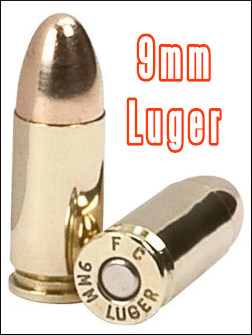 Out of the box the Super GP100 9mm has a 9.5-lb double-action pull and a 4.5-lb single action trigger pull. Reviewers say the trigger pull is a little uneven initially but smooths out over time. A Gunblast tester, Boge Quinn, also observed that if you do NOT use the supplied moon-clips it is awkward to remove the spent cartridges: “You don’t have to use a moon clip, but I don’t know why you wouldn’t… it just works great that way.”




 How about a game of “Cartridge Chess”, with chess pieces sourced from your own ammunition collection? We think the concept of a Cartridge Chess Set is pretty clever, and it’s bound to be a conversation-starter at home or at the hunting lodge. With a little creativity, our readers could make their own Chess Sets like this, using a variety of cartridge types.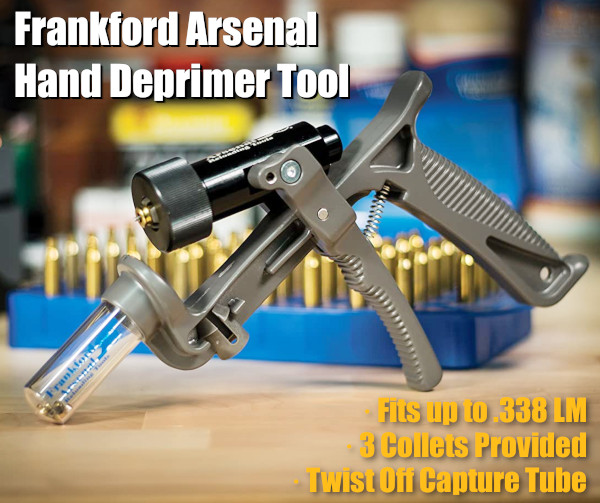



 I first tried factory ammo, loaded with Hornady 32gr and 40gr V-Max. The 32gr load shot the best — five-shot groups were slightly larger than a half-inch at 100 yards. My dad heard that Alliant Reloder 10X was a good powder for this cartridge, and he worked up a load using the Sierra 32gr BlitzKing bullet. He found that 26.5 grains was the right amount for his rifle. Considering that my rifle was probably made on the same day, having a consecutive serial number, I decided to try my Dad’s load, along with a half-grain up and down: 26, 26.5, and 27 grains of powder. I, too, found that my rifle prefers 26.5 grains of RL 10X. With this load, I could shoot consistent quarter-inch, five-shot groups at 100 yards. Cartridge OAL is 2.353″, or 1.990″ measured from the ogive.


 I estimate I bagged about 250 prairie dogs during each trip, meaning about 500 in total for this season. There were misses, of course, but those are generally 400 yards and beyond, when wind becomes too much of a factor, or shooter error. And, for each trip, I managed to get two or three “doubles,” which is lingo that means that a single bullet results in two dead prairie dogs. Prairie dogs tend to congregate, and when they do, “doubles” become possible, and “triples” are not out of the question. One of these “doubles” was clearly visible through my scope.
 My first trip to South Dakota, at the end of June, offered a unique oppor-tunity, since First Stop Guns was having a show that coincided with my time in the area. Dan Cooper, founder and owner of Cooper Arms, was present at the show. My dad and I decided to host a small dinner at my parents’ new home, and we invited Dan Cooper and others. I brought tenderloin steaks from California for this. In addition to Dan Cooper, Mark and Steve Blote of First Stop Guns, along with Paulette Kok of Dakota Arms, attended the dinner. It was a pleasure and honor to be in their company. They’re all very personable.

 Spring Groundhog Hunting — Fun and Challenging
 Along with actual groundhog hunting, many shooters like to shoot paper and/or steel groundhogs in club groundhog competitions. These are fun matches that you can shoot with a variety of rifles. Our first choice would be a 22 BR for ranges out to 450 yards or a 6 BRA if targets are farther out. One popular match in the Northeast is the St. Thomas Ground hog shoot in Pennsylvania (see below).