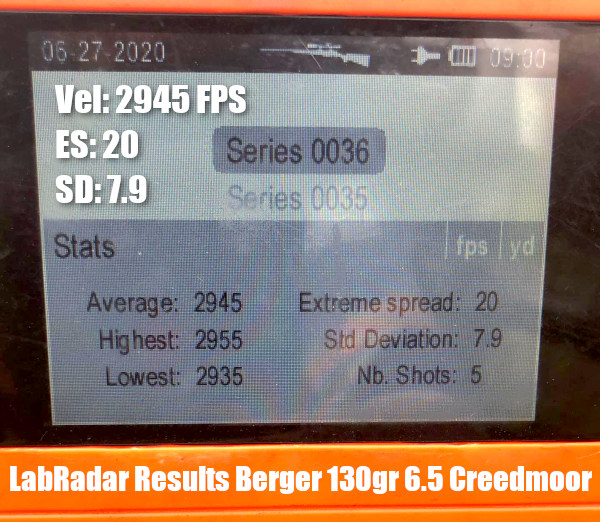
Is factory 6.5 Creedmoor ammunition good enough to win a PRS or NRL competition? The answer is a resounding “YES” if we’re talking about Berger ammunition. Produced with Berger match bullets and premium Lapua brass, this Berger 6.5 Creedmoor ammunition demonstrated excellent accuracy, impressive velocity, and very good ES/SD numbers. When tested at 1000 yards with an MPA-stocked PRS rig with Rem 700 action, this ammo showed just half-MOA of vertical, and produced a group that would have been a 50-1X in F-Class competition. That’s quite impressive for a PRS rig.
This ammo test was performed by our friend Erik Cortina from Texas. The reigning SW Nationals F-Open champion, Erik is a top F-Class competitor who also shoots tactical matches (for fun and glory). A couple seasons back, Erik built a new 6.5 Creedmoor with a Remington 700 action. Though this rifle sports a top-shelf MPA chassis and premium Kahles scope, Erik calls this his “budget build” because it has a plain Rem 700 factory action rather than the elite Borden actions he normally runs. Erik’s actions of choice are the Borden Mountaineer for PRS and Borden BRM-XD for F-Class.
Erik posted: “Shot my budget 6.5 Creedmoor … with Berger Bullets factory ammo. I shot five rounds over the chrono to get speed. I used BC info from the box and it all lined up properly. I adjusted my ECTuner to tune load and it took just 15 shots to get it shooting well. It’s simple with good components.”
This Berger factory ammo features Berger 130gr Hybrid OTM Tactical bullets. The Lapua 6.5 Creedmoor cases have a large rifle primer. You can see this ammo displays good velocity with Extreme Spread and Standard Deviation rivaling good hand-loads.
Cortina says the very accurate Brux barrel and razor-sharp 6-24x56mm Kahles scope help achieve this kind of outstanding performance at 1000 yards. Here are the key components for Erik’s latest PRS rig:
Barrel Tuner by Erik Cortina — Fits Behind Muzzle Brake
This rifle features a barrel tuner designed and crafted by Erik Cortina. You can the EC Barrel Tuner alone, or, as you can see, the EC Tuner can be fitted BEHIND a muzzle brake. Erik tells us: “The EC Tuner allowed me to tune the barrel to my ammo rather than tuning the ammo for barrel as is done when reloading. With the tuner, there is no need to try different brands of ammo as they can all be tuned to shoot as good as possible in my rifle.”
When you make a reloading mistake, you may need to “pull down” assembled ammo. The embedded UltimateReloader.com video demonstrates how to use the Hornady Cam-Lock bullet pulling system.
When Reloading Goes Bad — The Danger of Over-Charging
Our friend Gavin Gear of UltimateReloader.com was recently reloading some 9mm pistol ammo with his Hornady progressive press. As part of his reloading procedure, he visually checks the cases — and he noticed that the charges seemed high. Sure enough, his most recently-produced rounds were about two grains over spec. He diagnosed the issue: “I was using a powder measure without a baffle. What happened was, over the course of the loading session, things settled in, and the charge level increased.”
Not knowing just when his powder measure started delivering too much powder, Gavin decided, for safety’s sake, to pull down all the ammo he had just reloaded. Yes that’s time-consuming, but it’s better than the alternative — having a dangerous Kaboom while shooting. With fast-burning pistol powders, a two-grain over-charge could cause a blown case, damaged firearm, and/or serious injury.
Watch Cam-Lock Bullet Puller Used to Remove Bullets from Loaded Ammo:
Use of Bullet Puller starts 4:00 minutes into video.
Gavin says it is vitally important to perform safety checks during the reloading process: “You’ve got to do it — check every single round to make sure there IS powder, and that there’s not too MUCH powder. Double, Triple, Quadruple check your components… and your powder charges. You can’t be too careful.”
To pull down a loaded round, first place the cartridge in the shellholder on your press ram. Then raise the round up into the bullet puller device installed where a die would go. The Hornady Cam-lock bullet puller works by clamping the bullet in a collet when you flip down the red-coated lever. Then, with the case held by the rim in the shell-holder, the bullet exits the cartridge as the press ram is lowered. It takes time, but it’s pretty fool-proof once you get the hang of it. This entire process is illustrated in Gavin’s video, starting near the four-minute mark.
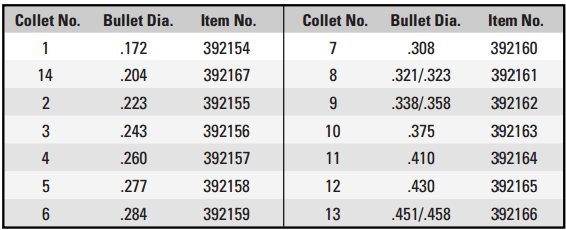
The Hornady Cam Lock Bullet Puller has four (4) key components: 1. Cam-Lock die body; 2. Cam-Lock lever; 3. Stem; and 4. Collet (Caliber-specific).
NOTE: In order to use this tool, you’ll need the appropriate collet for each diameter range of bullets you intend to pull. For example use collet #3 for 6mm, collect #6 for 7mm, and collet #7 for .308 Caliber.
RCBS Lock-Out Die
A good safety option for users with progressive presses is the RCBS Lock-Out Die. This has a charge detection rod that dips into each case after powder has dropped. You adjust the die to the proper charge height for your desired load. If the actual dispensed charge is too high or too low, the Lock-Out Die senses the problem and stops the press from advancing to the next case (it does this by preventing the ram/shellplate from fully elevating). We’ve used the Lock-out die with success for both pistol and rifle cartridges. It’s sensitive to about one-half grain with pistol powders.
This Lock-Out Die works with Hornady and Dillon progressives as well as with RCBS progressives. It does take up one die station on the press.
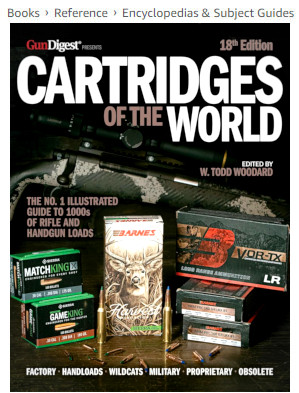
The new 18th Edition of the Cartridges of the World was released just last month (March 24, 2026) so it is very up to date. This massive 720-page reference contains illustrations and load data for over 1500 cartridge types. That makes it a unique, very valuable resource.
If you shoot a wide variety of cartridges, or are a cartridge collector, this book is a “must-have” resource. The latest 18th Edition includes many new cartridge types and 1500+ photos. The print version costs $37.71 at Amazon.com. Or you can get the print book from Amazon 3rd party sellers starting at $32.00 plus $3.99 shipping. The Kindle eBook version costs $21.99.
CLICK HERE for a large FREE Content Sample from the Kindle eBook version.
Updated 18th Edition with Feature Articles
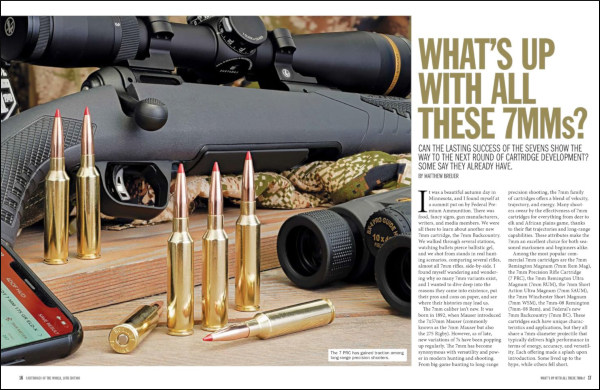
The 18th Edition of Cartridges of the World includes cartridge specs, plus tech articles on Cartridge identification, SAAMI guidelines, wildcatting, and new cartridge design trends. Cartridges of the World, the most complete cartridge reference guide in print, includes a full-color section with feature articles on new 7mm Cartridges, PRC Cartridges, 9mm Cartrdige, and a special feature on Gun Safes.
View Free Book Sample Content
FREE STUFF for You: If you want to see what you are getting, there is a very large sample section of the 18th Edition available online with over 100 pages of content and dozens of photos and illustrations. To access all this FREE INFO, CLICK HERE, then look for the cover photo and click below the cover photos where it says “Read Sample”. It may take a few moments to fully load the sample pages. NOTE: This content is primarily from the Kindle digital 18th Edition.
Cartridges of the World 18th Ed. CHAPTERS:
Chapter 1: Current American Sporting Cartridges
Chapter 2: Obsolete American Rifle Cartridges
Chapter 3: Wildcat Cartridges
Chapter 4: Proprietary Cartridges
Chapter 5: Handgun Cartridges of the World
Chapter 6: Military Rifle Cartridges of the World
Chapter 7: British Sporting Rifle Cartridges
Chapter 8: European Sporting Rifle Cartridges
Chapter 9: American Rimfire Cartridges
Chapter 10: U.S. Military Ammunition 5.56 to 20mm
Chapter 11: Cartridge ID by Measurement
At the request of our readers, we provide select “Deals of the Week”. Every Sunday afternoon or Monday morning we offer our Best Bargain selections. Here are some of the best deals on firearms, hardware, reloading components, optics, and shooting accessories. Be aware that sale prices are subject to change, and once clearance inventory is sold, it’s gone for good. You snooze you lose.
NOTE: All listed products are for sale to persons 18 years of age or older. No products are intended for use by minors.
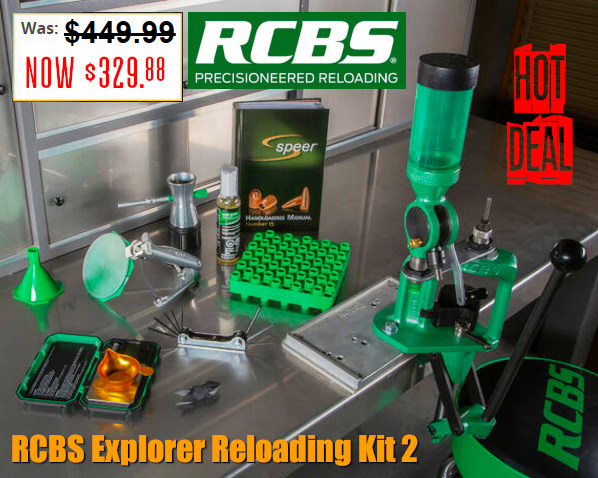
Midsouth — RCBS Explorer Reloading Kit 2, $329.88
⏺️ » Great price for everything you need — press, powder measure, scale etc.
For folks getting started with hand-loading, a great basic package is the RCBS Explorer Reloading Kit 2. On sale for $329.88 at Midsouth, this RCBS Package features pretty much all you need to load rifle and pistol ammo: Reloader Special 5 single-stage press, Uniflow-III Powder Measure, 1500gr digital scale, hand priming tool, powder funnel, powder trickler, hex key set, deburring tool, loading block, and Case Slick spray lube. You even get a Speer Reloading Manual.
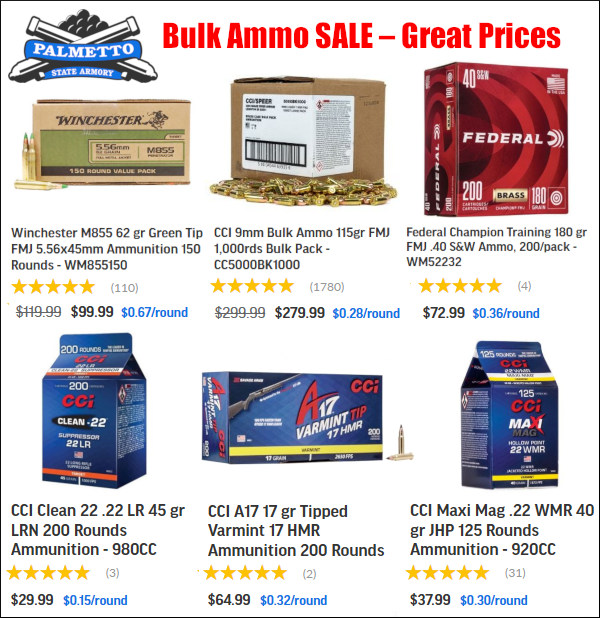
Palmetto SA — Bulk Ammunition Sale, Rimfire and Centerfire
⏺️ » Major savings on wide selection of rifle, pistol, and shotgun ammo
Here is a great opportunity to get quality ammo for your pistols, rifles, and shotguns. Head over to Palmetto SA for the current April Ammo Sale. There is a large variety of .223 Rem/5.56 NATO ammo, plus very affordable .38 SPL and 9mm ammo. Rimfire fans will find great deals on all popular types: .17 HMR, .22 LR, and .22 WMR. Along with the ammo types shown above, there are many other pistol cartridge types. Plus you’ll find a huge selection of 12ga and 20ga shotgun ammo starting at just $0.36/shell.
Are you curious about bullet stabilization? Do you understand why bullets can tumble or become unstable if the velocity gets too low or if the twist rate is inadequate. Here is an excellent video from Gunwerks that explains Bullet Stabilization.
This animated video starts by showing the design/shape differences between an older-style rifle bullet and a newer VLD-style bullet with higher BCs (Ballistic Coefficients). Generally speaking, the longer a bullet gets relative to diameter, the more RPM is required for stability. And to achieve that higher RPM you need more barrel twist and/or more RPM. The video illustrates where the Center of Gravity and the Center of Pressure are located. These are farther apart (in relative terms) for a VLD or Hybrid-style, long-nose bullet.
When the bullet is in flight there is an angle of attack. This is exaggerated in the animation for illustration purposes, but it is important to understand the the attack angle affect stability. The rotation rate (Revolutions Per Minute) is a function of bullet velocity as it leaves the muzzle and the twist rate of the barrel. Since long VLD-style bullets need more stability, the barrel twist rate needs to be higher than with shorter, fatter bullets. This is pretty much try for all calibers.
The importance of adequate barrel twist rates for bullet stabilization is further discussed in this next video featuring Bryan Litz of Applied Ballistics:
Bullet Stability and Twist Rates
In this video, Bryan Litz talks about bullet in-flight stability and how to calculate barrel twist-rate requirements for long-range bullets. Bryan explains that bullet stability (for conventional projectiles) is basically provided by the spinning of the bullet. But this spin rate is a function of BOTH the nominal twist rate of the barrel AND the velocity of the projectile. Thus, when shooting the same bullet, a very high-speed cartridge may work with a slower barrel twist rate than is required for a lower-speed (less powerful) cartridge. For match bullets, shot at ranges to 1000 yards and beyond, Bryan recommends a twist rate that offers good stability.
The Cartridge Comparison Guide is a remarkably comprehensive 340-page, spiral-bound book. Covering over 250 cartridges, the Second Edition of the Cartridge Comparison Guide is the product of many years of labor by Andrew Chamberlain, a Utah-based hunter. Andrew says his Guide “compares every factory available cartridge from the 17 calibers up to the 50 caliber cartridges”. (Sorry, most wildcat cartridges are not covered.) Chamberlain’s Guide also compiles cartridge data from major ammunition manufacturers such as Barnes, Federal, Hornady, Norma, Nosler, Remington, Sierra, Swift, Weatherby, and Winchester. It shows the optimal velocity achieved for each bullet weight and calculates bullet energy, recoil, and powder efficiency. Large color photos illustrate handgun and rifle cartridges.
The Cartridge Comparison Guide provides data for thousands of cartridge/bullet/velocity combos. Quick reference sheets and ballistics charts cover Trajectory, Velocity, and Energy out to 500 yards. The Cartridge Comparison Guide also offers a firearms lexicon, plus Appendices covering Cartridge Selection for Game Animals, Bullet Selection/Design, Bullet Expansion, and Wound Channel Characteristics.
New Content in Second Edition of Cartridge Comparison Guide
The Cartridge Comparison Guide (Second Edition) costs $39.99 plus shipping and tax. CLICK HERE to visit the Online Store where you can order the 340-page book. Here’s what’s new in the Second Edition:
Addition of Shotgun Ammunition (Both Slug and Shot loads).
Momentum Calculation for all Rifle, Shotgun and Handgun loads.
Integration of Shotgun Slug Ammunition with Center Fire Rifle Data Tables.
Factory Load Summary Added (Shows manufacturers and loads produced).
One factory load and one hand load for every bullet weight available in each cartridge.
Over 90 pages of additional ballistics content (roughly 35% more than in First Edition).
Great Resource for Hunters
One of Chamberlain’s main goals in creating the Cartridge Comparison Guide was to help hunters select the right cartridge for the job: “This started as a personal project to gather information on the more popular cartridges commonly used for hunting. I wanted to find the best all-around performing cartridge and rifle that a guy on a budget could shoot. I began comparing cartridge performance, versatility, bullet selection, powder efficiency, recoil generation vs. energy produced, standing ballistic data for different environments….”
Giant Cartridge Poster for Computer Wallpaper (1665×1080 pixels)
Here’s a great illustration of hundreds of cartridges and shotshell types. For dedicated reloaders, this would work great as desktop “wallpaper” for your computer. CLICK HERE for full-size image.
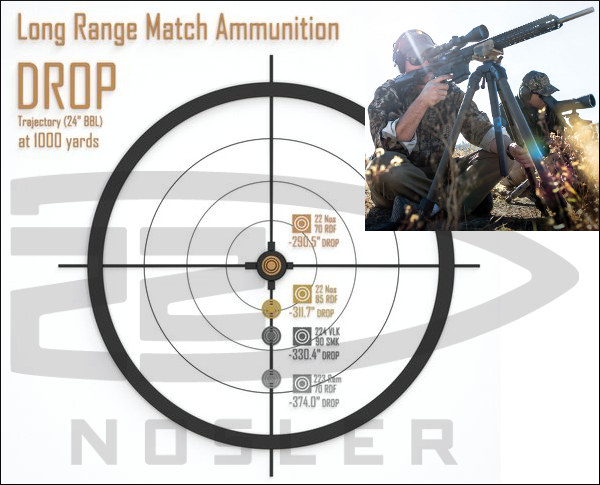
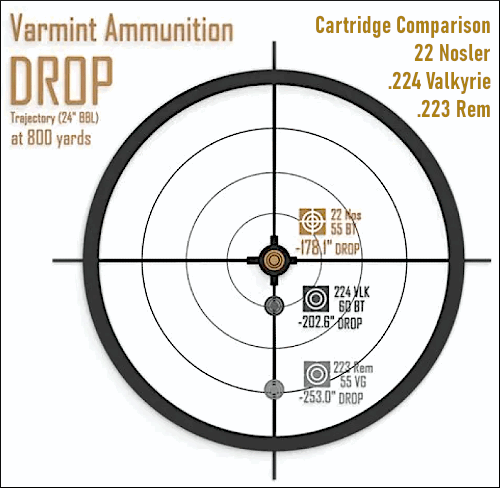
Nosler created the 22 Nosler cartridge to get the highest possible ballistic performance from a .22-caliber, AR-compatible cartridge that also provides decent barrel life and ease of conversion. The 22 Nosler achieved these objectives and much more — it delivers far better performance than the .223 Remington and even out-runs the 224 Valkyrie.
14% More Speed than .223 Remington
Approaching 22-250 velocities in a much smaller package the 22 Nosler yields 25% more case capacity than the .223 Rem/5.56 NATO, resulting in 14% more velocity and 30% more energy at the muzzle.
In ballistics, there’s no free lunch. Larger powder capacity at similar operating pressures equates to higher velocity potential. In the case of the 22 Nosler, this is evidenced by a 4-5 grain capacity increase over the tried and true .223 Remington, and a 2-3 grain capacity advantage over the newly-introduced 224 Valkyrie. This larger “engine room” allows the 22 Nosler to deliver higher velocities. That translates to less drop (flatter trajectory) at long range.
Faster than .223 Rem and 224 Valkyrie
When loaded with 80gr low-drag match bullets and fired from the same 24″ barrel (bolt actions, not gas guns) the 22 Nosler outruns the 224 Valkyrie by about 150 fps. Compared to the .223 Remington, the difference is even greater — the 22 Nosler runs over 300 fps faster than a .223 Rem! These velocity gains give the 22 Nosler an advantage in long-range trajectory and downrange energy retention.
This video compares the specifications of the 22 Nosler and .223 Remington.
NOTE: Bolt face dimensions are identical for the 22 Nosler and the 223 Rem / 5.56 NATO at 0.378″, so no bolt swap is required.
How to Run the 22 Nosler in Your AR-Platform Rifle
Converting your AR to 22 Nosler is as simple as a barrel and magazine change, and there are countless AR-platform MSRs in circulation with the proper 0.378” (.223 Rem) sized bolt face. By comparison, to make the swap to 224 Valkyrie, you must purchase a dedicated .224-Valkyrie upper (not cheap!), or at the minimum add a new barrel, modified bolt with proper bolt face, and 6.8 SPC-compliant mags.
This video explains how to adapt an AR-15 type rifle to shoot the 22 Nosler
Many Factory Ammo Options — from 55 to 85 grains
Nosler offers a variety of factory loads in 22 Nosler with bullet options from 55 grains to 85 grains, with various tip choices, and both lead core and lead-free projectile choices.
It’s already the fourth month of 2026, so the shooting season in many areas is well underway. If you need ammo for your rifles and handguns it pays to comparison shop. Smart shooters can benefit by price-shopping to get the best deals on factory-loaded ammunition, particularly for popular cartridge types such as .22 LR, 9x19mm (9mm Luger), .357 Mag, .223 Rem (5.56×45), and 6.5 Creedmoor. It this article we list 15 reliable online sources for factory-loaded ammo. You may want to bookmark this page so you can quickly scan and price-check multiple vendors. In addition, you can use a service such as AmmoSeek.com.
Why Should You Shop for Ammo Online?
By shopping online for ammo, you can save money, get a wider selection, and get bulk discounts. GunDeals.com explains: “Online purchases [can] save you a lot of money [and can] also save your time… one of the most important advantages is definitively the huge selection.” With online retailers you can quickly compare prices, and you will often get a discount on a large order (300 rounds or more) that is not available in local stores. Note, with some large vendors such as Cabela’s and Sportsman’s Warehouse you can order online then pick up in a local store.
Are There Restrictions on Online Ammo Purchasing?
In most (but not all) U.S. states is it legal to order ammunition online to be shipped to your residence. However, you MUST check your State and local laws and regulations. In some states and/or cities, it is ILLEGAL to purchase ammunition online for shipment across state lines with direct delivery. For example, in California, all ammo must be purchased from a licensed ammo dealer/vendor with a state background check (so much for the Second Amendment)*. Likewise Washington DC, and Hawaii do not allow online ammunition purchases. And there are restrictions in New York City. In Alaska there are multiple shipping regulations that impact ammo deliveries from online sales so many vendors do not ship to Alaska.
*This restriction was found unconstitutional by a Ninth Circuit 3-judge panel in Rhode v. Bonta. However, California Atty. Gen. Rob Bonta appealed that ruling, seeking a full en banc Ninth Circuit review. The 9th Circuit granted the full en banc review. As a result, the 3-judge panel’s ruling against the law was set aside, so the restrictive law remains in effect while the full Ninth Circuit considers the case. This means that Californians still may not order ammo from out-of-state vendors.
At the request of our readers, we provide select “Deals of the Week”. Every Sunday afternoon or Monday morning we offer our Best Bargain selections. Here are some of the best deals on firearms, hardware, reloading components, optics, and shooting accessories. Be aware that sale prices are subject to change, and once clearance inventory is sold, it’s gone for good. You snooze you lose.
NOTE: All listed products are for sale to persons 18 years of age or older. No products are intended for use by minors.
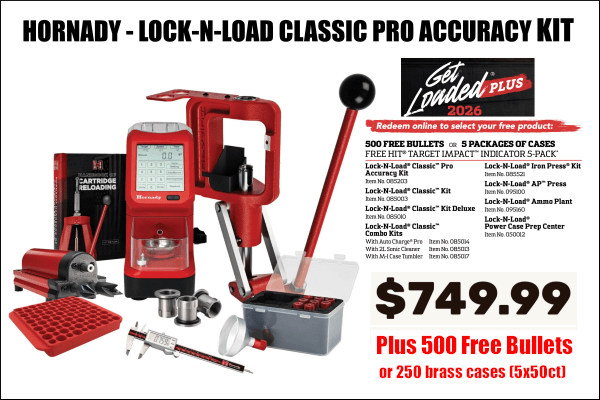
Brownells — Hornady LNL Classic Pro Combo Kit, $749.99
⏺️ » Great deal on combo kit with 500 free bullets or 250 free brass cases
The Lock-N-Load Classic Pro Accuracy Kit from Hornady has almost everything you need for precision reloading. This deluxe Combo Kit featurea the Classic Pro Press with good front access, plenty of leverage, and tight tolerances for smooth, consistent results. You also get Hornady’s impressive Auto Charge Pro powder Scale/Dispenser which provides fast and precise powder measurements to within 0.1 grain. This kit includes the popular Case Prep Trio power tool with three tool drivers. NOTE: Kit buyers qualify for a big rebate from Hornady — Get 500 bullets or five, 50ct boxes of brass cases.
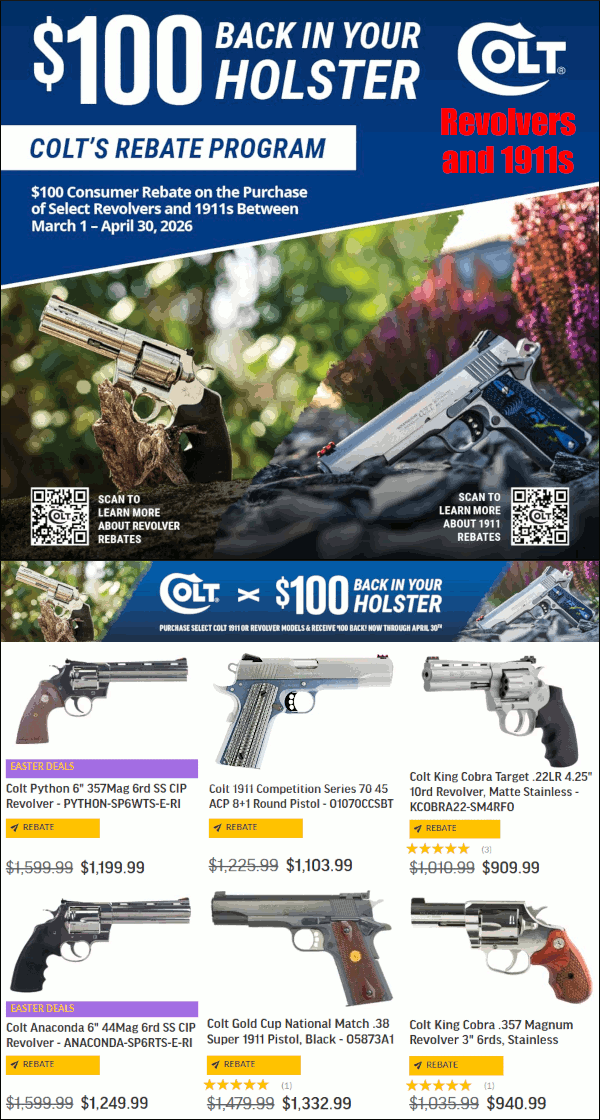
Palmetto State Armory — Major Colt Sale PLUS $100 Rebate
⏺️ » Save hundreds on Colt Revolvers and 1911s PLUS $100 Mfg. Rebate
Colt Firearms offers some of the highest-quality revolvers and pistols you can buy. The classic Colt Python and Anaconda wheelguns are legendary for good reason — they are ultra-accurate, with smooth cycling and great triggers. And the Colt King Cobra .22 LR revolver is excellent. Colt also offers a wide selection of very high-quality 1911-style pistols in multiple chamberings: 9mm, .38 Super, and .45 ACP. We like the fit and finish of these 1911s. Act now to get a great Colt revolver and/or pistol at a significant discount. Plus now through 4/30/2026, Colt offers a great $100 rebate on popular revolvers and 1911-type pistols.
As an Amazon affiliate, this site can earn revenues through sales commissions.
The shooting season is now in full swing. When you head to the range you’ll want to be prepared. That means collecting all the gear you’ll need at the range. It’s easy to forget small, critical items, so we’ve provided a checklist of the small “extras” you should pack before you head out to the range. In addition to rifle, rests, ammo, targets, and cleaning gear, here are a dozen essentials you should include in your range bag.
• Shell-Holder — If you don’t have calipers, you can use a shell-holder to check for excessive case expansion from hot loads. If a fired case doesn’t slip into the shell-holder easily, your load is definitely TOO HOT.
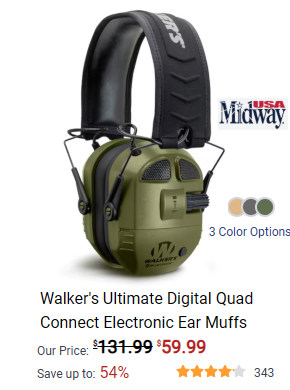
• Extra Earplugs — Always use ear protection when shooting. We bring a 35mm film canister with extra sets of foam earplugs.
• Hex Wrench or Screwdriver for action screws — Action screws can work loose with time. Always bring the appropriate hex wrench or screwdriver whenever you go to the range.
• Small Wrench for Scope Rings — Check the tension of your scope base and ring fasteners before you go. Bring along a small Torx wrench for the ring screws (or other tool that fits your fasteners).
• Normal and Under-sized Jags — It is often wise to use one-caliber undersize jags when applying solvent with cotton patches. You should have a couple sizes in your range kit.
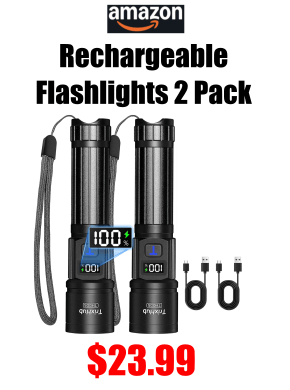
• Extra Batteries — Bring extra batteries for all your electronic gear — which can include chronograph, windmeter, digital camera, GPS etc.
• Small Notebook and Pen or Pencil — Use the notebook to record chron data, log group sizes, and make notes about wind and weather conditions.
• Adhesive dots — Bring a few sheets of adhesive dots (sold at office supply stores). Use small white or black dots as target pasters. Use larger red or orange dots as aiming points (target centers).
• Folding Chair or Camp Stool — This comes in handy if you’re spotting for another shooter, or if you reload away from the firing line.
• Water Bottle — You can’t shoot well if you’re dehydrated. Bring at least two quarts of water with you and keep a bottle at the bench.
• Surveyors’ Tape and Wood Stakes — You can make inexpensive wind indicators using surveyors’ tape attached to the top of wood stakes.
• Small Plastic Ruler — Use this to measure your group sizes. A transparent (see-through) ruler works best. Rulers are also useful for drawing lines on targets.
This list is not intended to be exclusive. There are many other items you may wish to include. Obviously bring safety glasses, and Sharpie-type pens are always handy to mark targets. We invite our readers to add other “essentials” to the list. The important thing is to plan ahead, packing your key items before you drive to the range.


 Cortina says the very accurate Brux barrel and razor-sharp 6-24x56mm Kahles scope help achieve this kind of outstanding performance at 1000 yards. Here are the key components for Erik’s latest PRS rig:

 RCBS Lock-Out Die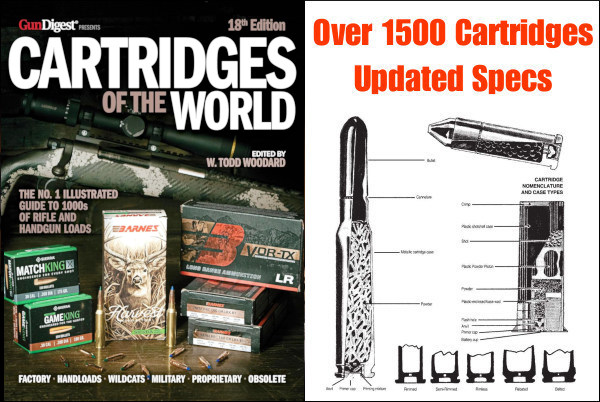






 The
The 






 The shooting season is now in full swing. When you head to the range you’ll want to be prepared. That means collecting all the gear you’ll need at the range. It’s easy to forget small, critical items, so we’ve provided a checklist of the small “extras” you should pack before you head out to the range. In addition to rifle, rests, ammo, targets, and cleaning gear, here are a dozen essentials you should include in your range bag.
 • Shell-Holder — If you don’t have calipers, you can use a shell-holder to check for excessive case expansion from hot loads. If a fired case doesn’t slip into the shell-holder easily, your load is definitely TOO HOT.
 • Hex Wrench or Screwdriver for action screws — Action screws can work loose with time. Always bring the appropriate hex wrench or screwdriver whenever you go to the range.
 • Extra Batteries — Bring extra batteries for all your electronic gear — which can include chronograph, windmeter, digital camera, GPS etc.
 • Folding Chair or Camp Stool — This comes in handy if you’re spotting for another shooter, or if you reload away from the firing line.
 • Small Plastic Ruler — Use this to measure your group sizes. A transparent (see-through) ruler works best. Rulers are also useful for drawing lines on targets.


