Fire-Form with Foulers
Here’s a tip for guys who shoot the 6 PPC, 6 Dasher, 6 BRA, .284 Shehane, or other wildcat cartridges that require fire-forming. Use your fouler shots to fire-form new cases. That way your fouler shots do “double-duty” and you get your brass fire-formed without putting extra rounds through your expensive barrel.
This procedure is recommended by Joel Kendrick, the 2004 IBS 600-yard Shooter of the Year. After he cleans his barrel, Joel knows it takes two or three shots to foul in the bore before accuracy returns. (YMMV — some barrels may need five or six foulers.) When shooting his PPC, Joel uses those fouler shots to fire-form his new brass. Joel explains: “I like to have relatively new brass always ready. By fire-forming a couple cases after each barrel-cleaning during a match, by the end of the weekend I’ve got a dozen or more freshly fire-formed cases to put into the rotation. If you do this with your fouler shots you get your fire-forming accomplished without using up any extra barrel life.”
This not only saves barrel wear, but it saves you trips to the range for the purpose of fire-forming. We thank Joel for this smart suggestion. For those who do not have a dedicated barrel for fire-forming, this should help keep your round-count down. Note: With this fouler fire-forming routine, you should ALWAYS do the fire-forming with the SAME POWDER you load for your match ammo. Joel currently works as the Supplier Quality Process Engineer for MMI-TruTec, a company that offers barrel surface coatings that can further extend your barrel life.
Kulzer Sets Eight IBS 1000-Yard IBS Benchrest Records with 6 BRA Rifle Report by Alex Wheeler
In 2021, Glenn Kulzer of Dillon, Montana had a season that will go down in 1000-Yard Benchrest history. Glenn set eight IBS records in 2021 at the Deep Creek range in Missoula, and then was named IBS 1K Shooter of the Year. What makes this so incredible is not just the number of records but the records themselves. Normally when a world record small group is shot that’s a singular event — never accompanied by Aggregate records set by the same shooter. Glenn’s IBS record small group wasn’t a one-time lucky string. Consider this — Glenn nailed that historic small group, but also recorded multiple IBS Aggregate records in 2021. And Glenn set these IBS Heavy Gun records actually using his 6 BRA (6mmBR Ackley) Light Gun! Mighty impressive.
[Editor: These were impressive records that have stood the test of time. A quick search of the IBS record site shows Glenn Kulzer still holds six of the ten listed IBS 1000-yard Heavy Gun records. Plus, Glenn broke the Light Gun 20-Target Agg group record, but that was later bettered by Tom Mousel.]
1000-yard Benchrest Aggregate records represent a series of targets shot over the course of multiple matches during a season. That really takes any luck out of the equation. You have to keep the rifle shooting at its peak all year long. It’s the ultimate test of accuracy. But the small groups do get the most notice and Glenn also broke the small group record with a remarkable 2.6853″ 10-shot group (photo below).
Eight IBS Records Set by Glenn Kulzer in 2021
Date: 06/13/2021
Class: Heavy Gun
Record: 10-Shot Group, 2.6853″
Date: 06/13/2021
Class: Heavy Gun
Record: 10-Shot Score 100/2.6853″
Date: 2021
Class: Heavy Gun
Record: 6-Match Group Aggregate, 4.349″
Date: 2021
Class: Heavy Gun
Record: 6-Match Score Aggregate, 99.167/4.679″
Date: 2021
Class: Heavy Gun
Record: 12-Target Group Aggregate, 4.529″
Date: 2021
Class: Heavy Gun
Record: 12-Target Score Aggregate, 98.583/5.058″
Date: 2021
Class: Heavy Gun
Record: 20-Target Score Aggregate, 95.2/6.422″
Date: 2021
Class: Light Gun
Record: 20-Target Group Aggregate, 5.202″
NOTE: Two of these records have been broken. The HG 20-Target Score Aggregate record is now 95.55, set by Blake Wilson. And the LG 20-Target Group Agg record is now 4.3825″, set by Tom Mousel.
This IBS record 1000-yard group, and Glenn’s other IBS records, were shot with Roy Hunter’s 103gr “A” bullet, Hodgdon H4895 powder, CCI BR4 primers, and Alpha Munitions 6 BRA brass. However, Glenn does use Lapua brass for some other 6 BRA rifles.
Glenn’s record-setting rifle is a Light Gun with a common setup used in long range Benchrest. The rig features a Borden BRM drop-port action with a Bix’n Andy trigger. The action is glued and screwed into a industrial wood laminate Deep Creek Tracker stock, a predecessor of the McMillan LRB. The Krieger barrel is a 4-groove, 1:8″-twist Heavy Varmint contour chambered for the 6 BRA (6mmBR Ackley) cartridge. All of Glenn’s rifles are topped with Vortex Golden Eagle scopes. Glenn notes that his Vortex Golden Eagles have show excellent point-of-aim stability when tested with a scope checker. The front rest was a Sinclair competition with Edgewood front bag, Field & Cave outfitters front rest plate, and speed screw. For rear support Glenn uses an Edgewood LRB rear bag.
Loading Procedures for Record-Setting 1000-Yard Shooting
Glenn’s loading process is pretty simple. He full-length sizes every time, bumping the shoulders back about .003″. Powder is weighed to the kernel, and bullets are seated with a Wilson seater. NOTE: Glenn does does not anneal his brass. He sorts primers by weight but does not otherwise measure them by dimensions. He seats the primers by feel using a relatively inexpensive primer seating tool — nothing fancy.
Glenn worked up a trim-and-point recipe for this lot of bullets based on group size. Load development is all performed at 1000 yards using the group ladder method. Glenn’s record load ended up being 30.3 grains of H4985 powder with the 103gr bullet seated very far into the rifling with .005″ of neck tension. This gave a velocity of 3030 fps in the 28″ Krieger.
Glenn shot Alpha Munitions 6 BRA brass all year with the .080″ flash hole. This year he shot Roy Hunter’s 103gr “A” bullet set quite deep into the rifling. NOTE: This deep jam has proven to be very stable IF you barrel likes it. Glenn used CCI BR4 primers and Hodgdon H4895 with .005″ of neck tension. His load delivered 3030 fps out of a 28″ barrel. NOTE: This is a “HIGH NODE” that may not be possible in an average barrel with different brass. Many 6 BRA shooters are reaching a 3000+ fps node, but you should always start low and work up. Some 6 BRA barrels will max out at 2950 FPS with 103-108gr bullets.
Glenn Interview Part I — All About the Rifle that Set Eight 1000-yard Records
Glenn Interview Part II — Load Development Process and Loading Methods
Glenn Interview Part III — Barrel Cleaning Discussion
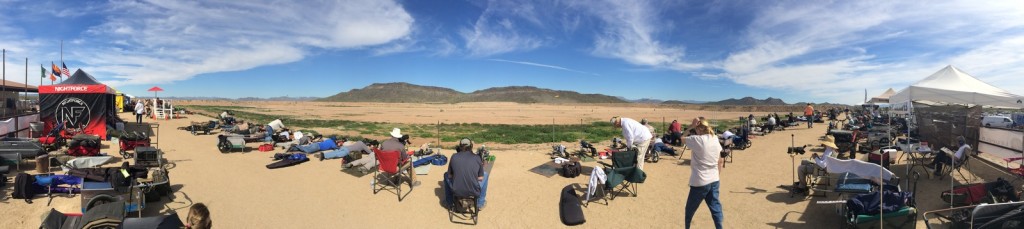
Glenn Kulzer also shot his impressive 6 BRA at the 2021 IBS Nationals at Deep Creek (shown above). This Deep Creek range photo is by Forum member Dave Way.
Setting Records in June 2021 Report by Alex Wheeler
It was a typical match for June, nothing unique about it. Saturday was actually looking to be a really great day. Overall it was good but not great. Sunday had a clear blue sky with bright sun. I looked through a couple of scopes before the match and it was milky. I probably would have shot that relay at 30-35 power. But somehow Glenn Kulzer was able to pull off the best heavy gun group ever shot in 1000-yard IBS competition. With that group Glenn also broke the 6-match Group Aggregate record. The group was no fluke, this rifle also shot great in previous matches with small groups at 1000. To my knowledge this may be the only time a small group record AND an Aggregate record were broken in the same season by the same gun. The ultimate achievement.
On June 13, 2021, Glenn shot a 2.6583″ 10-shot group, all shots in the 10 Ring for a 100 score. This now stands as the current IBS Heavy Gun 1000-Yard 10-shot group record AND score record. It is also part of new Aggregate Records listed above.
About Glenn Kulzer — Rising Star in the Long-Range Benchrest Game by Alex Wheeler
Kulzer is a pharmacist in Dillon, Montana. The attention to detail required for his job crosses over to Long-Range Benchrest. He started off a very competitive shooter right from the start. I have said it many times, but benchrest is not an elitist sport. Hard work and dedication will always rise to the top. Glenn took the sport seriously from the beginning. Accordingly, he displayed a rapid learning curve and quickly surpassed some of his mentors in match results. Glenn tunes mostly at 1000 yards using the Deep Creek variation of ladder testing. He will also load and tune at the range to try and nail the best tune for the conditions. Again, it all about the work done by competitors. But Glenn’s success shows that a bright, hard-working shooter can rise to the top of the game in just a few seasons.
Last month, Orangeburg, South Carolina became the epicenter of rifle competition on November 4-5, 2023 as the Mid-Carolina Gun Club hosted the widely-acclaimed Tack Driver IV. The Tack Driver has rapidly grown in popularity and stature, becoming a yearly must-attend event. The match’s rise in popularity can be attributed to several factors, including its organizer, the spirited Jim Cline, renowned for his quick wit, larger-than-life persona, and affinity for pranks. The Tack Driver’s popularity and status is further boosted by its unique format: shooting a mix of group and score targets at 300 meters. It has a generous 22-pound rifle weight limit and extends an invitation to all precision shooting disciplines. Competitors get the opportunity to compete with some of the world’s best shooters, have a great time, enjoy fantastic food, and see if they have what it takes to earn the title of “Tack Driver”.
What is the Tack Driver Match
For the uninitiated, the Tack Driver is a 300-meter “take-all-comers” match designed to answer the age-old question of which combination of caliber and shooting discipline is the most accurate. The rules are simple: all rifles will be fired from a bench, 22-pound weight limit, caliber must be .338 or smaller, and no one-piece rest is allowed. Each competitor will alternate shooting 5 group targets and 5 score targets over the course of two days. There are a few more rules, but those are the basics.
The Tack Driver’s course of fire alternates between score targets and group targets. So competitors must demonstrate both precision and accuracy. The group targets test precision, measuring only the group size for 5 record shots. Meanwhile, the score targets demand accuracy with a goal of hitting 5 separate 1″-diameter bullseyes, each with a single shot (ideally obliterating the dot in the center). Each target has a designated area for unlimited sighters during the 7-minute match. At the end of the match, the shooter with the best combination of the highest score and smallest group aggregate wins.
Beginning of Tack Driver IV — Cool Temps and Light Winds
Bright blue skies, light winds, and cool temperatures greeted the 99 competitors in attendance to compete for the title of Tack Driver Champion. The match, since its inception, has attracted a deep list of “Who’s Who” in the world of precision shooting. In attendance are World Record Holders, National Champions, Hall of Famers, Shooters of the Year, and World Team members. Literally the “best of the best” from UBR, Score, Group, 600-yard, 1000-yard, and Ground Hog competitions, were competing in this unique contest of “precision and accuracy.”
Tack Driver IV Video — Many Images from Match
Wayne Campbell’s Tack Driver-Winning 6 PPC Rifle
Wayne Campbell won The Tackdriver IV with a modern 6 PPC rifle. The components included: BAT 3-Lug action, Bartlein 5-groove barrel, Scarborough stock, Nightforce 42x44mm fixed-power scope, Bix ‘N Andy trigger. Notably, Wayne did most of the gunsmithing himself.
Results of The Tack Driver IV — Combined Grand Aggregate
The Tack Driver IV Grand Aggregate Winner is Wayne Campbell! Congratulations to Wayne who was also the Tack Driver Group Shooting Champion with a .7028 Aggregate! This is Wayne’s second year in a row to win this honor.
The “agony of defeat” award goes to Jeff Thompson. Jeff lead in group after targets 3 and 4 and appeared untouchable. However on target 5, Jeff shot an uncharacteristic 1.031″ group, which allowed both Greg Ellis and Wayne Campbell to surge past.
Top 5 Group Results
1. Wayne Campbell .7028
2. Greg Ellis .759
3. Jeff Thompson .7758
4. Jeff Summers .794
5. Dewey Hancock .804
Fun Group Fact: Jeff Summers and Wayne Campbell were the only competitors to keep all 5 groups below an inch.
Top 5 Score Results
1. Derick Loflin 245-2X
2. Stevie Salter 244-3X
3. Rober Seeman 244-3X
4. Dave “SuperMan” Way 244-1X
5. Gavin Peinhardt 243-2X
A big congratulations goes to Derick Loflin, the new Tack Driver Score Champion with a 245-2X. Once Derick moved into 1st place (after target 4 was posted) he never relinquished the lead.
Chambering Selections of Competitors — 6 PPC Most Popular
Of the 98 recorded chambering types for participants, the 6 PPC was the most popular with 39 entries. Next was the 30 BR with 27 entries. There were a dozen 6 BRAs (aka 6mmBR Ackley), plus 11 6mmBRs. There were three 22 PPCs and two each 30 Dasher and 6.5×47, with one Grinch and one 30 WW.
Saturday Morning Tack Driver Interviews with Top Shooters
Click NAME to view YouTube Interview Video:
Jeff Peinhardt, Tack Driver I Champion Hall of Fame Member
Samuel Hall, 600-Yard Shooter 3-Time National Champion
Here is the 0.337″ group shot by George Cabrera. George was shooting a 6mmBR rifle with Panda action (right bolt, left port, no ejector), Kelbly stock, Krieger 1:10″-twist barrel, Jewell trigger, Nightforce 12-42x56mm BR scope. George loaded his 6mmBR rifle with H4895 powder and Berger 90gr HPBT bullets. At 300 meters this 0.337″ group works out to 0.098 MOA (one MOA is 3.435″ at 300 meters).
Saturday Night Cookout with Smoked Prime Rib
With the range closed and targets hung, shooters and family members began gathering at the pavilion (on top of the hill) for the 6:30 feed. With a main course of Smoked Prime Rib, it was a packed house. Previous nights the shooters were treated to a low country boil and grilled chicken. The food throughout the event, lunch and supper is simply amazing. It’s a 5-Star dining experience served with paper plates and napkins. Here is a video of folks enjoying the festivities.
Prime Rib Night Video
Prelude — Tack Driver Lite (November 2, 2023)
This year started with a new event, “The Tack Driver Lite,” held on Thursday morning. two days prior to the regular Tack Driver. The match has two goals: first, to give early-arriving competitors something to do, and second to get the match director, Jim Cline, out from behind his computer and see how he stacks up against the competition. The Tack Driver Lite format is similar to the regular Tack Driver but with a couple of twists. The match consists of 4 targets (2 Score & 2 Group) instead of the usual 10 (5 Score & 5 Group). Each competitor was allowed to put out one flag. Prior to drawing a bench the shooter had to state at what range he would put his flag. Competitors have 7 minutes to shoot one Score and one Group target. The next twist is the targets were hung sideways, one on top of the other, instead of the normal straight up and down. It really shouldn’t make a difference, but visually and mentally it did. With the temperature in the low 30s and light and variable winds, twenty shooters took to the line.
Results of Tack Driver Lite
When the dust had settled Roy “The Renaissance Man” Hunter (photo below) found himself the winner of the score portion of the match, shooting clean with a perfect score of 100. Top dog was Billy Stevens who won both the Overall Grand Aggregate (combined score and group) and the Group Aggregate with a 0.689.
Target by Target Progress of the Main Tack Driver IV Match
The NRL Precision Hunter Challenge features a multi-distance, walk-around shooting course similar in some ways to PRS/NRL, but limitations on weight and cost of equipment make this more affordable and more practical. This relatively new discipline is catching on — the 2023 NRL Hunter Challenge match, held June 16-18, 2023, in Price, Utah, drew nearly 150 competitors. Hornady was the title sponsor of the event.
Shooting USA SHOW TIMES:
The 2023 Hornady NRL Hunter Challenge is featured this week on Shooting USA television. This Shooting USA Episode airs Wednesday, November 29, 2023 at 9:00 PM Eastern and Pacific; 8:00 PM Central. If you miss the regular broadcast, you can stream the show online on Vimeo for $0.99 per episode.
Shooters from all over the country competed in 20 challenging stages. The course of fire consisted of 160 rounds with hiking between stages at the North Springs Shooting Complex. The Precision Hunter Challenge featured target distances from 200-850 yards, and angled shots between 0-10°. At the North Springs Shooting Complex, there were natural terrain obstacles and tree stands. Competitors had to navigate the terrain to establish their shooting positions — very much the opposite of a benchrest match!
“The NRL HUNTER Series is designed to help educate new and seasoned hunters about their skills, gear, and personal limitations. The Hornady Precision Hunter Challenge did just that!” said Travis Ishida, President of the NRL. “With a well-designed course of fire that was both challenging and fun, this match encompassed everything we are looking for. With over 50% new faces at this match the NRL HUNTER Series is growing faster than we ever imagined” he added. Verl Dallin, Match Director, added: “With the help of the staff and ROs, the Hornady Precision Hunter Match turned out simply fantastic”.
This video features highlights from the 2022 Hornady Precision Hunter Challenge:
The Civilian Marksmanship Program (CMP) has approved new divisions for adults and juniors that will be implemented at the 2024 CMP Bianchi Cup and added to the CMP’s Action Pistol Program. The major development is the approval of a new Rimfire Division. That’s a very big deal that makes the Cup competition much more affordable. We applaud this move by the CMP.
Along with the new Rimfire Division, the CMP will add new “Provisional Divisions” for Production and Production Optics. CLICK HERE to learn more about the new Bianchi Cup Rimfire and Provisional Divisions.
The 2024 CMP Bianchi Cup is set for May 21-24, 2024 at the Green Valley Rifle & Pistol Club in Hallsville, Missouri. This prestigious 40-year-old action pistol match includes four featured events: Practical, Barricade, Falling Plate, and Moving Target. Hundreds of competitors from around the world compete in the event each year.
New Competition Classes: Rimfire, Provisional Production and Production Optics
In 2024, Bianchi Cup participation should increase significantly as the CMP is introducing new competition classes. Awards will be presented for all three new divisions: Rimfire, Production, Production Optics. The biggest change is the inclusion of a Rimfire Division. This division will encompass the same basic rules for each of the current setups — Open, Production/Production Optics, Metallic and Revolver.
The Rimfire Division is designed to encourage participation from juniors not shooting centerfire pistols as well as adults who want to warm up for the Bianchi Cup in a less expensive manner.
Provisional Divisions for Production and Production Optics will also be added to action pistol (with current Production and Production Optics divisions remaining unchanged). The rules for the new Provisional Divisions will be derived form USPSA rules.
Competitors will be divided into their divisions — Metallic, Production, Open, Production Optic, Provisional Production, Provisional Production Optic, or .22 Rimfire — per current CMP Action Pistol Rules.
Handguns for Bianchi Cup’s New Rimfire Division
If you’re looking for a reasonably-priced semi-auto .22 LR pistol for the new Rimfire Division, we recommend the Browning Buck Mark series. Buck Marks are accurate and very reliable. This rimfire pistol is available in a variety of models starting at under $370.00. A good Buck Mark will serve you for a lifetime.
For Rimfire Revolver competition we recommend the 10-shot Smith & Wesson 617 and the relatively new 10-shot Colt King Cobra Target .22 LR, both with available 6-inch barrel lengths. CLICK HERE for a good, side-by-side video review of these two rimfire revolvers by popular YouTube host Hickok45.
These German-language video (with English subtitles), showcases Bianchi Cup Revolver Class guns, and explains how to clean and maintain these high-tech wheelguns.
In a helpful NSSF video, Ryan Cleckner explains why you normally should avoid canting your rifle — rotating it clockwise or counter-clockwise. Cleckner explains that canting the rifle in one direction or another will change the point of impact: “When you rotate the rifle, not only does the [POI move] in the direction that you’re rotated, [but] it also loses some of its elevation as it rolls down.” This, Cleckner explains, can make you miss on one side or the other:
Cant to the Left — You’re going to miss low and left.
Cant to the Right — You’re going to miss low and right.
In this video, starting at the one-minute mark, Cleckner shows the effect of rifle canting when engaging a 600-yard target. A few degrees of cant (either to the left or to the right), moves the shot POI completely off the steel silhouette target. The POI change occurs mainly because you are lowering (and laterally shifting) the scope sight-line relative to the bore axis, effectively changing your zero.
David Tubb has explained: “Every 1 degree you are off on a cant, is about six inches of difference laterally at 1000 yards”.
Position Shooting with Sling — Rifle Cant Considerations
Cleckner’s discussion assumes that the scope or sights are set to hit center with the rifle level and plumb. That works for most situations when shooting prone off bipod, front mechanical rest, or front sandbag. However, many sling shooters, including David Tubb and John Whidden, do tilt or cant their rifles slightly inward because this allows a more comfortable hold with sling, or allows better eye-to-sight alignment. Holding the rifle at an angle can work — but the angle of cant must be consistent for every shot. Canting the rifle is not a sin by itself. However, after you confirm your zero on your target, the degree of cant must be the same for EVERY shot. You must maintain that exact same degree of rotation on each shot or you will experience the shot POI movement Cleckner illustrates. Consistency is the key.
John Whidden, 5-time Nat’l Long Range Champion, holds a Palma rifle. John now shoots a match rifle with an Anschutz stock which he holds more upright, but still with some counter-clockwise cant. John also installed his iron sights at an angle so that the adjustments are correct (and plumb) even with his canted hold: “While it may not be obvious in the picture, the sights on my rifle are set up so that they’re straight vertical and horizontal while I hold the rifle canted. Making sure your adjustments (scope or sights) are vertical and horizontal is a critical piece of the pie.”
Inexpensive Dual-Diameter Scope-Mounted Bubble Level
The best way to avoid inconsistent rifle canting is to use a bubble level fitted to rail or scope. One very affordable and versatile product is the Jialitte Scope Bubble Level. This features a 30mm milled inside diameter, plus an inner insert ring so it will also fit 1″-diameter main tubes. The Jialitte unit is nicely radiused, and has a low profile in the middle. User reviews have been very positive. You could easily pay $35.00 or more for a 30mm scope level. This costs just $8.79 on Amazon (Cyber Monday special).
To understand the heart and mind of a champion, watch this video profiling Jessie Harrison. This talented lady is arguably the best female action pistol shooter in history. No other woman has amassed as many championships or set so many speed-shooting records. Over the past two decades Jessie Harrison (who has also competed with with married names Jessie Duff and Jessie Abbate) has earned dozens of major titles including twenty-two U.S. Practical Shooting Association (USPSA) Ladies Championships. Jessie won her 22nd USPSA title at the 2021 USPSA Race Gun Nationals in Alabama.
Jessie is one of the hardest-working athletes in the shooting game. Jessie is America’s “leading lady” — perhaps the winningest female pistol shooter in the game today. The drive and dedication that has made Jessie a success are revealed in this video from Weatherby.
Jessie Harrison’s Will to Win
Jessie explains how hard work brings titles: “To prepare for a championship, I’m on the range constantly.
My office is the gun range — that’s where I do my work.
I travel the country pullin’ the trigger, makin’ brass, smelling gunsmoke. I have to make sure that I’m in control because… there is no other person on the line with me, helping pull the trigger.
I have to pay attention to my foot placements, my set-ups, my positions, gettin’ the gun clean out of the holster, my reloads. I can’t think about it when I’m shooting. I can’t think about these small things. I have to focus on the sights and pulling the trigger. It’s just me and the gun.
[When] I step out on to the range, I simply have to be perfect — I have to be the best… I won’t settle for anything less.”
First-Ever Female Grand Master
Jessie Duff is the first woman in history to earn the title of USPSA Grand Master (GM), the highest rating conferred by the U.S. Practical Shooting Association (USPSA). To earn this prestigious ranking, Duff had to maintain an average above 95% in shooting classification courses, something never before achieved by a lady shooter. Jessie finished 2013 with a 95.39% average.
Photo by Forum member GAT. Chambered in 6-6.5×47 Lapua, this rifle features a Stiller TAC30 action, Krieger barrel, Harrells brake, Konohawk Stock, and Sightron SIII 6-24x50mm scope.
Ryan Cleckner has created many good shooting videos for the NSSF, such as his excellent Understanding MOA Video. Ryan is noted for his ability to explain complex topics in an easy-to-comprehend manner. This video, covering the fundamentals of shooting, has been viewed over 3 million times! It’s worth watching, particularly for guys getting started in PRS/practical competitions.
In this video, Ryan Cleckner reviews proper technique for rifle shooters. A stable platform, sight alignment, sight picture, and trigger control are key fundamentals to shooting properly. This is basic stuff, but Cleckner presents it in a clear, logical fashion. This is a good video for novice shooters.
Tip on Viewing Your Reticle:
Cleckner: “Sometimes it can be difficult to focus between the target and the reticle, even with the parallax adjusted properly. I recommend you focus only on the reticle. Just like the front sight on a rifle or a handgun, that reticle is what you can control, and it’s what matters. Focus on a crisp, clear reticle, in a stable platform, and all that’s left is trigger control.”
Tip on Trigger Control:
Cleckner: “Trigger control is pretty straightforward, as long as you think about it as a continuous process, and not just one thing that happens. I like to think about it as drawing a line in the dirt. I like to think about this constant pressure that I’m adding as I draw this line straight back, and then… continuing to draw that line even as the rifle goes off. That’s the good follow-through you’ll need.”
Long Range Shooting Handbook — A Good Resource
Cleckner has authored a book, the Long Range Shooting Handbook, which expands on the topics covered in the above video. You can view Sample Chapters from Ryan’s Book on Amazon.com.
Ryan Cleckner’s new book is designed as an intro to important fundamental concepts such as MOA vs. Mils, External Ballistics, and Environmental Effects. Included are personal tips and advice based on Cleckner’s years of experience as a sniper instructor and special operations sniper.
The Long Range Shooting Handbook is divided into three main categories: What It Is/How It Works, Fundamentals, and How to Use It. “What It Is/How It Works” covers equipment, terminology, and basic principles. “Fundamentals” covers the theory of long range shooting. “How to Use It” gives practical advice on implementing what you’ve learned, so you can progress as a skilled, long range shooter.
As a long-range shooting expert, Ryan Cleckner has impressive credentials. Cleckner was a special operations sniper (1/75 RGR) with multiple combat deployments, and he has served a U.S. Army sniper instructor. Currently he works as a firearms industry executive and attorney.
Congratulations to Team Lapua-Brux-Borden (“Team Lapua”) winning the F-Open Grand Aggregate Team Award at the 2023 F-Class Long-Range Championships with a superb score of 1593-95X. Team Lapua members are Tod Hendricks, Ted Wedell, Jeremy Smith, David Christian, and Jay Christopherson, with Bob Sebold as coach and Erik Cortina as Team Captain.
In Match 1 of the F-Open Team Championship, Team Lapua also set a new National record of 800-53X, breaking the previous record by 11 Xs (set by Team Long Shots in 2014). In the 2023 Match 1 four Team Lapua members fired 20 rounds for record at 1000 yards, not dropping a single point.
“We noticed in the forecast that the wind conditions were going to be mild, and there was a chance to set a new National record”, commented Team Captain Erik Cortina. “The previous record was an 800-42X, so we knew we all had to shoot perfect scores to claim the record. It felt great when the 80th shot came up an X! We managed to score 800-53X, beating the old record by 11 Xs.”
Additionally, team members Jay Christopherson, David Christian, and Erik Cortina finished in the top 10 of the individual F-Open LR championship. Along with its record-breaking Long Range 2023 win, Team Lapua finished 3rd place overall in the Mid-Range F-Open team championships, adding an exclamation point to Lapua’s dominating results.
The 2023 United States F-Class Long Range National Championships were hosted by the Desert Sharpshooters and held November 1-5, 2023 at the Ben Avery Shooting Facility in Phoenix, Arizona. The Long Range National Team Championship consists of eight (8) 20-shot strings fired at 1000 yards. There are 160 shots total with a max score of 10-1X per shot.
About Lapua
For 100 years, Lapua has been producing superb small caliber cartridges and components for civilian and professional use. Lapua is a part of the Capstone Precision Group, exclusive U.S. distributor for Berger, Lapua, Vihtavuori and SK-Rimfire products. For more information, visit Lapua.com
On the heals of the USA NRA F-Class Nationals held earlier this month in Phoeniz, we’ll take a look at the gear used by F-Class competitors who shoot in F-TR and F-Open divisions. On the firing line you’ll see the latest and greatest stocks, actions, optics, bipods (for F-TR), and Front Rests (for F-Open). This article looks at the two F-Class divisions.
A while back, our friend Vince Bottomley in the UK wrote an excellent article for Target Shooter Magazine. Vince offers “solid-gold” advice for new F-TR and F-Open shooters. Vince reviews the cartridge options, and offers suggestions for a shooter’s first (and hopefully affordable) F-Class rifle. Vince also reviews various bipod choices for F-TR and discusses optics options (from $300 to $3000).
Getting Started in F-Class by Vince Bottomley
As membership secretary of a large club, one of the questions I’m frequently asked – “What’s the best way to get started in F-Class?” My club has an F-Class shoot every couple of weeks at ranges from 300 to 1000 yards and, not surprisingly, it’s very popular.
F-TR or Open Class?
From a shaky start way back in 2004, the F-TR Class is now proving as popular as Open Class and, at GBFCA League shoots and club shoots, many shooters choose to start with a 308, shooting off a bi-pod – in other words F-TR. In Open Class, the 7mm WSM soon established itself as the “must have” cartridge – if you wanted to win but, the WSM’s appetite for barrels eventually brought another 7mm cartridge into play – the 284 Winchester. This 50-year-old stalwart was revived a decade or so ago as the 6.5-284 and indeed this cartridge found some favor with F-Class pioneers – before the potency of the WSM was discovered. If you don’t mind shelling out for a couple of barrels per year (barrel life is about 750 rounds with the WSM) go for the 7mm WSM but, if you require a decent round-count, then opt for the .284 Win and learn to read the wind a bit better!
[Editor: In the last couple of years, another option has emerged — the 6.5 PRC necked up to 7mm. This wildcat 7-6.5 PRC offers a bit more velocity than a .284 Win or its “improved” cousin the .284 Shehane.]
F-Open rifles on the firing line at the Ben Avery Shooting Facility in Phoenix, Arizona.
Scopes for F-Class
If you will be shooting 1000 yards then I would recommend at least 32 power and preferably a variable – like the 8-32. The cheapest “usable” scope in this range is the Sightron. It’s a great scope for the money and at under $900 (in the USA) it’s half the price of its nearest competitor. It’s also light – at 1.5 lbs – and there are some great reticles for the F-Class shooter – like the LRMOA.


 Fire-Form with Foulers


 Glenn worked up a trim-and-point recipe for this lot of bullets based on group size. Load development is all performed at 1000 yards using the group ladder method. Glenn’s record load ended up being 30.3 grains of H4985 powder with the 103gr bullet seated very far into the rifling with .005″ of neck tension. This gave a velocity of 3030 fps in the 28″ Krieger.


 Click NAME to view YouTube Interview Video:


 Jessie Harrison’s Will to Win