The 22BR cartridge is viewed by many as primarily a varmint round. However, with modern, high-BC bullets, it offers excellent long-range performance. With high-BC 80-95gr .22 caliber bullets, the 22BR can excel in a variety of shooting disciplines. Here we feature the Tubb 2000 rifle of Clint Greenwood. Clint did his load testing with the 90gr JLK (Jimmy Knox) VLDs, but now the new Sierras promise to rival the performance of the JLKs with readily-available factory bullets. That’s good news for long-range shooters since we’re told Jimmy is retiring from the bullet-making business.
A ‘New Twist’ on the Tubb 2000
A few seasons back, Texan Clint Greenwood let us know about a 22BR project he had in the works. We were intrigued by the potential of 90gr bullets in this cartridge. Clint reports: “I got involved with the 22BR after working with its parent case, the 6mm BR Norma. I became interested in the 6BR about three years ago. I had read everything I could find concerning the 6BR, particularly several of Larry Bartholome’s Precision Shooting articles. I was convinced that I just had to have a 6BR, so I took a Rem 700 short action that I had and sent it off to Greg Tannel for some work. While waiting for the rifle to return, I succumbed to the fever and purchased a Tubb 2000, also in 6BR. Both of these rifles were outstanding. It was harder to find a load that didn’t work in the 6BR than to find one that did.
I devote most of my shooting time to High Power XC, but shoot the occasional prone match. My home club was constructing a 1000-yard range and would shortly begin shooting monthly 1000 prone matches. I had originally planned to shoot one of my 6BRs in the prone matches, but a friend that I shoot with, also a 6BR fan, had recently built a bolt-gun in 22BR, and was really pleased with it. We talked at length about his rifle. He had Dave Kiff grind a reamer that would allow him to neck down Lapua 6BR brass to 22 BR and not have to neck turn. His rifle was barreled with a 7.7-twist Kreiger, and he was having great success shooting the 80 Sierra MK across the course.
Better BC for Service Rifle Competition I am primarily a Service Rifle shooter, shooting an AR. Being aware of the self-imposed limitations of shooting the AR Service Rifle, particularly at long range, I had always endeavored to gain every advantage for myself. When the .224 90gr Jimmy Knox (JLK) VLDs came out… I jumped on the bandwagon with a passion. I was easily able to obtain 2750 FPS with the 90 out of the tiny .223 case using VV N540, moly and CCI 450 primers. This familiarity with the quirks of the 90 JLK led me to build my wife a prone rifle in .223.
I had John Holliger chamber a 30″ PacNor in 1:6.5″-twist for the rifle. John Holliger is absolutely the guru for 6.5-twist barrels, having pioneered them. I have had a half-dozen 6.5-twist PacNors that John has done, and every one has been a hummer. Using the 30″ barrel, I was able to push the 90gr JLK to 2900 FPS with no problems. The 90gr JLK’s BC has been listed from .560 to .590, and pushing it at 2900 fps, it was obvious that, as far as a .22 was concerned, the 90gr JLK was the best wind-bucking bullet [available at the time]. [Editor’s NOTE: There are now other high-BC .22 caliber bullets from Berger, Lapua, and Sierra].
Several factors converged at once to finally turn on the dim 10-watt bulb in my head. I had a large supply of Lapua 6BR brass, several thousand 90gr JLKs, a friend with a 22BR reamer for loan, and a gunsmith that really knew his way around 6.5 twist PacNor barrels who also made T2K barrels. I was doomed! Holliger chambered a 30″ 6.5-twist PacNor for my T2K, using my friend’s reamer. I was busy getting tooling ready. When the barrel arrived, I removed the 6BR barrel off of my T2K, and screwed the 22BR barrel on.”
22BR Cartridge Basics
The 22BR is a simple wildcat formed by necking-down 6mm BR brass. Case forming is easy — just run a 6BR case through a 22BR sizing die. With custom bullets, the 22BR has done well in NBRSA short-range Benchrest. Accuracy is on a par with 6mm BR out to about 250 yards, but from there, the 6mm VLDs, with their high BCs, buck the wind better. The 22BR with 90gr bullets offers very impressive ballistics, with less recoil than you might experience shooting a 6BR or 6mm Creedmoor with 105-110gr projectiles.
Forming the 22BR Case
Forming 22BR brass is not complicated. Starting with 6mm BR cases from Peterson or Lapua, you simply run the case through a 22BR full-length sizing die. Be sure to outside-chamfer the case mouths first and lube the case necks and body.
To reduce run-out, half-way through the stroke back out the case and rotate it a half-turn. Then finish by running the case all the way up into the FL die. You can also use a bushing neck-sizing die, but it goes more smoothly if you use an intermediate bushing, then do a second pass with your final bushing. (Or, if you have a Redding 22BR die, using it first will reduce the neck enough to finish with a single bushing.) Using a full-length sizing die is the better method, as the bushings tend to push brass down to the neck-shoulder junction (NSJ). With either method we suggest you run a mandrel down the necks after necking down, and neck-turn the last .050″ or so of the neck and slightly up into the shoulder. This will remove any bulge at the NSJ, and help prevent doughnut formation. And remember to load a few dummy cases before you spec the neck diameter for your reamer to ensure your cases will chamber without further neck-turning.
Load Development for the 22 BR
After necking down the brass from 6mmBR, Clint used a K&M neck turner to remove the doughnuts formed when necking down. He ran the turned brass back through the sizer die, with no expander, and then inside-neck-reamed with a .221 reamer. Then, as a last step he used a mandrel to expand the necks, using two different mandrels to obtain some cases with .004 and some with .002 neck tension.
Clint reported: “I talked with Wes Grass, who had been playing with the 22BR and the 90 JLK. He opined that Varget, while a stellar powder in the 6BR, was simply too fast for the 22BR pushing the 90-grainer. Wes suggested trying VV N550, of which I had a supply. I loaded incremental loads of 0.5 graina of Varget and N550, in the two different sets of neck-tensioned cases. Being familiar with the 6BR, and having spoken with Wes about his loads, I began the Varget loads at 30.0 going up to 32.0. The N550 started at 30.0 also, and went up to 31.5.” Here is a table with the loads Clint worked up using the 90gr JLK:
VARGET Charge
Velocity
Extreme Spread
Std. Dev.
30.5
3022
14.3
6.2
31.0
3091
28
11.5
32.0 Ejector marks — too hot
3185
2.5
2.2
Vihtavuori N550 Charge
Velocity
Extreme Spread
Std. Dev.
30.0
2861
60.9
27
30.5
2930
46
16.5
31.0
2960
33
12.7
31.3 — Match Load
3050
22
9
31.5
3062
10.5
4.9
Clint noted: “All of the above loads used Lapua 6BR brass, neck turned and reamed, .004 tension, CCI BR4 primers. (I did settle on .003 neck tension). These loads were OK in my rifle. Reduce at least 10% before using them! [EDITOR’S NOTE: If you start about 10% under these loads, that should be a good beginning point for using the 90gr Sierra Match-King in a 22BR.]
Final Thoughts on Bullets, Powder and the 22BR
Clint Greenwood found that his 90gr JLK .22 Caliber worked best in his barrel seated well into the lands. You may get different results with different brands of VLD bullets or hybrid bullets. We recommend trying different seating positions and evaluating what works best.
Clinet explained his load development using 500 series VV powder. He observed that he had to get the pressures up pretty high. With higher pressures, “the groups will suddenly shrink dramatically. When you reach the operating pressure for the 500 series of powder, groups shrink dramatically, as if a light switch has been thrown.”
Working up the loads for the 22BR didn’t yield any surprises with the components that I had chosen. At 30.5 grs, the VV N550 loads began to really group into knotholes. 31.5 grains of N550 yielded some pretty impressive groups, as well as chrono numbers that were encouraging. I decided to back off 0.2 grains, as shooting in South Texas, I might be shooting these loads anywhere from 45 degrees to 110 degrees. The VV 500 series is fairly temperature insensitive, not as good as Varget, but decent, but on a few occasions in the past I have had a few “pressure excursions” that were unsettling in .223, and didn’t want to go there with my T2K. Dropping the loads 0.2 grains didn’t appear to change the accuracy and gave me a little insurance. At 200 yards, the warmer N550 loads were consistently under 1/2 MOA. I expect a bit better results when I use the fireformed brass, instead of the new Lapua that was sporting .010″ runout.
I am really pleased with the accuracy of my T2K in 22BR. I have to give most of the credit to John Holliger. If he hadn’t gone out on a limb and experimented with the PacNor 6.5 twist .22 barrel, none of this would have been possible. Good Luck, and remember to work up to these loads! — Clint Greenwood
David Tubb Explains T2K Stock Adjustments
I advocate setting stock length a little longer than most people might. I am a firm believer that it is best to “reach” slightly for the pistol grip as this ensures a strong, secure hold on the rifle. I pull the rifle firmly into my shoulder pocket when shooting offhand, and also prefer to have what I would characterize as very firm contact between rifle butt and shoulder in the sitting and prone positions as well. When using a sling in prone or sitting, stock length (and sling tension) should be great enough so that, at the least, you have to push the buttpad forward with your hand in order to place the stock into the shoulder pocket. My buttstock is shortest offhand and longest prone. If my standing setting is “0”, I’m usually out about 1-1/2 inches for sitting and about another inch for prone. I have found that many people tend to shoot with a stock that’s too long in sitting and too short everywhere else.
I have found the cast off/on adjustment feature on the buttstock greatly helps in attaining the natural shooting positions I desire. For prone, I offset the clamping block so the buttplate moves outward [the index mark on the clamp is to the right of center on the scale on the receiver extension tube]. I swing it a little bit inward for offhand and slightly more inward for sitting. The amounts of cast on/off (in clock-face terms) are approximately 6:30 for standing, 4:30 for prone, and 8:00 o’clock for sitting.
Stock Length Adjustment Procedure
The buttstock is adjustable in length 4-plus inches. This adjustment is accomplished by moving the buttplate tube in or out after loosening the four screws on the clamping block. Ensure that the buttstock tube is fully contained in the block. The extent of rearward (lengthening) movement is determined by the front of the buttstock tube fitting flush with the front of the block.
Cast and Cant Adjustment Procedure
The buttstock is adjustable for cast or offset by loosening the four screws on the clamping block and swiveling the block on the receiver extension tube. The buttplate itself is adjustable for cant up to 360 degrees and after loosening the screw directly in the center of the rubber recoil pad is adjustable for height at approximately 1-1/2 inches. The cheekpiece is adjustable vertically approximately one inch. The vertical cheekpiece adjustment is accomplished via the top knurled ring. The lower knurled ring will then secure the setting.
For more information on the Tubb 2000 Rifle and SSS Accessories, contact:
Superior Shooting Systems
Maker of Tubb 2000 Accessories,
and DTAC Bullets and Brass DavidTubb.com
Well summer is almost here, so we know many folks are planning outdoors adventures in the weeks ahead. Do you have a good first-aid kit in your vehicle to deal with possible injuries? For just $17.00 (sale price) you can get an excellent kit from Be Smart/TRI, the #1 maker of First Aid Kits in the USA.
TRI’s Be Smart Get Prepared First Aid Kit has 201 items inside a sturdy case with shoulder strap and carry handle. There is also a handy, detachable mini pouch with key essentials for first aid on-the-go. You can easily bring the mini-pouch along on a bike ride or hike.
This multi-purpose First Aid Kit includes:
• 50 – Bandages 3/4 x 3
• 30 – Bandages 3/8 x 1 1/2
• 6 – Bandages Closure
• 3 – Knuckle Bandages
• 1 – Tapes – .5 x 2.5yd Waterproof
• 10 – Cotton Tips – 2.75″”/10 Pack
• 4 – Finger Splints
• 1 – First Aid Guide
• 4 – Gauze Pad – 2 x 2 / 4 ply
• 4 – Gauze Pad – 4 x 4 / 4 ply
• 1 – Gauze Pad – 5 x 9
• 2 – Nitrile Gloves
• 1 – Instant Cold Pack – 5 x 6
Tips for Staying Healthy Outdoors
To help ensure that outdoor adventures remain safe and trouble-free, the CTD Shooters’ Log has prepared a helpful Essential Summer Survival Guide. This is worth reading before you venture away from civilization.
Here are some highlights of the article with links for MORE INFO:
First Aid Kits for Campers
You should never venture outside without a first aid kit close at hand. While exploring the outdoors, all types of accidents can occur—from cuts, scrapes, and burns to broken limbs and severe allergic reactions.
Basic Survival Skills
Basic survival skills are a necessity if you plan to spend any amount of time outdoors. These five tips, plus a how-to on what to pack in a lightweight, basic survival kit will help if you are ever stuck, lost, stranded or injured in the field.
How to Treat Burns
Fireworks, barbeques and campfires — in the summer we are frequently around fire, which increases our chance of getting burned. A first-degree burn is most likely home treatable, while a third degree burn requires immediate medical attention. Learn how to spot the differences between minor and severe burns.
If you have been considering getting an AMP annealer — the most sophisticated microprocessor-controlled annealing machine on the planet — then you may want to take advantage of a special promotion. Right now Creedmoor Sports is offering FREE SHIPPING on AMP Mark II Annealing Machines. This can save you quite a few dollars. And the machines are IN STOCK now and ready to ship — no waiting! This FREE Shipping offer is good through Monday, May 15, at noon Central Time. CLICK HERE for Product INFO.
The AMP Mark II uses computer-controlled electric Induction Annealing for precise, repeatable results.
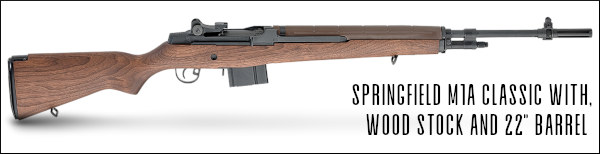
Do you own a Springfield M1A (or wish you did)? Then you should watch this 5-minute video from the American Gunsmithing Institute (AGI). This video shows the basics of the operation of the popular M1A rifle, the civilian version of the military M14. In this video, gunsmith John Bush field-strips the M1A and shows how the bolt, op rod, and trigger group fits together and operates. This video contains excerpts from the M1A Rifle Armorer’s Course, AGI Course #1584. The full Armorer’s Course is available on DVD from www.AmericanGunsmith.com.
Watch Highlights of AGI M1A Rifle Armorer’s Course:
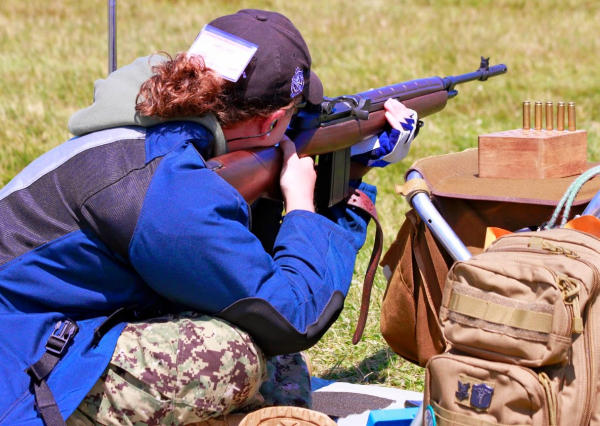
2023 CMP Springfield M1A Match at Camp Perry
The 16th annual Springfield Armory M1A Match will take place during the 2023 CMP National Rifle Games Matches. The CMP will host the event on Sunday, July 30, 2023, the same weekend as the Garand/Springfield/Vintage Military matches. Competitors of all experience levels are encouraged to bring their M1A rifles to Camp Perry and compete. CLICK HERE for Online REGISTRATION. The match is open to all individuals ages 12 and above. For more information contact the CMP at competitions@thecmp.org or call 419-635-2141 ext. 724 or 714.
The Springfield Armory M1A match began with one man’s idea and passion. Springfield Armory’s Mike Doy witnessed the waning of classic M1 Garand and M1A rifles from the competitive High Power firing lines. “I really wanted to get those M1A rifles out of safes and closets and back out onto the field. So 11 years ago, I promoted the idea of running an M1A-specific match at Camp Perry. That first year we had over 600 competitors and spectators.” Now the match offers some of the biggest pay-outs at Camp Perry. In recent years, Springfield Armory has donated over $25,000 worth of cash and prizes, including a $2,000 cash award to the overall winner.
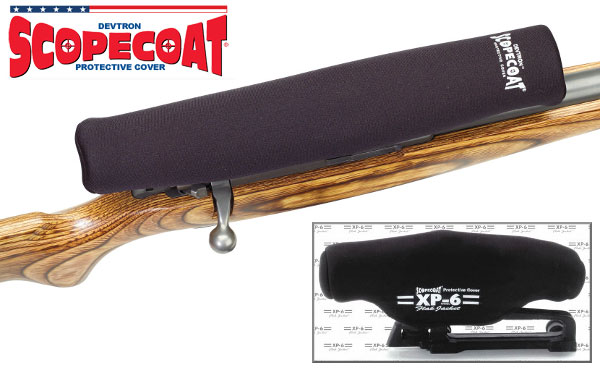
With the price of premium scopes approaching $3500.00 (and beyond), it’s more important than ever to provide extra protection for your expensive optics. ScopeCoat produces covers that shield scopes with a layer of neoprene rubber (wetsuit material) sandwiched between nylon. In addition to its basic covers, sold in a variety of sizes and colors, ScopeCoat has a line of heavy-duty 6mm-thick XP-6 covers that provide added security. CLICK HERE to review the full line of ScopeCoats on Amazon.
Triple-Thickness XP-6 Model for Added Protection
The XP-6 Flak Jacket™ is specifically designed for extra protection and durability. The 6mm-thick layer of neoprene is three times thicker than the standard ScopeCoat. XP-6 Flak Jackets are designed for tall turrets, with sizes that accommodate either two or three adjustment knobs (for both side-focus and front-focus parallax models). To shield an expensive NightForce, March, or Schmidt & Bender scope, this a good choice. XP-6 covers come in black color only, and are available for both rifle-scopes and spotting scopes.
The heavily padded XP-6 Flak Jacket is also offered in a Zippered version, shown at right. This is designed for removable optics that need protection when in storage. The full-length, zippered closure goes on quick-and-easy and provides more complete protection against dust, shock, and moisture. These quality XP-6 scope covers are available on Amazon for $22-$37.
Special Covers for Binos and Red-Dots
ScopeCoat offers many specialized products, including oversize covers for spotting scopes, protective “Bino-Bibs” for binoculars, rangefinder covers, even sleeves for small pistol scopes and red-dot optics. There are also custom-designed covers for the popular Eotech and Trijicon tactical optics.
More and more folks are using Burris Signature Rings these days. These unique rings feature polymer inserts. That allows you to pre-load some elevation in your scope set-up, or you can center-up the windage. Additionally, the polymer inserts hold your scope securely without leaving marks on the tube. Lastly, some folks believe that Signature rings may offer advantages for benchrest competition. Rodney Wagner shot a world-record 600-yard group using Burris Signature Zee Rings (“Zee” denotes the Weaver-rail model). James O’Hara set multiple IBS 1000-yard records using Burris Signature Zee Rings. James will tell you he thinks “all his guns seem to shoot best with these rings”.
IBS World Record Set with Signature Zee Rings
Are Signature Zees good enough for competition? Absolutely. Some folks scoff at these Burris rings, given their low price. A set of 1″-diameter Sig Zees cost $40.89 at Midsouth. But consider this, in 2013 Rodney Wagner shot the then-smallest 600-yard group in history, a 0.336″ 5-shot stunner, using Signature Zee Rings on his IBS Light Gun. It took five years for a smaller 600-yard group to be shot, a 0.311″ by bullet-maker Bart Sauter, using his IBS Heavy Gun. (See IBS 600-yard Records.) Here’s Rodney with his record-setting rifle, fitted with affordable Signature Zee 30mm rings.
Vendors Have Burris Signature Rings in Stock Now
Various models of Burris Signature Rings are available from many online vendors. NOTE: You may have to check with more than one seller to get the exact size, height, and model you prefer. But right now these vendors have pretty good selections of Signature Zees, including the hard-to-find 30mm High and Extra High models. If you check all three sellers, you’ll probably find what you need.
Three-Position Air Rifle (3PAR) shooting is the most popular and fastest-growing form of shooting sports competition for junior shooters (High School age and younger). The Civilian Marksmanship Program (CMP) conducts two primary Three-Position Air Rifle events. First, Precision Air Rifle is modeled after Olympic-style shooting and allows the use of specialized target rifles and equipment. Second, Sporter Air Rifle is designed for new competitors or those who desire to compete with a minimum of equipment and expense.
In both types of shooting, competitors fire at targets at a distance of 10 meters in three different positions, prone, standing and kneeling. Three-Position Air Rifle provides young competitors with competitive shooting sports opportunities that can be offered on a wide variety of easily accessible or easily constructed ranges, with equipment that is commonly available at affordable costs.
The CMP actively promotes Three-Position Air Rifle shooting as a premier youth marksmanship competition by providing low-cost equipment and pellets as well as training materials and competition activities. In addition, other air gun events for juniors and adults are hosted by CMP throughout the year. CMP facilities have Open Public Shooting evenings, and matches for air rifle and air pistol take place at the CMP Marksmanship Centers. CMP ranges are equipped with OpticScore Targets featuring technology by Kongsberg Target Systems.
The updated Challenger PCP (pre-charged pneumatic) Air Rifle is a preferred .177 sporter class air rifle for competitive marksmanship programs throughout the country, including the Marine Corps JROTC, Army JROTC, Air Force JROTC, Navy JROTC, American Legion, and 4-H. The Challenger is a three-position competition rifle that features a fully adjustable stock, a two-stage, adjustable match grade trigger, a hooded front aperture sight, a micro click, adjustable diopter rear sight, a patented ambidextrous pull bolt, and a floating Lothar Walther™ barrel.
Young American Wins Gold Medal in Air Rifle at 2021 Olympics
William Shaner won a Gold Medal at the 2021 Tokyo Olympics. The University of Kentucky marksman, then age 20, captured Gold in the 10-meter (10m) Air Rifle, setting an Olympic record in the process. Shaner scored 251.6 points in the 10m final to set a new Olympic Record just 1.2 points shy of the world record. Will scored 10.5 or above on 13 of his 24 shots in the final. At the Tokyo Games, William was shooting a Walther air rifle.
Watch Will Shaner capture Gold with a stellar shooting performance, broadcast by NBC Sports:
William hails from Colorado Springs, Colorado. He started his shooting career at age nine in a 4H program in the appropriately named town of Rifle, Colorado.
CMP Records 580+ Entries During 2022 National Air Gun Events at Camp Perry
Air rifle shooting is a very popular activity throughout the nation. Air rifle matches can draw a huge number of competitors. Last summer, the 2022 National Air Gun events, held as part of the Civilian Marksmanship Program’s National Matches, welcomed over 580 air rifle and air pistol entries. The events were held at the Gary Anderson CMP Competition Center at Camp Perry, Ohio.
Gary Anderson CMP Competition Center at Camp Perry.
Special CMP Air Rifles from Anschutz
Back in 2009, the CMP ordered a special run of Anschutz Air rifles. These had laminated wood stocks and the CMP logos on the buttstock.
The CMP currently offers Precision Air Rifles and Sporter Air Rifles for sale via the CMP Website.
CMP Precision Air Rifles from Walther
The new Walther LG400 Bluetec was specifically designed for 3-position air rifle shooting. The barreled action and trigger are the same as the top-of-the-line LG400 models. It comes without an absorber but it can be retrofitted with one. The barreled action will fit into any of the higher end stocks if you wish to upgrade it. The accuracy is the same as the higher-priced LG400s. With a top-tier marksman, this rifle can put 10 shots through the same hole at 10 meters.
The LG400 Bluetec is sold by the CMP with the Walther Basic rear sight, Walther 22mm front sight and a 200/300 bar steel cylinder. The aluminum stock comes with an ambidextrous grip, trigger guard, and an adjustable cheekpiece and buttplate. This rifle is sold by the CMP but shipped via Walther Arms.
Video from the U.S. Army Junior Air Rifle Nat’l Championships at Fort Benning, Georgia. This invitation-only event features top 30 precision and sporter individuals, and top 30 teams in both disciplines.
Sporter Air Rifles
The largest and fastest-growing segment of junior shooting today, Three-Position Air Rifle Shooting, uses a class of target air rifles called Sporter Air Rifles. These Sporters now constitute a special class of junior shooting competition, and are used extensively in JROTC programs.
Sporter air rifles are characterized by their light weight (5-7 lbs.), low cost (from $180 to $600), basic target features (adjustable sights, adjustable length stocks, adjustable sling attachments) and good accuracy (rifles sold through this program must be capable of consistently shooting tens on the standard competition targets).
Shown above is the new Daisy Model 599 10-Meter Competition Air Rifle, a .177-caliber gun that allows competitors to shoot the entire match without having to recharge.
Article by Paul Ivnitskiy and David Lewis of AmmunitionToGo.com
As you know, if your magazine spring loses its elasticity or breaks, it can render your firearm almost worthless. AmmunitionToGo.com conducted a test to determine how long mag springs can last. The test also examined whether leaving a mag loaded for an extended period of time causes problems, or if loading a mag can damage its spring. The test findings are eye-opening and show that, under controlled conditions, the springs themselves will last more than a human lifetime for most shooters.
The test crew subjected 13 different mags (from multiple manufacturers) to a test protocol over a year. The protocol included loading and unloading to full and half capacity, storing in climate-controlled and fluctuating temperatures, and storing in a non-climate controlled shed.
Field Testing — Magazines Performed Flawlessly
The crew took the mags to the range for field testing throughout the test study. The results revealed that regardless of the frequency of loading or unloading, or storage conditions, not a single magazine failed. The use of a digital force gauge showed no significant variability in the springs’ resistance from mag to mag but all the tested springs put up 20-25% less resistance than when they were fresh out of their factory packaging. That said, all of the mags performed flawlessly during field testing.
Laboratory Magazine Testing — Tens of Thousands of Cycles
To determine precisely how much punishment a mag can tolerate before its spring starts wearing out, the team recruited help from lab technicians at Applied Technical Services. The results showed that a factory Glock 17 mag spring endured 14,842 cycles (the equivalent of 252,314 rounds) before it snapped, while the Magpul Gen 3 PMAG endured 69,881 cycles (2,096,430 rounds) before it finally gave up.
While this testing was not perfectly emulated under real-world conditions, it is safe to conclude that mag springs are remarkably durable. Many believe that by downloading a mag, that is, loading the mag shy of full capacity, they can protect their mag springs. However, the real world trials don’t offer up any evidence to support this kind of behavior by shooters.
Conclusion — Get Good Mags and Don’t Worry About Them
Common wear and tear from everyday use is more likely to degrade the overall quality of a firearm magazine than the spring failing on its own from being loaded to full capacity and stored for long periods of time. So, unless you’re part of the group of individuals that actually shoots thousands of rounds down range on a weekly basis for training or completion reasons, the whole issue of worrying about the lifespan of your magazine springs is somewhat trivial.
Other Important Factors to Consider
There are many other factors to consider before worrying about magazine spring failure. First, address the overall quality and cleanliness of your firearm, magazine housing, guide rod, buffer tube spring, ammunition choice, the list goes on. Magazine springs are relatively cheap items that can ultimately fail, just like any other man-made item before it. Luckily, magazine springs are very easy to replace once identified as the cause of a malfunction.
Cleaning Rod Rack Costs Just $7.99
Looking to better organize your reloading room (aka “man cave”)? Here’s a handy, affordable product that will help you organize gear in your reloading room or “man cave”. Tipton’s Cleaning Rod Rack (Tipton #100335) can accommodate up to six rods with various size handles. The wall-mounted Rod Rack also has horizontal studs on either end for additional accessories. These are useful for hanging the Tico Tool shotgun cleaning wands that stow in a tube with a plastic hook on the top.
Tipton Cleaning Rod Racks come complete with mounting screws (and screw slots are molded-in). You’ll find Tipton Cleaning Rod racks for under $10.00 at most vendors. They are $7.99 at MidwayUSA, while Amazon.com offers the racks for $14.74 with free shipping for Amazon Prime Members.
Millions of Americans now exercise their Constitutional right to “keep and bear arms”, specifically to carry a pistol for personal protection and home defense. In response to the rapid growth of the CCW (Concealed Carry Weapon) market, numerous gun-makers have introduced compact handguns specifically designed for concealed carry. These “Carry Guns” tend to be smaller, lighter, with smoother, rounded edges on slide and frame. Today, many modern carry guns are also “Optics Ready”, meaning they have slides that can accept smaller red dot sights. And some companies are now selling handguns with the optics pre-installed.
For today’s Saturday video showcase, we feature five videos covering a wide range of popular semi-automatic carry guns. You’ll see offerings from Beretta, Glock, HK, Kahr, Kimber, Ruger, Smith & Wesson, Taurus, Walther and more. In addition, we’ve included a video that covers the pros and cons of installing optics on carry pistols. Finally, as a bonus, we’ve included a video that highlights five handguns that you may want to avoid, as they have not lived up to expectations.
Top Ten Best Carry Pistols for the Money
Here the Honest Outlaw Channel reviews ten semi-auto pistols. The host states these are the “10 best pistols for the money,” adding that “these handguns are reliable, accurate, durable, light weight, and cost less than most alternatives.” This video was released in December 2022, so it covers the latest generation of modern carry pistols.
Five Favorite Carry Pistols — Colion Noir’s Top Handguns
Colion Noir is a very popular gun reviewer and Second Amendment advocate. In this video, which has over 1.1 million views, Colion covers the five guns he personally carries. Why five? Colion states: “When it comes to my concealed carry guns, I practice tactical polyamory. Essentially, I don’t just carry one gun. I have a rotation of guns I carry based on what I’m wearing that day, where I’m going, and what I’m doing. I put a lot of thought into my carry rotation, which changes based on my needs. Sometimes a gun that’s better at handling the job comes out, and I’ll carry it once I’m comfortable with its reliability. That said, there are five guns I consistently carry[.]”
Five Top Choices among CCW & EDC (Everyday Carry) Handguns
The host notes: “We are going over the five best CCW firearms that I reviewed this year and ranking them from 1 to 5. We are going to save the best for the last. Some of the criteria for ranking these firearms isn’t only based on performance. We are ranking based on performance, price, reliability, and comfort.”
Ten Modern Micro-Pistols for Concealed Carry
The reviewer states: “It’s 2023 and the world of firearms keeps evolving. One of the hottest trends in the firearms industry right now is micro pistols — small, compact handguns that are perfect for concealed carry or as backup guns. If you’re looking for the best micro pistols in 2023, you’ve come to the right place. This video reviews the latest and greatest micro pistols on the market, discussing their features, performance, and why they’re making waves in the gun community.”
Kimber’s R7 Mako pistol won a coveted Golden Bullseye Award from NRA’s Shooting Illustrated magazine, taking the trophy for the magazine’s “2022 Handgun of the Year” category. The R7 Mako is very compact, with good ergonomics, yet it offers 12-rd (11+1) capacity (and 13+1 with extended magazine). The R7 Mako showed outstanding accuracy when tested indoors (see video at 15:25 time-mark).
The R7 Mako is offered Optics Ready for $599.00 MSRP or with Crimson Trace Red Dot Optic installed for $799.00 MSRP. SEE Shooting Illustrated Review.
Optics on Carry Pistols — Factors to Consider
Red Dot sights are becoming more popular than ever. Many pistols today are “Optics Ready”, and some handguns can now be purchased with optics already installed. There are both strengths and weaknesses having optics on CCW handguns. In this video, Massad Ayoob outlines the pros and cons of Red Dots on carry pistols. Along with covering the factors to consider, Ayoob provides advice on red dot zeroing, defoggers, and more.
BONUS: Five Handguns to Avoid
When shopping for a handgun, it’s helpful to know which models to avoid, because of poor reliability or other shortcomings. This Honest Outlaw video reveals five handguns that are not the best choices for concealed carry: Smith & Wesson CSX, SCCY CPX-2, Remington RP-9, Kahr CW 380, and Taurus PT 22.


 Better BC for Service Rifle Competition
 The 22BR is a simple wildcat formed by necking-down 6mm BR brass. Case forming is easy — just run a 6BR case through a 22BR sizing die. With custom bullets, the 22BR has done well in NBRSA short-range Benchrest. Accuracy is on a par with 6mm BR out to about 250 yards, but from there, the 6mm VLDs, with their high BCs, buck the wind better. The 22BR with 90gr bullets offers very impressive ballistics, with less recoil than you might experience shooting a 6BR or 6mm Creedmoor with 105-110gr projectiles.



 With the price of premium scopes approaching $3500.00 (and beyond), it’s more important than ever to provide extra protection for your expensive optics.
 The heavily padded XP-6 Flak Jacket is also offered in a Zippered version, shown at right. This is designed for removable optics that need protection when in storage. The full-length, zippered closure goes on quick-and-easy and provides more complete protection against dust, shock, and moisture. These quality XP-6 scope covers are available on

 More and more folks are using Burris Signature Rings these days. These unique rings feature polymer inserts. That allows you to pre-load some elevation in your scope set-up, or you can center-up the windage. Additionally, the polymer inserts hold your scope securely without leaving marks on the tube. Lastly, some folks believe that Signature rings may offer advantages for benchrest competition. Rodney Wagner shot a world-record 600-yard group using Burris Signature Zee Rings (“Zee” denotes the Weaver-rail model). James O’Hara set multiple IBS 1000-yard records using Burris Signature Zee Rings. James will tell you he thinks “all his guns seem to shoot best with these rings”.


