There are many reasons you might want to make a chamber cast. You may have acquired an older rifle and need to verify the chamber dimensions. Or, if you have a new reamer, you may want to check the exact “cut” dimensions against the blueprint specs. A chamber casting is also valuable if you run across a firearm that you believe has a custom barrel on it and you want to find out the dimensions of the chamber. Lastly, you may want to prepare a chamber casting to be used in the making of custom dies. (Most reloading die makers know how to work from Cerrosafe chamber casts.)
Cerrosafe is a metal alloy that has some unique properties which make it ideal for chamber casting. First, it has a relatively low melting point of 158 to 190° Fahrenheit. This makes it easy for the handloader to melt the Cerrosafe in his home shop. Second, it shrinks slightly during cooling which allows it to be extracted from the chamber easily. It then re-expands to the chamber’s original size after about one hour at room temperature. After cooling for about 200 hours, the chamber cast will expand to about .0025″ larger than the actual chamber size.
One of our Forum members has done many Cerrosafe castings and he offers this smart advice:
1. Remove the barrel from the action to make the pour much easier. If you don’t remove the barrel, it can be hard to pour through the action (even with a funnel) and can make a mess if you’re not careful.
2. Pre-heat the barrel for 5-10 minutes in the oven on the very lowest setting (170° F in my oven). (DON’T overdo it!). Allow to cool for a couple minutes so you can pick it up and it is under 120° F. Pre-heating the barrel helps the Cerrosafe stay liquid as you pour the casting. This helps ensure a good, complete fit to the chamber.
How to Use Cerrosafe for Chamber Casting
The basic ingredient of Cerrosafe is bismuth. Bismuth is a heavy, coarse, crystalline metal which expands when it solidifies, up to 3.3% of its volume. When bismuth is alloyed with other metals, such as lead, tin, cadmium and indium, this expansion is modified according to the relative percentages of bismuth and other components present. As a general rule, bismuth alloys of approximately 50% bismuth exhibit little change of volume during solidification. Alloys containing more than this tend to expand during solidification and those containing less tend to shrink during solidification.
What all this means for the gunsmith is that you can make chamber castings using only Cerrosafe and a few, simple hand tools. To make a chamber casting, first clean and degrease the chamber. Use a tight-fitting, cotton patch that’s wrapped around a bore mop or brush to plug the bore just ahead of the throat. I usually leave the cleaning rod attached to the plug until it’s time to remove the plug. Melt the entire bar of Cerrosafe in a heatproof container that you can easily pour the hot Cerrosafe out of. You can use a propane torch or heat over a hot plate or the burner of a stove. Cerrosafe melts easily at 158°-195° F. While the casting metal is still liquid, stir very well, skim off the dross, and pour your chamber. The real trick with Cerrosafe is not to overheat it. If you heat the solid slowly, and keep it within the required temperature range, you shouldn’t get any dross.
Note the time the casting was poured. The casting will take only a very short time to solidify, usually within a minute. Wait 30 minutes and then remove the plug from the bore. Turn the muzzle upward and the casting will fall from the chamber. At 30 minutes after initial solidification, Cerrosafe shrinks slightly, so removal is very easy. Allow the new casting to cool thoroughly then measure the casting exactly one hour from the time it was cast. The casting will give you an exact measurement of the chamber. Cerrosafe casting metal can be used over and over. Remelt the entire amount back together and pour the Cerrosafe into a small mold of the appropriate size. Always melt the entire Cerrosafe ingot to make a chamber casting. For best results, never cut off, or use, just a part of the ingot.
In our Shooter’s Forum there is a popular thread, Let’s See Those Hunting Rifles. This long-running thread features dozens of interesting hunting rifles of all varieties — from rimfires to big magnums. In that thread we found the focus of today’s story, a .221 Fireball. Now that we are in the thick of winter, with Christmas just two weeks away, we showcase this .221 Rem Fireball rifle from Norway. This rig belong to Thomas Haugland, aka “Roe” on our Forum. An avid backcountry hunter, Thomas also happens to be one of the best gun-content video producers on YouTube — check out Haugland’s THLR.NO YouTube Channel.
We’ll begin with two of Haugland’s remarkable videos — worth watching just for the stunning scenery. Thomas skis through the Norwegian Arctic backcountry, then successfully uses his suppressed, white-camouflaged .221 Fireball rifle to bag a Ptarmigan bird — bringing home a well-earned winter dinner.
NOTE: This is the short preview version. Watch the full hunt in second video.
The 7-minute video below shows the full ski hunt. The Ptarmigans are spotted at 4:30 time mark and Thomas takes the shot at 5:36. Great video — you feel like you are there in Norway’s white wilderness. The images above (including top photo) are pulled from this video.
About the .221 Fireball Cartridge
The .221 Remington Fireball cartridge was developed by Remington in 1963 for the XP-100 bolt action pistol. Today the cartridge remains popular with hunters/varminters, both in the original version, and with wildcats such as the .20 Vartarg and .17 Fireball. Lapua started making superb .221 Rem Fireball cartridge brass starting in 2014. However, according to Lapua: “This case is no longer in active production.” But you can definitely still find it — Lapua .221 Fireball brass is in stock now at Grafs.com for $79.99/100. Lapua notes: “Fireball brass has recently seen a dramatic surge in popularity, due in large part to the efforts of wildcatters working with this versatile case. Whether used in its original form, or necked into one of the many cases that it serves as a parent for, the Lapua .221 Fireball brass is a sure winner[.]”
Haugland .221 Fireball with New Carbon Stock and Walther Barrel
Shown above is Haugland’s same .221 Rem Fireball from the videos, but with a new camo stock and new barrel. (The previous stock was painted white). Originally a Remington 700 Light Varmint, this was rebarreled to .221 Fireball with Lothar Walther 1:12″ barrel. Thomas admits he “Goofed a little on the barrel profile, so it is a tad heavier than I wanted.” The stock is a carbon-fiber Gunwerks ClymR and on top is a Leupold 3-18x44mm MK5 HD with Gunwerks RH1 reticle. Only the action and the trigger is left from the original rifle.
With the 1:12″ twist, this rifle is restricted to 55gr maximum bullet weight. Thomas posted: “Shoots well with Vihtavuori N130 and Norma N200 powders, not so good with RL7.” Due to lack of light in far-Northern Norway in winter (see photo above), Roe has not hunted with this rifle much since rebarreling, but as you can see, it’s very accurate — look at that group. Thomas says the gun shoots much better with the new barrel: “With the factory barrel (which I believe was 1:14″-twist) it didn’t shoot better than 1 MOA at 100 yards. Now it approaches half-MOA for three shots (see photo).”
And Thomas was successful with this rig as “reborn” with new stock and barrel. Here’s the gun and a Ptarmigan he shot in the Norwegian snow-covered backcountry.
If you like that Gunwerks ClymR carbon stock, here’s a Gunwerks video showcasing the ClymR Rifle System. A complete Gunwerks ClymR rifle with Titanium action and scope is a shocking $9734.99, so we can understand why Thomas went with the stock alone, paired with a older Rem 700 action.
Right now, with loaded ammunition and primers hard to find, many shooters are exploring air rifle options to enjoy target shooting and maintain their marksmanship skills. While air rifles don’t use powder and primers, there IS a propellant — compressed AIR, very highly compressed air. Some of the premium air rifles on the market now run at 4500 PSI. How do you get that kind of pressure safely? You need a very good air compressor, preferrably with smart technology to run to max without over-pressure risks. Thankfully, there are some very advanced air compressors on the market today, including a new ReadyAir “oilless” compressor from Umarex and the popular Air Venturi II portable sold by Pyramyd Air. Both electrically-powered units can safely fill airgun reservoirs up to 4500 PSI.
UMAREX ReadyAir Oilless Airgun Compressor
Umarex USA recently introduced a new oilless portable air compressor to fill high-pressure air guns. The innovative Umarex ReadyAir pump is a “smart device” with electronically-controlled fills up to 4500 PSI. It utilizes a patented oilless piston compression technology to fill PCP reservoirs up to a true 4500 PSI in a few minutes. The oilless design means less maintenance hassles.
“In a growing market of 3000 PSI and greater airguns, shooters need an easy, yet reliable and portable air source. The Umarex ReadyAir reliably fills … 4500 PSI airguns like that of our Umarex Hammer and other big game hunting air rifles in just minutes”, said Richard Turner, President of Umarex USA.
The oilless system is simple and requires less maintenance allowing shooters to spend more time shooting and less time maintaining their compressor. The ReadyAir is the only smart airgun compressor in its class engineered to be oilless AND control the extreme heat generated by the compression of air. Umarex claims “the heavy-duty quality components plus smart electronic governors increases its life expectancy and decreases maintenance while eliminating the need for liquid cooling or lubrication.”
The Umarex ReadyAir can run from standard 110-volt electrical outlets without an external converter box. Or it can run from a 12-volt vehicle battery with the included 8-foot battery cables. The ReadyAir can be electronically programmed to fill to any desired pressure up to 4500 PSI. It is managed by a smart on-board computer that automatically shuts the compressor off if the set running temperature is ever exceeded. It also features a compressed activated charcoal filter to prevent dirt and moisture from entering an airgun’s reservoir.
UMAREX READYAIR FEATURES:
Oil-Free: Requires no oil or water
Smart Digital Auto-Shut-Off Control: Stops at your Set Pressure
Temp Protection: Smart Auto Shut Off prevents over-heating
Legitimately Fills to 4500 PSI
Electric: Use standard 110 volt or 12 volts with no external converter
Dual Language Capability: English / Spanish
High-Pressure Hose, Long 12 volt cables and 110 volt power cable included
Maintenance Kit Included
The portable Umarex ReadyAir has an attractive $549.99 MSRP, half the price of some other 4500 PSI compressors. (Order from Pyramyd Air for $529.99). Each ReadyAir includes the compressor unit with carry handle, 110V power cord, 12V battery clamp cable, and a high-pressure hose with quick connect fittings.
Air Venturi Nomad II Electric Air Compressor
Another very good value in a 4500 PSI electric-powered air compressor, is the Air Venturi Nomad II 4500 PSI Portable PCP Compressor. Priced at $699.99, the Nomad II offers features and performance that could cost $1000.00 or more with other machines capable of quick air fills up to 4500 PSI. Weighing under 20 pounds, and sized just 10.6″ L x 8″ W x 7.9″, the fan-cooled Nomad II is truly a “portable” unit that even includes a travel bag and a converter so you can power this pump from your vehicle’s 12-volt battery. NOTE: This requires lubricant — you must use pure silicone oil with the Nomad II Compressor.
Pressures up to 4500 PSI
Integrated LED lights on underside of the unit for low light use
Capable of running off 110V or 220V outlet or 12V car battery
Fan-cooled power supply for electrical outlet use is built-in
External Lubrication Port (Use Silicone Lubricant only)
Hose with integrated moisture catch and female QD fittings
Noise level while running is 92 dB
Jumper cables included
Efficient High Pressure Hand Pumps
Have you ever wanted to shoot at a range or in the field where there is no electrical power and you don’t have a gas-fueled pump of some kind? There IS an human-powered way to fill your air rifles — if you’re willing to expend some energy.
For the money, we like the GX PCP 4500 PSI Hand Pump, $159.99 at Amazon (shown above). This well-designed pump features a 3.5 Stage high pressure fill function along with built-in Oil-Moisture Filters. The exclusive 3.5 Stage pump design compresses the maximum amount of air possible from each stroke. That means fewer strokes and less work to fill your air gun. The design also has a wide-spread base that keeps the unit nice and steady while you are pumping.
Umarex also offers a specialized hand pump rated for 4500 PSI — though a 3000 PSI fill is more common. The Umarex SuperFill High Pressure Hand Pump compresses the maximum amount of air possible from each stroke. About 150 strokes of the pump will fill a 13ci (200 cc) tank to 3000 PSI. For $49.99 you can add the patented Dry-Pac system that removes up to 90% of moisture in the compressed air. With this pump Umarex includes a female quick-disconnect fitting that threads onto the end of the hose. This SuperFill Hand Pump costs $179.99 from Umarex
In this video, Eydin Hansen explains how to use high-pressure hand pumps. The key is to use steady strokes both up and down. Use your body-weight on the down stroke, when there is the most resistance. Hansen also suggests pumping in stages — pump for 5 minutes, then let it cool down for 15. Them pump another 5. Hansen recommends keeping Keep your airgun’s cylinder topped off so that future pumping won’t require more than the one, 5-minute session. “Slow and steady wins the race”, says Hansen.
Are you thinking of getting into the NRL22 game next season, our would you just like to add a modern chassis-style rimfire rig to your rifle collection? Here is a cool new MDT chassis that can transform a basic CZ 457 .22 LR rifle into something much more modern and versatile. With this $499.95 MDT XRS Chassis system, you can build a very competitive NRL22 rig for under $1000.00 (before optics). Right now a basic CZ 457 rifle costs just $427.00 at Bud’s Gunshop, with heavy-barreled 457s $80-$120 more.
MDT Offers New CZ 457 Inlet for MDT XRS Chassis System
MDT now offers a CZ 457-inletted MDT XRS Chassis System. This modern modular aluminum chassis transforms a “plain Jane” CZ 457 into something that can really perform in rimfire tactical competitions. The XRS Chassis System provides adjustability and features that can benefit tactical shooters. The stock features adjustable cheekpiece and adjustable length of pull. The 12.12″ long fore-end comes with M-LOK slots built in for accessory mounting and attachment of ARCA or Picatinny rails. With a rail on the bottom you can slide your bipod fore and aft to adapt to various stage positions and supports.
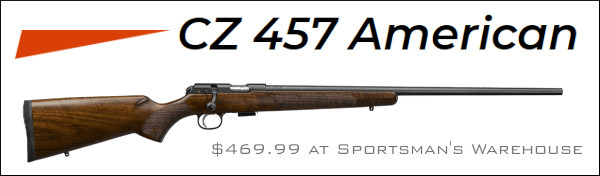
Weighing in at 3.9 pounds, the XRS features an adjustable length-of-pull (via spacers) from 13.25″ to 15.0″. There is also a handy quick-adjust cheek piece. This affordable XRS chassis is a great upgrade for a basic CZ 457 .22 LR bolt-action rimfire rifle. The CZ 457 American, shown below. is under $470.00.
Each XRS is constructed from a full-length, CNC-machined core of aircraft-grade aluminum with textured polymer outer panels (for durability and “feel”). The precision aluminum bedding system helps maximize the accuracy of the CZ 457 action. The XRS features a replaceable over-molded and textured grip system, with BOTH angled and vertical grips included with purchase.
CLICK HERE for more information on the MDT XRS Chassis System with a starting price of $499.95.
Lyman’s Auto Advance Target System is an innovative product for rimfire shooters. Shoot more, with less time wasted changing targets. The Auto Advance features a motor-driven roll of targets that can be “refreshed” with a radio remote-control. Here’s how it works — a 50-foot-long target roll is mounted in the top on the target stand. When you’re ready for a new target, push a button and a fresh target rolls into place. The radio remote-control activates a battery-powered electric motor that conveniently rolls a new target into place after the current target is shot out. The remote-control works at distances up to 200 yards. NOTE: This target system is rated for rimfire and air rifle use only — no centerfire.
There are currently four (4) target roll options: Five Bullseye Target, 11-Bull Smallbore Target, Silhouette Target, and Varmint Target. MSRP is $149.95; street price is currently $112.99 on Amazon.
This helpful Lyman video shows all the features of the Auto Advance, with instructions for frame assembly, target-roll loading/removal, and use of the remote control.
Lyman states: “The new Lyman Auto-Advance Target System offers shooters the ability to change targets at up to 200 yards with the press of a button! No more walking downrange to replace targets, or waiting for cease-fires! The Auto-Advance Target System is battery-operated, so there is no need for wires and power outlets, plus it disassembles easily for transportation back and forth to the range. The Auto-Advance Target System has steel protection plates that are rated for use with all rimfire calibers. The Auto-Advance Target System comes with a roll of standard bullseye targets. Additional 50-foot target rolls are available with bullseye, animal and silhouette designs.”
With the current acute shortages of ammo and reloading components (particularly primers), many shooters are doing more dry-fire training. This method allows you to practice your hold, aiming, and trigger-pulling skills without using precious components and/or barrel life. Here are three systems employed for Dry Fire Training. The first device, the Mantis X Series, fits on a Picatinny rail and has a full-featured App that records your sessions and offers training tips. The Strikeman, used primarily by pistol shooters, features an in-chamber laser and a smartphone App that “reads” a proprietary target. The third device, the SCATT MX-02, is favored by top air rifle Olympic shooters and smallbore marksmen, but it can also be effectively used with centerfire rifles also. AND it can work for LIVE-fire as well as dry-fire training.
Mantis Systems — X2 for Dry-Fire, $99.99
Built for dry-fire use only, the Mantis X2 ($99.99) provides real-time, shot-by-shot feedback for both pistol and rifle users. You can track multiple training sessions with data-driven insights, and monitor your progress. This unit has earned high user reviews such as: “As a new gun owner the Mantis X is a game changer for me. I have not been able to get to the range during the lockdowns and being able to practice at home [is great].” And another: “Easy to install[.] The App is free and easy to use. I can’t make it to the range very often so I love being able to improve at home. It holds its charge for a long time.”
Guns America Digest has reviewed the Mantis X2. Tester Edgar Sherman says it offers good functionality for the $99.99 MSRP: “[The X2] is a clip-on attachment you can put on your handgun or rifle to test your accuracy [and see] how much movement you produce when breaking your shot. I use this system for myself to check my grip and trigger press [and] help new shooters eliminate variables. This tool will link up to your phone via Bluetooth and a free [Android App].” The Mantis X2 is a good value. The manufacturer states: “There is nothing at this price point that will give you this level of feedback for dry fire.”
There are actually four Mantis versions for firearms: X2 ($99.99), X3 ($169.99), X7 Shotgun ($199.99) and X10 Elite ($249.99). The X3 adds live fire functionality, allowing you to delve into and compare performance improvements between dry and live fire sessions. The capabilities of each system are found on the Mantis Model Comparison Page. NOTE: If your pistol/rifle lacks a standard accessory rail, Mantis offers a variety of Clamp-on Rail Adapeters.
Strikeman Training System
In this video Dustin Ellerman shows how to use the Strikeman Dry Firing System.
The Strikeman system is designed for dry-fire training primarily with handguns. This $99.99 system has four components: 1) a laser cartridge (similar to a bore-sighter) that fits in your chamber; 2) a special target; 3) a mount for your smartphone; and 4) a smartphone App that records your aiming. During practice, you set up your smartphone to point at the target, and the App record the laser movement, effectively tracking your muzzle movement. The manufacturer explains: “By using our signature target, laser cartridge and smartphone holder in unison with our phone App, you can safely practice your shot in the comfort of your home. The target includes a removable mount and suction cups. Our custom designed smartphone holder allows you to adjust your smartphone effortlessly.” Users seem to like this system, and Strikeman even offers a 15-day sastisfaction guarantee: “The Strikeman Training System is guaranteed to improve your shot accuracy, or your money back. Try it risk free for 15 days!”
The Strikeman is currently offered for seven (7) different cartridge types: .380 ACP, 9x19mm, .357 SIG, .38 SPL, .40 SW, .45 ACP, .223 Rem/5.56. The manufacturer’s video below shows how to place the Strikeman laser cartridge in your pistol and set up your smartphone and the special target:
SCATT MX-02 for Dry-Fire and Live-Fire
The SCATT MX-02 ($1799.99) is an electronic shooter training system that can be used effectively for dry-fire training. However, it it is also capable of operating outdoors with live, centerfire ammunition, at distances from 25 yards to 600 yards. Tony Chow tested this product for AccurateShooter.com. As fitted to his AR-15 Service Rifle, Tony found this is a very useful tool that can help High Power competitors refine their technique and shoot higher scores. CLICK HERE for MX-02 3000-word Review. There is a newer SCATT MX-W2 model ($1899.00) that offers all the same capabilities with a Wireless configuration.
How the SCATT MX-02 Works
The SCATT sensor mounted on the end of the barrel has a digital camera that recognizes the black bullseye in the target, even in broad daylight outdoors. Using the bullseye as a reference, the SCATT software tracks the movement of the muzzle relative to the center of the target. The unit can plot these movements as a continuous trace, which appears on a monitor as a squiggly, colored line. By sensing the exact moment of shot release, the SCATT can also interpolate relative shot placement (for a single shot or series of shots) — but this is not the same as an electronic target which actually records the exact shot impact location on the target.
Calling all holiday shoppers! Looking for that perfect gift for the hunter or shooter on your list? Through December 31, 2020, ZEISS will be offering fantastic deals for the holiday season through participating ZEISS authorized retailers. Customers looking to buy select Conquest V4 riflescopes and Terra ED 42 mm objective binoculars will receive $100 off instantly at time of purchase. CLICK HERE for ZEISS SALE INFO.
$100 Off Zeiss Conquest V4 Riflescopes
The Conquest V4 Scope series offers four different magnification levels. Choose from 3-12x56mm, 4-16x44mm, 4-16x50mm, or 6-24x50mm.
These scopes offer outstanding optics, precise controls, with many advanced features as shown below. And now you can save $100 instantly on your purchase.
Exceptionally accurate. Extremely precise. The Conquest V4 riflescopes are for hunters and target shooters. We like the 6-24x50mm version for varmint hunting and practical competitions.
$100 Off Terra ED Binoculars
ZEISS Terra ED binoculars are robust, reliable, and easy to use. They are light-weight and compact. The optical precision, advanced design, and hydrophobic multicoating guarantee brilliant images in all conditions. Terra ED binoculars are waterproof and nitrogen-filled.
CLICK HERE to learn more about the ZEISS Holiday Sales Event.
At the request of our readers, we provide select “Deals of the Week”. Every Sunday afternoon or Monday morning we offer our Best Bargain selections. Here are some of the best deals on firearms, hardware, reloading components, optics, and shooting accessories. Be aware that sale prices are subject to change, and once clearance inventory is sold, it’s gone for good. You snooze you lose.
1.Sportsman’s Warehouse — H&K 416 .22 LR Rimfire AR, $379.99
⏺ Authentic AR15 ergonomics, good for NRL22, and fun plinking
Centerfire ammo is in short supply, and prices have never been higher, so many shooters are doing more practice with a .22 LR. If you’re looking to have more fun at the range for less money, snatch up an H&K 416 .22 LR Rifle and practice in style. This high-quality, German-engineered semi-auto rimfire rifle has earned strong owner reviews. The size, ergonomics, and “feel” replicate a centerfire AR perfectly you can train effectively for a fraction of the price.
2. Locked & Loaded — Iver Johnson Shotgun Sale
⏺ Solid self-defense scattergun, choose 12ga or 20ga
Folks around the country are looking for defensive firearms these days, given the recent social unrest. And shotguns are high on the list of defense guns. Right now LockedLoaded.com has some great deals on Iver Johnson pump shotguns. Get the basic 12 GA version for just $289.00. Or if you want a Picatinny action rail and fiber optic front sight, there is a 20 GA version for $349.99 — still a bargain.
3. MidwayUSA — Bushnell Elite XRS II 4.5-30x50mm, 36% OFF
⏺ Outstanding scope, favorite of PRS competitors, Big SAVINGS
The Elite XRS II is Bushnell’s flagship optic, crafted to exacting standards. This scope’s ED Prime Glass delivers rich color and contrast, even in low light. You can grab the Bushnell Elite Tactical XRS II 4.5-30x50mm Scope in several configurations for 36% off right now. This quality FFP scope with 1/10 Mil Clicks has been praised by many top PRS/NRL competitors. It offers a locking windage turret and an elevation turret with RevLimiter Zero Stop. The reticle has mil-based hash marks.
4. Midsouth — RCBS Rotary Case Tumbler with SS Media, $147.99
⏺ Wet tumbling works great, big savings, includes SS Pins
Want to get your old, used brass looking like new again? Try wet-tumbling your cases with stainless media. You’ll be impressed. For wet-tumbling, a good option is the RCBS Rotary Case Tumbler. This comes with everything you need to get started including 5 pounds of stainless steel pin media. This is a good unit with plenty of capacity.
⏺ Smart new Die System simplifies loading multiple cartridge types
Are you tired of buying another expensive seating die every time you try a new cartridge type? With the unique Frankford Arsenal Universal Bullet Seating Die you can have one die that loads multiple cartridge type. This cleaver bullet seating system includes 3 different stems and 9 sleeves allowing you to seat .224 up to .338-Caliber bullets with this one die system.
6. MidwayUSA — RCBS MatchMaster Digital Powder Scale/Dispenser, with $100 Gift Certificate
⏺ Fast, accurate dispenser, get $100 Gift Certificate with purchase
The Matchmaster has gotten good reviews and represents a whole new level of powder dispensing for RCBS. If you’ve been waiting for the right time to pick up an RCBS MatchMaster Digital Powder Scale & Dispenser you can get one for $899.00 — a significant discount. PLUS when you buy this from MidwayUSA you get a $100 Midway Gift Certificate by using code RCBS100. That lowers your net cost to $799.00, a stellar deal for one of the most sophisticated powder scale/dispensers on the market.
⏺ High quality, true match grade .224 bullets — just $23.90 per 100
When it comes to measuring trigger pull there aren’t many tools that can do the job across a wide range of pull weights and also do it repeatably. One of the best trigger pull measuring tools is Lyman’s Electronic Digital Trigger Pull Gauge. This accurate trigger gauge can register from 1 ounce all the way up to 12 pounds pull weight. That makes it ideal for all firearms types. This unit features a retractable pull rod to prevent damage. We like this Lyman tool and recommend it.
8. Natchez — Sierra MatchKing 69gr .224 Bullets, $119.49/500
⏺ Excellent match-grade bullets, 500ct with attractive pricing
With reloading components getting more expensive, it pays to take advantage of great deals whenever you can. If you shoot a .224-caliber cartridge, then consider this 500-pack of Sierra MatchKing .224 69 gr HPBT MATCH bullets. These are high quality, true match-grade bullets, priced about as cheap as we have seen them in recent months. For a Service Rifle shooter or .223 Rem fan, this is a great option — grab them at this bargain price.
9. Amazon — Two Sets Z87.1 Protective Eyewear, $12.95
Safety eyewear can be expensive, so losing or damaging them at the range is a bummer. We like high-quality, yet inexpensive eye protection and this 2-pair pack of safety glasses are a perfect example. They’re fully ANSI Z87.1-certified. Price? For just $12.95 you get both a clear AND tinted-lens unit. Or, if you prefer, get two clear types for the same low $12.95 price.
10. Graf’s — MTM Pistol Side Slide Ammo Boxes, $2.19
⏺ Handy opening/closing, strong when stacked, good value
Tired of ammo boxes with annoying lids that won’t stay open, or that require two hands to open? Consider these new MTM Side Slide pistol ammo boxes. The innovative design allows you to easily slide the lid sideways, providing quick access to just the rounds you need, while the others stay secure. With the cover retracted (slid open) you have ready access. When the lid is fully closed the ammo box is stiffer and stronger than some competing designs.
Today’s featured rifle comes from the land Down-Under — Australia. This impressive .300 WSM F-Open rig has top-tier components/accessories from multiple countries. From the USA comes the Borden BRMXD action, Krieger barrel, McMillan Kestros ZR stock, and R.A.D. 2 recoil system. The 10-60x56mm March scope comes from Japan. The Lenzi rear bag is from Italy, and the SEB front rest is from Indonesia, with a Rodzilla top from America. This rifle is brand new, and just had its first competitive test this weekend, emerging with the top 600m Aggregate. By all indication, this .300 WSM F-Open beast is a winner.
Impressive .300 WSM F-Open Rifle from Australia
This rifle belongs to Kris Wilson, aka “Willow” on our AccurateShooter Forum. Just last week Kris posted in the Pride and Joy Rifle thread: “Got my latest build up and running — a .300 WSM F-Open rifle. Never shot a .300 WSM (Winchester Short Magnum) before today and I have to say that, while the recoil is on the sharp side, it’s entirely manageable thanks to the stock design and front rest.” Kris resides in Sydney, New South Wales, Australia and shoots at the Hornsby RSL Rifle Club. He is his club’s current F-Open Champion, even with some very tough competition — his club boasts two Australian F-Open championship-winning club members. Kris loves the F-Class game: “I started rifle shooting in 2015 when I was introduced to the world of F-class through shopping for a riflescope. Once I saw what F-class was all about, I was hooked.”
Kris produced this video on December 5, 2020. He reports: “Here is my first real outing with my new .300 WSM. I had previously sighted in at 50 meters at an indoor range to establish a wind zero. Had a rough idea of velocity so I threw together two loads to run at 600 meters. Our Aussie targets have a max numerical ring value of 6 (equivalent to “10” on USA targets). On Stage One I shot a 60.8X (60.10X max possible), grouping about 3.7 inches. On Stage Two, shown in this video, I shot a a 66.9X (66.11X max possible) with a 3-inch grouping. I took first place in both stages and won the overall Aggregate for the day. That earned me a Christmas ham and turkey for my trouble!”
.300 WSM Rifle Hardware, Cartridge Choice, and Reloading
Report by Kris Wilson, NSW, Australia
Stock: McMillan Kestros ZR with R.A.D. 2 system. 70% black, 15% grey, 15% red.
Action: Borden Rimrock BRMXD, left bolt, right port, left eject. The action is fully DLC coated and fitted with a +20 MOA rail
Trigger: TriggerTech Diamond
Barrel: Krieger 1:10″-twist, 4 groove finished at 31″ and fitted with an Ezell tuner.
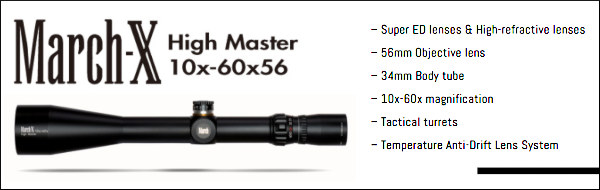
Scope: March High Master 10-60x56mm with MTR-1 reticle, illuminated
Rings: ARC M10 High Rings
Front Rest: SEB Mini Rest, with Rodzilla Rest Top system
Rest Feet: Bryan Blake (F-Class Products) adjustable stainless feet
Rear Support: Lenzi (Italy) LR Rear bag, with custom metal base plate
Cartridge Selection — Why the .300 WSM Was Chosen over a 7mm Cartridge
I set out with the goal of building my ultimate F-Open rifle. Now “ultimate” is of course subjective, but I did not want to leave any stone unturned when it came to building a .300 WSM. When researching the equipment for my new build I had a couple of ideas in mind. I was already shooting a 7mm, in the form of a 280AI which had served me well, but I already had plans to switch to a .284 Shehane with the introduction of Peterson .284 Win brass, coupled with the fact Norma stopped making 280AI brass (Note: Peterson now makes 280AI brass). While I was reasonably well-covered with my .284 Shehane, I wanted something with a bit more horsepower to hold up at long range in choppy conditions. A lot of the top guys here shoot 7mm SAUMs but I wasn’t keen on going down that path. Why? For every accurate SAUM I’ve seen, I’ve seen others struggle and given that the 7mm SAUM seems to be particularly hard on barrels, I wanted something that could match the 7mm SAUM ballistically, but have better barrel life.
After plenty of research on AccurateShooter.com, and speaking with some shooters, both locally and in the USA, I decided to give the .300 WSM a go. This cartridge is not particularly popular in Australia for F-Open, primarily because most states enforce muzzle energy restrictions, so pushing the .300 WSM to its potential simply isn’t viable for many shooters here. It IS viable in my home state however, along with the ACT, so I can at least use it in major competitions in two Australian states without having to run at lower nodes where it would otherwise be trumped by the 7 SAUM shooters. I was also attracted to the cartridge through its general design, having a 35-degree shoulder angle similar to the inherently accurate .284 Winchester. I also think the .300 WSM resembles a super-sized Dasher, another devastatingly accurate cartridge. Most .300 WSM shooters report ease of tuning, another key factor I considered.
Choice of Stock, Action, and Barrel
My gunsmith, Matt Paroz (aka MattP on the AccurateShooter Forum) is one of Australia’s top gunsmiths as well as one of Australia’s top F-Open shooters. He knows what it takes to build match-winning rifles. Matt is also an agent for McMillan stocks and I was sold on the Kestros ZR after seeing how it well it tracked — the lower center of gravity it offers cannot be underestimated once you start stepping up in caliber size. I had previously seen a couple of rifles that Matt built for an Australian F-Open team member and I was blown away not only by the quality of the builds, but how well the components worked with one another. I already own a Barnard action, a match-winning action in its own right, but I was desperate to get my hands on a Borden. I liked the fact that Jim Borden times his actions as they leave his factory, so I ordered a BRMXD, left bolt, right port, left eject. I ordered my BRMXD fully DLC-coated, for both longevity and aesthetics.
I opted for a TriggerTech Diamond trigger which has been timed to the action and offers a level of crispness the factory Barnard trigger cannot replicate. The synergy between action and trigger is just superb. I managed to get my hands on a 10-twist, 4-groove Krieger barrel that looks like a winner so far. Finished at 31″, this barrel has been super-easy to tune so far, with Berger 215gr hybrids showing very good promise. NOTE — Overall the rifle comes in 500 grams (1.1 lbs.) below F-Open max weight, so the next barrel will probably finish at 32″.
The barrel sports an Ezell tuner. I don’t touch the tuner until I’ve sorted my load and bullet seating depth. The tuner just affords me that extra flexibility in tightening up an already good grouping. At the end of the day, like any competitive shooter, I’m chasing tight vertical and horizontal, something which will run inside 1 MOA at 1000 yards. If I drop a shot, I want it to be my fault, not the rifle’s.
About my optics choice — when the chance to own a March High Master came up, I didn’t think twice. I have used March previously and got a sneak peek through an original High Master prototype which was doing the rounds in Australia. With superb image quality, it left a lasting impression. March has built up an excellent following and reputation in Australia, and so far I have to say it was money well spent. The March is held in place with a set of beefy ARC M10 rings.
The rest of my F-Open setup includes a modified SEB Mini up front, with a Rodzilla Rest top and Bryan Blake adjustable feet. I chose the SEB Mini because it has a wide, stable footprint but relatively light weight. That makes the Mini easier to transport. At the rear I use an extremely well-crafted Lenzi LR bag which sits on a custom rear plate. This heavy combination keeps things nice and planted. That aids in straight tracking.
Reloading for the .300 WSM — Process and Die Choice
When it comes to reloading, I keep it simple and don’t over-think things. I use Norma .300 WSM brass. I ensure case mouths are always deburred on the inside and out but I do not neck turn. I am set up to turn necks with a 21st Century unit, but after neck turning previously for a 6mm SLR, I just didn’t see a noticeable benefit in doing so. I always full length re-size after firing and prefer bushings, generally opting for .002″ of neck tension on anything I shoot. So far it seems to be working. With my .300 WSM I run a Redding Type-S full-length bushing die with a .335 bushing. A loaded round comes in at 0.337″ across the neck and I opted for a no-neck turn reamer which comes in at 0.343″, so there’s plenty of clearance. I use a Forster micrometer seating die. I prefer the feel of the Forster and I use Redding dry lube media to assist in smooth bullet seating.
Reloading room with MEC single-stage press on left and AutoTrickler with Force Restoration Scale on right. Note there are plenty of bullets — Kris got his supplies before the shortage.
I use an AMP Annealer and anneal after every firing. Powder charges are measured and dropped with a V3 AutoTrickler and A&D FZ500i scale. The 215gr Berger Hybrid seemed like a pretty good place to start as far as bullet selection. I point them with a Whidden bullet pointing die. Powder options can sometimes be a contentious choice and if you’re lucky you’ll get a couple of powders which will work well in any given barrel. For my .300 WSM I use Alliant Reloder 23. It is very temp-stable. My primer of choice is S&B Standard Large Rifle Primers. How does it all come together? The first nine shots through the barrel while zeroing the scope resulted in an ES of 17 and SD of 6 — promising signs for a light initial load of 63 grains.
First Test in Competition — Kris Earns Victory at 600m with his .300 WSM
The first real test came after only 19 rounds had gone down the barrel. My local range and district had its annual Christmas shoot with Christmas hams and turkeys awarded to discipline winners. I was up against a decent field with two members from the Australian F-Open team running against me — one sporting a .284 Win and the other a 7mm SAUM. I ran two different loads using Reloder 23. I was hoping to be in the vicinity of 2920 fps with my pointed Berger 215gr hybrids. What made this a bit harder was not being able to run my LabRadar prior to the shoot. Based on user comments on the 215gr hybrids, I jumped them 20 thousandths, hoping they would hold together and not end up with a shotgun grouping on target.
My first sighting shot at 600 meters was a 4 which landed high, but windage was good. I wound down 1 MOA and the second sighter was a 5. My first scoring shot was an X. I proceeded to shoot clean, scoring a 60.8X (100.8X on a USA target), with the group measuring 3.7 inches. Quite a good start for shots 20-31 through the barrel! For Stage 2, we were only allowed one sighter with 11 shots to count (66.11 max possible). I knew my second load was a touch higher so I came down several clicks, and my first sighter was an X. This second stage load grouped tighter, shooting clean again with a 66.9X, with 11 shots in 3 inches. That was good enough to take first place in both stages and win the overall Aggregate for the day. See HEXTA target screen capture below. American readers take note — a SIX in Australia is the same as a TEN in your USA system.
Suffice to say I was very pleased with how things turned out! Despite the bigger bang this rifle makes, the Kestros ZR and R.A.D. 2 system made it remarkably compliant. The recoil is sharp but the R.A.D. system just takes all the sting out of it — it reminded me of shooting my old 280AI in terms of felt recoil. I was able to get back on target with a minimum of fuss and didn’t find the rifle fatiguing at all, so it gets a massive thumbs up from me. This just illustrates how important component selection and rifle set-up is to the overall experience. Going home with a Christmas ham and Turkey was an added bonus!
CONCLUSION — The .300 WSM is Very Effective for F-Open
With recent trends in F-Open equipment, such as rifle stock technology making a lower center of gravity possible, bigger F-Open options such as the .300 WSM are now quite manageable. That’s not to say this caliber is a pussy cat — it definitely kicks more than the .284s out there. But with my choice of components, the recoil is manageable and the R.A.D. 2 system takes the sting out, so I’m not left nursing a sore shoulder at the end of a stage. The rifle is off to a very positive start so far but I know it’s capable of more. The lead up to Christmas will keep me busy fine-tuning a load in time for the NSW State Title match to be held in late January 2021. With COVID-19 halting most competitive shooting in Australia in 2020, this 2021 NSW competition is sure to prove popular. I intend to have my .300 WSM rifle humming in time for it.
Kris Wilson (NSW, Australia) Talks About Competitive Shooting
When I was introduced to F-Class shooting, I was fascinated with the level of accuracy shooters were obtaining with their rifles and it was something that just drew me in. Since then it has been a gradual learning curve, not to mention the fact everyone I have met has been super friendly and willing to share their knowledge. The shooting fraternity is a great community to be part of…. Mixing it with Australia’s best is what drives me right now.
For the past two years I have taken competition more seriously as I hope to represent Australia in the future. In my first Nationals match in 2019, I finished 15th out of 30 F-Open shooters. I then finished 7th in the 2019 NSW State Championships, with every shooter above me having been a state or national championship winner, including current F-Open world champion Rod Davies. 2020 has been different due to COVID-19 — unfortunately many of Australia’s state championships and prize shoots were cancelled. But I’ve been working hard to maintain my skills and the new rifle is motivation. As reloading equipment and rifle components continue to improve, it’s a great sport which encourages learning and provides many opportunities to keep improving your shooting.
Some years ago our friend Danny Reever acquired the PMA Action Cleaning tool. He’s used it for many seasons and it’s still working great. If you shoot a precision rifle, it deserves to have a clean action and lug recess area. This handy tool speeds up the cleaning process, letting you do a better job in less time.
PMA Action Cleaning Tool Kit Review by Danny Reever
I’ve been using the PMA Action Cleaning Tool Kit for quite some time. Previously, I used one of the old style (round knob) Sinclair action-cleaning tools with cylindrical cotton rolls. With the Sinclair tool, I was pretty satisfied that I was getting my actions reasonably clean. But, as I explain below, I think the PMA Action Cleaning Tool Kit is easier to use, and possibly achieves better results.
PMA Tool Kit Extensively Tested with Many Action Types
PMA tried a variety of options before finalizing the PMA Action Cleaning Tool Kit. PMA explains that several shooters did a lot of testing “with various sizes of die-cut foam, patches, felts and cotton rolls with various bolt action types (BAT two- and three-Lug, Kelblys, Halls, Remingtons, Winchesters and Savages). [Testers all agreed] that the foam disc is far superior to felts and cotton rolls [and] we decided to include two different sizes of foam discs.”
The PMA Action-Cleaning Tool uses round foam discs in two included sizes: 1″ diameter and 1.25″ diameter. Both size discs can be used alone, or with a 3″ patch wrapped around them. The handles of the tools are CNC-machined blue-anodized aluminum with a silicone sleeve for grip. The PMA tool handles are a bit longer than those of my old Sinclair action-cleaning tool. I like the added handle length, and I find the design of the handle easier to use compared to the old-style round knobs.
The PMA tools are quality items. They are an improvement over my older Sinclair action-cleaning set-up. But do the PMA tools they actually clean the action better or easier than the old style cotton rolls? Well, based on my experience, the answer is a definite “maybe”.
Comparison Testing — Cotton Rolls vs. PMA Foam Discs (with and without patches)
Starting with the old-style cotton roll system, I cleaned my actions to a level I considered “clean” in the past. I then tried the included PMA foam discs. I found that, for my Remington-style actions, the larger 1.25″-diameter disc seemed to work better than the smaller 1″-diameter disc. Wrapping the larger disc with a 3″ patch definitely brought out more crud from my previously cleaned actions than the old style cotton rolls. Well, you might ask, what if you wrap the old-style cotton roll with a patch? Yes that will remove more crud too, but perhaps not as much as the PMA system. Moreover you would have to buy both cotton rolls AND 3″ patches. Not many places sell the cotton rolls.
Is it worth plunking down the $55.95 for the complete PMA system? Well, if you want to upgrade to a quality-made tool with better handles the answer is yes. Is getting that last bit of crud out of your action every time you clean it that important to you? You have to decide that for yourself. From my own perspective, I was due for an upgrade so the answer was easy. I like the PMA system, especially the new improved handles. Also, with the PMA system I don’t have to fool around with a tiny Allen screw to secure the cotton rolls — that was annoying. So my final take on the PMA Action Cleaning Tool Kit is that it is a good product with some real advantages over other action-cleaning systems.
PMA Tool charges $55.95 for the complete Action Cleaning Tool Kit that includes a chamber cleaning tool and Lug Recess cleaning tool. PMA offers the Lug Recess Cleaning Tool by itself with four foam cleaning discs and five 3″ patches. The Chamber Swab Tool is sold separately for $20.95. Cleaning discs are also available separately in your choice of 1″- and 1.25″-diameter in a five pack.


 Cerrosafe is a metal alloy that has some unique properties which make it ideal for chamber casting. First, it has a relatively low melting point of 158 to 190° Fahrenheit. This makes it easy for the handloader to melt the Cerrosafe in his home shop. Second, it shrinks slightly during cooling which allows it to be extracted from the chamber easily. It then re-expands to the chamber’s original size after about one hour at room temperature. After cooling for about 200 hours, the chamber cast will expand to about .0025″ larger than the actual chamber size.


 About the .221 Fireball Cartridge


 For the money, we like the