March 48x52mm High Master Scope — Tested in Competition
by Jay Christopherson, AccurateShooter.com Systems Admin
Using a fixed power scope on your F-Class rifle is not only effective, but can save you weight and money — key benefits when it comes to the F-Class game.
I recently tested the March High Master 48x52mm scope on my F-Open rifle in three different matches, including a Long Range Regional match in Montana and the recent 2017 US F-Class National Championships in Lodi, WI. While I’ve long been considering a fixed-power optic, it wasn’t until a recent F-TR build came in over-weight (with a large zoom scope), that I finally decided to give it a fixed-power comp scope a try. The March High Master 48x52mm saved me both weight (10.6 oz. or 300 grams) and money ($800+) compared to a top-end, variable-power March.
Across three matches and multiple conditions (including heavy mirage), I never found myself wishing that I had a variable-power scope on top of my rifle. And I never experienced issues holding rings on the target. A fixed-power scope might not be for everyone. However a serious F-Class shooter who needs to cut some weight, or save a little cash (compared to high-end zoom scope), shouldn’t be worried about being “under-glassed” with a fixed power scope such as the March HM 48x52mm. It can do the job. [Editor: Jay finished second overall in F-Open Division at the 2017 F-Class Nationals.]
The Case for A Fixed Power F-Class Optic
There’s been a thought bouncing around and growing in my head for the past few years while shooting F-Class — Why don’t more guys shoot a fixed power scope in F-Class? Nine out of ten F-Class shooters I’ve polled spend most of their time between 40 power and 50 power, regardless of the conditions. It seemed to me that a fixed power in the 40X – 50X range would be a great option.
I’ll admit, that I’ve long been an advocate of needing a variable-power scope so that I could “dial down to see the rings” on those really heavy mirage relays. There’s even been times when I’ve been successful dialing down to 35X – 25X just for that reason. But still, like most guys, I find that I rarely go above 50X and rarely below 40X – 99% of my time is spent right around 42X – 45X. Having gotten used to shooting high magnification now, it’s been quite a long time since I’ve bothered to dial down below 40X, even in very heavy mirage. But, I held on to that notion that it’s better to have it and not need it, than to need it and not have it.
I recently built an F-TR rifle. I made a slight mistake on the weight. Fully built with my zoom scope, the rig ended up at 8.3kg (8.25kg is the limit for F-TR). That’s not much overweight, but I don’t like to be too close to the limit anyhow. There are lots of ways I could have addressed the issue, but I started thinking again about the scope. I love my current variable-power scopes, but I couldn’t help thinking that a fixed power scope in the 40X – 50X range might solve my issue nicely (and give me a chance to try something new). So I obtained a March High Master 48x52mm fixed-power scope to test. The 48X magnification falls right into my comfort zone. With its 52MM objective, the March HM matched the profile of my existing variable-power scopes nicely. Aesthetics is at least part of the goal and in my opinion, 50MM+ objective scopes look “right” on F-Class rifles. It’s also worth noting that this is the only fixed power scope that I have tried so far and that I have no affiliation with the manufacturer.
There’s the notion out there that fixed power scopes have inherently brighter sight pictures or maybe “clarity” is a better word. This may be due to there being less complex lenses and fewer parts inside. I don’t have any way to quantify that, so I’ll just say that the image clarity is excellent on the 48X March. I also found that the scope weighed 300 grams less than my variable-power scope, which brought me under the F-TR weight limit nicely, as I had hoped.
Fixed-Power Scope at 2017 F-Class Nationals and Other Matches
Because my F-TR rifle was still in load development, I decided to try out the March HM 48x52mm at a couple matches on my F-Open rifle, while I waited on a part for my F-TR rifle. I fitted the 48x52mm scope to my F-Open rifle and used it at three matches: 1) a local 600-yard mid-range match in WA State; 2) the Long Range Regional at Deep Creek in Montana; and 3) the 2017 US F-Class Nationals in Lodi, WI. I ended up using it the entire match at all three matches. With three different matches, all a few weeks apart and in different parts of the country, I got a nice cross-section of light, weather, and mirage conditions to sample. At all three matches, and even in a medium-heavy mirage situation, I never found myself wishing I could dial down the power. In fact, I never thought about variable power at all — the scope was excellent in all of the different conditions. Even with a good deal of mirage present, I never had a problem making out the rings well enough to hold on. For what it’s worth, I used the scope while shooting on two different teams that set (pending) National LR and MR F-Open team records at those matches. If I didn’t have confidence in a fixed-power scope (and the March in particular), I would never have taken a chance shooting it where a team depended on me. [Editor: In individual competition, Jay finished second in F-Open at the Nationals.]
Scope Tracked Great and Click Values Were Right On
In terms of technical details, the scope tracked perfectly on my scope checker (there are several threads on the AccurateShooter forums regarding checking a scope for drift), which meant I felt comfortable using it at the F-Class Nationals. Critically, I spent a good bit of time working on the ocular focus (reticle focus) so that it would be perfectly set-up for my eye. I’ve found that many complaints about parallax and “soft” or “blurry” images can be traced back to the owner never taking this critical step with a new scope. Normally my scopes all have external, tactical-style turrets — the March HM 48×52 has covered turrets. I wondered how this would work for me, but again, I never thought about it while shooting. Once the covers are off, the clicks are extremely tactile and easy to read and it just never became an issue. The parallax adjustment works nicely and the scope tracked well with every adjustment I made, from 600 yards to 1000 yards.
What Could Be Improved
On the con side of things, I find the scale on the elevation turret to be a bit confusing. Most scopes I have used have an incrementing scale on the elevation (and windage) turrets, so that you can count up from zero as you dial up the adjustments. The 48X HM uses a ‘0’ that is centered on the turret travel (see photo above), so that you count down or up on the scale. Here, I would prefer a scale that bottoms out at zero (or that you can adjust to bottom out at zero) and then increments. I think it’s an easier and more consistent way to measure, but your mileage may vary. Other March scopes I’ve used have a color-coded system on the turrets which I also find a little less than useful. Again, I wouldn’t mind at all if March re-thought its system there.
The other con for me is the eye-relief. It’s middle of the road as far as other high-end scopes I’ve used, but for me personally, I still find it a bit on the short side — I would prefer more eye relief.
Save Hundreds Compared to a Premium Zoom Scope
On the plus side (from a cost standpoint), fixed power scopes are generally priced quite a bit lower than equivalent-quality, variable-power optics. The March HM 48x52mm (product # MAR1076) I tested is no exception. Bullets.com sells the HM 48x52mm for $1951.00. That’s $810 less than its variable-power relative, the March HM 10-60x52mm, priced at $2763.00. I consider the 48x52mm’s $1951 price to be very reasonable for such a quality piece of hardware.
Conclusion — High-Quality, Fixed-Power Scopes Are Worth Considering
Overall, if you find that you spend 99% of your time in the 40X – 50X range with your variable-power scope, I’d encourage you to give some thought to a fixed-power scope for F-Class. I’ve only tried one fixed-power optic — the March HM 48x52mm. But having used this excellent, fixed-power scope in several high-level F-Class competitions now, I’d have no qualms about recommending a high-grade, fixed-power optic to anyone shooting F-Class.
We like Howa 1500-series rifles. The major attractions are the smooth-running action (feels almost like a custom), a very good two-stage trigger (way better than most domestic factory triggers), pretty decent barrels, and excellent fit and finish. Howa also offers a “mini” action that’s nearly an inch shorter than a conventional short action. The only negative is that the Howa actions have metric barrel threads. That complicates the re-barreling task for some gunsmiths who don’t have the right equipment. All-in-all the Howa 1500 series is still a fine value, offering excellent “bang for the buck”. If we were choosing a new varmint or hunting rifle, the Howa would be one of our first choices.
Given our positive outlook towards Howa rifles, we were pleased to see that American Rifleman just named the Howa 1500 HCR rifle (with scope package) as the NRA Gun of the Week. Check it out:
Designed for PRS “factory class” competition and tactical applications, the Howa HCR offers the smooth-running 1500 action with HACT 2-Stage trigger in a fully-adjustable aluminum chassis. The Howa’s MSRP is $1299.00, with “street price” around $990.00 in black or $1180 with Camo finish so the HCR is directly competitive with the Ruger Precision Rifle (RPR). Available chamberings are: .223 Remington, .243 Winchester, 6.5 Creedmoor, and .308 Winchester.
Mounted on an AR-style buffer tube system, the Howa HCR utilizes the fully adjustable LUTH-AR MBA-3 stock. Length of Pull is adjustable from 12.5″ to 16.75″. Comb height is also adjustable to fine tune for scope height-over-bore. Weight with a 24″ barrel is 10.2 pounds (before optics), so this Howa HCR is lighter than many similar rifles on the market.
Trigger images from PrimaryArms.com, which sells all the triggers reviewed here: Geissele, Elftmann, Timney, and ALG Defense.
Are you thinking of upgrading the trigger system for your AR-platform rifle? There are dozens of options available, from $45 up to $300. Thankfully, Brownells has created video reviews of some of the more popular AR trigger options from Timney, Geissele, and ALG Defense. And we included a video review of the highly-regarded Elftmann Match Trigger. If you want the best solution for Service Rifle competition, you might favor the Geisselle. For ease of installation, it’s hard to beat the Timney, a “drop-in” module. Like the Timney, the super-smooth Elftman is a drop-in module. At $249.00 it’s pricey, but it is one of the best AR triggers out there. If you’re on a tight budget, the best “bang for your buck” may be the “Perfected Mil-Spec” ALG which starts at around $45.00.
Geissele Enhanced Two-Stage Trigger
Geissele makes a variety of quality AR trigger sets both single-stage and two-stage. Many High Power competitors like the two-stage Geissele trigger. This delivers a repeatable, controlled pull through the first stage with a very clean break in the second stage. The Super Dynamic Enhanced Trigger, shown above, features a distinctive, trigger blade. Reviewer Thomas Conroy says: “The flat surface is very easy to press against. Both stages are light and very distinct.”
Elftmann Drop-In Match Trigger
Though pricey ($249.00 at PrimaryArms.com), we really like the Elftmann AR trigger. It combines the best of both worlds — the precision and smoothness of the Geissele with the Timney’s ease of installation. This single stage trigger is user-adjustable from 2.75 to 4 pounds pull weight. It is offered with either straight or curved trigger blade. Primary Arms says: “The amazingly short take-up, glass-rod crisp break and [near-zero] over-travel can be compared to the finest custom 1911 triggers.”
Timney Drop-In Trigger Module
This trigger module is available for both the AR15 and the AR10 platform (as covered in the above video). Timney triggers are easy to install and come with multiple pin size and pull-weight options. Reviewer Thomas Conroy confirms that the single-stage Timney “breaks cleanly and crisply. This trigger is modular, meaning that the trigger, sear, hammer, and spring are all encased in a bright, shiny yellow aluminum housing.”
ALG Defense Trigger — Higher-Quality Basic AR Trigger
According to Thomas Conroy, ALG triggers “are the perfected version of the standard, non-adjustable mil-spec original trigger. They have the same geometry, but are made to higher quality standards, and come with … hardened and smoothed-out sear contact surface to eliminate all grittiness.” These are also offered in a nickle-boron coated version. Available for under $45.00, the ALG is a well-made, low-cost option for shooters who want a better factory-type trigger system.
For More Information about These Triggers
Learn more about Geissele, Timney and ALG triggers, plus two more AR trigger options (CMMG and Rock River Arms) in a Trigger Comparison Review by Thomas Conroy on Ammoland.com.
I have seen it time and time again, shooters on the line wrestling with their rifle trying to get the bolt closed while the wind is switching. They were too focused trying to get their bolt to close and getting their rifle settled back on the bags that they missed the wind switch. Bang… Eight! The straw that broke the camel’s back for me was at the 2017 Canadian Nationals. I was paired up with a young girl and she would try really hard to close the bolt on her rifle. The majority of the time she would get it to close, but often times she could not even get the round to chamber. She was focused on her rifle the entire time rather than on the conditions. When we completed our strings, she had five rounds that did not chamber out of 15! That is way too many! I told her she needed to think about full-length sizing with 0.002″ shoulder bump, or Controlled Full-length Sizing like I call it. I told her not to worry about losing accuracy. I told her that I full-length size all my rounds and asked if she noticed how smooth my bolt was and noticed my score. She said yes, they were both great!
Controlled Full-length Sizing Does NOT Harm Accuracy
I have found that Controlled Full-length Sizing does NOT hurt accuracy or shorten brass life. I find that I can focus much more on the conditions when I don’t have to think about chambering a round nor extracting it. It has become second nature. After firing, I keep my head welded to the stock, I open the bolt by placing my thumb on top of stock and rotating hand upwards. I reach in and retrieve spent case, place it back in ammo box, and pick up another loaded round and put in chamber. I verify conditions and when ready, I push the bolt in and close it with my index and middle finger.
With Controlled Full-length Sizing you “bump” the shoulder around .002″ for bolt guns.* Image courtesy Sinclair International which carries a variety of Full-length dies.
Whidden Full-Length Sizing Dies by AccurateShooter.com Editor
For proper Full-length sizing, you want a quality die that’s a very good match to your chamber. For our project rifles we usually turn to Whidden Gunworks which offers both bushing and non-bushing FL dies. And if you want the hot new option, check out Whidden’s patent-pending, click-adjustable FL-sizing die. This gives instant, precise control over shoulder bump. It works great.
*With gas guns, such as the AR10, you may want to increase shoulder bump to .003″ or more. With some benchrest cartridges, .0015″ bump may prove optimal. But .002″ is a good starting point.
Here’s a cool new product that will make it easier to stow and/or transport your precious cleaning rods. Sure you can tuck a single rod in a gun case, but what if you want to carry a variety of rods to the range? This case holds up to four (4) rods securely, and keeps solvent residues off your fine firearms.
MTM’s new Gun Cleaning Rod Case is capable of storing four rifle or shotgun cleaning rods up to 47″ long. Each rod is held in an individual slot and there are foam inserts on either end, making transportation secure and rattle-free. You don’t have to worry about the rods banging into each other. We like the fact that MTM has cleverly included multi-sized “corrals” to hold patches from large to small. Plus there is plenty of room to hold jags and brushes.
MTM explains the benefits: “Long gun enthusiasts no longer have to fumble and search for miscellaneous cleaning equipment since it will all be in an easy to access container.”
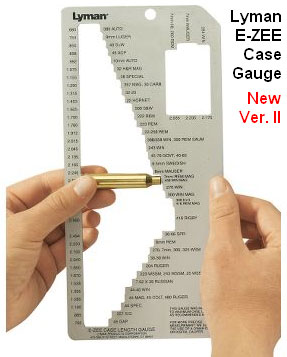
Lyman’s popular E-Zee Case Length Gauge is now bigger and better. The new version II of Lyman’s Case Gauge is much larger than the original version. The Case Gauge II now measures more than 70 cartridge types — way more than before. This tool is a metal template with SAAMI-max-length slots for various cartridge types, including relatively new cartridges such as the .204 Ruger and Winchester Short Magnums. This tool allows you to quickly sort brass or check the dimensions. If you have a bucketful of mixed pistol brass this can save you hours of tedious work with calipers. You can also quickly check case lengths to see if it’s time to trim your fired brass.
If you load a wide variety of calibers, or do a lot of pistol shooting, we think you should pick up one of these Lyman Case Gauge templates. They are available for under twenty bucks at Brownells ($18.99) and Amazon.com ($17.77). The E-Zee Case Gauge has long been a popular item for hand-loaders.
NOTE: For years the E-Zee Case Gauge had a silver finish with black lettering, as shown above. Some of the most recent production of E-Zee guages have a new “high contrast” look, with white lettering on a black frame. You may get either version when you order online (Brownells shows silver, Amazon shows black). We actually prefer the older version.
Case Gauge Should Last a Lifetime
Easily measure the case length of over 70 popular rifle and pistol cases with Lyman’s new E-Zee Case Length Gauge II. This really is a “must-have” piece of kit for any gun owner who hand-loads numerous pistol and rifle calibers.
This rugged, precisely-made metal gauge makes sorting or identifying cases fast and accurate. The template is machined with SAAMI max recommended case lengths. Made from metal, with no moving parts, the E-Zee Case Gauge II should last a lifetime.
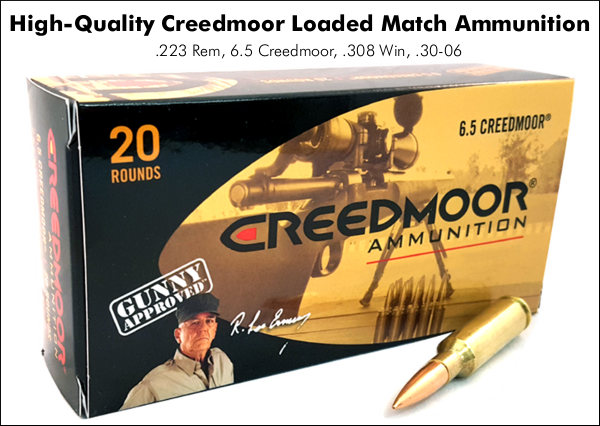
You may not know this, but Creedmoor Sports sells very high-quality loaded ammunition crafted with top-quality bullets and premium-grade Lapua brass for .308 Win and .30-06. We have friends who have shot some of this ammo in .223 Rem and .308 Win, and it is very impressive. The 6.5 Creedmoor ammo is capable of winning PRS matches outright. Creedmoor’s rifle cartridge match ammunition includes:
.223 Rem: (55gr FMJ, 68gr HPBT, 69gr TMK, 75gr HPBT, 77gr TMK) 6.5 Creedmoor: (140gr HPBT Hornady, 140gr HPBT Nosler, 142gr Sierra — all Hornady brass) .308 Win: (155gr, 167gr, 168gr Sierra, 175gr all in Lapua Brass; also precision hunting in other brass) .30-06 Springfield: (167gr Lapua Scenar HPBT in Lapua Brass)
Use Coupon Code CS929 to receive Free Ground Shipping on orders over $99!
Oh, the beauty of it — all that Lapua brass. From Finland with love….
What does 13,005 pounds (6.5 tons) of powder look like? That would last most reloaders a few seasons. Hoarders, eat your hearts out….
Here is a simple but effective product that can benefit varminters and game-hunters. The slip-on, padded RRR (“triple R”) gun rest cushions your rifle on any surface and helps eliminate noise when shifting the gun from one shooting position to another. The RRR slip-on rest is made of neoprene (wet suit material) with a built-in, thick Armaflex foam cushion on the bottom. This $19.95 sleeve protects the finish of your rifle, while providing a cushioned layer between your rifle and the supporting surface.
Hunters will appreciate how the RRR sleeve quiets the gun when the forearm is placed on supporting surface. The padded, neoprene covering acts like a sound deadener. With the RRR, the rifle forearm doesn’t clang or rattle, even when you set the gun on a metal frame or hard surface.
Video Shows RRR in Use in the Field
This padded sleeve works great when shooting from a truck, providing a padded surface when aiming from a truck mirror or door frame. Likewise, the RRR rest works well in the field when shooting from a tree-limb, or a boulder.
The patented RRR slip-on rest fits rifle stocks from 1¼ inches to 2¼ inches wide, and will not interfere with your scope. Installation is easy — after unloading the rifle, simply slide the RRR over the barrel and fore-end, with the RRR logo on top, so that the cushion section is under the rifle stock.
Key Benefits of the RRR Slip-On Padded Fore-Arm Rest
1. The RRR slip-on rest cushions your rifle. This helps to keep the shot from going high even when the rifle is placed on a hard surface.
2. The RRR protects the finish on the stock of your rifle from scratches when resting on hard surfaces.
3. The neoprene, water-resistant RRR works well even in wet or snowy weather. (But you should remove from gun after a wet hunting session.)
Ever heard of Alliant Reloder 23? Or Reloder 26? These two relatively new European-produced Reloder propellants were introduced in 2014. Most folks haven’t tried these Reloder powders because it took quite a while for the first shipments of RL 23 and RL 26 to arrive in the USA. But now these two new propellants are available in the USA, with substantial inventories in stock at some larger vendors. For example, Powder Valley has both RL 23 and RL 26 in stock now at $23.50 per pound. Many other vendors have ample RL 23, but RL 26 is a bit harder to find.
From our Forum members who shoot large magnum cartridge types with heavy bullets, we have heard good things about both RL 23 and RL 26. Reports from the field indicat that both these powders are delivering impressive velocities with low velocity ES/SD.
What are the characteristics of RL 23 and RL 26? That question was answered recently by Paul Furrier who works for ATK, the parent company of Alliant Powders. Posting in our Shooters’ Forum, Paul writes:
“Let me provide some factual info about these products. Some of the stuff that gets propagated is not correct. Reloder 23 is produced by our Swedish partner Bofors, and Reloder 26 is produced in Switzerland by our extremely capable partner Nitrochemie. I have seen it stated that they are both made by Bofors, so that is incorrect.
I have also noticed people are equating Reloder 23 to Reloder 22, and Reloder 26 to Reloder 25. Both of those statements are definitely incorrect. We do state that the performance of Reloder 23 is similar to Reloder 22, and it is, in general burn speed terms, but they are most certainly not the same. We have worked quite a lot of recipes for Reloder 23, and they are not the same as Reloder 22. Reloder 26 is definitely slower burning than Reloder 25, so there shouldn’t be any confusion there either.”
Furrier says that RL 23 is NOT sensitive to temperature shifts: “Reloder 23 was developed to bring a truly temp-stable powder to the Reloder 22 burn-speed range using Bofors new process technology. This is the second product developed for us with this TZ® process, the first being AR-Comp™. We see terrific efficiencies, SDs, accuracy and flat temp response from these powders. Please try them, I think you will be impressed.”
Speed and More Speed with RL 26
Think of Reloder 26 as a high-velocity powder for big cartridges. Furrier explains: “Reloder 26 is produced with Nitrochemie’s latest generation EI® process technology. This is the same impregnation coating process used to produce Reloder 17, Reloder 33, and Reloder 50 for us, and it is fantastic. The “so what” on Reloder 26 is great ballistic efficiency, high bulk density so you can get more of the slow powder into the case to harness the energy, and decent, predictable extreme temp response. Reloder 26 is not as flat at temps as the TZ or Australian materials, but it is very manageable, usually in the 0.5 fps/°F range (depending on the application). Just as important, the pressure increases at hot are very manageable. We are using quite a bit of this powder in our Federal factory ammo due to the fantastic ballistics and accuracy.
Both of these new Reloder powders contain decoppering agent to help reduce coppering up your barrels, but this is nothing new for us. Bofors began adding decoppering agent to our Reloder rifle powders in the 2002 timeframe, and all our Swiss Reloders except 17 contain their proprietary additive. (We may include it in 17 at some point also, but right now we like it just the way it is.) Sorry we didn’t have a snappy name figured for the decoppering agents, we just did it.
Both of these new Reloder powders are also produced to the current highest level of ‘green’ technology. Actually, all of our Alliant rifle, pistol and shotshell reloading powders meet the current (tough) European requirements for elimination of nasty ingredients. They do not contain any dinitrotoluene or dibutylphthalate, which are a couple of the nasties that are commonly used in smokeless powders.
Thank you for your interest in our new powders.” — Paul Furrier, ATK
Reloder 23
Like AR-Comp™, new Reloder 23 from Alliant Powder performs consistently across temperature extremes. Its sophisticated TZ® technology manipulates the response of the material and resists the natural tendency to generate more pressure at higher temperatures and less pressure at lower temperatures. Reloder 23 is perfect for long-range target shooters seeking performance similar to Reloder 22 with world-class temperature stability.
Features & Benefits:
TZ technology provides exceptionally consistent velocities across temp extremes
Contains proprietary de-coppering additive
Ideal for long-range target shooting
Excellent lot-to-lot consistency
Formulation contains no DNT or DPB
Made in Sweden for Alliant Powder
Reloder 26
Reloder 26 offer high velocities in large magnum cases. Achieve awesome ballistics with new Reloder 26 from Alliant Powder. The propellant’s burn speed falls between that of Reloder 22 and Reloder 33, and it incorporates EI® technology to produce extremely high velocities in magnum cartridges. Reloder 26 has a high bulk density that allows larger powder charges, and it provides a consistent, controlled response to temperature changes.
Features & Benefits:
EI technology produces extremely high velocities in magnum cartridges
Contains proprietary de-coppering additive
Controlled temperature stability
Excellent lot-to-lot consistency
Formulation contains no DNT or DBP
Made in Switzerland for Alliant Powder
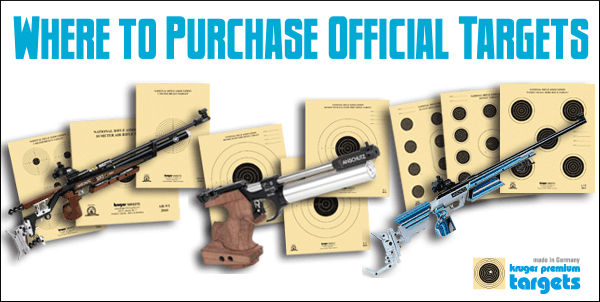
Need targets — not just any old targets, but the correctly-sized targets for specific shooting disciplines (such as NRA Smallbore, F-Class, and 1K Benchrest)? Well you won’t find them at your neighborhood Wally World store. Precise, dimensionally-correct competition targets are producted by a half-dozen specialty printers. In this article we provide links to the leading target sellers, with a chart showing “who’s got what”. Look for your particular discipline and the vendors will be specified.
Sources for Official Shooting Competition Targets:
AccurateShooter.com offers dozens of FREE, printable targets for target practice, load development, and fun shooting. We also offer a few of the most popular NRA Bullseye targets. One or more of these printable targets should work for most training purposes. However, some readers have asked: “Where can we get the real targets… exactly like the ones used in NRA, IBS, and NBRSA shooting matches?”
All these vendors carry nearly all the NRA High Power and Smallbore targets, including the new, smaller F-Class targets. National Target has the F-Class and High Power targets, including 100-yard reductions of the 200, 300, and 600-yard military targets. Germany’s Kruger Targets sells all the important NRA targets, and international (ISSF) air rifle and smallbore targets too.
Orrville Printing currently sells IBS targets for rimfire (50 yard) benchrest, short-range centerfire Benchrest (100, 200, 300 yards), Hunter BR Rifle (100, 200, 300 yards), plus the official 600-yard and 1000-yard IBS targets. National Target Company also has most of the IBS targets. NBRSA short-range, 600-yard, and 1000-yard benchrest targets are available directly from the NBRSA Business Office. Call (307) 655-7415 to order for the season.


 Trigger images from


 Lyman’s popular


 This padded sleeve works great when shooting from a truck, providing a padded surface when aiming from a truck mirror or door frame. Likewise, the RRR rest works well in the field when shooting from a tree-limb, or a boulder.