Generally you want the biggest, heaviest gunsafe you can afford. However, for many gun owners, a 1000+ pound behemoth is impractical. For those who relocate frequently for their jobs, or who live up many flights of stairs, it is more practical to have a safe that breaks down into separate pieces for transport. In our Guide to Gunsafes, we reviewed the Zanotti Safe, a quality modular safe that breaks down into smaller, lighter components. Now there is a another modular safe that competes with the Zanotti. Snapsafe’s Titan Modular Safe ships in three (3) flat boxes. Simply unpack the components and assemble the 330-lb. Titan on-site in about 30 minutes without tools.
Watch video to see how the SnapSafe Titan can be assembled without tools:
The SnapSafe™ Titan holds 12+ rifles, weighs 375 lbs. assembled, and measures 59” H x 22” W x 17.5”. Side panels are 9 gauge steel and the door is 3/16” steel secured by eight 1″-diameter chrome steel live locking bolts. SnapSafe claims that its patented structure can be stronger than conventional welded construction. You can choose either SecuRam™ Digital Lock or a mechanical lock. The Titan comes with fire-sealing gaskets lining the door frame. These gaskets, combined with ceramic wool blankets in the walls provide a claimed one hour of fire protection against temperatures up to 2300ºF.
SnapSafe sells its Titan 12+ long-gun capacity safe for $1249.00 delivered. There are also larger-capacity modular safes — the $1648.00 Super Titan (24 gun capacity), and the massive $1999.00 Super Titan XL (36 gun capacity). All prices include shipping to the lower 48 states.
Along with .22 LR, the LA101 is offered in .22 WMR and 17 HMR chamberings.
There’s an impressive bolt-action rimfire rifle built in Australia, the LA101 Crossover from Lithgow Arms. Imported by Legacy Sports Int’l, this relatively new rimfire rifle offers a smooth-running action, excellent accuracy, a crisp trigger, and a durable, Cerakote finish.
YouTube host 22Plinkster recently tested the LA101 in .22 LR, and found that it delivered very impressive accuracy. He recorded multiple “one-ragged-hole” groups at 50 yards (see video below). Even at 100 yards, the LA101 was shooting close to 1 MOA with relatively inexpensive ammo. This is an impressive rifle, as it should be, with a $1000+ price tag. MSRP is $1079.00 USD (synthetic), $1215.00 USD (laminate).
22Plinkster writes: “I have shot a lot of .22 LR bolt rifles in my day, but this one, is a nail driver!” After testing, he concluded that the LA101 was “the most accurate bolt rifle I own”. He reports the stock is very comfortable for off-hand shooting as well as bench work.
LA101 Crossover Features and Specifications
The Lithgow Arms LA101 Crossover features a 3-lug, 60°-throw action with rear-locking bolt. It is available in both right-hand and left-hand versions, with a very good factory trigger advertised at 3.3 pounds (1.5 kg). Note — testers report report the trigger feels lighter. Choose between a fiberglass-reinforced polymer stock, Walnut, or laminated wood stocks. This rifle is offered in three rimfire chamberings: .22 LR, .22 WMR, and 17 HMR. The .22-cal barrels are hammer-forged while the 17 HMR barrel is button-broached. Action and barrels are Cerakote finished. The Lithgow LA101 can use CZ 452/455 5-round and 10-round magazines.
The LA101 is offered with choice of wood or synthetic stocks, all of which feature a straight, lower rear section that works well in rear bags:
Here is another, lengthy LA101 review, done in Australia a couple years back. The reviewer field-tests a composite-stocked Lithgow LA101 with a wide variety of .22 LR ammunition. Warning: Starts with loud, annoying music — you may want to turn down your speakers:
Jonathan Ocab, a High Power shooter from California, had gunsmith Doan Trevor install a Sako-style extractor in the Rem 700 bolt in Ocab’s 6mmBR Eliseo R5 tubegun. Jonathan produced an excellent video showing how the Sako extractor improves the ejection of the short, fat 6mmBR cartridges in his rifle. Jonathan’s video demonstrates 6mmBR case ejection with an unmodified Rem 700 factory bolt versus a factory bolt fitted with a Sako-style extractor.
Johnathan explains: “Note how even when slowly operating the bolt, the bolt with the Sako extractor easily ‘kicks’ out the brass on ejection with minimal chance of operator error resulting in a failure to extract. While the unmodified bolt has issues ejecting brass on slow operation, it will eject if the operator pulls the bolt back quickly (fast and with some force).
While a Sako-style extractor isn’t an absolute necessity, this video shows the definite improvement this modification provides. For short cartridges like the 6mmBR, this is very useful. This modification is highly recommended for competition shooters, especially High Power competitors who seek improved function in rapid-fire stages. This modification is fairly inexpensive and any competent gunsmith should be able to perform the work (usually under $100 with parts and labor).”
EDITOR’s NOTE: In his video, Jonathan deliberately worked the unmodified Remington bolt slowly to show how the standard Rem extractor can struggle with short fat cases like the 6mmBR. In fact, when you work a standard, unmodified bolt more quickly, the extraction can be much more positive. Cycling the bolt with more “snap” provides more energy to eject the cases. We have run an R5 Tubegun chambered in 6mmBR with an unmodified Rem 700 bolt (no SAKO extractor), and the extraction was reliable, provided the bolt was worked quickly.
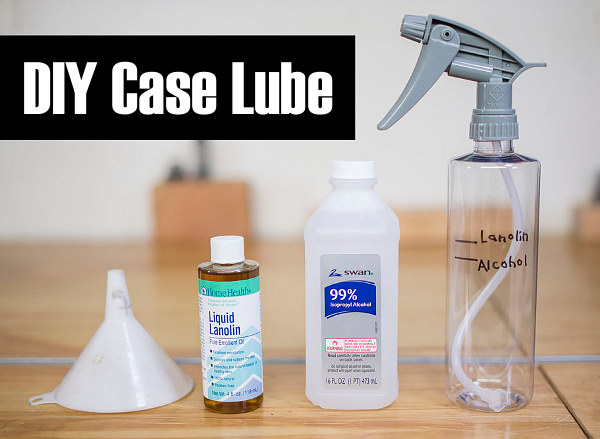
In the YouTube video embedded below, our friend Gavin Gear of UltimateReloader.com shows how to make your own case lube using simple, inexpensive ingredients. As recommended by the 6.5 Guys, this Liquid Lanolin + Isopropyl Alcohol mix works well and is very cost-effective. You can make a pint of this home-brew Lanolin case lube for a fraction of the price of commercial aerosol spray lubes.
Gavin describes the exact mixing process on his Ultimate Reloader website. Gavin says this lube mix is a good complement to the Hornady One-Shot (pistol) and Dillon DCL (rifle) lubes he has used for pistol and rifle reloading sessions. CLICK HERE to read more.
He who dies with the most toys wins — right? Well Sinclair has another interesting gadget you can add to your reloading bench. The Sinclair Case Neck Sorting Tool lets you quickly sort brass by neck-wall thickness. For those who shoot “no-turn” brass, sorting your cases helps achieve more uniform neck tension and, thereby, more consistent bullet seating. Large variances in neck-wall thickness can cause inconsistent neck “grip” on the bullet. Generally, we’ve found that more consistent neck tension will lower ES and (usually) improve accuracy.
Get Better Results with No-Turn Brass
We know some guys who shoot no-turn 6mmBR brass in competition with considerable success — but their secret is pre-sorting their brass by neck-wall thickness. Cases that are out-of-spec are set aside for sighters (or are later skim-turned).
Watch Case Neck Sorting Tool Operation in Video (May not load on mobile devices)
How the Case Neck Sorting Tool Works
Here’s how the Sinclair tool works. Cases are rotated under an indicator tip while they are supported on a case-neck pilot and a support pin through the flash hole. The unit has a nice, wide base and low profile so it is stable in use. The tool works for .22 through .45 caliber cases and can be used on .17- and .20-caliber cases with an optional carbide alignment rod. The MIC-4 pin fits both .060 (PPC size) and .080 (standard size) flash holes. Sinclair’s Case Neck Sorting Tool can be ordered with or without a dial indicator. The basic unit without indicator (item 749-006-612WB) costs $59.99. Complete with dial indicator (item 749-007-129WB), the tool costs $89.99. IMPORTANT: This tool requires caliber-specific Case Neck Pilots (sold separately).
Editor’s Comment: The purpose of this Sinclair tool is rapid, high-quantity sorting of cartridge brass to ascertain significant case-neck-wall thickness variations. Consider this a rapid culling/sorting tool. If you are turning your necks, you will still need a quality ball micrometer tool to measure neck-wall thickness (to .0005) before and after neck-turning operations.
Red Dot (aka “Reflex”) sights help pistol shooters hit their targets quickly. With these sights you simply place the dot on the target. Head alignment is not critical. These sights offer an open field of view, virtually no parallax, and eye relief is basically unlimited. You don’t have to worry about aligning front and rear sights — as long as you can see the red dot you’re good to go. The only real negative is that the red dot can be hard to see in very bright sunlight, and users with strong astigmatism may see a blurry or fuzzy image instead of a sharp dot.
As quoted in Outdoor Life, pistol champion Doug Koenig explains: “Red-dot sights are fast, superior in low light, and allow the shooter to simply focus on the target.” For those reasons competitive action pistol shooters can shoot faster with red dot sights. They definitely offer a “competitive advantage”, and that’s why iron sights guns run in a different class in most pistol matches.
The NRA Blog recently reviewed five (5) red dot sight systems for handguns. Red dots give let shooters focus on the target rather worry about sight alignment. In addition, red dots aid older shooters who often have trouble with close focusing. TIP: If you need reading glasses — a red dot can help.
SIG SAUER Romeo 1 SIG SAUER’s Romeo 1 open reflex sight is built with SIG’s twin adjustment springs that provide a “lock-less” zeroing system while maintaining zero. The sight body is CNC-machined from solid billet magnesium to be lightweight and strong, and its molded aspherical lens is bright and distortion-free. The Motion Activated Illumination (MOTAC) system recalls the last brightness setting used, so you don’t have to remember those adjustments on your own.
Vortex Venom Vortex’s Venom reflex sight can be mounted on pistols with Picatinny rails, as well as tactical rifles and shotguns. The 3 MOA dot is easy to see in nearly any lighting conditions and allows users to shooting accurately at long ranges. Ultra-clear multi-coated lenses provide a wide field of view with sharp image quality, and brightness controls are easy to find and use, located on the left side of the unit. The Venom features 14-hour auto-shutdown to extend battery life, and the unit is built shockproof and waterproof to withstand harsh operational demands.
Burris Fastfire III
Burris’ Fastfire III is one of the most versatile red dots on the market. In addition to the unlimited eye relief awarded by red dots, the Fastfire III features windage and elevation adjustments that don’t require the use of a proprietary or special tool – just a small flathead screwdriver is needed to make adjustments, and comes bundled. Battery access on the top of the sight makes it easier to change batteries, and the Fastfire III includes a battery warning indicator and eight-hour auto-shutoff to prolong battery service life.
Bushnell First Strike
Known for quality sights at great prices, Bushnell delivers again with the First Strike, one of the most affordable red dot sights available. Despite its affordability, the First Strike is well made, and an ideal candidate for use with smaller-caliber firearms, such as rimfire pistols. Like many other reflex sights, the First Strike mounts using the Picatinny rail system, so you’ll need to ensure your pistol either has a rail included or can facilitate a small mounting rail section. The First Strike is waterproof, shock-proof and fog-proof, and coated lenses ensure excellent light transmission, allowing easy target acquisition up to 100 yards — well beyond normal pistol range.
Trijicon RMR
Trijicon’s RMR (Ruggedized Miniature Reflex) sight is one of the most durable mini red dots available today. Produced from 7075-T6 aluminum to military specifications, the RMR is lightweight but strong, using a patented shape that absorbs impact and diverts stress away from the lens. The RMR is available in dual-illuminated, LED, and adjustable LED models with dot sizes from 1 to 13 MOA. The RMR is waterproof to 20 meters (66 feet), and boasts easy adjustment for windage and elevation.
Are you looking for a .22 LR Rimfire rifle that has the look and feel of a centerfire rig? Then check out the CZ 455 rimfire rifle featuring a black-finished, laminated wood stock. This gun, dubbed the “Varmint Tacticool” by CZ-USA, features a 5-round detachable magazine and adjustable trigger. And recently CZ added a Suppressor-Ready version fitted with a 16.5″ barrel and threaded muzzle.
The original CZ-455 Varmint Tacticool was built as an affordable tactical trainer with the ergonomics and stock profile of a full-size centerfire tactical rig. The Tacticool’s stock looks similar to the Manners Composites stock on CZ’s 455 Varmint Precision Trainer, but the wood-stocked ‘Tacticool’ version is much less expensive. The CZ 455 with Manners stock retails at $940.00 MSRP while the latest suppressor-ready Tacticool model lists for $549.00 MSRP. The $391.00 you save will buy a LOT of ammo (or a scope).
Tacticool Accuracy Demo — Nailing Match-Sticks at 30 Yards — Five for Five
We like the looks of the CZ-455 ‘Tacticool’, and the stock has some nice features. The butt-hook stock has ambidextrous palm swells on the grip and a raised comb to provide a comfortable cheek weld for shooting with a scope. The fore-end features a wide, beavertail swell for greater stability on a front sandbag. There are two (2) sling swivel studs so you can attach both a sling and a bipod.
At $940 MSRP, the CZ 455 Precision Trainer in Manners Stock is much more expensive.
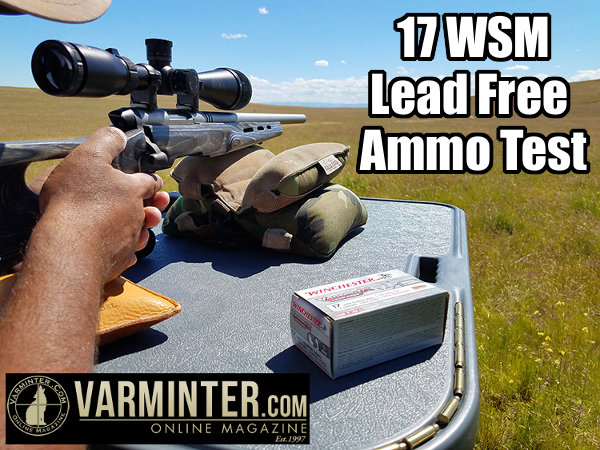
The team at Varminter.com just completed an extensive test of Winchester’s new LEAD FREE 17 WSM ammunition. During multiple sessions, Varminter.com shot the ammo using no less than nine different rifles. Four, 5-shot groups were shot with each rifle from the bench at 100 yards. Results were impressive. Average group size for a 1:9″-twist heavy barrel Savage B-Mag was a remarkable 0.5005 inches. Group size averages for seven of the eight other 17-cal rifles* ranged from 0.755 to 1.03 inches at 100 yards — pretty impressive for factory rimfire rigs. A LOT of time was invested in this test, and we recommend you read the full report on Varminter.com.
Fastest Rimfire Cartridge Ever
If you’re not familiar with this cartridge, the 17 WSM is the fastest, flattest-shooting rimfire round you can buy. It stomps the .22 LR, and even offers significantly better ballistics than the popular 17 HMR. This lead- free version is impressively flat-shooting. With a 100-yard zero, it drops only 4.3 inches at 200 yards. Compare that with a .22 LR which can drop 18 inches or more from 100 to 200 yards (based on 1150 fps MV).
Zinc Replaces Lead in Winchester’s Eco-Friendly 17 WSM
For folks who live in areas where lead ammo is restricted, such as California, the arrival of this Lead Free 17 WSM is good news. Winchester’s new 17 WSM ammunition features a Zinc-cored, polymer-tipped 15-grain bullet with 0.118 G1 BC. The ammo is rated at a speedy 3300 FPS velocity. Winchester says that the zinc core and “thin alloy jacket with engineered sidewall profile” deliver “explosive fragmentation.”
*The ninth rifle, a Savage BMAG with original thin-contour barrel, was the “odd man out”. Accuracy was mediocre, averaging 1.763 inches.
What anti-corrosion products really fight rust effectively? You’ll hear many opinions, but what do actual field tests reveal? One rifle shooter, who posts on YouTube as BlueonGoldZ, wanted to separate myth (and marketing claims) from reality, so he completed his own long-term rust test using metal samples. First he used ordinary tap water spray, and then he did a second, longer-duration test with a salt-spray solution. Nine different products were tested: Break Free CLP, Corrosion-X, Frog Lube, M-Pro 7, Outers, Pro-Shot Zero Friction, Rem Oil, Slip 2000, and Tetra Gun Triple Action CLP.
BlueonGoldZ initially examined each product for its “beading” properties with a normal tap water spray. But the main test involved many multiple weeks of exposure after a “dense” salt-water spray. (No rust formed after two weeks tap water exposure, so the test was accelerated with salt-water exposure).
The clear winners in the test, as shown by the screen shot above, were Corrosion-X (Best), and Frog-Lube (Second Best). The photo shows the test samples two weeks after being sprayed with salt water. The results are pretty dramatic — you can see with your own eyes what happened. We think this is a very useful bit of real-world research.
Results from Similar Long-Term Salt Exposure Test
Unfortunately, BlueonGoldZ’s test did NOT include Eezox, which we have found to be extremely effective (on a par with Corrosion-X). In another long-term test of corrosion preventatives, the two best rust fighters were Eezox and Corrosion-X in that order. Since that test was completed, Corrosion-X, already an excellent product, has been enhanced. CLICK HERE for Long-Term Salt Exposure Test Report.
Schmidt & Bender 5-25×56mm PM II SFP Review Test conducted by RifleShooter.com
For police and military use, the Schmidt & Bender PM II (Police Marksman) is the gold standard of extreme use rifle optics. Other high end scopes aspire to the PM II’s level of durability, optical clarity, repeatability, and performance. With our assistance, RifleShooter.com recently conducted an in-depth test of Schmidt & Bender’s 5-25×56 PM II, Second Focal Plane (SFP) version. Here are the results…
The test scope is a 5-25×56 PM II (SKU: 677-911-995-A8-A2) with a Second Focal Plane (SFP) P4FL2-MOA reticle; double-turn elevation with rotation indicator; single turn windage; 1/4-MOA click values; illuminated reticle; and side adjustable parallax from 10 meters to infinity. This is an impressive beast — a big, sturdy, well-made optic.
Schmidt & Bender scopes have sophisticated features and a wide array of available options. The many options and features of the 5-26x56mm PM II are explained in this Schmidt & Bender video:
Second Focal Plane (SFP) Reticles
The Second Focal Plane (SFP) reticle design works well for long-range target shooters, benchrest shooters, hunters, and law enforcement. Often, SFP reticles are associated with Minute of Angle/MOA-based reticles. For target shooters who like to dial-in the elevation corrections, frequently SFP is the preferred reticle type. Also, these reticles are offered with thinner lines and markings to aid in target shooting, by not covering up as much of the target area, which is absolutely necessary in such cases as F-Class and Benchrest shooting. With a SFP reticle the size/width of the reticle lines stay constant at all magnifications.
Tall Target and Box Tests
Commentary by Rifleshooter.com Editor
To get an idea of how the PM II tracked I wanted to conduct a tall target and box test. I set up a couple of ISPC targets at 100 yards (below).
The target on the left is for the tall ladder test, the target at the right is for the box test.
With the scope zeroed* I set up a tall target test at 100 yards. I placed a 1″ orange dot on a pair of targets (above, left). We then used a four foot level to draw a plum line moving up from the dot and fired the three shot group below.
I dialed 30 MOA of elevation on the scope and fired another group. Measuring the distance between the two groups, would indicate how well the scope is tracking.
Since 1 MOA is 1.047″ at 100 yards, 30 MOA would be 31.41″ (30 x 1.047″ = 31.41″), looking at my tape measure, everything checked out (above).
Next I conducted a quick box test and set up an IPSC target with a orange paster at 100 yards. To do this I first Fired one round with the scope zeroed, then…
Dialed 6 MOA left, fired one round
Dialed 15 MOA up, fired one round
Dialed 6 MOA right, fired one round
Dialed 6 MOA right, fired one round
Dialed 15 MOA down, fired one round
Dialed 6 MOA left and fired one round
After this, you want to see two holes close to each other on the first target, as well as the correct spacing dialed in between each hole, so how did the PM II do?
Well, it worked like a champ! The rest of my time with the PM II has been equally impressive.
— It’s a lot of scope. The PM II is pretty much the best scope you’ll be able to buy anywhere in the world. There is a reason they are in such widespread Military and Law Enforcement use, it has earned its reputation.
— Great zero stop. The PM II has the easiest-to-adjust turret and zero stop system I have ever used. On the PM II, Schmidt & Bender’s exclusive “Sub Zero Stop” system allows movement below zero. On the test scope it was 1.75 MOA. This is a great feature if you switch ammunition or elevation and need to bump your zero down.
— Tracks well. This was to be expected with its widespread use by military units throughout the world.
— Crisp, precise adjustments. The tactile feel of the knobs is exceptional.
— Crystal clear glass. Great light transmission and reticle.
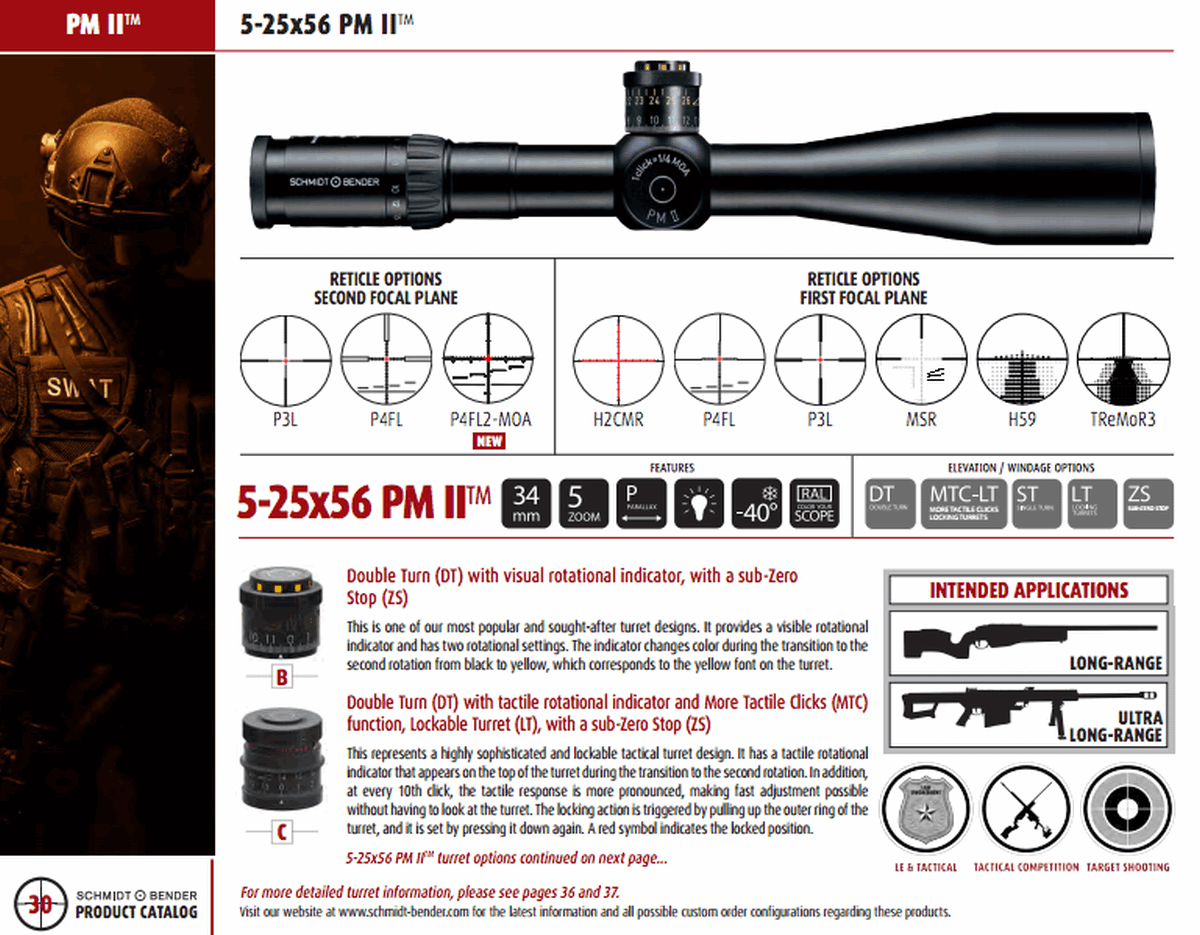
This Schmidt & Bender catalog page shows reticle options for the 5-25×56 PM II:
Click image to zoom
Turrets and Controls — How They Work
On the right side of the optic, you’ll notice a .250 MOA single-turn windage adjustment knob. On the top you’ll note the .250 MOA elevation adjustments. The tactile feel of each “click” is impressive — crisp and precise. A large parallax knob is located on the left side of the turret. The smaller knob located closer to the eyepiece is the adjustment knob for the illuminated reticle.
Here the view from behind the scope. Note the DT (double turn) elevation turret. At its current setting in the photo above, it is still on the first revolution (.250 MOA below 0) and as adjustments within the first revolution are made, you’d read the white numbers. During the second revolution, the windows in the top of the turret turn yellow, as shown below.
Test Rifle — .300 Win Mag in Accuracy International AICS AX Chassis
For testing and evaluation purposes I mounted the PM II in Spuhr ISMS mount on a custom made .300 Winchester Magnum rifle. Testing was done with handloaded ammo: Sierra’s 195-grain Tipped MatchKings over Norma brass and Hodgdon H4831SC powder.
This is the test rifle I used. It was built primarily with parts from Brownells.
Here is the Schmidt & Bender 5-25x56mm PM II SFP (foreground) alongside three other S&B products: 5-25×56 PM II FFP (Desert Tan), 12-50×56 PM II, 3-20×50 PM II
Better Pricing, Better Warranty, Better Availabilty
In addition to increased production and availability, Schmidt and Bender has reduced retail pricing on PMII models 14-19% depending on the model. S&B Marketing Director Kyle Brown commented, “S&B improved its warranty in the USA for 2017, and now offers a USA 20-Year Transferable Limited Warranty. We have reduced our pricing to be competitive; and have greatly increased our on-hand inventory levels to supply our customers with complete and on-time deliveries.”
Schmidt & Bender has made an effort to support the Precision Rifle Series (PRS). Brown said “for 2017 we have made a very hard push to become more active in PRS with our brand and with our products.”.
To learn more about Schmidt & Bender optics, CLICK HERE.
* Zeroing Process for PM II: The zero stop and turret settings are controlled by set screws. Zeroing is a breeze. You don’t have to move caps, insert shims, move clutch mechanisms, and so on. Simply loosen the screws, swing the turret back to “0” and you are all set. To establish a 100-yard zero, I hung a target at 50 yards, fired one round, dialed a correction, fired a confirmation shot and moved back to 100 yards. I fired one round at 100, made a correction and was zeroed. That’s it, three rounds, done.


 Generally you want the biggest, heaviest gunsafe you can afford. However, for many gun owners, a 1000+ pound behemoth is impractical. For those who relocate frequently for their jobs, or who live up many flights of stairs, it is more practical to have a safe that breaks down into separate pieces for transport. In our Guide to Gunsafes, we reviewed the Zanotti Safe, a quality modular safe that breaks down into smaller, lighter components. Now there is a another modular safe that competes with the Zanotti. Snapsafe’s Titan Modular Safe ships in three (3) flat boxes. Simply unpack the components and assemble the 330-lb. Titan on-site in about 30 minutes without tools.



 How the Case Neck Sorting Tool Works
 Red Dot (aka “Reflex”) sights help pistol shooters hit their targets quickly. With these sights you simply place the dot on the target. Head alignment is not critical. These sights offer an open field of view, virtually no parallax, and eye relief is basically unlimited. You don’t have to worry about aligning front and rear sights — as long as you can see the red dot you’re good to go. The only real negative is that the red dot can be hard to see in very bright sunlight, and users with strong astigmatism may see a blurry or fuzzy image instead of a sharp dot.