Yep, it’s wintertime — Christmas is just two weeks away. There is plenty of snow on the ground in many parts of the country. 2025 has brought unusually cold weather to many regions with more snow on its way this weekend. In the Northeastern region, snow storms (with very low temps) are predicted for December 12-15, 2025.
If you plan to go shooting or hunting in the weeks ahead, while the weather is below freezing and snow is on the ground, you need to be prepared. You should always have the right equipment and make sure that you can contact help if something goes wrong (such as not being able to start your vehicle).
The folks at the Precision Rifle Network have created a good video on winter shooting and hunting. Host Marcus Hom provides his TOP 10 TIPS for wintertime shooting/hunting adventures. We recommend that any 4-season shooter watch this video.
TOP 10 TIPS for Winter Shooting and Hunting:
1. Wear Good Sunglasses — With snow on the ground, wearing sunglasses is a must because of the extra reflected light. You can get good sunglasses that also have ANSI Z87.1-approved impact protection.
2. Wear Protective, Moisture-Proof Clothing — Wear a set of Bibs and a long jacket. This will prevent you from getting snow inside your clothing when shooting prone.
3. Take Care of Your Hands — Bring good winter gloves, preferably with a waterproof outer layer. Make sure the inner gloves can work with your trigger/trigger guard.
4. Bring a Good Tripod — A tripod keeps you elevated so you can avoid laying down in snow or slush. That, in turn, avoids body heat loss. “Keeping out of the snow and shooting from an elevated position is pretty important in the wintertime.”
5. Protect Optics and Action — Keep your scope lenses and action clear of moisture, snow, and fog. You will want to have good caps on both lenses. Make sure the action remains closed, and consider some kind of wrap over the action until you’re ready to load and shoot.
6. Ranging Challenges — Laser range-finders don’t perform optimally with intense, bright, ambient light. Also, if it’s showing you may get false readings from snow particles. So take multiple readings to ensure you have the right distance. Also, if you have a reticle with MOA or MIL marks, and you know the size of your target, then you can range the target with the scope.
7. Drop and Windage Info (DOPE) Chart — Bring a waterproof, hard copy dope chart. Out in the field on cold days, a phone battery dies fast, and you’ll want to preserve that battery for emergency phone use if needed. So, you should keep a good old-fashioned drop chart in a waterproof laminate.
8. Muzzle Velocity Issues — Cold temperatures can lower muzzle velocity. Before you go, get an idea of how your velocity will change with low temperatures. Some powders are more sensitive to temperature than others, causing a noticeable reduction in muzzle velocity. A load you’ve worked out in summer may shoot LOW in winter because the actual velocity is low. Even with a “temperature stable” powder you may see a 10 fps slow-down. Do some winter velocity testing if you can before you go.
9. Keep Your Ammo Warm — A simple way to avoid muzzle velocity changes with low ambient temperatures is to keep you ammunition ON YOUR BODY. Have a pouch under your layered clothing where the ammo can be kept relatively warm. See video: 07:50
10. Safeguard Keys and Valuables — Keep keys and valuables in a secure, zippered pocket. “There is nothing worse than losing something… keys, phone, wallet. It’s really hard to find something when its buried under [many] inches of snow”. We also recommend keeping a spare vehicle key hidden on your car/truck. There are magnetic holders that can keep that spare key secure but safely hidden from view.
New .300 WSM F-Class rifle, with stock finished by Forum member Cigar Cop.
One of the most popular features of our Shooters’ Forum is the ongoing Pride and Joy Rifle thread. Since 2009, Forum members have posted photos and descriptions of their most prized firearms. Here are some of our favorite “Pride and Joy” rifles recently showcased in our Forum. Do you have a gun you’d like to see featured there? Register for the Forum and you can add your favorite gun to the list.
We hope these “Pride and Joy” rifles may provide inspiration for our readers, whetting their appetite for their next competition, varminting, or hunting rifle project.
Ultra-Low Profile 6 PPC for Short-Range Benchrest
This handsome rifle, which belongs to Forum member J.J.Coe, represents the state-of-the-art for 100/200-yard benchrest rifles. It is chambered (no surprise) for the 6 PPC cartridge, which dominates the short-range game. In features a super-low profile carbon composite stock. Note how the vertical centerline of the stock is very close to the barrel. This keeps the center of gravity low and helps the rifle recoil smoothly with less hop in the bags. Note also the tuner on the barrel.
22 BR Savage Varminter — Accuracy on a Budget
This 22 BR Savage, with upgrades from Sharpshooter Supply, is the “pride and joy” of Forum member Maynard. Note the heavy-contour custom barrel with brake. That 22 BR cartridge is a very effective choice for varmint work, as the ground hog in the photo proves. The 22 BR and 22 Dasher are capable of outstanding accuracy with a large variety of bullets and powders. A 22 Dasher can rival the ballistics of a 6mmBR out to 500+ yards, but with reduced recoil.
Eliseo Tubegun in 7mm SAUM with Pierce Action, Bartlein Barrel
Here is a striking camo-finished Elesio (Competition Machine) Tubegun chambered for 7mm SAUM. Note the block fitted to the tubular fore-end so the rifle rides smooth and steady on the Rodzilla T-Rex joystick front rest. The proud owner, Forum member Aeon, tells us: “This is a Gary Eliseo RTM chassis with pickle forks. It has a custom Ceracoat paint job to match my sling gun.” Key components are: Pierce Engineering long action tube receiver, Bartlein 1:8.5″-twist barrel, Jewell trigger set at 2 oz., and Vortex Golden Eagle scope in Vortex rings. Aeon adds: “The chamber was cut by Mark Chesesbro of Chesebro Rifles. Mark throated it very long so the the 180gr and 184gr Bergers would sit where they belong.”
Tuning the 7mm SAUM and Recoil Reduction
Owner Aeon tells us: “The 7 SAUM was as easy a gun as I have ever shot to find a good load for — H1000 gave great consistency and tuning was not hard. However, the challenge in shooting this rifle was recoil management. The 7 SAUM has a punch to it and I found myself having trouble finishing three relays without form problems in the last relay. I considered getting a RAD Pad but that would have required expensive machine work. I stumbled on a recoil pad that is uniquely effective, the Falcon Strike. Sent the pad to Gary Eliseo and he sent it back with the butt plate machined to fit. Complete game changer! The rifle is a dream to shoot now with a big reduction in felt recoil.”
This gray and blue beauty belongs to Forum member Farmer Dave. He posted: “Got this 6.5×47 Lapua back from my smith about six months ago. It’s the most accurate rifle I have ever owned.” This rifle features: AG Composites CF stock, Stiller TAC 30 action, Bartlein 5R barrel, TriggerTech Diamond trigger. On top is a Trijicon Accupower riflescope.
Henry .45-70 with Modern Buttstock and M-LOK Handguard
Here is member Quest45’s handsome lever-action Henry .45-70 Gov and Glock 40 10mm. About his two guns he posted: “All I need is a can of bear spray”. The rifle is fitted with a red dot sight, ammo caddies, Ranger Point M-LOK handguard, and a modernized modular buttstock. These upgrades make it a thoroughly-modern Henry lever gun for the 21st Century.
A .243 Winchester Hunting Rig that Nailed Scottish Roe Buck
Forum member John V. from Scotland showcased a successful hunt with his .243 Winchester rifle. This sports a suppressed, 26″ MTU 1:7.5″-twist barrel. He loaded Sierra 100gr Pro-Hunter bullets, and took this nice Roe Buck at 240 yards through a gap in the foliage.
Mauser M96 with Quilted Maple Stock — for the Wife
We like this handsome quilted Maple-stocked Mauser belonging to Forum member Steel Mover. He posted: “Some like synthetic and some like wood — I have both. Here is the wife’s quilted Maple 96 Mauser 6.5×55. I was working in the shop, wife walked through and said ‘You are building that for me aren’t you?’ Well ‘Yes, dear’ I said of course … so I Lost my rifle.”
Patriotic .284 Shehane F-Open Rig
Forum member 1shot is proud of this new F-Classer: “Just got my first F-Open rifle finished chambered in .284 Shehane. It features a Kelbly stock w/RAD system, Shilen 1:8″-twist ratchet-rifled barrel with EC Tuner, and X-treme 2-stage trigger — all mated up to a Kelbly Panda action. I think this dog will hunt!”
Bill Goad’s 6PPC Hunter “Ranch Rifle”
Forum member Grimstod tells us: “This is the personal rifle of Bill Goad. He has been experimenting with it on several levels. It is shooting great and has several matches on it now. Please enjoy these photos. More can be found on the website www.PremierAccuracy.com. We like the subtle barbed wire effect on the stock.
Do-it-Yourself Paint Job, Done in the Bathroom at Home
Many eye-catching rifles start with a great paint job. Forum member JHN did this job himself. He posted: “Went to local paint shops, some cost a two-month work income, some said guns were a ‘no-no’. So I did it myself — my first Candy Apple red. Base collar is gold metallic, followed by the red. I didn’t have a good paintwork place so I had to improvise. Our bathroom has nice concealing in the summer — a perfect paint booth. So I only have to apologize about some red flakes in our bathroom.”
Today is Thanksgiving, aka “Turkey Day”, a time to enjoy an annual get-together with family and friends. To mark this occasion we offer a collection of interesting videos about turkey hunting plus a FREE Turkey target. Enjoy your Thanksgiving holiday!
GetZoneHunting.com has a vast video library for hunters, with hundreds of helpful videos on all types of hunting. In time for spring turkey season, GetZoneHunting offers a big collection of turkey hunting videos: At the Ranch – Turkey. On that page you’ll find 13 turkey hunting “how-to” videos. Here are links to five GetZone Turkey Hunting videos with valuable information from skilled, experienced hunters.
At the Ranch Turkey Hunting Videos
At the Ranch – Turkey offers solid advice for turkey hunters. These five videos will help you better understand turkey behavior and have success on your hunt. Click any photo to watch the particular video on the GetZone website. (Work Warning — When each GetZone video opens, it may immediately launch an annoying commercial with loud AUDIO!). There are eight more turkey hunting videos on GetZone’s Turkey Hunting HQ Page.
At the Ranch: Shot Placement for Turkeys — CLICK PHOTO to Watch Video
At the Ranch: Turkey Hunting Essentials — CLICK PHOTO to Watch Video
At the Ranch: The Difference Between a Jake and a Tom — CLICK PHOTO to Watch Video
At the Ranch: Early vs. Late Spring Turkey Hunt — CLICK PHOTO to Watch Video
At the Ranch: How to Plan a Turkey Hunt — CLICK PHOTO to Watch Video
Free Printable Turkey Target from AccurateShooter.com
As a special bonus for our readers, here is a free, printable Turkey Target, so you can practice for your turkey hunting adventure, This special Turkey Bullseye Target was created by our friend and Forum member Pascal (aka “DesertFrog”). CLICK HERE for FREE Turkey Target.
Readers know Jim Borden as a Hall of Fame shooter and the owner of Borden Accuracy/Borden Rifles. Jim won 10 IBS National Championships, set 10 IBS world records, and was inducted into the Benchrest Hall of Fame in 1996. But Jim is not just a great shooter. This highly-trained engineer is very much a Renaissance man. He is as skilled with cameras as he is with benchrest rifles.
Jim is a talented outdoor photographer who has compiled an impressive portfolio of wildlife and landscape photographs. For this Thanksgiving-eve edition of the Daily Bulletin we are featuring some of Jim’s favorite nature images. We hope readers enjoy them as much as shooters prize Borden’s Rimrock benchrest and Rimrock hunting actions.
Growing up in rural Pennsylvania, in a hunting household and hunting community, Jim learned about shooting at a very early age. He started hunting at the age of nine with his father and grandfather. His grandfather had an avid interest in photography while they were on hunts and Jim became interested as well. Jim began using SLR cameras in the 1970s, often carrying cameras on his hunts. As the years passed, Jim became more interested in “shooting” the animals with a camera versus a gun. Jim converted from film to digital in 2006 and in 2007 Jim’s wife Joan started accompanying Jim on the photo safaris. Jim has a particular passion for elk, moose, and eagles and Jim also enjoys scenic photography. Jim and Joan both shoot Nikon professional equipment. Their photographs can be viewed on his JandJB Wildlife Photography Blog.
All in the Family
Jim’s grandfather was a gunsmith who taught Jim the trade when Jim was very young. Jim’s father and grandfather ran a country business that included an auto repair shop, welding, a small lathe, and a forge. Jim earned a degree in Mechanical engineering at Penn State University. For 23 years he worked for Procter and Gamble (P&G) as an engineer and as an engineering manager/project manager.
Borden Accuracy/Borden Rifles Success Story
Borden Accuracy/Borden Rifles has been a source for precision benchrest and hunting rifles for many years. Jim started doing his own gunsmithing while competing in benchrest and high power silhouette matches. Jim launched his business in 1987, working nights and weekends while still employed at P&G. The business became full-time in 1995 with Jim and his wife Joan doing the work. The business was expanded in 1999 with the construction of the new Springville, PA facility and the addition of sons Jim Jr. and John to the staff. Son-in-law John Mecca came onboard in January 2000. Now the Borden shop continues to make some of the finest rifles and actions in the world. Joan tells us that the company has seen a significant growth in ultra-high-quality precision hunting rifles in recent years.
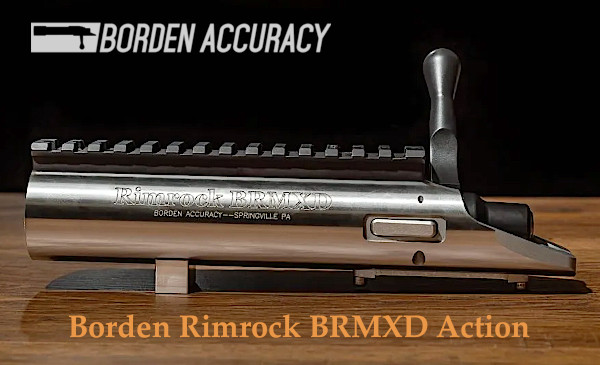
Jim and company began making Rimrock benchrest and Rimrock hunting actions in 2001. They added Borden Alpine and Timberline actions in 2006. These actions are made in an advanced manufacturing facility which has three CNC vertical Machining centers, three CNC lathes, three manual lathes, a manual knee mill, a surface grinder, a cylindrical grinder and wire EDM machine. To learn more, visit BordenRifles.com, call (570) 965-2505, or send email to info [at] bordenrifles.com.
Thanksgiving is just 4 days away. What better way to celebrate the occasion than to blast away at some bearded gobblers (of the paper variety). Here’s our Turkey Day target, ready for some family fun. This special Turkey Bullseye Target was created by our friend and Forum member Pascal (aka “DesertFrog”). CLICK HERE for FREE Turkey Target.
Get a Full Set of Animal Targets
For your convenience, we’ve packaged the Turkey Target along with five (5) other varmint/animal-themed targets. These are all offered in .pdf (Adobe Acrobat) format for easy printing.
Hunting season is well underway throughout North America. If you’re planning a hunt, and want to improve your chances of success, you can benefit from today’s Saturday Showcase featuring noted huntress and outdoor video host Kristy Titus. Titus, co-host of the Team Elk TV show, is a certified instructor who has hunted around the globe. She grew up in the outdoors, running pack mules in Oregon with her father.
Successful Hunts with Kristy Titus and Field Dressing Methods
Kristy has her own successful YouTube Channel, Pursue the Wild with Kristy Titus. Here are three popular videos on that channel. Kristy’s field dressing video has amassed over 5.7 million views!
Best of North American Big Game Hunting
Caribou Hunting in the Northwest Territories
Gutless Field Dressing Method
Hunters who are deep in the backcountry may need to quarter the animal for easier field removal and to help cool the meat as quickly as possible. In this video, Kristy Titus shows the step-by-step process of the gutless method. Kristy recommends a good skinning knife such as the Buck Knives Pursuit Series. She also states you should have quality game bags plus a section of Polyethylene Visqueen material which can be purchased at local hardware stores.
Shooting Skills and Tactics for Hunters with Kristy Titus
As part of NRA Women TV, hunting guide Kristy Titus hosts a series of videos that explain important strategies and shooting skills for hunters. In these videos, Kristy demonstrates field positions that can be employed during a hunt. She also explains preparation for a hunt, including fitness training.
Click each link below to watch other Kristy Titus Hunting Videos.
Kristy says: “When it comes to bolt-action rifle fit, there is no ‘one size fits all’. When picking out your rifle [consider options] after the purchase to ensure you are as comfortable as possible.”
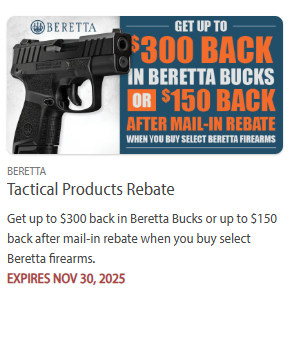
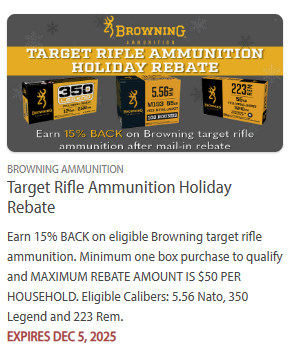
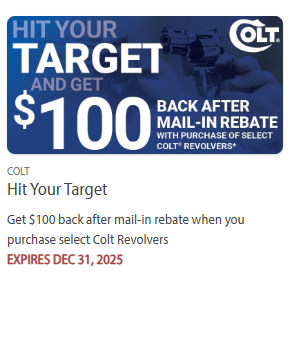
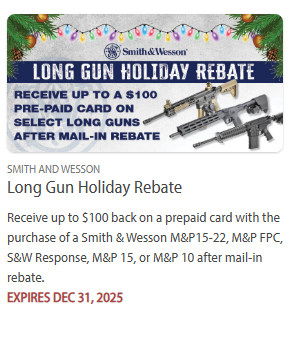
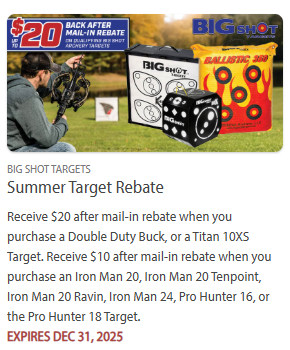
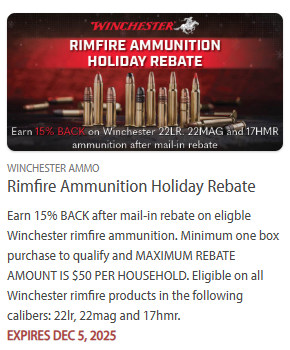
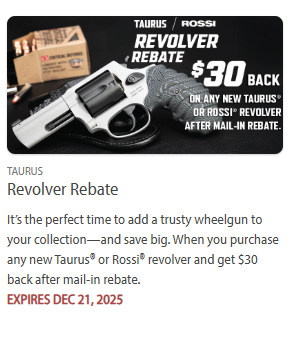
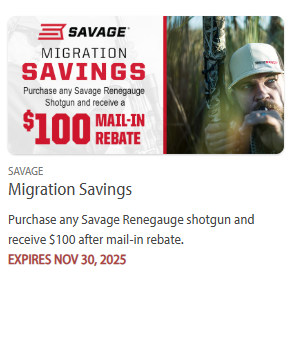
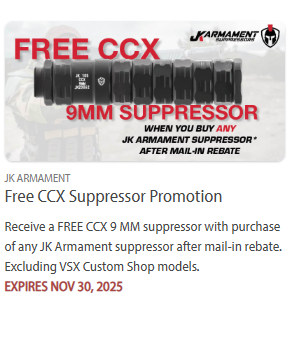
You can save big bucks on guns and gear with factory rebate programs. But with the end of 2025 fast approaching, dozens of great shooting industry rebate programs are about to expire. Many major rebates on rifles, pistols, optics, and/or ammunition require purchases no later than December 31, 2025.
If you are in a buying mood (maybe to get a new gun as an Xmas gift to yourself), check out these notable rebate offers. We showcase 16 great discount/rebate programs. These rebates can save you big bucks on rifles, pistols, shotguns, ammo, or gear. Many of these rebates are worth $100 or more. For example you can Save $200 on Savage rifles or Save $150 on Beretta pistols. Note: most of these promos are good through the end of December 2025, but some expire on November 30 — so check the dates.
Hunting season is underway now across the country. You’ll definitely want to zero your hunting rifle before the hunt, and you need to know how your shots will impact with a cold barrel.
Commonly, hunters won’t have the ability to fire one or two fouling shots before heading out on a hunt. Therefore it’s important that a hunter understands how his rifle shoots with a “cold bore shot”. Both the point of impact (and possibly velocity), may be different with a cold bore than with a barrel that has been warmed and fouled with a series of shots. In this video from the U.S. Army Marksmanship Unit (USAMU), you’ll learn how to determine your cold bore point of impact (POI) for a rifle that just been cleaned, as well as the cold bore POI with a barrel that has already been “fouled in”.
SGT Joe Hein of the USAMU shows how to plot cold bore POI with both a clean bore and a fouled bore. Note that the “cold bore” shot from a fouled barrel was closer to the follow-up shots than the cold bore shot from a clean barrel. This is typical of many factory barrels. SGT Hein provides a simple way to understand your rifle’s cold bore performance. Hein’s advice can keep you from missing that long range shot at that big buck on opening day. A little time spent on the range before that critical first shot will help ensure you have meat in the freezer this season.
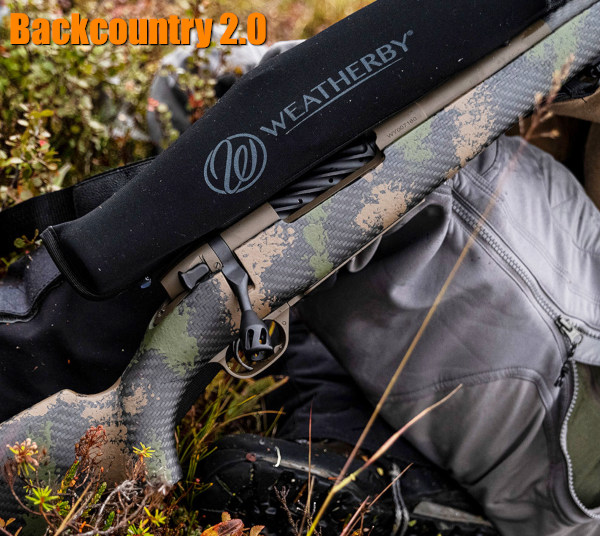
It’s the heart of hunting season in many parts of the country. Game hunters are heading out for their late fall deer hunts. For hunters making long treks in the back-country, reducing carry weight is a big deal. That’s why we’ve seen a trend among rifle-makers to introduce rifles that weigh significantly less. This is accomplished through use of carbon fiber stocks, carbon-wrapped or fluted barrels, and even titanium actions. The Weatherby rifles showcased here feature such lightweight components. For example, the Weatherby Mark V Backcountry 2.0 Ti (Titanium) model comes in at just 4.7 pounds before optics. That’s mighty light for a hunting rifle.
Weatherby Backcountry 2.0 Ti with titanium action, fluted barrel, and carbon-fiber stock, 4.7 pounds.
Light-Weight, Carbon-Stock Backcountry 2.0 from Weatherby
Here is good news for backcountry hunters. Weatherby’s Backcountry 2.0 carbon-stocked hunting rifles weigh well under 6 pounds before optics. There is even one titanium action model series that weighs just 4.7 pounds. The 2.0 series now offers both standard steel receivers or even lighter titanium receivers. And Backcountry 2.0 Carbon models are equipped with a new carbon fiber stock that is the lightest in the industry — weight is a mere 20 ounces for standard actions. For further weight savings, some models feature a tensioned carbon fiber-wrapped barrel. But all that high-tech doesn’t come cheap — MSRP for the Titanium action, carbon-wrapped barrel model is $3849.00!
Ultralight Carbon Stock — Weatherby’s new Blacktooth stock features a Carbon Link™ bedding system which engages the recoil lug and distributes recoil throughout the stock without the weight of a traditional aluminum bedding block. This makes the overall stock lighter and stiffer.
The Backcountry 2.0 Ti Carbon combines a tensioned carbon fiber barrel with the ultra-lightweight Titanium Weatherby Mark V action. This barrel system has shown excellent accuracy, making it a good choice for a long-range hunter. Registering a very low 5.3 lb starting weight, the Backcountry 2.0 Ti Carbon combines a titanium action with the Peak 44 Blacktooth stock — which Weatherby claims is the “lightest production carbon fiber stock on the market.”
Along with the new ultra-light elements, these Weatherbys have premium Mark V features: 54-degree bolt lift for fast cycling, fluted bolts, TriggerTech triggers, and Cerakote finish on metal parts. All the Backcountry 2.0 series rifles have a sub-MOA accuracy guarantee. CLICK HERE for Weatherby Backcountry 2.0 Field Test by Peterson’s Hunting.
Light is Right — Weatherby’s Backcountry 2.0 rifles weigh as little as 4.7 pounds (before optics).
Weights for Backcountry 2.0 Models range with chamberings:
Weight Saving Secrets — How Weatherby Achieved Such Light Weights GunsAmerica Digest reports: “A huge amount of the weight savings comes thanks to the updated carbon fiber Blacktooth stock by Peak 44. This stock uses what they call their Rock Solid Carbon Link bedding system which eliminates the need for a metallic bedding block. The Blacktooth stock weighs less than 20 ounces. The Backcountry 2.0 [series adds] both a carbon fiber stock and either fluted #1 MOD-profile or #2 MOD-profile carbon steel barrels or #4 MOD-profile BSF carbon fiber-tensioned barrel to achieve these light weights.” READ GunsAmerica Review.
To mitigate recoil Weatherby developed its new 3DHEX recoil pad — the gun industry’s first production 3D-printed pad. The 3DHEX’s three-dimensional honeycombed design extends the duration of the recoil pulse — taking away the sharp kick. Weatherby explains: “With the same amount of recoil spread out over a much greater time period, felt recoil is greatly reduced[.]” Backcountry 2.0 rifle recoil is also reduced by factory-fitted Accubrakes, contoured to match barrel profile.
Field Test of Titanium Action Weatherby Backcountry in 6.5-300 Whby Magnum
In this video, Hunter Todd Helms reviews Weatherby’s Backcountry T1 rifle in 6.5-300 Weatherby Magnum. This rifle is meant for fast and light travel in the backcountry. A fluted barrel, titanium action, and carbon fiber stock minimize weight. Todd says the 3DHEX recoil pad really does tame the magnum kick. This model also features a new streamlined muzzle brake.
Preparations Before The Hunt
1. Map Your Hunt and Notify Others — Before your hunt, make a plan and notify friends and family members about WHERE you are going and your intended return date and time. Print out a Google Satellite map and locate landmarks and trailheads. Mark where you plan to park your vehicle and give a copy of this map to friend and/or family members. A hunter may injure himself by falling off a rock, or tumbling in a creek-bed. After that kind of injury the hunter may be confused or unable to walk. If you get stranded in the wilderness, you want trusted persons to know where you are. So, before you leave on a trip, provide a map to a friend or family member. Show them where you will leave your vehicle, and where you expect to be every day of your hunting adventure.
2. Licenses and Permits — Make sure you have a valid hunting licenses and all the necessary tags. Begin this process with ample time before your intended hunt(s). The NSSF adds: “If you are crossing state or national borders, find out about any special considerations you must take care of. Border crossings can mean knowing about firearm transport laws or Chronic Wasting Disease-related regulations.”
3. Work on Your Fitness — On a multi-day hunt you may be trekking many miles. You need to be in good shape. If you are out of shape you may be putting yourself in a precarious situation, particularly if you underestimate the terrain difficulty. As the NSSF says: “Not being able to handle the conditions lessens your chances of success, can turn a great experience into an agonizing one and can endanger your health.”
4. Do Your Homework — Study the area you will be hunting. Talk to other hunters. Look at satellite photos. Get a real sense of the walking and terrain challenges. For a multi-day hunt, MAKE a PLAN. The NSSF states: “Eliminate surprises. Learn as much about where you will be staying, the area you will be hunting, what the weather might be like and what you need to bring[.]”
5. Rifle and Ammo — Make sure your rifle is sighted-in and your ammo is tested. Sight-in your rifle with the ammo you plan to use on your hunt. CLICK HERE for 4-Shot Sight-in Method. After sighting-in from the bench, confirm your zero by shooting from typical hunting positions (kneeling and with forearm supported on a rock or post).
6. Communications and GPS — Bring a GPS if you are in a wilderness area far from civilization. It’s a good idea to bring a cell phone, but you may not have coverage if you’re quite a distance from populated areas. A smart-phone also doubles as a digital camera to record your trophies. For navigation and safety, consider getting Garmin inReach Explorer+. This high-tech handheld unit features interactive SOS, connecting you to the GEOS 24/7 search-and-rescue monitoring center. They also allow you to send and receive text messages, no matter where you are, via advanced inReach satellite technology. Yes you can communicate even if you are miles from the nearest cell tower.
Visit WhereToHunt.org
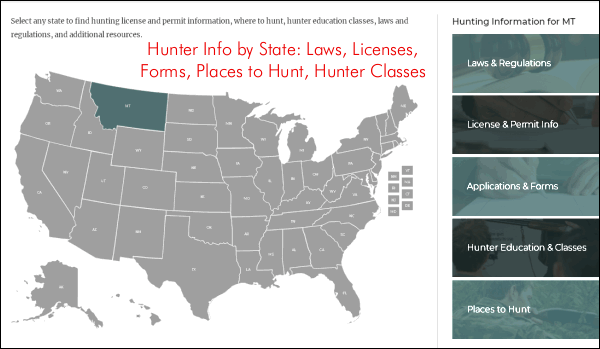
There’s a great online resource for hunters that will help you find game locations in your state and ensure you have all the proper permits and game tags. WheretoHunt.org features an interactive map of the country. For all 50 states, the NSSF has compiled information about hunting license and permits, where to hunt, hunter education classes, laws and regulations and more. For each state you’ll also find a link for required applications and license forms.
Thanksgiving is Thursday, November 27th this year. Looking for culinary inspiration for your holiday gatherings? The NRA Blog offers three special (and delicious) Wild Game Recipes for your family feasts:
Honey Mustard Planked Wild Turkey Breast
Mushroom-Stuffed Wild Boar Roast with Black Truffle Sauce
BBQ Brined Pigeon
These recipes come from some of the country’s best chefs, and they all seem mouth-watering. You’ll find a full list of ingredients plus step-by-step cooking tips.
One of the many advantages to hunting is the assortment of game you can gather that lasts for an extended period of time. Just because it’s Thanksgiving doesn’t mean you have to stick with a whole turkey from the store and a ham hock.
We have three unique spins on wild game recipes that will suit your dining table perfectly. Even if you’re one of those hunters who enjoys a quick hunt the morning of Thanksgiving, these recipes will make your holiday more delicious than ever. — NRABlog.com
And for those folks who hope to harvest their own gobbler for the Thanksgiving holiday, here is a special NRA Turkey target that can help you hone your turkey-hunting skills.
GetZone.com offers a turkey hunting video with expert guidance on Turkey hunting, specifically stalking and shot placement: “When it comes to shotgun hunting, you don’t want to get BBs in the meat, so the most common (and lethal) shot with a shotgun is a headshot.”
This photo is from GetZone.com, a website that provides information on shooting and hunting. CLICK HERE to watch a GetZone video on turkey hunting. Work Warning: When you click photo, a loud audio track may start immediately, so turn down the audio volume.


 Jim is a talented outdoor photographer who has compiled an impressive portfolio of wildlife and landscape photographs. For this Thanksgiving-eve edition of the Daily Bulletin we are featuring some of Jim’s favorite nature images. We hope readers enjoy them as much as shooters prize Borden’s Rimrock benchrest and Rimrock hunting actions.


 Borden Accuracy/Borden Rifles Success Story