Hunting season has started in many parts of the country. And today, Saturday, September 26, 2026, is National Hunting and Fishing Day. Every year, this event is held on the 4th Saturday of September. First recognized by President Nixon in 1972, this is now the 54th year the event has been celebrated across the USA. To help mark this day, we are offering six informative videos for hunters. These cover planning your hunt, selecting good optics, and optimizing your rifle.
This video and related article offer good basic advice for sighting-in a hunting rifle. There are a series of six points covered. Here’s Tip #1: “Find a safe place to shoot your rifle with a backstop. If possible, use a bench and a rock-solid shooting rest. Sighting-in is all about consistency, so the less human error you have, the better. For safety, be sure to also bring ear and eye protection.” READ FULL ARTICLE on NRAWomen.com.
Prepare For Your Hunt — Get Fit and Practice Positions
As part of the NRA’s Tips & Tactics video series, Kristy Titus explains how to prepare for a hunt. Titus, co-host of the Team Elk TV show has hunted around the globe. She grew up in the outdoors, running pack mules in Oregon with her father. In this video, Kristy discusses fitness training and demonstrates field positions that can be employed during a hunt.
Kristy explains: “Hunting can lead you into some steep, rough country. It’s really important that you train both your body and your mind to handle the elements and the rigors of hunting So, if you plan on going on a mountain hunt, get out and train your body. Train with your firearm. Get off the bench and have some fun with this. Do some positional shooting or, if you want to add a stress dynamic… have someone put you under a time parameter.”
Elk Hunting — Great North American Adventures
A North American elk hunt represents the adventure of a lifetime for many. Before heading out on an elk hunt, you want to maximize your chances of success by having the right equipment, and by doing your homework before the hunt. This National Shooting Sport Foundation (NSSF) video offers good advice on planning your first elk hunt.
Success! Elk hunt photo from West Canyon Ranch, a private hunting ranch in Utah.
Photo courtesy Rocky Mountain Elk Foundation (RMEF).
Deer Hunting in Norway’s Fjord Mountains
Here’s a video with some truly stunning scenery. Watching this video is like taking a virtual vacation to Norway, where you can explore the scenic mountains in the Fjord region. Forum member Kenneth Skorpen (aka “Sal”) has created a cool video of a deer-hunting trip he took in Norway. He didn’t bag a buck on this trip, but the walk in the Fjordland mountains took Kenneth through some spectacular scenery. (At the 11:25 time mark you’ll see an amazing sunset over the Fjord.)
Kenneth did encounter a doe that had fallen down the mountain, and apparently broken its neck (14:35 time mark). The terrain is very steep, and Kenneth observed that: “I feel fortunate to be able to do this, but I also feel very tired in my legs. Did you know that the hares around here have shorter left legs due to the steep hills?”
Load Development for .308 Win Hunting Rifle
In this video, F-Class ace Keith Glasscock shows load development with a .308 Winchester hunting rifle. Here Keith uses a large X-type sandbag for a front support. He is shooting a Remington 700 bolt-action rifle, with Barnes TSX solid copper bullets, PPU Brass, Federal 210m primers, and AR Comp powder. Keith said the Barnes bullets were excellent — he commented that these bullets were “match quality in terms of precision”. Keith achieved some very small three-shot groups with AR Comp and the TSX projectiles. Keith did note that point-of-impact shifted up significantly with increases in charge weight (see 6:20-7:10). With thinner-contour hunting barrels, this is not unexpected. But POI change should be observed carefully during load development, as you may need to adjust your zero after completing testing.
Tomorrow, September 26, 2026, is National Hunting and Fishing Day. Hunting season is here — and we know many of our readers will soon head to the woods in pursuit of deer, elk, or other game. To make a good shot, it’s wise to rest your rifle when possible. In this video, methods for stabilizing a rifle in the field are demonstrated by Forum member Thomas Haugland, who hails from Norway. Thomas focuses on practical field shooting skills for hunters. Thomas (aka ‘Roe’ on Forum and Sierra645 on YouTube) shows how to verify his zeros from bipod and then he demonstrates improvised field rests from the prone, kneeling, and sitting positions.
Thomas explains: “In this video I focus on basic marksmanship techniques and making ready for this year’s hunt. As a last check before my hunting season, I got to verify everything for one last time. My trajectory is verified again, the practical precision of the rifle is verified. I also practice making do with the best [improvised] rest possible when an opportunity presents itself. After getting knocked in the face by a .338 Lapua Magnum rifle during a previous filming session, I had to go back to basics to stop [flinching]. I include some details from bipod shooting that hopefully some hunters will find useful. Fingers crossed for this years season, good luck!”
How to Stalk Game — Tips from Thomas
If you liked that video, here is another valuable video from Thomas. In this “How to Approach Deer” video, Thomas explains the basics of a successful stalk. If you are headed into deer country this fall, definitely watch this video.
Resting a Hunting Rifle on Backpack
Here’s a great practical tip that can help you make that perfect shot. Thomas shows the best way to use a conventional backpack to provide a steady support for your hunting rifle. He also explains how to correctly deal with parallax in your scope.
This Saturday, September 26, 2025, is National Hunting and Fishing Day.
There are over 9.2 million hunters in the United States. The fees paid by hunters are essential to support conservation efforts and to protect/maintain habitats.
These infographics explain the vital role that American hunters play in protecting wild species in North America. Currently 60% of state Fish & Wildlife Agency funding comes from excise taxes and licensee fees paid by hunters and anglers. The system has provided billions of dollars for conservation over the past nine decades. Since the late 1930s, hunters, target shooters and the firearms industry have been the nation’s largest contributors to conservation, paying for programs that benefit America’s wildlife.
The Pittman-Robertson Act generates $700 million annually, which is distributed by the U.S. Fish and Wildlife Service to state fish and game agencies across America.
This coming Saturday, September 26th, is National Hunting and Fishing Day, held each year on the fourth Saturday of September. To help the avid hunters among our readers, here are Twenty Tips that can help ensure a safe and successful hunt. These tips have been compiled from our AccurateShooter Hunting Forum, with help from Hunting Editor Colton Reid (who has already been out hunting this month). Some items are preparatory — such as working with maps, sighting in the rifle, and improving physical fitness. We also talk about equipment — having the right gear, from proper boots to a GPS for multi-day hunts.
Of course there are entire volumes written on hunting, but these 20 Tips can benefit all hunters. Follow these suggestions and you should have a safer hunting experience with greater likelihood of success. If you liked these pointers, you’ll find two dozen more helpful hints on the NSSF Website.
Preparations Before The Hunt
1. Map Your Hunt and Notify Others — Before your hunt, make a plan and notify friends and family members about WHERE you are going and your intended return date and time. Print out a Google Satellite map and locate landmarks and trailheads. Mark where you plan to park your vehicle and give a copy of this map to friend and/or family members. A hunter may injure himself by falling off a rock, or tumbling in a creek-bed. After that kind of injury the hunter may be confused or unable to walk. If you get stranded in the wilderness, you want trusted persons to know where you are. So, before you leave on a trip, provide a map to a friend or family member. Show them where you will leave your vehicle, and where you expect to be every day of your hunting adventure.
2. Licenses and Permits — Make sure you have a valid hunting licenses and all the necessary tags. Begin this process with ample time before your intended hunt(s). The NSSF adds: “If you are crossing state or national borders, find out about any special considerations you must take care of. Border crossings can mean knowing about firearm transport laws or Chronic Wasting Disease-related regulations.”
3. Work on Your Fitness — On a multi-day hunt you may be trekking many miles. You need to be in good shape. If you are out of shape you may be putting yourself in a precarious situation, particularly if you underestimate the terrain difficulty. As the NSSF says: “Not being able to handle the conditions lessens your chances of success, can turn a great experience into an agonizing one and can endanger your health.”
4. Do Your Homework — Study the area you will be hunting. Talk to other hunters. Look at satellite photos. Get a real sense of the walking and terrain challenges. For a multi-day hunt, MAKE a PLAN. The NSSF states: “Eliminate surprises. Learn as much about where you will be staying, the area you will be hunting, what the weather might be like and what you need to bring[.]”
5. Rifle and Ammo — Make sure your rifle is sighted-in and your ammo is tested. Sight-in your rifle with the ammo you plan to use on your hunt. CLICK HERE for 4-Shot Sight-in Method. After sighting-in from the bench, confirm your zero by shooting from typical hunting positions (kneeling and with forearm supported on a rock or post).
6. Shooting Positions — Practice the shooting positions you will use in the field. Practice sitting, kneeling, and prone positions. You should also practice with shooting sticks, using your day pack as a rest, and with a bipod. Try to have a rock-steady rest before taking your shot.
7. Back-Up Irons — If possible, select a rifle with back-up iron sights. While modern scopes are very durable, they can and do fail (glass can crack). If you’ve invested a lot of time and money in your hunt, back-up iron sights can keep you in the game even if your riflescope fails.
8. Communications and GPS — Bring a GPS if you are in a wilderness area far from civilization. It’s a good idea to bring a cell phone, but you may not have coverage if you’re quite a distance from populated areas. A smart-phone also doubles as a digital camera to record your trophies. For navigation and safety, consider getting Garmin inReach Explorer+. This high-tech handheld unit features interactive SOS, connecting you to the GEOS 24/7 search-and-rescue monitoring center. They also allow you to send and receive text messages, no matter where you are, via advanced inReach satellite technology. Yes you can communicate even if you are miles from the nearest cell tower.
9. Select Good Gear — Make sure you have GOOD BOOTS that are comfortable — you’ll spend a lot of time on your feet. You may want a pack with harness for your rifle so you have both hands free. On a multi-day trip, make sure you can carry enough water, and that you will stay warm enough at night. Good practices for backpacking apply to multi-day hunts.
10. Make a Gear Checklist — Create a complete checklist of the gear and supplies you need. That includes arms, ammunition, rangefinder, binoculars, proper clothing (including spare clothes), hunting accessories, sleeping gear (on multi-day hunts), toiletries, medications. Don’t forget a good first aid kit — lots of bad things can happen during any wilderness trip. You can cut a hand, break an ankle or worse.
During The Hunt
11. Have a Plan — know where you plan to go and when. Try to be where you want in the early morning and early evening hours when deer are likely most active.
12. Take Your Time — If you spot a deer and get too excited and don’t take your time you may spook him. Go slow and glass. If possible, wait for the animals to bed down and relax. Then work out the best way to approach your prey. Remember, “You get so few opportunities, don’t screw it up!”
13. Glass More, Walk Less — Let your eyes do the walking — get good binoculars and use them. With their heightened senses of smell and hearing, deer/elk are able to spot you way better than you can spot them. If you are walking around a lot, chances are you are getting spotted by your prey.
14. Riflescopes Are Not Binoculars — Never use a riflescope as a substitute for binoculars. The temptation to do so is real, but when one does this, one is by definition pointing the muzzle of the gun at unknown targets. We like binoculars with built-in rangefinders. When glassing at long range, try supporting your binoculars on your pack.
15. Be Sure of Your Target before Shooting — Every year during whitetail season, farmers are forced to spray-paint their cattle or risk having them “harvested” by hunters who don’t bother confirming the species in their sights. Hunters with “buck fever” can make mistakes. When in doubt, don’t shoot.
16. Know When to Unload — When finished hunting, unload your firearm before returning to camp. You should also unload your gun before attempting to climb a steep bank or travel across slippery ground.
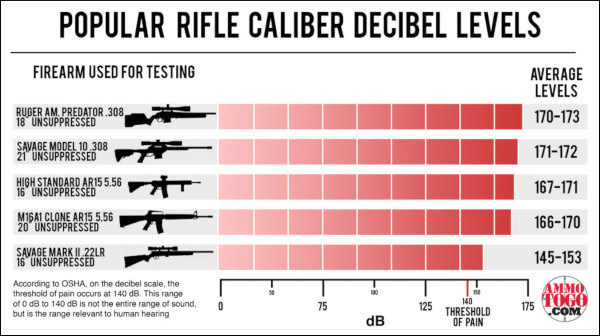
17. Bring Hearing Protection — While pursuing and stalking your prey you’ll want full sensory use of your ears. But when you’re finally ready to take the shot, slip in hearing protection. A shot from a large-caliber hunting rifle can exceed 170 decibels. Unprotected exposure to noise from a SINGLE 170+ dB shot can cause permanent hearing damage. (Source: ASHA.org). If you make a follow-up shot, you double that noise hazard. Therefore a hunter with a non-suppressed rifle should have hearing protection available.
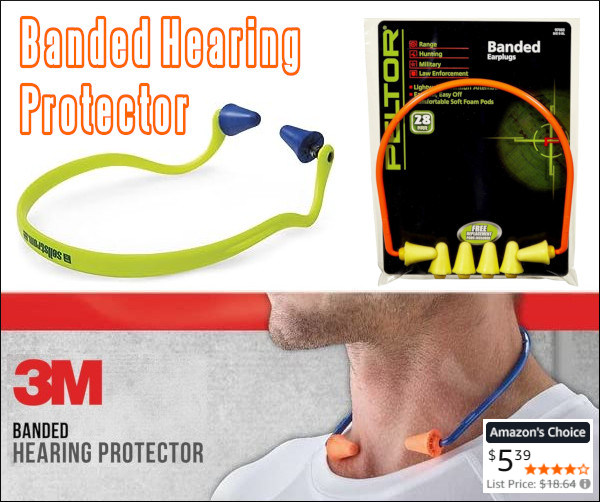
You can keep a pair of easy-to-use quick-insert ear plugs on a cord around your neck. Or, get a lightweight neck band with earbuds, such as the Sellstrom Band, Peltor Band, or 3M Safety Band, all with a good 25 dB or better Noise Reduction Rating. You can keep these lightweight bands around your neck for quick deployment before you shoot.
“Once a hunter is successful, the REAL work begins.” — Colton Reid
18. Harvesting the Animal — When dressing your animal, be careful with the meat. You’ll want very sharp knives. Some hunters prefer knives with replaceable, razor-sharp blades. Don’t rush the task. Make sure you don’t get moisture or dirt on meat. The three spoilers of meat are heat, moisture, and dirt.
19. Pace Yourself When Packing Out — If you DO succeed, and bring down a big buck, will you be able to dress the animal and carry out the meat? Always be prepared to hike out with extra weight. If you are successful, make sure not to waste the meat you worked so hard for. Choose a pack that can help you carry a heavy load. Remember, this is not an insignificant challenge — you may be carrying 60 to 100 extra pounds in addition to your other gear. Again, take your time. Rest as needed. Don’t hurt yourself.
20. Remember to Enjoy the Experience — Our Hunting Editor, Colton Reid, offers this sage advice to all hunters, but particularly to novices: “Have fun, and appreciate your hunt, whether you bag a buck or not. It is a privilege to experience the wilderness and to get away from the city. Enjoy it while you’re out there. And keep your spirits up. You may get tired, but remember that ‘comes with the territory’. At the end of the day, yes you may be exhausted. And you may want to quit and go home. But stay positive, stay focused. Be patient, the experience is worth it.”
CLICK HERE for Hunter Training/Mentoring Programs State-by-State.
Visit WhereToHunt.org
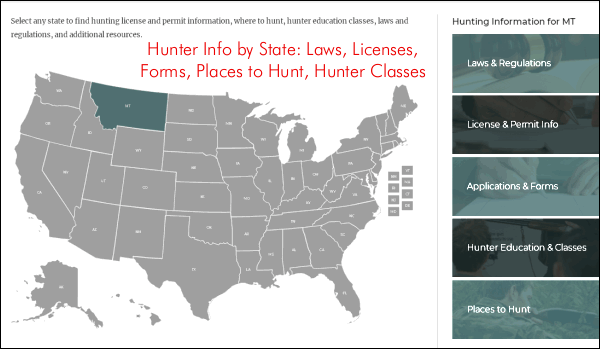
There’s a great online resource for hunters that will help you find game locations in your state and ensure you have all the proper permits and game tags. WheretoHunt.org features an interactive map of the country. For all 50 states, the NSSF has compiled information about hunting license and permits, where to hunt, hunter education classes, laws and regulations and more. For each state you’ll also find a link for required applications and license forms.
Finnish gun manufacturer SAKO Ltd. crafted the impressive S20 series of “hybrid” rifles. These are offered in a Hunter model and a Precision model. Both feature an internal aluminum chassis, adjustable trigger, and integral Picatinny rail on top. Users can change fore-ends and rear sections to suit different disciplines. Use the rifle for a PRS match one weekend and hunt with it the next.
SAKO states: “The user will be able to switch between the stocks and fore-ends quickly and easily and can change the rifle from a tactical to a hunting rifle or vice versa in a matter of minutes with no need to re-zero optics after assembly. The stocks can be taken down easily by loosening up two screws between the rear stock and fore-end.” Both 20″ and 24″ barrel versions have been offered, with a wide variety of chamberings/calibers: .243 Win, 6.5 Creedmoor, 6.5 PRC, .270 Win, 7mm Rem Mag, .308 Win, .30-06 Springfield, .300 Win Mag.
The SAKO S20’s stainless steel action features a 3-lug, push-feed bolt with plunger ejection. The Cerakoted receiver of the S20 features a machined Picatinny rail for easy scope mounting. The trigger of the S20 is adjustable for pull weight and for position within the trigger guard (± 7mm) to ensure good length of pull for the shooter. The muzzle of the rifle is 5/8×24 threaded, allowing for the addition of muzzle devices such as suppressors or brakes (some models come with factory brakes installed).
The Picatinny rail is machined directly on the receiver. The S20 action features a 3-lug bolt with 60° bolt throw. SAKO says the “high locking-lug surface area increases both safety and performance.” The full length of the action mates with a matching V-bed in the aluminum chassis. S20 factory accessories include monopod, muzzle brake, barricade stop and a thumb rest add-on.
SAKO sells the S20 in a variety of configurations. You can buy a single stock system or with both stocks. The Hunter model is offered with a variety of camouflage finishes. The SAKO website lists six different camo options for the S20 Hunter model: First Lite Fusion, Roughtech Green, Roughtech Desert, Hunter Camo, Polyfade Gray, and Polyfade Gray/Green.
PHOTO: SAKO Hunter Model S20s are available with Camouflage stocks in multiple colors and patterns.
The SAKO S20 Precision model has a more vertical grip, wider fore-end (with rail mount), and a flat section in the buttstock that enhances bag riding. This can be used for tactical-style competition as well as varminting and hunting. M-Lok system allows mounting of bipods and other accessories.
SAKO S20 Review in GunsAmerica Digest
A few years ago GunsAmerica Digest published a very thorough SAKO S20 Hybrid field test and review. That article explained how to swap stocks and fore-ends and how to adjust the trigger. The reviewer, Jeff Cramblit, noted the smooth function of the action and gave high praise to the modular stock system:
“Sako was right all along, the S20 is a ‘Hybrid’ rifle. My favorite configuration after all the testing … is the Hunter buttstock and the Precision forearm. This gives me the ability to use all my rail mounted accessories and I like how the thumbhole stock feels even better than the Precision grip. It [was] 11 pounds 5.5 ounces when outfitted with the Leupold Mark 5HD 3.6-18x and the Hatch bipod[.]
The Sako S20 is an impressive rifle. It carries and balances well, shoots fantastic, has a great trigger, smooth action, reliable magazines, and the fact that you can have it your way is an added bonus.”
SAKO S20 Proves Very Effective for Hunting
The SAKO S20 is definitely a good hunting rifle. SAKO has offered the S20 with many popular hunting chamberings including: .243 Win, 6.5 CM, 6.5 PRC, .270 Win, 7mm Rem Magnum, .308 Win, .30-06 Springfield, .300 Win Magnum. The photo above was taken by a hunter in Europe who purchased the S20. He used it successfully to nail a wild hog.
SAKO S20 Specifications
Calibers/Chamberings: .243 Win, 6.5 CM, 6.5 PRC, .270 Win, 7mm Rem Magnum, .308 Win, .30-06 Springfield, .300 Win Magnum. Receiver: Grey Cerakoted Stainless Steel with integral scope bases Barrel: 20″ or 24″, Grey Cerakote, Cold Hammer-Forged (some models fluted); muzzle 5/8×24 threaded Trigger: Adjustable 2 to 4 pounds Stock: Chassis mounted Hunter or Precision model, adjustable cheek piece, adjustable length of pull Magazine Capacity: 5- or 10-rounds for standard cartridges, 3- or 7-rounds for magnum cartridges
Take-Down Stock with Modular Front and Rear Sections
The takedown stock of the SAKO S20 allows for great modularity, so that S20 rifles can be configured according to owner preferences with different rear stocks and fore-ends. The S20’s aluminum chassis is covered by a strong but comfortable outer shell material that SAKO calls H.I.R. – High Impact Resistant. The same H.I.R. material is used on car dashboards. The outer shell is currently offered in two styles — a thumbhole hunter and a more tactical style with straight toe and conventional grip.
Full Adjustability — Even Trigger Position
Adjustable ergonomics are a big part of the S20 design. The multi-adjustable trigger (available in both single-stage and two-stage variants) can be moved backwards or forwards to better fit different hand sizes. An adjustable cheek piece and LOP spacers help provide a proper fit.
M-Lok System Allows Easy Mounting of Accessories
The new SAKO S20 can accept a wide range of accessories, attached via aluminum M-LOK placements. SAKO-made accessories include Rear Mono-Pod, Barricade Stop, and Thumbrest. And yes SAKO threads the muzzles 5/8×24 for use with brakes and suppressors. This video shows how accessories mount:
Field Sports Unboxing Video of SAKO S20 with Hunter Stock
This S20 “first look” video was created by the UK Fieldsports channel. The reviewer was impressed with the S20’s interchangeable stock system: “The modularity allows the rifle to be configured to the shooter’s preferences with different rear stocks and fore-ends. At launch, SAKO introduced both the tactical precision stock and the ergonomic hunting stock, the latter being an improved version of a traditional thumbhole stock more like a pistol grip. Switching between rear stocks is fast and easy, virtually changing the rifle from a target rifle to a hunting rifle, or vice versa, with the correct grip, in a matter of minutes.”
The Fieldsports review added: “Overall, the adjustable ergonomics are a big part of the S20 design. The multi-adjustable trigger can be moved backwards or forwards to better fit different hand sizes and to achieve the optimal trigger position, and its weight and length of pull can be adjusted. The quick-adjustable cheek piece and spacer adjustable length of pull help to achieve the best possible shooting posture. Combined with a wide selection of M-LOK and QD compatible accessory options, S20 adapts to all body sizes and shooting situations.”
Field Test of SAKO S20 — Sub-MOA Accuracy with .300 Win Mag
In this test, using factory ammunition, the shooter achieved sub-MOA accuracy with a SAKO S20 Precision chambered in .300 Win Mag. The very first three shots out of the gun went into about 3/4″ with two shots touching (SEE 04:25 – 4:50 time-marks). The tester offered this rifle description: “Boasting a cold hammer-forged, fluted stainless steel barrel with a recessed crown and a durable Cerakote® finish, this precision rifle ensures impeccable accuracy in virtually any environment. The sculpted stock features an adjustable cheek pad and recoil pad for a customizable fit[.] An M-Lok monopod is easily fitted for added stability in the rear, while the adjustable trigger ensures a consistent, user-specific pull[.] The receiver is mounted to a full-length bedding for improved strength and durability. Plus, the oversized bolt handle ensures intuitive, snag-free manipulation, while a low throw profile easily clears your scope.”
Hunting season is starting soon in most states. For many, Fall hunting season involves liberating a rifle that sits in a safe most of the year, grabbing a box of cartridges, and heading to the wilds. But this “once a year thing” carries with it potential risks.
It is all to easy to grab some rounds that may look right, but which are, in fact, a slightly different chambering. Likewise it is possible some hunting rounds got put in the wrong box after last year’s hunting trip. Be very careful when you get ready for a hunting trip — check the headstamp, cartridge dimensions, and bullet diameter of all your rounds. If you make an ammo selection mistake, the consequences can be disasterous, as this story reveals.
The .223 WSSM and 6mmBR Disaster Report by Dr. Jim Clary
Under most circumstances, shooters don’t have to worry about chambering the wrong cartridge into the wrong rifle. After all, the cartridges are well marked and we all know which rifle we are shooting on any given day. In many cases, incorrect cartridges cannot be chambered — larger cases will not fit in smaller chambers, for example. No problem! That being said, I can tell you that even an experienced, careful and normally safe shooter can make a mistake.
The following is an account of just such a mistake that could have resulted in death or dismemberment. Fortunately, the shooter was not hurt, but the rifle was completely destroyed.
Last year, a friend purchased a Savage Precision right bolt, left port, single shot bolt action in 6mmBR Norma. It was an incredible prairie dog gun and he spent the summer burning powder and busting dogs. In October, he purchased a stainless steel Browning A-Bolt Varmint in .223 WSSM. The weather in the upper Midwest turned sour by the time he got the brass tuned up and he only got to fire it a few times before he was “socked in” for the winter. Thus, he spent his evenings loading ammo for the spring thaw.
During a break in the weather, he grabbed both rifles and a couple of bags of .223 WSSM and 6mmBR cartridges and headed to the range to check out his new loads. In case you are not familiar, the 6mmBR is smaller in diameter and a mite shorter than the .223 WSSM. Because of this, it will chamber in a .223 WSSM, but the .243 caliber (6mm) bullet is too big for the .22 caliber bore. That is what happened to my friend.
The rest is history — when he squeezed the trigger, all hell broke loose. The entire bottom of the rifle blew out, including the magazine assembly. The explosion actually cut the stock into two pieces. However, the bolt held and amazing as it may seem, the .243 bullet was “swaged” right out of the .223 barrel.
6mmBR (left) and .223 WSSM (right) cartridges above the remains of Browning A-Bolt rifle.
One Small Mistake Is All It Takes
Now, realize that my friend has been shooting all manner of firearms, safely, for over half a century. He is meticulous, thorough and conscientious in his approach to reloading and shooting. However, he made one mistake. He put some lose 6BR cartridges in a baggie as he packed up from a prairie dog hunt last summer, without noticing that the baggie was marked .223 WSSM in black marker. Then, when the break in his winter weather came, he grabbed the bag, believing it to be the WSSM cartridges and didn’t check the head stamp.
Couldn’t happen to you? How many times have we emptied our pockets of cartridges and dropped them into a plastic container on the shooting bench? How many times have we set down to a marathon reloading session, loading several calibers in a row? How many times have we put the wrong bullets, cases or primers into the incorrect container? My point is that even the safest of us can make a mistake. So, look at the picture above and take a bit more time when you reload your ammunition at home or chamber a round in the field. It might save your life.
Click Map to launch interactive webpage with info for all 50 states.
Going hunting soon? Need to find out about hunting licenses, deer tags, local regulations, and the best hunting areas? Then visit WheretoHunt.org. This website has an interactive map of the country. Simply click on a state to find the info you need.
For all 50 states, the NSSF provides information about hunting licenses and permits, where to hunt, hunter education classes, laws and regulations and more. For each state you’ll also find a link for required applications and license forms. Have a safe and productive hunt this year.
Hunting season is coming soon. For hunters that means many hours may be spent searching for animals through spotting scopes and binoculars — “glassing” for game. And when the hunter does find a good buck or doe, he’ll need to know the animal’s precise distance, so that demands a good laser rangefinder. Being carried in the field, the scopes on hunting rifles need to be tough and durable, and every hunting scope should have excellent low-light performance. And when the hunter finally takes his shot, his scope better be properly zeroed. Today’s Saturday showcase spotlights Hunting Optics. We offer seven good videos that help you select the right riflescope, spotting scope, rangefinder, and binoculars for your next hunt.
Optics Selections for Mountain Hunts
Here’s a good video by an avid hunter who treks in remote, mountainous zones. The host has learned what works… and what’s worth the weight to carry: “I’ve found that the combination of 10×42 binoculars and a 27–60x80mm spotting scope is the sweet spot for mountain hunting. This pairing balances weight with reach, allowing me to keep moving but also reach out and see well-hidden animals. In some cases, I will make use of an 18×56 binocular, but this is reserved for non-backpack hunts. With 25 years of mountain hunting experience, I can whole-heartedly recommend my preferred binocular pair as a fantastic and versatile set-up for northern mountain hunts at the very least.”
Ultimate Spotter Test — 19 Spotting Scopes Reviewed
The producers of this remarkable 19-product spotting scope comparison state: “If you are looking at choosing the best spotting scope for hunting… you are in the right place! We tested these 19 spotting scopes to find the best compact spotting scope, best 65mm spotting scope, and best 85mm spotting scope out there. We also wanted to find the best values on the market, and I think we definitely did that. While we certainly couldn’t test them ALL, we were able to put together this incredible lineup of some of the best spotting scopes out there to help you find what is going to work for your specific needs.”
First Focal Plane vs. Second Focal Plane Scopes
For the last century, Second Focal Plane (SFP) scopes have been most common on hunting rifles. Now there are an increasing number of First Focal Plane (FFP) optics favored by hunters. The main reason is that the reticle mark values (in Mils or MOA) are constant relative to the target size at all magnification levels. That is handy for hold-offs and hold-overs. On the other hand, a SFP scope maintains a constant reticle size and line thickness at all zoom values. For most hunting shots, taken inside 300 yards, that really should be fine. Many hunters feel they can spot their prey more easily without a busy reticle that obscures small details at higher magnification. This video explains the pros and cons of both reticle types. The final decision is up to you — much will depend on the terrain you hunt and the distances you shoot.
The Complete Optics Selection for For Deer Hunting
In this video, Vortex optics techs explain the optics package deer hunters will want to take into the field. Along with a good medium-power zoom riflescope, you’ll want binoculars and (probably) a spotting scope. You’ll also want a Laser Rangefinder (LRF) or laser-equipped binoculars. As the team points out, the LRF is not just to range your prey right before you take a shot. A top-quality LRF can range a reflective object as far as 1500 yards away. That helps you decide whether you want to hike a mile to reach that buck you see way out on the next ridge.
MOA vs. MIL — What You Need to Know
These days, scope manufacturers offer a wide selection of both MIL (Milliradian) and MOA (Minute-of-Angle) based optics. We do think that MOA is still predominant in the lighter-weight, lower-cost (sub-$500) scopes marketed for hunters. There are pros and cons for both angular measurement systems. One MIL is 3.6″ at 100 yards, while one MOA is 1.047″ at 100 yards. If you grew up thinking in inches, a 1/4-MOA click-value hunting scope might work best. If you shoot PRS or have other MIL scopes you may prefer a MIL-value optic for your hunting rifle. Both choices will do the job.
Comparison of Eight Laser Rangefinders
The Backfire team purchased eight rangefinders and tested them in the field. Most of the products are under $500. This is a good review if you are looking for a compact LRF at a moderate price. Looking at performance for the price, for the hunting market, the reviewers favored the Leupold RX-1600 and the waterproof Vortex Ranger 1800. COMMENTARY: If you can afford it, we recommend that serious hunters consider top-end laser rangefinder-equipped binoculars such as the ZEISS Victory RF and Leica Geovid.
How to Zero Your Hunting Rifle Efficiently
Last but not least, here’s a great video from Vortex that shows you how to quickly and efficiently sight-in and zero your hunting rifle before heading out into the field. This video explains a simple procedure that lets you get a solid zero in just three shots. Of course you probably want to fire a few more rounds to confirm your zero before you head off to your hunting grounds, but this will let you get on-target with a minimum amount of time and ammo expended. This helpful video has over 3 million views on YouTube!
Fouling Shots and Cold Bore Condition
If you recently cleaned your rifle, you may want to fire two or three fouling shots before you start this procedure. But keep in mind that you want to duplicate the typical cold bore conditions that you’ll experience during the hunt. If you set your zero after three fouling shots, then make sure the bore is in a similar condition when you actually go out hunting.
September 26, 2026 is National Hunting & Fishing Day. The annual celebration takes place on the the fourth Saturday of September every year. National, regional, state and local organizations will run thousands of “open house” hunting- and fishing-related events around the country. Events will include Fishing Derbys, Hunting Expos, Wing-shooting tournaments, and much more.
Hunting Safety Checklist
A good hunt begins with preparation. And during the hunt, safety is a key priority. To help hunters, the National Shooting Sports Foundation (NSSF) has created a Safety Checklist for hunters. This Hunting Safety Checklist, produced as part of the NSSF’s “Hunt S.A.F.E.” campaign, helps hunters follow good, safe practices in the field and at home.
Hunting season is coming soon around the country. If you want to get hunting tips from experts, here is a great audio “infotainment” resource. Leupold offers podcasts, 40-75 minutes in length, on a variety of topics of interest to hunters and precision shooters. A podcast is like a radio show that’s available 24/7, at your convenience. When you want to “tune in”, via your home computer or mobile devices, just visit the Leupold Podcast Page.
Oregon-based optics-maker Leupold & Stevens (“Leupold) offers the “Core Insider” podcast series. These podcasts deliver hunting advice and recount successful hunting trips — such as Caribou hunting in Alaska. Other Leupold podcasts provide optics info, industry intel, and tech tips. Leupold’s Core Insider podcasts can also be accessed directly from Leupold.com. From the Leupold Podcast Home Page, you can stream the podcasts live or download for later listening.
You can also stream these podcasts via iTunes and Spotify.
The Leupold Core Insider Podcasts cover a wide variety of shooting and hunting topics. One early episode features Leupold team members Kyle Lamb and Buck Doyle discussing long-range shooting, while recent Episode 55 explains how Binoculars and Rangefinders function. There are now 96 Leupold Podcasts available online for FREE.


 Hunting season has started in many parts of the country. And today, Saturday, September 26, 2026, is National Hunting and Fishing Day. Every year, this event is held on the 4th Saturday of September. First recognized by President Nixon in 1972, this is now the 54th year the event has been celebrated across the USA. To help mark this day, we are offering six informative videos for hunters. These cover planning your hunt, selecting good optics, and optimizing your rifle.


 Here’s a video with some truly stunning scenery. Watching this video is like taking a virtual vacation to Norway, where you can explore the scenic mountains in the Fjord region. Forum member Kenneth Skorpen (aka “Sal”) has created a cool video of a deer-hunting trip he took in Norway. He didn’t bag a buck on this trip, but the walk in the Fjordland mountains took Kenneth through some spectacular scenery. (At the 11:25 time mark you’ll see an amazing sunset over the Fjord.)

 Tomorrow, September 26, 2026, is National Hunting and Fishing Day. Hunting season is here — and we know many of our readers will soon head to the woods in pursuit of deer, elk, or other game. To make a good shot, it’s wise to rest your rifle when possible. In this video, methods for stabilizing a rifle in the field are demonstrated by Forum member Thomas Haugland, who hails from Norway. Thomas focuses on practical field shooting skills for hunters. Thomas (aka ‘Roe’ on Forum and





 Hunting season is starting soon in most states. For many, Fall hunting season involves liberating a rifle that sits in a safe most of the year, grabbing a box of cartridges, and heading to the wilds. But this “once a year thing” carries with it potential risks.