The Three Amigos in New Mexico (L to R): Kelly McMillan, Paul Phillips, Derek Rodgers.
Three years ago nearly to the day, Kelly McMillan, Derek Rogers, and Paul Phillips enjoyed the fellowship and satisfaction of a successful New Mexico Antelope hunt. But sadly, Kelly passed away on June 1, 2021 from rapid, unexpected medical issues. Yesterday, October 7th, 2021, Paul Phillips posted: “Three years ago today. This hunt with Kelly McMillan and Derek Rodgers was a great memory. I miss Kelly.” Yes Paul, scores of us who counted Kelly as a friend and colleague miss him, and think of him often.
This isn’t your typical hunting story, because these weren’t your typical hunters. Derek Rodgers is the reigning F-TR World Champion, and past King of 2 Miles. Paul Phillips is the 2019 King of 2 Miles and a member of the Silver Medal-winning F-TR Team McMillan at the 2018 Nationals. The third hunter, Kelly McMillan, needs no introduction. The past owner of McMillan Fiberglass Stocks, Kelly was a leading figure in the gun industry for decades. He also supported many top rifle shooting teams. This story helps us remember Kelly and all he did for the shooting sports.
In October 2018, these three friends got together for a very successful hunt in New Mexico, Derek’s home turf. All three bagged an impressive Antelope, with Paul Phillips dropping the biggest buck of all. Derek made the longest shot, hitting his buck at an impressive 510 yards, verified by laser rangefinder.
Paul Phillips posted: “Our New Mexico Antelope hunt with Kelly McMillan and Derek Rodgers was a success. To hunt with these two icons was definitely on my bucket list. I shot my buck at 389 yards in an 18-mph wind through a barbed wire fence.” It was a big trophy buck, measuring 84 3/8 inches.
Derek nailed his Antelope at 510 yards with a .308 Win fitted with a suppressor. As dusk approached, despite blustery wind and rain, Kelly dropped the third Antelope with a great 230-yard shot from a broken tree crotch. Paul noted: “All three bucks had their own challenges and funny story. All three hunts required team work with stalking, communication.” The three hunting buddies all had top-quality rifles built with McMillan stocks of course.
For long-range hunting you need to have your drops absolutely “spot-on”. Paul posted: “When you do a 30-45 minute stalk… you need to have all your ballistics perfect or they get away. We were glad that we had a practice day before the hunt to confirm our zeros and verify our ballistics.”
Kelly noted: “Paul Phillips scored this nice 80″+ buck in New Mexico. It was Paul’s first antelope.” The .338 LM rifle featured a Stiller TAC338 action, Bartlein 20″ barrel, McMillan A5 Stock, and Nightforce ATACR scope. In the Facebook video, Paul talks about making the shot, directly into the wind.
Both of Kelly’s Amigos — his hunting partners — were profoundly saddened by his passing. They miss him, as do all of us who knew Kelly.
Derek Rodgers wrote of his friend and hunting partner: “It is difficult to tell you how deeply saddened I feel about the loss of Kelly. What started as a shooting relationship quickly became a close friendship so many years ago. It was a privilege to know Kelly on a personal level and I will never forget his generous, caring nature and the never-ending kindness he had for others. He will forever be missed.”
Paul Phillips posted: “I have no words to express how saddened I am … we lost an icon in the shooting industry. Kelly McMillan was not only a great friend but the most generous and giving man I knew in the industry. There is not enough space to write about everything he did for competitive shooters, military snipers, hunters, and shooting enthusiasts. You were one-of-a-kind Kelly and I will forever remember your friendship and how big an advocate you were for shooting sports. R.I.P. my friend.”
Hunting season is here. Time to organize your gear before heading to deer country. If you don’t have a quality, compact Laser Rangefinder, here’s a great deal. The 7x25mm SIG Sauer Kilo 2200 BDX Rangefinder is now on sale for under $350.00. This is an accurate LRF that ranges deer-sized targets at long distances quickly. The scan mode is fast and very effective. The unit is compact and light — a bonus for hunters.
This SIG LRF sold for over $500.00 when it was introduced. Now you can save 30%, with the Kilo 2200 BDX selling for just $346.99 at Amazon, with Free Shipping. Given its performance, that’s a steal. (With very similar performance, the SIG Kilo 2200 BDX is less than half the price of SIG’s Kilo 2400 BDX, $799.99 on Amazon.) We have tested a variety of LRFs from Bushnell, Leica, Leupold, Sig, Swarovski, and Zeiss. This SIG Kilo 2200 BDX will run with anything in the sub-$500 price range. If you are looking for a small LRF that can fit in a shirt pocket, this Kilo 2200 BDX is a good choice. Glass is good, controls are good, ranging capability is good. Light-Wave DSP Technology enables the Kilo 2200 BDX to range extremely fast. Scan mode refresh rate is an ultra-fast 4 times per second. The unit’s “smart” OLED Lumatic Display automatically runs bright in full sunlight, while dimming down to low levels at dusk and dawn.
And the BDX (Ballistic Data Xchange) capability is a big bonus if you have a compatible SIG Sauer BDX riflescope. This rangefinder can communicate with BDX scopes or phone Apps, providing ballistics solutions. Using Bluetooth, the built-in BDX system sends an illuminated holdover dot to any Bluetooth-enabled SIG Sauer BDX scope. Even with a conventional scope, the SIG Kilo 2200 BDX rangefinder will communicate with a free ballistics App on your mobile device.
SIG Kilo 2200 BDX Verified Buyer Reviews
Read the reviews on Amazon. 87% of verified buyers gave this SIG LRF Five Stars:
Five Stars: “I spent a lot of time agonizing over which rangefinder to purchase, and I’m glad I went with this one. I’ve easily ranged objects out to 1300 yards. Pairing it with the Sig Sauer BDX App and imputing some ballistic and wind data shows me MOA adjustments both in the App and directly in the rangefinder while I’m ranging.” (Review by A. Kirzner, June 2020)
Five Stars: “Amazingly fast and accurate readings. The fact that they pair with Bluetooth to the ballistics App on my phone makes long range shooting much easier.” (Review by Eric A., May 2019)
Five Stars: “Quick to acquire target, easy to use, red reticle works great in low light conditions.” (Review by Brian C., October 2019)
And here is a review of the previous model, the SIG Kilo 2000: “It’s small — palm-sized. If you’re a backcountry shooter and every ounce counts, you can wear this unit around your neck all day long. In my experience and opinion, the Sig Kilo 2000 is an amazing laser rangefinder at a very reasonable price. When it comes to the raw function of a laser rangefinder, to give accurate, repeatable distance measurements within your target range, the Sig Kilo 2000 blows away anything even remotely close to it in its price range.” (Review by Verified Customer, July 2016)
Editor’s Note: This story was first published many seasons ago. In the interceding years, equipment has evolved — actions, optics, front rests and so on. But this rifle remains very competitive in the 600-yard silhouette game, and it remains a wicked weapon for long-range varminting.
The 6-284 may well be the “ultimate” 6mm cartridge, if speed AND accuracy are considered. While it burns a lot more powder than a 6mmBR or 6 Dasher, it also delivers a lot more velocity. Our friend John Southwick, owner of this week’s featured 6-284, can push 107gr SMKs past 3400 fps — velocities no 6BR, 6BRA, or 6 Dasher can touch. He normally dials that back to 3200 fps or so, but that’s still well beyond the limit of a 6 Dasher even a 6mm Creedmoor. John’s gun is more than a speed demon of course — it’s a hyper-accurate match rifle that has claimed many Varmint Silhouette wins. At his club, when John and the Black Borden come out to play, everyone else is usually competing for second place.
Building the Borden Black Beauty
John tells us: “I chose the 6-284 mainly because it appeared in the winning equipment lists of 1K BR matches, and it was becoming very popular with long-range varminters. Skip Talbot had also used a 6-284 to set an IBS 1000-yard record (subsequently lowered in the last decade). Norma and Lapua offered quality 6.5-284 brass, so case-forming would be easy. I wanted a fairly light-recoiling rifle, and after much research I came to the conclusion that a high-BC 6mm bullet driven at 3200+ fps would meet my needs.
I was looking for a very high performance long-range target/bench rifle, primarily to use in 600-yard matches at my local club (Ojai Valley Gun Club), and possibly 1000-yard bench matches, plus occasional varmint hunting. I wanted to have a rifle that was built by a prominent gunsmith. I chose to work with Jim Borden of Borden Rifles for several reasons: his rifles had set world records, his reputation was excellent, and his rifles often showed up in the winning equipment lists of IBS and NBRSA sanctioned shoots. Also I had decided that I wanted a Nesika-actioned gun. I was impressed that Jim had designed one of the Nesika’s key features – Borden Bumps. Likewise, I liked the Bald Eagle front rest, and found out that Jim contributed to its design as well. This gave me confidence that Jim understood every element that goes into precision rifle performance.
Loading for Accuracy
My match load consists of Norma 6.5-284 brass, 51.0 grains of Alliant Reloder 22, Fed 210m primers, and Sierra moly-coated 107gr MKs, seated about .010″ into the lands. This runs about 3250 fps from the 28″ barrel. Case necks are turned to .0133″ wall thickness for a .270″ loaded neck diameter. I use a .268 or .269 bushing, and bump the shoulders back each time. I set the “bump” so that, with firing pin removed, I can just feel the case in the chamber when closing the bolt. My loaded rounds typically show no more than .0015″ runout on a NECO concentricity gauge. I credit the low run-out in large part to the custom inline seating die and shoulder-bump neck-bushing die Jim made for me.
How the 6-284 Shoots
The rifle has fulfilled all my expectations. It is a superbly precise and accurate rifle, as long as I do my part in steering the gun and feeding it consistent, quality ammo. I haven’t done a lot of 100-yard group shooting, just enough to test loads. Typically the rifle easily puts five shots into half-MOA or less at 600 yards. I’ve logged several 3-shot groups between 1.06″ and 2.2″ at 600 yards. I’ve been told that kind of accuracy would be competitive in a 600-yard BR match. But most importantly, I have confidence the gun will hit where I aim. Our Ojai club uses half-size silhouette targets. This gun’s ability to pick off the relatively small steel targets, even in some of the worst conditions imaginable, is nothing short of amazing. At times it seems I’m launching 107gr silhouette-seeking guided missiles.”
Borden 6mm-284 SPEC SHEET
Borden Long-Range Rifle, 16.5 lbs
Nesika ‘K’ Action, 1.70″ diam., Right Bolt, Left Port.
Hart 28″, 1:9″ twist, .920″ at muzzle, cryo’d with .272″ neck diam. and 1.5° throat.
McMillan MBR stock, Borden texture finished, pillar-bedded, with action also glued in.
Nightforce 12-42x NXS,
NP-R2 reticle, 20 MOA ramped scope base, Leupold Mark IV rings.
A Special Brand of Silhouette Shooting
John’s rifle is a purpose-built gun, optimized for one task — hitting little half-size silhouettes at very long distances, at a shooting venue that demands serious wind wizardry. At Ojai, even though matches commence early in the morning, it’s not unusual to have a 10 mph wind blowing left to right at the firing line, no wind at the mid-course flag, and a swirling variable wind at the targets. To make matters worse, the little critters sit on top a ramped berm. When the wind switches to 6 o’clock, it can rise right in front of the target, sending shots high. Despite the often-wicked conditions, John and his Black Borden have excelled at the varmint matches — he’s the “smart-money” bet to win on any given weekend.
John reports: “The rifle has really proven itself at the 600-yard silhouette match at my local club. We shoot ten targets per match, usually three “matches” or relays per day. Targets are half-size NRA Hunter Pistol metallic silhouettes: 1 Ram, 2 Turkeys, 3 Pigs, and 4 Chickens (note, these are larger than the mini-silhouettes in the above photo). The Ram counts one point, Turkey two points, Pig three points and the Chicken counts four points. The Chickens have a “hit zone” roughly .6 MOA at 600 yards–about 3.6″. Trust me, that can be challenging, particularly in shifting winds. Unlike conventional silhouette matches, we shoot F-class fashion from the ground, using bipods or pedestal rests. That’s easier than shooting off your hind legs of course, but our targets are much smaller than standard high-power silhouettes.”
The Black Borden was the rifle to beat at Ojai for many years. John held the record for the most “cleans” (no misses) for the event, and he was the annual Champion for many years, including five years in a row. One year he won the championship in the very last match. John noted: “Thankfully, the gun was humming and I made the right wind calls. I picked up enough points in the final shoot to win the series for the year.” Yes, John’s flat-shooting Borden 6-284 had done its job once again.
Long-Range Silhouette Match Strategy and Techniques
In competition, John says watching the conditions, and minimizing mental mistakes is key: “I keep things pretty basic. Our varmint silhouette matches allow 20 minutes for sighters and 10 shots on target (one per animal). We usually get in three “matches” or relays per event. I try to wait for a favorable condition, then take a few sighters and adjust the scope as needed. If the condition holds steady, I’ll try to run my targets before the wind changes.
At the Ojai range, it is vital to watch the wind flags and heed your spotters’ calls. I’ve seen the wind go from 7mph right to 10mph left from one target to the next. That’s nearly a foot and a half of horizontal change for my gun. If there is a major change, I will try to wait it out. If the shift is small, I may hold off a bit. Scope corrections are a last resort; while you’re dialing, the wind may switch again.”
Technical Report from Jim Borden, Gunsmith
We set up John’s 6-284 as we would for 1000-yard Light Gun competition. We’ve also built some of these rifles in 6MM BR for use in 600-yard competition. For John, we used a Borden/Nesika Model K 1.70″ diameter action as the beginning basis of the rifle. The timing and cocking-piece system for this rifle has the Borden improvements to improve firing pin energy and lock time. The action was pillar-bedded and glued into a McMillan Tooley MBR pattern stock. The stock blank was gel-coated and then epoxy-finished with a texture.
About the Muzzle Brake — We normally blend the brakes into the barrel to make the transition smooth and unseen. John preferred to have the brake larger than the barrel so that it could also be used on future barrels.
9-Twist Barrel — The barrel is a 1:9″-twist Hart HV pattern 28 7/8 inches long. Our 6×284 reamer has a .272″ neck diameter. It is throated with a tight cylindrical section followed by the 1 ½ degree throat. Chambering of the barrel was done utilizing our proven Benchrest chambering techniques. The method of chambering ensures that the body, neck and throat of the chamber align concentrically with the bore and grooves of the barrel. [Editor: With a 6BR or 6 Dasher, we’d definitely recommend an 8-twist barrel to shoot 105-107 grain match bullets. However, with the extra velocity of the 6-284, the 9-twist Hart worked great for John.]
NOTE: Borden Accuracy (BordenRifles.com) now produces its own excellent Borden Custom Actions, which have won National Championships and set World Records. Borden offers precision bolt action receivers for competition, ELR, hunting, varmint, PRS, and other shooting applications.
Situated in the Coastal Mountains behind Ventura, California, the Ojai Valley Gun Club is a beautiful place to shoot. And the Hwy 33 route up to the range offers stunning views.
As part of NRA Women TV, hunting guide Kristy Titus hosts a series of videos that explain important strategies and shooting skills for hunters. Titus, co-host of the Team Elk TV show, is a certified instructor who has hunted around the globe. She grew up in the outdoors, running pack mules in Oregon with her father. In these videos, Kristy discusses demonstrates field positions that can be employed during a hunt. She also explains preparation for a hunt, including fitness training.
Click each link below to watch other Kristy Titus Hunting Videos.
“When it comes to bolt-action rifle fit, there is no ‘one size fits all’,” says Titus. “When picking out your rifle [consider options] after the purchase to ensure you are as comfortable as possible.”
Hunting season has started in many parts of the country… or will very soon. Before you head out to the hunting fields, you may want to practice your shooting on specialty paper targets designed expressly for hunters. Here is a selection of game targets which can help you achieve success this hunting season.
Realistic Game Targets with Marked Vital Zones
Serious hunters may prefer to practice with photo-realistic game targets with animal profiles that look like the real thing. Champion offers realistic “X-Ray” game animal targets. These X-Ray targets display the bone structure and heart/lung position of game animals. These are popular with hunters, as are Champion’s Critter Targets Set with 5 different realistic animals in a 10-pack. CLICK HERE to view X-Ray Animal Targets and Critter Targets.
Unfortunately this large ELK X-Ray target has been discontinued, but you may still find it in some stores. CLICK HERE to view large version.
Birchwood Casey offers a Realistic Deer Target that shows the vital Hit Zone. The target comes with four (4) replaceable Shoot-N-See overlays. A target twin-pack with the overlays is $7.60 at Amazon.com.
FREE Printable Game Targets from the NRA
To help you prepare for your fall hunts, NRABlog.com has created a set of color practice hunting targets. You can hone your skills on a trio of bucks, three wild hogs, or three turkeys. Each target features three red bullseyes, centered on the animals. You can print the targets in black and white, but they look best in color. Click on each image below to download a FREE printable PDF file.
Right-Click Each Image to Download Printable PDF File:
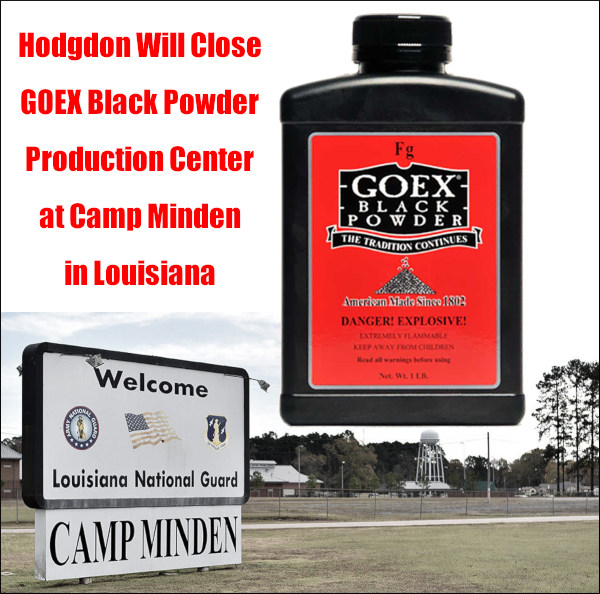
Hodgdon Powder Company, on 9/27/2021, announced that it would be shutting down the GOEX Black Powder production center at Camp Minden in Louisiana. This was the last remaining black powder factory in the United States. This could mean “hard times ahead for traditional muzzle-loading and BPCR shooting” (source: NAMLhunt.com). Here is the official announcement on the Hodgdon website:
“Effective immediately, Hodgdon Powder Company, Inc. has made the decision to cease manufacturing operations at the company’s Camp Minden, Louisiana site while evaluating strategic options for the black powder business.
The business will wind down operations while an evaluation process on the future of the black powder business takes place. Strategic options for the GOEX and Olde Eynsford brands of black powder, along with the manufacturing capabilities, will include a potential sale of the business. All affected employees will be retained through December 31, 2021 to assist in an orderly closing of the site and receive severance commensurate with their years of service to the company.
The Hodgdon Powder Co., Inc has been honored to have been a part of the GOEX Powder legacy and sustains a fond appreciation for sporting customers who have enjoyed shooting GOEX powders.”
Ironically, the GOEX logo states “The Tradition Continues”.
With this announcement, GOEX might be gone for good.
The closure eliminates the only domestic source of blackpowder in the United States. According to a company press release, Hodgdon will evaluate “strategic options for the black powder business”, including a potential sale of the company.
GOEX Powder has a long, storied history that starts in 1802 with the building of a blackpowder plant on the Brandywine River in Delaware by E.I. Du Pont de Nemours. Production expanded with the building of the Belin plant in Moosic, Penn., in 1912, and the facility supplied military blackpowder during both world wars, as well as the Korean and Vietnam wars. In the 1970s, the Belin plant was incorporated into the GOEX family, and production moved to Minden, LA, in 1997. [In 1969] GOEX was purchased by Hodgdon Powder Company [which] spent years updating equipment at the Minden facility, enhancing employee safety and blackpowder quality.
Despite Hodgdon’s efforts, the GOEX facility at Camp Minden has a history of manufacturing incidents stretching back to 1998, including a June 2011 incident where 1,000 pounds of blackpowder exploded. The latest incident at GOEX occurred on June 18, 2021, when an explosion required the evacuation of 15 employees inside the facility. Nobody was injured, but the plant observed a 24- to 48-hour waiting period to ensure that nothing else at the facility ignited.
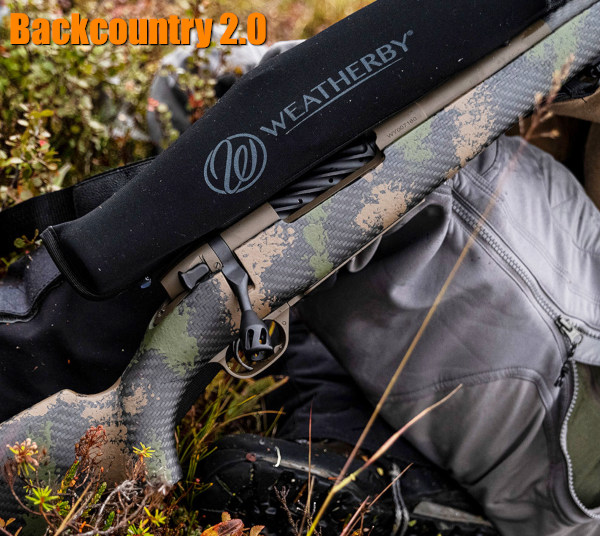
Light is Right — Weatherby’s Backcountry 2.0 rifles weigh as little as 4.7 pounds (before optics).
Here is good news for backcountry hunters. Weatherby’s new Backcountry 2.0 carbon-stocked hunting rifles weigh well under 6 pounds before optics. There is even one titanium action model series that weighs just 4.7 pounds. The 2.0 series now offers both standard steel receivers or even lighter titanium receivers. And Backcountry 2.0 Carbon models are equipped with a new carbon fiber stock that is the lightest in the industry — weight a mere 20 ounces for standard actions. For further weight savings, some models feature a tensioned carbon fiber-wrapped barrel. But all that high-tech doesn’t come cheap — MSRP for the titanium action carbon barrel model is $3749.00!
Ultralight Carbon Stock — Weatherby’s new Blacktooth stock features a Carbon Link™ bedding system which engages the recoil lug and distributes recoil throughout the stock without the weight of a traditional aluminum bedding block. This makes the overall stock lighter and stiffer.
Along with the new ultra-light elements, these Weatherbys have premium Mark V features: 54-degree bolt lift for fast cycling, fluted bolts, TriggerTech triggers, and Cerakote finish on metal parts. All the Backcountry 2.0 series rifles have a sub-MOA accuracy guarantee.
Weights for Backcountry 2.0 Models range with chamberings:
Weight Saving Secrets — How Weatherby Achieved Such Light Weights GunsAmerica Digest reports: “A huge amount of the weight savings comes thanks to the updated carbon fiber Blacktooth stock by Peak 44. This stock uses what they call their Rock Solid Carbon Link bedding system which eliminates the need for a metallic bedding block. The Blacktooth stock weighs less than 20 ounces. The Backcountry 2.0 [series adds] both a carbon fiber stock and either fluted #1 MOD-profile or #2 MOD-profile carbon steel barrels or #4 MOD-profile BSF carbon fiber-tensioned barrel to achieve these light weights.” READ GunsAmerica Review.
To mitigate recoil Weatherby developed its new 3DHEX® recoil pad — the gun industry’s first production 3D-printed pad. The 3DHEX’s three-dimensional honeycombed design extends the duration of the recoil pulse — taking away the sharp kick. Weatherby explains: “With the same amount of recoil spread out over a much greater time period, felt recoil is greatly reduced[.]” Backcountry 2.0 rifle recoil is also reduced by factory-fitted Accubrakes, contoured to match barrel profile.
Today, September 25, 2021, is National Hunting and Fishing Day (NHFD). We’re proud to recognize how important hunting is for millions of Americans — as a source of food for families and as an important connection with nature and the outdoors. The NFHD website has helpful resources for hunters, and in this article we provide links for Where to Hunt, How to get Hunting Licenses, and Hunter Education.
This month we hope some of our readers can take new shooters afield and introduce them to hunting. Many hunters receive their first introduction to hunting from family or friends as a tradition passed down from generation to generation. There are over 9.2 million hunters in the United States. Join the millions of dedicated hunters to enjoy a fulfilling experience in the outdoors.
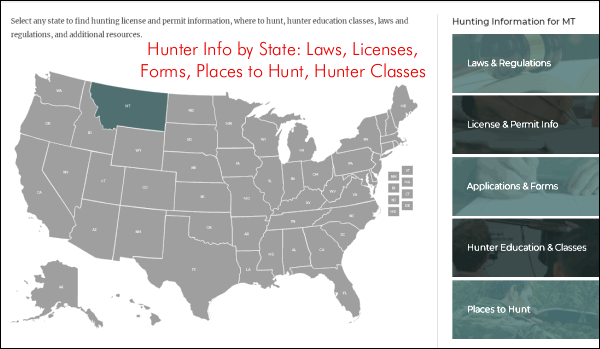
To have a successful hunt you must first get to areas where game thrives. Finding the right places to hunt is essential. The NSSF offers a nationwide Where-to-Hunt database of hunting areas. You can click on a particular state, then specify the specicies you wish to hunt. This is a very useful resource.
In most states, when hunting game animals, you’ll need a hunting license and/or zone permit. The Federal Fish & Wildlife Service has state-by-state listing for hunting licenses on FWS.gov. Click the box below to learn how to get hunting licenses in your region.
For all hunters, whether they have mentors to guide them or not, the most important first step into the woods begins with a state-certified hunter education course. Click the box below to see hunting education opportunities around the nation.
Game Resources — To learn more about different game species, click these NSSF links:
To help you prepare for a fall hunt, here is a free, printable Deer Practice target. Hone your skills on a trio of bucks with a red bullseye centered on the animals. You can print the targets in black and white, but they look best in color. Right-click the image below to download a FREE printable PDF file.
Today is National Hunting and Fishing Day. To help the avid hunters among our readers, here are Twenty Tips that can help ensure a safe and successful hunt. These tips have been compiled from our AccurateShooter Hunting Forum, with help from Hunting Editor Colton Reid (who has already been out hunting this month). Some items are preparatory — such as working with maps, sighting in the rifle, and improving physical fitness. We also talk about equipment — having the right gear, from proper boots to a GPS for multi-day hunts.
Of course there are entire volumes written on hunting, but these 20 Tips can benefit all hunters. Follow these suggestions and you should have a safer hunting experience with greater likelihood of success. If you liked these pointers, you’ll find two dozen more helpful hints on the NSSF Website.
Preparations Before The Hunt
1. Map Your Hunt and Notify Others — Before your hunt, make a plan and notify friends and family members about WHERE you are going and your intended return date and time. Print out a Google Satellite map and locate landmarks and trailheads. Mark where you plan to park your vehicle and give a copy of this map to friend and/or family members. A hunter may injure himself by falling off a rock, or tumbling in a creek-bed. After that kind of injury the hunter may be confused or unable to walk. If you get stranded in the wilderness, you want trusted persons to know where you are. So, before you leave on a trip, provide a map to a friend or family member. Show them where you will leave your vehicle, and where you expect to be every day of your hunting adventure.
2. Licenses and Permits — Make sure you have a valid hunting licenses and all the necessary tags. Begin this process with ample time before your intended hunt(s). The NSSF adds: “If you are crossing state or national borders, find out about any special considerations you must take care of. Border crossings can mean knowing about firearm transport laws or Chronic Wasting Disease-related regulations.”
3. Work on Your Fitness — On a multi-day hunt you may be trekking many miles. You need to be in good shape. If you are out of shape you may be putting yourself in a precarious situation, particularly if you underestimate the terrain difficulty. As the NSSF says: “Not being able to handle the conditions lessens your chances of success, can turn a great experience into an agonizing one and can endanger your health.”
4. Do Your Homework — Study the area you will be hunting. Talk to other hunters. Look at satellite photos. Get a real sense of the walking and terrain challenges. For a multi-day hunt, MAKE a PLAN. The NSSF states: “Eliminate surprises. Learn as much about where you will be staying, the area you will be hunting, what the weather might be like and what you need to bring[.]”
5. Rifle and Ammo — Make sure your rifle is sighted-in and your ammo is tested. Sight-in your rifle with the ammo you plan to use on your hunt. CLICK HERE for 4-Shot Sight-in Method. After sighting-in from the bench, confirm your zero by shooting from typical hunting positions (kneeling and with forearm supported on a rock or post).
6. Shooting Positions — Practice the shooting positions you will use in the field. Practice sitting, kneeling, and prone positions. You should also practice with shooting sticks, using your day pack as a rest, and with a bipod. Try to have a rock-steady rest before taking your shot.
7. Back-Up Irons — If possible, select a rifle with back-up iron sights. While modern scopes are very durable, they can and do fail (glass can crack). If you’ve invested a lot of time and money in your hunt, back-up iron sights can keep you in the game even if your riflescope fails.
8. Communications and GPS — Bring a GPS if you are in a wilderness area far from civilization. It’s a good idea to bring a cell phone, but you may not have coverage if you’re quite a distance from populated areas. A smart-phone also doubles as a digital camera to record your trophies. For navigation and safety, consider getting Garmin inReach Explorer+. This high-tech handheld unit features interactive SOS, connecting you to the GEOS 24/7 search-and-rescue monitoring center. They also allow you to send and receive text messages, no matter where you are, via advanced inReach satellite technology. Yes you can communicate even if you are miles from the nearest cell tower.
9. Select Good Gear — Make sure you have GOOD BOOTS that are comfortable — you’ll spend a lot of time on your feet. You may want a pack with harness for your rifle so you have both hands free. On a multi-day trip, make sure you can carry enough water, and that you will stay warm enough at night. Good practices for backpacking apply to multi-day hunts.
10. Make a Gear Checklist — Create a complete checklist of the gear and supplies you need. That includes arms, ammunition, rangefinder, binoculars, proper clothing (including spare clothes), hunting accessories, sleeping gear (on multi-day hunts), toiletries, medications. Don’t forget a good first aid kit — lots of bad things can happen during any wilderness trip. You can cut a hand, break an ankle or worse.
During The Hunt
11. Have a Plan — know where you plan to go and when. Try to be where you want in the early morning and early evening hours when deer are likely most active.
12. Take Your Time — If you spot a deer and get too excited and don’t take your time you may spook him. Go slow and glass. If possible, wait for the animals to bed down and relax. Then work out the best way to approach your prey. Remember, “You get so few opportunities, don’t screw it up!”
13. Glass More, Walk Less — Let your eyes do the walking — get good binoculars and use them. With their heightened senses of smell and hearing, deer/elk are able to spot you way better than you can spot them. If you are walking around a lot, chances are you are getting spotted by your prey.
14. Riflescopes Are Not Binoculars — Never use a riflescope as a substitute for binoculars. The temptation to do so is real, but when one does this, one is by definition pointing the muzzle of the gun at unknown targets. We like binoculars with built-in rangefinders. When glassing at long range, try supporting your binoculars on your pack.
15. Be Sure of Your Target before Shooting — Every year during whitetail season, farmers are forced to spray-paint their cattle or risk having them “harvested” by hunters who don’t bother confirming the species in their sights. Hunters with “buck fever” can make mistakes. When in doubt, don’t shoot.
16. Know When to Unload — When finished hunting, unload your firearm before returning to camp. You should also unload your gun before attempting to climb a steep bank or travel across slippery ground.
17. Bring Hearing Protection — While pursuing and stalking your prey you’ll want full sensory use of your ears. But when you’re finally ready to take the shot, slip in hearing protection. A shot from a large-caliber hunting rifle can exceed 170 decibels. Unprotected exposure to noise from a SINGLE 170+ dB shot can cause permanent hearing damage. (Source: ASHA.org). If you make a follow-up shot, you double that noise hazard. Therefore a hunter with a non-suppressed rifle should have hearing protection available.
You can keep a pair of quick-insert plugs on a cord around your neck. Or, get a lightweight neck band with earbuds, such as Howard Leight Quiet Band QB2HYG, 3M Safety Band, or Sellstrom Band, all with a good 25 dB Noise Reduction Rating. You can keep these lightweight bands around your neck, for quick deployment before you shoot.
“Once a hunter is successful, the REAL work begins.” — Colton Reid
18. Harvesting the Animal — When dressing your animal, be careful with the meat. You’ll want very sharp knives. Some hunters prefer knives with replaceable, razor-sharp blades. Don’t rush the task. Make sure you don’t get moisture or dirt on meat. The three spoilers of meat are heat, moisture, and dirt.
19. Pace Yourself When Packing Out — If you DO succeed, and bring down a big buck, will you be able to dress the animal and carry out the meat? Always be prepared to hike out with extra weight. If you are successful, make sure not to waste the meat you worked so hard for. Choose a pack that can help you carry a heavy load. Remember, this is not an insignificant challenge — you may be carrying 60 to 100 extra pounds in addition to your other gear. Again, take your time. Rest as needed. Don’t hurt yourself.
20. Remember to Enjoy the Experience — Our Hunting Editor, Colton Reid, offers this sage advice to all hunters, but particularly to novices: “Have fun, and appreciate your hunt, whether you bag a buck or not. It is a privilege to experience the wilderness and to get away from the city. Enjoy it while you’re out there. And keep your spirits up. You may get tired, but remember that ‘comes with the territory’. At the end of the day, yes you may be exhausted. And you may want to quit and go home. But stay positive, stay focused. Be patient, the experience is worth it.”
CLICK HERE for Hunter Training/Mentoring Programs State-by-State.
Prepare For Your Hunt — Get Fit and Practice Positions
As part of the NRA’s Tips & Tactics video series, Kristy Titus explains how to prepare for a hunt. Titus, co-host of the Team Elk TV show has hunted around the globe. She grew up in the outdoors, running pack mules in Oregon with her father. In this video, Kristy discusses fitness training and demonstrates field positions that can be employed during a hunt.
Kristy explains: “Hunting can lead you into some steep, rough country. It’s really important that you train both your body and your mind to handle the elements and the rigors of hunting So, if you plan on going on a mountain hunt, get out and train your body. Train with your firearm. Get off the bench and have some fun with this. Do some positional shooting or, if you want to add a stress dynamic… have someone put you under a time parameter.”
Visit WhereToHunt.org
There’s a great online resource for hunters that will help you find game locations in your state and ensure you have all the proper permits and game tags. WheretoHunt.org features an interactive map of the country. For all 50 states, the NSSF has compiled information about hunting license and permits, where to hunt, hunter education classes, laws and regulations and more. For each state you’ll also find a link for required applications and license forms.
Tomorrow, September 25, 2021, is National Hunting and Fishing Day. Hunting season is here — and we know many of our readers will soon head to the woods in pursuit of deer, elk, or other game. To make a good shot, it’s wise to rest your rifle when possible. In this video, methods for stabilizing a rifle in the field are demonstrated by Forum member Thomas Haugland, who hails from Norway. Thomas focuses on practical field shooting skills for hunters. Thomas (aka ‘Roe’ on Forum and Sierra645 on YouTube) shows how to verify his zeros from bipod and then he demonstrates improvised field rests from the prone, kneeling, and sitting positions.
Thomas explains: “In this video I focus on basic marksmanship techniques and making ready for this year’s hunt. As a last check before my hunting season, I got to verify everything for one last time. My trajectory is verified again, the practical precision of the rifle is verified. I also practice making do with the best [improvised] rest possible when an opportunity presents itself. After getting knocked in the face by a .338 Lapua Magnum rifle during a previous filming session, I had to go back to basics to stop [flinching]. I include some details from bipod shooting that hopefully some hunters will find useful. Fingers crossed for this years season, good luck!”
How to Stalk Game — Tips from Thomas
If you liked that video, here is another valuable video from Thomas. In this “How to Approach Deer” video, Thomas explains the basics of a successful stalk. If you are headed into deer country this fall, definitely watch this video.


 Building the Borden Black Beauty
 Loading for Accuracy

 Long-Range Silhouette Match Strategy and Techniques
 We set up John’s 6-284 as we would for 1000-yard Light Gun competition. We’ve also built some of these rifles in 6MM BR for use in 600-yard competition. For John, we used a Borden/Nesika Model K 1.70″ diameter action as the beginning basis of the rifle. The timing and cocking-piece system for this rifle has the Borden improvements to improve firing pin energy and lock time. The action was pillar-bedded and glued into a McMillan Tooley MBR pattern stock. The stock blank was gel-coated and then epoxy-finished with a texture.







 Tomorrow, September 25, 2021, is National Hunting and Fishing Day. Hunting season is here — and we know many of our readers will soon head to the woods in pursuit of deer, elk, or other game. To make a good shot, it’s wise to rest your rifle when possible. In this video, methods for stabilizing a rifle in the field are demonstrated by Forum member Thomas Haugland, who hails from Norway. Thomas focuses on practical field shooting skills for hunters. Thomas (aka ‘Roe’ on Forum and


