Lapua just dropped a bombshell — multiple bombshells, in fact. Lapua just announced that it will be producing .221 Fireball brass and .50 BMG brass starting early 2014. This will be the first truly match-grade brass ever offered for the .221 Fireball. That’s great news for varminters, who can use Lapua’s new .221 Fireball brass “as is” or neck it down to .20 Vartarg or 17 Fireball. Tactical shooters can also use the .221 Fireball brass to make the .300 Whisper and 300 Blackout sub-sonic cartridges. At the other end of the spectrum, ultra-long-range shooters now have a new ultra-premium brass source for the mighty .50 BMG. This is potentially a “game-changer” for fifty-cal shooters who have had to “make do” with military surplus brass for the most part. Lapua says the new brass, both .50 BMG and .221 Fireball, should be in the USA by early April, 2014. Sorry, no pricing info is yet available.
Here is the Lapua Product Announcement for .221 Fireball and .50 BMG Brass:
New 180-Grain and 150-Grain 7mm Scenar-L Bullets
The other big news from Lapua is the release of two new 7mm (.284 caliber) Scenar-L target bullets. Recognizing the popularity of 7mm cartridges among F-Class Open Division shooters, Lapua will offer a high-BC, 180-grain bullet. As part of the “L” series, this new 180-grainer bullet should exhibit extreme consistency in base-to-ogive measurements and bullet weight. We expect this new 180gr projectile to be extremely accurate in the .284 Winchester, .284 Shehane, 7mm WSM, and 7mm RSAUM — popular chamberings for F-Class and long-range benchrest shooters. No BC information has been released yet, but we expect the BC number to be quite high, giving this bullet great wind-bucking capability. In addition to the new 180gr 7mm Scenar-L, Lapua will offer a new 150gr 7mm bullet. This is optimized for medium range competition in Silhouette and Across-the-Course competition. It should offer great accuracy, but with less felt recoil than its 180-grain bigger brother.
Profile by Kyle Jillson forNRABlog
In the December issue of Shooting Sports USA, Barb Baird of Women’s Outdoor News sits down with Nancy Tompkins, one of the most accomplished shooters out there. A past World and National Champion, Nancy likes to reach out and touch targets at 1,000 yards with accurate rifles. She’s been competing in Palma (.308 caliber at 800, 900, and 1000 yards), Long Range (1000 yards) and Smallbore prone for 41 years. Thanks to her father, Nancy began competing in the seventh grade and now shares the love of shooting with her daughters Michelle and Sherri Gallagher, her husband Mid Tompkins, and her goddaughter, Danielle Makucevich. Nancy has competed on numerous international Palma teams, traveling from her home base in Prescott, Arizona.
“There is nothing better than traveling, making new friends and competing with the best shooters in the world,” said Nancy. And she only shoots with the best equipment. Her Palma rifle features a McGee stock, Stolle Panda action, Krieger barrel, Anschütz trigger, Warner rear sight and a Right Sight (front sight). Her .22 LR Smallbore rifle sports an Anschütz action and trigger with a Hart barrel, McGee stock, Right Sight (front sight), and Warner rear sight.
As always, interviewer Barb Baird had a key question for Nancy: “What’s in your range bag, Nancy Tompkins?” Actually, Nancy stores stuff in her Creedmoor shooting stool for High Power matches and in a large plastic box from Home Depot for her Smallbore matches. Here’s what Nancy keeps at the range:
Sinclair timer
Allen wrenches, small screwdriver, and grease
SPF-15 lip balm
Magnifying glass
Two slings
Creedmoor shooting glove
Decot shooting glasses
TLC Gunworks elbow pad
Champions Choice shooting visor
CeCe’s custom ear plugs
One More Item — Nancy’s Lucky Mouse
Nancy’s cat, Sierra, placed a toy mouse in one of her shooting stools a few years ago. Nancy now considers it her lucky charm. To learn more about Nancy’s recommended equipment, and glean great tips on Long Range marksmanship, get Nancy’s latest book, Prone & Long Range Rifle Shooting.
The NFL has refused to run a self-protection-themed TV commercial from Daniel Defense during the 2014 Super Bowl game. Apparently it’s fine to display half-naked ladies, or sell alcohol products on national television, but anything related to the Second Amendment is off-limits. In refusing to air the Daniel Defense commercial, the NFL cited its League policy against promoting firearms. According to the NSSF, “It is league regulation and not federal law that prohibits the advertising of firearms or ammunition on NFL broadcasts.”
Watch Daniel Defense Commercial Banned from the Super Bowl by the NFL
If you watch the minute-long video above, you will see that it is pretty tame. It is all about a man taking individual responsibility for protecting his family. You won’t see guns being fired, in fact you won’t see any actual guns at all*. The message is subtle — if you care about your family’s security, you may wish to exercise your Constitutional right to own a firearm. That doesn’t seem extreme at all, but NFL decision-makers decided that this commercial was too controversial, and violated its ‘no guns’ rules.
Larry Keane, Senior Vice President and General Counsel for the National Shooting Sports Foundation, criticized the action of the NFL: “It would have been interesting to see if the television ad that Daniel Defense wanted to run during the 2014 Super Bowl would have caused the hubbub in elite liberal circles that the National Football League clearly feared it would. It may well have, but we’ll never know, for sure, since the NFL decided that its ‘no firearms’ on its airtime ruling would stand after the video review.
While we are disappointed that the nicely-produced Daniel Defense commercial will not run on national television during the Super Bowl, we are very pleased to see the attention being paid to the decision of a major sport’s management that seems so out of touch with the pro-Second Amendment sentiments of so many football fans across the country. Conservative commentators have been busy scoring points. Nationally-syndicated Columnist Michelle Malkin, for example, wrote ‘The National Football League’s hypocrisy and selective decency standards reek like a post-game locker room’.” Here is a Fox News commentary about the NFL’s refusal to air the Daniel Defense commercial:
* The video does show the Daniel Defense logo with the silhouette of a rifle. Daniel Defense agreed to remove that rifle graphic, but the NFL still said “no”. As a Fox commentator explains: “This is really not about guns at all but [rather] the idea of guns, and how distasteful they are… to people in the media.”
Christmas is coming up soon, so today we’re featuring a hand-picked collection of “stocking stuffers” for precision shooters. You can order most of these items online, and if you get your orders in soon, your selections should arrive before December 25th. So as not to bust your holiday budget, all of our selections are priced under $10.00. These items are handy tools that you’ll use over and over again at the range and/or at your loading bench (so you’re allowed to buy them for yourself, even after Christmas).
Gifts $1 to $5
Surveyors Tape
$1.99
Hood Kwik Estimator
$2.50
Bifocal 3X/6X Magnifier
$2.75
Barrel Mirage Shade
$4.95
Surveyors’ Tape. Always watch the wind when you shoot. Inexpensive, Day-Glo Surveyors’ Tape (aka “Flagging Tape”), attached to a stake or target frame, makes a good wind indicator. It will flutter even in mild breezes, alerting you to both angle and velocity shifts. This should be part of every range kit. Don’t leave home without it.
Hood Kwik Estimator. Here’s a very handy tool to measure your 6mm groups. Bracket the group within the diverging lines of the Kwik Estimator and you’ll instantly get a good approximation of the actual group size. No more trips to the tool box for calipers. The inexpensive Kwik Estimator fits in a shirt pocket. (Thanks to Boyd Allen for this suggestion.)
Bifocal 3X/6X magnifier. This handy, inexpensive dual-power magnifier is always close at hand on our loading bench, because it helps with so many task. We use a compact magnifier to inspect bullet tips, to check brass chamfers, and inspect the internals of triggers and other parts. Priced at just $2.75, a magnifier like this (or the folding variety) is a “must-have” item for every hand-loader.
Sinclair Barrel Mirage Shade. For high-volume varminters, and competitors who shoot fast in warm weather, a mirage shield is absolutely essential. This prevents hot air rising off the barrel from distorting the image in your scope. The aluminum Sinclair shield can be trimmed to fit, and comes with stick-on Velcro attachments. Two lengths are available: 18″ for short BR barrels, and 24″ for longer barrels.
Gifts $6 to $10
Dewey Crocogator
$6.50
Ballistol Aerosol Lube
$8.99
Sinclair Barrel Bag
$9.95
Sinclair Load Block
$9.99
Dewey Crocogator. The Crocogator tool, with knurled “teeth” at both ends, is simple, inexpensive, and compact. Yet nothing zips though primer-pocket gunk faster or better. Unlike some cutter-tipped primer pocket tools, the Crocogator removes the carbon quick and easy without shaving brass. One end is sized for large primer pockets, the other for small.
Ballistol Aerosol Lube. Ballistol is a versatile, non-toxic product with many uses in the reloading room. We have found it is ideal for lubricating cases for normal full-length sizing. It is clear, not gooey or chalky like other lubes. It is very, very slippery, yet is easy to apply and just as easy to wipe off. As you lube your cases, the Ballistol will also clean powder fouling off the case necks. For heavy-duty case forming and neck expansion, we’ll still use Imperial die wax, but for every-day case sizing, Ballistol is our first choice. It also helps prevent your dies from rusting and it even conditions leather. Ballistol is a favored bore cleaner for Black Powder shooters because it neutralizes acidic powder residues.
Sinclair Barrel Bag. If you run a switch-barrel rig, or take spare barrels to a big match, this simple but effective barrel bag will protect your valuable steel. The bag is moisture-resistant vinyl on the outside with a soft, quilted interior to protect the barrel’s finish and delicate crown. There are two sizes: one for barrels up to 26 inches, the other for barrels up to 31 inches. Both sizes are priced at $9.95 per bag. That’s cheap insurance for those priceless barrels.
Sinclair ‘Poly’ Loading Block. We’ve tried wood and injection-molded loading trays, and we prefer Sinclair’s white polyethylene loading blocks. They featured chamfered holes properly sized for the particular case you reload. The blocks are heavy enough to be stable on the bench, and the “dishwasher-friendly” material is easy to clean. The standard Poly Loading Block holds 50 cases, while the Competition Loading Block holds 25 cases with a tray for empties. For a bit more money, there’s also a Heavy-Duty 50-case model with an extra-thick 1″ base.
Report based on story by Ashley Brugnone, forThe First ShotCMP Online Magazine
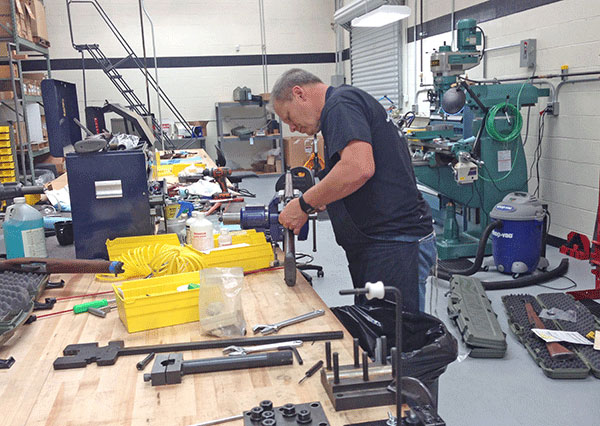
After a month of business, the CMP Custom Shop is already stacked to the ceiling with rifles needing customization and repair. With nearly 200 rifles already shipped to the Shop, the gunsmiths running the operation only anticipate more to come in the future. “Things are going great,” said John McLean, CMP Custom Shop manager. “We’re learning how to do everything we need to do in order to get things done as quickly for customers as we can, as well as do a good job.”
The Custom Shop opened its doors on October 1, 2013, offering upgrades, customization, refinishing, and other types of repair for U.S. Military-type rifles. The shop specializes in such rifles as the M1 Garand, M1 Carbine, 1903 and 1903A3 Springfield, the 1917 Enfield and the Krag. CMP will NOT be working on shotguns, pistols, revolvers, M14/M1A, AR15-style rifles or other commercially-produced modern rifles.
A M1917 U.S. Enfield was the first gun to pass through the doors of the custom shop. It was sent to be refinished by a contractor, spending nearly a month being restored. The rifle was then repaired by McLean and his crew and is just about ready to be returned to its owner. McClean explains: “The amount of time we work on pieces varies very widely. It could be five minutes worth of work to a couple days worth of work, depending on what the customer wants.”
John McLean works on a M1917 U.S. Enfield — the first of many rifles to arrive at the shop for repair.
Rifles needing repair can be shipped to the CMP Shop in Anniston, Alabama from anywhere in the country. Then, once repaired, these rifles are shipped back out to the owners. Shelves of rifles to be serviced are presently stacked to the ceiling of the Custom Shop, representing about 90 days’ worth of scheduled work for the CMP gunsmiths.
CMP Custom Shop Also Offers Training Classes
The space where the rifles are repaired, though meant as a machine shop, was also designed as a classroom. Benches facing a projection screen hanging on the wall to display slides and other instructional materials seat a class of about 20 people. Recently, the shop held its first CMP Advanced Maintenance Class (AMC), which involved both hands-on training. Students raved about this class: “Fantastic course. Can’t say enough good about it. Instructors were phenomenal”; “This was by far the very best firearms class I have ever taken.” The CMP Custom Shop will hold six more classes in 2014, However, registration is already full for all sessions.
For a list of services the shop provides, visit the CMP Custom Shop web page. For detailed CMP Custom Shop information, or specific questions, please contact John or Chris at customshop@thecmp.org or call (256) 835-8455, ext. 1113.
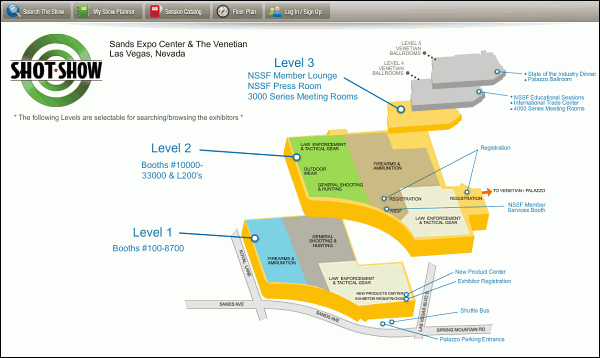
Believe it or not, NSSF’s 2014 SHOT Show is only a month and a half away. As the entire industry prepares, enthusiasm is already building for the January 14-17 event in Las Vegas, Nevada.
If you haven’t already done so, register today at ShotShow.org. At the same time you can also sign up for special sessions, such as retailer and law enforcement seminars, SHOT Show University, evening events, and more. Stay up to date on show news through the SHOT Show Blog and connect with the show via Facebook and Twitter.
In the spirit of the season, German Salazar offers this gift to our readers: free books. In his Rifleman’s Journal blog, German notes: “I can think of no better gift than knowledge, in this case knowledge of the early days of ballistic science, organized competitive shooting, the NRA and much more.”
Google, a company we all know for its internet search service, has undertaken a massive project known as Google Books under which they are scanning and making available millions of out-of-print books with uncertain copyright ownership.
Below you will find a list of books, each with a clickable title link and brief description. The title link will take you to the Google Books page for each book. You can read the entire book online, or you can download it to your computer as a PDF file and save it (or print it). You can also create your own Google Library and save the books there for access from any computer. Most of these books are hundreds of pages long, so consider your paper and toner supply before printing!
The Bullet’s Flight From Powder to Target, Franklin W. Mann, 1909, 384 pages.
This is the original and still widely read and highly regarded book on internal and external ballistics. Dr. Mann was a tireless experimenter and had the resources to pursue his interest with the best equipment available. A close friend of Harry Pope as well as other notable experimenters in the early days of smokeless powder, Mann’s work is thorough and well documented. If you’re interested in ballistics, this is the foundation that you must know in order to understand the ensuing century of work in that field.
Irish Riflemen in America, Sir Arthur Blennerhassett Leech, 1875, 216 pages.
This book chronicles the Irish rifle team’s trip to America in 1874 to compete against the best of America’s riflemen as organized by the Amateur Rifle Club of New York when the fledgling NRA ignored the Irish challenge. The book also includes a great deal of history of Irish target shooting and an account of a hunting trip in the American West by members of the party. Well worth reading.
The American Rifle, Townsend Whelen, 1918, 637 Pages.
Townsend Whelen was — and remains for many of us — the dean of American firearms writers. Here is a man who truly did it all and wrote about it with the authority of experience and the modesty of a true gentleman. Despite his roots in Philadelphia society, Whelen sought outdoor adventure and hard living and he found it; we are all richer for his ability to document it so well. This book, written immediately after (and during) the Great War gives a great insight into the period from a rifleman’s perspective: equipment, reloading, shooting — it’s all here. A long book and worth every page.
Suggestions to Military Riflemen, Townsend Whelen, 1909, 243 pages.
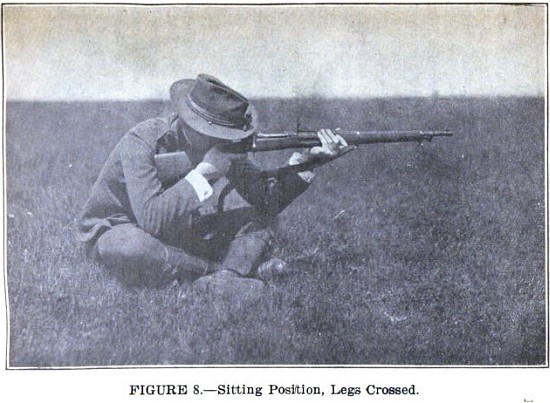
Townsend Whelen’s pre-war book on marksmanship which brought him to national prominence in the military establishment. Whelen, who coached the national championship winning Army rifle team at Sea Girt in 1906, covers all aspects of shooting the Model 1903 rifle, including long-range shooting. There is also an appendix covering the Krag-Jorgensen as it was still used by various state guard units at the time. Positions, sights, zeroing, windage, score books, slow-fire, rapid-fire, long-range, ammunition, vision; it’s all here. Every topic you see covered in a modern book on marksmanship was covered by Whelen in this book. You can’t know where you’re going if you don’t know where you’ve been — this is a “must read” for the serious marksman and student of history.
Modern Rifle Shooting From the American Standpoint, W. G. Hudson, 1903, 155 pp.
Dr. Hudson was one of the leading lights of the early smokeless era (as well as the Schuetzen era), a contemporary and friend of Mann and Pope, Hudson was a tireless investigator of all things related to accuracy. This very hard to find book is an introduction to target shooting with a detailed overview of equipment and practices and is well illustrated with many plates of top level equipment of the day; a real gem.
Manual for Rifle Practice: Including Suggestions for Practice at Long Range, George Wood Wingate, 1879, 303 pages.
Wingate was the central figure in the founding of the National Rifle Association of America. Like Whelen’s manual 30 years later, Wingate’s book was adopted as the training manual by many military organizations. An authoritative view of marksmanship instruction in the day of the Trapdoor Springfield, Sharps, Remington Rolling Block, and Peabody military rifles. Includes diagrams and instructions for their care.
How I Became a Crack Shot — With Hints to Beginners, W. Milton Farrow, 1882, 204 pp.
Milton Farrow was one of the top shots of his time. Well-bred and highly educated, modesty was not among Farrow’s virtues. This makes for entertaining reading as he describes his travels and his many shooting accomplishments. The Hints for Beginners section has advice that remains sound even these many years later.
The Gun and its Development, William Wellington Greener, 1907 (8th Ed.) 786 pages.
Originally published in 1881, Greener’s book covers all aspects of the firearms world at that time and this 8th edition has many updates. While much of the text focuses on shotguns, there is a great deal of other material in this massive tome, including coverage of gunpowder and explosived, pistols, rifles, target shooting, rifle clubs and much more of interest to the modern rifleman. Many great period advertisements at the end will make you wish for a time machine!
Cartridge Manufacture, Douglas Thomas Hamilton, 1916, 167 pages.
This book is a well-written, technical presentation of small arms cartridge manufacturing during the Great War. An inside look at all processes at the Frankford Arsenal including case manufacture, bullet manufacture, loading and packaging. A useful historical treatise on the topic.
Did you miss Black Friday? Well don’t fret. Sinclair International is still offering 10% off all orders of $149.00 or more. This hefty discount is valid through 11:59 pm on Monday, December 2, 2013. There are many good deals to be had. Remington 700 Short Action receivers are on sale for $389.99. Forum member JohnHenry notes that Sinclair has benchrest LV 1:14″-twist 6mm Bartlein barrels on sale for $299.99, and you’ll get an additional 10% off with Discount Code EBJ. Use Code EBJ at checkout to save today and on Cyber-Monday (12/2/2013).
Can a pumpkin be launched over a mile? Can a gourd go super-sonic? These vital questions will be answered on Thanksgiving Day as the Science Channel covers the annual Punkin Chunkin World Championship held in Sussex County, Delaware. The previous record, set in 2011 by the Second Amendment Too Air Cannon, is 4,329.37 feet, or 0.8199 miles (1443 yards). The heavy artillery will be out in force this year — trying to break that record, and maybe hit the mile mark in the process.
Each year, competitors roll out some amazing machines designed to propel pumpkins “farther, higher, faster”. The mighty air cannons are the distance kings, but the wild and crazy devices in the torsion, trebuchet, catapult, and centrifugal divisions are impressive to watch. Many of these fearsome-looking machines replicate the designs of medieval military siege weapons.
Team Builds $168,000 Air Cannon in Effort to Go Supersonic and Chunk One Mile
With the goal of launching a pumpkin one mile, considered the “Holy Grail” of Punkin Chunkin, the American Chunker team has developed one of the biggest, baddest air cannons ever. With a new 540-horsepower compressor pumping out 500 psi of pressure, the creators of this massive cannon hope to send a pumpkin supersonic. This cannon represents an investment of $168,000 and 2800 man-hours. State-of-the art sensors are used to gauge pressure and measure the pumpkin’s speed in flight. Will the team break the sound barrier? Watch the Science Channel special to find out.
Great Video on High-Tech Air Cannon (Amazing Stuff!)
To catch all the Punkin Chunkin action, tune your TVs to the Science Channel on Thanksgiving Day, November 28th. At 8:00 PM Eastern, the Science Channel devotes a full hour to America’s wildest display of agricultural artillery — Punkin Chunkin. This hour-long special TV event covers the 2013 World Punkin Chunkin Championship. This fun-filled event, held near Bridgeville, Delaware each November, draws up to 70,000 spectators, raising money for charity. The Punkin Chunkin special is hosted by Tory Bellici, Kari Byron, and Grant Imhara from Mythbusters. Like Big Guns? View Chunkin Air Cannons Gallery.
McMillan will still be making stocks and other components. However, it is selling off its gun-building business. Strategic Armory Corps (SAC) announced it has acquired McMillan Firearms Manufacturing, LLC. McMillan produces quality hunting and tactical rifles including the highly-regarded TAC-50, TAC-416, TAC-308, TAC-300/338, and the new Alias modular rifle system. McMillan produces a full line of hunting rifles, including the Custom Collection, Mountain Extreme Series, and Long Range Hunting Series. McMillan also builds competition and target rifles.
The McMillan Firearms acquisition carries out Strategic Armory Corps’ strategy of acquiring premium firearms manufacturing companies (SAC has previously purchased ArmaLite Inc. and Surgeon Rifles). “The acquisition of McMillan Firearms is consistent with our focus on acquiring the highest quality manufacturers of premium firearms,” said Mark Johnson, Strategic Armory Corps CEO. “This transaction provides the perfect product line complement to the ArmaLite and Surgeon Rifles product lines and will allow us to more effectively serve the needs of the custom bolt action rifle enthusiast.”
Kelly McMillan stated, “Both Ryan and I will continue on as long term consultants with McMillan Firearms. We are proud of our heritage and are confident that Strategic Armory Corps will continue to build the highest quality firearms for our valued customers”.
Strategic Armory Corps is based in Phoenix, Arizona and is a fast-growing firearms and ammunition company that serves the needs of the high end firearms enthusiast. In July of 2013, the company acquired ArmaLite, Inc. one of the oldest names in the AR-style sporting rifle segment of the industry.
Story lead from EdLongrange. We welcome reader submissions.


 The NFL has refused to run a self-protection-themed TV commercial from Daniel Defense during the 2014 Super Bowl game. Apparently it’s fine to display half-naked ladies, or sell alcohol products on national television, but anything related to the Second Amendment is off-limits. In refusing to air the Daniel Defense commercial, the NFL cited its League policy against promoting firearms. According to the NSSF, “It is league regulation and not federal law that prohibits the advertising of firearms or ammunition on NFL broadcasts.”
 Christmas is coming up soon, so today we’re featuring a hand-picked collection of “stocking stuffers” for precision shooters. You can order most of these items online, and if you get your orders in soon, your selections should arrive before December 25th. So as not to bust your holiday budget, all of our selections are priced under $10.00. These items are handy tools that you’ll use over and over again at the range and/or at your loading bench (so you’re allowed to buy them for yourself, even after Christmas).




 Believe it or not, NSSF’s 2014 SHOT Show is only a month and a half away. As the entire industry prepares, enthusiasm is already building for the January 14-17 event in Las Vegas, Nevada.
 In the spirit of the season, German Salazar offers this gift to our readers: free books. In his




 Can a pumpkin be launched over a mile? Can a gourd go super-sonic? These vital questions will be answered on Thanksgiving Day as the


 To catch all the Punkin Chunkin action, tune your TVs to the Science Channel on Thanksgiving Day, November 28th. At 8:00 PM Eastern, the Science Channel devotes a full hour to America’s wildest display of agricultural artillery — Punkin Chunkin. This hour-long special TV event covers the 2013 World Punkin Chunkin Championship. This fun-filled event, held near Bridgeville, Delaware each November, draws up to 70,000 spectators, raising money for charity. The Punkin Chunkin special is hosted by Tory Bellici, Kari Byron, and Grant Imhara from Mythbusters. Like Big Guns? View


