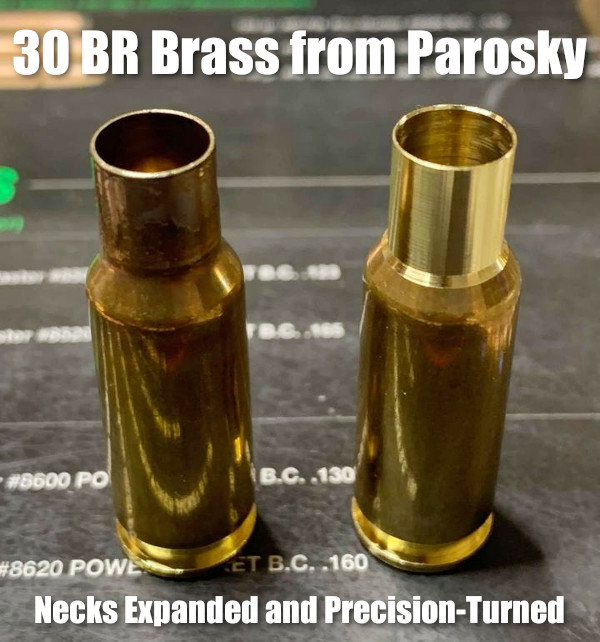
Here’s good news for 30 BR shooters. Paul Parosky, maker of the excellent PRP Custom Bullets, is now offering 30 BR neck-turned brass. This can save you considerable time and effort forming 30 BR cases from Lapua 6mmBR brass. And the neck-turning is superb, again representing time savings (and no tools to buy). You can order this 30 BR brass from PRPbullets.com. If you communicate with the PRP team, Paul may be able to neck-turn to your specific thickness. Paul notes: “Here are necks turned for a 0.330 neck. I’ll try my best to accommodate anyone’s neck dimensions as they wish. Just contact us through our website PRPBullets.com.”
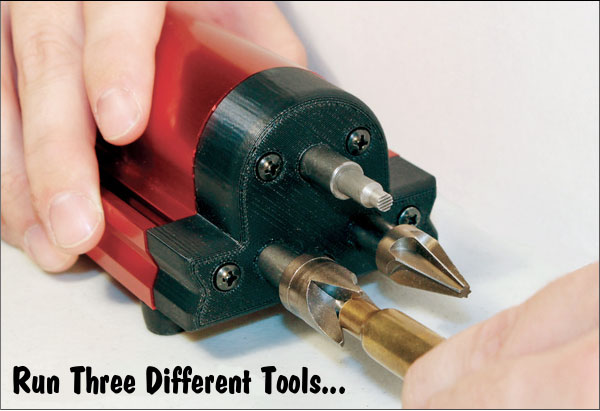
About this Neck-Turning set-up — Paul Parosky notes: “For neck-turning I’m using an old drill press that has been re-worked. The cutter and spindle are all indicated before neck turning to ensure no runout. The RPM is around 520. The lube I use is a mixture of royal and mystery oil.”
Why the 30 BR Dominates 100/200 Benchrest for Score Competition
The 30BR, along with some wildcat variants, remains the dominant cartridge in short-range (100/200) benchrest-for-score competition. The 30BR’s .308″-diameter bullets are larger than the 6mm bullets used by the 6PPC (which rules group BR competition). The bigger 30-Cal diameter has an advantage in touching scoring rings. In addition, the 30 BR is also relatively easy to tune, and barrel life is considerably better than with smaller-caliber benchrest cartridges. For more information, see our AccurateShooter 30 BR Cartridge Guide.
Cases are Expanded, Then Neck-Turned
To produce his 30 BR brass, Parosky first uses a series of expander mandrels. Then he neck-turns with power using a converted drill press. Paul tells us: “This is done the old school way, I use three different tapered expander mandrels, then neck-turn it to the proper neck chamber, then run them up through a FL expander mandrel to ensure necks are straight. Then I clean all the cases.”
Paul Parosky Can Also Neck-Turn 6PPC Brass
Paul Parosky also expands and neck-turns 6PPC cases that are made from parent Lapua .220 Russian cartridge brass. Here, illustrating his 6PPC neck-turning operation, is a Paul Parosky post on the USA Benchrest & Extreme Precision Shooters Facebook page.
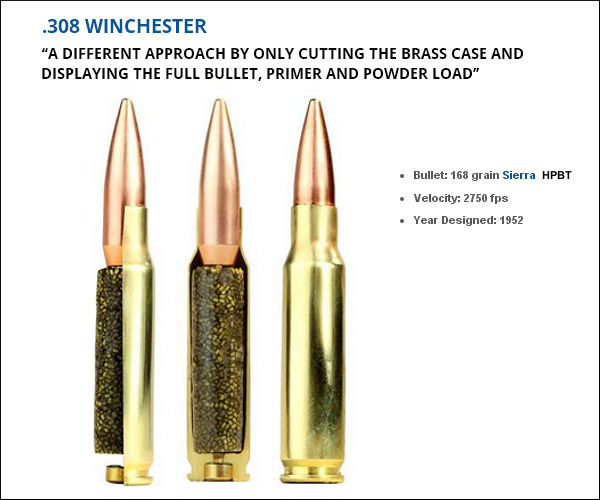
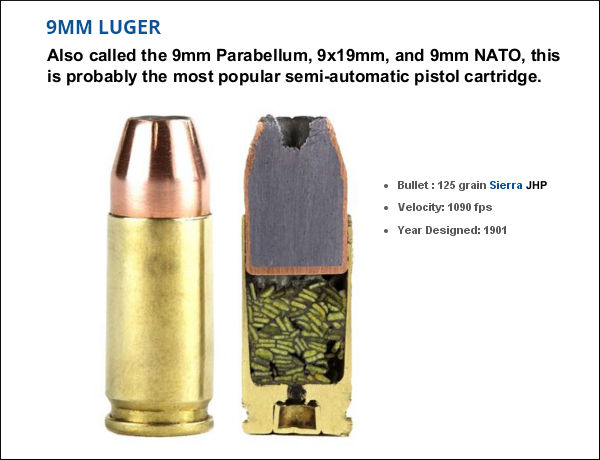
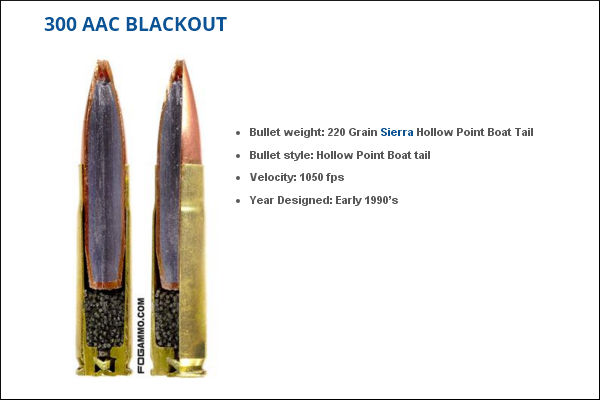
Here’s something you don’t see every day — the inside of loaded cartridges, sliced halfway through. This lets you see how bullet core, jacket, cartridge case, powder, and primer all fit together. Give credit to the folks at FOG Ammunition for creating this interesting series of cut-through ammo images. We show four cartridges here: the .308 Winchester, 9mm Luger, 300 BLK, and .50 BMG. You’ll find two more (the .223 Remington and .45 ACP) on the original FOG Ammo Blog Article.
This .308 Winchester model took on a different approach by only cutting the brass case and displaying the full bullet, primer and powder load. A spec amount of powder was used to create the model powder form. An estimated 10% volume was added during the forming process, along with an undetermined amount of air pockets.
This bisection is a 9mm Luger Jacketed Hollow Point round with flake powder held together with super glue. After this self-defense round was cut by a trained professional the round was polished by hand. This might look like stick powder, but those are in fact flakes stacked up in cross-section. Designed in 1901 by Georg Luger, this popular cartridge is used by civilians, military, and law enforcement.
For this model of the .300 AAC Blackout (aka 300 BLK), a Dremel tool was used to create a pie cut within the bullet and brass case. A measured amount of power, roughly 65% of spec charge, was placed inside the case with super glue. This cartridge was originally optimized for subsonic use with a suppressor, so the amount of powder used is small relative to the nominal case capacity. That leaves more room for the relatively large .30-caliber bullet.
Last but definitely not least is the .50 Caliber BMG round (aka .50 Browning Machine Gun). Famed for its wartime use in the M2 Machine gun, the .50 BMG round is also used in civilian Long Range competitions. A typical .50 BMG cartridge holds over 225 grains of powder. That’s almost ten times the amount in a 5.56×45 NATO Round! To demonstrate the size of the .50 BMG, check out that .223 Rem for comparison.
At the request of our readers, we provide select “Deals of the Week”. Every Sunday afternoon or Monday morning we offer our Best Bargain selections. Here are some of the best deals on firearms, hardware, reloading components, optics, and shooting accessories. Be aware that sale prices are subject to change, and once clearance inventory is sold, it’s gone for good. You snooze you lose.
NOTE: All listed products are for sale to persons 18 years of age or older. No products are intended for use by minors.
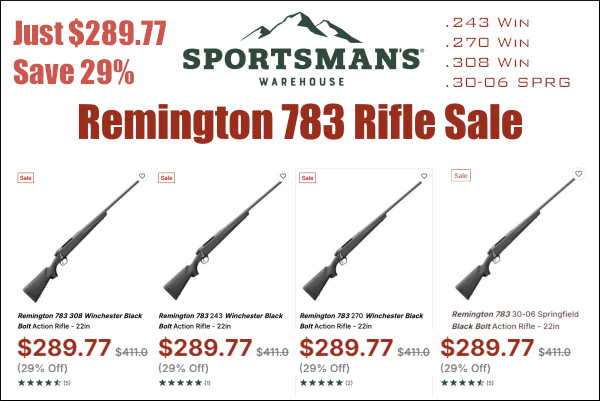
1. Sportsman’s WH — Rem 783 Rifle (Many Calibers), $289.77
⏺️ » Good quality hunting rifles under $300!
It’s hunting season. Here’s an amazing deal on a good Remington hunting rig. The Remington 783 rifle is available in a variety of popular chamberings for just $289.77 at Sportsman’s Warehouse. This modern rifle has a pillar-bedded action, free-floating button-rifled barrel, steel detachable magazine, and modern polymer stock. There are both 22″ and 20″ barrel options. The Rem 783 features Remington’s new user-adjustable Cross Fire trigger system.
2. Precision Reloading — FREE Hazmat On Purchases of $199+
⏺️ » Save $30-$45 with FREE Hazmat through 10/2/2025
When you purchase powder and/or primers, you normally must may the vendor a Hazmat fee of up to $45 per order. But right now Precision Reloading is offering FREE Hazmat on Powder and/or Primer Orders of $199 or More. To get FREE Hazmat use Coupon Code FREEHAZ at checkout. That can save you $30-$45 compared to other online retailers.
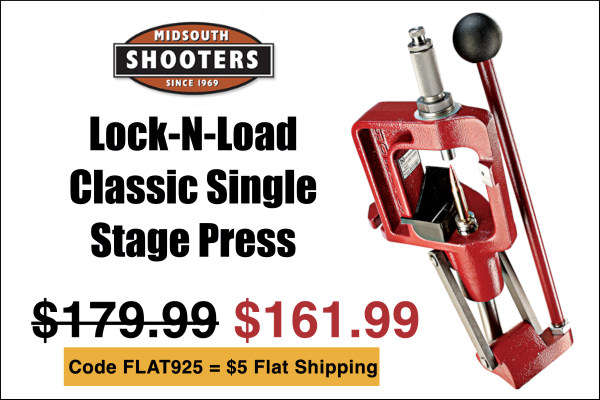
3. Midsouth — Hornady LNL Classic Press, $161.99
⏺️ » Good, strong single-stage press $38 less than elsewhere
The Hornady Lock-N-Load Classic Single-Stage Press is a very good press for loading pistol and rifle rounds. The Lock-N-Load Classic has a strong solid cast frame. The frame front is angled, allowing easier placement and recovery of cartridges. This press also works with Hornady’s Quick Change bushing system to allow rapid die changes. An optional Primer Feed tube system that holds up to 70 primers is available. NOTE: Midsouth is selling this press for just $161.99 — a great deal. This same press sells for $199.97 elsewhere.
4. Midsouth — ELEY .22 LR Rimfire Ammo Sale
⏺️ » Ultra high-quality .22 LR rimfire ammo with big discounts
ELEY .22 LR Rimfire Ammunition is favored by top rimfire shooters in multiple disciplines — Silhouette, Benchrest, Smallbore 3P/Prone, Field Target, NRL22 tactical, Steel Challenge, Biathlon, and Pistol. ELEY offers a wide range of ammo types starting at about $7.40 per box. Right now Midsouth has 14 types of ELEY rimfire ammo on sale including: Target, Ultra, TENEX EPS, Club, Match, Team, Semi-Auto BR Precision, High Velocity, Benchrest Outlaw, Bullseye, Subsonic, TENEX Pistol and more.
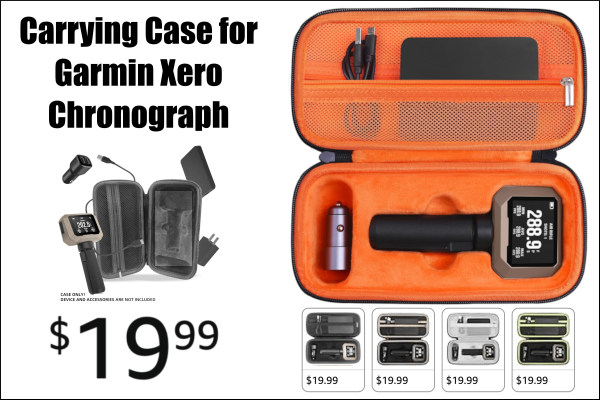
5. Amazon — Carry Case for Garmin Xero C1 Chronograph, $19.99
⏺️ » Handy, quality case for popular Garmin Radar Chronograph
This handy carry case is designed specifically for the Garmin Xero C1 Pro Chronograph. The nicely-padded, waster-resistant case holds the chrono mounted on its tripod, with a zippered compartment above for power cords and accessories. Three different inside colors are offered: Orange (as shown), Black, and Gray. And there are two other black interior versions with contrasting tan or green highlights. This kind of case is a “must-have” for transporting your $599 Garmin Chrono. There is also a smaller $9.99 Garmin Compact Travel Case that just holds the unit and a cord (not the power adapter). Both large and small cases provide protection from scratches, impacts, and everyday wear and tear.
6. Graf & Sons — Hornady Ammo Sale
⏺️ » Large selection of hunting and target ammo at good prices
Graf & Sons is currently running a major sale on Hornady Ammunition for both hunting and target shooting. Hornady Superformance ammo features polymer-tipped Hornady NTX bullets which are accurate and very effective on big game. Hornady’s Superformance ammo works in all action types, including semi‑autos. Along with Superformance ammo, many other ammo types are on sale, including .17 HMR rimfire.
7. Midsouth — Frankford Arsenal Perfect Primer Seater, $62.11
⏺️ » Excellent Primer Seating Tool with very positive user reviews
Amazon has the Frankford Perfect Primer Seater Tool for $62.11 (22% Off). This is a GREAT primer seating tool. It has good feel, plenty of leverage, and the primer tray works well. Importantly, it has a click-adjust wheel for precise primer seating depth control. Read our Frankford Primer Seating Tool Product Review. The tool comes complete with 12 precision shell holders. A quick thumb release system allows you to switch from small to large primers easily. Plus there is a hard stop so you won’t over-crush a primer.
8. Natchez — Federal .223 Rem, 500 Rounds, $199.99
⏺️ » Get 500rds of good .223 Rem ammo for just 40 cents each
Here’s great deal on quality Federal .223 Rem 55gr FMJ American Eagle Ammunition. A 500-round pack is now just $199.99, which works out to just 40 cents per round. American Eagle rifle ammunition offers consistent, accurate, affordable performance for the range. The loads feature quality bullets, reloadable brass cases and dependable primers.
Designed for the smaller heads of youth and women shooters, these Walker’s Slim Passive Earmuffs (#ad) feature a slim profile for comfort and convenience. Lightweight, foldable, and adjustable, these earmuffs are well-suited for female and younger shooters. The $18.02 price is a fantastic deal on good muffs with impressive 27dB Noise Reduction Rating (NRR). These are available in a variety of colors, including Flat Dark Earth (FDE) or Black for $18.02, Olive Green for $18.97, Coral for $20.16, and Teal for $22.53.
As an Amazon affiliate, this site can earn revenues through sales commissions.
Hunting season is here. For many of us, Fall hunting season involves liberating a rifle that sits in a safe most of the year, grabbing a box of cartridges, and heading to the wilds. But this “once a year thing” carries with it potential risks.
It is all to easy to grab some rounds that may look right, but which are, in fact, a slightly different chambering. Likewise it is possible some hunting rounds got put in the wrong box after last year’s hunting trip. Be very careful when you get ready for a hunting trip — check the headstamp, cartridge dimensions, and bullet diameter of all your rounds. If you make an ammo selection mistake, the consequences can be disasterous, as this story reveals.
The .223 WSSM and 6mmBR Disaster Report by Dr. Jim Clary
Under most circumstances, shooters don’t have to worry about chambering the wrong cartridge into the wrong rifle. After all, the cartridges are well marked and we all know which rifle we are shooting on any given day. In many cases, incorrect cartridges cannot be chambered — larger cases will not fit in smaller chambers, for example. No problem! That being said, I can tell you that even an experienced, careful and normally safe shooter can make a mistake.
The following is an account of just such a mistake that could have resulted in death or dismemberment. Fortunately, the shooter was not hurt, but the rifle was completely destroyed.
Last year, a friend purchased a Savage Precision right bolt, left port, single shot bolt action in 6mmBR Norma. It was an incredible prairie dog gun and he spent the summer burning powder and busting dogs. In October, he purchased a stainless steel Browning A-Bolt Varmint in .223 WSSM. The weather in the upper Midwest turned sour by the time he got the brass tuned up and he only got to fire it a few times before he was “socked in” for the winter. Thus, he spent his evenings loading ammo for the spring thaw.
During a break in the weather, he grabbed both rifles and a couple of bags of .223 WSSM and 6mmBR cartridges and headed to the range to check out his new loads. In case you are not familiar, the 6mmBR is smaller in diameter and a mite shorter than the .223 WSSM. Because of this, it will chamber in a .223 WSSM, but the .243 caliber (6mm) bullet is too big for the .22 caliber bore. That is what happened to my friend.
The rest is history — when he squeezed the trigger, all hell broke loose. The entire bottom of the rifle blew out, including the magazine assembly. The explosion actually cut the stock into two pieces. However, the bolt held and amazing as it may seem, the .243 bullet was “swaged” right out of the .223 barrel.
6mmBR (left) and .223 WSSM (right) cartridges above the remains of Browning A-Bolt rifle.
One Small Mistake Is All It Takes
Now, realize that my friend has been shooting all manner of firearms, safely, for over half a century. He is meticulous, thorough and conscientious in his approach to reloading and shooting. However, he made one mistake. He put some lose 6BR cartridges in a baggie as he packed up from a prairie dog hunt last summer, without noticing that the baggie was marked .223 WSSM in black marker. Then, when the break in his winter weather came, he grabbed the bag, believing it to be the WSSM cartridges and didn’t check the head stamp.
Couldn’t happen to you? How many times have we emptied our pockets of cartridges and dropped them into a plastic container on the shooting bench? How many times have we set down to a marathon reloading session, loading several calibers in a row? How many times have we put the wrong bullets, cases or primers into the incorrect container? My point is that even the safest of us can make a mistake. So, look at the picture above and take a bit more time when you reload your ammunition at home or chamber a round in the field. It might save your life.
You can never be too safe when hand-loading your own ammunition. This article outlines the Seven Fundamental Reloading Safety Tips, as explained by Brownells. This is important information for novice hand-loaders and a good refresher for those with reloading experience! The Ulimate Reloader video below has some specific tips on loading hunting ammo, as it’s now hunting season throughout much of the nation.
Summary of the Seven Safety Tips:
1. Do NOT mix powders. Keep your powders clearly marked and dated. You can use masking tape to write the date on the container.
2. Check cases frequently. Look for split necks, case head separation or other signs of fatigue and excessive pressure.
3. Store your reloading supplies in a safe and dry location, away from children and away from any possible source of ignition. It is also smart to keep your powder and primers separate.
2. Get and use respected reloading manuals, especially for new cartridges. Start low and work up slowly while watching for warning signs of pressure and/or case fatigue.
5. Make sure you cannot be distracted when reloading. Turn off your phone. If you get interrupted, stop. (Distractions will eventually lead to mistakes.)
6. Make sure your ammo headspaces properly in each gun if you load the same cartridge type for different firearms. Even with the same cartridge, different guns may require different loads.
7. If reloading military brass, be aware that case capacity is usually reduced, and initial loads should be at least 10-15% lower than published data.
Here are some other tips that will help your avoid making costly mistakes (such as using the wrong powder, or undercharging a case):
Powder Type — Always double-check the label on your powder containers. After placing powder in the powder measure, put a piece of tape on the measure with the powder type written on it. Some guys write the powder type on a card and place that right in the hopper.
Scale Drift — Electronic balances can drift. If you are using a digital powder scale, calibrate the scale with a test weight every 50 rounds or so.
Case Fill — If you throw more than one charge at a time, look INSIDE every case before seating a bullet. Squib charges can be dangerous if you don’t notice them before firing the next round.
Progressive Presses — When using a progressive press, consider using an RCBS Lock-Out Die. This will detect a low charge and stop the machine. These dies will work with RCBS, Hornady, and Dillon progressives.
In the wintertime, it’s common to encounter problems with static electricity when throwing your powder charges. The static can cause powder kernels to cling to the surface of reloading components, and can cause powder clumping. Clumped or sticky powder may make your measure bind or grab in the middle of the cycle, which can throw off your charge weight. Here are a couple simple ways you can minimize the effects of static electricity and improve the consistency of your powder measuring.
Ground Your Powder Measure — If you’re throwing powder charges in the fall or winter and have problems with bridging or sticking powder, use a ground wire. Bullet-smith Victor Johnson (Johnson Precision Bullets) tells us: “I have a 25-foot piece of real small wire with alligator clips on each end. It’s that long so I can run it down the hall to a water pipe. Use the wire tie from a bread bag to hold it in a small roll to put in the range box. When using it at the range use a 6″ nail from the co-op or Lowe’s / Home Depot and just push it into the ground.”
Use Bounce Dryer Sheets — A quick pass with the thin sheets used in dryers will eliminate “static cling” on your plastic reloading parts like powder throwers, powder funnels, and reloading press guides. Thanks to Doc76251 for this tip.
Reduce Electronic Scales’ Drift with Anti-Static Spray
Very sadly, GS Arizona, the creator of the Rifleman’s Journal website, passed away unexpectedly in June of 2022. Here is one of the many great tips he provided to handloaders through that website.
Apparently reducing static charges on and around electronic scales can reduce their propensity to drift, lessening the problem of “wandering zero”. Just how and why static charges interfere with scale performance is unclear, but many shooters have noticed that static electricity can cause electronic scales to behave strangely. So how do you reduce static charges around your digital balance? GS Arizona has found a very simple solution — an anti-static aerosol spray — that, by all indications, actually works. When this “spray-can solution” was suggested by a fellow shooter, GS was skeptical. However, he tried the stuff and he says that it really does help the scale maintain zero over time, with much less observed drift.
GS explains that the use of “Static Guard” spray helped mitigate the problem of a drifting zero on his Ohaus electronic scale: “My electronic scale… suffers from drifting zero (as they all seem to). I’ve read dozens of forum posts about drift and how to minimize its occurrence, so I know this problem isn’t limited to my scale or my workshop. Sometime last year, John Lowther mentioned the use of anti-static spray as a solution to the drift problem. John stated that the spray had virtually eliminated drift for him.”
GS found that the Static Guard actually worked: “The spray works great, just as John said it would. I spray all surfaces that I touch with my hands and arms as well as the pan (top and bottom), the metal tray on which the pan rests and the table under the scale. In six months or so of using the spray I’ve re-applied it about two or three times; it certainly isn’t something that you need to do each time you sit down to load. Before using the spray, it was not uncommon for me to re-zero the scale 10 times in the course of loading 72 rounds; now it might need it once during a session.”
Hunting season kicks off this month in many parts of the USA. If you have a new hunting rifle or need to develop a load for your rig with a new choice of bullets and/or powder, this article can help. Ace shooter Keith Glasscock explains how to develop a good load for a hunting rifle or varmint rifle.
Keith is an outstanding competitive shooter, who has finished second at the F-Class National Championships (F-Open) multiple times. Keith is also a skilled wind coach who runs the popular Winning in the Wind YouTube Channel. Along with his interest in mid-range and long-range F-Class competition, Keith also enjoys game hunting and varmint adventures.
Developing accurate hand-loaded ammo for hunting and varmint rifles involves procedures that may be a bit different than load testing for a match rifle. You want to be efficient, and use the types of brass and bullets you’ll be using on the hunts. In two recent videos, Keith shows how he developed good, accurate loads for a .223 Rem varmint rifle and a .308 Win hunting rifle.
.223 Rem Load Development — Powder Charge and Seating Depth
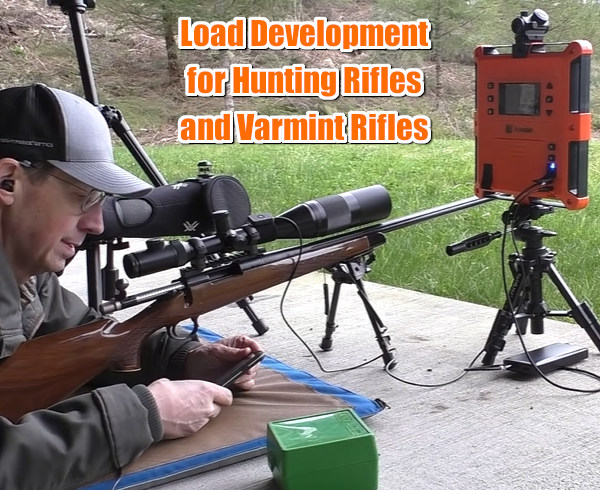
In the first video, Keith covers the load development process for a Remington 700 bolt-action varmint rifle chambered in .223 Remington. Keith starts by full-length sizing the brass. Then he experimented with powder charge weights, and came up with a promising load of 24.7 grains of Alliant AR Comp with Hornady 50gr A-Max bullets.
Next Keith experimented with seating depths (see 5:30-6:100) and found that accuracy improved as he changed OAL length in .005 increments. Keith ended up with 2.270″ with a 3-shot group in the twos! This video shows the importance of testing your bullet choice at various seating depths. Keith shoots this rig prone off bipod, which is similar to the bipod shooting he does in the varmint fields. Keith explains key factors to consider when optimizing the .223 Rem cartridge in a varmint rig. Velocity readings are made with a LabRadar unit.
Load Development for .308 Win Hunting Rifle
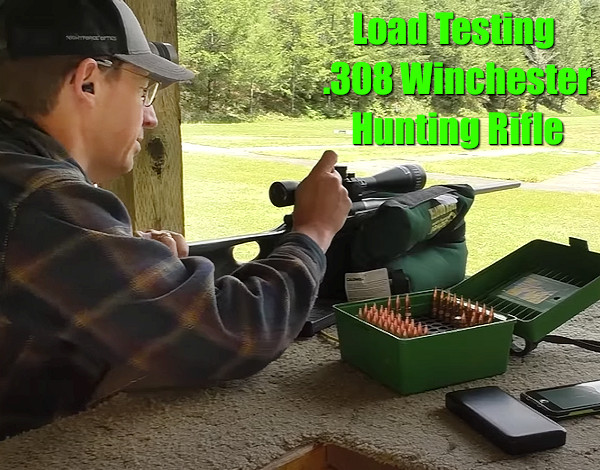
In a second video, Keith shows the process for load development with a .308 Winchester hunting rifle. Here Keith uses a large X-type sandbag for a front support. Again, he was shooting a Remington 700 bolt-action rifle, this time with Barnes TSX solid copper bullets, PPU Brass, Federal 210m primers, and AR Comp powder. Keith said the Barnes bullets were excellent — he commented that these bullets were “match quality in terms of precision”. Keith achieved some very small three-shot groups with AR Comp and the TSX projectiles. Keith did note that point-of-impact shifted up significantly with increases in charge weight (see 6:20-7:10). With thinner-contour hunting barrels, this is not unexpected. But POI change should be observed carefully during load development, as you may need to adjust your zero after completing testing.
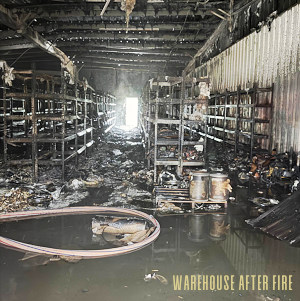
Powder Valley Outdoors (“Powder Valley”) is one of the leading reloading component and shooting supplies vendors in the country. Powder Valley has also been a strong supporter of AccurateShooter.com for over a decade. However, as you may have heard, Powder Valley suffered a warehouse fire recently. Thankfully no one was injured and Powder Valley is now fulfilling orders for customers.
Powder Valley is making great progress after the warehouse fire. The company now has a variety of products back in stock — powder, primers, brass, bullets, and more — and Powder Valley is fulfilling orders through trusted industry partners while Powder Valley gets its own warehouse back up and running. Orders can be placed now through the Powder Valley website. The staff at Powder Valley tells us: “Powder Valley would like to say thank you to the entire community for their incredible support and prayers through this time.” To support Powder Valley and place an order, visit PowderValley.com.
Powder Valley: Rising from the Ashes
When a devastating fire tore through Powder Valley’s main warehouse and offices, the loss was total. Everything melted, burned, and destroyed. But through it all, the Powder Valley team is standing strong — grateful that everyone is safe and determined to come back better than ever.
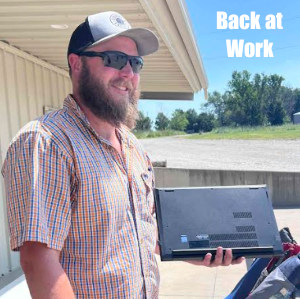
In the immediate aftermath, the team rallied to take care of customers. Kim and Kort from Customer Service worked to make sure orders and support didn’t stop. Jacob, laptop in hand, quickly transitioned to remote operations. Beau jumped in to handle inventory assessments in what was left of the office area. Owners Bryan and Noel Richardson also stepped forward, sharing their story with local news outlets about the impact of the fire and what Powder Valley means to their family and community.
The damage to the facility was extreme, and while Powder Valley is insured, dealing with insurance will take time. In the meantime, the company has partnered with trusted industry allies to fulfill orders, ensuring customers can still get what they need while keeping revenue flowing to sustain operations.
“Right now, working with industry partners was the fastest way to get back up and running,” the team explained. “It allows us to continue serving our customers and keep business moving while we navigate insurance and begin planning for our long-term home.”
The road ahead will be long — finding or building a new facility, reorganizing operations, and reestablishing full capacity. But the Richardson family and the entire Powder Valley team are unwavering in their commitment to the shooting sports community. “We’re going to get up and we’re going to keep swinging. We’re going to keep swinging”, Bryan said.
For now, every order placed with Powder Valley helps keep the lights on and supports the rebuild. And the company couldn’t be more grateful for the overwhelming outpouring of support from shooters and reloaders across the country. “This incredible community has given us strength and optimism to keep forging ahead,” the team shared. “From the bottom of our hearts — thank you.”
Nobody likes to spend hours manually chamfering cases and cleaning primer pockets. There are simple hand tools that will perform these tasks, but the process is time-consuming and tedious after a couple dozen cases. To speed up case prep duties, you can get one of the large, powered case prep centers. These function well, but frankly we didn’t want to give up that much precious space on our reloading bench. One good solution is Hornady’s compact Lock-N-Load Case Prep Trio (item 050160). This triple-threat tool packs a lot of functionality in a small package.
This cleverly-designed powered tool has a small footprint, yet it can perform three tasks as well as much more expensive, tower-style case prep units. The Hornady Case Prep Trio $139.99 at Midsouth, $144.65 at Precision Reloading, and $146.99 on Amazon. We’ve used this machine and it works well. The only negative is that you will get metal shavings on your bench (unlike some of the larger case prep centers). We’ve seen some guys put a small pan under the power head — then you can just dump the shavings out of the pan.
With three active stations, you can chamfer, deburr and clean primer pockets without having to change tools. The Case Prep Trio ships with inside chamfer, outside chamfer, and deburr tools. You can also use the machine with other optional 8/32 threaded accessories such as primer pocket reamers, primer pocket uniformers, and case neck brushes. CLICK HERE to see all tool options. Conveniently, the Case Prep Trio has on-board storage for your tool-heads. User reviews have been very positive.
At the request of our readers, we provide select “Deals of the Week”. Every Sunday afternoon or Monday morning we offer our Best Bargain selections. Here are some of the best deals on firearms, hardware, reloading components, optics, and shooting accessories. Be aware that sale prices are subject to change, and once clearance inventory is sold, it’s gone for good. You snooze you lose.
NOTE: All listed products are for sale to persons 18 years of age or older. No products are intended for use by minors.
1. EuroOptic — Tikka T3x Hunting Rifle Sale, Major Savings
⏺️ » Save up to 39% on quality rifles with accuracy guarantees
The Tikka T3x is a quality hunting rifle at an affordable price. Currently EuroOptic is running a major closeout sale, offering T3x bolt-action rifles with a wide variety of chamberings and stock styles. At $580 you can get a T3x Lite, a very good deal. If you prefer a wood stock, that’s offered in the T3x Hunter for $730. At the top end, consider the $1100 Tikka T3x Roughtech Cerca which adds some serious upgrades. The stock is composed of Roughtech material, and is modular, with an interchangeable pistol grip allowing the angle to be modified for different shooting positions.
2. Amazon — Caldwell Stable Table Deluxe, $191.48
⏺️ » Positive user reviews — good set-up for varminting and home ranges
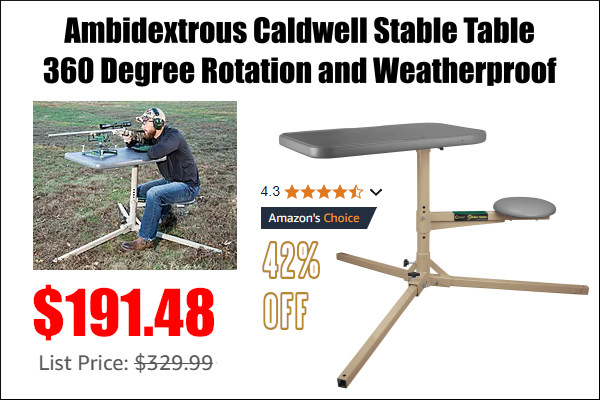
If you want a good supported shooting option that can be transported in your vehicle, check out the Caldwell Stable Table Deluxe (#ad). Now discounted 42% to $191.48, this rotating range bench is stable and comfortable. The seat and tabletop pivot (rotate) around a center axis as a single unit so you can easily swing laterally from one target to the next — that’s great for P-dog adventures. A bolt in the base allows angle adjustment of a single leg, letting you align the top parallel with the horizon. This is great unit for varmint hunting with very positive owner reviews.
3. Amazon — Lyman Turret Press Kit, $699.99
⏺️ » Complete reloading system with 8-station turret press
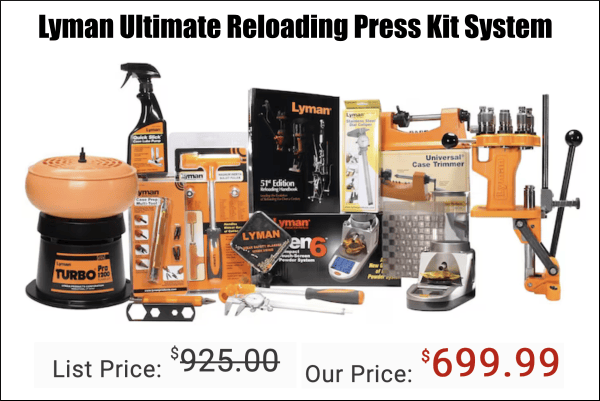
The Lyman Ultimate Reloading System is a very complete multi-product kit with all the tools required to accomplish all steps in the reloading process. On sale for $699.99 ($225 discount), this combo kit includes the excellent Lyman Brass Smith 8-Station turret press ($365 MSRP), Lyman Gen 6 Electronic Scale/Dispenser ($320 MSRP), Universal Case Trimmer, Pro 1200 Turbo Tumbler, and case prep tools and more. This is a great package deal for someone getting starting in reloading.
4. Graf’s — Sightron SIII Scope Sale, MOA and MIL, Save 25%
⏺️ » Major discounts on excellent competition scopes
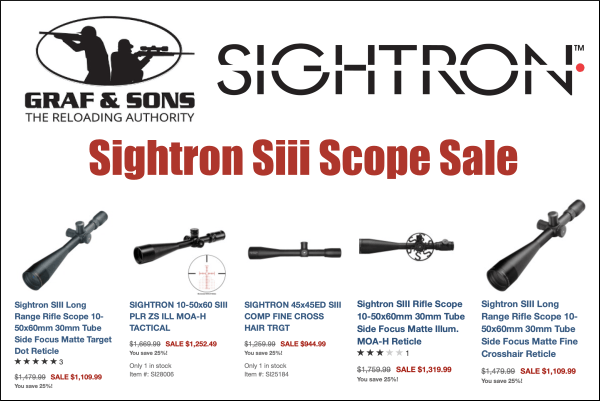
If you need a new competition scope, definitely check out the Sightron SIII Scope Sale at Graf & Sons. There are a wide variety of scopes on sale including 45X fixed power, 6-25x50mm, 8-32x50mm, and 10-50x60mm. Many offer precision 1/8 MOA adjustments. For short-range benchrest, 600- and 1000-yard benchrest, F-Class, and PRS/NRL matches you’ll find a good scope on sale, with your choice of MOA and MIL reticles and MOA or MIL clicks. Most scopes are now 25% off, so you can save $300 to $440.
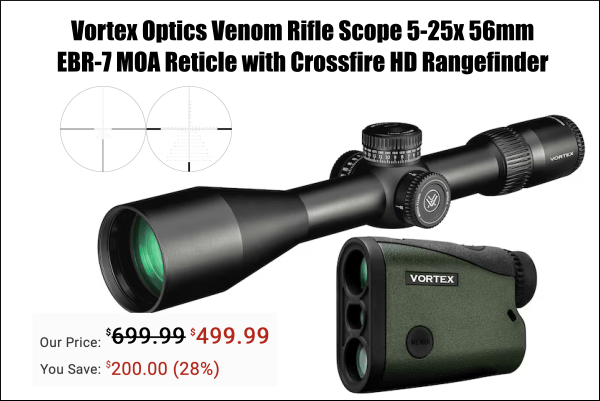
⏺️ » Very affordable combo for hunters and varminters
Here’s a good Vortex FFP scope plus rangefinder combo for matches, varmint hunting, and more. The Vortex Venom 5-25x56mm scope features a 34mm main tube, ample turret travel, and RevStop Zero System. The First Focal Plane EBR-7C reticle gives you accurate holds at any magnification. This $499.99 combo includes a Vortex Crossfire HD 1400 Laser Rangefinder, a handy, reliable unit. Right now you save $200 on this scope/LRF combo with this MidwayUSA sale.
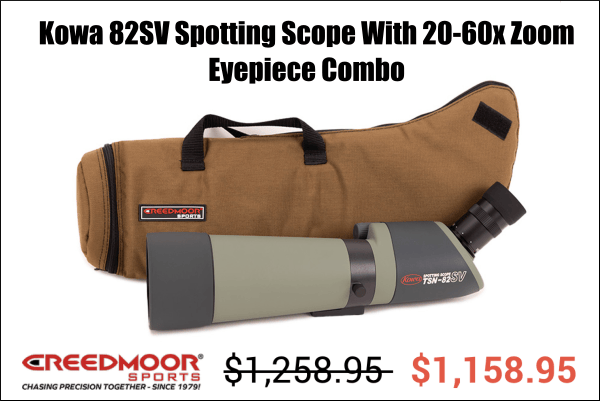
⏺️ » Popular spotting scope favored by competitors
The Kowa 82SV Spotting Scope is favored by many top competitors. The 82mm lens is bright and sharp and the glass is multicoated, ensuring sharp images and a clear visual range. This combo comes with an excellent 20-60 zoom eyepiece. This Kowa 82SV spotter offers optical performance as good or better than many other spotting scopes costing much more. This Kowa spotter ships with a nice Creedmoor Sports padded cover. Save $100 now with this deal.
7. Midsouth — Nosler Ballistic Tip Ammo Sale
⏺️ » Major savings on ballistic tip hunting ammo
Need good ammo for your fall hunt? Consider picking up some Nosler Ballistic Tip Ammunition, offered for a wide selection of hunting cartridge types including .260 Rem, .270 Win, .308 Win, .30-06 Springfield, and .300 WinMag (and more). The Nosler bullets in this ammo have a heavily-jacketed base that ensures wide expansion while the boat-tail design enhances long-range accuracy. These quality hunting rounds deliver the accuracy and down-range punch required for clean kills in the field.
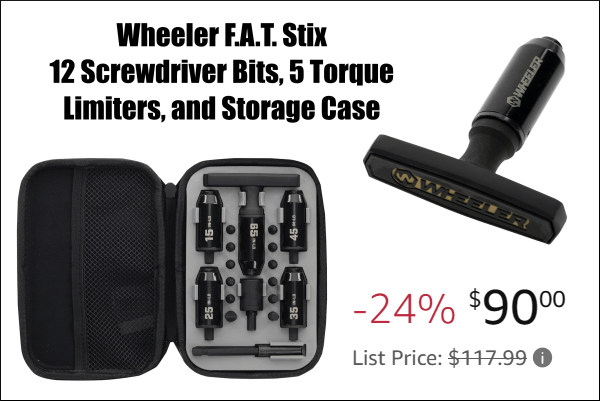
8. Amazon — Wheeler F.A.T. Stix, $90.00
⏺️ » Unique tool set for setting torque precisely
Proper torque settings for your scope rings and action are critical for accuracy. For this, we like the Wheeler F.A.T. Stix (#ad) with 12 screwdriver bits, 5 torque limiters, and storage case. This compact torque wrench set, now 24% off, takes the guesswork out of setting the correct torque. Simply attach the preset torque limiter to the t-handle, insert the desired bit, and set your screw to the right specs.
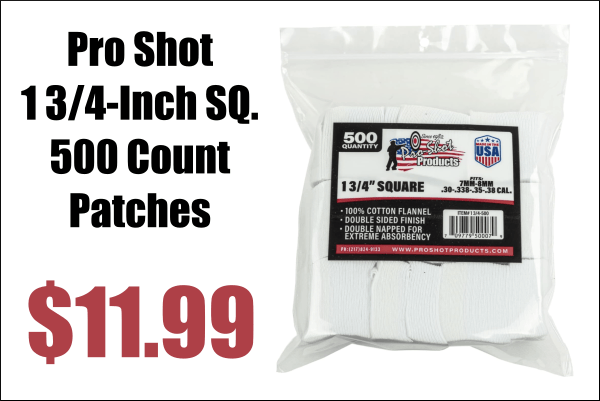
9. Amazon — Pro Shot 7mm/.38 500ct Patches, $11.99
⏺️ » 500 patches good for rifles and pistols
Cleaning barrels properly requires good patches (and plenty of them). Right now you can get 500 Pro-Shot Rifle Patches for just $11.99 on Amazon (#ad). These American-made 100%-cotton patches work great. The 100% cotton flannel fabric holds solvent well and is finished on both sides for optimal cleaning of powder and carbon residue. These patches can also be used to clean inside actions and muzzle brakes.
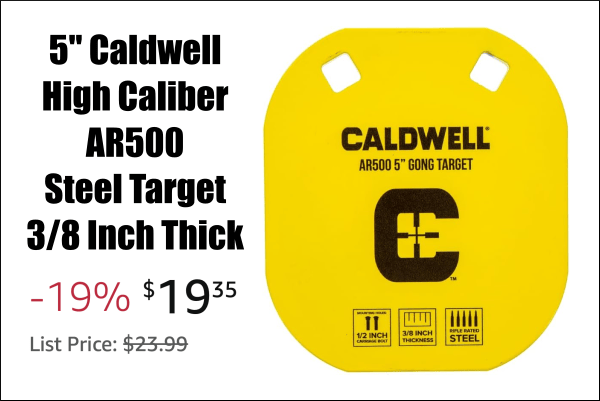
10. Amazon — Caldwell High Caliber AR500 Steel Targets, $19.35
⏺️ » Good, durable Steel gong target under $20
Available in a variety of shapes and sizes, Caldwell Gong targets are made of tough AR500 steel. These bright yellow steel targets can withstand thousands of rounds. Rated up to 3000 FPS impact velocity these will work with most common rifle types. Right now the 5″ Gong (3/8″ thick steel), is just $19.35, a 19% savings. A wide variety of other Caldwell AR500 steel targets are available including 8″ Gong, 10″ Coffin, 13″ Octagon, and Full-size IPSC.
As an Amazon affiliate, this site can earn revenues through sales commissions.












 Hunting season is here. For many of us, Fall hunting season involves liberating a rifle that sits in a safe most of the year, grabbing a box of cartridges, and heading to the wilds. But this “once a year thing” carries with it potential risks.


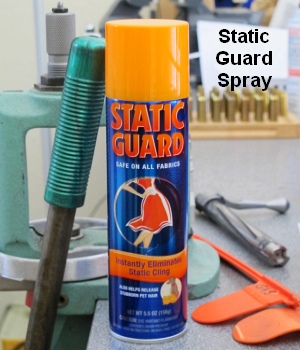 Apparently reducing static charges on and around electronic scales can reduce their propensity to drift, lessening the problem of “wandering zero”. Just how and why static charges interfere with scale performance is unclear, but many shooters have noticed that static electricity can cause electronic scales to behave strangely. So how do you reduce static charges around your digital balance? GS Arizona has found a very simple solution — an anti-static aerosol spray — that, by all indications, actually works. When this “spray-can solution” was suggested by a fellow shooter, GS was skeptical. However, he tried the stuff and he says that it really does help the scale maintain zero over time, with much less observed drift.