Do you have some ammo that got loaded incorrectly, perhaps with the wrong powder? Then you’ll want to disassemble the ammo for safety’s sake. You can use an impact puller to do this task, but if you have more than a dozen rounds or so, you may prefer to use a collet-style bullet puller. These work very quickly and positively, making quick work of big jobs. The efficiency of the collet-style puller is worth the investment if you frequently disassemble ammo. These devices retail for under $35.00 (collets sold separately). Normally, you’ll need a specific collet for each bullet diameter. But collets are not that costly, so this isn’t a big deal, particularly if you only load a few calibers, such as .223, 6mm, and .308.
Hornady and RCBS use different mechanisms to tighten the collet around the bullet. On the red lever Hornady Cam-Lock Bullet Puller, a lever-arm on the top of the bullet puller serves to tighten the collet around the bullet. Simply rotate the lever from the vertical to the horizontal position to grab the bullet. Lower the ram to remove the case. The bullet will drop out when you return the lever arm to the vertical position. This is demonstrated in the video below:
Hornady Cam-Lock Bullet Puller Demonstrated
Collet bullet-pullers resemble a loading die with a lever or handle on the top. They screw into a standard reloading press. Hornady and RCBS both make collet-style bullet pullers. They use the same basic principle — the device tightens a collet around the bullet, and then the bullet is separated from the case by lowering the press ram. NOTE: Collet pullers may leave small marks on your bullets, unlike impact (kinetic) pullers.*
Like the Hornady tool, the RCBS Bullet Puller employs a collet to grab the bullet. However, the RCBS tool tightens the collet in a different way. The head of the RCBS tool is threaded internally. By rotating the lever arm clockwise in a horizontal circle you squeeze the collet around the bullet. To remove the bullet, after lowering the press ram, simply spin the lever arm back in the opposite direction. The use of the RCBS tool is demonstrated in these two videos:
RCBS Collet Bullet Puller Demonstrated:
WARNING: When removing bullets from loaded cartridges, always make sure there are no obstructions or debris in your shell-holder or under the loaded round. NEVER engage a primer seating accessory on your press when working with loaded rounds. You can cause a round to discharge by contacting the primer! Also, we recommend you keep your head and torso away from the bullet puller tool at all times.
*By contrast, impact pullers rarely mark bullets, particularly if you put a little bit of foam or paper wadding in the closed end of your impact puller. When dismantling loaded rounds, powder kernels can get trapped in the wadding, so you should remove and replace the wadding before changing to cartridges loaded with a different powder type (assuming you intend to save the powder).
Looking for a good load for a new rifle? Or perhaps you want to try a new powder and bullet combo for an existing rig. One of the best places to start for load data is Hodgdon’s online Reloading Data Center for pistol, rifle, and shotgun reloaders. Check out the Reloading Data Center at www.HodgdonReloading.com.
In the Data Center, you’ll find thousands of load recipes for pistol, rifle, and shotgun. Rifle shooters will find dozens of loads for their favorite Hodgdon, IMR, and Winchester powders such as H4198, H4895, Varget, H4350, and IMR 8208 XBR. And Hodgdon’s Reloading Center is “mobile-friendly” so it works well with smartphones and tables. Navigation is easy, and you can set the search criteria easily choosing your favorite powder or bullets. After choosing a cartridge, you can pre-select specific bullet weights and powder types. That quickly delivers just the information you want and need. You won’t have to scroll through scores of entries for bullets or powders you don’t use.
NOTE: This shows results for two bullet weights and two powder choices. With more powders and bullets selected you will get more results. The “BUY NOW” buttons link to the Hodgdon webstore.
Reloading Center is Smartphone-Friendly
Mobile users will notice that the current Hodgdon Reloading Center is “user-friendly” for smart-phone and tablet users. Controls have been optimized for touch-screens, and buttons are large and easy to use.
How to Get Started with Handloading
Getting started in Reloading? Ultimate Reloader offers a helpful introductory video that covers the basics. In addition, a recent Ultimate Reloader article reviews the types of reloading presses, plus the other gear you’ll need, from dies to powder dispensers.
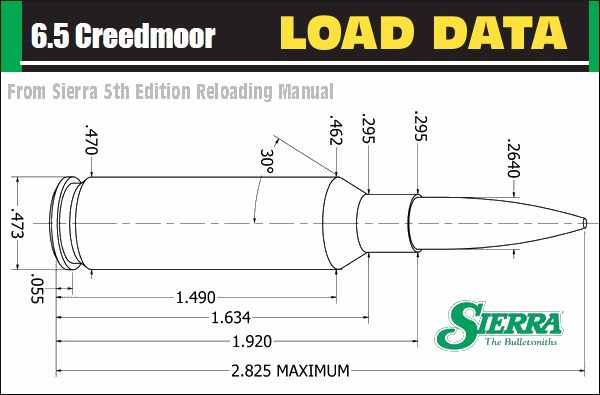
Sierra Bullets has released extensive load data for the popular 6.5 Creedmoor cartridge. This medium-sized cartridge has become one of the most popular chamberings for tactical and PRS shooters. The 6.5 Creedmoor combines excellent accuracy, good mag-feeding, good barrel life, moderate recoil, and reasonable component cost. That’s why this cartridge has caught on quickly, and is now one of the most popular chamberings in factory rifles.
Developed in 2007 by Dennis DeMille and Dave Emary, the 6.5 Creedmoor is a shortened and improved 30 TC cartridge case that was inspired by the .308 Winchester design. This short action design was created to maximize case capacity and a wide range of loading lengths, while still fitting in standard short action magazines. With the correct twist barrel, the versatile 6.5 Creedmoor can take advantage of the wide range of bullet weights available in 6.5 mm (i.e. .264 caliber). Reloaders should keep in mind that the 6.5 Creedmoor works best with medium to medium-slow powders such as H4350, Varget, Win 760, and RE-17. The light recoil and adaptability of the efficient 6.5 Creedmoor cartridge has already proven itself in high power, precision rifle series and benchrest competitions. Couple that with respectable barrel life and its intrinsic accuracy potential and you have a recipe for success which should insure its legacy for decades to come.
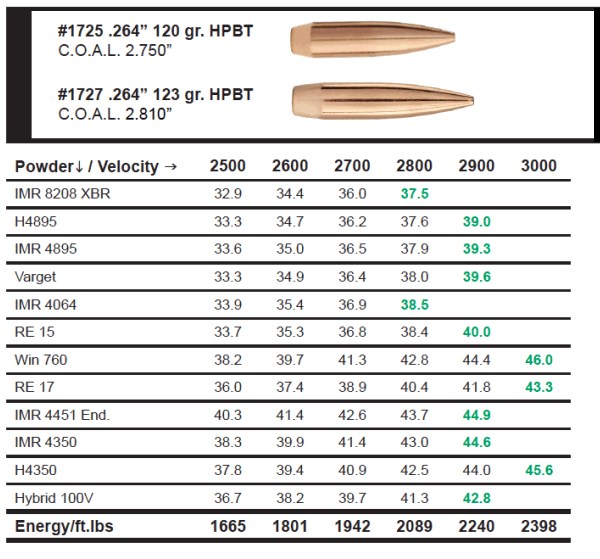
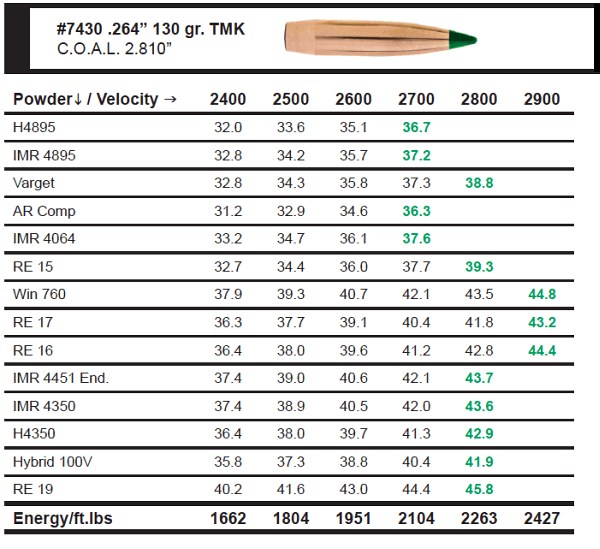
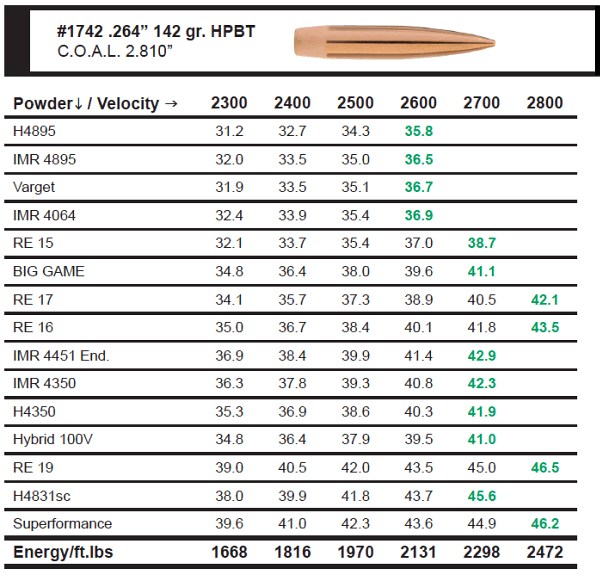
Here are three tables from the Sierra Bullets Reloading Manual (5th Edition). IMPORTANT — This is just a sample!! Sierra has load data for many other 6.5mm bullet types, including FB, Spitzer, SBT, HPBT, and Tipped MK from 85 grains to 142 grains. To view ALL 6.5 Creedmoor DATA, CLICK HERE.
INDICATES MAXIMUM LOAD – USE CAUTION
LOADS LESS THAN MINIMUM CHARGES SHOWN ARE NOT RECOMMENDED.
INDICATES MAXIMUM LOAD – USE CAUTION
LOADS LESS THAN MINIMUM CHARGES SHOWN ARE NOT RECOMMENDED.
INDICATES MAXIMUM LOAD – USE CAUTION
LOADS LESS THAN MINIMUM CHARGES SHOWN ARE NOT RECOMMENDED.
Two More Great 6.5 Creedmoor Reloading Resouces
Want More 6.5 Creedmoor Load Info? View Starline’s 6.5 Creedmoor Guide by Gavin Gear:
PRB 6mm Creedmoor and 6.5 Creedmoor Load Survey
The Precision Rifle Blog compiled Load Data from PRS Competitors, for both 6mm Creedmoor and 6.5 Creedmoor. This is a good place to start. PRB surveyed the match loads for “173 of the top-ranked precision rifle shooters in the country”. CLICK HERE.
LEE Precision has a new six-station Progressive Press with some impressive engineering. Given its very affordable $364.50 street price and the features, this new Six Pack Pro 6000 Progressive Kit will definitely draw some customers away from Dillon, RCBS, and Hornady.
This press has clearance for magnum rifle cases, offers auto-indexing, and does not require a set of separate tool heads. Just swap the dies in and out quickly using LEE Smart Lock bushings.
The press includes the combination tool rack, bin bracket and free ammo bin. When you purchase the full Six Pack Pro 6000 Kit, shown at right, this comes complete with LEE Breech lock reloading dies (your choice of cartridge), Universal Case Feeder, Auto Drum Powder measure, and appropriate shell plate.
You can buy the Six Pack Pro 6000 Kit set up for a variety of cartridge types: 9mm Luger, .32 S&W, .380 ACP, .38 SPL/.357 Magnum, .40 SW, .44 SPL/.44 Magnum, .45 ACP, .45 Colt, 300 Blackout, .223 Remington, and 6.5 Creedmoor. Each set comes with the dies and shell plate you need for that cartridge type.
The included dies for pistol cases are: Carbide full length sizing die, powder-through expanding die, bullet seating die. For rifle cartridges .223 Remington and 6.5 Creedmoor you get: Full length sizing die, short or long charging die, easy adjust dead length bullet seating die, and factory crimp die.
Key Features of New LEE Six Pack Progressive Press:
Six stations
Very affordable price
Automatic priming system
Simple and reliable automatic indexing
Clearance sufficient for largest magnum rifle cases
Cartridge changeover in seconds, change primer size with no adjustments
Dies secured with LEE Smart Lock Bushings — no turret or tool heads needed
John Lee, President of LEE Precision, is proud of this new product: “I am pleased to announce the Six Pack progressive is now shipping. The Six Pack is the heaviest, most capable progressive press, we have ever made. The Six Pack is also one of the easiest presses to setup and operate. The only ‘adjustments’ are setting the dies and selecting and installing the correct primer size. The Six Pack Pro kit includes everything you need to start reloading a specific cartridge. The kit includes our new ‘Smart Lock’ Breech Lock quick change bushings.”
The Pew Pew Tactical website has interesting article on rifle and pistol cartridges and bullet types. This contains a large selection of interesting photographs and illustrations. If you load and/or shoot for a wide variety of cartridge types, you’ll find that article well worth reading. It has nearly 50 photographs and more than a dozen short videos. READ FULL Article.
The article shows all types of pistol bullets, along with a variety of rifle projectiles. It even illustrates multiple types of shotshell cartridges.
The article also explains the basic components of modern cartridges –bullet, case, powder, and primer:
Photo courtesy Ammunitiontogo.com which sells ammo from many leading brands.
Popular Cartridge Types Profiled
The article provides quick summaries of popular ammunition types including 9mm Luger (9x19mm), .357 Magnum, .40 SW, .45 ACP, .223 Rem, and .308 Winchester. The author’s favorite pistol round is the 9mm Luger: “9mm is my personal favorite and if there was a “Goldilocks” round, this would be it. The very first gun I bought was a 9mm. They’re fun at the range. They’re good for defense. It is the standard round for NATO countries and the majority of police forces around the world. It is mild shooting, can vary in weight from 115 to 147 grains, and has varying stopping power based on the type of bullet.”
This Pew-Pew Tactical guide to cartridge types also provides a quick explanation of cartridge ignition — both centerfire and rimfire: “The rimfire’s primer is built into the rim while the centerfire cartridge has the primer in the center. Pro tip — if you can see a circle in the middle…it’s a centerfire cartridge.”
There are two common types of centerfire primers — Boxer and Berdan. This helpful Wikipedia illustration shows how Boxer, Berdan, and rimfire primers ignite the powder in the cartridge:
This centerfire and rimfire ignition animation is by BBODO – Own work, CC BY-SA 3.0 licensed under the Creative Commons Attribution-Share Alike 3.0 license.
At the request of our readers, we provide select “Deals of the Week”. Every Sunday afternoon or Monday morning we offer our Best Bargain selections. Here are some of the best deals on firearms, hardware, reloading components, optics, and shooting accessories. Be aware that sale prices are subject to change, and once clearance inventory is sold, it’s gone for good. You snooze you lose.
NOTE: All listed products are for sale to persons 18 years of age or older. No products are intended for use by minors.
1. Precision Reloading — Lee PRO 1000 Press Package, $189.99
⏺ Amazing deal on Progressive Press with Case Feeder for loading pistol ammo
If you want the efficiency of a progressive press, but have a limited budget, consider the Lee Pro 1000 Progressive Reloading Press. This reloading kit includes 3-station press, dies (Carbide FL Sizing, Powder-Through Expanding, and Bullet Seating Dies), 3-Hole Turret, Shell Plate, Powder Measure, Universal Case Feeder, and priming system. Yes that’s right this $189.99 Kit includes the case feeder! Order the kit for your favorite cartridge type including: .32 S&W, .38 Auto/.38 Super, .38 Spl/.357 Mag, .380 ACP, .45 Colt, .45 ACP, and .223 Remington. NOTE: Lee cautions that “Only CCI or Remington brand primers are safe to use with this press”. While this is a great deal it’s best suited for pistol cartridge loading. BONUS: Also, through 11:59 PM CST on 12/26/2022 you save 10% on orders over $75 with Code 122522.
⏺ Kit offers good press and big savings over price of individual tools
The RCBS Rebel Master Reloading Kit offers everything you need to get started with precision hand-loading. On sale now for just $349.99 at Midsouth, this package includes: Rebel Single-Stage Press, Uniflow-III Powder Measure, 1500 grain digital scale, hand priming tool, powder funnel, hex key set, chamfer/deburring tool, accessory handle with case neck and primer pocket brushes, case loading block, and spray lube. You even get a Speer #15 loading manual. This is a heck of a deal for $349.00 with FREE Shipping. You could pay $200 for just a good single-stage press alone.
3. Sportsman’s Warehouse — Savage Rascal Sale + Rebate
⏺ Good little bolt-action training rifle, now with REBATE
The Savage Rascal is a great starter rifle for new shooters. This compact, single-shot, bolt-action rimfire comes in a variety of stock colors and patterns. Purchase one by 12/31/2022 and get a $25 mail-in Savage rebate. These Savage Rascal Rifles feature laminated stocks, threaded (1/2-28) barrels, and modern aesthetics. Though sized for younger shooters, the design shares full-size rifle features, including Savage’s user-adjustable AccuTrigger system.
4. Amazon — Magpul Bipod, $66.00
⏺ Quality, sturdy yet light-weight bipod
Looking for a lightweight, easy-to-mount yet stable bipod? The modern Magpul MOE Bipod features injection molded components for weight reduction while still retaining the functionality, strength, and value of Magpul’s all-metal bipods. It’s easy to mount the MOE bipod using the rapid-attach mounting system that attaches securely to sling wwivel studs on the rifle forearm — no track required.
5. Amazon — RCBS Hand Priming Tool, $33.99
⏺ Very good price on an quality, durable hand-priming tool
Shopping for a very reliable hand priming tool at a bargain price? We recommend the RCBS 90200 Hand Priming tool. This durable tool seats primers quickly and safely, with plenty of leverage. The unit ships with BOTH large and small primer plugs. A safety mechanism separates the seating operation from the primer supply, significantly reducing the the possibility of tray detonation. Yes there are better, high-end hand priming tools, but you might have to pay $80+ to get noticeably better performance.
6. KYGUNCO — Taurus TX22 Competition, $419.99
⏺ Affordable .22 LR match pistol with compensator has earned positive reviews
Rimfire pistols let you enjoy action pistol competitions without spending a ton of money. Among .22 LR pistols, the Taurus TX22 Competition SCR offers great performance for the price. The TX22 Competition SCR builds features a precision-engineered slide and match-grade bull barrel. The “skeletonized” slide with enlarged ejection port is designed so that a red dot optic can be mounted to the barrel. That helps prevent problems during ejection of empty shells. Taurus claims this mounting configuration enhances accuracy compared to a slide-mounted optic platform.
7. Midway — Caldwell Front Rest & Rear Bag, $99.99
⏺ Great price on good set-up for sighting-in hunting rifles
Need a good basic front rest and rear bag to sight-in that hunting rifle or do load development? Here’s a solid, functional benchrest set-up at a great price. This Caldwell Rock BR Rest and Bag Combo is great combo deal for just $99.99. This will more than suffice for testing a hunting rifle or basic bench-work. Upgrade the rear bag later. The front rest adjusts for both windage and elevation. This is a GREAT deal — consider that the Caldwell Rock BR Rest by itself sells for $179.99 at Sportsmans.com.
8. Midsouth — Year-End RCBS Sale, Save Big Plus Free Shipping
⏺ Great prices on top-tier items plus FREE Shipping
9. Amazon — Hearing Protection and Shooting Glasses, $35.99
⏺ Excellent kit with 30 NRR muffs plus TWO sets of safety eyewear
Nearly every time we’re at the range we see people without proper eye and/or ear protection. For under $40 you can get excellent protection with this Earmuffs and Safety Lenses Kit. You get a comfortable set of 30 db NRR earmuffs plus TWO sets of protective glasses, all housed in a handy carry kit. The ANSI Z87.1-approved lenses are Anti-Fog and scratch-resistant. We like having a choice of lens colors — the clear lenses provide max light transmission while the yellow lenses offer enhanced contrast and work well on overcast days. If you do a lot of indoor training, this is a very good kit for the price.
10. MidwayUSA — MTM 4-Can Ammo Crate, $27.52
⏺ Great system that hold many pounds of ammo securely
This MTM ammo crate is popular with our readers. The MTM AC4C Ammo Carrier features four lockable polymer ammo cans in a fitted, four-slot 23.5″ x 11.3″ x 7.5″ carry crate. This makes it easy to haul four full ammo cans. Actual purchasers have raved: “Moments after I received this storage box set I ordered another. Very well-built and great design — a steal at the price.” The system includes four lockable, O-Ring 11.3″ x 7.2″ x 5″ ammo cans (AC30T) for multi-caliber ammo storage. The crate even includes tie-down points for transport in a cart or ATV. This is on sale now at MidwayUSA for $27.52 or $34.27 on Amazon.
At the request of our readers, we provide select “Deals of the Week”. Every Sunday afternoon or Monday morning we offer our Best Bargain selections. Here are some of the best deals on firearms, hardware, reloading components, optics, and shooting accessories. Be aware that sale prices are subject to change, and once clearance inventory is sold, it’s gone for good. You snooze you lose.
NOTE: All listed products are for sale to persons 18 years of age or older. No products are intended for use by minors.
1. Bullet Central — Premium Pre-Fit Barrels
⏺ Excellent Pre-fit chambered barrels in stock at good prices
No one wants to wait weeks or even months to get a top-quality custom barrel chambered by a gunsmith. Now you have a great alternative. Bullet Central has a large inventory of pre-fit, pre-chambered, cut-rifles barrels crafted with premium hand-lapped steel from Bartlein, Brux, and Krieger. A wide variety of calibers and contours are offered. Chamberings include: 6.5mm Creedmoor, 6.5×47 Lapua, 6mm BRA, 6mm BRX, 6mm Creedmoor, 6mm Dasher, and 6mm GT. If need a top-quality barrel for your Benchrest, varmint, or NRL22 rifle, this is a great option. Note: Pre-fits are also offered in .223 Rem, but are currently sold out.
⏺ Complete Package — everything you need to reload at 21% Off
Here’s an excellent reloading package with everything you need to start handloading cartridges. And right now you can save 21%. With this Hornady Lock N Load Deluxe Classic Reloading kit you get the Classic single-stage press, powder measure with stand, digital scale, hand priming tool, OAL gauge tool, calipers, loading block, bullet release “hammer”, powder trickler, funnel, chamfer/debur tool, shellholder pack, die bushings, lock rings, Hornady Reloading Manual and much more. Folks, this is a great bargain at $450.00! The same Hornady L-N-L Deluxe Kit is currently $599.00 on Amazon and $579.99 at MidwayUSA.
3. KYGUNCO — 12 Days of Christmas Rimfire Rifle Deals
⏺ Major bargains through 12/31/2022 — check out these rimfire rifles
⏺ Versatile, stable, works with all rifles, including ARs
When cleaning long guns, you need a secure, stable platform. We recommend the Tipton Best Gun Vise, now $71.99 on Amazon. This vise was designed to accommodate the widest possible array of firearms for cleaning, maintenance, or gunsmithing. This vise is easily configurable to handle bolt-action rifles, break-open shotguns, AR-15s, and handguns. We’ve used this vise and can attest that it is very versatile and holds rifles securely.
5. EuroOptic — Free Extra Stock/Fore-end with Sako S20
⏺ Free factory stock and fore-end with Sako S20 Purchase
Here’s a great deal from Sako and EuroOptic. Purchase a new Sako S20 Hunter Rifle and receive a free S20 Precision Stock and S20 Precision Fore-end. OR purchase a new Sako S20 Precision Rifle and receive a free S20 Hunter Stock and S20 Hunter Fore-end. Note: The S20 Precision Stock is currently out of stock, it will ship when more arrive. Not valid with any other discount or offer.
6. Browning — $150-$300 Rebates on Browning Gun Safes
⏺ Big End-of-Year Rebate on quality Browning Prosteel Safes
Now’s a great time to purchase a new gun safe. You can save up to $300 with Browning’s Holiday Safe Rebate Program. Receive a money rebate of $150, $200, or $300 when you purchase a new, eligible Browning ProSteel safe at retail between November 23 and December 31, 2022. After purchasing the safe at a Browning dealer, submit your rebate application via the Browning Online Rebate Center.
7. Palmetto State Armory — Taurus 9mm Pistols $100-$125 Off
⏺ Major discounts plus Taurus Factory Rebates
You can get the Taurus G2C pistol for $224.99 on sale ($125 Off), and you qualify for an additional $25.00 Taurus Factory Rebate. That lowers your net cost to just $199.99 — a heck of a deal for an accurate, reliable 9mm carry pistol. If you want something smaller get the Taurus GX4 pistol for $299.99, $100 off. The GX4 also qualifies for a FIFTY dollar Taurus Rebate, lowering your net cost to $249.99. These Taurus Rebate programs are good for purchases made through 1/15/2023.
8. Midsouth — RCBS ChargeMaster SALE, $50 OFF and $30 OFF
⏺ Best ChargeMaster deals around — grab savings while you can
As part of Midsouth’s 2022 Christmas Sale, there are big savings on RCBS ChargeMaster powder scale/dispensers. Get the ChargeMaster Supreme for $379.99 ($50 OFF) or the ChargeMaster Link for $269.99 ($30 Off). Both machines are Bluetooth-capable for use with a mobile App. These are the best prices we’ve seen for these two ChargeMasters. And with either machine you get FREE Shipping! Sale prices end at 11:59 PM on 12/31/2022.
9. Amazon — Midland-EX37VP Radio Kit (Set of 2), $49.99
⏺ Quality Walkie-Talkies with good range and special Emergency functions
Having a good 2-way communication system is vital when hunting or wilderness hiking. And a pair of walkie-talkies really helps during shooting practices when a buddy goes downrange to set targets. A very good 2-Way radio system is the Midland-EX37VP E+Ready Emergency Two-Way Radio Kit. These walkie-talkies have a 26 mile range and feature 22 FRS (Family Radio Service) channels, along with channel scan. With this kit you get vital E+Ready Emergency functionality, plus NOAA weather alerts — important in the event of a natural disaster.
10. Cabela’s — Knife and Flashlight Combo, $10.00
⏺ Amazingly low price for decent folding knife and flashlight
This Cabela’s Knife and Flashlight Combo Kit makes a great gift, or a back-up to keep in a vehicle or travel kit. The rugged folding pocket knife features an aluminum handle with a 2.5″-long blade made of 420 stainless steel. The 3.5″-long flashlight has a durable aluminum body, and a 75-lumen output.
11. Midsouth — MTM Cleaning Rod Case, $21.99
⏺ Good product for transport of those important cleaning rods
Good cleaning rods are expensive and can be easily damaged if you’re not careful. To protect those valuable cleaning rods, we recommend the MTM cleaning rod case which holds four rods as well as cleaning supplies. This case protects your rods both at home and while traveling. With this handy, durable case you can stop worrying about bending or breaking those important cleaning rods.
BONUS — Get $25 Gift Card with $100 Gift Card Purchase
FREE MONEY: If you are looking for a gift for a shooting buddy, consider this Brownells deal. If you purchase $100 worth of Brownells gift cards you get bonus $25 Card for FREE.
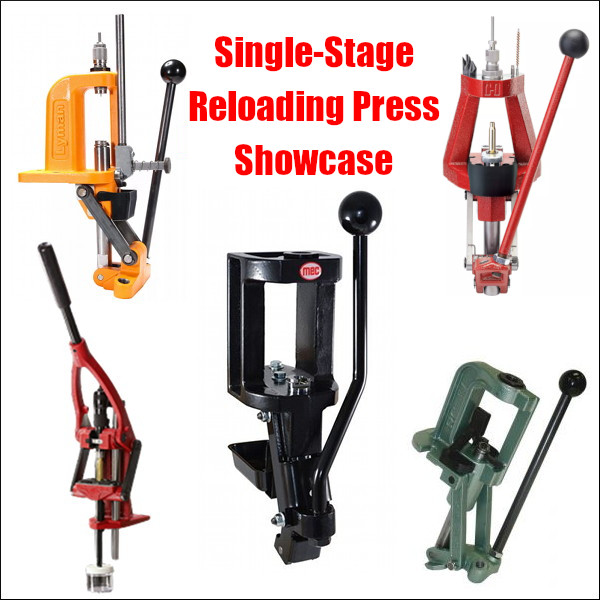
Hand-loaders have never had so many great choices in single-stage presses, with many different configurations and features. There are classic O-Frame presses, Coax-style presses, Open-front presses, Pyramid presses, and compact C-Frame presses. Here is our 2019 Single Stage Press Showcase with products from Forster, Hornady, Lee, Lyman, MEC, and RCBS. We’ve included short videos showing the features of these reloading presses.
If you are shopping for a new press you should look at the various features of each. You may prefer something classic like a Rock Chucker, or the innovative open-front MEC. If you are looking for a compact press to use at the range, the Lyman C-Frame is very impressive for the price. And the Forster Co-Ax remains a great addition to any loading room.
MEC Marksman Single-Stage Press
If you are looking for a new, full-size single-stage reloading press, definitely consider the MEC Marksman. Created by the makers of the popular MEC shotshell reloading systems, the MEC Marksman combines a sturdy cast-iron frame with a modern open-front design. If you are looking for a new, full-size single-stage reloading press, definitely consider the MEC Marksman. Created by the makers of the popular MEC shotshell reloading systems, the MEC Marksman combines a sturdy cast-iron frame with a modern open-front design. With a $239.99 street price, the MEC Marksman press now costs more than an RCBS Rock Chucker Supreme press, but the MEC offers some distinct advantages — such as an open front plus a floating shell-holder system.
Our friend Gavin Gear of UltimateReloader.com got his hands on a MEC Marksman press and put it through its paces. He came away impressed with the product, saying it delivers excellent performance, and has many impressive features. Gavin tells us: “Cast iron tools and machines are a lifetime investment. The made-in-USA MEC Marksman features ductile cast-iron construction, an open-front frame design for easy cartridge access, a new floating shell-holder design with a unique retention system, and ambidextrous handle setup.” MEC also offers a wide selection of accessories for the Marksman press, including a press riser/mount, shell-holder caddy, and die trays.
Forster Co-Ax Press
If you are not yet familiar with the many unique features of the Forster Co-Ax, we recommend you watch the video above, a very thorough video review by Rex Roach. This shows how the press operates and highlights the design elements which set the Co-Ax apart from every other reloading press on the market. This 14-minute video shows the key Co-Ax features, explaining how the floating case-holder jaws work (3:30 time-mark), how the dies are held in place (4:40 time-mark), how spent primers are captured (6:10 time-mark), and how to set the primer seating depth (10:00 time-mark). We’ve used a Co-Ax for years and we still learned a few new things by watching this detailed video. If you are considering purchasing a Co-Ax, definitely watch this video start to finish.
In recent years, Forster Co-Ax® presses have been somewhat hard to find, as demand has out-stripped supply. The Co-Ax has many dedicated fans, given its unique features, such as the floating case-holder jaws, and easy, rapid slide-in/slide-out die placement. We’ve also found that Co-Ax presses load very straight ammo and we like the ability to switch between short handle (good for bullet seating) and long handle (ideal for heavy case-sizing tasks). We also think the Forster Co-Ax has one of the best spent primer capture systems on the market — a straight drop into a removable plastic cup. Simple and it works.
Lyman Brass Smith Victory Single-Stage Press
Lyman’s sturdy Victory Single-stage Press is a full-size unit that competes with the RCBS Rock Chucker Press. With beefy cast iron construction, the Victory’s strength and leverage rivals the Rock Chucker. The press operates smoothly and the handle can be mounted on either side.
If you like to prime cases using a press, this Victory press has a priming system that’s much easier to use than the RCBS Rock Chucker system. The priming tube is right up front, with multiple primers loaded vertically in a tube. Simply push the shuttle at the button of the tube to advance the primer into place.
For convenience, the entire primer-loading system can also be removed so it doesn’t interfere with case and bullet-handling operations. We generally prefer to prime cases separately using a dedicated hand- or bench-mounted tool, but the Victory press does the job nicely.
Overall, the Victory is a great value in a full-size “O-Frame” press with sturdy construction and a solid Lyman warranty. It’s on sale now for $179.99 at Midsouth.
RCBS Rock Chucker Supreme Single-Stage Press
Nearly every serious hand-loader has owned or used the RCBS Rock Chucker press. This Editor still uses a Rock Chucker passed down by his brother 20 years ago. And yes, it is still going strong. The latest Rock Chucker Supreme single-stage press features an improved “upside-down Y-path” dual-bin spent primer catcher. Otherwise the Rock Chucker Supreme remains big, strong, versatile and sturdy. It has very strong linkages, with a compound leverage system providing plenty of power — FL-sizing is a breeze even with large, magnum cases. The 1″-diameter ram has 12.5 sq. inches of ram-bearing surface.
Some people may not know that the Rock Chucker offers a secondary 1 1/4″ x 12 thread for shotshell reloading dies and Piggyback 3 upgrade. The Rock Chucker Supreme retails for under $190.00 ($169.99 now at Midsouth). The RCBS Rock Chucker is definitely a quality product that can last a lifetime. For heavy-duty sizing chores this remains one of the best choices in single-stage presses. We do recommend shopping around. You can sometimes get a pretty big discount on Rock Chuckers and RCBS has regular rebate programs.
Lyman Brass Smith Ideal C-Frame Compact Press
The Lyman Brass Smith Ideal Press is a very affordable, cast iron C-Frame reloading press. We think it is the new “class leader” in compact presses. This works great as a secondary press for your reloading room or a small press you can take to the range. The large front opening allows you to access the shell holder without hitting the support bar on other types of presses. Unlike other compact presses made from aluminum, Lyman’s Ideal press is cast iron so it is rigid and strong. The high-quality steel ram is one inch in diameter. The Brass Smith is a true ambidextrous press that can be accessed from either side and mounted the same. This is a great choice for a second, auxiliary press for depriming and bullet seating.
Hornady Iron Single Stage (Open-front) Press
In this “Reloading with Rosie” video, the attractive female host loads some ammo using the Hornady Iron Press. With a beefy, pyramid-style cast-iron frame with an open front, this press offers some advantages over a traditional “O-Frame” type press. Access is considerably easier, for one thing. And the top of the press includes slots to hold dies and tools — that’s really a very nice feature that saves time. Also an optional “automatic” priming system shuttles primers from a vertical tube in the back to the shell-holder in the front. That’s clever. Over all the Iron Press is a nice piece of engineering — good job Hornady.
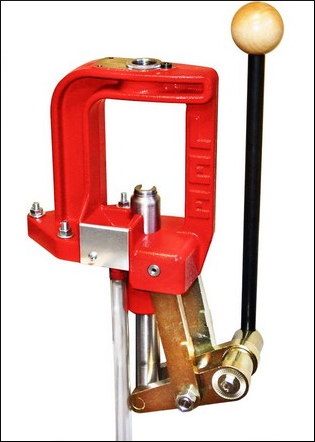
Lee Classic Cast (Iron) Breech Lock Press
The Lee Classic Cast Breech Lock Press offers excellent value for the money ($169.99 at Midsouth). Based on the proven design of the Classic Cast press, the updated Breech Lock series adds the quick-change die bushing and an improved primer drop system. This press is strong, with cast iron frame, all-steel linkage, and 12 square inches of ram bearing surface.
Lee says this press has the “largest opening and the longest stroke in the industry” among O-frame type presses. The handle can be mounted on either side. We love the fact that the handle ANGLE can be adjusted, as well as the lever arm length — that allows you to adjust travel and leverage to suit your preference. Smart engineering.
The new spent primer drop features a large-diameter hollow ram with clear hose that drops primers straight to a bin — that’s simple and effective. The press is very rigid and the base is wide enough for good stability. We have one of these Classic Cast Breech Lock Presses in our reloading room and it works well.
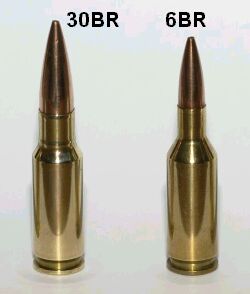
The 30BR is an amazing little cartridge. However, 30BR shooters do have to neck-up 6mmBR brass and then deal with some issues that can arise from the expansion process. One of our Forum members was concerned about the donut that can form at the new (expanded) neck-shoulder junction. Respected bullet-maker Randy Robinett offers tips on how to deal with the “dreaded donut”.
The Forum member was concerned about thinning the brass if he turned his 30BR necks after expansion: “Everything I have found on 30BR case-forming says to simply turn off the bulge at the base of the neck caused by the old 6BR shoulder. I expanded my first case and measured the neck at 0.329″ except on the donut, where it measures 0.335″. Looking inside the case… reveals a groove inside the case under the donut. Now, it is a fact that when I turn that neck and remove the donut, the groove is still going to be there on the inside? That means there is now a thin-spot ring at the base of the neck that is .005 thinner than the rest of the neck. Has anyone experienced a neck cracking on this ring?”
Randy Robinett, who runs BIB Bullet Co., is one of the “founding fathers” of the 30BR who help prove and popularize the 30 BR for benchrest score shooting. Randy offers this advice on 30BR case-forming:
While the thinner neck-base was one of our original concerns, unless one cuts too deeply INTO the shoulder, it is not a problem. For my original 30BR chamber, thirty (30) cases were used to fire 6,400 rounds through the barrel. The cases were never annealed, yet there were ZERO case failures, neck separations, or splits. The case-necks were turned for a loaded-round neck diameter of .328″, and, from the beginning, sized with a .324″ neck-bushing.
The best method for avoiding the ‘bulge’ is to fire-form prior to neck-turning (several methods are successfully employed). Cutting too deeply into the shoulder can result in case-neck separations. I have witnessed this, but, with several barrels and thousands to shots fired, have not [personally] experienced it. The last registered BR event fired using that original barrel produced a 500-27x score and a second-place finish. [That’s] not bad for 6K plus shots, at something over 200 firings per case.
Check out the 30BR Cartridge Guide on AccurateShooter.com
You’ll find more information on 30BR Case-forming in our 30 BR Cartridge Guide. Here’s a short excerpt from that page — some tips provided by benchrest for score and HBR shooter Al Nyhus:
30BR Case-Forming Procedure by Al Nyhus
The 30BR cartridge is formed by necking-up 6BR or 7BR brass. You can do this in multiple stages or in one pass. You can use either an expander mandrel (like Joe Entrekin does), or a tapered button in a regular dies. Personally, I use a Redding tapered expander button, part number 16307. This expands the necks from 6mm to .30 cal in one pass. It works well as long as you lube the mandrel and the inside of the necks. I’ve also used the Sinclair expander body with a succession of larger mandrels, but this is a lot more work and the necks stay straighter with the Redding tapered button. This button can be used in any Redding die that has a large enough inside diameter to accept the BR case without any case-to-die contact.
Don’t be concerned about how straight the necks are before firing them the first time. When you whap them with around 50,000 psi, they will straighten out just fine! I recommend not seating the bullets into the lands for the first firing, provided there is an adequate light crush-fit of the case in the chamber. The Lapua cases will shorten from approx. 1.550″ to around 1.520″ after being necked up to 30-caliber I trim to 1.500″ with the (suggested) 1.520 length chambers. I don’t deburr the flash holes or uniform the primer pockets until after the first firing. I use a Ron Hoehn flash hole deburring tool that indexes on the primer pocket, not through the case mouth. — Al Nyhus
Setting optimal bullet seating depth is very important for maximum accuracy. While some cartridges and barrels may deliver good accuracy with a wide range of bullet seating depths, other barrels may be more fussy, and may strongly prefer a specific seating depth, such as .006″ in the lands or .020″ off. To get this kind of precision, you need to know the exact position of the lands in your barrel. In addition, because barrel throats tend to move as the round count goes up, you should check the position of the lands regularly on a competition rifle.
Today’s Saturday Videos demonstrate a number of methods for finding Length to Lands in your rifle barrel. We start with the most common method — using the Hornady O.A.L. Gauge with a threaded modified case. With some practice, and a refined touch, this is actually very accurate. After this, we offer videos that have alternative methods, each with its pros and cons. You should find a method that works for you, that can achieve results within a couple thousandths for multiple measurements.
Finding Cartridge Length to Lands with O.A.L. Gauge
Probably the most common method to find length to lands is using a Hornady O.A.L. Gauge Tool with a comparator on a set of calipers. We regularly use this method with a custom modified case for our 6mmBR rifle. Using the technique described below, we can get results within .0015″ or so three out of four times. We do recommend taking multiple measurements. As explained below, be consistent and do NOT push the gray plastic rod too fast or with too much force.
During this measurement process, the modified case, with a bullet in its neck, is inserted in the chamber. Go slow, take your time. Here are FIVE TIPS that will help you get repeatable and reliable length-to-lands measurements with the Hornady O.A.L. Gauge:
1. Start with a clean chamber and clean barrel throat.
2. Make sure the modified case is fully screwed down and seated on the O.A.L. Gauge. It can sometimes unscrew a bit during repeated measurements.
3. Insert the modified case slowly and gently, but ensure the shoulder of the modified case is fully seated on the end of the chamber.
4. Push the gray plastic rod GENTLY. It is common for the bullet to be tilted a bit. You want to allow the bullet to self-center in the throat BEFORE you apply much pressure. Then tap a couple times and push until you feel resistance. Do NOT push too hard — that will jam the bullet in the lands.
5. Repeat the measurement at least 3 more times. If you follow our instructions, you should, typically, get a repeatable measurement, within 0.0015″ or so, 3 out of 4 times.
NOTE: We’ve seen some folks struggle to get repeatable measurements with this tool. In most cases, they were going too fast and pushing too hard on the gray rod, creating a hard jam.
Brownells — Using Hornady O.A.L. Gauge with Modified Case
This Brownells video shows how to use the modified (threaded) case for the cartridge your rifle shoots. Attach it to the O.A.L. Gauge, then insert a bullet into the case neck and slide the tool into the chamber. It takes a little practice to get consistent results. After getting the measurement in the barrel, you ascertain the length to lands using a Hornady Bullet Comparator attached to your calipers.
Making Your Own Modified Case — Threading the Case End
This helpful video from our friend Gavin Gear of UltimateReloader.com shows how to create a custom modified case to use with a Hornady O.A.L. Gauge. You need to drill out the primer pocket area, then tap and thread the bottom of the case.
Ultimate Reloader Shows 3 Ways to Find the Lands
This video shows three different ways to measure distance to lands. First Gavin Gear shows how to use a Hornady O.A.L. Gauge with Modified Case. The second methods shows how to use a bit of Loctite INSIDE the neck to secure a bullet. Be sure there is NO Loctite on the outside of the neck — you don’t want that in your chamber! You place the case with bullet into the chamber, then close bolt to seat the bullet. After waiting 5-10 minutes for the Loctite to set, you remove the cartridge gently. The third method (time-mark 16:50) is a Jam method using a bolt with the firing pin assembly and ejector removed (so there is no extra pressure on the case). Gavin notes: “The bullet ogive can be colored with a permanent marker if you want to indicate lands contact.”
About this third Jam method, ace F-Class shooter Erik Cortina posted: “My method is actually the last one that Travis showed. The one where you let the lands push bullet in. But it is neck tension dependent. I also put die wax in bullet ogive to prevent it from sticking in the lands. The method of seating bullet deeper and deeper until bolt closes is the Alex Wheeler method. As you said, there are a tons of ways to measure this.”
Finding Length to Lands the Speedy Way
Here is another method to find length to lands that can work with an unmounted barrel. This method is explained by Thomas “Speedy” Gonzales, a top gunsmith and ace benchrest shooter. Speedy drops a case with bullet seated into the chamber and then adjusts the seating depth with an inline seating die until there is no sticking or resistance felt. He can then adjust the true length to lands easily with his micrometer seating die. If you don’t have a modified case and do not want to partially disassemble your bolt to take measurement, you might want to use Speedy’s method.
Finding Length to Lands Using Bolt Movement — Primal Rights
This video shows how to remove the firing pin assembly in your bolt. This way the bolt can be used to advance a case with bullet smoothly into the chamber. Then the bullet seated in the case neck will move back to “first touch” contact position. Then extract the case slowly and measure.
The video host states: “Overall length gauges and modified cases tend to be close, but never as precise as we would like them to be. Here we describe how to measure the length to your lands in your rifle as precisely as possible, using a caliper and bullet comparator.” NOTE: The host says a store-bought Modified Case may not deliver that exact same length from case base to lands as your own fired case. That is true, but as long as the commercial Modified Case gives you repeatable results, you have a functional reference point which you can then use to test seating depths relative to that measurement.
Finding Length to Lands Using Bullet in Case With Split-Cut Neck
Here is a common method that requires no special tools. Simply take a fired (no primer), neck-sized case and split the necks down vertically with a Dremel. Done right, this will hold the bullet in place when you chamber the unloaded round. As the bullet touches the rifling it will move back. As the cartridge chambers, the bullet slides back into the case to give you length to lands. This is not super-accurate but it is probably good enough for finding the length to lands for a hunting rifle. The video maker explains: “No need to purchase gauges for this if you are willing to sacrifice one case. With a little time and patience you can get good results with this method.” Further Explanation.
How to Adjust Tension — Length and Number of Neck Cuts
Forum member Andris Silins, who uses this method, explains: “I made the neck cuts using a Dremel with a cut-off wheel. You can adjust tension two ways. First, you can make the cuts longer or shorter. Longer cuts = less tension. If you used only three cuts instead of four you would get more tension. The trick is to be gentle when you open and close the bolt. If you ram the bolt closed you may wedge the bullet into the lands. When you open the bolt it helps to keep a finger or two near by to guide the case out straight because the ejector wants to push it sideways.” READ MORE.
Finding the Lands with HK Rifleworks
This is another video that demonstrates how to disassemble the bolt so that the firing pin assembly and spring does not apply pressure on the empty case which would affect the bullet as it touches the lands. The video maker shows how to use a Brownells bolt disassembly tool to quickly take the bolt apart (3:20 time-mark). Once you have a repeatable measurement, you know exactly where is “first touch”. Then you can adjust your seating depth to be into the lands, or jumping the bullets. Many benchrest shooters like to load “into the lands”. PRS/NRL shooters and hunters will generally prefer to jump their bullets .0020″ or more.


 Like the Hornady tool, the RCBS Bullet Puller employs a collet to grab the bullet. However, the RCBS tool tightens the collet in a different way. The head of the RCBS tool is threaded internally. By rotating the lever arm clockwise in a horizontal circle you squeeze the collet around the bullet. To remove the bullet, after lowering the press ram, simply spin the lever arm back in the opposite direction. The use of the RCBS tool is demonstrated in these two videos:


 Developed in 2007 by Dennis DeMille and Dave Emary, the 6.5 Creedmoor is a shortened and improved 30 TC cartridge case that was inspired by the .308 Winchester design. This short action design was created to maximize case capacity and a wide range of loading lengths, while still fitting in standard short action magazines. With the correct twist barrel, the versatile 6.5 Creedmoor can take advantage of the wide range of bullet weights available in 6.5 mm (i.e. .264 caliber). Reloaders should keep in mind that the 6.5 Creedmoor works best with medium to medium-slow powders such as H4350, Varget, Win 760, and RE-17. The light recoil and adaptability of the efficient 6.5 Creedmoor cartridge has already proven itself in high power, precision rifle series and benchrest competitions. Couple that with respectable barrel life and its intrinsic accuracy potential and you have a recipe for success which should insure its legacy for decades to come.


 LEE Precision has a new six-station Progressive Press with some impressive engineering. Given its very affordable


 Popular Cartridge Types Profiled



 If you are not yet familiar with the many unique features of the Forster Co-Ax, we recommend you watch the video above, a very thorough video review by Rex Roach. This shows how the press operates and highlights the design elements which set the Co-Ax apart from every other reloading press on the market. This 14-minute video shows the key Co-Ax features, explaining how the floating case-holder jaws work (3:30 time-mark), how the dies are held in place (4:40 time-mark), how spent primers are captured (6:10 time-mark), and how to set the primer seating depth (10:00 time-mark). We’ve used a Co-Ax for years and we still learned a few new things by watching this detailed video. If you are considering purchasing a Co-Ax, definitely watch this video start to finish.
 Lyman’s sturdy Victory Single-stage Press is a full-size unit that competes with the RCBS Rock Chucker Press. With beefy cast iron construction, the Victory’s strength and leverage rivals the Rock Chucker. The press operates smoothly and the handle can be mounted on either side.
 Nearly every serious hand-loader has owned or used the RCBS Rock Chucker press. This Editor still uses a Rock Chucker passed down by his brother 20 years ago. And yes, it is still going strong. The latest Rock Chucker Supreme single-stage press features an improved “upside-down Y-path” dual-bin spent primer catcher. Otherwise the Rock Chucker Supreme remains big, strong, versatile and sturdy. It has very strong linkages, with a compound leverage system providing plenty of power — FL-sizing is a breeze even with large, magnum cases. The 1″-diameter ram has 12.5 sq. inches of ram-bearing surface.

 The Lee Classic Cast Breech Lock Press offers excellent value for the money (
 The 30BR is an amazing little cartridge. However, 30BR shooters do have to neck-up 6mmBR brass and then deal with some issues that can arise from the expansion process. One of our Forum members was concerned about the donut that can form at the new (expanded) neck-shoulder junction. Respected bullet-maker Randy Robinett offers tips on how to deal with the “dreaded donut”.


