Lyman’s popular Case Length Gauge is now bigger and better. The enhanced version II of Lyman’s Case Length Gauge is much larger than the original version. The E-Zee Case Gauge II now measures more than 70 cartridge types — way more than before. This tool is a metal template with SAAMI-max-length slots for various cartridge types, including relatively new cartridges such as the .204 Ruger and Winchester Short Magnums. This tool allows you to quickly sort brass or check the dimensions. If you have a bucketful of mixed pistol brass this can save you hours of tedious work with calipers. You can also quickly check case lengths to see if it’s time to trim your fired brass.
If you load a wide variety of calibers, or do a lot of pistol shooting, we think you should pick up one of these Lyman Case Gauge templates. They are available for under $26.00 at Brownells ($24.99) and Amazon.com ($19.39). The E-Zee Case Gauge has long been a popular item for hand-loaders.
NOTE: For years the E-Zee Case Gauge had a silver finish with black lettering, as shown in the video. Some of the most recent production of E-Zee Case Gauges have a new “high contrast” look, with white lettering on a black frame. You may get either Case Gauge version when you order online (Brownells shows silver, Amazon shows black). We actually prefer the older, silver version.
Case Gauge Should Last a Lifetime
Easily measure the case length of over 70 popular rifle and pistol cases with Lyman’s new E-Zee Case Length Gauge II. This really is a “must-have” piece of kit for any gun owner who hand-loads numerous pistol and rifle calibers.
This rugged, precisely-made metal gauge makes sorting or identifying cases fast and accurate. The template is machined with SAAMI max recommended case lengths. Made from metal, with no moving parts, the E-Zee Case Gauge II should last a lifetime.
With the Whidden Click-Adjustable Sizer Dies, you can change shoulder bump by .001″ (one-thousandth) with a simple click. Fast. Easy. Precise.
As handloaders have become more aware of shoulder bump and proper adjustment of the sizer die in recent years, there has become a need for an easier way to adjust the sizer die properly. For most folks, with their conventional dies, it takes lengthy trial trial and error to get the shoulder setback correct. Anyone who has done this can attest that it can be a slow and annoying job.
Whidden Gunworks has solved the problem with the innovative Click Adjustable Sizer Die. Patent No: 10,393,488. This die and lock ring work together to give the user a clicking feel to the adjustment just like a high end rifle scope. Each click moves the shoulder bump exactly .001″ so you can easily find the exact shoulder bump that you desire.
The Click Adjustable option is available on Whidden Custom Sizer dies as well (7/8”-14 format dies only)! Included with the Click Adjustable Sizer Die is a Shoulder Bump Gauge. This gauge attaches to standard calipers and allows measurement from the case shoulder to the base. Using the Shoulder Bump Gauge with the Click Adjustable Sizer Die will make the proper sizer die setup easier than ever before.
Click-adjustable die sets are available with both bushing and non-bushing configurations. Along with these complete die sets, Whidden Gunworks offers a separate click-adjustable ring to use with existing dies. Priced at $54.95, the Whidden Click-Adjust Lock Ring represents a modest investment for a major gain in die ease-of-use and precision adjustability.
The Whidden Universal Click Adjustable Lock Ring you can instantly turn your sizer die into a Click Adjustable Die. This ring works with any 7/8 OD sizer of any brand with adjustable shoulder bump. Simple in design, the inner and outer ring can rotate independently of each other. Each click is metered in true 1 thousandths adjustment and has 0.100″ total available travel. These work great with nearly all sizing 7/8 OD sizing dies, and one verified purchaser noted: “Not only are they useful on reloading dies, but it’s the cat’s meow on the Giraud Power Trimmer Case Holders.”
Dillon Users Take Note: The Whidden Click Adjustable Sizing Die will not work with the Dillon 550 or 650 progressive reloading press systems. The Universal Click Adjustable Lock Ring is not compatible with the Dillon floating toolhead.
Here is a simple, low-cost way to get reliable readings of case headspace when you “bump” the shoulder back on your 6BR, .243 Win, or .308 Win brass. Credit Boyd Allen for this tip. First, you’ll need one .45 acp case (.40 SW works too), with primer removed. Make sure the pistol case is trimmed square and that it is round. We recommend you first size it, trim it and chamfer. Next, take the .45 acp (or .40 SW) case and slip it over the neck of a fired, unsized rifle case with the primer removed. Align the two cases between the jaws of your calipers and note the length from rim to rim (See photo below, with striped case).
OK, now you have the length for a fired rifle case BEFORE sizing. Next, take a full-length sized rifle case (without primer) and do the same thing, placing the pistol case over the neck of the FL-sized case (Bottom Photo). The difference between the two numbers is the amount of “bump” or set-back you are applying to the shoulder. Here the difference is .0015″. The amount of bump you need varies with your chamber and your load, but .0015-.002″ is a good initial setting. By using this simple tool, you can avoid bumping the shoulder too much. This will also help you set-up the depth of your full-length die to get the proper amount of bump each time.
Other Pistol Brass Types Work Too: Some folks have used this method but they prefer to work with 10mm or .40 SW brass rather than a .45 acp, because slightly smaller-diameter pistol cases may conform to the shoulders of their sized rifle cases a bit better. That works fine — use whatever pistol brass case works best for your rifle brass. We got very repeatable results with .45 acp brass but the method also works with 10mm or .40 SW brass. Just be sure the pistol brass has been sized, trimmed, chamfered, and de-burred.
At the request of our readers, we provide select “Deals of the Week”. Every Sunday afternoon or Monday morning we offer our Best Bargain selections. Here are some of the best deals on firearms, hardware, reloading components, optics, and shooting accessories. Be aware that sale prices are subject to change, and once clearance inventory is sold, it’s gone for good. You snooze you lose.
1. Natchez — Bushnell Optics Sale
⏺ Save up to 35% on Bushnell rifle scopes and binoculars
You’ll find some serious bargains on Bushnell optics right now at Natchez. Check out the Bushnell optics sale. You’ll find everything from rifle scopes to red dots to rangefinders all at deeply discounted prices. Act fast because the best deals can sell out quickly.
2. Midsouth — RCBS Rotary Case Cleaner (Tumbler), $169.99
⏺ Strong, durable tumbler machine for use with Stainless Media
The RCBS Rotary Case Cleaner tumbling machine is great for cleaning brass inside and out. Set the machine for up to three hours of continuous cleaning at 60 RPM. The rubber-lined drum lowers noise levels significantly. This RCBS product comes with a clear sealing plug with a rubber seal, and a grated drain to separate you brass from media/liquid when done. The screw-on lid features a sturdy lifting handle. Get this machine on sale now for $169.99 at Midsouth. NOTE, this same case tumbler is $223.99 on Amazon without media, so you can save $54 with this Midsouth deal!
3. Midsouth — Winchester .223 Rem Ammo 1000 rds, $599.99
⏺ Excellent chassis rifles and hunting rigs, save 15% with discount
Did Santa bring you a new AR-15 but forgot to leave some ammo? Here’s a very good deal on a 1000-round case of .223 Remington ammo. At only $.60 per round this is one of the best deals we’ve seen for quality, major-brand USA-made ammo. Ammunition continues to be in short supply for popular chamberings so take advantage of this deal before it sells out.
4. Amazon — RCBS Trim Mate Case Prep Center, $169.99
⏺ Excellent chassis rifles and hunting rigs, save 15% with discount
Prepping your cases before loading is important. However case prep chores can be very time-consuming. Save time (and effort) with a case prep center such as RCBS Trim Mate. This all-in-one unit contains six variable, high-speed rotating stations (four at < 350 RPM; two at < 550 RPM). It also features tools included for all stations and a storage area for tools not in use. The Trim Mate performs multiple prep tasks quickly and efficiently -- deburring, chamfering, primer pocket uniforming, and more.
⏺ Great deal on excellent FFP 5X zoom scope for PRS/NRL
Are you in the market for a high quality, First Focal Plane (FFP) scope at a good price? We found this Crimson Trace CTL 3 Series 5-25x56mm rifle scope. Featuring a 34mm tube, a large 56mm objective, and an innovative reticle this scope is a bargain with the nearly $300 savings right now. With a 5X zoom range and 0.1 Milrad clicks, this scope can definitely do the job for PRS/NRL competitions. This Crimson Trace FFP scope has received very positive reviews from purchasers.
⏺ Great kit with 9mm pistol, muffs, eye protection and case
We love finding great deals on pistols especially when they come as a complete kit. Check out this Smith & Wesson M&P 9 Shield range bundle. It contains the reliable S&W M&P 9mm Shield EZ pistol, a quality Plano hard carry case, safety glasses, and hearing protection.
7. Amazon — Caldwell Target Camera, $177.53
⏺ Effective for under 400 yards at lowest price ever
Every serious shooter should have a target camera. One of the most affordable systems is Caldwell Ballistic Precision Sight-In Target Camera. This high-definition camera can stream 720p video from up to 400 yards away straight to your mobile device. This Caldwell TargetCam features a waterproof housing on camera and transmitter and ships with a tripod and stand. The viewing App is compatible with Android, iPhone, and most tablets. This App allows you to save pictures, add notes, calculate group size, and even record video. If you need a target cam with more range we recommend the LongShot LR-3.
8. Amazon — Dewey Lug Cleaning Kit, $25.69
⏺ Get your action’s internals clean with this complete kit
Cleaning your action’s lug recesses is important to accuracy and good bolt operation. The Dewey Rods bolt action lug recess cleaning kit will allow you to clean the inside of your action and the critical lug recess area. Keeping this area clean ensures your bolt locks up properly every time ensuring consistent ignition and accuracy. The kit comes with brass rod with handle, aluminum lug swab holder, felt lug cleaners, bore swab, hand-brush, and a 50-pack of cotton rolls.
9. Amazon — Rusfol PMAG Wall Holder, $11.99
⏺ Handy, sturdy way to store AR Magazines for quick access
Many folks have multiple AR-platform PMAGs but they may not be readily accessible. A great way to store loaded mags is with the ABS Standard PMAG Wall Mount. This horizontal rack, made from strong ABS plastics, can hold up to 6 mags, loaded or unloaded. You can mount these to a safe door, or to a wall in your home or garage. This gives you secure storage, and/or rapid access.
As a 2022 New Year’s bonus for our Bulletin readers we decided to showcase 10 of our favorite gun tech, reloading, and shooting technique videos for our readers. These videos were created by top YouTube content providers: F-Class John, Gavin Gear, Keith Glasscock, Erik Cortina, Thomas Haugland, and Pieter Malan. Consider this like an all-star gun channel collection. These videos will help you load more accurate ammo, improve your “mental game”, and shoot better in matches. Enjoy!
Sinclair International has created a series of instructional videos illustrating the basics of metallic cartridge reloading. The 8-Part series starts with reloading basics and provides step-by-step, how-to instructions that will help new reloaders get started. Detailed, animated illustrations show you what happens inside the chamber when shooting, and inside the dies during each step of reloading. The videos can be viewed on Sinclair International’s YouTube channel. Shown below is the first video in the series:
Each of the Sinclair videos is hosted by then Sinclair Int’l President Bill Gravatt (now with Creedmoor Sports). Bill doesn’t just show you “how”, he tells you “why”. The how-to segments cover case inspection, proper die set up, case sizing, primer installation, powder measuring, bullet seating, crimping, and even goes into the record keeping needed for the handloader. “We wanted to give shooters who haven’t reloaded a look at all the advantages of creating your own ammo and how easy it is to get started,” said Gravatt, “without telling them they had to have any certain brand or type of equipment to do the job.”
The Eight Video Topics Are:
Part 1 — Intro to Video Series
Part 2 — Intro to Reloading Safety
Part 3 — Metallic Cartridge Components
Part 4 — The Firing Sequence
Part 5 — Tools for Reloading
Part 6 — Loading Bottle-Neck Cartridges (2 videos)
Part 7 — Loading Straight Wall Cartridges
Part 8 — Reloading Series Conclusion
Reloading Tools
Shown below is Part 5 of the video series, covering the tools used for precision reloading.
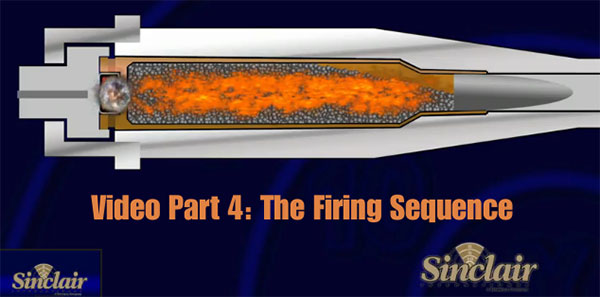
We also strongly recommend the Part 4 Video to readers who are getting started in reloading. This “How Things Work” segment covers the sequence of events inside the chamber (and barrel) when the cartridge is fired. The video includes helpful graphics that show what happens to the primer, powder, cartridge, and bullet when the round is fired. The video also illustrates “headspace” and explains how this can change after firing. We think this video answers many common questions and will help reloaders understand the forces at work on their brass during the firing process.
Here’s a tip for guys who shoot the 6 PPC, 6 Dasher, 6 BRA, .284 Shehane, or other wildcat cartridges that require fire-forming. Use your fouler shots to fire-form new cases. That way your fouler shots do “double-duty” and you get your brass fire-formed without putting extra rounds through your expensive barrel.
This procedure is recommended by Joel Kendrick, the 2004 IBS 600-yard Shooter of the Year. After he cleans his barrel, Joel knows it takes two or three shots to foul in the bore before accuracy returns. When shooting his PPC, Joel uses those fouler shots to fire-form his new brass. Joel explains: “I like to have relatively new brass always ready. By fire-forming a couple cases after each barrel-cleaning during a match, by the end of the weekend I’ve got a dozen or more freshly fire-formed cases to put into the rotation. If you do this with your fouler shots you get your fire-forming accomplished without using up any extra barrel life.”
This not only saves barrel wear, but it saves you trips to the range for the purpose of fire-forming. We thank Joel for this smart suggestion. For those who do not have a dedicated barrel for fire-forming, this should help keep your round-count down. Note: With this fouler fire-forming routine, you should ALWAYS do the fire-forming with the SAME POWDER you load for your match ammo. Joel currently works as the Supplier Quality Process Engineer for MMI-TruTec, a company that offers barrel surface coatings that can further extend your barrel life.
At the request of our readers, we provide select “Deals of the Week”. Every Sunday afternoon or Monday morning we offer our Best Bargain selections. Here are some of the best deals on firearms, hardware, reloading components, optics, and shooting accessories. Be aware that sale prices are subject to change, and once clearance inventory is sold, it’s gone for good. You snooze you lose.
1. EuroOptic — Save 15% on Christensen Arms Rifles with Code
⏺ Excellent chassis rifles and hunting rigs, save 15% with discount
Christensen Arms (CA) makes very high-quality rifles with good barrels and excellent stocks and chassis. These are some of the best production rifles you can buy. The CA Modern Precision Rifle series features a very high-quality chassis with folding stock. Hunters will like the light-weight Ridgeline series with Carbon-Fiber wrapped barrel and available Titanium action. Use EuroOptic promo code SHOOT15 to save 15% on these and other CA rifles. However, you better act soon — his special promo code is a limited time offer.
2. Academy Sports — Cannon 65-Gun Safe, $799.99
⏺ Save HUNDREDS on a BIG safe, this deal won’t last long!
Here’s a BIG gun safe at a great price. This large Cannon AP5540 safe is rated for 65 guns, but that’s for thin rifles with iron sights. In the real world you CAN hold 20+ scoped rifles and 20+ handguns with ease. The safe is 55″ high, 40″ wide, and 25″ deep. It weighs 465 pounds and boasts seven 4″ locking bolts. It ships with adjustable shelves, carpeted interior, and door organizers. It has a 30-minute fire rating with FIN fire seal. There is a fast electronic lock with a handy back-up key. This is a LOT of safe for the money.
3. Bruno’s — McMillan Stocks $50 Off Sale
⏺ Save $50 and avoid the wait for a quality McMillan Fiberglass stock
Right now at Bruno Shooters Supplies, McMillan Fiberglass Stocks in inventory have been discounted $50.00. If you need a top-grade stock, here’s your chance to save $50.00 and have your new stock delivered immediately (no wait). A large variety of stock designs are offered for competition, tactical, and hunting applications. Shown above are just a few of the nearly 30 stocks available now.
4. Locked & Loaded — Timney Trigger Blow-Out Sale
⏺ Big Discounts on Timney triggers for bolt guns and ARs
Need a trigger for your next gun project, or plan to upgrade an existing rifle? Then consider a Timney. Right now Locked & Loaded has a variety of quality Timney triggers on sale. Save up to $90 with this December Timney Trigger Blow-out Sale. On sale are triggers for Rem 700s (and clones), for ARs, and for the SIG MPX.
5. Midsouth — LEE Automatic Case Primer (ACP) Press — $74.95
⏺ Speeds up priming, works well, case feeder $24 extra
The Lee Automatic Case Primer (ACP) is the world’s first automatic-feeding priming tool that does not need shell-holders. Cases are guided into position by a sliding “finger guide”. The “dead length” priming device ensures that primers are seated uniformly without “feel” or adjustments required. This is very efficient and relatively easy, once the primers are loaded into the triangular tray. This ACP tool is on sale now at Midsouth for just $74.95, 20% off the regular price.
To increase output, there are various, affordable LEE ACP upgrades including the Lee Universal Case Feed Magazine ($23.79), Lee Case Feed Collator ($10.96), and Lee Roller Handle (part #91629). In addition, the ACP can DE-PRIME cases efficiently with the inexpensive ($7.29) ACP depriming kit. SEE LEE ACP Product Info Sheet with all accessories.
6. Palmetto SA — CCI Blazer Brass 9mm Ammo, $19.99/50
⏺ Very good price on reliable, reloadable USA-made 9mm pistol ammo
We like CCI ammo — it is reliable and consistent. This reloadable CCI Blazer brass-cased 9mm Luger ammo has served us well for many practice sessions and IDPA matches. Right now, Palmetto State Armory has this 9mm ammo on SALE for just $19.99 per 50rd box. That works out to just $0.40/round — a great price these days.
7. MidwayUSA — Walker’s Alpha Power Electronic Muffs
⏺ Excellent price and good NRR for electronic muffs
This is an outstanding deal for quality electronic earmuffs with a very good 26dB Noise Reduction Rating (NRR). These muffs are on sale for just $39.99, 50% off the regular price. Two hi-gain, omni-directional microphones pick up sound equally from all directions, which preservers and enhances your ability to hear. The Alpha Power’s sound dampening composite housing aids comfort and having a separate volume control for each ear is a big plus.. Users say these muffs are very comfortable and work well: “I still use ear plugs and the Walker’s [dual] volume control helps to hear range commands and communicate with other shooters.”
⏺ Fast, easy AR15 rimfire conversion — save on ammo costs
If you shoot an AR15 in service rifle or tactical matches, it makes sense to train with rimfire ammo. First, .22 LR ammo is WAY cheaper than .223 Rem match ammo. (Rimfire ammo starts at about $0.10/rd.) Second, shooting .22 LR at 100 yards duplicates the wind drift of a .223 Rem at much longer ranges. Right now the CMMG Bravo Rimfire Conversion Kit (replacement bolt/carrier plus 10-rd magazine) is $179.99 at Brownells on sale. Or, for just $10 more ($189.99), you can get the CMMG .22 LR Bravo Conversion with THREE 25-rd rimfire magazines. NOTE: CMMG recommends Federal 36gr plated RN ammo for best performance. This CMMG kit is designed for Direct Impingement AR-15s only.
9. MidwayUSA — Hoppes Gun Vise and Cleaning Kit, $39.99
⏺ Good basic gun vise at great price with bonus cleaning kit
The Hoppe’s Gun Vise is a good basic support for working on your firearms. Clamping brackets in the front and rear hold your rifle or shotgun securely without scratching. The vise is made out of a durable, chemical resistant polymer and has multiple compartments for your cleaning chemicals, tools, and accessories. Included with this vise is a 12-piece Cleaning Kit for rifles, pistols, and shotguns. Features include: Dual lockable no-scratch brackets, multiple compartments for tools, and adjustable feet.
⏺ Quality name-brand shooting eyewear — buy multiples at this price
Every shooter needs eye protection EVERY TIME you go to the shooting range. Right now Midsouth has the good Radians clear Lens Outback Shooting Glasses for just $5.88. These ANSI Z87.1 Radians Shooting Glasses provide 99.9% UVA/UVB protection with the coated lenses. These offer excellent wrap-around protection and are fairly light and comfortable. A handy neck cord is included. With this low $5.88 price, you can buy 3 or 4 sets and keep spares for yourself and your shooting buddies.
This article originally appeared on the USAMU Facebook Page. The USAMU regularly published reloading advice for many years. Check the Facebook archives for related USAMU articles.
Here at the U.S. Army Marksmanship Unit (USAMU), we receive inquiries from shooters at many skill levels. One of the most frequent questions we are asked is, “What equipment do you recommend I buy to start handloading?”
Often, the handloader will be focused on producing ammo in quantity, and a big concern is whether to begin with a single-stage vs. a progressive press. However, there is one critical item that often gets overlooked as folks talk about the especially interesting topics such as reloading die brands and types, scale types and brands. And, what might that item be?
“When all else fails, read the what?” Yes, we recommend those new to handloading actually begin with reading the early chapters of one or, preferably two quality handloading manuals. They contain copious information on basic handloading safety, how to choose and use components, and how to recognize and avoid potentially dangerous conditions. Of course, they also do a fine job of teaching new loaders the correct methods of adjusting dies, determining safe loads and improving accuracy. Beginners can recognize and avoid many potential pitfalls, shortening the learning curve tremendously.
As a government entity, we aren’t able to make specific brand-name recommendations as such. However, recent manuals from the major bullet and powder manufacturers, especially those who emphasize accuracy and match-type bullets are generally a wise choice.
Handloaders often come to prefer one or two maker’s manuals over others for various reasons. Asking a friend who’s already an experienced loader which manuals they recommend is a good start. Borrowing one or more to read before purchasing is another.
This is a good way to both save money and get a feel for the variety of component types and data that are available. Comparing differences in data from different manuals in the same caliber, with the same powder and bullet weight can be an eye-opener. It is also a wise step in researching any loading project before one begins—and the reasons for the differences are fully explained in the manuals!
The AMU recommends buying proven, high-quality equipment. It should have a reputation for great durability, good ergonomics and reasonable-to-excellent precision. In addition, ask fellow shooters which companies have a good reputation for support after the sale. Several of the better handloading companies set the bar very high.
Video Shows Special Features of Forster Co-Ax Reloading Press
With the better ones, it’s common to call to order small replacement parts and receive them at no charge in the mail immediately thereafter. Other companies don’t enjoy such a sterling reputation. Often, these focus on cheap equipment made with low-quality materials, aimed at those to whom cost is the prime consideration.
Good quality equipment not only leads to less frustration, faster production, better results and less misery — it is also an excellent investment. Certain companies’ products sell virtually instantly on the used market and retain high resale value. Other gear from less well-regarded companies is much more difficult to sell. Moreover, it brings far less of its original purchase price—if it can be sold at all.
Ask veteran handloaders — preferably those who are still very active in the shooting sports — which equipment they prefer, and why. After getting specific recommendations, search for reviews of that equipment, as well as possible alternates and newer designs. Learn the steps of operating the various options, and evaluate them for efficiency, effort and precision. A little research can pay big dividends here!
Reloading components are in short supply these days, particularly powder and primers. But primers may be the biggest challenge these days — finding them may seem like a Quest for the Holy Grail. That’s a big problem for handloaders. You may be able to find substitutes for your favorite powder and bullets, but if you don’t have primers, you can’t even get started.
To locate primers these days, you must consider ALL possible sources: local gunshops, local private sales, sale tables at shooting club meetings, gun/hunting forum classifieds, large outdoor stores, and mail-order vendors. Then yes, worst case scenario, look at the auction sites such as GunBroker.
You need to be looking at multiple places — local vendors, gun clubs, big retailers such as Cabela’s and Sportsman’s Warehouse. And get creative — talk to shooting buddies, check for estate sales.
Consider all Possible Sources — Not Just Online Vendors
The guys who are scoring primers these days are resorting to old-fashioned methods — visiting small, mom-and-pop gunstores, checking local estate sales, and “networking” with local shooting club members. First, if you are not a member of a local shooting club, you should join for a multitude of reasons. We recently acquired some powder at a local shooting club meeting, exchanging some H4198 for Hodgdon Varget straight across. A Forum member recently scored both powders and primers at the estate sale of a shooting club member.
For the best chance of success, regularly check 6-10 brick-and-mortar locations in your region. One good way to do this is by combining forces with shooting buddies. Get together with 3 or 4 guys and collectively scout ALL the local gunshops and outdoor stores with shooting supplies. You CAN get lucky. For example, we regularly check a small gunstore in a nearby mall. Just last week we were able to find CCI pistol primers! Yes, deliveries are happening, you just need to check. And check often.
How to Find Primers — SEVEN STRATEGIES
1. Make a list of ALL local gunshops and outdoor supply stores within a 70-mile radius. Call them on a regular basis.
2. Join a local shooting club. Attend meetings where you can sell/exchange products. (We recently exchanged pistol primers for rifle primers we needed).
3. Join local/regional gun forums. You may find listings for “face-to-face” transactions where you can buy/exchange primers. Our AccurateShooter Forum also has a thread on Where to Find Primers.
4. Bookmark multiple vendor websites and check daily (we provide a list below).
5. Combine resources with some shooting buddies. Get together with 3 or 4 guys and collectively scout ALL the local gunshops and outdoor stores with shooting supplies. Assign each guy a different “territory” (perhaps close to his work locations).
6. Search your garage and storage areas. This Editor recently found 5000 Winchester Small Pistol Primers in an unopened box. These were left over from his IDPA and 3-gun days, years ago.
7. Consider APS Primers. CCI sells APS primers pre-loaded in plastic strips. These can still be found gathering dust in some shops. You can remove the primers from the strips, or simply buy an APS priming tool and use them as intended.
Online Vendors for Primers
Here are leading online retailers that sell primers (along with other reloading components). NOTE: Most of these vendors’ primer inventories sell out quickly. So you need to check regularly. Persistence will pay off, eventually. Primer shipments DO arrive, they just sell out fast.
Best Strategy for Online Primer Purchasing (Not Auctions)
With these (and other) online vendors, you need to check “early and often”. Primers may arrive and sell out in a matter of minutes. You should bookmark multiple sources and check them multiple times each week.
The primer shortage has been worsened by dramatically reduced imports of Russian primers.
WARNING — SCAM Websites Want to Steal Your Money
BEWARE of websites that list unlimited quantities of hard-to-find primers. In recent weeks we have seen five criminal scam websites selling reloading products including powder and primers. Here a quick tip — if the website does not take regular credit cards (MC/Visa/Amex/Discover) it is likely a scam site. And if you can order 200 8-lb jugs of Varget it is definitely a scam site! Bottom Line — beware of ANY seller without an established history, and be very wary of sites that only take Zelle, Venmo, and Bitcoin.
Last Word — About Online Auctions for Primers
We are seeing persons selling primers at crazy high prices ($200/1000!) via online auctions at Gunbroker and elsewhere. Be careful… very careful. Primers are a HAZMAT product. They may ONLY be shipped legally by Hazmat-certified businesses. Some of the Auction sellers are not HAZMAT-certified. If your primer shipment is seized or not delivered because the seller was not properly certified, don’t expect to get your money back.


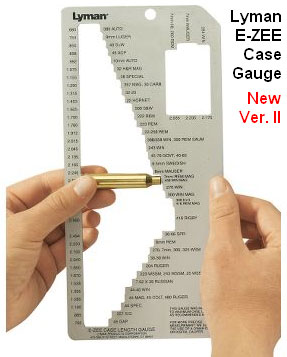 Lyman’s popular Case Length Gauge is now bigger and better. The enhanced version II of Lyman’s Case Length Gauge is much larger than the original version. The E-Zee Case Gauge II now measures more than 70 cartridge types — way more than before. This tool is a metal template with SAAMI-max-length slots for various cartridge types, including relatively new cartridges such as the .204 Ruger and Winchester Short Magnums. This tool allows you to quickly sort brass or check the dimensions. If you have a bucketful of mixed pistol brass this can save you hours of tedious work with calipers. You can also quickly check case lengths to see if it’s time to trim your fired brass.





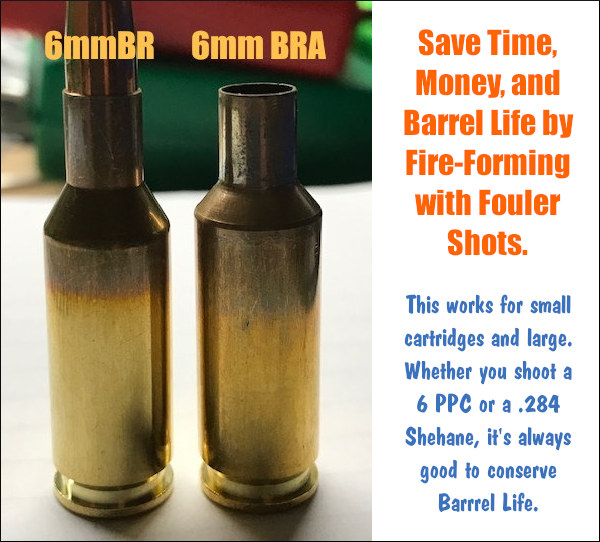
 Here’s a tip for guys who shoot the 6 PPC, 6 Dasher, 6 BRA, .284 Shehane, or other wildcat cartridges that require fire-forming. Use your fouler shots to fire-form new cases. That way your fouler shots do “double-duty” and you get your brass fire-formed without putting extra rounds through your expensive barrel.



 Handloaders often come to prefer one or two maker’s manuals over others for various reasons. Asking a friend who’s already an experienced loader which manuals they recommend is a good start. Borrowing one or more to read before purchasing is another.


