The Visalia Sportsman’s Association Dale Wimp Shooting Range — a great place to shoot.
Report by Boyd Allen | Photos and video by Pete Kitrinos
The IBS is in the West! The first International Benchrest Shooters (IBS) match at the Visalia, CA range was held over the recent Labor Day Weekend. Despite scorching 106° heat, many of the West’s top short-range benchrest shooters assembled for the first IBS-sanctioned match (after a 30-year history with the NBRSA) at the Visalia range. The mix of shooters included at least one Benchrest Hall of Fame member, as well as NBRSA record holders. Competitors were happy to return to Visalia, which had been closed for seven months while range improvements were made (some parts of the East berm were still under construction). With only two ranges in the entire state holding short range group matches, the temporary loss of Visalia had a significant impact. It was time to get back to business — the business of shooting tiny groups.
This video includes Aerial Drone footage of the range — worth watching!
Surrounded by fields, the Visalia Range is located in California’s Central Valley, a rich agricultural area.
For about thirty years the California 3-Gun Benchrest Championship match has been held at the Visalia Sportsman’s Association Dale Wimp Range over Labor Day weekend. For all those years, the matches have been put on by local shooter and current club president Dennis Thornbury. During a good part of that time, he has also managed to keep his name in the NBRSA record book, and pick up four Benchrest Hall of Fame points, as well as having recently done a tour as NBRSA president. This year’s match is sanctioned by the IBS, a first at Visalia.
Don “The Pumpkin” Nielson used an action he fabricated, a “fat bolt” aluminum 3-lug with steel insert.
Dennis Thornbury has been putting on registered matches at the Visalia range for 30 years. He holds an NBRSA record, and has 4 Hall of Fame points.
The format: On Saturday competitors shot 100 yards all day, Sporter in the morning, Light Varmint in the afternoon. The following day the morning competition was Heavy Varmint at 100 and at lunch the targets were moved to 200 yards with Heavy Varmint being shot that afternoon. On Monday, Labor Day, at 200 yards, Light Varmint was shot in the morning and Sporter in the afternoon. All three days consisted of five, 5-shot matches in the morning and five more in the afternoon.
Morning, Day 1 — Very few “daisy wheels”. This has been the trend for many years at this range.
Getting down to business. Shown, from right to left: Henry Pinkney, Joe Stanovich, Steve Epstein, Keith Cottrell (face obscured), Jim Nicolas (standing).
Sunday Top Shots: Jack Childers, Keith Cottrell, John Pierce, Lester Bruno, Dennis Thornbury, and Don Nielson. (Yes that’s a corn field in the background):
With the big temp changes between morning and afternoon, competitors were chasing powder loads all weekend. Small groups were hard to find, so only three “screamers” were recorded all weekend, and no teen Aggs. With the oppressive heat, attrition was also a factor: “We started with 30 shooters, and ended with just 21 competitors”.
Temperatures were in the triple digits for Saturday and Sunday, backing off to the high 90s on Monday. High humidity made it feel even hotter — heat stress was a definite issue. Even the rifles seemed to be at less than their best, causing very light wind conditions to produce Aggregates that were larger than the observed wind conditions would lead one to expect. Wind was generally light and switchy. Lighter mornings with wind increasing slightly through the days. Sunday saw more wind than the other two days after ten o’clock or so.
Loading benches with the usual clutter. Note the LabRadar chronograph on a bench at the firing line. Lawrence Weisdorn tracked his velocities during the match to know when a powder charge adjustment was needed.
Top Shooters: The Top Five in the 3-Gun (HV, LV, and Sporter) Championship were: Keith Cottrell (.2534), John Pierce (.2695), Dennis Thornbury (.2714), Art Kawai (.2885), and Rich Shaw (.3016). Winners of the Class Grand Aggs were Dennis Thornbury (HV .2424), Lester Bruno (LV .2400), and Keith Cottrell (Sporter .2395). CLICK HERE for full Match Results.
Equipment List for Top Five Shooters
You can use a LabRadar during competition. This was Lawrence Weisdorn’s set-up at Visalia.
Benchrest Technique — How to Shoot at Visalia
This range is built a bit like a large bathtub, dug into a flat field with the excavated earth thrown up in steep berms on three sides. This configuration and the usual lack of strong winds creates a lot of thermal-generated switchiness with flags changing direction often and very little agreement within any shooter’s set. This places a high premium on visual memory and the ability to judge equivalent conditions, because duplicates are almost never seen. Although the opportunity to run groups can happen, this is mostly a “pickers” range, which places a high premium on visual memory.
Facilities at Visalia Sportsman’s Association Range
There are 28 monolithic, steel-reinforced, concrete benches (poured in place, base and top all one pour). The reloading area is behind the benches with most of it on the same level as the benches. There are permanent (fixed position) tables that have laminate tops, except for where the range house sits, mid-range, with a “wailing wall” along its east and north sides. The direction of fire is north. The benches are under a slightly pitched metal roof that has recently been extended so that it has a good amount of overhang in front of the benches. Electricity is available in the reloading area and there are a few electrical outlets in the parking lot for RVs. There are both steps and a wheelchair ramp connecting parking lot to the reloading level and the shooting level.
Field of (Benchrest) Dreams — Precision Shooting Among the California Corn Fields.
Do you find that the crosshairs in your scope get blurry after a while, or that you experience eye strain during a match? This is normal, particularly as you get older. Focusing intensely on your target (through the scope or over iron sights) for an extended period of time can cause eye strain. Thankfully, there are things you can do to reduce eye fatigue. For one — breathe deeper to take in more oxygen. Secondly, give your eyes a break between shots, looking away from the scope or sights.
In our Forum there is an interesting thread about vision and eye fatigue. One Forum member observed: “I have noticed recently that if I linger on the target for too long the crosshairs begin to blur and the whole image gradually darkens as if a cloud passed over the sun. I do wear contacts and wonder if that’s the problem. Anyone else experienced this? — Tommy”
Forum members advised Tommy to relax and breath deep. Increase oxygen intake and also move the eyes off the target for a bit. Closing the eyes briefly between shots can also relieve eye strain. Tommy found this improved the situation.
Keith G. noted: “Make sure you are still breathing… [your condition] sounds similar to the symptoms of holding one’s breath.”
Phil H. explained: “Tom — Our eyes are tremendous oxygen hogs. What you are witnessing is caused by lack of oxygen. When this happens, get off the sights, stare at the grass (most people’s eyes find the color green relaxing), breath, then get back on the rifle. Working on your cardio can help immensely. Worked for me when I shot Palma. Those aperture sights were a bear! The better my cardio got the better and longer I could see. Same thing with scopes. Try it!”
Watercam concurred: “+1 on breathing. Take a long slow deep breath, exhale and break shot. Also make sure you take a moment to look at the horizon without looking through rifle or spotting scope once in a while to fight fatigue. Same thing happens when using iron sights.”
Arizona shooter Scott Harris offered this advice: “To some extent, [blurring vision] happens to anyone staring at something for a long time. I try to keep vision crisp by getting the shot off in a timely fashion or close the eyes briefly to refresh them. Also keep moisturized and protect against wind with wrap-around glasses”.
Breathing Better and Relaxing the Eyes Really Worked…
Tommy, the shooter with the eye problem, said his vision improved after he worked on his breathing and gave his eyes a rest between shots: “Thanks guys. These techniques shrunk my group just a bit and every little bit helps.”
Read more tips on reducing eye fatigue in our Forum Thread: That Vision Thing.
To avoid eye fatigue, take your eyes away from the scope between shots, and look at something nearby (or even close your eyes briefly). Also work on your breathing and don’t hold your breath too long — that robs your system of oxygen.
On September 20-24, 2017, the CMP New England Games will take place in a scenic corner of Vermont (check out that photo above — is that nice or what?). Hosted by the Vermont State Rifle and Pistol Association and the Burlington Rifle and Pistol Club, the New England Games will be conducted at the Camp Ethan Allen Training Site, a beautiful facility.
Registration is currently open. Competitors are encouraged to register right away, though interested shooters will also be able to register for additional matches while attending the event. Last year, over 150 competitors shot in the inaugural New England Games. This year the number may top 200. The New England Games have become extremely popular for the breathtaking views and serene environment. Add in the new electronic target system and you have a recipe for success.
The 2017 New England Games will feature the CMP’s electronic High Power targets. Thus far in 2017, this mobile target system was used during the Oklahoma Games in April, the Eastern Games in May, and at Camp Perry in June. The electronic target system is now well-sorted and provides accurate scoring. Shooters have monitors right at their shooting stations, providing instant scoring info — no more waiting for the targets to be marked manually. And with the elimination of pit duty allowed by the target system, matches are completed in a shorter amount of time.
Here’s the view from the berm, looking back to the firing line…
The 2017 New England CMP Games will include a GSM New Shooter Clinic and a Small Arms Firing School (SAFS), led by certified instructors. No previous firearm experience is required for SAFS. Students participating in the clinic will learn gun safety, target shooting skills, positioning, and basic rifle mechanics. Then they will participate in a true M16 EIC match. The CMP provides ammunition and a rifle during the Rifle SAFS.
Similar to the Eastern, Western, and Oklahoma CMP Travel games, the New England Games features a variety of competitive shooting matches including: Garand/Springfield/Vintage andModern Military Match, As-Issued 1911 Pistol Match, EIC Pistol Match, .22 Rimfire Pistol Match, Rimfire Sporter Match, M1 Carbine Match, and Vintage Sniper Match, along with the regular High Power competitions.
Competitors Praise Venue and Match
Competitors at last year’s inaugural CMP New England Game were mightily impressed by Camp Ethan Allen, a beautiful venue. “I was blown away by the facilities at Camp Ethan Allen,” said Steve Cooper, CMP North general manger. “The grounds were neatly manicured, our offices for registration and sales were very convenient and the classrooms were perfect for our clinics.”
He went on to say, “As beautiful as the surroundings were, the people were even better. They truly wanted us there and they enjoyed the matches, clinics, and other activities. It will be a pleasure to return next year for an even bigger and better event.” Photos from the 2016 event are posted on the CMP’s Zenfolio website.
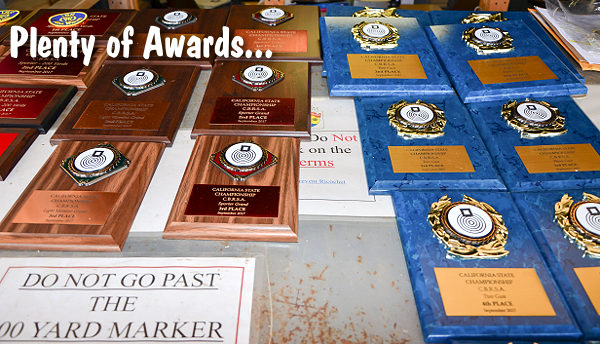
Many awards will be earned at the 2017 New England Games…
Of course, it wouldn’t be a true CMP Games event without a Rimfire Sporter Match.
The CEATS Pistol Range hosted both centerfire and rimfire matches in a lovely, tree-lined setting.
Learn More about the CMP New England Games
For registration, travel, and housing information, visit the New England Games Page on the CMP website. If you have questions, Contact Christina Roguski at 419-635-2141 ext. 714, or email competitions [at] thecmp.org.
We like to use the Birchwood Casey 2″ and 3″ orange “Target Spots” stick-on circles (with diamond centers) for shooting at 300 yards and beyond (photo right). These give you a very precise aiming point if you align your cross-hairs with the corners of the diamond. However, we know that some guys, particularly those whose scopes have “target-dot” reticles, prefer to have a small box for an aim point. In addition, the orange Target Spots are not a true “Day-Glo” color, so they may seem a little dull (low-contrast) when the target is in shadow.
For guys who want an ultra-high contrast target with a square box in the center, Birchwood Casey offers a series of neon green targets with box centers and spike-style extended vertical and horizontal lines (like on a compass). The manufacturer explains: “These newly-designed adhesive Target Spots come in highly-visible Atomic Green. The crosshair design fulfills the needs of open-sight shooters along with scope users. Easily line up your open sights on the center square or lay the crosshairs along the vertical and horizontal diminishing lines.” You can also rotate the Atomic Green Target Spots 45° to create a diamond center with the crosshairs in an “X” pattern.
We’ve sampled these targets. The Atomic Green background is a true “Day-Glo” color (like safety signs) so these circles appear very bright on a target backer. These work well in low light. We won’t throw away our orange Target Spots, but these Atomic Green circles are a nice option. NOTE: Atomic Green spots are NOT “splatter” targets — a contrasting bright color does NOT appear around your bullet holes.
Multiple Sizes Offered
Birchwood Casey sells the new Atomic green circles in various sizes. You can order a Combo Pack with sixty 1″-diameter spots, thirty 2″-diameter spots, and twenty 3″-diameter circles.
To get the best accuracy out of any benchrest rifle, you need to find the optimal position of front rest and rear bag. The important point to remember is that each rig is different. One gun may perform best with the front rest right at the tip of the forearm (Position ‘D’ in photo), while another gun will work best with the rest positioned much further back. This Editor’s own 6BR sits in a laminated stock that is pretty flexy in the front. It shoots best with the front rest’s sandbag located a good 6″ back from the forearm tip (position ‘A’).
Here’s some benchrest advice that can help you reduce vertical and shoot tighter groups… without spending another penny. Many benchrest shooters spend a fortune on equipment and devote countless hours to meticulous handloading, but they never experiment with their rifle’s position/balance on the bags. This article explains why you should test your rifle in various positions. What you learn may surprise you (and improve your scores).
Next time you go to the range, experiment with the position of your rifle on the front rest, and try a couple different positions for the rear bag. You may find that the rifle handles much better after you’ve made a small change in the placement of your gun on the bags. Recoil can be tamed a bit, and tracking can improve significantly, if you optimize the front rest and rear bag positioning.
This competitor has the front rest positioned fairly far forward but not all the way out. Note the stop on the front rest — this limits forward stock travel.
Balance Your Gun BEFORE You Spend Hours Tuning Loads
In the pursuit of ultimate accuracy, shooters may spend countless hours on brass prep, bullet selection, and load tuning. Yet the same shooters may pay little attention to how their gun is set-up on the bags. When you have acquired a new rifle, you should do some basic experimentation to find the optimal position for the forearm on the front rest, and the best position for the rear bag. Small changes can make a big difference.
Joel Kendrick, past IBS 600-yard Shooter of the Year, has observed that by adjusting forearm position on the front rest, he can tune out vertical. He has one carbon-fiber-reinforced stock that is extremely rigid. When it was placed with the front rest right under the very tip of the forearm, the gun tended to hop, creating vertical. By sliding the whole gun forward (with more forearm overhang ahead of the front sandbag), he was able to get the whole rig to settle down. That resulted in less vertical dispersion, and the gun tracked much better.
Fore/aft stock position is important even with very wide fore-ends.
Likewise, the placement of the rear bag is very important. Many shooters, by default, will simply place the rear bag the same distance from the front rest with all their guns. In fact, different stocks and different calibers will NOT behave the same. By moving the rear bag forward and aft, you can adjust the rifle’s overall balance and this can improve the tracking significantly. One of our shooters had a Savage 6BR F-Class rifle. By default he had his rear bag set almost all the way at the end of the buttstock. When he slid the rear bag a couple inches forward the gun tracked much better. He immediately noticed that the gun returned to point of aim better (crosshairs would stay on target from shot to shot), AND the gun torqued (twisted) less. The difference was quite noticeable.
A small change in the position of the forearm on the front rest, or in the placement of the rear bag, can make a big difference in how your gun performs. You should experiment with the forearm placement, trying different positions on the front rest. Likewise, you can move the rear bag back and forth a few inches. Once you establish the optimal positions of front rest and rear bag, you should find that your gun tracks better and returns to battery more reliably. You may then discover that the gun shoots smaller groups, with less vertical dispersion. And all these benefits are possible without purchasing any expensive new gear.
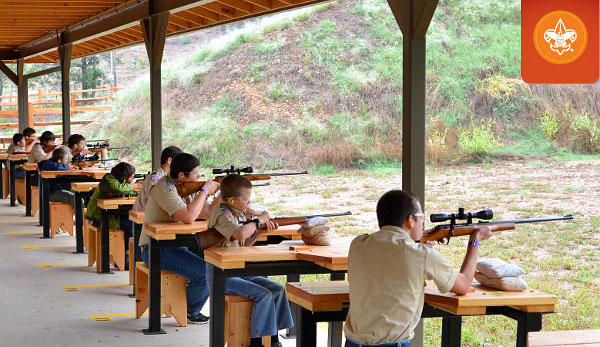
Editor’s Comment: Young people are the future of the shooting sports. If we don’t get young boys and girls involved in target/recreational shooting, the shooting sports will decline dramatically as our population ages. That can eventually lead to range closures, gun/accessory makers going out of business, and our heritage as a nation being lost. Therefore it is in the interest of every shooter to encourage young people to enjoy the shooting sports. Here are some of the best programs dedicated to getting the next generation of shooters started.
Article based on report in NRABlog.com.
Want to get young people involved in the shooting sports? Through organized training programs youngsters learn safe firearms handling, improve marksmanship skills, and meet other kids with similar interests. They also learn important life skills such as teamwork and goal attainment. There are several youth marksmanship programs available. All these programs let you share your joy of shooting with the younger generation. Remember today’s juniors are the future of our sport.
NRA National Junior Shooting Camps
File photo from NRA Smallbore Rifle Championship
The NRA’s National Junior Shooting Camps provide high-quality training opportunities in rifle, pistol and shotgun disciplines. Instruction is directed by highly qualified, top-level coaches. NRA offers camps for advanced and intermediate juniors. There are also Junior Olympic Shooting Camps, hosted by USA Shooting and supported by the NRA and the Civilian Marksmanship Program.
National 4-H Shooting Sports
The National 4-H Shooting Sports Program was created to teach marksmanship, the safe and responsible use of firearms, the principles of hunting and archery, and much more. State level 4-H clubs offer programs for individual training as well as team competitive shooting. There is also a National 4-H Shooting Sports Championship each summer which hosts Shotgun, Air Rifle, Air Pistol, Smallbore Rifle, Smallbore Pistol, Compound Archery, Recurve Archery, Muzzleloading Rifle and Hunting Skills events.
Boy Scouts of America
The Boy Scouts of America (BSA) offers several marksmanship opportunities for new and intermediate shooters. Programs provide training for marksmanship badges and there are a variety of other competitive and recreational programs. Check with your local Boy Scout organization to learn about the range offerings for scouts in your region.
American Legion Junior Program
Thousands of male and female junior shooters have participated in the American Legion Junior Shooting Sports Program, which has a perfect safety record. The Junior Program includes a Basic Marksmanship Course, Qualification Awards and Air Rifle Competition. To learn more, visit www.legion.org/shooting.
Youth Hunter Education Challenge (YHEC)
The NRA’s Youth Hunter Education Challenge (YHEC) program helps kids 18 and under to learn hunting, marksmanship, and safety skills. From rifle, bow, and muzzleloader shooting, to wildlife identification, map & compass orienteering and more, YHEC participants get hands-on training in eight skill areas. This is a great program for parents and kids who want to go on family hunts together.
Winchester/NRA Marksmanship Qualification Program
From a young shooter’s first BB gun to sophisticated air rifles, shotguns, muzzleloaders, pistols, and rifles, the year-round Winchester/NRA Marksmanship Qualification Program offers a pathway to excellence for young shooters. Qualification shooting provides incentive awards for developing and improving marksmanship skills. Progression is self-paced and scores are challenging but attainable. Performance is measured against established par scores and any shooter who meets or exceeds those scores is entitled recognition awards for that rating.
Brownells / NRA Day
Brownells / NRA Day events provide adults, youth, families, hunters, sportsmen, competitors – literally everyone – the opportunity to come together under a formal program to learn, experience, share, and grow in appreciation of the shooting sports. The event themes offered in the program are designed for discovery. They provide exposure to the many different activities available in shooting sports and offer participants the opportunity to explore them in a safe, controlled environment.
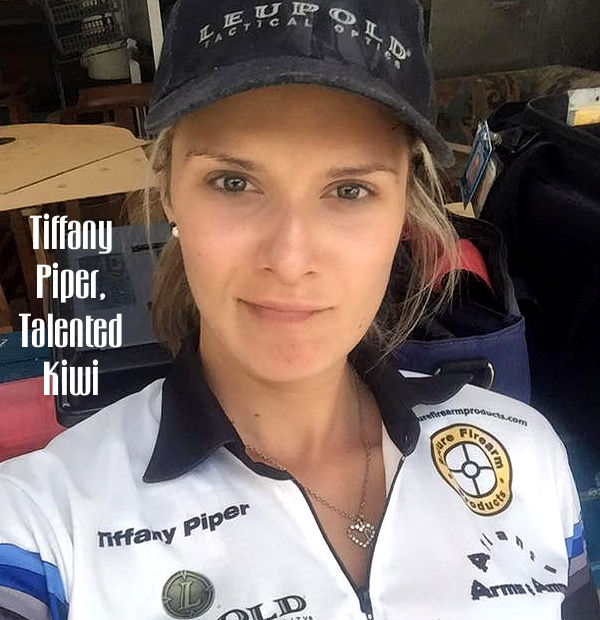
The NRABlog has interviewed seven prominent lady shooters, asking them for tips for other lady shooting sports enthusiasts, particularly new shooters. Top female competitors such as 2016 Bianchi Cup Winner Tiffany Piper and Team S&W Co-Captain Julie Golob offer good advice on competitive shooting as well as using firearms for self-defense. Read the full article here.
Here Are Some of the Top Tips from Leading Ladies:
Tiffany Piper (Action Pistol): The best piece of advice I would give is practice makes perfect. In New Zealand, we barely get enough range time with our noise restrictions so muscle memory and technique are key.muscle memory and technique are key. Study up on shooting techniques, watch YouTube videos of other professional women shooters, and try out what you see. Don’t get intimidated thinking it’s a male’s sport[.]”
Julie Golob (Team S&W, 3-Gun and Pistol): “If something isn’t clear, just ask about it! Shooters are some of the best people you’ll ever meet, but we can be confusing and use a lot of shooter slang and lingo. When in doubt, ask!”
Tori Nonaka (Team Glock): “I always recommend to new shooters to first concentrate on the basics of gun safety. That way they will be more comfortable when they next learn about the particular gun…. Their confidence will grow as they familiarize themselves with their specific weapon. Then, it’s all about practice at the range.”
Corey Cogdell (Olympic Trap Shooter): “It’s empowering for women to know how to use a firearm in a sporting atmosphere as well as for self-defense. So if you are new to firearms, check out your local gun club and take a lesson! There you’ll find instructors and other shooting sports enthusiasts who will be more than willing to help you.”
One eye or two? That’s the question that confounds some pistol shooters, particularly during slow fire. When shooting one-handed, some bullseye pistol shooters use a piece of tape or paper on one lens of their shooting glasses to obscure their non-dominant eye. That way they can get a more precise sight picture. However, when shooting two-handed, it’s almost always better to shoot with both eyes open. And if you are doing a “move and shoot” session/match, you’ll surely want to have both eyes open.
Champion pistol shooter Doug Koenig says he always shoots handguns with both eyes open: “To me it’s very simple — I wouldn’t drive my car with one eye closed. I wouldn’t walk around the house with one eye closed. To me, it’s all about your vision, your depth perception.” Doug adds that you definitely need both eyes open to transition quickly from target to target.
With both eyes open you’ll have better depth perception and peripheral vision. You will also be able to transition from target to target more quickly. In a timed, multi-target stage, you’ll want to move your head/eyes to the next target right after you break a shot. You’ll find that you will then reflexively move the handgun on to the new target when you swing your vision on to it. Don’t linger on the target you just shot — move to the next.
Here are two other helpful videos from Doug Koenig and the NSSF:
Sight Alignment and Sight Picture
Trigger Press and Trigger Control
Doug Koenig’s List of Championships:
10-time World Champion
18-time Bianchi Cup winner
2016 NRA World Shooting Champion
More than 70 National Championships
6-time World Action Pistol Championship Winner
3-time World Speed Shooting Champion/Steel Challenge
Watch Doug Koenig’s Championship Season TV show on the Pursuit Channel: Wednesday 5:30 pm (Eastern); Friday 9:00 pm (Eastern); Saturday 1:30 am (Eastern) West Coast prime-time.
Want to see the details?CLICK HERE to view full-screen photo.
Check out those five targets. The Aggregate (average) of all five targets is a tiny 0.0840 inches! These were shot by Gary Ocock at 100 yards in a California benchrest match on August 6, 2017. Though Gary’s 0.0840 Agg beats existing records, this was not a “sanctioned” match, so Gary’s killer Agg will NOT be submitted for IBS or NBRSA records. So, sadly, the Agg won’t appear in the record books, but this remains a spectacular, verified feat of rifle accuracy, accomplished in competition.
The argument can be made that this is the Most Accurate Gun Ever Built. As far as we can determine, no one has ever shot a smaller 5-target Agg anywhere, at any time.
The Unlimited Benchrest Record That Will Never Be (Official)
Report by Boyd Allen
Gary Ocock’s stunning unlimited Aggregate is beyond amazing. That’s an average of five, 5-shot groups of .0840. Shot under sanctioned match rules, but at an unsanctioned 100-yard fun match, this Aggregate is well under the current 100-yard official records of the IBS (.1386), and the NBRSA (.1242). The fourth of the five groups measured a minuscule .018, less than half the size of the existing NBRSA Unlimited record of .049 (also shot by Gary). Check it out:
When the top 15 shooters all post teen Aggs, conditions must be pretty favorable. However there were some light switchy winds — Gary said that he shot better in the left to right condition.
GUN SPECIFICATIONS
Ocock’s red Jay Young Unlimited Railgun features one major difference from Young’s typical Railgun designs. The bottom of the barrel block is integral with the top (moving part), of the gun. The barrel is Ocock’s usual 1:13.5″-twist Krieger chambered for the 6 PPC. The BAT Neuvo action* is unusual in that its lugs are horizontal at lock-up instead of the usual vertical. With horizontal lugs, both lugs maintain contact with their abutments when the action is cocked. In the more normal configuration when cocked the top lug is forced off of its seat by a combination of the angle of the trigger cocking piece interface, the pressure of the striker spring, and bolt clearance at the rear of the action.
LOAD SPECIFICATIONS
Gary shot this remarkable Agg with well-used brass, Vihtavuori N133 powder, and self-made 66gr BT bullets** seated at “jam”. This amazing Agg was shot on the second day of a 2-day Unlimited Benchrest match. On Day 1 Gary had experimented with various loads using both surplus IMR 8208 and Vihtavuori N133, but was not satisfied with the results. For his first group on Day 2, Gary tried a light load of N133. After seeing the result, however, he decided to go to the other extreme — a super stout N133 load — with the same powder. As you can see, Gary’s willingness to experiment paid off.
Notably, Gary used light neck tension. Ocock found that for these bullets and this barrel, light neck tension worked best (contrary to “normal” N133 benchrest practice). Ocock used a bushing that only produces .001″ difference between the diameters of sized and loaded case necks.
Comment on Ocock’s Achievement
Congratulations to Gary Ocock for superb shooting (and smart loading). Even though the match was not sanctioned (so the Agg will never be a record), Ocock has raised the bar very high, and given us a new standard of ultimate accuracy.
Though this 0.0840 Aggregate and 0.018 group will never go into the record group, they are still noteworthy. There’s virtually no doubt that they would have survived inspection by any record committee. Except for the lack of fixed backers, an IBS requirement (for detecting cross-fires), all other conditions were met for an officially-sanctioned match.
*The new BAT Neuvo actions are the result of a collaboration between Dwight Scott, and Bruce Thom, featuring Dwight’s ideas and BAT’s proven manufacturing expertise.
** Ocock shot his own, boat-tail match bullets, made with George Ulrich-crafted dies using Hood cores. Although he said that it had been a while since he had weighed any, his best guess was that they weigh something around 66.5 grains.
American Silhouette shooter Eric Mietenkorte delivered a superb performance at the recent Canadian National Silhouette Championships in Fort Steel, British Columbia. Eric recorded a 1-2-3 Trifecta with 1st Place in Master Standard Rifle, 2nd Place in Master Hunter Rifle, and 3rd place in Master Smallbore Hunter. Eric is coming home with quite the trophy harvest. Other top shooters included Team Lapua members Mark Pharr and Cathy Winstead-Severin.
Erich called this a “target rich environment”…
Eric tells us: “The Canadian National Championships are all wrapped up. Thanks to the Bull River Shooters Association (B.R.S.A.) for hosting an incredible event! What a great [week] of shooting! Such a beautiful range with the nicest people! It was great seeing old friends and making new ones. [There were] definitely some challenging wind and mirage conditions, but lots of great shooting, and I even took home some hardware.” Erich has posted these photos from the event.
Erich was quick on the trigger shooting pigs at 300 meters. He says “I love hearing that clang from hitting the steel.” Click speaker icon to hear audio.
6.5mm Chamberings Favored for Centerfire (High Power) Silhouette
The 6.5mm caliber seems to be the “sweet spot” for High Power Silhouette shooters. Erich says: “I use the .260 Bobcat (6.5×250) wildcat. Most still use the .260 Remington and 6.5×47 Lapua.” Other popular chamberings for High Power Silhouette include the 6.5 Creedmoor, 6mmBR, 6mm Dasher, 6×47 Lapua, and 7mm-08.
One wicked cool paint job — the Fighter Plane graphics on Erich’s smallbore rifle drew admiring glances.
Here Erich spots for fellow American shooters Mark Pharr and Cathy Winstead-Severin of Team Lapua.
The Cranbrook Daily Townsman News did a nice story on the Championships, complete with this informative video.
Fort Steele in British Columbia is a beautiful venue. Stunning scenery all around…






 On September 20-24, 2017, the CMP New England Games will take place in a scenic corner of Vermont (check out that photo above — is that nice or what?). Hosted by the Vermont State Rifle and Pistol Association and the Burlington Rifle and Pistol Club, the New England Games will be conducted at the Camp Ethan Allen Training Site, a beautiful facility.


 We like to use the Birchwood Casey 2″ and 3″ orange “Target Spots” stick-on circles (with diamond centers) for shooting at 300 yards and beyond (photo right). These give you a very precise aiming point if you align your cross-hairs with the corners of the diamond. However, we know that some guys, particularly those whose scopes have “target-dot” reticles, prefer to have a small box for an aim point. In addition, the orange Target Spots are not a true “Day-Glo” color, so they may seem a little dull (low-contrast) when the target is in shadow.