SHOT Show 2024 concluded 1/26/24, but another big shooting/hunting event is right around the corner, and this time the public is invited! (SHOT Show is restricted to outdoor industry personnel and media). The Great American Outdoor Show runs February 3-11, 2024 at the Pennsylvania Farm Show Complex in Harrisburg, Pennsylvania. This 9-day event celebrates hunting, fishing, and the outdoor lifestyle.
The show features over 1,000 exhibitors with booths and displays covering 650,000 square feet of exhibit hall space. At the Outdoor Show you’ll find firearms and optics makers, hunting outfitters, fishing guides, and RV experts. Each day there will be special events including seminars, featured speakers, archery competitions, celebrity appearances, outdoor skills demonstrations and much more.
Along with the 400+ outfitters, there will be experts giving instruction on archery, fishing, and hunting skills. CLICK HERE for profiles on the experts and featured speakers. Here are four of the leading hunting and firearms speakers on the schedule:
Big Country Concert on Saturday Night
Country music fans have reason to cheer this year. On Saturday February 10, 2024 (from 7:00 pm – 10:00 pm), there will be a major 2024 NRA Country Concert. Warren Zeiders and Randy Houser will be rockin’ the house with special guest Jacob Bryant. CLICK HERE to pre-order Concert Tickets.
Wall of Guns — $10 for a Chance to Win One of 40 Firearms
Right in the middle of the action will be The NRA Foundation’s Wall of Guns. Located at booth #39 in the PA Farm Show Complex’s main hallway, the Wall, which has display cases on both sides, will offer chances to win firearms during all nine days of the show.
The Wall of Guns has been a favorite since the NRA took over the show in 2014. For only $10, attendees have a 1 in 100 chance to win a brand new firearm or a $400 cash prize. After every 100 tickets are sold, a winner is drawn. With over 40 firearms to choose from, the $10 ticket is an easy buy for most attendees. All of these firearms have been graciously donated to The NRA Foundation in support of preserving the Second Amendment. Click HERE to view all 2024 Wall of Guns ticket packages.
Text in this article is Copyright 2024 AccurateShooter.com. Any site republishing this story agrees to pay damages and/or licensing fees.
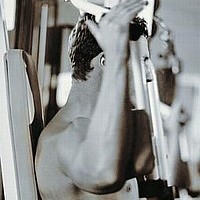
In the archives of The First Shot (the CMP’s Online Magazine), SGT Walter E. Craig of the USAMU discusses physical conditioning for competitive shooters, particularly High Power competitors. Fitness training is an important subject that, curiously, is rarely featured in the shooting sports media. We seem to focus on hardware, or esoteric details of cartridge reloading. Yet physical fitness also matters, particularly for High Power shooters. In his article, Craig advocates: 1) weight training to strengthen the Skeletal Muscle System; 2) exercises to build endurance and stamina; and 3) cardiovascular conditioning programs to allow the shooter to remain relaxed with a controlled heart beat.
SGT Craig explains: “An individual would not enter a long distance race without first spending many hours conditioning his/her body. One should apply the same conditioning philosophy to [shooting]. Physical conditioning to improve shooting skills will result in better shooting performance[.] The objective of an individual physical training program is to condition the muscles, heart, and lungs thereby increasing the shooter’s capability of controlling the body and rifle for sustained periods.”
In addition to weight training and cardio workouts (which can be done in a gym), SGT Craig advocates “some kind of holding drill… to develop the muscles necessary for holding a rifle for extended periods.”
For those with range access, Craig recommends a blind standing exercise: “This exercise consists of dry-firing one round, then live-firing one round, at a 200-yard standard SR target. For those who have access only to a 100-yard range, reduced targets will work as well. Begin the exercise with a timer set for 50 minutes. Dry-fire one round, then fire one live round and without looking at the actual impact, plot a call in a data book. Continue the dry fire/live fire sequence for 20 rounds, plotting after each round. After firing is complete, compare the data book to the target. If your zero and position are solid, the plots should resemble the target. As the training days add up and your zero is refined, the groups will shrink and move to the center.”
Fitness training and holding drills help position shooters reach their full potential. Here is 6-Time U.S. National Long Range Champion John Whidden.
Training for Older Shooters
Tom Alves has written an excellent article A Suggested Training Approach for Older Shooters. This article discusses appropriate low-impact training methods for older shooters. Tom explains: “Many of the articles you will read in books about position shooting and the one mentioned above are directed more toward the younger generation of shooters in their 20s. If you look down the line at a typical high power match these days you are likely to see quite a few folks who are in their middle 30s and up. Many people in that age range have had broken bones and wear and tear on their joints so a training program needs to take that into account. For instance, while jogging for an extended period for heart and lung conditioning may be the recommended approach for younger folks, it may be totally inappropriate for older people.”
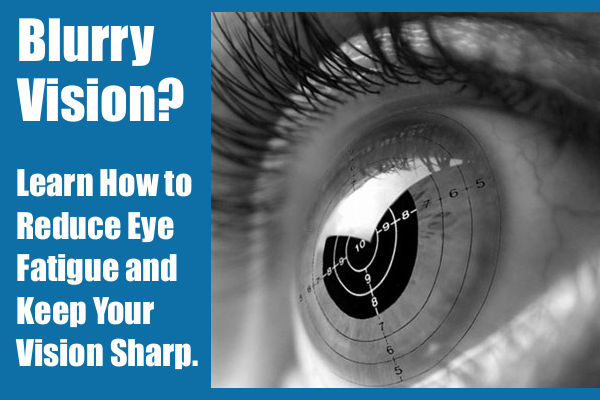
Do you find that the crosshairs in your scope get blurry after a while, or that you experience eye strain during a match? This is normal, particularly as you get older. Focusing intensely on your target (through the scope or over iron sights) for an extended period of time can cause eye strain. Thankfully, there are things you can do to reduce eye fatigue. For one — breathe deeper to take in more oxygen. Secondly, give your eyes a break between shots, looking away from the scope or sights.
In our Forum there is an interesting thread about vision and eye fatigue. One Forum member observed: “I have noticed recently that if I linger on the target for too long the crosshairs begin to blur and the whole image gradually darkens as if a cloud passed over the sun. I do wear contacts and wonder if that’s the problem. Anyone else experienced this? — Tommy”
Forum members advised Tommy to relax and breath deep. Increase oxygen intake and also move the eyes off the target for a bit. Closing the eyes briefly between shots can also relieve eye strain. Tommy found this improved the situation.
Phil H. explained: “Tom — Our eyes are tremendous oxygen hogs. What you are witnessing is caused by lack of oxygen. When this happens, get off the sights, stare at the grass (most people’s eyes find the color green relaxing), breath, then get back on the rifle. Working on your cardio can help immensely. Worked for me when I shot Palma. Those aperture sights were a bear! The better my cardio got the better and longer I could see. Same thing with scopes. Try it!”
Keith G. noted: “Make sure you are still breathing… [your condition] sounds similar to the symptoms of holding one’s breath.”
Watercam concurred: “+1 on breathing. Take a long slow deep breath, exhale and break shot. Also make sure you take a moment to look at the horizon without looking through rifle or spotting scope once in a while to fight fatigue. Same thing happens when using iron sights.”
Arizona shooter Scott Harris offered this advice: “To some extent, [blurring vision] happens to anyone staring at something for a long time. I try to keep vision crisp by getting the shot off in a timely fashion or close the eyes briefly to refresh them. Also keep moisturized and protect against wind with wrap-around glasses”.
Breathing Better and Relaxing the Eyes Really Worked…
Tommy, the shooter with the eye problem, said his vision improved after he worked on his breathing and gave his eyes a rest between shots: “Thanks guys. These techniques shrunk my group just a bit and every little bit helps.”
Read more tips on reducing eye fatigue in our Forum Thread: That Vision Thing.
To avoid eye fatigue, take your eyes away from the scope between shots, and look at something nearby (or even close your eyes briefly). Also work on your breathing and don’t hold your breath too long — that robs your system of oxygen.
The Rimfire Challenge Shooting Association (RCSA) is now an official partner of the +ONE Movement, a mentorship program organized by the National Shooting Sports Foundation (NSSF). “RCSA is looking forward to a long relationship with NSSF,” stated RCSA Board President Peter Swenson.
NSSF +ONE programs encourage mentorship related to firearm safety, firearm basics, shooting sports, and hunting. The +ONE program focuses on peer-to-peer development in shooting sports and hunting.
About the Rimfire Challenge Shooting Association
Designed to introduce new shooters to shooting sports in an exciting, family-friendly format, Rimfire Challenge matches focus on competition with .22 LR rifles and pistols. Matches are open to shooters of all shooting experience levels, with events conducted at ranges nationwide. The annual RCSA World Championship takes place each October. See match action in the video below. The RCSA promotes rimfire competition nationwide, supports beginning competitors and clubs, and solicits support for rimfire events from industry businesses.
Watch Action from the 2023 Rimfire Challenge Championship at Cavern Cove Range in Alabama
Programs that inspire mentoring can make a huge difference. According to recent research, if just one out of three target shooters and hunters can introduce someone new to the shooting sports, we can help to secure a strong future for generations to come.
The NSSF encourages shooting sports enthusiasts and hunters to join the +ONE movement and invite someone to the range or afield. Learn more about the +ONE Movement by visiting LetsGoShooting.org and LetsGoHunting.org.
This article is Copyright 2023 AccurateShooter.com. No reproduction on any other site is permitted.
.009″ — The Record That Stood for 40 Years.
In 1973 Mac McMillan shot an amazing 100-yard, .009″ five-shot group in a benchrest match. The .009″ group was measured with a 60x microscope for verification. Mac McMillan shot the group using a handbuilt prototype McMillan rifle with an early McMillan stock.
Mac’s .009″ group was the “Holy Grail” of rifle accuracy. This .009″ record was considered by many to be unbreakable, a record that would “stand for all time”. Well, it took 40 years, but someone finally broke Mac’s record with an even smaller group. In 2013, Mike Stinnett shot a .0077″ five-shot group using a 30 Stewart, a .30 caliber wildcat based on the 6.5 Grendel. Stinnett’s .0077″ group now stands as the smallest 100-yard group ever shot in registered benchrest competition.* Read About .0077″ group HERE.
Stinnett’s success doesn’t diminish the significance of Mac McMillan’s .009″ group in the history of benchrest competition. For four decades Mac’s group stood as the ultimate standard of rifle accuracy*. For those of you who have never seen Mac McMillan’s .009″ group, here it is, along with the NBRSA World Record certificate. The target now hangs in the McMillan Family Museum.
*Somebody else might claim a smaller group, but unless moving backers or electronic targets were used, it cannot be verified. Moving target backers are used at registered benchrest matches to ensure that five (5) shots are actually fired in each group. That eliminates any doubt.
Most of us have access to a printer at home or at work. That means you can print your own targets. You’ll find hundreds of free target designs online, including dozens of downloadable targets on our AccurateShooter.com Target Page. If you’re feeling creative, you can design your own target with a computer drawing program such as MS Paint.
Paper Stock Is Important
If you want your self-printed targets to show shots cleanly (and not rip when it gets windy), you should use quality paper stock. We recommend card stock — the kind of thick paper used for business cards. Card stock is available in both 65-lb and 110-lb weights in a variety of colors. We generally print black on white. But you might experiment with bright orange or yellow sheets. Forum Member ShootDots report: “They sell cardstock at Fed-Ex Kinko! I use either Orange or Yellow. That makes it easy to see the bullet holes clearly.” On some printers, with the heavier 110-lb card stock, you will need to have the paper exit through the rear for a straighter run.
Here are some Target-Printing Tips from our Forum members:
“Staples sells a 67-lb heavy stock that I have settled on. I use the light grey or light blue, either of these are easy on the eyes on bright days. I have used the 110-lb card stock as well and it works fine. It’s just a little easier to print the lighter stuff.” (JBarnwell)
“Cardstock, as mentioned, works great for showing bullet holes as it doesn’t tear or rip like the thin, lightweight 20-lb paper. I’ve never had a problem with cardstock feeding in the printer, just don’t stick too many sheets in there. If I need three targets, I load only three card stock sheets”. (MEMilanuk)
“I’ve used Staples Sticker paper. This works well and no staples are required (joke intended). It helps if you put slight tension on the lighter weight paper when mounting it on the target frame.” (Mac 86951).
Here are some tips for using lighter weight paper (if you want to save money or your printer won’t work with heavier stock):
“20-lb bond works pretty well for me if I use a spray adhesive and stick the entire back of the paper’s surface to the backer board.” (Lapua40X)
“I use the regular 20-lb paper but the only time it tears is when there is no backer to support it. This can be an issue when going to a public range and the backer are all shot out. I use a large construction paper backer that I clip onto the stands.” (CPorter)
Here Are Three of Our Favorite Targets. Click to Download PDFs.
As we release this story, the New Year — 2024 — is just 15 hours away (East Coast Time). Perhaps you’ve been eagerly awaiting for the big event, getting champagne (and sparklers) to celebrate the New Year. Hopefully, 2024 will be much better than 2023, a tough year with inflation, the border crisis, conflict in the Mid-East, ongoing war in Ukraine, and shocking incompetence/corruption in Washington. To mark the dawning of 2024, with hope for a much better year, we expect many folks will open a bottle of champagne. You could pop the cork the traditional way, or read on and learn how to release the celebratory champagne with a rifle shot, as demonstrated by the talented Kirsten Joy Weiss. Click on the above video to see Kirsten release champagne with a rimfire rifle.
Recently at Thorton Winery in Temecula, California, a champagne vintner, we were shown the best way to open a champagne bottle. We were told you should hold the bottle nose up at an angle then rotate the BOTTLE slowly while holding the cork. That works great… but it’s not as stunning as the way sharpshooter Kirsten Joy Weiss opens a bottle of bubbly.
A former competitive smallbore rifle shooter, ace trigger-puller Kirsten Joy Weiss tried a special New Year’s trick shot a few seasons back. In keeping with the festive New Year’s spirit, Kirsten attempted to shoot the cork off a champagne bottle. After a few unsuccessful tries, she managed to hit the cork with at least two shots. But alas the cork did not fly. She actually hit the cork, but it did not release. That was surprising…
Undaunted, Kirsten changed her strategy, aiming for the neck of the bottle. This duplicates the process of “sabering” a champagne bottle — a method of liberating the bubbly by slashing off the end of the neck with a blade. Aiming for the neck of the bottle, Kirsten successfully blew off the top of the bottle. (Apparently, when “sabering” it is actually the pressure within the champagne bottle which does most of the work).
NRA Media offers a series of informative videos about the Science of Shooting, covering a wide range of topics, from eye dominance to long-range ballistics. These videos feature high production values, with super-slow motion segments, as well as helpful computer graphics to illustrate the principles covered.
The videos are narrated by Jessie Harrison, a top action pistol shooter (and the first women ever to achieve USPSA Grand Master status). Jessie is assisted by talented shooters such as Top Shot Season 4 Champion Chris Cheng. There are 40 videos in the Firearm Science Video Series. Here are seven good NRA science videos, with links to others below.
Olympic Gold Medalist Jamie Gray demonstrates the four positions used by competition shooters: Prone, Standing, Sitting, and Kneeling. Helpful overlay graphics show how the human skeleton aligns in each of these positions. This video should help hunters as well as competitive position shooters. If you shoot silhouette, definitely watch this video!
BULLET TRAJECTORY — Factors at Play and Zeroing Strategies
Host Jessie Harrison (formerly Jessie Duff) and Veteran Air Force Sniper and Long Range Expert George Reinas help us understand the factors behind bullet trajectory. NOTE: There are some exaggerations in the graphics in the videos, and inconsistent terminology use, but it’s still a helpful basic primer on the subject of trajectories. This popular video has over 1 million YouTube views.
INTERNAL Ballistics — Cartridge Ignition and Bullet in Barrel
What happens inside the barrel of your gun when you pull the trigger? In this edition of Firearm Science, Jessie Harrison goes over internal ballistics, which studies the combustion of propellant, the pressure developed, and the motion of the bullet along the bore of the barrel. There are some good 3D animations showing how the powder charge ignites and the bullet moves through the barrel.
CHOKE TUBES and Shot Patterns — Shotgun Science
With over 2.2 million YouTube views, this shotgun-centric video is the most popular of all the NRA Firearms Science series videos. Here Olympic trap shooter Corey Cogdell explains how choke tubes affect a shotgun’s shot pattern in this edition of Firearm Science. We recommend that all Shotgun hunters watch this video — it explains the effect of choke tubes very well.
ZEROING RIFLES for Long Range — Tech Tips
The process of zeroing rifles for long range is covered in this Firearm Science video featuring George Reinas, a veteran Air Force sniper. George demonstrates how to adjust his scope to compensate for bullet drop at long range. Our friend Dennis Santiago was involved in the making of this video, which was filmed at the Burbank Rifle & Revolver Club in Southern California.
EYE DOMINANCE — How to Determine Which Eye is Dominant
Host Jessie Duff and longtime shooter Krystie Messenger demonstrate how eye dominance affects aim and teach you how to determine your dominant eye in this edition of Firearm Science. There are very simple tests you can do to determine your eye dominance. This Editor is right-handed but left-eye dominant. All competitive shooters should check for eye dominance. If you are cross-dominant, you can alter your head position or put a paper patch on one frame of your shooting glasses.
Now that it is wintertime, many of our readers will be switching to indoor shooting for a few months. Practicing at indoor ranges can be fun with both handguns and rifles (with permitted chamberings). But indoor shooters must be aware of noise issues and general safety concerns.
There are important safety and behavior rules you need to follow at a gun range. Sometimes bad range etiquette is simply annoying. Other times poor gun-handling practices can be downright dangerous. The NRA Blog has published a useful article about range safety and “range etiquette”. While these tips were formulated with indoor ranges in mind, most of the points apply equally well to outdoor ranges. You may want to print out this article to provide to novice shooters at your local range or club.
8 Tips for Gun Range Etiquette
Story by Kyle Jillson for NRABlog
Here are eight tips on range etiquette to keep yourself and others safe while enjoying your day [at the range]. Special thanks to NRA Headquarters Range General Manager Michael Johns who assisted with this article.
1. Follow the Three Fundamental Rules for Safe Gun Handling
ALWAYS keep the gun pointed in a safe direction.
ALWAYS keep your finger off the trigger until ready to shoot.
ALWAYS keep the gun unloaded until ready to use.
This NSSF Video Covers Basic Gun Range Safety Rules:
2. Bring Safety Gear (Eye and Ear Protection)
Eye and Ear protection are MANDATORY for proper safety and health, no matter if “required” by range rules or not. It is the shooter’s responsibility to ensure proper protection is secured and used prior to entering/using any range. Hearing loss can be instantaneous and permanent in some cases. Eyesight can be ruined in an instant with a catastrophic firearm failure.
3. Carry a Gun Bag or Case
Common courtesy and general good behavior dictates that you bring all firearms to a range unloaded and cased and/or covered. No range staff appreciates a stranger walking into a range with a “naked” firearm whose loaded/unloaded condition is not known. You can buy a long gun sock or pistol case for less than $10.
4. Know Your Range’s Rules
Review and understand any and all “range specific” rules/requirements/expectations set forth by your range. What’s the range’s maximum rate of fire? Are you allowed to collect your brass? Are you required to take a test before you can shoot? Don’t be afraid to ask the staff questions or tell them it’s your first time. They’re there to help.
5. Follow ALL Range Officer instructions
ROs are the first and final authority on any range and their decisions are generally final. Arguing/debating with a Range Officer is both in poor taste and may just get you thrown out depending on circumstances.
6. Don’t Bother Others or Touch Their Guns
Respect other shooters’ privacy unless a safety issue arises. Do NOT engage other shooters to correct a perceived safety violation unless absolutely necessary – inform the RO instead. Shooters have the right and responsibility to call for a cease fire should a SERIOUS safety event occur. Handling/touching another shooter’s firearm without their permission is a major breech of protocol. Offering unsolicited “training” or other instructional suggestions to other shooters is also impolite.
7. Know What To Do During a Cease Fire
IMMEDIATELY set down your firearm, pointed downrange, and STEP AWAY from the shooting booth (or bench). The Range Officer(s) on duty will give instructions from that point and/or secure all firearms prior to going downrange if needed. ROs do not want shooters trying to “secure/unload” their firearms in a cease fire situation, possibly in a stressful event; they want the shooters separated from their guns instantly so that they can then control the situation as they see fit.
8. Clean Up After Yourself
Remember to take down your old targets, police your shooting booth, throw away your trash, and return any equipment/chairs, etc. Other people use the range too; no one wants to walk up to a dirty lane.
NOTE: There are ten (10) shots in the group, but for simplicity we are only displaying five (5) shot circles. Adding more circles won’t change the measurement because the two most distant shots, which determine group size, ARE included.
What kind of 200-yard accuracy can you get in an enclosed, underground test range? Would you believe 0.162 MOA at 200 yards with a .338? Have a look at these test targets from Sierra Bullets. Like most bullet manufacturers, Sierra does live-fire bullet testing to ensure that Sierra projectiles perform as promised, with repeatable accuracy. Sierra tests bullets in its own underground test complex. Sierra’s 300-meter test range is the longest, privately-owned underground bullet test facility in the Western Hemisphere.*
Day in and day out, various bullet types are tested using a big collection of barreled actions. These barreled actions are clamped in stout, return-to-battery test fixtures. These big, heavy test fixtures provide near-perfect repeatability (with no human-induced holding or aiming errors).
Sierra Bullets 10-Shot Groups at 200 yards
Check out these 10-shot test groups shot at the Sierra Test Range at 200 yards. Note that the numbers listed on each sample are actual measurements in inches. To convert to MOA, cut those numbers in half (to be more precise, divide by 2.094, which is 1 MOA at 200 yards). For example, the 0.340″ middle group works out to 0.162 MOA at 200 yards.
Scan-Verified 0.162 MOA Accuracy at 200 Yards
To verify the accuracy of Sierra’s measurements, we measured the middle (.338 caliber) 10-shot group with our On-Target Group Measurement software. We registered a group size reading of 0.339″ — within one-thousandth of the Sierra measurement. The calculated group size in MOA (Minute of Angle) is 0.162.
That’s amazingly good for ten rounds of big .338 caliber bullets. A FIVE-shot 0.162 MOA group at 200 would be considered excellent at any benchrest match. But remember this target has TEN shots. The current, one-target IBS world record for ten shots at 200 yards is 0.245″, set by Ed Watson in 1999.
Bevy of Barreled Actions for Bullet Testing
Sierra Bullets uses dozens of barreled actions for testing bullets in its enclosed, 200-yard test range. Each barrel has its own logbook to track the barrel’s usage.
Click Photo to Zoom
*Even Longer Test Tunnels Exist in Europe: At Stadeln in Germany, RWS (now part of RUAG) owns a 500 meter tunnel (above ground level) which has existed for decades. In Thun, Switzerland, RUAG has a fully-instrumented 500 meter underground tunnel. Near Ulm, Germany, there is a 5-lane 300 meter underground shooting range that is open to the public.


 Big Country Concert on Saturday Night


 In the archives of


 .009″ — The Record That Stood for 40 Years.

 Most of us have access to a printer at home or at work. That means you can print your own targets. You’ll find hundreds of free target designs online, including dozens of downloadable targets on our


 A former competitive smallbore rifle shooter, ace trigger-puller Kirsten Joy Weiss tried a special New Year’s trick shot a few seasons back. In keeping with the festive New Year’s spirit, Kirsten attempted to shoot the cork off a champagne bottle. After a few unsuccessful tries, she managed to hit the cork with at least two shots. But alas the cork did not fly. She actually hit the cork, but it did not release. That was surprising…


 Scan-Verified 0.162 MOA Accuracy at 200 Yards


