To understand the heart and mind of a champion, watch this video profiling Jessie Harrison. This talented lady is arguably the best female action pistol shooter in history. No other woman has amassed as many championships or set so many speed-shooting records. Over the past two decades Jessie Harrison (who has also competed with with married names Jessie Duff and Jessie Abbate) has earned dozens of major titles including twenty-two U.S. Practical Shooting Association (USPSA) Ladies Championships. Jessie won her 22nd USPSA title at the 2021 USPSA Race Gun Nationals in Alabama.
Jessie is one of the hardest-working athletes in the shooting game. Jessie is America’s “leading lady” — perhaps the winningest female pistol shooter in the game today. The drive and dedication that has made Jessie a success are revealed in this video from Weatherby.
Jessie Harrison’s Will to Win
Jessie explains how hard work brings titles: “To prepare for a championship, I’m on the range constantly.
My office is the gun range — that’s where I do my work.
I travel the country pullin’ the trigger, makin’ brass, smelling gunsmoke. I have to make sure that I’m in control because… there is no other person on the line with me, helping pull the trigger.
I have to pay attention to my foot placements, my set-ups, my positions, gettin’ the gun clean out of the holster, my reloads. I can’t think about it when I’m shooting. I can’t think about these small things. I have to focus on the sights and pulling the trigger. It’s just me and the gun.
[When] I step out on to the range, I simply have to be perfect — I have to be the best… I won’t settle for anything less.”
First-Ever Female Grand Master
Jessie Duff is the first woman in history to earn the title of USPSA Grand Master (GM), the highest rating conferred by the U.S. Practical Shooting Association (USPSA). To earn this prestigious ranking, Duff had to maintain an average above 95% in shooting classification courses, something never before achieved by a lady shooter. Jessie finished 2013 with a 95.39% average.
Photo by Forum member GAT. Chambered in 6-6.5×47 Lapua, this rifle features a Stiller TAC30 action, Krieger barrel, Harrells brake, Konohawk Stock, and Sightron SIII 6-24x50mm scope.
Ryan Cleckner has created many good shooting videos for the NSSF, such as his excellent Understanding MOA Video. Ryan is noted for his ability to explain complex topics in an easy-to-comprehend manner. This video, covering the fundamentals of shooting, has been viewed over 3 million times! It’s worth watching, particularly for guys getting started in PRS/practical competitions.
In this video, Ryan Cleckner reviews proper technique for rifle shooters. A stable platform, sight alignment, sight picture, and trigger control are key fundamentals to shooting properly. This is basic stuff, but Cleckner presents it in a clear, logical fashion. This is a good video for novice shooters.
Tip on Viewing Your Reticle:
Cleckner: “Sometimes it can be difficult to focus between the target and the reticle, even with the parallax adjusted properly. I recommend you focus only on the reticle. Just like the front sight on a rifle or a handgun, that reticle is what you can control, and it’s what matters. Focus on a crisp, clear reticle, in a stable platform, and all that’s left is trigger control.”
Tip on Trigger Control:
Cleckner: “Trigger control is pretty straightforward, as long as you think about it as a continuous process, and not just one thing that happens. I like to think about it as drawing a line in the dirt. I like to think about this constant pressure that I’m adding as I draw this line straight back, and then… continuing to draw that line even as the rifle goes off. That’s the good follow-through you’ll need.”
Long Range Shooting Handbook — A Good Resource
Cleckner has authored a book, the Long Range Shooting Handbook, which expands on the topics covered in the above video. You can view Sample Chapters from Ryan’s Book on Amazon.com.
Ryan Cleckner’s new book is designed as an intro to important fundamental concepts such as MOA vs. Mils, External Ballistics, and Environmental Effects. Included are personal tips and advice based on Cleckner’s years of experience as a sniper instructor and special operations sniper.
The Long Range Shooting Handbook is divided into three main categories: What It Is/How It Works, Fundamentals, and How to Use It. “What It Is/How It Works” covers equipment, terminology, and basic principles. “Fundamentals” covers the theory of long range shooting. “How to Use It” gives practical advice on implementing what you’ve learned, so you can progress as a skilled, long range shooter.
As a long-range shooting expert, Ryan Cleckner has impressive credentials. Cleckner was a special operations sniper (1/75 RGR) with multiple combat deployments, and he has served a U.S. Army sniper instructor. Currently he works as a firearms industry executive and attorney.
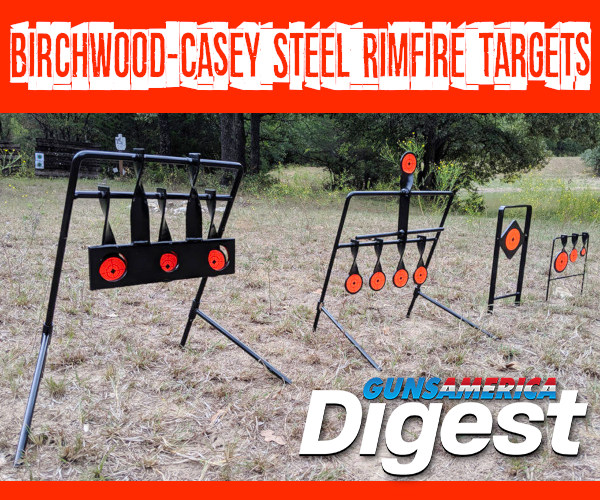
Rimfire plinking with reactive targets is FUN and affordable. We always like to include REACTIVE TARGETS during a trip to the range with our .22s. Decent .22 LR rimfire ammo is not expensive, and a wide variety of affordable steel targets are available. Rimfire-class steel is much less costly than the heavy AR500 steel plates used for centerfire rounds. In fact, Birchwood Casey makes a wide variety of reactive steel rimfire targets that retail for under $50.00. These offer great “Bang for the Buck”.
A fast-cycling, semi-auto .22 LR rifle like the Savage A22 is great for shooting reactive targets.
GunsAmerica Digest has reviewed a variety of reactive rimfire target systems from Birchwood Casey. We recommend you read this detailed article Little Targets, Big Fun, by Jordan Michaels. He acquired four different steel target systems and tested them at his Texas range. Michales was impressed: “At $30-$55 a pop, Birchwood-Casey’s targets are small enough to be challenging and cheap enough to buy four or five for the price of one centerfire-rated target. They’re also light, portable, reactive, and easy to set up.”
B/C Gallery
B/C Back Drop
B/C Qualifier Spinner
B/C King of Diamonds
Check out how these Birchwood Casey steel targets perform. These animated GIFs show actual shooting sessions with .22 LR rifles and pistols. The targets hold up well, though the black paint comes off. The reviewer notes: “You shouldn’t worry about durability as long as you stick to .22 LR. I shot the heck out of these targets with rifles and handguns using both standard and high-velocity cartridges, and I didn’t notice any denting or cracking. If the targets are going to be kept outside, however, keep an eye out for rust – the black paint comes off immediately.”
Safety Considerations with Steel Reactive Targets
The tester said the targets worked best with a .22 LR ammo with at least 1000 fps MV at the targets. He tested with .22 LR pistols as close as 7 yards, and .22 LR rifles out to 100 yards. Be advised — when shooting steel targets at relatively close ranges ALWAYS wear full-coverage eye protection because ricochets and splash-backs are definite risks. Also comply with all range rules.
To succeed in long-range shooting matches, given the high level of competition these days, you’ll need solid wind-reading abilities. We’ve found an article by SFC Emil Praslick III, retired USAMU Service Rifle coach and U.S. Palma Team Coach, that can help you make better wind calls in competition.
Emil Praslick, now retired from the U.S. Army, is considered one of the best wind gurus in the United States, if not the world. During his service with the USAMU he authored an excellent two-part article on wind reading that is available on the CMP (Civilian Marksmanship Program) website. Both articles contain helpful illustrations, and are “must-read” resources for any long-range shooter–not just Service Rifle and Highpower competitors.
Part One covers basic principles, tactics, and strategies, with a focus on the 200-yard stages. Emil writes: “There are as many dimensions to ‘wind reading’ as there are stages to High Power competition. Your tactical mindset, or philosophy, must be different for the 200 and 300 yard rapid-fire stages than it would be for the 600 yard slow-fire. In the slow-fire stages you have the ability to adjust windage from shot to shot, utilizing the location of the previous shot as an indicator. Additionally, a change to the existing conditions can be identified and adjusted for prior to shooting the next shot.”
In Part Two, Praslick provides more detailed explanations of the key principles of wind zeros, wind reading, and the Clock System for determining wind values: “The Value of the wind is as important as its speed when deciding the proper windage to place on the rifle. A 10 MPH wind from ’12 o-clock’ has No Value, hence it will not effect the flight of the bullet. A 10 MPH wind from ‘3 o’clock’, however, would be classified as Full Value. Failure to correct for a Full Value wind will surely result in a less than desirable result.”
Praslick also explains how to identify and evaluate MIRAGE:
Determine the accuracy of the mirage. Mirage is the reflection of light through layers of air that have different temperatures than the ground. These layers are blown by the wind and can be monitored to detect wind direction and speed.
Focus your scope midway between yourself and the target, this will make mirage appear more prominent. I must emphasize the importance of experience when using mirage as a wind-reading tool. The best way to become proficient in the use of mirage is to correlate its appearance to a known condition. Using this as a baseline, changes in mirage can be equated to changes in the value of the wind. Above all, you must practice this skill!
Click HERE for more excellent instructional articles by Emil Praslick and other USAMU Coaches and shooters.
The 2023 NRA Long Range F-Class Nationals event is underway right now at Ben Avery range in Phoenix. That’s an extremely tough competition — the targets are at 1000 yards and your need a rifle with ultra-high accuracy potential. To win in competitive shooting you need an accurate rifle, excellent ammo, good sights/optics, and good physical fitness.
But in addition, there is the “mental game”. You need to be mentally prepared for the match. You should be focused yet relaxed, and be able to deal with stresses from a bad shot or rapid wind change. Experts say you also want to visualize the perfect shot.
One great Shooting Sports USA article, Shooting is 90% Mental, was penned by Chip Lohman (SSUSA’s former Editor). With the help of two very smart Ph.D types, Judy Tant and Mike Keyes, Lohman examines the mental processes involved in the shooting sports. Chip’s co-authors have impressive credentials. Dr. Judy Tant is a Clinical Psychologist and National Bullseye Pistol Champion. Dr. Michael J. Keyes, is a licensed Psychiatrist and former physician for the U.S. Shooting Team. CLICK HERE to read article.
Recommended Books to Focus Your Mental Game and Improve Your Shooting
Along with the article above, there are a number of good books than can help you improve your mental game and perform better in competition. Here are seven recommended books that can help your mental game and shooting skills. These are available from Creedmoor Sports and Amazon.com.
The Bullseye Mind
Bullseye Mind is the first mental training book written specifically for sport shooters.
Mental Training in Shooting
Mental training in Shooting” is a practical book packed with good, straightforward advice about techniques and mental preparation.
Mental Game and Marksmanship Books on Amazon
Mental Preparation for Shooting Matches
Advice from Emil Praslick
Along with these books we offer some smart advice from Emil Praslick III, former USAMU coach. Considered one of the best wind readers on the planet, Praslick also was known for his ability to help his shooters master the “mental game”. Here is an article from the CMP Archives in which Praslick explains how to focus your mind to achieve greater success.
Thinking Your Way to Success by Emil Praslick
Why does it seem that the same small group of shooters wins the majority of the matches? What is the difference among shooters who are technically equal? Confidence. A confident shooter is free to execute his shots without the fear of failure, i.e. shooting a poor shot.
Negative thoughts (can’t, won’t be able to, etc.) will destroy a skilled performance. The mind’s focus will not be on executing the task, but on projecting fear and self-doubt. Fear is the enemy, confidence is the cure. How does a shooter on the eve of an important match … attain the confidence needed to perform up to his potential? A pre-competition mental plan can assist in acquiring that positive mental state. The plan can be broken down into a few phases.
Build a feeling of preparedness. Developing and executing a plan to organize your equipment and pre-match routine will aid you in feeling prepared on match day.
Avoid negative and stressful thoughts. Focusing on “winning” the match or shooting for a specific score (like making the “cut” or making the President’s 100) can cause undue stress. Good shooters focus on aspects that are within their control: their sight picture, their sight alignment, their position. Each shot should be treated as an individual event.
Train stage-specific tasks during your practice sessions. Instead of shooting matches or practice matches only, include some drills that focus on your problem areas. Training in this manner will assist your level of confidence.
As part of your pre-match routine, imagine yourself shooting perfect shots. Visualize getting into the perfect position, acquiring a perfect sight picture, and perfect trigger control.
Today, October 31st is Halloween (aka “All Hallows Eve”). There will be trick-or-treaters and Costume parties. Why not head to the range and shoot some Halloween-themed targets this October amidst the fall foliage. The folks at the NRA Blog have created a series of “spook-tastic” Halloween targets. Writer Kyle Jillson says, “In addition to stocking up on candy and finding great costumes, we thought you might like to have some fun at the range, so we created these spooky targets for you to use.”
Just click an image to launch its full-size version. You can then download the target and print it out on regular 8.5″x11″ paper. Now you have fun Halloween-themed targets to bring to the range this week.
Today is October 31st, Halloween (originally “All Hallows Eve”). That means it’s pumpkin time. Just how much fun can you have with pumpkins? Watch these two videos and find out. In the first video, the RatedRR team sends a few orange gourds to pumpkin heaven using Det Cord, C4, and binary explosives. The sequence starting at the 2:00 minute mark in the first video is truly amazing. WARNING: DO NOT TRY THIS AT HOME!
Watch Pumpkin Blasting with Explosives
In the next video, a pumpkin carved as a Death Star serves as the target for a .50 caliber rifle (looks like a Barrett M82 .50 BMG). As you may guess, the pumpkin Death Star suffers the same fate as the Hollywood version in Star Wars. NOTE: At the 0:42 mark in the video, a graphic displays “30,000 FPS”. That’s the high-speed camera’s frame-per-second rate, NOT the projectile velocity in feet-per-second.
Watch .50 BMG Rifle vs. Death Star Pumpkin
Warning: These demonstrations were carried out on closed ranges by experienced professionals certified to use explosives. Possession of C4 and Det Cord may be a violation of various Federal, State, and local laws. Detonating cord and C4 are classified as high explosives and are regulated by the BATFE. Don’t even think about trying to repeat these stunts on your own.
Precision rifle shooters don’t have to hit a big-league fastball, or launch a top-fuel dragster in the blink of an eye. Nonetheless, reaction times are important in our sport — both for competitive shooters and hunters. Want to catch that prairie dog before he slips down his hole? You’ll need to be quick. Want to win at short-range benchrest? Then you’ll need to watch your windflags and respond quickly to a change. Miss a major wind-shift and you could ruin your whole weekend.
Here’s a fun test of reaction times from HumanBenchmark.com. The way it works is that, after clicking “Start”, you wait until the background color changes from red to green. The instant you see green, immediately click your mouse. The average (median) reaction time is 215 milliseconds. Hint: If you keep your finger “preloaded” in contact with your mouse button you can shave some milliseconds — but don’t “jump the gun”.
Tips for Faster Times
Here are three tips to speed up your reaction times:
1) Respond to the color change (by itself), rather than wait to read the word “CLICK!” after the box shifts to green.
2) Try focusing at the corner of the box, rather than the center. This may help you react “without thinking”.
3) Have your index finger “poised and ready” over the left button–you can shave milliseconds by very slightly depressing the button before you actually click.
Pumpkin Blast event graphic from P2K Sports Range in El Cajon, CA.
Halloween (originally “All Hallows Eve”) is celebrated every year on October 31st — this upcoming Monday. That means it’s pumpkin time. Just how much fun can you have with pumpkins? Watch these six videos and find out. In the first video, the RatedRR team sends a few orange gourds to pumpkin heaven using Det Cord, C4, and binary explosives. The sequence starting at the 2:00 minute mark in the first video is truly amazing. WARNING: DO NOT TRY THIS AT HOME!
Oh, and as a bonus for you guys who like ladies who can shoot, we included a fun video with the enthusiastic YouTuber and gun enthusiast Babee Blue. She posted: “Had a leftover Halloween pumpkin and wanted to blow it up using a Ruger .270 Win rifle. Add some Tannerite and it made for quite the fun explosion. Doesn’t everybody blow up their leftover Halloween pumpkins?”
NOTE: For all the videos, if you don’t hear sound, then click the speaker icon.
Watch Pumpkin Blasting with Explosives
In this lead video, the RatedRR team blasts a collection of pumpkins using Det Cord, C4, and binary explosives. The sequence starting at the 2:00 minute mark is jaw-dropping — truly top-tier Hollywood-style colored explosions. WARNING: DO NOT TRY THIS AT HOME!
Pumpkin Face Carved in 5.5 seconds with Handgun
In two days, on October 31st, we celebrate Halloween (which was originally called All Hallows’ Eve). That means the neighborhood kids will be ringing doorbells as soon as it gets dark. No doubt some of you procrastinators will wait ’til the last minute to set out your Halloween decorations and Jack-O-Lanterns. Don’t worry, in the video below, our friend, 3-Gun ace Taran Butler, shows how to carve a pumpkin in just about 5.5 seconds, give or take a tenth. Taran performed this feat of speed-carving with his trusty Infinity handgun, chambered in 9mm Major.
Kirsten Carves Pumpkin Face with .22 LR Volquartsen
In this video, the lovely and talented Kirsten Joy Weiss shows off her impressive trick-shot skills. To help celebrate the gouls/goblins holiday, Kirsten “carved” a pumpkin using her semi-auto Volquartsen .22 LR rifle. Kirsten had to send a lot of rimfire rounds into her orange friend.
It turns out that Mr. Pumpkin’s posterior side was better than his front. On inspection, Kirsten saw that the most impressive Jack ‘O Lantern face appeared on the reverse side of her pumpkin. It turns out the little .22-caliber bullets worked better on exit than entry. Those “exit wounds” made a very successful Halloween face.
Babee Blue Blows Up Pumpkins with .270 Win and Tannerite
In this video, the popular Babee Blue uses a rifle to drill pumpkins that were filled with some Tannerite. The result is an impressive blast when Babee puts a .270 Win round into a pumpkin downrange. This is a fun video to watch, and Babee Blue is an enthusiastic pumpkin blaster.
Which Cartridge Best Destroys a Pumpkin
This video is more about pumpkin blasting than pumpkin carving. Hosted on the Garand Thumb YouTube Channel, this engaging video has been watched over 1.3 MILLION times. The shooters try a variety of cartridge types to determine which firearm destroys pumpkins the best? The host explains: “In this very spooky special we will be putting lead to gourd in the most kinetic way possible. Which gun will do the best? Only science can tell us.”
Carving Pumpkin with Smith & Wesson .44 Magnum Revolver
Hickok45 Carves Pumpkins with Handguns
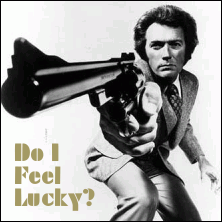
To celebrate Halloween, here’s an example of master wheelgun marksmanship. Popular YouTube host Hickok45 skillfully creates a smiling face on a pumpkin using a S&W Model 29 .44 Magnum revolver. Hickok45 is using the classic blued, double-action revolver popularized by Clint Eastwood as Dirty Harry. To form the eyes he uses multiple shots then uses a string of shots to form the mouth, reloading his Model 29 along the way. Carving pumpkins with bullets has become a tradition for Hickok 45 — every year he puts a face on a pumpkin using a different firearm, typically a pistol, but he’s used other handguns and a couple rifles as well. SEE PUMPKIN Shooting Playlist. Happy Halloween!
The 2023 F-Class National Championships commence Sunday, October 29, 2023 at the Ben Avery Shooting Facility (BASF) in Phoenix. For 2023, the Nationals combine both Mid-Range and Long-Range competitions in one extended mega-match. The Mid-Range U.S. F-Class Nationals start on Sunday, October 29, 2023 and run through Wednesday, November 1, 2023. All Mid-Range shooting will be at 600-yard targets.
The Long Range U.S. F-Class National Championships then run Thursday, November 2, 2023 through Sunday, November 5, 2023. All Long Range matches are at 1000 yards. The competitions will have two different divisions: F-Open and F-TR (Target Rifle). Registration LINKs for both Mid-Range and Long-Range Championships are below. CLICK HERE for 2023 Nationals Official Program.
2023 U.S. NRA Long Range F-Class Nationals
Thursday, November 2 through Sunday, November 5
Located on 1,650 acres in north Phoenix, Ben Avery is one of the nation’s largest publicly-operated shooting facilities. A City of Phoenix “Point of Pride,” the facility has received a five-star rating from the National Association of Shooting Ranges. A camping area is available for competitors. Contact Ben Avery Shooting Range Camping to reserve a camping spot.
Firing line at 2015 F-Class Nationals at Ben Avery Shooting Facility.
You’ll see some serious hardware on the firing line at Ben Avery. Here’s a modern F-Open rig with a handsome maple stock. The gun, belonging to David Mann of Texas, shoots as good as it looks.
RULES: Current NRA F-Class Rules shall apply. TARGETS: MR-1FC at 600 yards and LRFC at 1000 yards. TARGET SERVICE: Competitors will pull their own targets. SCORING: Competitors will score. Any competitor failing to perform his scoring duties may be disqualified. CLASSIFICATION: NRA F-Class Classifications will be used. Those competitors unclassified or without proof of a lower classification, will be required to compete in the Master class. Please indicate classification on the registration and entry form. EMPTY CHAMBER INDICATOR (ECI): Approved NRA empty chamber indicators are required to be used at all times except during the preparation period time and firing.


 Jessie Harrison’s Will to Win



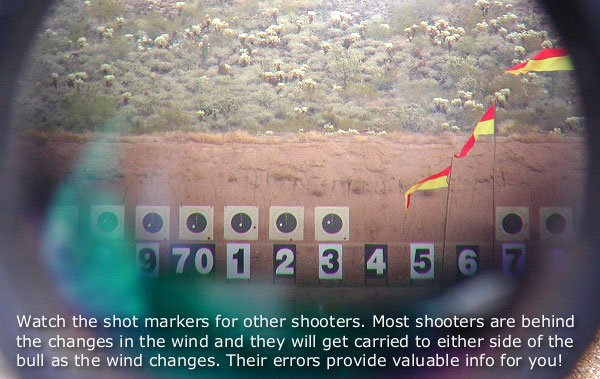
 To succeed in long-range shooting matches, given the high level of competition these days, you’ll need solid wind-reading abilities. We’ve found an article by SFC Emil Praslick III, retired USAMU Service Rifle coach and U.S. Palma Team Coach, that can help you make better wind calls in competition.
 Part One covers basic principles, tactics, and strategies, with a focus on the 200-yard stages. Emil writes: “There are as many dimensions to ‘wind reading’ as there are stages to High Power competition. Your tactical mindset, or philosophy, must be different for the 200 and 300 yard rapid-fire stages than it would be for the 600 yard slow-fire. In the slow-fire stages you have the ability to adjust windage from shot to shot, utilizing the location of the previous shot as an indicator. Additionally, a change to the existing conditions can be identified and adjusted for prior to shooting the next shot.”





 In two days, on October 31st, we celebrate Halloween (which was originally called All Hallows’ Eve). That means the neighborhood kids will be ringing doorbells as soon as it gets dark. No doubt some of you procrastinators will wait ’til the last minute to set out your Halloween decorations and Jack-O-Lanterns. Don’t worry, in the video below, our friend, 3-Gun ace
 Hickok45 Carves Pumpkins with Handguns


