Report based on story by Kyle Jillson for NRA Blog
Summer is the time of year to get outside and have fun with family and friends. A great way to enjoy shooting with friends and family members is to attend a Brownells/NRA Day. These fun events will be held throughout the summer, at locations across the USA. These events are designed for all ages — from youngsters to senior citizens. The activities appeal to all skill levels, from first-time shooters to seasoned competitors.
Brownells/NRA Day events are fun affairs, where participants can try out a variety of different shooting disciplines. Events are always a big hit and you won’t find people as friendly and helping anywhere else. Below is a complete list of upcoming July events. If you see one nearby, go to the Brownells/NRA Day website to learn more.
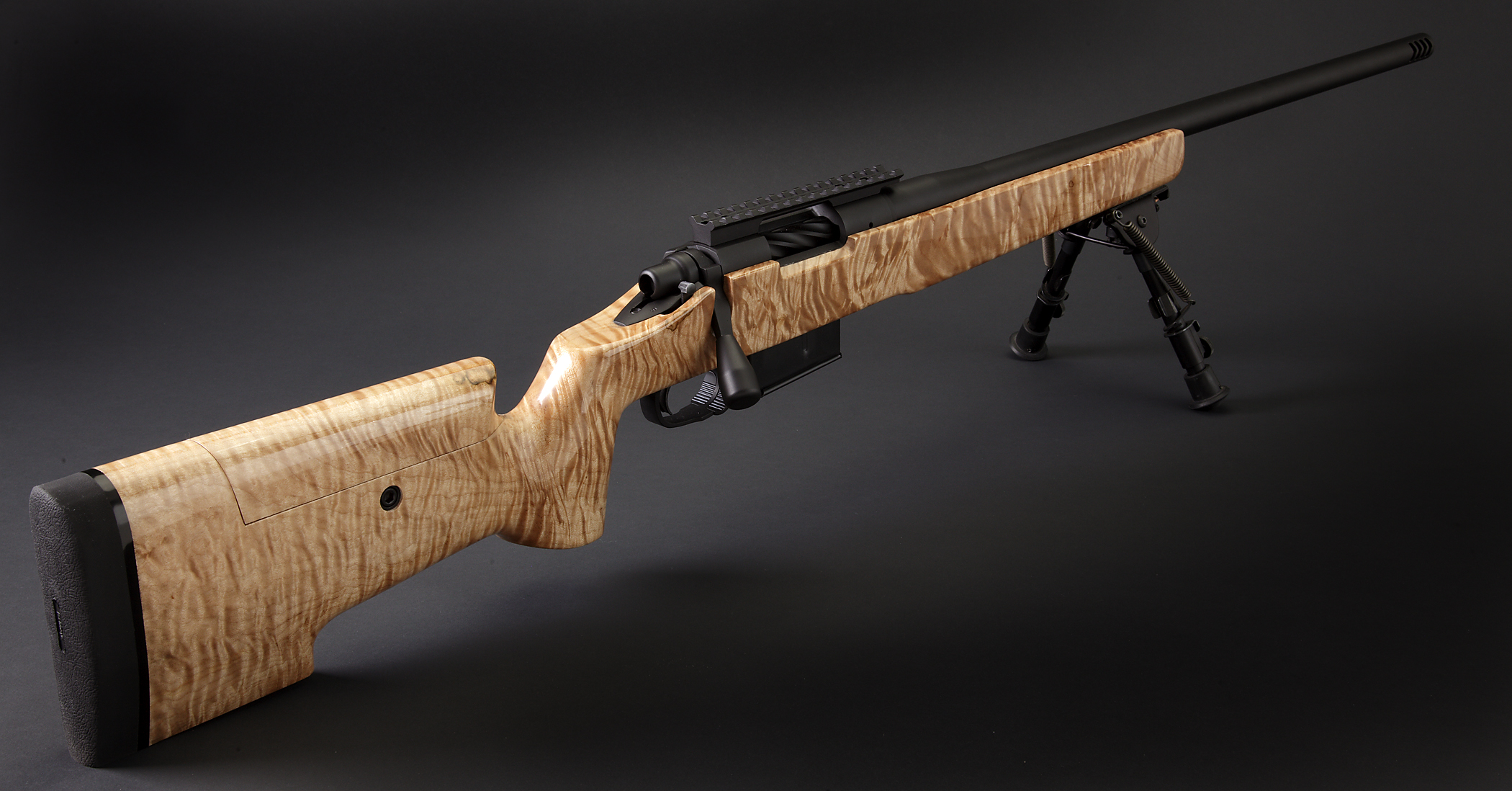
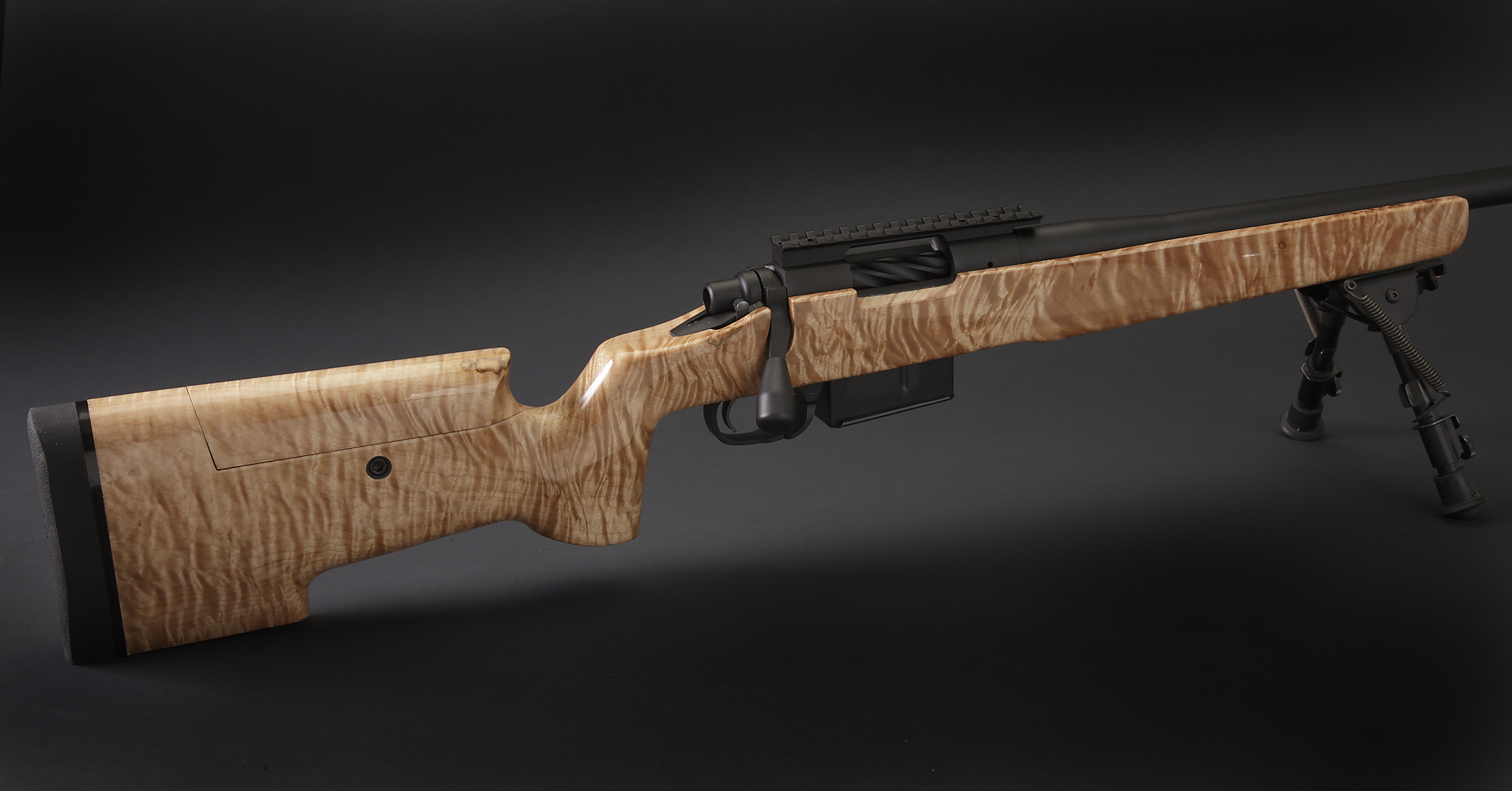
Forum member Cody H. (aka “Willys46″) provided this report on his new Russo-stocked 6-6.5×47 Rifle.
Joel Russo out of Harrisburg, PA is taking modern technology and new stock designs and mating them with Old World materials and craftsmanship. The result: rifles that shoot true and look seriously sharp. Russo got his start making laminated wood stocks for budget-minded tactical rifle shooters with his popular A5-L design. Motivated by his passion for woodworking and a mindset for detail, Russo has shifted his focus from the run-of-the-mill laminates to create shootable works of art in some of the most highly figured, beautiful, exotic and domestic woods. Russo has come to feel that if he as a craftsman is going to spend precious time creating something out of wood, it should be for something worthy of his personal investment.
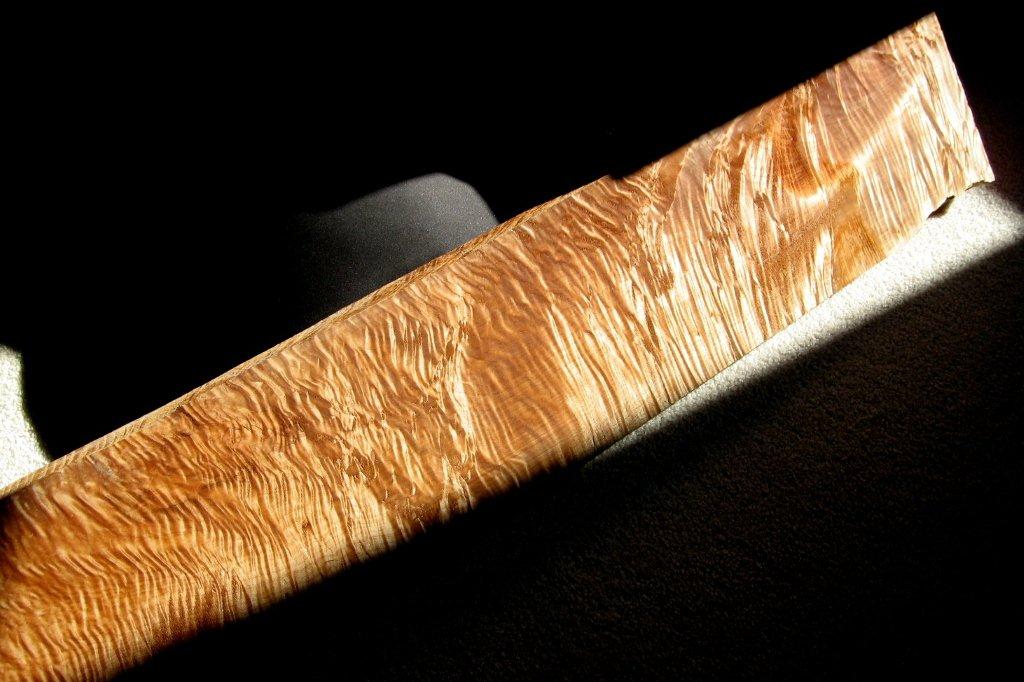
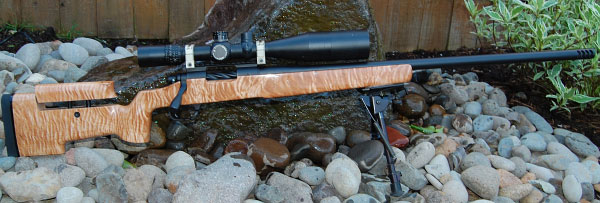
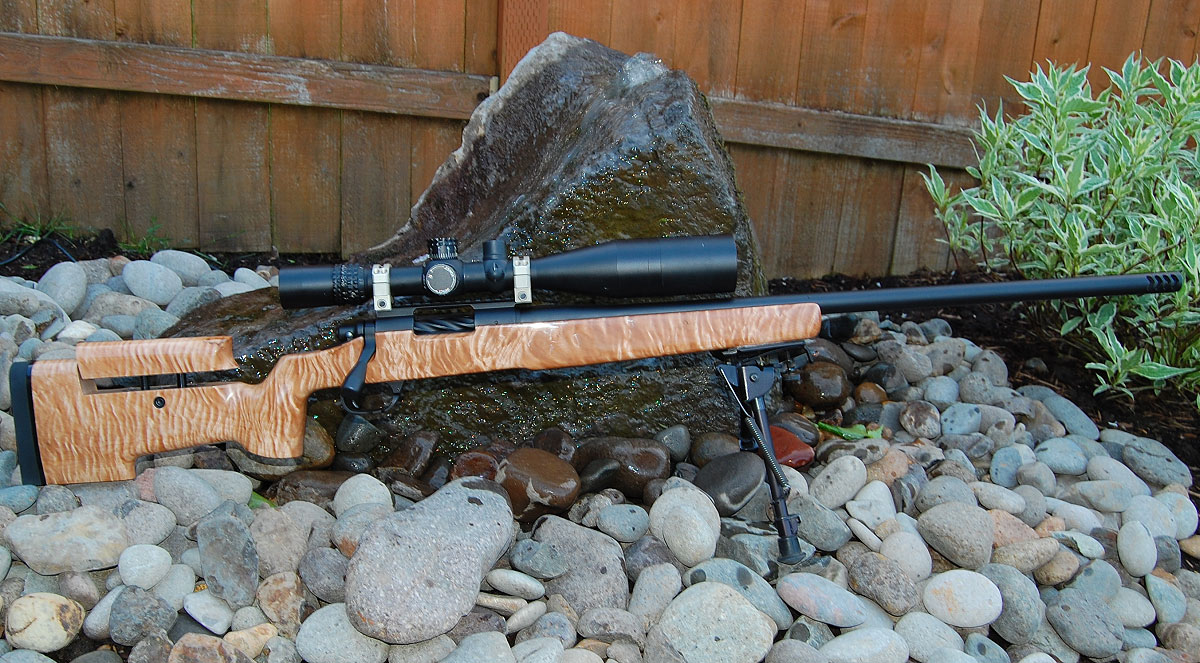
Take, for example, a recent Russo stock that started its life as a highly figured piece of Curly Maple harvested in the Pacific Northwest. After CNC inletting, profiling, pillar- and glass-bedding, the stock was meticulously finished to showcase the wood’s beauty. This stunning stock was commissioned for my new 6-6.5×47 Precision Field Rifle [Editor: it’s just too pretty to be labeled ‘tactical’]. Have a look….
Rifle Specifications: Remington 700 short action with R&D Precision bottom metal. Bartlein Barrel (Sendero Contour). Joel Russo Stock in A3-5 pattern (A5 buttstock with A3 fore-end). Barrel chambering/fitting (6-6.5X47 Lapua) by Steve Kostanich.
How does it shoot? Cody reports: “I’ve had the rifle two weeks, and sent about 200 rounds down range so far. I could not be happier with the performance of the whole package. The 6-6.5×47 Lapua chambering really makes it a pleasure to shoot with its low recoil and accuracy potential. With the fitted muzzle brake, recoil is minimal. The ballistics of 105gr Berger hybrids at 3100 fps make the wind at 600 yards very manageable. As for the stock, the slimmer fore-end holds the bipod much nicer than my old A5L. The lighter weight also makes it more maneuverable in different shooting positions.”
NOTE: Hi-Rez Gallery images may take some time to load. Be patient — it’s worth the wait.
Cody Talks About His Rifle and Joel Russo’s Work
Click Play Button to Hear Audio
Like any artist, Russo carefully considers where to begin. Deciding where the stock will be cut out of the wood blank can take days. He must determine where the forend and pistol grip will lay to be sure the true beauty of the wood will transfer to the stock design. After Russo cuts the rough pattern out of the blank, it’s off to the CNC mill for barrel and action inletting. The stock is almost completely inletted but still in the rough; enough material remains for Russo to hand-blend the wood and metal for that all-important fit and finish. Then it’s off to the duplicator, which cuts out the stock in the specified pattern.
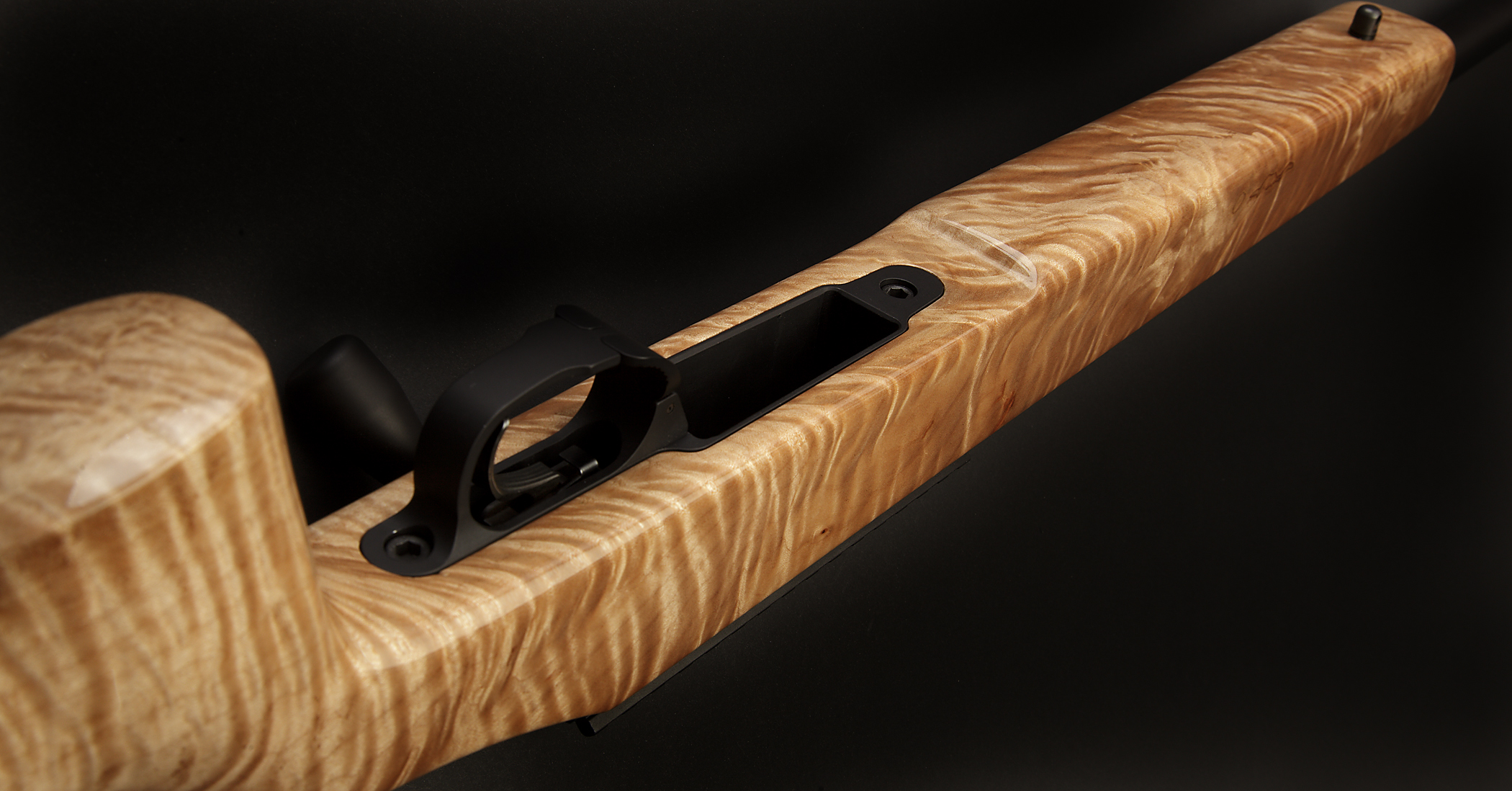
With inletting completed, the action is pillar- and glass-bedded, then readied for final shaping. The tang/pistol grip area demands careful work for a perfect look and feel. It takes hours with files and rasps to get everything just right. Once material is removed it’s a done deal so patience with the tools is a must. Russo is a very painstaking woodworker, and as an artisan and champion shooter himself, he wants the tang to melt into the pistol grip for the perfect look and feel.
Once the major wood removal is complete, Russo begins surface sanding. To make the finish come out smooth and flat, a sanding block is a must. With the density change in figured wood, some sections will be softer and so material is removed more quickly, making for a very wavy finish. When Russo is satisfied with the final sanding he starts the finishing process.
Russo generally does a hand-rubbed TUNG Oil finish. Since this stock is for a tactical competition rifle, and I wanted to preserve the natural blond color of the Maple, a clear coat finish was in order. In all fairness the maple would look even better with a darker oil finish, which allows the deep grain and figure to come out, creating an almost 3-D effect. A hand rubbed oil finish can take months to be applied properly. The shorter application time was another advantage for this particular build.
Clear coat maintains the original color of the wood while being comparatively easy to apply with basic paint-spraying tools. If you scratch the surface, it’s a simple matter to buff it out just like you would a car door ding. After a numerous coats are applied then it is wet-sanded just like the finish on a classic hot rod. The finer the sandpaper grit, the shiner the finish. For the maple stock project, a higher-than-typical gloss finish was selected because the wood kept looking better the shiner it got. Want it shinier? All you have to do is invest a little more time in sanding and polishing. Sometimes Russo works his way to 6000 grit sandpaper.
Walk-Around Video Showing Beautiful Wood
After final wet-sanding of the clear-coat, the finished stock is one even a millionaire would be proud to shoot. With the advent of fiberglass composite materials and assembly-line production methods, there are fewer true craftsmen like Joel who can start with a block of wood and some metal and create a complete rifle. So it’s refreshing that wood artisans like Russo are keeping alive the craftsman tradition. To see more examples of Joel Russo’s work, visit www.RussoRifleStocks.com.
Kevin Thomas of Lapua USA recently acquired a bit of living history — a reproduction Model 1873 Trapdoor Springfield. Here is Kevin’s story of his new rifle and the legacy it carries.
This week marked the 138th Anniversary of Lt.Col. George Armstrong Custer’s historic ride into the valley of the Little Big Horn, along with 200+ men of the U.S. Seventh Cavalry. June 25, 1876 did not go well, as Custer and his men became a well-known, sad footnote in U.S. history. [Editor: Well it was sad for Custer fans. Native Americans have a different perspective.]
For years now, I’ve wanted one of the rifles Custer and his men carried that day, a Model 1873 Trapdoor Springfield, chambered for the 45/70 cartridge. I finally acquired one, when I walked into a gunstore a while back and saw a handsome repro Trapdoor sitting peacefully on the shelf. It called to me.
Somewhere in the distance, I could hear the bugle calls, the Sioux and Cheyenne war cries and the thundering of cavalry across the plain. It simply had to go home with me, and so it did. It seemed an especially insistent demand with this being the 138th anniversary and all, so I took it along to our regular Wednesday night practice session. All I can say is, I’m glad we don’t have to do rapid-fire with one of these in our matches today, because they do have a mule-like kick to them!
The Trapdoors were a cost saving measure that the Armory came up with at the end of the Civil War, to convert muzzle-loading Springfield muskets into breech-loading cartridge arms. A quick look will give several dead giveaways that many of the parts on the “new” rifle were actually interchangeable with the old 1861 and 1863 Springfield muskets. The parts that were altered or newly fabricated were relatively minor changes.
Above, you can see where these rifles got their name. Loading was done by flipping a lever which opened up a trap door that provided access to the chamber. Flipping that same lever and opening the trap door then ejected the case after firing.
Here is the opposite side, trapdoor open. The ring and slide on the side of the stock was to facilitate an attachment point for a lanyard that the troopers wore over their shoulders. Remember, they often used these while at a full gallop, not an easy feat!
After seven months of hard work and concentration, over 300 sporter and precision air rifle juniors are competing this week at the 2014 CMP National Three Position Air Rifle Championship. The event runs June 23 through 28 at the new Gary Anderson CMP Competition Center in Camp Perry, Ohio.
Junior marksmen participating in the CMP National Championship will also be competing in the USA Shooting National 3P Junior Olympics. Sporter competitors will fire on Tuesday, June 24, while precision competitors will follow on Friday, June 27. The National Junior Olympics will also be held in the Gary Anderson CMP Competition Center.
Big money is at stake for the teams. First place teams in the sporter and precision competitions will receive $10,000 towards their team’s MidwayUSA endowment, while second and third place teams will earn $7,500 and $5,000, respectively. MidwayUSA contributed over $460,000 towards the competition.
The event is free and open to the public. The world-class Gary Anderson CMP Competition Center boasts 80 firing points with state-of-the-art electronic targets. Spectators are able to observe each competitor’s shot via large, 90-inch overhead monitors. CLICK HERE for more info on the CMP National Three Position Air Rifle Championship.
“This new series is heavily based in experimental ballistics, and takes a ‘Myth Busters’-type approach to many of the questions and problems faced by modern long range shooters,” stated Litz. Volume I of the series is scheduled for release in late July, 2014. The book will cost $39.95, but you can pre-order now for $35.95, a 10% savings.
Bryan adds: “Anyone interested in the underlying science behind shooting can benefit from this book. We address the important questions… How much does faster twist affect MV? How does stability affect BC from the muzzle and downrange? What chronographs are capable of high accuracy and precision? What characteristics should you look for in your long range rifle and optic set up? What new gadgets are being developed to enhance long range shooting?
New Book Features Extensive Live-Fire Test Results
Bryan tells us: “The book spotlights state-of-the-art technologies (and methodologies) in long range shooting. New equipment and old ideas are explored using experimental, live-fire testing. Extensive test results are reported in an easy-to-understand way. Among other things, our tests explore the effects of twist rate on muzzle velocity, BC (supersonic and transonic), precision, even spin rate decay for various rifling profiles as they are tested experimentally.
Chronographs and Optics Are Tested and Compared
Litz’s new book traces the evolution of modern rifle, bullet, and optic design. Results from chronograph comparison tests are presented, showing the strengths and weaknesses of available commercial chronographs. High-tech instrumentation such as laser rangefinders and wind measurement devices are explained in detail by contributing author Nick Vitalbo.
The New Book Puts Theory into Practice
We asked Bryan Litz how this new book differs from his previous treatises. Bryan replied: “My original Applied Ballistics for Long-Range Shooting book explains the fundamental elements of external ballistics. It’s the academic background which all future work relies on. The new book, Modern Advancements in Long Range Shooting, covers the ongoing development of equipment and ideas. We explore things like twist rate effects, modern rifle and optic design, and some of the high tech instruments which are being used to enhance the effectiveness of long range shooting.
Do you like black rifles? Do you suffer from an irrepressible desire to modify, tweak, and upgrade every little component on your ARs? Then check out “Everything AR” in the GUNS Magazine Combat Special Edition. From upgrades and accessories to brand reviews and insight into AR operating systems, the Fall/Winter 2014 GUNS Magazine Combat Special Edition is a cover-to-cover AR love-fest.
This 194-page Special Edition includes a helpful review of direct gas versus piston operating systems by Richard Mann. Another article by this same writer, “Pistol Caliber Carbine Perfection”, explores the evolution of pistol-caliber AR carbines, discussing pros and cons of several pistol calibers. Publisher/editor Roy Huntington contributes a story on Black Rain Ordnance, a company known for its high-quality AR-platform rifles, and lifetime warranty.
Want gadgets for your AR? In “Ten Got-To-Have Accessories For Your MSR,” contributing editor Dave Douglas spotlights some of the best bolt-ons for “Modern Sporting Rifles”, from sling mounts and LED lasers to sights and rubber grips.
The Fall/Winter 2014 issue of GUNS Combat includes the all-new 2015 Buyer’s Guide. This 128-page, comprehensive catalog features hundreds of products ranging from all types of handguns and long guns, to knives, lights and lasers
MidwayUSA has completely revamped its shipping system, putting in a new billing structure that should result in significant savings for customers, particularly for small orders. The new “Nitro Express” shipping program at MidwayUSA will offer $3.99 shipping for orders under one pound (non-DOT regulated products). Packages 1 to 10 pounds can ship for $5.99 (USPS) plus $0.60 per pound. DOT-regulated products cost more to ship, but the rates are still reasonable. Here are the new Nitro Express Shipping Rates from the MidwayUSA website:
Nitro Express Shipping Basics
MidwayUSA founder Larry Potterfield explains: “I’m very pleased to announce… our new Nitro Express Shipping® system. We discovered that if MidwayUSA re-engineered our system for shipping packages… we could save our customers a lot of money on shipping costs.
We’ve spent several years and millions of dollars to develop one of the best, most efficient shipping systems in the country; and we’ve negotiated very hard with our freight partners — all to save our customers money on shipping costs.
Right off the bat you’ll notice that most shipping costs went down substantially — and it’s really easy to understand. There are no order minimums or small order fees and shipping costs are calculated ‘real-time’ as you add products to your shopping cart. The complete details are available by clicking on Shipping Charges & Options on our website.
News Tip from EdLongrange. We welcome reader submissions.
Covering over 59,000 firearms, the Firearms Guide is the most comprehensive resource on guns ever created. And now it’s bigger and better than ever. The updated 5th Edition of the Firearms Guide is now available on dual-layer DVD for $39.95 from Impressum Media. This latest DVD now include Military Guns and Antique Guns as well. The Windows Version is available right now.
Think of this as a digital encyclopedia of guns — the mother of all gun reference guides. The sheer amount of information is mind-boggling. The Firearms Guide covers nearly 60,000 models of rifles, pistols, shotguns, air rifles, and air pistols from 705 manufacturers worldwide.
Products are illustrated with 39,000 high-res color photos, plus 4,850+ schematics with parts lists for 360 gun-makers. If you’re a gunsmith or armorer, you’ll want to buy this DVD, just to have the searchable schematics with part numbers handy.
If you are a gun collector, or just an information junkie, you’ll find this DVD to be an invaluable resource. The DVD’s scope is truly worldwide, with coverage of gun makers in Western Europe, Eastern Europe, South America, South Africa and Asia as well as North America. With the DVD’s search capability you can search by gun caliber, manufacturer, and key features (e.g. “.223 Rem, Colt, folding stock”). There are 14 different search criteria — this allows you to “drill down” precisely to find the gun you want in seconds. Shown below are typical profiles of listed products:
Here are some of the useful bonus features included on the the $39.95 DVD. Gunblast.com says the DVD is “worth the price for the target images alone”.
650 Printable Targets: game animals, silhouettes, crosshairs, sight-ins, fun targets.
FFL Locator – Searchable database of over 62,000 gun dealers in the USA with contact info.
US-EU Ammo Caliber Chart: Cartridge equivalency charts identify the correct domestic equivalent of European ammo.
Video Shows Search Functions on DVD (from Previous Edition)
Bryan Litz shot his first F-TR match recently, and he came up a winner — a big winner. Competing at the Midwest Palma event, Bryan topped the F-TR field, winning by 15 points. In fact Bryan ended up finishing within 10 points of F-Open winner Alex Lipworth. In the 20-shot, 1000-yard matches, Bryan averaged an impressive 195-7X, with a stunning 196-11X score in one match. (Consider that the 1000-yard X-Ring is just five inches in diameter!) Not bad for Bryan’s first attempt at the F-TR game.
We all know Bryan has serious long-range shooting skills. But he also had a secret weapon — a wickedly accurate, wood/carbon-stocked, low-profile F-TR rifle built by John Pierce. With this Pierce rifle, Bryan had to abandon the hard-holding style he uses in sling-shooting competition. Instead he adopted a “less is more”, almost-free-recoil method — and it worked. Is this the future of F-TR? Read on and learn what Bryan has to say about F-TR shooting, “belly benchrest” style.
Sling Shooter Tries F-TR
by Bryan Litz
I’ve been coaching the Michigan F-TR team for a while and finally decided to participate in the competition. F-TR is more rifle-centric than Palma, meaning the precision demands are greater due to the smaller scoring rings. After seeing Eric Stecker’s results with his Pierce rifle at the 2014 Berger Southwest Nationals, I asked my good friend and Michigan team-mate John Pierce to “build me one like Eric’s”. This is the same basic set up as John’s own F-TR rifle as well. It’s a Pierce F-TR action with a 30″ long, 1:9″ twist Bartlein Barrel chambered for the Berger 215gr Hybrids. The barreled action is bedded into a light-weight, BR-style stock built by Bob Scoville. A Phoenix bipod underneath and a Nightforce 15-55X Competition scope complete the package.
Click Image to Zoom
Loading the .308 Winchester with Berger 215gr Hybrids
I received the rifle just one week before the Midwest Palma match. During that week prior to the match, I put over 700 rounds on the rifle. I did some load development but was mostly learning to shoot a new rifle in a new discipline. I settled on 215gr Berger Hybrids seated 0.015″ off the riflings over a stout charge of Varget in Lapua Palma (small primer) brass with CCI BR4 primers. The only brass prep was mandreling the necks of the new brass for consistent neck tension. Bullets were slightly pointed, but nothing was segregated by weight, base-to-ogive, or anything. All the ammo I shot in Lodi was loaded in brand-new Lapua brass.
Check Out Bryan’s Set-up with the Rifle (Click Photo to Zoom)
Learning the F-TR Game — Adapting to a New Shooting Style
Coming over from sling shooting, I knew there would be unique challenges to F-TR which I wanted to learn prior to (not during) a major tournament. I learned a new shooting position which doesn’t involve drawing the right knee up. For F-TR I get more straight behind the gun rather than at an angle. I found that the rifle shoots best with very light cheek, shoulder and grip pressure, approaching free recoil. This is how Eric Stecker shot his similar rifle into second place in the SW Nationals. I learned the rifle’s sensitivity to different bipod and rear bag supports, and found the best buttplate position to allow the rifle to track and stay on target after recoil. This set-up shot best with a mostly free-recoil approach, that means “hovering” over the comb, rather than resting your head on the stock. This took some “getting used to” in terms of neck and back muscle tone. These are the kind of details I think it’s important to focus on when entering a new dicipline.
“I love the way this Pierce F-TR rifle flings brass, and wins tournaments. None of my sling guns ever had an ejector. With this rig, it’s become one of my favorite things to eject the brass and just let it fly!”
I think many shooters consider themselves ‘ready for a match’ the first time the rifle shows them a couple 1/3 or 1/4 MOA 5-shot groups from a bench at 100 yards. While making the rifle shoot precisely is certainly a prerequisite for successful match shooting, it’s certainly not the whole story. So as soon as I got the load and rifle shooting 1/2 MOA from the bench, I proceeded to shoot many 10- and 20-shot strings from the ground at 300 and 1000 yards. I shot more than 500 rounds this way, studying the rifles character, and learning to shoot it. It’s amazing how much the precision (grouping) is affected by subtle variables in the set-up, especially when shooting heavy bullets. I truly believe that many F-TR rifles are hindered in their precision potential by something in the way they are set up and shot.
Advice on Shooting the Heavy Bullets in a .308 Win
I believe F-TR set-ups are way more forgiving with light- to medium-weight bullets (155 to 185 grains). By this I mean that it’s easier to shoot good groups with a variety of bipods, rear bags, etc. But as you get into the 200 – 215 grain bullet weights, the precision of the rifle (i.e. group size) becomes very sensitive to set-up and shot execution. I was able to find a good set-up which let the rifle shoot very well on a variety of surfaces (hard gravel, soft grass, sand, etc.). In Lodi, the rifle shot well all week.
Having done so much preparation and training with the rifle the week prior to the match, I felt very prepared and confident. The results were actually better than expected. There were no problems at all with equipment, and I just shot the rifle the way it liked to be shot. In the end, I won the F-TR Division. I can say there were many shooters interested in the Pierce rifle!
Impressive Performance
Bryan observes that this rifle held 1/2 MOA of vertical at 1000 yards for 17 out of 20 shots. That’s impressive accuracy. Bryan was in first place each day of the match, including the 3×1000 on Friday where he averaged over 195-7X. Remarkably, Bryan finished just 10 points behind the F-Open winner, with the next closest F-TR competitor 15 points behind Bryan. In fact, with his .308 Win, Bryan out-scored 75% of the F-Open shooters. CLICK for match results.
Bryan gave credit to his smiths and his team-mates: “I’d like to thank John Pierce for building a great F-TR rifle and thank my dad, Bill Litz, for loading the best ammo on the planet. Finally, I’d like to thank the Michigan F-TR team for helping me learn how to shoot F-TR.”
Bryan writes: “Here I am with ‘The Man’, John Pierce, and the epic F-TR rifle he built for me. This thing shoots ‘No S***’ 1/2 MOA Vertical at 1000 yards.”
Texan Mike Bryant is a superb gunsmith and a very successful benchrest competitor. And though he is getting up in years, he hasn’t lost any of his talent as a trigger-puller. In fact, if recent results are any indication, Mike Bryant isn’t getting older, he’s getting better.
Check out this set of targets Mike recently shot, which represent the best 100-Yard Aggregate of Mike’s shooting career. Maybe being a grandfather has improved his skill set.
Mike reports: “Here’s the set of targets I shot at the East-West HV100. Needless to say, I was tickled to death. This is the best 100-yard Agg I’ve ever shot [in benchrest competition]: 0.1744″ average.”
Click Photo for Full-Size Version
Mike is a great gunsmith, but he’s retired for the most part now: “I’ve closed up my shop and won’t be gunsmithing for the general public. I want to help my son on the ranch and shoot more benchrest.”
As far as the “shoot more benchrest” part, it looks like Grandfather Bryant is doing well indeed. Mike credits his recent success to other shooters:
“I owe a lot of what I was able to accomplish with this Agg to Gene Bukys. Gene is currently one of the hottest-shooting benchrest competitors in the United States, and a member of the Benchrest Hall of Fame. After the Cactus Classic this year, Gene shared with us the make, twist rate, and contour of the barrels that he had been using to win everything in sight. He also told me which of his reamers that Dave Kiff had made him that he had been using and which one to order from Kiff to shoot the same chamber.”
“Gene had already matched a die to my previous chamber that [eliminated] the click at the top of the bolt stroke to insure smooth bolt operation. After the Cactus I ordered some of the same barrels that Gene was using and ordered a reamer from Kiff. I chambered two of the barrels with the reamer that Gene was using on Monday and fire-formed brass for them on Tuesday and spent a little time at home trying to get the rifles tuned up for the East-West.”
“On Saturday morning I started with one of the rifles and shot it through the LV 100. Not doing particularly well. So, switched rifles to the other one for the HV 100. It seemed to be working better and seemed to get better as the day went along. After the match, I was out pulling up my flags and Wade Hull walks up to me and holds out his hand and says ‘Congratulations, you won the Heavy 100′.”
Hall of Famers Helping Other Benchresters
Mike concludes: “If there is a story in my experience, it is really about benchresters helping other benchresters. People like Gene Bukys, Jack Neary, and Bart Sauter, all Hall of Fame members, are giving back to other benchrest shooters to help them become better. Jack Neary has been giving Vihtavuori tuning classes for many years, passing on the info that helped him get into the Hall of Fame. Bart Sauter posts on Benchrest.com, passing on key secrets of his success. And let’s not forget Tony Boyer who has helped others in many ways, including one-on-one private benchrest lessons. So, if there is a story here, it’s about these guys, not about me.”
Between benchrest matches, Mike Bryant likes to spend “quality time” with his children and grandchildren. Here is Mike on a playground slide with his grandson. Mike’s philosophy is to enjoy life and stay young at heart. We think that’s a good approach to life.






 Kevin Thomas of


 After seven months of hard work and concentration, over 300 sporter and precision air rifle juniors are competing this week at the 2014 CMP National Three Position Air Rifle Championship. The event runs June 23 through 28 at the new Gary Anderson CMP Competition Center in Camp Perry, Ohio.


 Do you like black rifles? Do you suffer from an irrepressible desire to modify, tweak, and upgrade every little component on your ARs? Then check out “Everything AR” in the
  MidwayUSA has completely revamped its shipping system, putting in a new billing structure that should result in significant savings for customers, particularly for small orders. The new “Nitro Express” shipping program at MidwayUSA will offer $3.99 shipping for orders under one pound (non-DOT regulated products). Packages 1 to 10 pounds can ship for $5.99 (USPS) plus $0.60 per pound. DOT-regulated products cost more to ship, but the rates are still reasonable. Here are the new


 Covering over 59,000 firearms, the


 Texan Mike Bryant is a superb gunsmith and a very successful benchrest competitor. And though he is getting up in years, he hasn’t lost any of his talent as a trigger-puller. In fact, if recent results are any indication, Mike Bryant isn’t getting older, he’s getting better.
 “I owe a lot of what I was able to accomplish with this Agg to Gene Bukys. Gene is currently one of the hottest-shooting benchrest competitors in the United States, and a member of the Benchrest Hall of Fame. After the Cactus Classic this year, Gene shared with us the make, twist rate, and contour of the barrels that he had been using to win everything in sight. He also told me which of his reamers that Dave Kiff had made him that he had been using and which one to order from Kiff to shoot the same chamber.”


