Shiny brass — it may not shoot more accurately, but it does make you feel better about your hand-loaded ammo. While it’s not necessary to get brass “bright and shiny” after every firing, it is a good idea to clean powder residue, grime, and grit off your brass before you run cases into sizing dies. There are many ways to clean cartridge cases. A quick wipe with solvent on a patch may suffice for recently-shot cases. Older brass with baked-on carbon may require lengthy tumbling. Ultrasonic cleaning is another popular option that gets your brass clean inside and out.
Sinclair International has a series of helpful videos on brass cleaning. These short “how-to” videos, hosted by Bill Gravatt, former head honcho at Sinclair Int’l and Creedmoor Sports, cover the various processes you can use — tumbling, ultrasonic cleaning, chemical cleaning, and cleaning by hand.
Video ONE — Cleaning Brass in Vibratory or Rotary Tumbler
TIP: Brass that has recently been shot will clean more easily than brass that has been sitting many days or weeks. If your tumbling media is fresh the job should be done in an hour or less. It’s your choice whether to tumble with primers removed or with primers still in the cases. If you choose to tumble with primers out, we suggest you deprime with a depriming die, rather that put dirty brass into your sizing die. Some people like to add a teaspoon of liquid polish to the media. This does work, cutting tumble time, and making your brass more shiny. However, if you add liquid polish, do that BEFORE you add the brass and let the tumbler run for a 15 minutes to get the polish completely mixed into the media. Otherwise you can else up with gooey gunk inside your cases — a very bad thing.
Video TWO — Ultrasonic Case Cleaning
TIP: There are many different types of solutions you can use. Soapy water suffices for some folks, particularly if you add a little Lemi-Shine. The Hornady and Lyman solutions work well, and can be used multiple times, provided you strain the solution to remove dirt and grit after cleaning sessions. Many ultrasonic cleaning machines have timers. Experiment with dwell time to see how long you need to immerse your brass. A very small amount of Ballistol in the solution will help lubricate your necks on the inside. This can make bullet seating go more smoothly, with more consistent neck tension.
Video THREE — Chemical Cleaners (Soaking without Ultrasound)
TIP: After using chemical cleaners, such as the Iosso solution, you need to water-rinse your brass thoroughly. A kitchen strainer helps with this (see video at 0:20). Also, don’t forget your brass in the chemical solution — follow the manufacturers recommendations and don’t exceed the recommended dwell time. Chemical cleaners work surprisingly well to remove grease and grime, and the solution can be re-used multiple times. However, if you want your cases to look bright and shiny (like new brass), you will probably have to tumble. [Editor: A very effective new chemical cleaner is the Brass Monkey product from the makers of Wipe-Out and Carb-Out. Add a teaspoon to a gallon of water then soak your brass for 20-30 minutes. It really works — the cases clean up dramatically].
Video FOUR — Manual Cleaning (By Hand)
TIP: Keep some oversize patches in your range kit. At the end of your shooting sessions, wipe off your fired brass with a patch dampened with a mild, non-corrosive solvent (once again Ballistol works well). Before the carbon sets up on your brass it is very easy to remove. For tougher jobs, you can use 0000 Steel Wool (as Bill recommends in the video). You may find that timely hand-cleaning lets you avoid tumbling altogether — or you may choose to tumble (or ultra-sound) your brass only after a half-dozen or so firings.
NRA Media offers a series of 40 informative videos about the Science of Shooting, covering a wide range of topics, from eye dominance to long-range ballistics. These videos feature high production values, with super-slow motion segments, as well as helpful computer graphics to illustrate the principles covered.
The videos are narrated by Jessie Duff, a top action pistol shooter (and the first women ever to achieve USPSA Grand Master status). Jessie is assisted by talented shooters such as Top Shot Season 4 Champion Chris Cheng. There are forty videos in the Firearm Science Video Series. Here are five NRA videos, with links to others below. You’ll find all 40 NRA Firearm Science Videos HERE.
Eye Dominance — How to Determine Which Eye is Dominant
Host Jessie Duff and longtime shooter Krystie Messenger demonstrate how eye dominance affects aim and teach you how to determine your dominant eye in this edition of Firearm Science. There are very simple tests you can do to determine your eye dominance. This Editor is right-handed but left-eye dominant. All competitive shooters should check for eye dominance. If you are cross-dominant, you can alter your head position or put a paper patch on one frame of your shooting glasses.
Eye Protection — Effect of Different Color Lenses
No matter what you’re shooting, eye protection should always be worn. But with so many choices, what should you wear? In this edition of Firearm Science, two-time Olympic trap shooter Corey Cogdell explains lens color options for protective eyewear. Different colors may be selected according to the light conditions and the sport. For most rifle shooters using magnified scopes, clear lenses are probably the best choice, except on very bright summer days.
Iron Sights vs. Optics
Host Jessie Duff and shooter Krystie Messenger demonstrate the benefits and drawbacks of using iron sights and optics in this edition of Firearm Science. For AR-type rifles, choosing the right option depends on the intended use of the rifle and the rules of competition. For example, a “Standard military Rifle” for CMP competition must have iron sights. But current NRA service rifle competition (and CMP unlimited military rifle class) allows scopes. Olympic smallbore shooters and Palma shooters have shown that extreme accuracy IS possible with sophisticated target sights. Below is the iron-sights Palma rifle with which John Whidden (Whidden Gunworks) won NRA Long-Range National Championships.
Today’s showcase shows how CCI, Federal, and Remington .22 LR rimfire ammunition types are produced in large American factories. CCI and Federal, until very recently, were part of the Vista Outdoor Kinetic Group. In December 2024 CCI and Federal along with other Vista ammo brands were sold to a Czech company, CSG.* Most CCI rimfire is produced in Idaho, while most Federal rimfire ammo is produced in Anoka, Minnesota. Here we feature videos from CCI, Federal, and Remington ammo plants. Watch and learn how rimfire ammo is made.
The Manufacturing Process for .22 LR Rimfire Ammunition Shooting Sports USA explains: “Rimfire cartridge cases are the oldest self-contained cartridge in existence, having been in continuous production since the mid-1850s. Rimfire cases are drawn from a thin piece of brass and formed with a hollow rim. A priming compound is then forced into the case using centrifugal force, where it is charged with powder and a bullet is seated in the mouth of the case. The case is then crimped around the bullet to ensure sufficient push and pull when the round is fired. When the firing pin strikes the thin brass rim of the case, the hollow rim is crushed and the primer is ignited.” Source: SSUSA.org 9/2/2017.
.22 LR Ammo Production at Federal Ammo Plant in Minnesota
Note to Viewers — After Starting Video, Click Speaker Icon to HEAR audio!
A while back a Field & Stream writer toured the Federal ammunition production facility in Anoka, Minnesota. This large plant produces both rimfire and centerfire ammunition. While touring the plant, the reporter was allowed to capture video showing the creation of .22 LR rounds from start to finish. This is a fascinating video, well worth watching. Click speaker icon for sound.
22Plinkster Tours CCI/Speer Idaho Factory
Trickshot artist and YouTube host 22Plinkster was able to tour the CCI/Speer production facility in Lewiston, Idaho. This large plant produces both rimfire and centerfire ammunition. While touring the plant, 22Plinkster was allowed to capture video showing the creation of .22 LR rounds from start to finish.
This revealing video shows all phases of .22 LR ammo production including cupping, drawing, annealing, washing, drying, head-stamping, priming, powder charging, bullet seating, crimping, waxing, inspection, and final packaging. We really recommend you watch the video from start to finish. Well worth watching, this excellent video has logged 3.2 million views on YouTube.
Remington Factory Produces Millions of Rounds of Rimfire Ammo
Billions of .22 Long Rifle rounds are produced every year, and Remington Ammunition in Lonoke, Arkansas produces a significant share of the rimfire ammunition used worldwide. This “American Rifleman Television” feature shows the full ammo production process. At the start, brass cups are stamped out of large sheets of brass, and the cups then move on to have the headstamps applied and rims formed. Next, the rounds move on to be annealed and rinsed. Then the cases move onto priming. A wet priming pellet is then pressed into each empty .22 case, and the case is spun rapidly, spreading the pellet mix into the inner cartridge rim. The primed cartridges are then sent to a drying house, where they’ll sit for several days to allow the priming mixture to dry. The Remington factory is very efficient, with “some of the fastest rimfire-making equipment on the planet”.
*In December 2024, Vista Outdoor completed the $2.23 billion sale of the company’s “Sporting Products” division — which is known as the Kinetic Group and includes American ammunition brands CCI, Federal Premium, Hevi-Shot, Remington, and Speer — to the Czechoslovak Group (CSG), a Czech conglomerate. READ Full Story of Vista Outdoor Kinetic Group ammo brands sale.
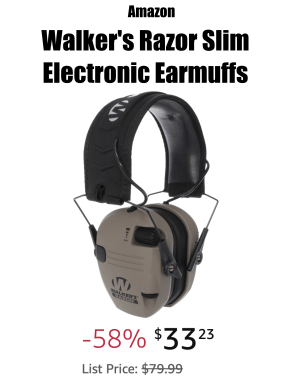
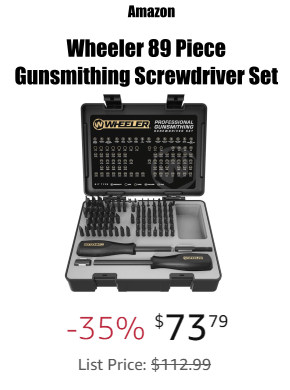
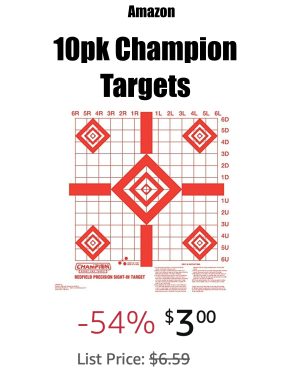
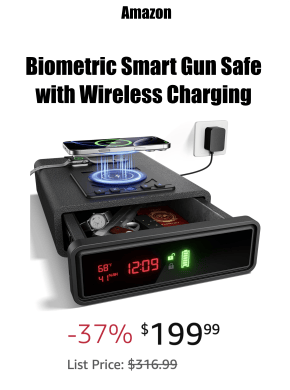
At the request of our readers, we provide select “Deals of the Week”. Every Sunday afternoon or Monday morning we offer our Best Bargain selections. Here are some of the best deals on firearms, hardware, reloading components, optics, and shooting accessories. Be aware that sale prices are subject to change, and once clearance inventory is sold, it’s gone for good. You snooze you lose.
NOTE: All listed products are for sale to persons 18 years of age or older. No products are intended for use by minors.
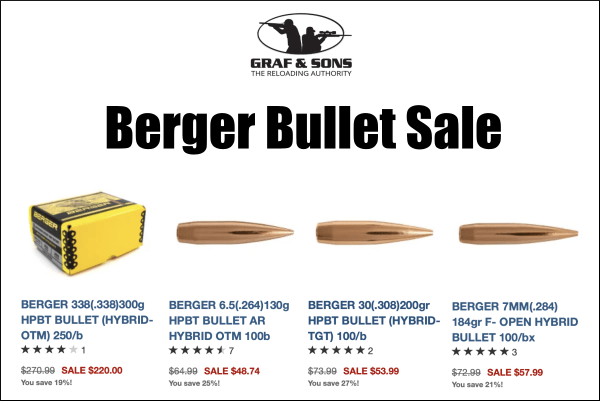
Graf & Sons — Major Berger Bullet Sale
⏺️ » Great savings on ultra-high quality Berger Bullets
When it comes to competition, Berger Bullets are among the very best with countless wins in PRS, High Power, F-Class, and other disciplines. Berger also makes great varmint and hunting bullets. Now you can stock up on these winning bullets for the matches you’re planning this year. Save now with this major Graf’s sale instead of paying more later.
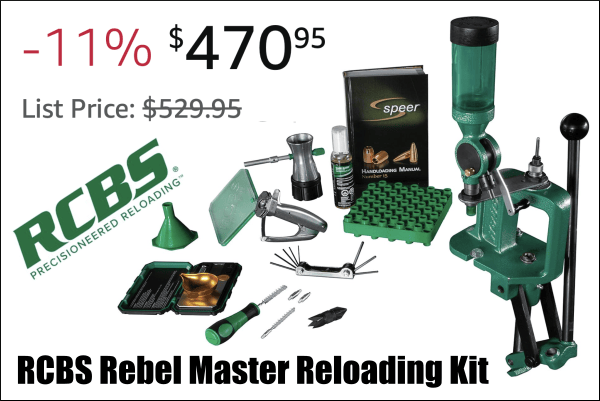
Amazon — RCBS Rebel Master Reloading Kit, $470.95
⏺️ » Complete kit with press, powder measure, scale, tools and more
For folks getting started with hand-loading, a great basic package is the RCBS Rebel Master Reloading Kit which is on sale for only $470.95. This RCBS Package features pretty much all you need to load rifle and pistol ammo: Rebel single-stage Press, Uniflow-III Powder Measure, 1500gr digital scale, hand priming tool, powder funnel, powder trickler, hex key set, accessory handle with case neck brushes, primer pocket brushes, deburring tool, loading block, and case lube. You even get a Speer Reloading Manual.
As an Amazon affiliate, this site can earn revenues through sales commissions.
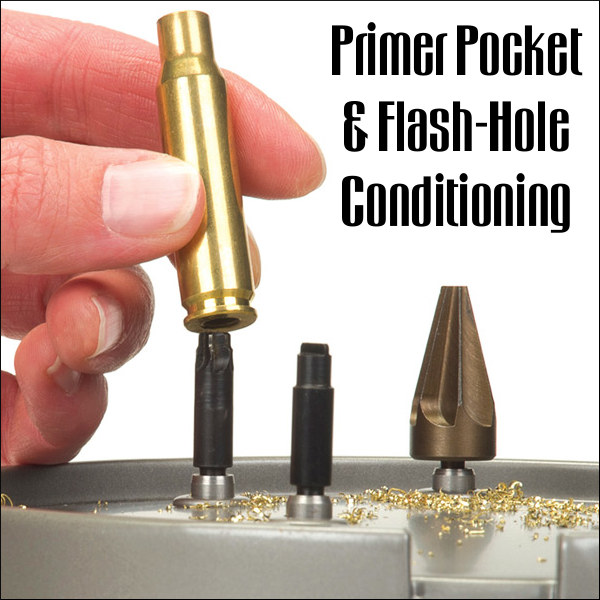
In the past the U.S. Army Marksmanship Unit published a series of reloading “how-to” articles on its USAMU Facebook page. One “Handloading Hump Day” article covered two basic case prep chores — uniforming primer pockets and deburring flash-holes. Visit the USAMU Facebook page for other tips.
Primer Pocket & Flash-Hole Conditioning
This week, we’ll address a question that frequently arises: “Do you uniform primer pockets and deburr flash-holes?” As we tailor our handloading methods to the specific needs of each instance, the answer, not surprisingly, is “Sometimes!” However, don’t flip that dial just yet, as what determines our approach may be helpful in deciding how to address one’s own techniques. Moreover, we have a buried “Easter Egg” morsel that may bring a chuckle, as well as useful safety information!
Generally, the USAMU Handloading Shop does not uniform primer pockets (PP) or deburr flash holes (FH) of our rifle brass. We’re certainly not against it… Rather, this reflects the very high volume of ammunition we load, the fact that very few cases are ever re-loaded for a second firing, and the types of brass we use. However, as a need is perceived, we DO deburr flash holes. Of interest, we have fired many very small, 1000-yard test groups and aggregates using weight-selected, domestic brass that had not had PPs uniformed or FHs deburred.
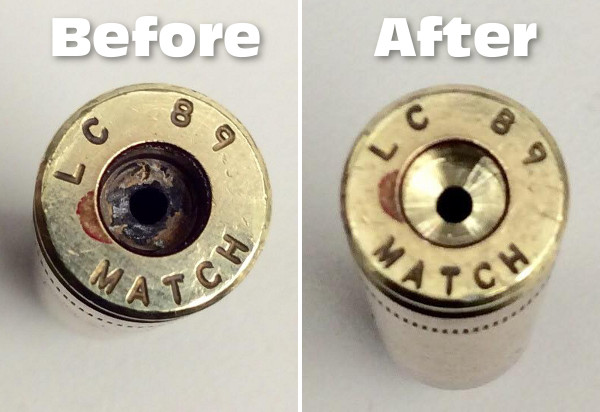
Before and After — On the left is a fired, deprimed 7.62×51 case with primer residue intact. On the right the primer pocket has been uniformed to SAAMI specs. Note the shiny finish at the bottom of the pocket — evidence of the the removal of metal when uniforming the primer pocket.
As to the type cases we use, many thousands of our long-range 5.56mm cases come to us from the arsenal with the primer of our choice pre-installed and staked-in, per usual practice. Obviously, we cannot uniform either FHs or PPs on this live, primed brass. However, after careful sorting, inspection and preparation, we do obtain match-winning results with it.
Shooters who reload their brass several times may decide to uniform PPs and deburr FHs, especially on their “300-yard and beyond” brass. Here, they will use the cases many times, while the uniforming is performed only once. Also, most handloaders only process moderate amounts of brass, compared to our multi-thousand round lots.
Having high quality Long Range (LR) brass helps. Many of the better brass manufacturers [make] their flash holes so that no burrs are created. Still, it does pay to inspect even THESE manufacturer’s products, as occasional slips are inevitable. Very rarely, some of the best makers will have a significant burr in, say, 1 per 1000 or 2000 cases, and it’s worth catching those.
Exceptions can always be found. Recently, we began processing a large lot of match brass from a premier manufacturer. We were startled to find that every case had a significant burr in the FH — something we’d never before seen from this maker. We then broke out the FH deburring tools and went to work.
Some observers have noted that it can be difficult to truly verify the contribution to accuracy of these procedures — particularly when firing from the shoulder, in conditions. Members of this staff, as individual rifle competitors, do often perform these operations on their privately-owned LR rifle brass. One could ascribe this to the old High Power Rifle maxim that “if you think it helps, then it helps.”
However, a World Champion and Olympic Gold/Silver medalist here commented on his own handloading (for International competition, which demands VERY fine accuracy). He noted that he did seem to see a decline in accuracy whenever he did not uniform FHs, deburr FHs and clean primer pockets before each reloading. (One might be tempted to counter that only a truly World Class shooter could reliably detect the difference.) However, with the wisdom of decades experience, our Champion also remarked that “It could have been that I just wasn’t shooting as well that day.”
For those who do opt for these procedures, note that various tool models may have adjustable depth-stops; pay attention to the instructions. Some FH-deburring tools (which enter the case mouth, not the primer pocket) are dependent upon uniform case length for best results.
Above is a flash-hole deburring tool on an RCBS powered case-prep unit. These case prep machines can save a lot of pain and misery, helping one perform various functions quickly and efficiently.
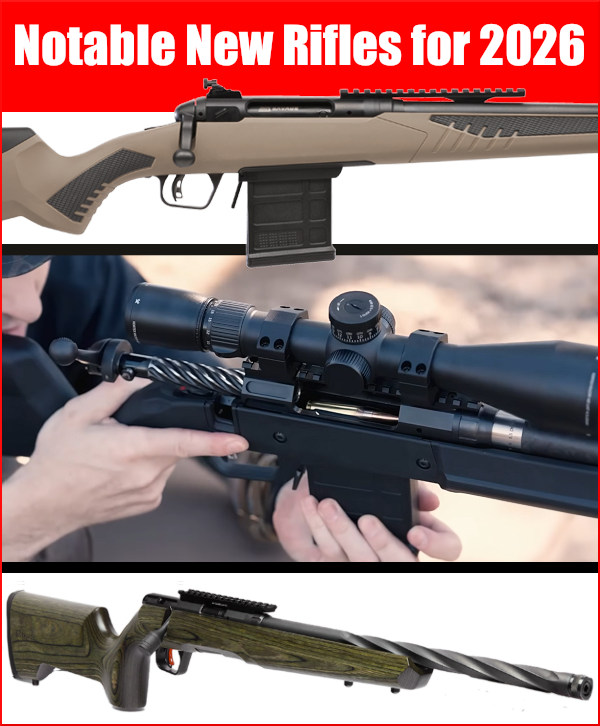
SHOT Show 2026 kicks off 16 days from now in Las Vegas. The biggest gun industry trade show on the planet, SHOT Show will showcase a huge variety of new products including firearms, optics, electronics, reloading hardware, ammunition and more. For today’s Sunday GunDay article we feature seven new (or nearly new) rifles that will be on display at SHOT Show 2026. You’ll see a wide variety of long guns here, at all price levels — from $300 to $7999. This Sunday showcase features bolt guns, semi-autos, and lever-action guns offered with a huge selection of chamberings, rimfire and centerfire.
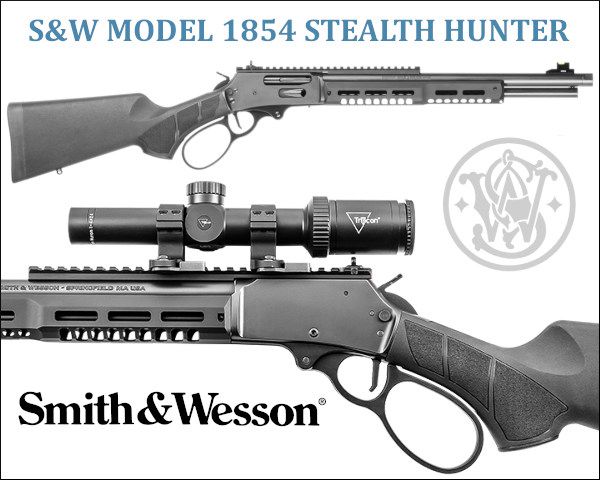
The Smith & Wesson (S&W) Model 1854 Stealth hunter is modernized lever-action rifle featuring a black finish, optics rail, and threaded barrel. This combines the slimness and easy cycling of a classic lever-action with the ability to mount modern optics and fit brakes and suppressors. The Stealth Hunter is currently offered in four chamberings: .30-30 Win, .357 Magnum, .44 Magnum, .45 Colt, .45-70 Govt. The 45-70 delivers significant stopping power for big game hunting.
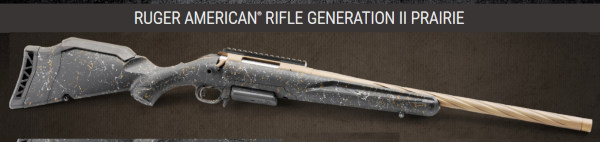
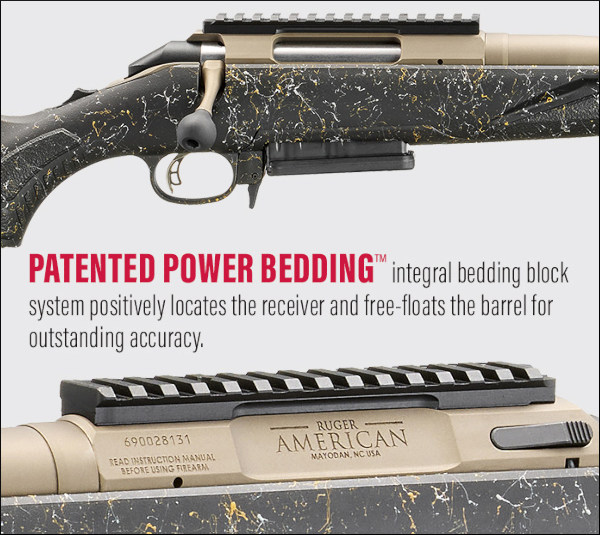
The updated Ruger American Rifle Gen II “Prairie” is a modern hunting rifle with nice features including a Cerakote coating on the receiver, bolt handle, and barrel. This rifle also includes a patented bedding block system with free-floating barrel and a Ruger Marksman adjustable trigger. This is a good value with a $729.00 MSRP.
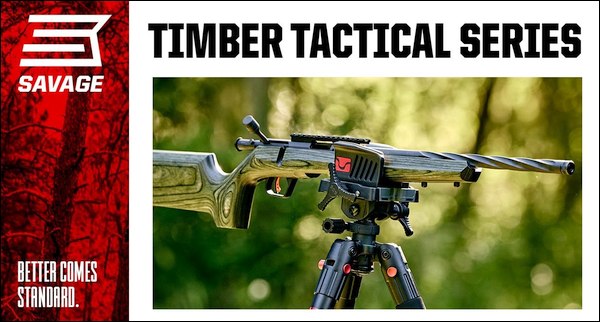
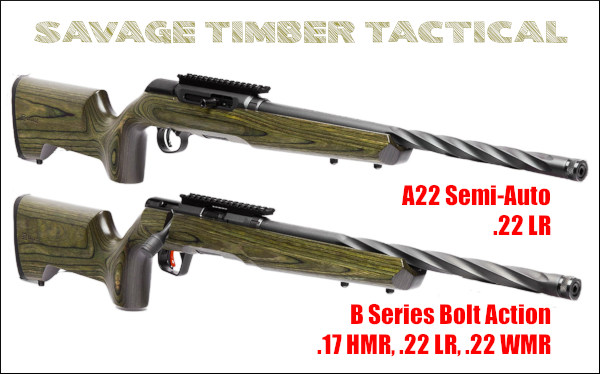
Savage has released a pair of “Timber Tactical” rifles in matching green laminated stocks. The A22 is a semi-auto available in .22 LR only. The B Series Timber Tactical rifles are offered in three rimfire chamberings: .17 HMR, .22 LR, .22 WMR. These look like a good option for a plinking rifle or for someone looking for a small varmint rifle. We might get the A22 for rapid-fire steel target rimfire matches, while for shooting ground squirrels we’d opt for the B-Series in .17 HMR. CLICK HERE for detailed American Hunter review of both Timber Tactical variants.
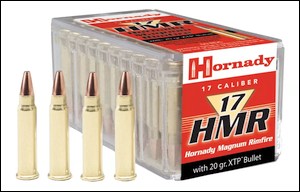
The .17 Hornady Magnum Rimfire (HMR) The .17 Hornady Magnum Rimfire (HMR) was introduced in 2002 by Hornady as a high-velocity, rimfire cartridge derived from the .22 Magnum case necked down to .17-caliber. The .17 HMR gained popularity among varmint hunters and target shooters for its good accuracy and hitting power out to 200 yards or more — all with low recoil and relatively low cost (compared to centerfire ammo).
Most .17 HMR ammo runs 17-grain or 20-grain hollow-point or plastic-tipped bullets at speeds around 2375-2550 FPS (lower for 20-grainers). Though lightweight, these small projectiles do deliver a powerful impact on small game while maintaining low recoil. Compared to the .22 LR, the .17 HMR offers superior ballistic performance, with flatter trajectories and higher energy at extended distances. It’s good for shooting prairie dogs, ground squirrels, sage rats, and other small critters.
The Savage 110 Magpul Scout is a new, versatile rifle with interesting features. With a modern Magpul Hunter stock and a 16.5″ barrel it is relatively compact and fairly light. It boasts a long rail on top of the action plus AR-style sights. It ships with a factory muzzle brake which can be removed for placement of a suppressor. Both black and FDE (flat dark earth) stock colors are offered. NOTE: MSRP is $1099.00 but dealers are selling Savage Magpul Scout 110s for under $820. (See Bud’s Gun Shop.)
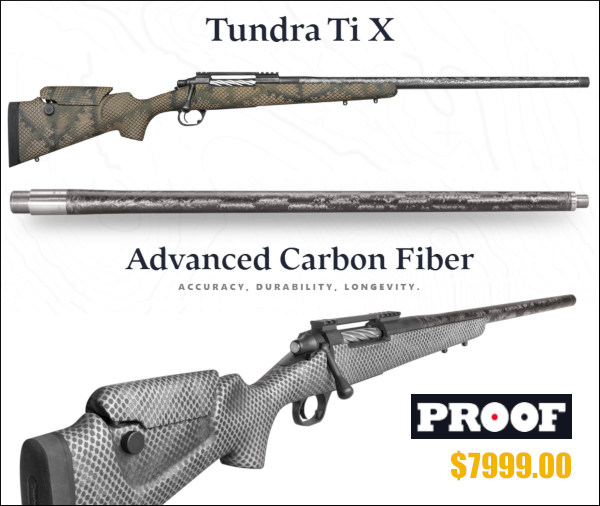
The Proof Research Tundra TI-X is a high-end ultra-lightweight hunting rifle, with a 1/2-MOA accuracy guarantee. Priced at $7999.00, this is one of the most expensive hunting rifles on the market. But you do get a titanium action, a carbon fiber stock, and high-tech carbon-wrapped barrel. The Tundra Ti X sports an adjustable TriggerTech Special Trigger and BDL-style magazine. A wide variety of chamberings is offered with barrels ranging from 20 to 26 inches. Listed starting weight (with shorter barrels) is 6 pounds, 5 ounces. Five different stock appearance types are offered: Green Granite, Green Jungle Camo, TFDE, Black, Black Jungle Camo.
The new Model 307 Alpine ST is light-weight, carbon-stock “backcountry bolt gun” built on Weatherby’s newest bolt-action rifle platform, the Model 307. Meant to complement the historic Mark V and Vanguard lineups, the Model 307 action is a 2-lug, fully cylindrical action compatible with aftermarket accessories. Model 307 is designed to accommodate a wide variety of stocks, triggers, rails, and mounts. Weatherby teamed up with PEAK 44 to produce an ultra-light rifle that can own the range and dominate in the field. The PEAK 44 Bastion stock weighs in at just 24 ounces and uses a proprietary 3D-Hex recoil pad to reduce the effects of recoil. The lightweight, spiral fluted barrel delivers good accuracy and comes with Weatherby’s recoil-reducing Accubrake ST.
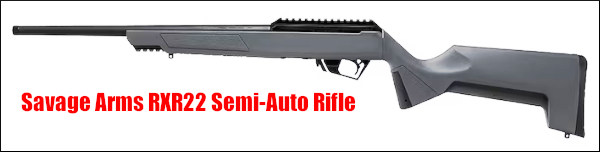
Savage RXR22 Semi-Auto Rimfire
Chamberings: .22 LR Rimfire | MSRP: $299.99
The Savage RXR22 is a new budget-priced semi-auto rimfire rifle. This is a good choice for plinking and small varmint work. It features an optics rail on top, a short rail on the forearm (for bipod mounting) and a detachable 10/22 compatible rotary magazine. This is designed to compete with the Ruger 10/22 with better bolt/chamber access and a better stock trigger. The RXR22 has a 16.25″ barrel and weighs just 4.6 pounds without optic.
Mother of All LR Primer Tests
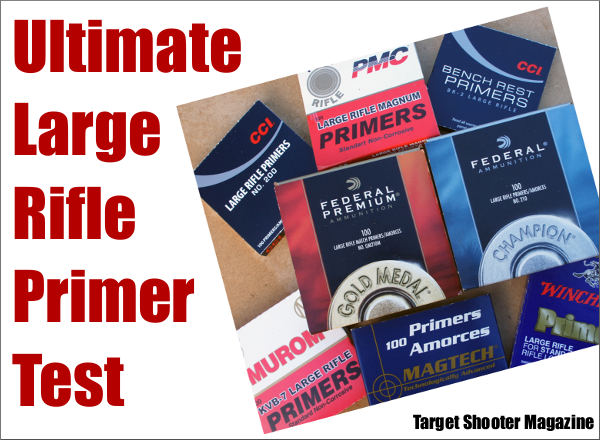
If you shoot a .308 Win, or any cartridge that uses a Large Rifle (LR) primer, you should read an important article by Laurie Holland in Target Shooter Magazine. Holland, a talented shooter from the UK (and Accurate Shooter Forum member), tested no less than sixteen (16) different large primer types using a custom F-TR target rifle shot from the bench. Laurie loaded .308 Win ammo* with 16 LR primer varieties and then tested for average velocity, ES/SD, and group size. This may be the most comprehensive and thorough LR primer test ever done. Here are the primer types tested:
1. CBC Magtech 9½
2. CCI 200 LR
3. CCI BR2 Match
4. CCI 250 Magnum
5. Federal 210
6. Federal 210M Match
7. Federal 215M Magnum Match
8. Fiocchi Large Rifle
9. Kynoch Large Rifle
10. Murom KVB-7 (PMC LR)
11. Norma Superflash LR
12. PMC LR Magnum
13. Remington 9½ LR
14. Remington 9½ M Magnum
15. Sellier & Bellot LR
16. Winchester WLR
Test Rig: Osprey Rifles-built F-TR rifle with Savage PTA action, 32″ Bartlein 1:12″-twist ‘Heavy Palma’ barrel, and Dolphin Gun Company modular stock with an F-Open/Benchrest fore-end.
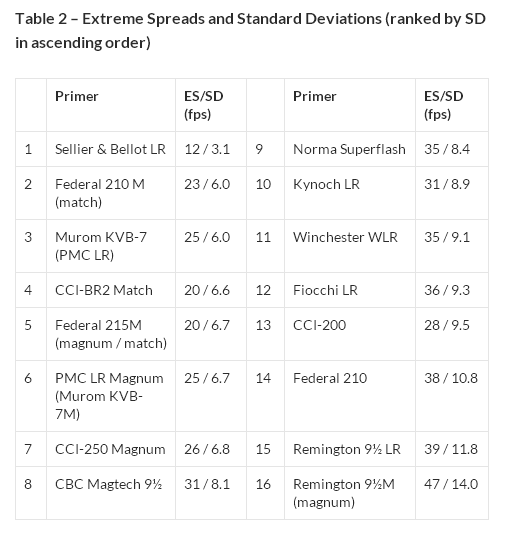
Some of Laurie’s results may surprise you. For example, would you guess that Sellier & Bellot primers had the lowest ES, by a significant margin? And get this, among ALL the primers tested, Rem 9½M Magnum primers produced the lowest velocity, while Rem 9½ LR (non-magnum) primers yielded the highest velocity. (The total velocity spread for all primers was 35 fps). That’s counter-intuitive and it’s odd that Rems were at opposite ends of the speed spectrum among ALL primers tested.
“The rationale for doing side-by-side tests is to see what effect primer choice has on ballistics, i.e. average velocities and MV consistency. There are a great many views on the subject, a few based on tests (including primer flame photography) but most apparently hearsay.” — Laurie Holland
Every serious hand-loader should definitely read the full test results to understand Laurie’s methodology and get all the details. This is an important test, with significant findings. But if you can’t spare the time right now, here are some highlights below:
Primer with Lowest Velocity: Remington 9½ M Magnum (2780 fps)
Primer with Highest Velocity: Remington 9½ LR (2815 fps)
Primer with Lowest ES/SD: Sellier & Bellot LR (12/3.1 fps)
Primer with Highest ES/SD: Remington 9½ M Magnum (47/14.0 fps)
Primer with Smallest Group Size: Remington 9½ LR (0.43″ average, three 5-shot groups)
Primer with Biggest Group Size: CBC Magtech 9½ (0.7″ average, three 5-shot groups)
Editor’s Comment: Laurie shot three, 5-shot groups at 100 yards with each primer type. The average group size for the top six primers varied by only 0.10″ (0.43″ to 0.53″), so one can’t conclude that one type is much better than another. Total group size variance (from best to worst) was 0.27″.
“The biggest surprise to me … came from an elderly (at least 10 years) lot of Czech Sellier & Bellot standard caps with an ES of 12 and SD of 3.1 fps, way below those of the nearest competitor. By contrast to the Fiocchis, they were an almost slack fit in the cases and this may have contributed to their consistent performance.” — Laurie Holland
NOTE: Values in chart are based on 15-Shot strings. The ES/SD numbers will therefore be higher than is typical with five-shot strings.
All ES/SD Values from 15-Shot Strings
Testing 16 primer types was a huge task — we commend Laurie for his hard work and thoroughness. This extensive test is an important contribution to the “knowledge base” of precision shooting. Laurie’s findings will doubtless influence many hand-loaders who hope to produce more consistent ammunition, or achieve better accuracy. Credit should also be given to Target Shooter Magazine for publishing the results. Well done gentlemen…
*Reloading method for Test Ammo: “Test batches consisted of 16 or 17 rounds for each primer, charges thrown by an RCBS ChargeMaster and checked on lab-quality electronic scales, adjusted if necessary to within ± 0.04gn, so any charge weight variation would be under 0.1 grain which equates here to 5 fps.”
Can you hit an egg at 600+ yards? We mean hit it reliably — not just by luck. To do that you’ll need good shooting skills and a very accurate rifle. How accurate? Well, a chicken egg is, on average, 2 1/4 inches (57 mm) long and 1 3/4 inches (44.5 mm) in diameter. That means to hit an egg (on demand) at 600 yards, you’ll need a rifle capable of 1/3-MOA accuracy (or better). Forum member DukeDuke has such a gun, and he demonstrated its egg-busting prowess in this short video. DukeDuke’s rifle is chambered in 6BRX (a 30° 6BR Improved) and it’s loaded with DTAC 115gr bullets pushed by Alliant Reloder 17. In the video, the eggs are placed on top of poles set 616 yards from the firing line.
See Egg Hit at 38 second mark…
As you can see in the video, that’s a heck of a nice shooting range where DukeDuke scrambled those eggs at 616 yards. The range is situated just outside of Lake Jackson, Texas. As for the gun… the action is a Rem 700 SA BDL, blueprinted and bedded in a Rem/HS Precision PSS stock. The 31″ barrel is 1:8″-twist Broughton. The “P3″ on the barrel stands for Porter’s Precision Products, Lake Jackson, TX. The rifle was built by Kenneth Porter. The load was 33.5 grains of RL-17 at 2950 fps, with 115gr DTAC bullets touching the lands. Cartridge OAL is 2.400″.
The 6mm BRX was developed by Bob Crone. Retaining the 30° shoulder of the parent 6mmBR case, the BRX has a little less capacity than a 6mm Dasher. Bob told us that his original design for the 6mm BRX always had a .100″ longer head space than a 6mmBR Norma and that he never deviated from that. But after Bob developed the first 6mm BRX, Bill Shehane made a 6mm BRX version that had a .120″ longer head space, and thus some confusion started. In truth, the original 6mm BRX always was (and still is) a chambering with a head space .100″ longer than a 6mm BR Norma.
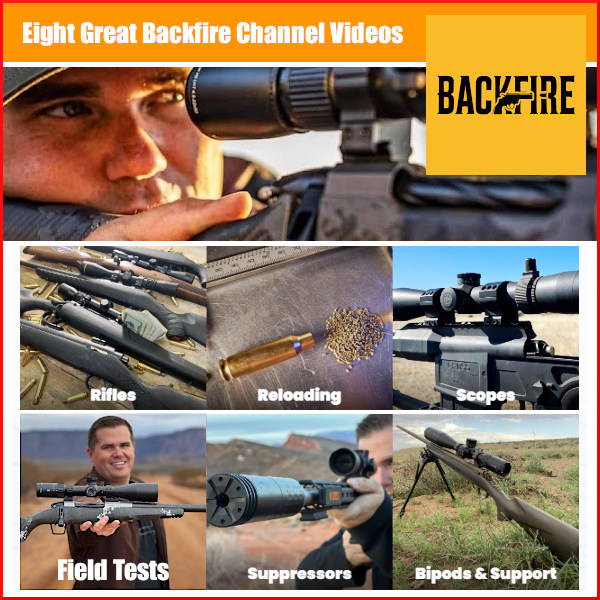
With today’s Saturday video showcase we feature eight videos from the Popular Backfire YouTube Channel. The host of the BackFire channel, Jim Harmer, also has a good website, Backfire.tv with written reviews. If you’re shopping for a hunting rifle we recommend you read the recent (12/1/2025) Best Hunting Rifles article. Without further ado, here are eight noteworthy videos from the BackFire Channel.
Five Powder Dispenser Comparison Test (All Units Purchased)
If you are in the market for a sub-$500 electronic powder dispenser, definitely watch this review. This Backfire comparison test is notable because the tester spent his own money to purchase all five powder dispensers being reviewed. That means Backfire could tell the full truth, both good and bad, about the machines. In fact, Backfire bought TWO ChargeMaster Lites because one failed (See 14:12 time-mark). The reviewer liked the RCBS ChargeMaster Supreme, but his top choice overall was the Hornady Auto Charge Pro. He favored the overall design, and really liked the way the dispensing speeds could be easily set faster or slower. Here are highlights from the video review:
00:08 Speed Test
03:09 Accuracy Test
07:57 Frankford Arsenal Intellidropper
09:08 Lyman Gen 6
10:44 RCBS Chargemaster Supreme
12:03 Hornady Auto Charge Pro
14:12 RCBS Chargemaster Lite
14:41 Conclusions
Best Rifle Scope Under $500 (2.2 Million Views)
This is a very comprehensive test of ten scopes under $500 MSRP. Unlike many reviews, the tester actually purchased all the tested scopes with his own money to provide a fair, unbiased review. The ten scopes all have approximately 4-14X magnification, common for a hunting/general purpose field scope. The reviewer ranked the $349 Vortex Diamondback Tactical FFP as the Best Overall scope. The reviewer’s first choice for a Target/Competition scope was the $299 Arken 4-16×50 model. The $175 Burris Fullfield E1 Hunting model was named the best “Lightweight, Capped Scope”.
The Backfire team purchased eight rangefinders and tested them in the field. Most of the products are under $500. This is a good review if you are looking for a compact LRF at a moderate price. Looking at performance for the price, for the hunting market, the reviewers favored the Leupold RX-1600 and the waterproof Vortex Ranger 1800. COMMENTARY: If you can afford it, we recommend that serious hunters consider top-end laser rangefinder-equipped binoculars such as the ZEISS Victory RF and Leica Geovid.
Affordable Hunting Rifles under $750.00 (1.3 million views)
Here’s another good Backfire Channel video for hunters looking for a new rig. With hunting season starting soon, this video can save you time and help you get the most bang for your buck. The Backfire team review eight affordable under-$750 rifles: Bergara B-14, Howa 1500 Hogue, Kimber Hunter, Remington 700, Ruger American, Savage 110 Switchback, Tikka T3X Superlite, and Weatherby Vanguard. The Backfire reviewers tested all 8 rifles for function and accuracy (4-shot groups). These 8 rifles were chose for review based on input from Backfire channel viewers.
Accuracy Secrets of a Champion — Interview with Erik Cortina
Our friend Erik Cortina is one of America’s top F-Class marksmen, and he has also achieved notable results in some long-range tactical matches. In this video Erik explains some of the factors that help in load development, wind reading, and achieving long range accuracy. If you shoot F-Class or even just compete in local matches, this video is worth watching. Erik’s Cortina Precision company produces high-quality tuners, tuner brakes, dies and other high quality products.
How to Set Up a Rifle for 1000 Yards
Here’s good video for novice ELR and Long range shooters. The video covers initial zeroing and then working with ballistics at 600-1000 yards. The tester explains the importance of a very stable platform and optics with adequate vertical adjustment and proper parallax control. The featured rifle is a 6.5 Creedmoor Bergara Premier Competition in a dark, gray PMA chassis (this is not the tan rifle in cover shot). Note: Bergara also offers a barreled action that you can put into a different chassis of your choice. The scope is an Athlon Helos BTR Gen2 4-20x50mm. A Garmin Xero C1 radar chrono was used to confirm velocity.
Low-Cost vs. High-Cost Rifles — How They Compare (2 Videos)
Here are two interesting videos that compare the features and performance of rifles at various cost points. The first video compares two rifles with a 10X (1000%) price difference — $350 vs. $3500. Some quite inexpensive rifles can perform very well, if you get lucky with the factory barrel. At the high end of the spectrum you can (hopefully) expect a smoother action, better trigger, more sophisticated stock, and (hopefully) more shot-to-shot consistency. Still a big investment doesn’t always guarantee vastly improved performance. For a deer hunter, a $500 rifle with a modestly-priced scope can probably do the job. If you want to hit prairie dogs at 500 yards and beyond, you’ll need an accurate cartridge and a very good (preferably custom) barrel for consistent hits.
For load development, some guys shoot 3-shot groups. Other guys shoot 5-shot groups, or even 10-shot strings. But for testing its projectiles, Sierra Bullets takes it to another level entirely. A while back Sierra was testing its .30-Caliber 175gr HPBT MatchKing in the Sierra underground tunnel. The results appear above — a FIVE HUNDRED Round group!
500 Shots Form 0.82 MOA Group at 300m (328 yards)
Sierra’s trigger-pullers sent five full boxes of bullets down-range at a single target. The photo above shows the result of 500 shots taken in a 300 meter test tunnel. The raw group size, edge to edge of the farthest shots, is about 3.13 inches, as shown on the calipers’ metal linear scale. Subtract a .308″ nominal bullet diameter* to get the 2.823″ on the digital readout. So you’re seeing a 2.823″ group at 300 meters (328 yards). One MOA at this distance is 3.435″ so this 500-round group is 2.823 divided by 3.435 or 0.82 MOA (0.8218 MOA to be precise).
This 500-round group was shoot as part of a pressure/velocity test for a commercial customer. The cartridge was .308 Winchester, loaded at 2.800″. The powder was Reloder 15. A 26″ barrel was shot from a return to battery rest. The gun was cleaned every 125 rounds and two foulers shot.
What do you think — could you beat this group from a bench for 500 rounds?
One Facebook poster joked: “500-round group? Everyone knows anything less than 1000-round groups are a waste of time and statistically irrelevant.”
Sierra’s 300 Meter Testing Tunnel
Ever wonder how (and where) Sierra tests its bullets? The answer is underground, in a 300-meter test tunnel located under Sierra’s factory in Sedalia, Missouri. The photo above shows the construction of the tunnel back in May, 1990. Like most bullet manufacturers, Sierra does live-fire bullet testing of its projectiles. Sierra’s 300-meter test range is the longest, manufacturer-owned underground bullet test facility in the world. In years past, Sierra offered free visits to the test tunnel as part of a factory tour.
* Normally, to get an exact group size, you should subtract the TRUE bullet hole size, which is usually smaller than the nominal bullet diameter. E.g. a .308 bullet hole may show on paper as .298 or so. But here, for simplicity, we are subtracting .308″ because we do not have the original target to measure.


 Shiny brass — it may not shoot more accurately, but it does make you feel better about your hand-loaded ammo. While it’s not necessary to get brass “bright and shiny” after every firing, it is a good idea to clean powder residue, grime, and grit off your brass before you run cases into sizing dies. There are many ways to clean cartridge cases. A quick wipe with solvent on a patch may suffice for recently-shot cases. Older brass with baked-on carbon may require lengthy tumbling. Ultrasonic cleaning is another popular option that gets your brass clean inside and out.




 The .17 Hornady Magnum Rimfire (HMR) was introduced in 2002 by Hornady as a high-velocity, rimfire cartridge derived from the .22 Magnum case necked down to .17-caliber. The .17 HMR gained popularity among varmint hunters and target shooters for its good accuracy and hitting power out to 200 yards or more — all with low recoil and relatively low cost (compared to centerfire ammo).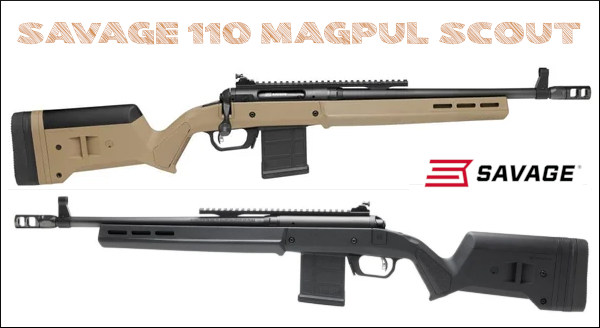



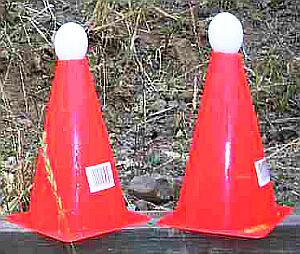 Can you hit an egg at 600+ yards? We mean hit it reliably — not just by luck. To do that you’ll need good shooting skills and a very accurate rifle. How accurate? Well, a chicken egg is, on average, 2 1/4 inches (57 mm) long and 1 3/4 inches (44.5 mm) in diameter. That means to hit an egg (on demand) at 600 yards, you’ll need a rifle capable of 1/3-MOA accuracy (or better). Forum member DukeDuke has such a gun, and he demonstrated its egg-busting prowess in this short video. DukeDuke’s rifle is chambered in 6BRX (a 30° 6BR Improved) and it’s loaded with DTAC 115gr bullets pushed by Alliant Reloder 17. In the video, the eggs are placed on top of poles set 616 yards from the firing line.
 As you can see in the video, that’s a heck of a nice shooting range where DukeDuke scrambled those eggs at 616 yards. The range is situated just outside of Lake Jackson, Texas. As for the gun… the action is a Rem 700 SA BDL, blueprinted and bedded in a Rem/HS Precision PSS stock. The 31″ barrel is 1:8″-twist Broughton. The “P3″ on the barrel stands for Porter’s Precision Products, Lake Jackson, TX. The rifle was built by Kenneth Porter. The load was 33.5 grains of RL-17 at 2950 fps, with 115gr DTAC bullets touching the lands. Cartridge OAL is 2.400″.