Looking to improve your competition skills? The Shooting Sports USA website has scores of informative articles that can help your score higher at your next shooting tournament. You’ll find articles on wind reading, position shooting, match strategies, and much more.
One great Shooting Sports USA article, Shooting is 90% Mental, was penned by Chip Lohman (SSUSA’s former Editor). With the help of two very smart Ph.D types, Judy Tant and Mike Keyes, Lohman examines the mental processes involved in the shooting sports. Chip’s co-authors have impressive credentials. Dr. Judy Tant is a Clinical Psychologist and National Bullseye Pistol Champion. Dr. Michael J. Keyes, is a licensed Psychiatrist and former physician for the U.S. Shooting Team.
If you shoot competitively, this is definitely a “must-read” article. The authors examine how the brain functions under stress, how “visualization” can be used to improved performance, how “brain speed” can be enhanced through proper training, and how the brain stores learned routines into “muscle memory.” And that’s just for starters — the article gives many concrete examples of techniques top shooters have employed to improve their “mental game” and shoot higher scores.
Brain Speed and Trigger Control: Research: Scientists believe that the newer frontal lobe may not be able to keep up with “deep” brain signals that transmit at nearly 300 mph. This is explained when athletes talk about “letting go”, rather than over-thinking the shot.
This conscious signal can take up to 0.3 seconds from recognizing the desired sight picture to moving the trigger finger — too long to capture the opportunity for a perfect shot. However, if the signal is initiated spontaneously in the cerebellum where such procedures are thought to be stored through repetition, the reaction speed is much quicker. Signals are processed by the “deep brain” almost twice as fast as the problem-solving frontal lobes.
Mental Preparation for Shooting Matches
Below are tips from Emil Praslick III, former USAMU coach. Considered one of the best wind readers on the planet, Praslick also was known for his ability to help his shooters master the “mental game”.
Thinking Your Way to Success by Emil Praslick III
Why does it seem that the same small group of shooters wins the majority of the matches? What is the difference among shooters who are technically equal? Confidence. A confident shooter is free to execute his shots without the fear of failure, i.e. shooting a poor shot.
Negative thoughts (can’t, won’t be able to, etc.) will destroy a skilled performance. The mind’s focus will not be on executing the task, but on projecting fear and self-doubt. Fear is the enemy, confidence is the cure. How does a shooter on the eve of an important match … attain the confidence needed to perform up to his potential? A pre-competition mental plan can assist in acquiring that positive mental state. The plan can be broken down into a few phases.
Build a feeling of preparedness. Developing and executing a plan to organize your equipment and pre-match routine will aid you in feeling prepared on match day.
Avoid negative and stressful thoughts. Focusing on “winning” the match or shooting for a specific score (like making the “cut” or making the President’s 100) can cause undue stress. Good shooters focus on aspects that are within their control: their sight picture, their sight alignment, their position. Each shot should be treated as an individual event.
Train stage-specific tasks during your practice sessions. Instead of shooting matches or practice matches only, include some drills that focus on your problem areas. Training in this manner will assist your level of confidence.
As part of your pre-match routine, imagine yourself shooting perfect shots. Visualize getting into the perfect position, acquiring a perfect sight picture, and perfect trigger control.
Keith Glasscock is one of America’s greatest F-Class shooters, as well as a highly respected wind coach. A High Master, Keith finished second overall at the 2021 NRA F-Class Long Range Championship in F-Open division. He also finished second at the 2020 Nationals, tied with F-Open winner Pat Scully on points, but with fewer Xs. And he took second also at the 2019 Nationals. His consistency is unrivaled, which means he definitely knows the secrets of long range wind calling and loading ultra-accurate ammo.
Keith has a popular YouTube Channel with new content every week. On Keith’s Winning in the Wind channel, Keith offers 60+ informative videos on a wide range of topics including wind reading, reloading, component selection, load development, and training. For today’s Video Showcase, we offer four of our favorite Keith Glasscock videos. Each video has important points that can benefit any competitive rifle shooter, whether you shoot in local 100-yard fun matches or compete at the National Level in F-Class, LR Benchrest, Palma, or High Power.
How to Prepare for a Match
In this informative video, Keith explains how to prepare for a major medium- or long-range rifle competition, with a particular focus on F-Class. Keith explains how to prepare for weather conditions and “get the lay of the land” before the match. Even the day of the match, your can look and learn. As one viewer noted: “I’ve noticed some guys playing on their phones during matches. This is an important time to get in sync with wind patterns and fine tune your wind strategy.”
How to Find (and Fine-Tune) Seating Depth
This is Keith’s most popular video. Keith definitely knows how to maximize accuracy by finding the optimal seating depth for each particular barrel. He is achieving groups in the high Ones for three shots. That would be good for a short-range benchrest cartridge, but Keith is achieving that with a .284 Winchester which has much more recoil. If you shoot F-TR or F-Open or even PRS, you should watch this video.
How to Lower your ES/SD and Reduce Vertical at Long Range
This is Keith’s first video in a series on how to improve long range groups, precision, and accuracy by reducing velocity Extreme Spread (ES) and Standard Deviation (SD). To achieve the lowest ES you need to look at multiple processes, including precision powder weighing, careful seating, brass annealing, and primer selection. Another factor is bullet selection. Not all bullets of the same nominal caliber and weight class have exactly the same bullet diameter or shape. Sometimes you can get better accuracy AND lower ES by trying a different brand of bullet. We have found bullet diameters, of the same stated caliber, can vary by up to .0008″ (eight ten-thousandths). Some barrels like the fatter bullets, while other barrels may favor the skinny bullets.
How to Find Bullet-to-Rifling Touch Point
Before you even start to load for a new rifle you need to know the point at which the bullet in a loaded round will first touch the rifling. (This will be a base to ogive measurement on your round). Beyond that point you are “in the lands”. If you load shorter than that base-to-ogive length you are “jumping” your bullets. Some cartridge/bullet combos typically shoot best in the lands, while with other bullets and cartridges, jumping is the way to go. Additionally, with some disciplines it is wise to jump your bullets since you may have to unload a chambered round while on the firing line. In this video Keith shows a number of methods to determine “length to lands” with repeatable precision.
Field Test and Review of SEB Mini-X Coaxial Front Rest
While gear reviews are not the primary focus of Keith’s YouTube Channel, Keith does talk about products he likes and uses. In this video. Keith reviews the SEB Mini-X, the newest coaxial tripod rest from SEB Rests. The Mini-X offers fast, precise windage and elevation adjustment with the joystick control. The unit is much easier to pack and transport than a large, heavy front rest such as a SEB NEO or Farley. The latest Mini-X also has upgraded foot controls that make it easier to level the rest on uneven ground. For more info, see our SEB Mini-X Report.
OK guys, you probably want to keep this page confidential. Your spouse probably doesn’t want to be reminded about all the times you ignored the “Honey Do” list and headed off to the range instead. And she certainly doesn’t want to know how much you spend every year on your gun hobby.
Answer these two polls to see how dedicated (or should we say “obsessed”) a gun guy you really are. Once you vote you can see how your shooting (and spending) habits compare to other readers. Full results display after you select an answer and click the “Vote” button.
Click to vote in our current Readers’ polls.
Click “View Results” to see what other readers have selected.
The rifle cartridge money clip is a real product from ReleaseMeCreations.com. You can, of course, make your own cartridge money clip with a Dremel tool for free.
Photos and Facebook post by Tactical Rifle Shooters
Yet another .300 Blackout disaster. Unfortunately, that .300 Blackout cartridge can fit in a .223 Rem chamber. Shooting a .308-caliber bullet in .223 bore is a recipe for disaster.
The .300 AAC Blackout aka “300 BLK”, is a compact 30-caliber cartridge designed to work in AR-15 rifles. It has a shorter cartridge case to accommodate the bigger 30-caliber bullet while still fitting in a standard AR-15 magazine. Unfortunately, that’s the danger. A careless shooter can toss a .300 Blackout cartridge in with .223 Rem rounds without noting. And because the case-head size is the same as the .223 Rem (5.56×45) the rifle’s bolt assembly will happily chamber and fire the .300 BLK round. Problem is, that forces a .308 diameter bullet down an undersized .223-caliber bore. Not good!
This images were provided by Tactical Rifle Shooters on Facebook. The message was clear: “Don’t try to run 300 Blackout in your .223/5.56mm. It won’t end well. The problem is identical rifles and identical magazines but different calibers.”
Image from Accurate Shooter Forum. Cutaway shows the jammed .30-Cal bullet:
For those who MUST have a .300 Blackout, here are some things you can do:
1. Use different colored magazines for .300 Blackout vs. .223 Rem.
2. Fit all your uppers with caliber-labeled ejection port covers.
3. Mark .223 Rem upper handguards with the caliber in bright paint.
4. Mark all .300 BLK Rounds with heavy black marker.
Comments by Folks Who Viewed these .300 Blackout Disaster Photos:
“The .300 Blackout is simply a badly-designed round. A properly-designed round would have had a feature in the shape that would have prevented cross loading in the first place.” — D. Santiago
“I almost made that mistake… I had a magazine of 300 BLK inserted in my .223/5.56 all night. Fortunately, I never pulled the trigger. Once I realized the mistake, I almost got ill. [After that incident] I no longer own a 300 BLK.” — B. Welch
“Happened to me hog hunting from a helo. Gun exploded in my face.” — B. Hood
“Fire-forming projectiles [is] so wrong in centerfire!” — M. Stres
“Had some dude come into the store the other day wanting .300 Blackout ammo to shoot in his 5.56 AR. It took 15 minutes of explaining for him to understand you got to have a .300 Blackout Upper!” — R. Williams
I absolutely love using this press stand. I use it with my Forster Co-Ax as well as my Dillon 550. The stand mounts those presses at the right height to minimize fatigue and maximize torque. Some products I merely review and return but this one is a keeper and won’t be leaving my bench anytime soon. — F-Class John
Lyman Universal Press Stand REVIEW
Product Review by F-Class John
Positioning your press at the optimal height is one of the oldest problems in reloading. Most presses sit low off the edge leading to uncomfortable arm strain or inconsistent pressure being applied while using. Lyman has set out to fix that problem with a reasonably-priced ($69.46 at Midsouth) press riser that works with the vast majority of reloading presses. This unit will raise just about any press up off your bench securely, allowing you to working more comfortably from a standing position. This also frees up vital bench space UNDER the press. Unfortunately this press stand is so popular it is back-ordered at most vendors.
I have used a variety of presses over the years. At times I’ve run into issues mounting a press at a level that doesn’t promote arm or hand strain during normal operations. In the past I’ve used blocks of wood or even tried other brands’ proprietary stands. But I had very limited success with those options. Accordingly, I was very excited to give the Lyman Universal Press Stand a chance.
Lyman’s Universal Press Stand comes complete with side plates, two different top plates, and a large collection of mounting hardware. The two top plates are pre-drilled for numerous popular Single Stage or Progressive presses. Helpful diagrams and instructions show which side of the top plate you need to use. The pre-drilled holes accommodate a variety of presses from RCBS, Dillon, Lyman, Redding, and Hornady. But surprisingly, the plates are not pre-configured for the Forster Co-Ax Press.
CLICK to WATCH VIDEO Showing Lyman Universal Press Stand
Setting up the stand was very simple. The two sides bolt to the lower shelf unit at which point you attach the top plate. All the supplied bolts made this a breeze and once everything was snugged down, I was able to place it on my bench where I wanted it and mark the drill holes to mount it. After securing the stand to my bench it was time to mount my press.
Lyman Universal Press Stand with Dillon 550 Press
Adapting Lyman Universal Press Stand for Forster Co-Ax
At the time of testing I was primarily using a Forster Co-Ax press. With no pre-drilled Co-Ax configuration for either Lyman top plate, I decided to customize the blank side of one of the top plates. I opted to position the mounting holes so that the press could sit 100% on top of the mounting plate and not just off one edge. I found this process simple to execute. Mark your drill holes, then drill the plate. This can easily be done with regular drill bits although using a step-bit worked faster and cleaner to help enlarge the holes just a little when I needed some extra clearance.
Lyman Universal Press Stand Is Stable and Strong
Once set-up, I found the stand to be incredibly stable. The design allows for full force to be applied to the press no matter what the operation. Having used this Lyman Press stand regularly over the past few months with both my Co-Ax and a Dillon 550c, I still find myself loving it. The height is perfect and allows me to load as much as I like without straining my arm or getting fatigued. With an attractive price point (under $55.00 street price) and a simple design, I feel this is a great system for those looking for a secure and raised platform for their reloading presses.
The Universal Press Stand comes with two plates. If you have different presses that fit each plate you could easily swap presses just by changing plates while leaving the presses attached. It’s less functional if you have two presses that share one plate and would require removing one press before installing the next one.
Lyman Press Stand Unboxing and Set-Up (KFW Video Review):
Gunsite Academy, the oldest and largest civilian firearms training academy in the USA, now offers 96 videos cover the full spectrum of the Gunsite Academy curriculum. In most of these videos, instruction/demontrations are provided by respected Gunsite instructors with commentary by gun writer Richard Mann.
There are a wide range of videos covering pistol, rifle, and shotgun shooting. In addition, there are videos covering gun maintenance, optics, and accessories. Nearly 100 videos are currently available on the Gunsite Academy Video Page. Most of the videos are also available the Gunsite YouTube channel.
Here are Five of our Favorite GunSite Academy videos:
Proper Bipod Use with Rifles
Dry-Fire Training — Save Your Ammo
MIL vs MOA in Riflescopes
Drawing a Handgun from Concealment
AR Platform Rifle Take-Down and Maintenance
In this video, Gunsite Academy instructor/gunsmith Cory Trapp demonstrates the proper way to field-strip, clean and lubricate an AR-15 carbine. Trapp also offers important technical tips for maintaining your modern sporting rifle, including lube points. This video has nearly 2.5 million views on YouTube.
Gunsite Academy — 45-Year Heritage of Excellence
Founded in 1976 by Lt. Col. Jeff Cooper (WW II and Korean War combat veteran, author, and professor), Gunsite Academy has been providing elite firearm instruction for more than 40 years. It enjoys a reputation for serious, no-nonsense training. Cooper built the facility just west of Paulden, Arizona. Originally it was called the American Pistol Institute (API).
When a rifle isn’t shooting up to it’s potential, we need to ask: “Is it the gun or the shooter?” Having multiple shooters test the same rifle in the same conditions with the same load can be very revealing…
When developing a load for a new rifle, one can easily get consumed by all the potential variables — charge weight, seating depth, neck tension, primer options, neck lube, and so on. When you’re fully focused on loading variables, and the results on the target are disappointing, you may quickly assume you need to change your load. But we learned that sometimes the load is just fine — the problem is the trigger puller, or the set-up on the bench.
Here’s an example. A while back we tested two new Savage F-Class rifles, both chambered in 6mmBR. Initial results were promising, but not great — one gun’s owner was getting round groups with shots distributed at 10 o’clock, 2 o’clock, 5 o’clock, 8 o’clock, and none were touching. We could have concluded that the load was no good. But then another shooter sat down behind the rifle and put the next two shots, identical load, through the same hole. Shooter #2 eventually produced a 6-shot group that was a vertical line, with 2 shots in each hole but at three different points of impact. OK, now we can conclude the load needs to be tuned to get rid of the vertical. Right? Wrong. Shooter #3 sat down behind the gun and produced a group that strung horizontally but had almost no vertical.
Hmmm… what gives?
>
Shooting Styles Created Vertical or Horizontal Dispersion
What was the problem? Well, each of the three shooters had a different way of holding the gun and adjusting the rear bag. Shooter #1, the gun’s owner, used a wrap-around hold with hand and cheek pressure, and he was squeezing the bag. All that contact was moving the shot up, down, left and right. The wrap-around hold produced erratic results.
Shooter #2 was using no cheek pressure, and very slight thumb pressure behind the tang, but he was experimenting with different amounts of bag “squeeze”. His hold eliminated the side push, but variances in squeeze technique and down pressure caused the vertical string. When he kept things constant, the gun put successive shots through the same hole.
Shooter #3 was using heavy cheek pressure. This settled the gun down vertically, but it also side-loaded the rifle. The result was almost no vertical, but this shooting style produced too much horizontal.
A “Second Opinion” Is Always Useful
Conclusion? Before you spend all day fiddling with a load, you might want to adjust your shooting style and see if that affects the group size and shape on the target. Additionally, it is nearly always useful to have another experienced shooter try your rifle. In our test session, each time we changed “drivers”, the way the shots grouped on the target changed significantly. We went from a big round group, to vertical string, to horizontal string.
Interestingly, all three shooters were able to diagnose problems in their shooting styles, and then refine their gun-handling. As a result, in a second session, we all shot that gun better, and the average group size dropped from 0.5-0.6 inches into the threes — with NO changes to the load.
That’s right, we cut group size in half, and we didn’t alter the load one bit. Switching shooters demonstrated that the load was good and the gun was good. The skill of the trigger-puller(s) proved to be the limiting factor in terms of group size.
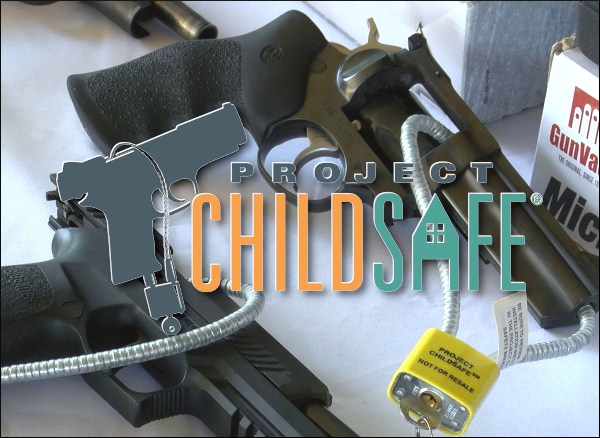
With schools closing soon for the summer and kids spending more time at home, firearms safety is more important than ever. Given that fact, the NSSF reminds gun owners to keep their guns locked up so they cannot be accessed by children. The National Shooting Sports Foundation (NSSF) and its partners urge gun owners to keep firearm safety a top priority and are making safety resources widely available as gun and ammunition sales increase, especially among first-time firearm purchasers.
For anyone considering buying a gun, Project ChildSafe’s Road To Responsible Firearm OwnershipMany Paths to Firearm Safety video series helps gun owners determine the best safe storage device for their home/lifestyle. You also view the Safe Storage Options chart.
NSSF encourages gun owners and non-gun owners to use the firearm safety resources available on its Project ChildSafe website. These include the McGruff Gun Safety videos for young children and this educational video explaining how to discuss gun safety with children:
“More parents are assuming the role of educators in their homes, so it’s a good to time have a talk with your kids about gun safety, even if you don’t own a gun”, states Joe Bartozzi, NSSF President and CEO. “If you do own a firearm, be sure your family understands the safety rules regarding firearms in your home, and always store guns responsibly when not in use.”
Shooting steel targets is fun — both at close-range with pistols and rimfire, and at long range with centerfire rifles. If you’ve been thinking of getting some steel targets, here’s a great SAVINGS opportunity. Right now, as a June 2022 Pre-Father’s Day Deal, Action Target is offering a full 20% off ALL Steel Targets. That’s a great promo from one of the most respected metal target-makers on the planet.
IMPORTANT — Though this is listed as a Father’s Day SALE, the discount is only valid for TWO DAYS — June 1st and 2nd, 2022. So don’t hesitate. Use discount code FATHERS2022 during checkout on the ActionTarget.com website.
Action Target posted: “Father’s Day is just around the corner, and we know Dads want steel shooting targets. So from June 1st-2nd, use coupon code FATHERS2022 and save 20% on all steel targets.”
If you shoot pistols, or rimfire rifle, this Dueling tree is a ton of fun. Shoot solo or two shooters can enjoy challenge matches on this PT Dueling Tree. With the 20% Off code you can save $93.20 off the regular $466.00 price. There are many other great steel targets, such as the rimfire plate rack or the full Steel Challenge Kit.
At the NRA Annual Meetings in Houston, Colt’s Manufacturing introduced an impressive new rimfire revolver — the King Cobra Target 22 LR. Colt states: “From competition to plinking and small game hunting, this baby Cobra does it all and packs 10-rounds of .22 LR in its cylinder.” The King Cobra Target 22 LR is available with 4-inch and 6-inch barrel lengths, both with 1:16″ RH rifling twist. MSRP is $999.00.
The King Cobra Target 22 LR features USA-forged stainless steel construction. Designed and crafted for outstanding accuracy, new King Cobra Target 22 LR features a one-piece barrel/shroud with fiber optic front sight. The cylinder holds ten (10) rounds. The frame is fitted with an adjustable target rear sight and Hogue overmolded rubber grips.
This TFB Showtime episode examines the new .22 LR rimfire Colt King Cobra Target. The King Cobra Target 22 LR features a 10-shot cylinder, and the same adjustable target sights as the .357 Magnum version.
“We are very excited to debut this new Baby Snake to our customers at NRA Annual Meetings,” said Justin Baldini, VP of Product Strategy, Colt CZ-USA. “Shooting .22 LR is such an important part of shooting sports. It’s where we come to learn as a beginner; and where we return as seasoned shooters to cost-effectively enjoy more time at the range. We’re confident that new and old Colt fans will love what we’ve done with the new King Cobra 22 LR.”
All-American built, the King Cobra Target 22 LR was designed and made to be shot — a lot! It should deliver exceptional accuracy and good reliability. Expect to see these revolvers at formal and informal rimfire competitions at gun clubs around the nation.
Commentary: We applaud Colt for introducing this new .22 LR wheelgun. Rimfire revolvers are great. This Editor owns a Smith & Wesson Model 617 ten-shot rimfire revolver that has easily fired more rounds than all his other handguns combined. A .22 LR revolver is great for training and fun for plinking. Like the Model 617, this new Colt .22 LR wheelgun offers minimal recoil, great reliability, a nice sight radius, and affordable shooting. In addition, if you shoot single-action slow-fire, the trigger pull is light and crisp — better than the vast majority of semi-auto pistols. We think this new “Baby Snake” will be a great addition to any shooter’s collection.


Research: Scientists believe that the newer frontal lobe may not be able to keep up with “deep” brain signals that transmit at nearly 300 mph. This is explained when athletes talk about “letting go”, rather than over-thinking the shot.


 The
The 


 >
>


 Action Target posted: “Father’s Day is just around the corner, and we know Dads want steel shooting targets. So from June 1st-2nd, use coupon code FATHERS2022 and save 20% on all steel targets.”


