Bullet sorting station — quilted Maple with marble tile inlay, created by JVW2008.
We have a master woodworker in our Shooters’ Forum, Jerry from Colorado (aka JVW2008). In a Shooters’ Forum thread, Jerry showcases multiple examples of his handiwork — various wood projects for the reloading room. Beautifully made, these one-of-a-kind custom cabinets and tool stands deserve to be on display in a museum.
Jerry’s creations exhibit exquisite craftsmanship and some very clever design features. What is your favorite item among the Jerry’s wood wonders shown here? You can reveal your favorites in the comment section below.
Throne for a Sartorius Analytical Balance
Jerry built this “Throne” for his ultra-precise Sartorius Entris force restoration scale, which is linked to a V2 Auto-Trickler. This is a true state-of-the-art powder measuring system on a beautiful base unit.
Cabinet for Balance Beam Scale
Here is an oak balance beam scale cabinet and weighing surface. Note the mulitiple tiers, side wings, and other smart design features.
Custom Arbor Press Base
Below is a handsome, well-designed base for K&M Arbor Press and Wilson dies. Look at the fitted recesses for the hand dies — very nice!
Jumbo Walnut/Maple Loading Block
And here is a beautiful 100-cartridge reloading block, crafted from Walnut over Maple. It’s impressive to see 100 cartridges all lined up like that!
To see more impressive wood projects by our Shooters’ Forum members, visit the Wood Working Ideas Forum Thread. Along with Jerry’s reloading toom wonders, you’ll see cleaning cradles, shooting benches, transport boxes, and much more. Check out this amazing inlaid rifle case crafted by Forum member Nando-AS for his son.
As a cartridge case is reloaded multiple times, burnt powder residue and carbon builds up on the inside of the case. Unless the case interior is cleaned in some fashion, eventually you’ll see a slight reduction in case capacity. One of our Forum members from Australia wonders about the effects of reduced case capacity: “If the capacity of the case decreases as the crud builds up, then it effectively reduces the size of the cartridge (inside). Wouldn’t that change the pressure produced from that of an equivalent clean case?”
Interesting Test of Case Capacity Changes
Forum member Fred Bohl has actual test results that can help answer the above question. Fred proved that, over a 20-reload cycle, the case capacity of uncleaned cases did decline a small amount. However, surprisingly, this did not seem to affect the actual chronographed velocity of the load. Extreme Spread (ES) did increase, but Fred believes the higher ES was due to changes in case-neck tension, rather than due to the slight reduction in case capacity. Fred reports:
“Back when beginning to use ultrasonic case cleaning, part of the motivation was to get the inside clean based on the assumption that allowing burnt residue to build up inside cases would affect capacity, and, ultimately, performance. An experiment was done to test this hypothesis. The load used, 30.5 grains of RL15 behind 107gr SMKs in a 6mmBR, was selected for best group and lowest ES in prior load development. It turned out to be 92% of initial case capacity and neither “full” or compressed. (I would suspect that different powders, load weight, and total case capacity might produce very different results.)
We took 30 cases of identical initial capacity and tracked three lots of 10 each:
LOT 1: No Internal cleaning LOT 2: Cleaned with media in tumbler LOT 3: Cleaned with Ultrasound machine
Each case (in each lot) was shot and reloaded 20 times. The simplified results after 20 reloads of each lot were as follows:
Lot 1 (not cleaned) – 0.3 to 0.4 gr. loss of capacity, 5 to 8 fps greater ES.
Lot 2 (tumble cleaned) – 0.1 to 0.3 gr. loss of capacity, 4 to 6 fps greater ES.
Lot 3 (ultrasonic cleaned) – no loss of capacity, no detectable change in ES.
FINDINGS
There was no detectable correlation of velocity change to the lots. An oddity was that on very hot days Lot 1 velocities were, occasionally, slightly higher. From results of another ongoing test, I believe the above differences in ES are probably due more to variance in bullet grip tension than case capacity. The ultrasound cleaned cases (LOT 3) did maintain the lowest ES, but we are not 100% sure of the reasons why. More consistent bullet seating might be the reason.”
Editor’s NOTE: Fred’s results do suggest that carbon build-up inside the uncleaned cases might cause a slight increase in pressure that shows up on hot days. Fred has posted that: “A local shooter reported doing the 20 reload, no-clean test on a .308 that gave a loss of capacity of 2.0 grains, doubled ES and significant velocity changes. However, I don’t have any details on his load weight or powder.” Obviously a lot of carbon can build up with 20 reloads. Many shooters retire their brass before then.
Ultrasonic Cleaning and Neck Lube
Some time ago, Jason Baney did a lengthy test on ultrasonic cleaning. Jason found that with his ultrasonically-cleaned cases, the inside of the necks got so “squeaky clean” that he needed to use dry lube in the necks. Jason uses the $21.50 dry lube kit from Neconos.com. This applies ultra-fine Moly powder to the neck using small carbon steel balls.
Examples of Guns & Gear Videos from GunTalk YouTube Channel Guns & Gear is a leading gun-centric resource with hundreds of informative videos. Produced by Tom Gresham, Ryan Gresham, and the Gun Talk team, Guns & Gear showcases new products in the firearms industry. Each episode features interviews with industry experts/instructors, range demonstrations, tips, and training techniques. Guns & Gear content is all FREE — you can watch hundreds of videos from Guns & Gear past seasons via the Guns & Gear Archive on GunTalkTV.com. And there are 900+ Guns & Gear videos on YouTube as part of the GunTalk Media YouTube Channel.
Savage 110 Precision Field Test and Review — 6.5 Creedmoor
Looking for an accurate, value-priced chassis rifle for PRS/NRL production class competition? Or would you like to shoot a big magnum in ELR matches? The Savage Arms 110 Precision is a good choice. These Savage 110 chassis rifles show excellent accuracy, and the barrel nut system allows easy installation of pre-fit barrels. Priced at $1649 MSRP, the Savage 110 Precision features an aluminum MDT LSS XL Cerakoted chassis and a 24″ barrel with factory muzzle brake. Chamberings offered are: 6.5 Creedmoor, .308 Win, .300 PRC, .330 Win Mag, and .338 Lapua Magnum.
Colt King Cobra Target .22 LR Rimfire Revolver
We think all serious shooters should have a .22 LR rimfire pistol in their collection, and a rimfire revolver is a smart choice, offering great accuracy and reliability. Colt relaunched the .357 Magnum King Cobra in 2019, and Colt later launched the .22 LR King Cobra Target family of rimfire revolvers. The King Cobra Target rimfire series includes 2″, 3″, 4.25″ and 6″ barrel versions. In this video, Justin Baldini joins Guns & Gear’s Kevin “KJ” Jarnagin reviews the features of the rimfire King Cobra Target. Then Team Colt’s Jalise Williams joins Guns & Gear’s Chris Cerino for a range demo.
Reloading Basics with Gavin Gear of UltimateReloader.com
In this Range Ready Tip, Gavin Gear of UltimateReloader.com explains the basic equipment one needs to reload rifle cartridges. Whether you’re an experienced reloader, or aspire to be one, you’ll find Gavin’s explanations helpful. He covers the key procedures — case sizing, priming, powder dispensing, and bullet seating. This Range Ready Tip features Hodgdon powders and Nosler bullets, with Lyman reloading presses and tools.
How to Improve Organization of Your Gun Safe
Many gun owners can benefit from this video which shows how to arrange the long guns and handguns in your gun safe. The video shows how to use rifle rods and handgun hangers to organize your gun safe contents in the most efficient manner. This can both make it easier to access your guns and can also help protect your valuable firearms from scraping and contact damage. Note: We recommend you put both rifles and pistols in rust-blocking sleeves for long-term storage.
Best Tripods for Hunting and Precision Shooting
This video explains how to select the best tripod for your hunting mode/match discipline and gun type. This video compares tripods from BOG, Two Vets, and Tricer. 1. The BOG DeathGrip (aluminum & carbon versions is good for hunting blinds, but is heavy and not ideal for mobility. 2. The Budget Spotting Scope Tripod is conveniently light but optimized for glassing, not for rifle support. 3. The Two Vets Recon V2 is a match-grade tripod ideal for long-range and precision shooters. 4. The Tricer HK Kit is a lightweight, inverted design with ball head and gun clamp. This may be the best all-around option for both hunting and tactical matches.
Guns & Gear Goes to GAP Grind — Leading Pro/Am PRS Match
For this video, Gun Talk’s Kevin “KJ” Jarnagin attended the Bushnell GAP Grind, a huge PRO-AM PRS match held annually in Tennessee. The GAP Grind, the largest, most popular PRS match in the world, draws nearly 400 amateur and pro shooters. Recognized as the premier PRO-AM precision rifle match with both individual and team competition, the GAP Grind has introduced thousands of new shooters to the sport since its inception. This 2-day, multi-stage PRS match is known for being very challenging.
Popperpalooza — Shooting 100 Steel Popper Targets with AR15
This fun video shows the ability of a modern sporting rifle (MSR) to drill a host of reactive steel targets with speed and efficiency. Using a Springfield Armory Saint AR-15, top action shooter Rob Leatham takes on “Popperpalooza” — a set-up with multiple rows of 100 steel “popper” targets. Shooting reactive targets is fun because you get instant gratification with the sound of the hit and the movement of the target as it falls down, swings, or spins.
Optics — Angled and Straight Spotting Scope Designs Compared
Spotting scopes come in two basic styles — straight and angled. The angled version is the most common because it can be used from all shooting positions — even prone (just rotate the spotter around its centerline). If you are spotting from a sitting or standing position, with the spotting scope on a tripod, a straight spotter may work best. That way your head/neck/torso is not bent down and you can instantly see a full view ahead just by moving your head slightly away from the lens. In this video, Gun Talk’s Kevin “KJ” Jarnagin covers the pros and cons of Straight vs. Angled spotting scopes. KJ uses Leupold SX-4 Pro Guide HD15-45x65mm spotting scopes in both straight and angled configurations.
Below are links to five past Guns & Gear shows we recommend. These feature some impressive rifles and pistols, notable new optics, and good travel advice for gun owners. Click a link below to open the show list for a particular season. Seasonal show previews will then display top to bottom in numerical order. Then look for the particular show number and click on it.
Season 13, Episode 7: Colt Anaconda, Frankford Arsenal X-10 Progressive Press, SIG Sauer Red Dot optics
The Shooting Sports USA website includes two excellent articles about the basics of metallic cartridge reloading. These two articles provide an excellent summary of the key procedures. If you are new to reloading, we recommend you read both articles:
Part II is particularly helpful because it explains the entire reloading process step-by-step, with 14 listed steps. The author notes: “In this, the second installment on metallic cartridge reloading, we’ll follow the sequence of steps involved in reloading a rifle cartridge and refining a metallic cartridge load. These steps are based on the use of a single-stage reloading press and a separate priming tool.”
Much important advice is provided as this article runs through the 14 Steps of Reloading. For example, when explaining Step 13, Bullet Seating, the article states:
“Proper seating depth is critical. Too much bullet protrusion and the cartridge may not work through the gun’s magazine, or it may fail to chamber. Too little and the bullet intrudes excessively into the powder chamber, decreasing volume and raising pressure. Neck tension is also important; any bullet that fails to seat with some resistance may be held only loosely by the neck and may be driven back into the case when the round is chambered, especially in semi-automatic arms.”
Important Guide to Detecting Over-Pressure Signs in Brass
As an example of the invaluable advice provided in these two articles, here’s a sample from Part II that explains how to determine if your load is over-pressure. We recommend that EVERY reader read this twice. There are more things to consider than a stiff bolt lift. You need to inspect cartridges very carefully:
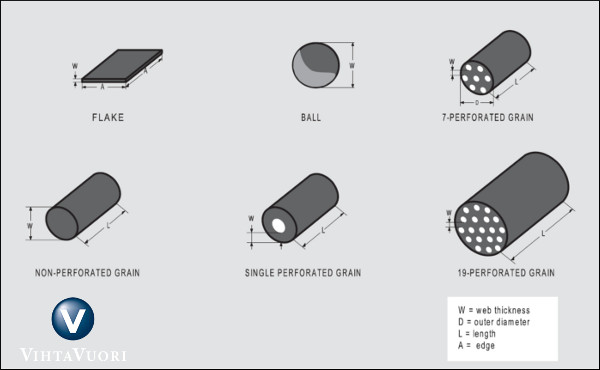
The shape of powder grains has a profound effect on the performance of the powder charge, as it concerns both pressure and velocity. There are multiple powder shapes including flake, ball, and extruded or “stick” (both solid and perforated).
So how does powder grain shape affect pressure and muzzle velocity?
In general, it can be said that powder that burns progressively achieves a desired muzzle velocity at lower maximum pressure than a powder that burns neutrally, not to mention a degressive powder. As grain size increases, the maximum pressure moves towards the muzzle, also increasing muzzle blast. Muzzle velocity and pressure can be adjusted by means of the amount of powder or loading density, i.e. the relationship between the powder mass and the volume available to it. As the loading density increases, maximum pressure grows.
All Vihtavuori reloading powders are of the cylindrical, single-perforated extruded stick type. The differences in burning rate between the powders depend on the size of the grain, the wall thickness of the cylinder, the surface coating and the composition. Cylindrical extruded powders can also have multi-perforated grains. The most common types are the 7- and 19-perforated varieties. A multi-perforated powder grain is naturally of a much larger size than one with a single perforation, and is typically used for large caliber ammunition.
Other types of powder grain shapes include sphere or ball, and flake. The ball grains are typically used in automatic firearms but also in rifles and handguns. The ball grain is less costly to produce, as it is not pressed into shape like cylindrical grains. Flake shaped grains are typically used in shotgun loadings.
Web thickness in gunpowder terminology means the minimum distance that the combustion zones can travel within the powder grain without encountering each other. In spherical powders, this distance is the diameter of the “ball”; in flake powder it is the thickness of the flake; and in multi-perforated extruded powders it is the minimum distance (i.e. wall thickness) between the perforations.
The burning rate of powder composed of grains without any perforations or surface treatment is related to the surface area of the grain available for burning at any given pressure level. The change in the surface area that is burning during combustion is described by a so-called form function. If the surface area increases, the form function does likewise and its behavior is termed progressive. If the form function decreases, its behavior is said to be degressive. If the flame area remains constant throughout the combustion process, we describe it as “neutral” behavior.
The cylindrical, perforated powders are progressive; the burning rate increases as the surface area increases, and the pressure builds up slower, increasing until it reaches its peak and then collapses. Flake and ball grains are degressive; the total powder surface area and pressure are at their peak at ignition, decreasing as the combustion progresses.
Our friend Dennis Santiago has done dry-fire training using a SCATT sensing device. This electro-optical unit shows a trace of barrel/muzzle movement on a computer screen, allowing a shooter to improve his hold and aiming. With practice, you get steadier, and learn to break the shot more perfectly. Top position shooters worldwide use this system. Dennis tells us: “This is my dry fire practice set up. I’m working on my approaches to the target today. You need the SCATT’s traces to see the feedback of what’s going on.” Here is one trace from Santiago’s morning training session:
Dennis trains indoors at his house: “The set-up is in a room with the target about 15 feet away mounted on a scope stand at eye height and aligned. This morning, it’s focus and trigger control. My offhand form is gonna get there bit by bit. There are many details to turn into instincts.”
SCATT MX-02 Training System
The SCATT MX-02 is an electronic shooter training system that is capable of operating outdoors with live, centerfire ammunition, at distances from 25 yards to 600 yards. Tony Chow tested this product for AccurateShooter.com. As fitted to his AR-15 Service Rifle, Tony concludes this is a very useful tool that can help High Power competitors refine their technique and shoot higher scores. FULL REVIEW HERE.
CLICK HERE for MX-02 product info page. Current MX-02 price is $1649.00. NOTE: There is now another more high-tech wireless model, the SCATT MX-W2 priced at $1999.00.
How the SCATT MX-02 Works
The SCATT sensor mounted on the end of the barrel has a digital camera that recognizes the black bullseye in the target, even in broad daylight outdoors. Using the bullseye as a reference, the SCATT software tracks the movement of the muzzle relative to the center of the target. The unit can plot these movements as a continuous trace, which appears on a monitor as a squiggly, colored line. By sensing the exact moment of shot release, the SCATT can also interpolate relative shot placement (for a single shot or series of shots) — but this is not the same as an electronic target which actually records the exact shot impact location on the target.
Pro shooter Kirsten Joy Weiss demonstrates the SCATT MX-02 electronic training system:
The system traces and records valuable information such as hold pattern, shot hold duration, follow-through, recoil pattern, and much more. The latest SCATT MX-02 systems can be used both indoors and outdoors up to 300 meters (and possibly more). READ FULL SCATT MX-02 TEST HERE.
SCATT traces reveal muzzle movements during the aiming process.
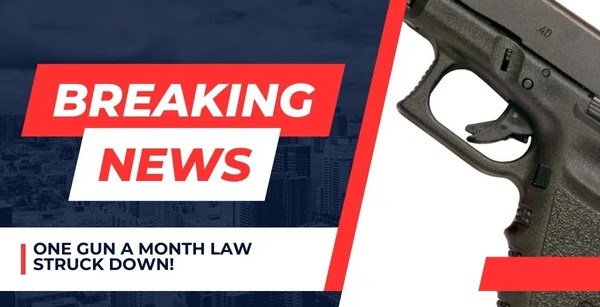
On Thursday, August 14, 2025, the Federal Ninth Circuit Court of Appeals has issued its mandate striking down California’s “one-gun-per-month” purchase restriction law. This was noteworthy as it was the first time the notoriously liberal 9th Circuit has issued a final judgment striking down a law as unconstitutional under the Second Amendment. This follows CA Attorney General Bonta declining to ask the 9th Circuit to rehear the case en banc (i.e. with full panel of all judges).
“California has managed to do what many thought impossible: violate the Second Amendment so blatantly that even the Ninth Circuit won’t uphold it”, explained FPC Action Foundation President Cody J. Wisniewski, counsel for FPC. “We are proud to have secured the rights of peaceable people and look forward to many more wins against California’s unconstitutional laws.”
California “1-in-30″ Firearm Ban Struck Down in Ninth Circuit Decision
The Ninth Circuit Court of Appeals has ruled that a California law restricting gun purchases to just one every 30 days is absolutely unconstitutional. With a unanimous 3-0 decision, a Ninth Circuit panel held that California’s “one-gun-per-month” gun ban law clearly violates the Second Amendment of the U.S. Constitution. The Ninth Circuit ruling in Nguyen v. Bonta can be viewed at firearmspolicy.org/nguyen.
“California has a ‘one-gun-a-month’ law that prohibits most people from buying more than one firearm in a 30-day period. The district court held that this law violates the Second Amendment. We affirm. California’s law is facially unconstitutional because possession of multiple firearms and the ability to acquire firearms through purchase without meaningful constraints are protected by the Second Amendment and California’s law is not supported by our nation’s tradition of firearms regulation”, wrote Ninth Circuit Judge Forrest. At the end of the 24-page decision, Judge Forest added: “The Second Amendment expressly protects the right to possess multiple arms. It also protects against meaningful constraints on the right to acquire arms because otherwise the right to ‘keep and bear’ would be hollow.”
Plaintiffs in the case included two FFL gun dealers, the Firearms Policy Coalition (FPC), the Second Amendment Foundation (SAF), San Diego County Gun Owners PAC, and six private citizens including Michelle Nguyen, for whom the case is named.
The Nguyen v. Bonta lawsuit challenged the California statute that only allows for the purchase of one handgun or semi-automatic centerfire rifle, from a licensed dealer within a 30-day period. Plaintiffs secured a summary judgment win at the District Court, which California then appealed to the Ninth Circuit. The Ninth Circuit affirmed the District Court decision, striking down the gun rationing law as impermissible under the Second Amendment.
Here’a useful article by Sierra Bullets Media Relations Manager Carroll Pilant. This story, which originally appeared in the Sierra Bullets Blog, covers some of the more common ammo problems that afflict hand-loaders. Some of those issues are: excessive OAL, high primers, and improperly-sized cases. Here Mr. Pilant explains how to avoid these common problems that lead to “headaches at the range.
I had some gentlemen at my house last fall getting rifle zeros for an upcoming elk hunt. One was using one of the .300 short mags and every 3rd or 4th round would not chamber. Examination of the case showed a bulge right at the body/shoulder junction. These were new cases he had loaded for this trip. The seating die had been screwed down until it just touched the shoulder and then backed up just slightly. Some of the cases were apparently slightly longer from the base to the datum line and the shoulder was hitting inside the seating die and putting the bulge on the shoulder. I got to thinking about all the gun malfunctions that I see each week at matches and the biggest percentage stem from improper handloading techniques.
One: Check Your Cases with a Chamber Gage
Since I shoot a lot of 3-gun matches, I see a lot of AR problems which result in the shooter banging the butt stock on the ground or nearest solid object while pulling on the charging handle at the same time. I like my rifles too well to treat them that way (I cringe every time I see someone doing that). When I ask them if they ran the ammo through a chamber gage, I usually get the answer, “No, but I need to get one” or “I didn’t have time to do it” or other excuses. The few minutes it takes to check your ammo can mean the difference between a nightmare and a smooth running firearm.
A Chamber Gauge Quickly Reveals Long or Short Cases
Size Your Cases Properly
Another problem is caused sizing the case itself. If you will lube the inside of the neck, the expander ball will come out a lot easier. If you hear a squeak as the expander ball comes out of a case neck, that expander ball is trying to pull the case neck/shoulder up (sometimes several thousandths). That is enough that if you don’t put a bulge on the shoulder when seating the bullet … it can still jam into the chamber like a big cork. If the rifle is set up correctly, the gun will not go into battery and won’t fire but the round is jammed into the chamber where it won’t extract and they are back to banging it on the ground again (with a loaded round stuck in the chamber). A chamber gage would have caught this also.
Oversizing cases also causes problems because the firing pin doesn’t have the length to reach the primer solid enough to ignite it 100% of the time. When you have one that is oversized, you usually have a bunch, since you usually do several cases at a time on that die setting. If the die isn’t readjusted, the problem will continue on the next batch of cases also. They will either not fire at all or you will have a lot of misfires. In a bolt action, a lot of time the extractor will hold the case against the face of the breech enough that it will fire. The case gets driven forward and the thinner part of the brass expands, holding to the chamber wall and the thicker part of the case doesn’t expand as much and stretches back to the bolt face. If it doesn’t separate that time, it will the next time. When it does separate, it leaves the front portion of the case in the chamber and pulls the case head off. Then when it tries to chamber the next round, you have a nasty jam. Quite often range brass is the culprit of this because you never know how many times it has been fired/sized and in what firearm. Back to beating it on the ground again till you figure out that you have to get the forward part of the case out.
Just a quick tip — To extract the partial case, an oversized brush on a cleaning rod [inserted] and then pulled backward will often remove the case. The bristles when pushed forward and then pulled back act like barbs inside the case. If you have a bunch of oversized case that have been fired, I would dispose of them to keep from having future problems. There are a few tricks you can use to salvage them if they haven’t been fired though. Once again, a case gage would have helped.
Two: Double Check Your Primers
Another thing I see fairly often is a high primer, backwards primer, or no primer at all. The high primers are bad because you can have either a slam fire or a misfire from the firing pin seating the primer but using up its energy doing so. So, as a precaution to make sure my rifle ammo will work 100% of the time, I check it in a case gage, then put it in an ammo box with the primer up and when the box is full, I run my finger across all the primers to make sure they are all seated to the correct depth and you can visually check to make sure none are in backwards or missing.
Three: Check Your Overall Cartridge Length
Trying to load the ammo as long as possible can cause problems also. Be sure to leave yourself enough clearance between the tip of the bullet and the front of the magazine where the rounds will feed up 100%. Several times over the years, I have heard of hunters getting their rifle ready for a hunt. When they would go to the range to sight in, they loaded each round single shot without putting any ammo in the magazine. On getting to elk or deer camp, they find out the ammo is to long to fit in the magazine. At least they have a single shot, it could be worse. I have had hunters that their buddies loaded the ammo for them and then met them in hunting camp only to find out the ammo wouldn’t chamber from either the bullet seated to long or the case sized improperly, then they just have a club.
Four: Confirm All Cases Contain Powder
No powder in the case doesn’t seem to happen as much in rifle cartridges as in handgun cartridges. This is probably due to more handgun ammo being loaded on progressive presses and usually in larger quantities. There are probably more rifle cartridges that don’t have powder in them than you realize though. Since the pistol case is so much smaller internal capacity, when you try to fire it without powder, it usually dislodges the bullet just enough to stick in the barrel. On a rifle, you have more internal capacity and usually a better grip on the bullet, since it is smaller diameter and longer bearing surface. Like on a .223, often a case without powder won’t dislodge the bullet out of the case and just gets ejected from the rifle, thinking it was a bad primer or some little quirk.
For rifle cases loaded on a single-stage press, I put them in a reloading block and always dump my powder in a certain order. Then I do a visual inspection and any case that the powder doesn’t look the same level as the rest, I pull it and the one I charged before and the one I charged after it. I inspect the one case to see if there is anything visual inside. Then I recharge all 3 cases. That way if a case had powder hang up and dump in the next case, you have corrected the problem.
On progressive presses, I try to use a powder that fills the case up to about the base of the bullet. That way you can usually see the powder as the shell rotates and if you might have dumped a partial or double charge, you will notice as you start to seat the bullet if not before. On a progressive, if I don’t load a cartridge in one smooth stroke (say a bullet tipped over sideways and I raised the ram slightly to reset it) Some presses actually back the charge back adding more powder if it has already dumped some so you have a full charge plus a partial charge. When I don’t complete the procedure with one stroke, I pull the case that just had powder dumped into it and check the powder charge or just dump the powder back into the measure and run the case through later.
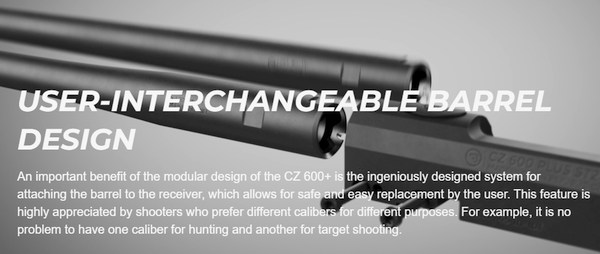
CZ has announced its new CZ 600+ bolt-action rifle series. These new rifles are offered in various formats for hunting, PRS/NRL, and target shooting. Notable features include and fast barrel swap system, a shorter bolt throw, and a wide selection of stocks. CZ offers 3-shot accuracy guarantees: Most models have guaranteed sub-MOA accuracy at 100 yards (three-shot groups), while the RANGE model offers guaranteed sub-0.75 MOA accuracy in five-shot groups.
“The CZ 600+ represents the future of hunting and precision rifles,” said Tom Taylor, CZ-USA’s Chief Marketing Officer. The CZ 600+ series features a groundbreaking modular design highlighted by patented innovations. These include an advanced Silent, Ergonomic, and Ambidextrous (S.E.A.) safety, a quick 4-position adjustable trigger, and an innovative interchangeable barrel system. The series guarantees unmatched precision accuracy, supported by CZ’s lifetime barrel warranty. For detailed information about the CZ 600+ series, visit CZFirerms.com.
Interchangeable Barrel System for Versatility
With the interchangeable barrel system, shooters can easily and safely swap barrels, allowing one rifle to adapt to multiple calibers, from hunting to sport shooting, seamlessly.
Innovative Features and Design — CZ 600+ Rifles Include:
Advanced S.E.A. Safety: Silent, Ergonomic, and Ambidextrous cross-bolt design for secure handling.
Quick Adjustable Trigger: Easily adjusted to suit personal preferences without disassembly.
Controlled Feeding System: Smooth bolt operation with 100% controlled feeding.
Lifetime Barrel Warranty: Cold hammer-forged barrels with exceptional durability and precision.
Robust Construction: Available with lightweight aluminum alloy receivers with integrated Weaver rails or steel receivers with Remington 700-style mounting interfaces.
The CZ 600+ Series — SIX Models
CZ 600+ MDT: Tactical Rifle with MDT Stock for PRS/NRL.
CZ 600+ RANGE: Optimized for precision shooting with adjustable stock features.
CZ 600+ TRAIL: Compact model with retractable stock and compatibility with AR and CZ mags.
CZ 600+ ALPHA: Rugged polymer stock designed for reliable performance in all conditions.
CZ 600+ LUX: Classic European walnut stock with fiber optic adjustable iron sights.
CZ 600+ AMERICAN: Timeless American styling combined with modern enhancements.
Are you in the market for your first handgun, for target use or for self-defense? The Winchester Blog has a good article for handgun buyers. This story, “Things You Should Know When Purchasing Your First Pistol”, provides many smart tips that can help you choose the right handgun, and save money in the process. In addition, the article explains how to train with your new pistol and handle it safely. READ Full Article.
If possible, you should test a variety of different pistols, to determine which works best for you. Check the feel, the ergonomics, the sight picture, and the controls. And, if possible, test the pistols with live-fire at a range which rents samples.
How do you know if your choice is right for you?
Once you’ve narrowed down choices, try to get time shooting the pistol(s) you are considering. You can usually rent guns at commercial ranges. This is an excellent way to “try before you buy.” NSSF has a list of places to shoot[.] When looking for a range that rents firearms, an online search and then a phone call to confirm what options are available is a solid plan. If you have friends and family who own a model you are interested in, ask if they will go to the range with you so that you can try it.
Take pistols for a test drive
First, dry-fire and manipulate the pistol. Can you easily lock the slide open? Are the sights suited to your vision? Then, fire a magazine or two of ammo [in a supervised range facility]. — Winchester Blog
The Winchester Blog article lists techniques that can help you get the “feel” for a particular firearm:
1. Practice the 4 Rules of Firearm Safety and make sure the gun is empty.
2. [After confirming the gun is empty] manipulate the slide, safety, magazine release, and dry-fire.
3. Perform a dry or empty magazine change — make sure you can hit the release and also reload a new magazine easily.
4. Perform a draw, or if you’re at a range where that is not allowed, simply pick the pistol up off the table and bring it up to your eye level and align the sights. Do this a few times. Can you acquire the sights quickly?
5. How does the backstrap fit your hand? Can you get both hands on the gun with enough “purchase” that you can really grip it well?
This Winchester Blog article is by Becky Yackley. Becky has competed in 3-Gun, Bianchi pistol, Service Rifle, NCAA air rifle, smallbore and air pistol events around the world since 1989.













 Oversizing cases also causes problems because the firing pin doesn’t have the length to reach the primer solid enough to ignite it 100% of the time. When you have one that is oversized, you usually have a bunch, since you usually do several cases at a time on that die setting. If the die isn’t readjusted, the problem will continue on the next batch of cases also. They will either not fire at all or you will have a lot of misfires. In a bolt action, a lot of time the extractor will hold the case against the face of the breech enough that it will fire. The case gets driven forward and the thinner part of the brass expands, holding to the chamber wall and the thicker part of the case doesn’t expand as much and stretches back to the bolt face. If it doesn’t separate that time, it will the next time. When it does separate, it leaves the front portion of the case in the chamber and pulls the case head off. Then when it tries to chamber the next round, you have a nasty jam. Quite often range brass is the culprit of this because you never know how many times it has been fired/sized and in what firearm. Back to beating it on the ground again till you figure out that you have to get the forward part of the case out.