Popular Powders In Stock at Brownells at Reasonable Prices
We all know that reloading powders have been hard to find. And when you do find an appropriate powder, some vendors are asking crazy high prices. Well we’re pleased to report that Brownells has a number of popular powders IN STOCK today (11/20/2021), and the prices are quite fair, starting at $24.99 per pound for Ramshot Competition. Grab some excellent Hodgdon H380 for $33.99 per pound, or IMR 4198 for $38.99 per pound. CLICK HERE to see all available in-stock powders at Brownells today.
Save Money with Brownells Discount Codes
While you’re shopping at Brownells, don’t forget to use one of the current Discount Codes to save money. There are many current codes that can save you up to 10% on your purchase. And with special Pre-Black Friday Code RTC you get $30 off $300 PLUS FREE Shipping and handling through November 23rd at midnight. Fill in the applicable Code during checkout.
Current Brownells Discount Codes:
Code FR6: $85 off $875
Expiration date November 30, 2021
Code FR5: $55 off $575
Expiration date November 30, 2021
Code RTC: $30 off $300 and FREE Shipping/Handling
Expiration Date November 23, 2021 at 11:59pm
Code FR4: $25 off $275
Expiration Date November 30, 2021
Code TAG: $15 off $150
Expiration Date Unknown
Code SAE: $15 off $150
Expiration Date Unknown
Code PTT: $10 off $100
Expiration Date Unknown
Code Q63: Free Shipping/Handling over $99
Expiration Date Unknown
Our friend and colleague F-Class John tests some of the finest reloading and shooting equipment you can buy. Recently he added the impressive Henderson Gen 3 Powered Trimmer to his inventory of tools. John is now a Henderson fan. He likes the speed, precision, and repeatability of the $779.00 Henderson machine, which trims-to-length and chamfers the case mouth all in one pass. Unlike some other trimming tools, the Henderson indexes off the overall case length NOT the shoulder. John found this worked just fine for his .284 Winchester brass, which has all been full-length sized prior to trimming.
John liked the precision of the Henderson trimmer and the overall design of the machine, which offers good ergonomics and very precise alignment of the cases. Cycling is smooth and positive, as you can see from the videos. Fit over the pilot was fine for John’s .284 Win brass, but he notes that other users may need to expand their case necks appropriately to fit their pilot.
Watch the video to see the Henderson trimmer in action. The dual, parallel horizontal support shafts provide precise alignment of the case as it moves inward toward the cutter blade. The Taper-Lock cutter provides a 14-degree inside chamfer and 30-degree outside chamfer. The trimming process is very consistent case after case, and the Henderson’s design captures brass shavings effectively.
Testing Trim Length Consistency — Henderson Shows Superb Repeatability
John did a separate quick test to demonstrate the trim length consistency of the Henderson unit. Measuring with digital calipers, John found that he could easily hold case overall trim lengths within .001″ (one-thousandth). The consistency was excellent even when trimming cases very quickly. When trimming .003″ off his cases, John said the Henderson showed superb repeatability. Henderson promises the trimmer “will repeat to within 0.002″ with same brand brass”, and John was able to hold 0.001″ length consistency.
Another Henderson owner posted: “I love mine. I like [the] consistent trim length with the positive stop. [Doing] the trim, chamfer, and debur all in one step sure makes the process nice and easy! I also immediately noticed the problem with the pilot on the cutting head with my sized cases. I just polished the pilots on my cutting heads with some fine grit sand paper a little at a time till I got it perfect for my preferred neck tension setting! I’m very pleased with my purchase of the Henderson precision trimmer.”
Henderson Power Trimmer vs. Giraud Power Trimmer
After he tested his new Henderson trimmer, F-Class John compared the pros and cons of the Henderson vs. his other high-volume power trimmer, a Giraud. He likes both machines, but now favors the Henderson for trimming his .284 Winchester match brass. He found that his ES/SD dropped a bit for brass trimmed with the Henderson vs. brass trimmed with the Giraud. With the Henderson-trimmed brass, John achieved an ES of 15 fps for 49 shots. That’s mighty impressive (see photo at right).
But the Giraud does have it’s advantages. It can work with calibers above .338, and it is very fast. One viewer of this video commented: “The Giraud is insanely fast if you aren’t only loading insane precision ammo. I borrowed one when I first started reloading and immediately ordered one. I’ve trimmed somewhere between 40-50k .223 cases. You can just rip through them while watching TV or listening to a podcast. It trims to length consistently less than +/-.001 all day.” The Giraud also indexes off the shoulder while the Henderson trims based on Cartridge Overall Length (OAL).
Henderson Gen 3 Trimmer Details
The Henderson Trimmer is available from HendersonPrecision.com for $779.00. When ordering, you must select a caliber and a collet size. Expect to wait a bit for delivery, depending on the cartridge type(s) you load. Available calibers are: .223, .243 (6mm), .25, .264 (6.5mm), .277, .284 (7mm), .308, and .338.
Product Description: The Gen 3 powered case trimmer uses a powerful, single-speed DC motor. The DC motor is extremely smooth and quiet and powers the spindle at around 1700 rpm. The enclosed aluminum motor mount shroud bolts directly to the bearing housing. The 90-volt DC motor offers maximum torque at 1700 rpm where you need it most. The motor has an in-line on/off switch for easy control. The Tri-Trim case trimmer includes one Henderson Precision Taper-Lock cutting head with Forster pilots as well as one Forster collet. The Taper-Lock cutter provides a 14 degree inside chamfer and 30 degree outside chamfer. The following cutter heads are available: 224, 243, 25, 264, 277, 284, 308, 338.
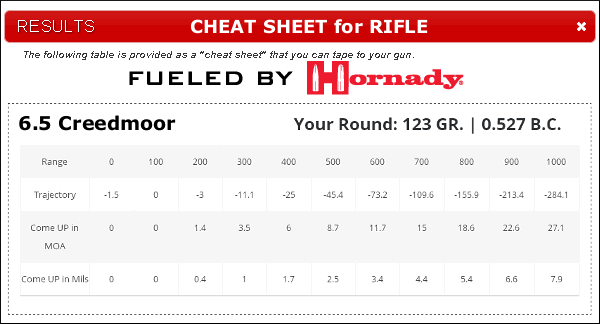
Need a simple, easy-to-use drop chart for your rifle? Something you can tape right to the buttstock? Then check out Hornady’s handy Online Ballistics Calculator. This user-friendly calculator will compute your drops accurately, and output a handy “Cheat Sheet” you can print and attach to your rifle.
Here’s how it works. From the Ballistics Calculator Page, first select 4DOF or Standard. Then simply input G1 or G7 BC values, muzzle velocity, bullet weight, zero range, and a few other variables.
Click “Calculate” to view the full chart (shown below). Then click “View Cheatsheet” and the simpler, 4-line Drop Chart (shown above) appears. Click “Print” and you’re done!
The online ballistics caculator is easy to use. You can select the basic version, or an advanced version with more data fields for environmental variables (altitude, temperature, air pressure, and humidity). You can also get wind drift numbers by inputing wind speed and wind angle.
Conveniently, on the trajectory output, come-ups are listed in both MOA and Mils — so this will work with either MOA clicks or Mil-based clicks. There are more sophisticated ballistics solvers available on the web (such as the outstanding Applied Ballistics Online Calculator), but the Hornady Calculator is very simple and easy to use. If you just want a basic drop chart, you may want to check this out.
Nosler now offers the Nosler Reloading Guide #9, the latest in a respected series of hardback Nosler load manuals. This 800-page guide covers 101 cartridge types. New in this edition you’ll find the popular 6mm Creedmoor, 6mm XC, 6.5 PRC, and 7.62×39, along with 20 Nosler, 22 Nosler, 24 Nosler, 27 Nosler and 33 Nosler. This new guide draws from thousands of hours in the Nosler Ballistic Lab, along with the experience of many respected experts.
The book is available now for $27.99 at Grafs.com. In addition, much of the book’s latest load data is available for free on the Nosler.com online LOAD DATA Center. But to get ALL the data, PLUS the technical articles, you’ll need to buy the book.
The Nosler Reloading Guide 9 Reloading Manual provides load data for 101 rifle and handgun cartridges with hundreds of new powder additions. A comprehensive data set for today’s reloader, this manual is current with every bullet that Nosler offers through 2020 from 17 caliber up to 458 caliber in the rifle section and 9mm up to 45 caliber in the handgun section. Nine new cartridges were added to this manual. These include: 20 Nosler, 22 Nosler, 24 Nosler, 6mm Creedmoor, 6mm XC, 6.5 PRC, 27 Nosler, 7.62×39 and 33 Nosler. Also new for the Nosler Reloading Guide #9 are cartridge introductions written by veteran outdoor writers and industry tech experts. The 800-page book also has helpful “how-to” sections such as “Getting Ready to Reload”.
Q. Why Buy a Book when Load Data is Available Online from Powder Makers?
There are good, solid reasons to buy print-format loading guides produced by bullet-makers. If you go to the Hodgdon online Reloading Data Center you’ll only find loads with Hodgdon, IMR, and Winchester powders — the key brands they sell. In a book such as this Nosler #9 or the Sierra Reloading Manual, you will find loads with a much wider selection of powders including Vihtavuori, Alliant, Accurate, Norma, Ramshot, and other brands. You won’t find a Reloder 16 or VV N140 load on Hodgdon’s website.
In addition, it is handy to have loads in a print edition which is easy to access on your load bench. You don’t need a computer or an internet connection. And using a book is often faster than a web interface when quickly scanning through a variety of bullet choices for a cartridge.
Along with the Nosler #9 Manual, here are four other recommended Reloading Manuals:
Report by NRA-ILA
In recent weeks, Americans have rightly become concerned over a somewhat obscure ATF recordkeeping regulation that has a profound impact on gun rights. If gun control advocates get their way in changing this federal regulation for the worse, altering how ATF maintains these records… American gun owners would find themselves subject to what amounts to a backdoor gun registry.
The type of electronically searchable database the ATF is seeking to develop would amount to a partial firearm registry. Firearm registries facilitate firearm confiscation.
Federal law requires those who purchase a firearm at a Federal Firearms Licensee (gun dealer or FFL) to fill out a form 4473. This record of the firearm transfer is then stored by the dealer on their premises. This creates a system whereby if a gun is found at a crime scene ATF can trace the firearm to the last retail purchase. However, since the records are stored with each FFL, the system is decentralized in a manner that protects against government abuse of gun owner data.
Gun dealers are required to maintain 4473s for 20 years. When a dealer goes out of business they must send their last 20 years of records to ATF’s National Tracing Center to facilitate firearm traces. Some of ATF’s materials appear to deliberately omit the 20-year requirement, seemingly in the hopes that FFLs will send all of their records to the National Tracing Center, regardless of age.
Under this system, over a million out-of-business dealer records are sent to ATF each month. Records obtained by gun rights advocates show that in 2021 ATF processed a staggering 54.7 million of these records.
ATF proposed rule 2021R-05 would make this record-keeping requirement more burdensome for FFLs and diminish gun owner privacy. Under the proposed rule, FFLs would be required to maintain 4473s indefinitely and relinquish all such data to ATF upon going out of business. NRA-ILA is opposed to this rule change.
The type of electronically searchable database the ATF is seeking to develop would amount to a partial firearm registry. And as all gun rights supporters and gun control advocates know, firearm registries facilitate firearm confiscation.
This understanding was at the heart of the debate over the Gun Control Act of 1968 and the development of the current recordkeeping system. In 1985, Sen. James McClure (R-Idaho) explained, “The central compromise of the Gun Control Act of 1968 — the sine qua non for the entry of the Federal Government into any form of firearms regulation was this: Records concerning gun ownership would be maintained by dealers, not by the Federal Government and not by State and local governments.”
—————–
The National Tracing Center could take another step towards a firearm registry if anti-gun lawmakers criminalize the private transfer of firearms — sometimes referred to as universal background check legislation. By funneling more firearm transfers through FFLs, lawmakers would create additional opportunities for recordkeeping on firearms and gun owners that could end up in the National Tracing Center database.
Gun owners have every reason to jealously guard information pertaining to firearm transfers. NRA-ILA will continue to work to help ensure gun owner privacy and to keep gun owners apprised of the ongoing attempts to cobble together a backdoor firearm registry.
Thanksgiving is just one week away. What better way to celebrate the Thanksgiving season than to practice your marksmanship shooting some bearded gobblers (of the paper variety). Here’s our custom Turkey Target, ready for family fun. This special Turkey Bullseye Target was created by our friend and Forum member Pascal (aka “DesertFrog”). CLICK HERE for FREE Turkey Target.
If you prefer color targets, here’s another turkey target, courtesy of the NRA. Hone your skills on a trio of turkeys. The target features three red bullseyes, centered on the gobblers. You can print the target in black and white, but they look best in color. Click the image below to download a FREE printable PDF file.
Get a Full Set of Animal Targets
For your convenience, we’ve packaged the Turkey Target along with five (5) other varmint/animal-themed targets. These are all offered in .pdf (Adobe Acrobat) format for easy printing.
The popular Talladega 600 Match is running this week (November 15-21, 2021) at the CMP’s Talladega Marksmanship Park in Alabama. Our friend Paula Crenshaw is at Talladega this week, shooting the match both as an individual and as a member of a Women’s Team. Paula says there are quite a few lady shooters at the event. Here are some images from the match. Paula, who holds the Distinguished Badge, is a member of the CMP Board of Directors.
The 4-member women’s team included Paula Crenshaw, Meredith Grant, Ashley Kennedy-Foster, and Jeannie Redicker. Ashley and Jeannie are in the photo above shooting prone. This foursome finished 4th in the team match.
Notably, in the Congressional 30 match, five women made the top 30: Haley Robinson (4th); Paula Crenshaw (15th); Ashley Kennedy-Foster (24th); Jeannie Redicker (26th); and Rachael Miller-Lansdown (29th). The Congressional 30 Overall Winner was James Fox while the High Junior was Anton Van Hoven.
The Talladega 600 includes a wide variety of popular CMP Matches:
BENCHREST GARAND MATCH
RIFLE MARKSMANSHIP 101/M16 MATCH
PISTOL MARKSMANSHIP 101/M9 MATCH
GARAND/SPRINGFIELD/VINTAGE/MODMIL MATCH
CONGRESSIONAL 30
RIFLE EIC MATCH
4-MAN TEAM MATCH
CARBINE MATCH
RIMFIRE SPORTER BENCHREST MATCH
HIGH POWER DIXIE DOUBLE MATCH
VINTAGE SNIPER TEAM MATCH
RIMFIRE SPORTER MATCH
M1A MATCH
CMP MATCH PISTOL 2700
CMP AS-ISSUED 1911 PISTOL MATCH
MILITARY & POLICE PISTOL MATCH
CMP .22 RIMFIRE PISTOL EIC MATCH
EIC PISTOL MATCH
Additional events include versions of prestigious National Trophy Matches, such as the Congressional 30 (with the same Course of Fire as the President’s 100 Match) and the Dixie Double High Power Match (mirrored off of the Hearst Doubles Match).
Electronic Targets Speed Up Matches at Talladega
Kongsberg target systems are used at the Talladega Marksmanship Park. Each firing point of the 500-acre facility is equipped with a state-of-the-art KTS electronic target and scoring monitor. This speeds up relays and eliminates the need for competitors to do pit duty to pull and mark targets. Located beside the shooter on the firing line, each monitor allows the competitor to see his/her shot location and score immediately.
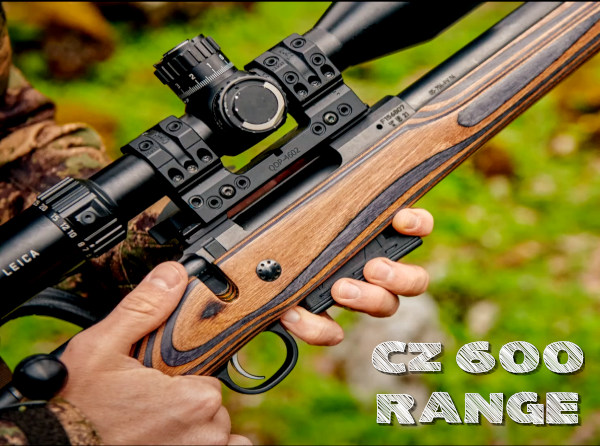
CZ has just introduced the new CZ 600 line of centerfire rifles. The series includes four unique models, with a variety of stock types, barrel profiles, action lengths, and chamberings. User-friendly CZ 600 features include 60-degree bolt throw, adjustable triggers, and the ability to swap barrels/chamberings using optional conversion kits. The CZ 600 Series includes four brand new models: Alpha, Lux, Trail, and Range.* These are designed for accuracy, modularity, and smooth cycling. Expect CZ 600s at dealers in early 2022.
Controlled-Feed Action with 60° Throw: CZ 600 Rifles have a 60-degree bolt throw. This cycles faster than a 90-degree bolt, with more clearance between bolt and optic, allowing for larger scopes. All CZ 600 models boast an oversized bolt knob for improved control with gloved hands. And the actions have controlled-round-feed. The 2-position safety allows bolt cycling with the safety engaged.
CZ USA offers Alpha, Range, Trail, and Lux CZ 600 versions. In Europe CZ offers a fifth model, the “Ergo” model, which is mentioned in this video.
Barrel Conversion Kits: Optional barrel conversion kits offer the ability to change cartridges (within the same-sized action) by swapping barrels, bolt face, and magazines, without the need of a gunsmith. This lets shooters use one rifle for a multiple shooting disciplines. A detachable magazine allows quick mag changes and secure magazine retention, with an optional locking feature. On most CZ 600 models, magazines can be topped off through the ejection port for convenience.
User-Adjustable Trigger: The Alpha, Range, and Lux have a user-adjustable, single-stage trigger, while the Trail model utilizes a two-stage trigger. Trigger pull can be adjusted without removing the chassis from the stock. A 4-position dial sets trigger weights from 1.3 to 3 lbs., moving over just 1/2 lb. per click.
CZ 600 Series Rifles Features:
Steel and Alloy Actions, 3 sizes
60-Degree Bolt throw
Vertical two-position safety
Controlled round feed with short extractor
Three barrel profiles: Light, Semi-Heavy, and Heavy
Adjustable trigger – no disassembly needed, 4 weights
Picatinny Rail or Remington 700 scope bases
Detachable magazine with optional lock
Caliber conversion kits (sold separately)
Accuracy guarantees: 3/4 MOA (Range), 1 MOA (Alpha, Lux), and 2 MOA (Trail)
CZ 600 Models — Alpha, Lux, Range, and Trail
CZ 600 Alpha — CZ designed the Alpha as a “do it all” rifle with guaranteed sub-MOA accuracy for a modest $749.00 MSRP. A light-weight aluminum receiver balances the semi-heavy barrel for a 7.3-lb overall weight (before optic). The CZ 600 Alpha is designed to be versatile, durable, and reliable. Available chamberings include .223 Rem, .224 Valkyrie, 6mm Creedmoor, 6.5 Creedmoor, 6.5 PRC, 7.62×39, .308 Win, .300 Win Mag, and .30-06 SPRG.
This Petersen’s video features the CZ Alpha model on a hunt in Central California
CZ 600 Lux — The refined lines and traditional style of the CZ 600 Lux reflect a long, proud legacy. The Lux features a steel action and oil-finished select-grade walnut stock. The steel receiver is drilled and tapped for Rem 700-pattern bases. The Lux model comes with a sub-MOA guarantee. Weight is 8.2 lbs. in 308 Win without scope.
CZ 600 Range — The Range model, with its cold hammer-forged heavy barrel, was designed to give precision shooters outstanding accuracy. The CZ 600 Range features the best accuracy guarantee ever offered by CZ: Sub-3/4 MOA guaranteed at 100 meters, for 5-shot groups with match-grade factory ammo. This accuracy is verified by CZ.
CZ 600 Trail — The CZ 600 Trail is a very light-weight, compact rifle, weighing just 6.1 lbs. before optics. The Trail uses AR-15 compatible mags for .223 Rem with CZ Bren 2 magazines for the other chambering, 7.62×39. The lightweight Trail model offers AR ergonomics along with ambidextrous mag release and safety lever similar to AR-platform rifles.
CZ 600 Trail Model — Initial Field Test
*In Europe CZ offers a fifth CZ 600 model, the “Ergo” model. See the first video linked above.
Many short-range Benchresters have thought about converting their 6 PPC to shoot a 30BR for score matches, or a Dasher for mid-range (or even 1000-yard) games. That way you have a rifle that does double duty, giving you the most bang for your buck. Though an action with a PPC bolt won’t normally work with 30BR/6BR/Dasher cases with their larger .308-class rim (0.4728″ diameter), there is a pretty easy solution that allows you to cycle these bigger cartridges with a 6PPC-style bolt (designed to fit .220 Russian rims).
“Rebating case rims … lets you shoot a 30BR in score matches using your PPC action. All you need is a new barrel. This saves buying another bolt, receiver, or rifle.” — Butch Lambert
Butch Lambert of ShadeTree Engineering provided this tip. Butch notes that many 6 PPC benchrest group shooters also enjoy shooting in score matches. But to be really competitive in the BR for score game, that means shooting a 30BR, which has a wider, .308-class rim (0.4728″ diameter). Likewise, if you want to compete in 600-yard registered BR events or in varmint matches, you probably want to run a bigger case, such as the 6BR, 6mm Dasher, or 6-6.5×47. Those cartridges also have the larger 0.4728″ rims.
Rebate Your 30 BR Rims
To convert a PPC-boltface action to shoot bigger cases you can spend a ton of money to buy a new bolt. That can cost hundreds of dollars. The simpler solution is to turn down the diameter of the larger cases on a lathe. Butch explains: “We’ve seen plenty of interest in rebating case rims. This lets you shoot a 30BR in score matches using your PPC action. All you need is a new barrel. This saves buying another bolt, receiver, or rifle if you have a PPC boltface. Anyone who has access to a lathe can do this job pretty easily. Yesterday I turned 150 case in about an hour.”
At right is the lathe form tool Butch uses to rebate the case rims.
Cutting Head for Rebating Rims
Editor’s Note: Butch Lambert (and his wife) recently returned from the hospital. We send our best wishes to the Lamberts for a full recovery and happier times in the days ahead.
In the wintertime, it’s common to encounter problems with static electricity when throwing your powder charges. The static can cause powder kernels to cling to the surface of reloading components, and can cause powder clumping. Clumped or sticky powder may make your measure bind or grab in the middle of the cycle, which can throw off your charge weight. Here are a couple simple ways you can minimize the effects of static electricity and improve the consistency of your powder measuring.
Ground Your Powder Measure — If you’re throwing powder charges in the fall or winter and have problems with bridging or sticking powder, use a ground wire. Bullet-smith Victor Johnson (Johnson Precision Bullets) tells us: “I have a 25-foot piece of real small wire with alligator clips on each end. It’s that long so I can run it down the hall to a water pipe. Use the wire tie from a bread bag to hold it in a small roll to put in the range box. When using it at the range use a 6″ nail from the co-op or Lowe’s / Home Depot and just push it into the ground.”
Use Bounce Dryer Sheets — A quick pass with the thin sheets used in dryers will eliminate “static cling” on your plastic reloading parts like powder throwers, powder funnels, and reloading press guides. Thanks to Doc76251 for this tip.
Reduce Electronic Scales’ Drift with Anti-Static Spray
Reloading Tip by GS Arizona from Riflemans Journal
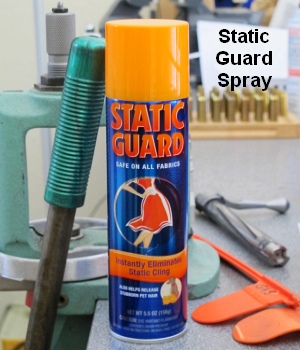
Apparently reducing static charges on and around electronic scales can reduce their propensity to drift, lessening the problem of “wandering zero”. Just how and why static charges interfere with scale performance is unclear, but many shooters have noticed that static electricity can cause electronic scales to behave strangely. So how do you reduce static charges around your digital balance? GS Arizona has found a very simple solution — an anti-static aerosol spray — that, by all indications, actually works. When this “spray-can solution” was suggested by a fellow shooter, GS was skeptical. However, he tried the stuff and he says that it really does help the scale maintain zero over time, with much less observed drift.
GS explains that the use of “Static Guard” spray helped mitigate the problem of a drifting zero on his Ohaus electronic scale: “My electronic scale… suffers from drifting zero (as they all seem to). I’ve read dozens of forum posts about drift and how to minimize its occurrence, so I know this problem isn’t limited to my scale or my workshop. Sometime last year, John Lowther mentioned the use of anti-static spray as a solution to the drift problem. John stated that the spray had virtually eliminated drift for him.”
GS found that the Static Guard actually worked: “The spray works great, just as John said it would. I spray all surfaces that I touch with my hands and arms as well as the pan (top and bottom), the metal tray on which the pan rests and the table under the scale. In six months or so of using the spray I’ve re-applied it about two or three times; it certainly isn’t something that you need to do each time you sit down to load. Before using the spray, it was not uncommon for me to re-zero the scale 10 times in the course of loading 72 rounds; now it might need it once during a session.”


 After he tested his new Henderson trimmer, F-Class John compared the pros and cons of the Henderson vs. his other high-volume power trimmer, a Giraud. He likes both machines, but now favors the Henderson for trimming his .284 Winchester match brass. He found that his ES/SD dropped a bit for brass trimmed with the Henderson vs. brass trimmed with the Giraud. With the Henderson-trimmed brass, John achieved an ES of 15 fps for 49 shots. That’s mighty impressive (see photo at right).



 Federal law requires those who purchase a firearm at a Federal Firearms Licensee (gun dealer or FFL) to fill out a form 4473. This record of the firearm transfer is then stored by the dealer on their premises. This creates a system whereby if a gun is found at a crime scene ATF can trace the firearm to the last retail purchase. However, since the records are stored with each FFL, the system is decentralized in a manner that protects against government abuse of gun owner data.




 Apparently reducing static charges on and around electronic scales can reduce their propensity to drift, lessening the problem of “wandering zero”. Just how and why static charges interfere with scale performance is unclear, but many shooters have noticed that static electricity can cause electronic scales to behave strangely. So how do you reduce static charges around your digital balance? GS Arizona has found a very simple solution — an anti-static aerosol spray — that, by all indications, actually works. When this “spray-can solution” was suggested by a fellow shooter, GS was skeptical. However, he tried the stuff and he says that it really does help the scale maintain zero over time, with much less observed drift.


