The 2025 NRA F-Class Nationals take place at the Winnequah Gun Club in Lodi, Wisconsin, August 2-9, 2025. And this is peak summer vacation time. So we know many of our readers will be driving to other states in the days and weeks ahead. If you plan to travel across state lines with your guns, this book can really help. With over 100 changes from last year, the 2025 edition of Traveler’s Guide to the Firearm Laws of the Fifty States is a must-read for anyone planning to travel around the country with firearms. In addition, the book also covers the firearms travel laws for Canada and Mexico.
For $16.95 you can purchase a state-by-state Traveler’s Guide to firearms laws. This book can help ensure you comply with all state laws during your trip. Highways Magazine states: “If you carry a weapon in your rig, you need this book.” This 68-page guide covers all firearms types and all 50 states. It even has info for Canada and Mexico. The Traveler’s Guide to the Firearm Laws of the Fifty States has sold more than 2,000,000 copies since it was first released in 1996.
This 28th edition of the Traveler’s Guide covers important topics such as carry of firearms in a motor vehicle, concealed carry reciprocity, which states preempt local gun regulation, tips on handling a traffic stop, concealed carry in state and National Parks, vehicle carry and possession on college campuses and much more. Best of all, the text is in plain, easy-to-read English.
Written and researched by J. Scott Kappas, an attorney and Class III Firearms Dealer, the 2025 Traveler’s Guide has a preface that defines many key terms important for anyone traveling with a firearm across state lines. The latest edition also has new formatting for easier reading.
The Traveler’s Guide is especially useful for shooters traveling in RVs and motorhomes. The American Rifleman Magazine declared: “This book is a must-have for truck drivers, motor home enthusiasts, campers and other travelers…easy to read and understand, well-organized and concise….” One reader from Texas adds: “I used to think that my RV was the same as my home when it came to gun carry….the Traveler’s Guide set me straight. Now I know my motorhome is subject to the same laws as any vehicle when it comes to guns.”
If you want to use an AR-platform rifle in the varmint fields, consider getting a 20-caliber barrel chambered for the efficient, low-recoil 20 Practical cartridge. The 20 Practical is simply a .223 Remington necked down to 20 caliber. The parent .223 Rem cartridge of course works great in an AR, but the 20 Practical offers some notable advantages for high-volume varmint shooters. The 20 Practical delivers very high velocity with very low recoil while still providing outstanding accuracy. The 20 Practical is great option for folks who favor “fast and light” — smaller, lower-mass bullets traveling at very high velocities. This little cartridge can launch 40-grainers at over 3900 fps, and 32-grainers even faster. This makes the 20 Practical a great choice for an AR-based varmint rifle.
20 Practical Ultimate Varminter
Over a decade ago, as a “proof-of-concept”, AccurateShooter.com created a 20 Practical AR15 Ultimate Varminter with a custom 20-caliber upper from Robert Whitley of AR-X Enterprises, LLC. That project rifle was ultra-accurate — every 5-shot group out of the gun was less than the size of a dime. That gun was auctioned off, but Robert Whitley produced many other 20 Practical AR15 uppers. (The 20 Practical cartridge is simply the .223 Rem necked down to 20 caliber — you can use standard .223 brass and load with standard.223 Rem dies. Just swap in a smaller expander and use smaller neck bushings.)
Robert learned that the accuracy of the first 20 Practical AR15 was no fluke. After building six (6) more 20 Practical uppers, he tested them for accuracy and they all shot great. These uppers featured DPMS low-pro receivers with side-charging handles. They are fitted with PacNor 1:11″ twist, 3-groove stainless barrels. Three of the uppers had 24″ barrels, two had 20″ barrels, and one had an 18″ barrel (See below).
Robert reports: “We [made] more 20 Practical AR15 uppers and I have to say I am astounded by the accuracy of [all those uppers]. For shooting little tiny groups out of an AR15 with bullets going 3500+ fps, it’s hard to beat the 20 Practical cartridge.”
In four of these uppers I shot re-sized Winchester brass using 25.3 grains of WC844 powder with Berger 40gr BTHP bullets loaded at 2.225″ OAL (about .015″ off the lands). WC844 is inexpensive military surplus powder that is nearly identical to H335. I tried three different primers and the choice did not seem to matter (CCI BR4, Rem 7 1/2s and Win Small Rifle — the old silver ones). All these four uppers shot great.”
Below is an animated GIF with targets from uppers #6, 10, and 11. All groups are mag-fed, 5-shot groups shot at 100 yards using a front rest and rear bag.
Targets Shot with Three Different 20 Practical AR Uppers
20 Practical Shooters Explain Why They Love this Little Cartridge
A popular thread in our Shooters’ Forum focuses on favorite variants of the .223 Rem cartridge. The thread asks: “What is your favorite and most versatile round that you have made from a .223 Rem parent case?” Many cartridges were named, but the wildcat cartridge cited most often was the 20 Practical. Here are some comments by Forum members, who explain the appeal of this great little 20-caliber cartridge:
“The 20 Practical is just a hoot to shoot. Outstanding precision, minimal recoil, easy case forming and inexpensive to shoot. What’s not to like?” — JLT
“The 20 Practical for me. Never had as much fun shooting a rifle as I did with the 20 Practical. Also, [it is] the easiest wildcat to form. Just get cases, a couple of bushings to get the right neck tension, and you are shooting.” — NMKid
“My favorite was and is the 20 Practical. No fire-forming, no neck-turning, and with the increased BC of the 20 Cal bullets, it’s hard to wipe the smile off your face in a prairie dog town[.]” — Region Rat
“20 Practical and the [original] .223 Rem are my favorites. Accurate, cheap to shoot. The 20 Prac allows you to see your hits and it’s fast.” — Alguapo
Smart Tips on Forming 20 Practical Cases
Varmint ace Warren B, aka “Fireball” in our Forum, explains how to form 20 Practical Cases. “Forming 20 Practical cases is very easy and no fire-forming is required. Start with any good quality .223 Rem brass. One can simply run the case into your bushing die with the appropriate bushing and call it done. I however like to make it a little more involved by doing the neck reduction in steps. I find that taking steps doesn’t overwork the brass as much as one step does. Also, if you resize the neck in too large of a step, sometimes, depending on the neck thickness, the neck will not be dimensionally what you would expect when finished. This is especially important towards the last step when one is getting close to the final required neck diameter.
For my cases the first thing I did was to run them into an old RCBS .223 Rem full length die with the decapping assembly removed. This will take care of any dented necks on the raw cases and bring the necks down to around 0.243″. Since all standard full-length dies oversize the necks way too much, starting with a .223 FL die actually reduces the neck diameter quite a bit — and obviates the need to buy an extra bushing for the first step. I then use my Redding Type-S die with two bushing sizes to get down to where I need to be. In other words, I start with the FL sizer, then move to a Type-S with a 0.233″ bushing and finish with a 0.228″ bushing. I use progressively smaller increments in size between the reductions.”
Efficient Loading of 20 Practical Cartridge
The beauty of the 20 Practical as a cartridge is its simplicity. You can start with .223 Rem brass, and use .223 Rem dies with minor modifications. No special case-forming dies are necessary. To prepare the brass, all you need is a .223 Rem bushing die with .233″ and .225″ bushings, plus a 20 Cal decapping rod assembly, Redding part #14206. First remove the .223 Rem decapping assembly and replace it with the 20 Cal decapping rod assembly (the same assembly used with Redding .204 Ruger dies). Put the .233″ bushing in a Redding Type ‘S’ bushing die and run your cases through for a first pass. Then swap in the smaller .225″ bushing for the second pass. Now your brass is sized and ready for loading.
You can seat bullets using a regular Redding, Whidden, Lee, or Hornady .223 Rem seating die with no mods. Use the .225″ bushing for neck sizing for all subsequent loadings once the cases have been necked down the first time. It is simple and easy.
In the above video, Robert Whitley shows how to neck down .223 Rem brass using two bushings in sequence. Then seats a bullet with the Redding Comp Seater die. To save time in the video, Robert skipped the steps of adding primer and powder. But those steps require no special equipment for the 20 Practical.
20 Practical vs. 20 Tactical
Varminter Kevin Weaver, who shoots both the 20 Practical and 20 Tactical, states that: “Both the 20 Tactical and the 20 Practical are fine .20 caliber cartridges. However, my favorite would be the 20 Practical. The 20 Practical gives the SAME performance as the 20 Tactical without fire-forming, or having to buy expensive forming dies.
So with the 20 Practical you do less work, you shell out a lot less money, yet you give up nothing in performance. What’s not to like? To create 20 Practical cases, just buy a .223 Rem Redding Type “S” Bushing Die set with a .230 or .228 bushing and have fun with this great little cartridge.
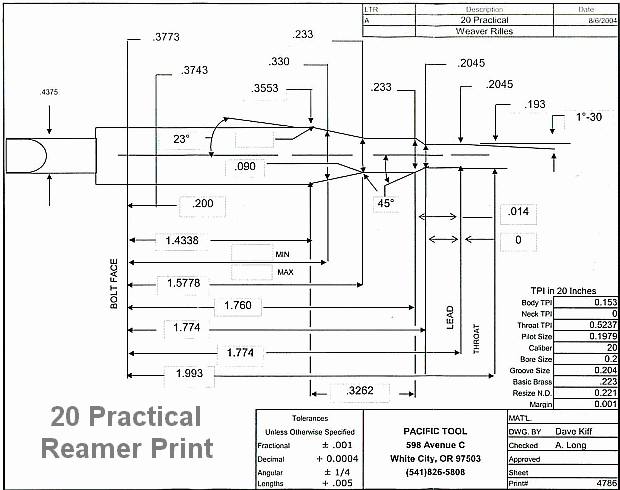
The 20 Practical and the 20 Tactical are almost identical cartridges. There are only slight differences in case outside diameter, shoulder angle, and case body length. Neck length on the 20 Tactical is a bit longer, but there is still plenty of neck on the 20 Practical to grip the popular bullets, such as the 32gr V-Max.”
20 Practical and 20 Tactical Specifications:
Cartridge
Bolt face to shoulder
Shoulder O.D.
Shoulder Angle
Total length
20 Practical
1.5778″
.3553
23°
1.760″
20 Tactical
1.5232″
.360
30°
1.755″
Parting Shot — Yes the 20 Practical works in Bolt Guns too!
“Favorite .223 Rem Wildcat? The 20 Practical hands down for me. I have two of them built on Savage actions right now. One has a 20″ BHW barrel and the other has a 26″ Criterion. It is my go-to caliber for shooting up a Prairie Dog town and the ones I have are insanely accurate. Here are some typical 100- and 200-yard groups with my 20 Practicals.” — IA_Shooter
Our friend Anette Wachter, aka “30CalGal”, stars in a smart video from NRAWomen.com. In this episode of Tips & Tactics, Anette talks about the “mental game” in competition. Specifically she explains how to “visualize success”:
I have found that a lot of my success in competition has come through what I call a ‘mental rehearsal’. I actually visualize every stage of the match and I visualize the success of the match and winning the match.
I actually visualize that round going downrange into the target, and the target coming up with a dead-center ‘X’. I visualize this over and over. If you visualize success you will achieve success.
Visualization is a process of mental preparation that is done before you get to the range. Many of the greatest shooting champions have used this technique to get ready for big matches, and to optimize their performance during record fire. If you want to enhance your “mental game” through pre-match visualization, we strongly recommend Lanny Bassham’s book, With Winning in Mind.
As a competitive smallbore 3P shooter, Bassham developed a mental management system. Using this system, Lanny Bassham won 22 world individual and team titles, set four world records, and captured an Olympic Gold Medal in Montreal in 1976. His techniques have been embraced by professional and Olympic athletes in many sports. With Winning in Mind covers a complete system of “mental management” techniques used by Olympians and elite champions.
About 30CalGal
Life is short. Go Shoot! — Anette Wachter
Along with being a talented competitive shooter, Anette created a popular Gun Blog, 30CalGal.com, and she has written for many gun publications including GunUp Magazine, Shooting Sports USA, Sure Shots Magazine, and Wide Open Spaces. CLICK HERE for a lengthy feature story about Anette’s impressive competition history, created for the Women’s Outdoor News. Among her many notable performances Anette remembered a big win in British Columbia: “My favorite, is of course, winning the BC Rifle Championships in 2011. [I was] the second woman and first US woman to win in its 127 year history.”
.009” Group Record Stood for 40 Years
In 1973 Mac McMillan shot an amazing 100-yard, .009″ five-shot group in a benchrest match. The .009″ group was measured with a 60x microscope for verification. Mac McMillan shot the group using a handbuilt prototype McMillan rifle with an early McMillan stock.
Mac’s .009″ group was the “Holy Grail” of rifle accuracy. This .009″ record was considered by many to be unbreakable, a record that would “stand for all time”. Well, it took 40 years, but someone finally broke Mac’s record with an even smaller group. In 2013, Mike Stinnett shot a .0077″ five-shot group using a 30 Stewart, a .30 caliber wildcat based on the 6.5 Grendel. Stinnett’s NBRSA record .0077″ group now stands as the smallest 100-yard group ever shot in registered benchrest competition.*
Stinnett’s success doesn’t diminish the significance of Mac McMillan’s .009″ group in the history of benchrest competition. For four decades Mac’s group stood as the ultimate standard of rifle accuracy*. For those of you who have never seen Mac McMillan’s .009″ group, here it is, along with the NBRSA World Record certificate. The target now hangs in the McMillan Family Museum.
*Somebody else might claim a smaller group, but unless moving backers or electronic targets were used, it cannot be verified. Moving target backers are used at registered benchrest matches to ensure that five (5) shots are actually fired in each group. That eliminates any doubt.
About Jerry Miculek… The Man, The Myth, The Legend
The video above begins: “My name is Jerry Miculek. Guns are what I do.” Jerry Miculek is a true legend in the firearms community. Acknowledged as the best wheelgun speed-shooter in history, Jerry is also an accomplished rifle and shotgun shooter with many class victories in 3-Gun competition. He also has been a prolific YouTube Video creator. For this Saturday Showcase, we feature seven notable Jerry Miculek videos. You will find over 500 more interesting videos on the Miculek “Trigger Tribe” YouTube channel Jerry shares with his daughter Lena Miculek.
How to Avoid Common Mistakes with Semi-Auto Rifles and Pistols
In this second video, Jerry explains common mistakes people make when handling and shooting three classic, semi-auto firearm types — the M1 Garand, the SKS carbine, and the M1911 pistol. Jerry shows handling faults that can cause out-of-battery detonation or early primer strikes, or cause jams in the Garand and SKS. Then Jerry explains why you should never release the slide on a M1911 pistol with a round already in the chamber. This is a must-watch video for Garand owners.
Hitting Target at 400 Meters with a Pistol
Could you hit an 18″ x 24″ target at a distance of 400 meters (437 yards)? Sure, you’re thinking, that would be easy with a good rifle fired from the bench or prone position. OK, now think about making that shot, OFF-HAND with a pistol. That’s something entirely different. We doubt many marksman would wager they could hit a plate 400 meters away with a handgun. That’s exactly the challenge legendary shooter Jerry Miculek undertakes in this interesting video. Shooting a Smith & Wesson 9mm M&P pistol with a red-dot optic, Jerry makes the 400m shot look easy, hitting the steel plate with his first shot. This takes good eyes, a solid grip, perfect trigger control (and a bit of luck).
Take-Down and Full Cleaning of AR-15
If you want to keep your black rifle running smoothly and reliably, you must clean it regularly and follow the correct maintenance procedures. In this video, Jerry Miculek takes down and cleans an AR-platform rifle belonging to his daughter Lena. This is a good video because Lena’s rifle was “run hard and packed up dirty” so you can see where carbon and grease build up. This 35-minute video is very thorough. Jerry is one of the nation’s top action carbine shooters, so listen carefully to his advice on cleaning and lubrication.
Ammo Types and Calibers — Jerry Miculek Explains the Basics
In this video, legendary shooter Jerry Miculek talks about popular types of pistol and rifle ammunition and the various bullet options used for plinking, competition, and self-defense. Jerry, one of the greatest pistol shooters on the planet, provides useful insights on cartridge selection and bullet choices. Jerry notes: “There are a TON of different types of ammunition” so he explains the basics. And Jerry answers common questions such as: “What is the difference between ball and hollow-point bullets?” and “What type of gun takes rimmed cartridge versus rimless?”.
Wheelgun Wisdom — How to Avoid Problem with Revolvers
Jerry Miculek has won multiple revolvers championships, and has set amazing records for revolver speed shooting (with reloads). Yes Jerry, “Mr. Revolver”, knows a thing or two about wheelguns. In this video, Jerry explains how you can damage your revolver by using the wrong methods to open and close the cylinder and extract ammo. Jerry shows what NOT to do, and then he very carefully explains the proper procedure to release the cylinder, and swing it out of the frame. In addition, Jerry shows how best to swing a loaded cylinder back into place.
80,000 Philippine M1 Garands in One Place
Back in 2020 Jerry Miculek visited the CMP’s HQ in Alabama. There he looked at the vast inventory of military rifles, including 80,000+ M1 Garands recently received from the Philippines. CMP tech staff showed Jerry some rare Garands that had never been issued. If you’re interested in classic military arms, you should definitely watch Jerry’s video. Gina Johnson, CMP’s general manager, told Guns.com that: “We have roughly 86,000 rifles from the Philippines and roughly 13,000 rifles from Turkey in our possession”.
Along with the 80,000+ Philippines Garands, the CMP received 13,000 from Turkey. The arrival of these 99,000 M1 Garands is great news for rifle collectors. Garands have been in short supply in recent years.
Plan Your Visit: Top 5 Areas to Explore Near Camp Perry Feature based on article by Ashley Dugan, CMP Writer
This summer, many of our readers will visit Camp Perry, Ohio to participate in the historic CMP annual National Matches. There will be smallbore and centerfire rifle matches, along with pistol matches. And this year there will be a number of new mid-range (600-yard) rifle matches. For those competing at Camp Perry this summer, there are many interesting nearby places to visit along the shores of Lake Erie. This article covers some tourism highlights in the area — the Top 5 areas visitors can explore outside of Camp Perry this summer. Many of these tourism attractions are featured in Ohio’s useful Shores and Islands website.
Marblehead and East Harbor State Park
Marblehead is a small village about 18 miles east of Camp Perry. The downtown area offers a strip of quaint shops and restaurants along with an eclectic array of artist galleries and events. Here, catch the Kelleys Island ferry or drive slowly down the picturesque coastline of the peninsula to reach the Marblehead Lighthouse – a state park with the oldest continuously operating lighthouse on the Great Lakes (since 1822). The spot has a good nautical museum on the grounds. Fish off the rocks, have a picnic or take in views of the world-famous amusement park, Cedar Point, located just across the bay. For more outdoor activities, Marblehead offers East Harbor State Park, with a public beach, a marsh pond, camping and breathtaking views.
Port Clinton, Put-In-Bay, Liberty Aviation Museum
Port Clinton is the city where Camp Perry is located. Nestled along the shore of Lake Erie, Port Clinton offers beaches, restaurants, festivals. and live outdoor music during the summer months. Ride the fast, Jet Express catamaran ferry to Put-In-Bay, visit the old Port Clinton Lighthouse, reserve your spot on one of the many charter fishing boats or grab a basket of fried Lake Erie perch.
Visitors may also visit the Liberty Aviation Museum, which showcases several authentic World War II aircraft and a fully operational Ford Tri-motor “Tin Goose” — one of only a few still flying. Learn more about Port Clinton at PortClinton.com.
Catawba Island
No more than a 10-minute drive from downtown Port Clinton is Catawba Island, which offers several fun options. The Gideon Owen Wine Company serves up local wines, with roots dating back to the 1870s. Just down the road, The Orchard restaurant offers farm-to-table options in an upscale atmosphere. Try fresh seafood or Wagyu beef, and listen to the live entertainment. Visit the farm stand next door for a salad or hot honey & whipped feta dip, or simply sip on some wine in the garden area. Later you can watch the sunset over the lake at Catawba Island State Park, find yet another ferry to Put-In-Bay, play putt-putt or maybe even take a tour of African Safari Wildlife Park, a member of the Zoological Association of America and home to many exotic animals and drive-through encounters.
Sandusky and Cedar Point
Just a short drive across the bay, you’ll find Sandusky, which is home to Cedar Point, a large amusement park opened in 1870 that now has over 70 thrill rides, including 18 roller coasters. The park is built within its own peninsula and holds a mile-long sandy beach and water park. Kalahari Resort & Convention Center, located in Sandusky, is Ohio’s largest indoor water park. Buy a day pass to the many pools and water slides. This is the USA’s #1 indoor water park according to USA Today. Other Sandusky amenities include the Sandusky Mall, a Merry-Go-Round Museum, a speakeasy bar, and the Jackson Street Pier with a variety of restaurants to enjoy. Learn more about Sandusky at CityofSandusky.com.
Lake Erie Islands
The Western Basin of Lake Erie, where Camp Perry is located, is home to several unique islands. Just a short ferry ride away, guests may rent golf carts, bikes, or take their own transportation. Such islands include South Bass, home to Put-In-Bay. The island is also home to Heineman Winery, founded in 1888. While at the winery, explore Crystal Cave, one of the largest geodes in the world, and Perry’s Cave, a limestone cavern discovered in 1813. Families may also visit the Perry’s Victory & International Peace Memorial, at 352 feet, one of the tallest monuments in the USA.
Viewable from South Bass is Kelleys Island, another fun destination in Lake Erie. The island offers historic homes, bed & breakfasts, and a State Park where you can camp, sunbathe, swim, or rent kayaks. Next to the beach is the Glacial Grooves, a natural phenomenon created when a massive glacier moved through the area millions of years ago, forming the Great Lakes.
Wouldn’t it be nice to have a print resource at your fingertips that has hundreds of true-size cartridge illustrations, plus technical descriptions of thousands of popular cartridge types? That could be a real time-saver. It’s no wonder this book is an Amazon category best-seller.
If you’re a serious shooter, the latest 7th Edition of the Ammo Encyclopedia belongs in your library. Released in late 2022, this 928-page book is probably the most comprehensive and up-to-date book in print covering current and obsolete cartridge and shotshell types. The Ammo Encyclopedia is a massive resource work with 100+ chapters, covering thousands of handgun, rifle, and shotgun cartridges from the past century and a half. This 928-page edition includes over 150 new cartridge profiles. An expanded Trademark Index lists contact information for all current ammunition manufacturers.
One of the best features is a full-color section with actual size drawings of over 320 current rimfire/centerfire cartridges and shotshells. You won’t find that many “life-size” cartridge drawings in one place even on the internet. Cartridge profiles and ballistic charts have been expanded to include many new factory cartridges. An updated Cartridge Index lists both the standard and alternate names for each cartridge in chronological order. The authors have even included air rifle pellets and historical images and charts. This 928-page softcover book is now just $19.99 on Amazon, 60% off list price.
Comments from guys who bought the book:
“This book contains a vast array of information on many modern and even obsolete ammunition. Definitely recommend for any modern reloader novice or experienced.” – Duggaboy460
“It’s a great reference book for individuals who reload their own ammunition. There is a lot more info in this Edition. Everyone who likes this information should have it in their library.” – Reloader
“Very comprehensive with great photos and detailed information. A Must have for anybody with several guns/ammo.” – M.Ibarra
SSG Greg Markowski of the USAMU at Camp Perry, Ohio.
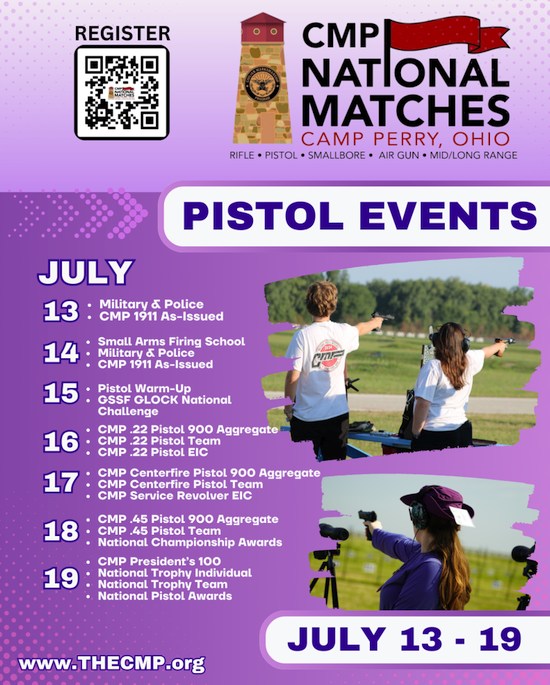
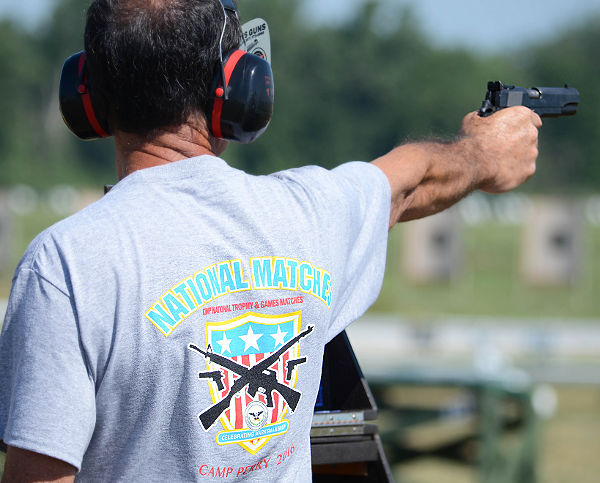
On July 13, 2025, pistol competition commenced at the National Matches at Camp Perry. Many of the best pistol shooters in the country have been on the firing lines, including members of the U.S. Army Marksmanship Unit Service Pistol team. After the last pistol match on Saturday, July 19th, trophies and awards will be presented to the top shooters.
Below is a schedule for the 2025 Pistol Competitions at Camp Perry. For more information about the National Trophy Pistol & Games Matches, visit the CMP’s Pistol Match INFO Page.
This video shows .45 ACP centerfire pistol competitors at Camp Perry
Loading Precision Centerfire Pistol Ammunition
If you want to compete in top competitions like the CMP matches at Camp Perry, you’ll need good ammo. The following USAMU article provides rock-solid reloading advice, explaining how to load accurate, reliable handgun ammo.
The U.S. Army Marksmanship Unit (USAMU) fields pistol teams as well as rifle and shotgun competition squads. Consequently the USAMU’s Reloading Shop loads tens of thousands of pistol rounds every year. In this article, the USAMU’s handgun experts talk about reloading for handguns — with smart tips on how to achieve superior accuracy with 100% reliability. This article, which offers important insights on COAL, primers, crimps and more.
Precision Pistol Reloading — Recommended Methods
Optimize the Taper Crimp
One often-overlooked aspect of handloading highly-accurate pistol ammunition is the amount of crimp and its effect on accuracy. Different amounts of taper crimp are used with various handloads to obtain best accuracy. The amount is based on bullet weight, powder burn rate and charge, plus other factors. It is not unusual for our Shop to vary a load’s crimp in degrees of 0.001″ and re-test for finest accuracy.
Use Consistent Brass
Brass is also important to pistol accuracy. While accurate ammunition can be loaded using brass of mixed parentage, that is not conducive to finest results, particularly at 50 yards. It is important for the serious competitor/handloader to use brass of the same headstamp and ideally one lot number, to maximize uniformity. Given the volumes of ammunition consumed by active pistol competitors, using inexpensive, mixed surplus brass for practice, particularly at the “short line” (25 yards), is understandable. However, for the “long line” (50 yards), purchasing and segregating a lot of high-quality brass to be used strictly for slow-fire is a wise idea.
Importance of Uniform COAL
Uniformity of the Case Overall Length (COAL) as it comes from the factory is also important to achieving utmost accuracy. More uniform case lengths (best measured after sizing) contribute to greater consistency of crimp, neck tension, ignition/burn of powder charge, and so on. Cartridge case-length consistency varies from lot to lot, as well as by maker. Some manufacturers are more consistent in this dimension than others. [Editor’s note: It is easy to trim pistol brass to uniform length. Doing this will make your taper crimps much more consistent.]
Primers and Powders — Comparison Test for Accuracy
Pay attention to primer brands, powder types and charges. Evaluating accuracy with a Ransom or other machine rest at 50 yards can quickly reveal the effect of changes made to handload recipes.
Bullet Selection — FMJ vs. JHP
Bullets are another vital issue. First, there is the question of FMJ vs. JHP. A friend of this writer spent decades making and accuracy-testing rifle and pistol bullets during QC for a major bullet manufacturer. In his experience, making highly-accurate FMJ bullets is much more difficult than making highly-accurate JHPs, in large part due to the way the jackets are formed. Small die changes could affect accuracy of FMJ lots dramatically.
The CMP now allows “safe, jacketed ammunition” in Excellence-in-Competition (EIC) Service Pistol matches, although wadcutter ammunition is prohibited. Thus, the option to use very accurate JHP designs simplifies the life of CMP Service Pistol shooters in pursuit of the prestigious Distinguished Pistol Shot badge.
Hopefully, these tips will be helpful to any pistol shooters interested in accurate handloads, not just “Bullseye” shooters. Small tweaks to one’s normal routine can pay big dividends in improved accuracy and make practice and competition more rewarding. Stay safe, and good shooting!
TOP IMAGE: SSG Greg Markowski, a shooter/instructor with the U.S. Army Marksmanship Unit and native of Poland, fires his pistol during the 2018 Civilian Marksmanship Program’s National Pistol Matches at Camp Perry, Ohio July 13, 2018. At that event, Markowski claimed the General Mellon Trophy, General Patton Trophy and the General Custer Trophy. U.S. Army photo by Maj. Michelle Lunato/released by Defense Visual Information Distribution Service.
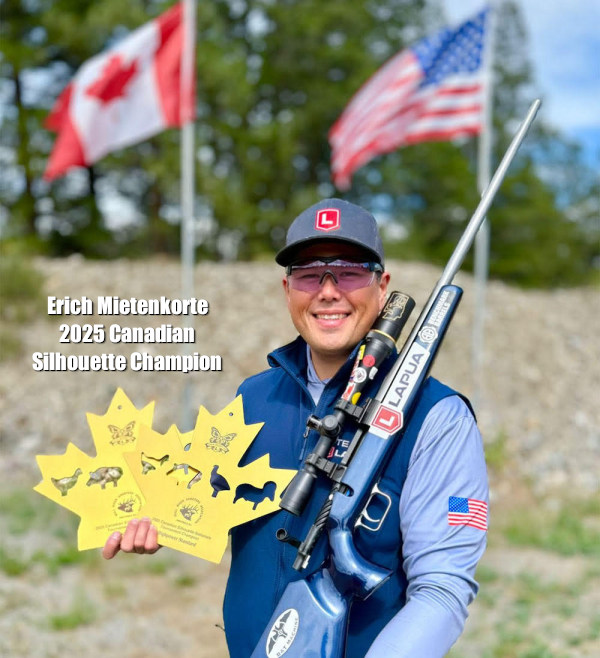
Erich Mietenkorte Wins 2025 Canadian Rifle Silhouette National High Power Championship.
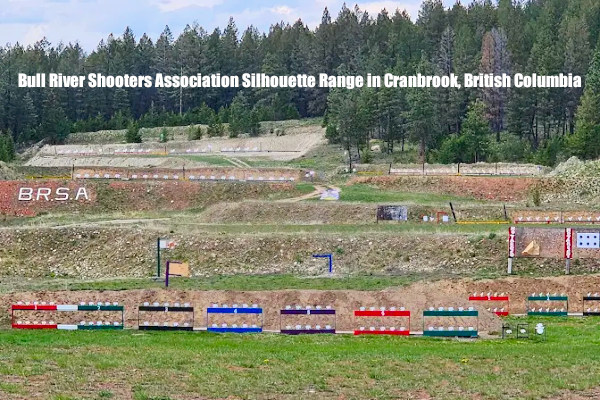
Team Lapua’s Erich Mietenkorte took top honors at the 2025 Canadian High Power Rifle Silhouette National Championships, winning the 240-shot High Power Aggregate with an impressive combined score of 195/240. Held at the Bull River Shooters Association range in Cranbrook, British Columbia, from June 29 to July 5, the national championship featured both Smallbore and High Power rifle disciplines, with competitors engaging steel silhouette targets from the standing offhand position at distances of 200, 300, 385, and 500 meters.
Mietenkorte competed in both High Power categories — Standard Rifle and Hunting Rifle — scoring 99/120 with his 6.5×47 Lapua in the Standard division, and 96/120 with his 6mm BR in the Hunting Rifle division. Mietenkorte’s combined performance earned him first place overall in the High Power aggregate and national titles in both rifle categories.
“Success in this discipline requires absolute confidence in your equipment. When it comes to consistency, reliability, and performance,?Lapua cases and bullets,?Vihtavuori powders, and?Berger bullets?are unmatched,” commented Mietenkorte. “I used Lapua 108gr and 139gr Scenar bullets in my 6.5×47, and Berger 95gr and 115gr bullets in my 6BR, all handloaded with Vihtavuori N140 powder. These components gave me the precision and consistency needed[.]”
What’s next? Mietenkorte will be competing at the U.S. NRA Rifle Silhouette National Championships at the NRA Whittington Center in Raton, NM, July 20-26, 2025.
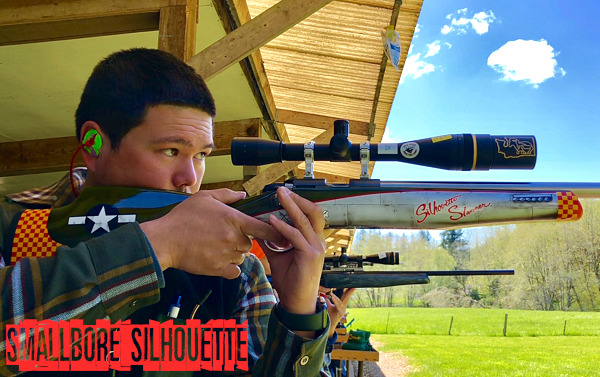
In addition to his success in the Canadian High Power competition, Mietenkorte finished 4th overall in the Smallbore Standard Rifle category. In the video below Eric demonstrates Smallbore Silhouette marksmanship skills.
Silhouette Champion Shares His Skills
In the video below, silhouette champion Eric Mietenkorte explains proper hold: “Consistency is key! Form a solid stance that is repeatable and allows you to have a natural point of aim. If you don’t come down on target adjust your feet, don’t rotate your body with your torso muscles.”
Erich explains his aiming method: “Pick a spot on the target and shoot for that. Try not to hesitate, if you’re on target, take the shot. It’s easy to get locked up by trying to make a great shot better. Make sure to follow through, keep that trigger pulled back. Don’t forget to have fun!”
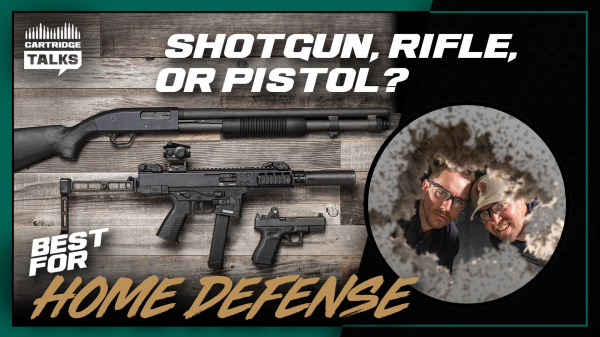
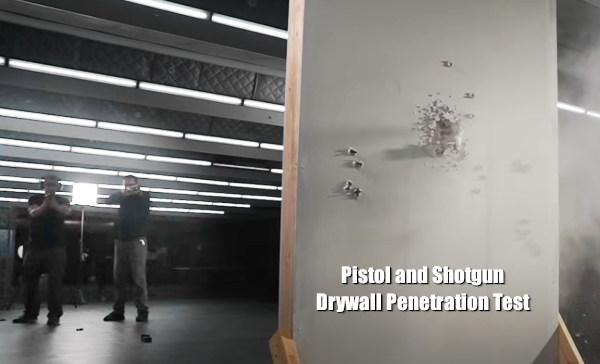
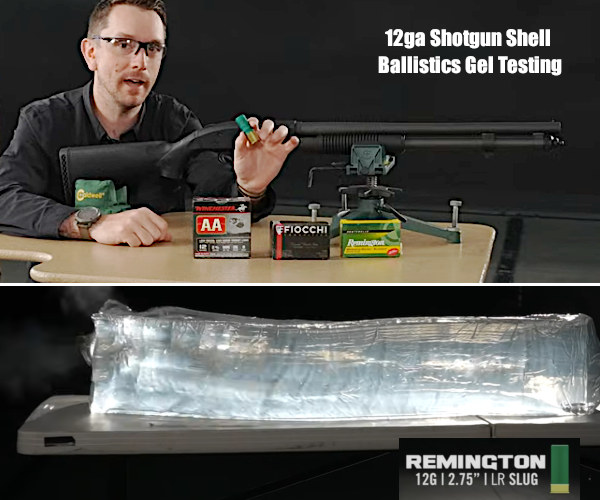
Mark and Ryan, co-hosts of the Vortex Nation Podcast, have released an informative video about gun choice for home defense. Mark and Ryan examine the performance of pistols, rifles, and shotguns in home defense scenarios. The podcast looks at the practical side of ballistics, comparing the pros and cons of these three gun types. The hosts assess the effectiveness (and penetration power) of these weapon types via field tests with cardboard silhouette targets, ballistics gel, and drywall. The eye-opening tests show how pistols, rifles, and shotguns perform in terms of accuracy, penetration power, and likely lethality.
At an indoor range, the Vortex team tests these three gun types (rifle, pistol, and shotgun) used for protection of home and family. They run a simulated home defense scenario, aerate some dry wall for science, and hit the ballistics gel to give you the real-world testing and fun you expect with plenty of surprises along the way. Click HERE for video.
Vortex invites viewers to share their thoughts in the YouTube comments section. You can access other interesting Cartridge Talks episodes by subscribing to the Vortex Nation YouTube Channel. To see more from Vortex visit VortexOptics.com or follow Vortex on Instagram and/or Facebook.



 Written and researched by J. Scott Kappas, an attorney and Class III Firearms Dealer, the 2025 Traveler’s Guide has a preface that defines many key terms important for anyone traveling with a firearm across state lines. The latest edition also has new formatting for easier reading.


 20 Practical Ultimate Varminter
 Robert learned that the accuracy of the first 20 Practical AR15 was no fluke. After building six (6) more 20 Practical uppers, he tested them for accuracy and they all shot great. These uppers featured DPMS low-pro receivers with side-charging handles. They are fitted with PacNor 1:11″ twist, 3-groove stainless barrels. Three of the uppers had 24″ barrels, two had 20″ barrels, and one had an 18″ barrel (See below).


 Varmint ace Warren B, aka “Fireball” in our Forum, explains how to form 20 Practical Cases. “Forming 20 Practical cases is very easy and no fire-forming is required. Start with any good quality .223 Rem brass. One can simply run the case into your bushing die with the appropriate bushing and call it done. I however like to make it a little more involved by doing the neck reduction in steps. I find that taking steps doesn’t overwork the brass as much as one step does. Also, if you resize the neck in too large of a step, sometimes, depending on the neck thickness, the neck will not be dimensionally what you would expect when finished. This is especially important towards the last step when one is getting close to the final required neck diameter.
 Varminter Kevin Weaver, who shoots both the 20 Practical and 20 Tactical, states that: “Both the 20 Tactical and the 20 Practical are fine .20 caliber cartridges. However, my favorite would be the 20 Practical. The 20 Practical gives the SAME performance as the 20 Tactical without fire-forming, or having to buy expensive forming dies.

 Our friend
 .009” Group Record Stood for 40 Years







 Use Consistent Brass