Many of the best rifle competitors in the United States will be heading to Indiana next week to compete at the 2019 NRA National High Power Rifle Championships which commence Monday, August 5, 2019. The Across-the-Course Championship, Mid-Range Championship, Long Range Championship, and Extreme Long Range Championship will all take place August 5-21, 2019 at Camp Atterbury, near Edinburgh, Indiana.
Day By Day Planner for 2019 Nationals at Camp Atterbury
Monday, August 5 will be the First Shot Ceremony, and squadded practice will also begin.
Tuesday, August 6 marks the beginning of the Team Matches. They will conclude on August 7.
Thursday, August 8 is the start of High Power Across the Course competition. They last until August 11.
Monday, August 12 is the Mid Range Team Championship, lasting until August 13.
Tuesday, August 13 is the first day of the Mid Range Individual Championship. They last until August 16.
Saturday, August 17 will be the Palma Team Match day.
Sunday, August 18 begins the Long Range Championship which continues through August 21.
Wednesday, August 21 is the registration day for the NRA Extreme Long Range Championship. The match will be fired over the next two days, finishing on August 23.
Lodging at Camp Atterbury and Nearby
Camp Atterbury offers on-base lodging — rooms and cabins will be available to all competitors 18 and over. Camp Atterbury lodging includes suites and standard rooms as well as the MWR Campground and the MWR Cabins. Lodging is controlled by the Camp Atterbury Lodging Office, not by the NRA. Entry fees DO NOT include lodging costs. There are also a number of hotels nearby, including Charwood Suites. Nearby campground Johnson County Park also offers special rates for High Power competitors.
With the CMP hosting important matches next year at Camp Perry, many rifle competitors will be “commuting” between the two venues this summers, driving 4.5 hours from Indiana to Ohio.
The U.S. Army Marksmanship Unit (USAMU) has produced an excellent series of videos, which collectively cover the Basic Rifleman’s Course. If you are getting started in High Power shooting, or want to improve your position shooting skills, this series is well worth watching. And these videos are not just for service rifle shooters — even bench shooters can benefit from these videos, particularly Part 5, which explains how to estimate wind speed and direction. The lead instructor for these videos is SFC Brandon Green, the reigning National High Power Champion, and Service Rifle Champion at the 2017 CMP Trophy Matches. When SFC Green talks, you should listen.
SFC Brandon Green is a shooting superstar. Green won his third NRA National High Power Rifle Championship in 2018 at Camp Atterbury, Indiana. He dominated the HP Championship cycle, finishing eight points and ten Xs ahead of his nearest competitor. Brandon also won High Power National Championships in 2015 and 2013. And in 2017 he set new records at the CMP’s National Trophy Matches at Camp Perry. One of the greatest marksmen in the nation’s history, SFC Green has no weaknesses, excelling at all positions, both rapid-fire and slow-fire.
Part 5 — Wind and Weather Estimation (Very Useful for All Shooters)
Note: This video includes a hit location “target analysis” in the first 6 minutes.
Part 4 — Minute of Angle Explained
Part 3 — Ballistics and Zeroing
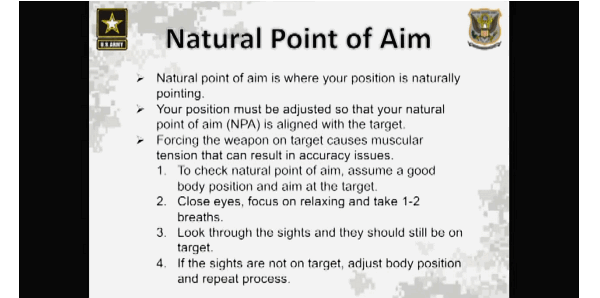
Part 2 — Positions, Sight Alignment, and Natural Point of Aim (Very Useful)
Part 1 — Aiming and Sight Picture
Three-time National High Power Champion SFC Brandon Green (left above) set four new National Records at Camp Perry in 2017.
Need a good scope for PRS, hunting, or varminting? Burris just announced a massive discount campaign that can save you hundreds of dollars on a new scope purchase. Incentives range from $500 in savings with the purchase of a Burris Eliminator III laser range-finding riflescope to $180 with the purchase of a Burris Fullfield II and $210 with the purchase of a Fullfield E1.
Burris Eliminator III SALE
The Burris Eliminator III 4-16x50mm smart riflescope is now available for $999, a $500 savings off MAP (Minimum Advertised Price).
The Burris Eliminator III is an advanced electro-optical device that combines magnified optics with a built-in laser rangefinder and micro-processor. With the push of a button, the Eliminator III ranges your target. Then the micro-processor “brain” instantly calculates the required holdover for that distance, and displays a red dot on the reticle. Simply put the red dot on the center of your target and pull the trigger. The Eliminator includes an inclinometer, integrated smart dope card, and rangefinder rated to 1200 yards on reflective objects.
Who Should Use the Eliminator III?
For folks doing high-volume prairie dog and varmint shooting, we like the Burris Eliminator III. Just push a button, and the scope determines the distance to the target, calculates the hold-over, and then displays a red aiming point in the reticle. We have used the Eliminator and it worked well on critter-sized targets out to 600 yards, and deer-sized targets further out. Burt remember, you still have to make the right wind call!
Burris Fullfield Series Optics Discounts
Burris is also offering big discounts on Fullfield II and Fullfield E1 series scopes. You can now save as much as $210.00 or 45% of the original price. The Fullfield II are good hunting optics with 3X zoom range. Fullfield E1 scopes feature ballistic drop compensating reticles. The Burris website states: Savings are available immediately at retail — no rebate paperwork required!” Here are the deals available through December 31, 2019:
Burris Fullfield II
3-9x40mm was $209, now $159, SAVE $50 item #200162
4.5-14x42mm was $299, now $189, SAVE $110 item #200183
6.5-20x50mm was $399, now $219, SAVE $180 item #200193
Fullfield E1
3-9x40mm was $279, now $189, SAVE $90 item #200320
4.5-14x42mm was $379, now $219, SAVE $160 item #200338
6.5-20x50mm was $499, now $289, SAVE $210 item #20034
30-day Money Back Guarantee. We’ve seen that for some home appliances and cleaning products, but never for firearms. Walther may be the first pistol-maker to allow you to own a modern handgun for a full month and then send it back for a complete refund. That’s right, you can purchase any new Walther PPQ or PPS, and use it for 30 days. Then, Walther declares: “If you don’t love it, return it on us.” Yep, Walther will even pay for the return shipping. If the pistol does not fully meet expectations, return it to Walther for a full refund of the purchase price, including tax and shipping.
Walther’s Marketing V.P. Bret Vorhees explains: “Consumers are often hesitant to put down their hard-earned money on a firearm purchase, simply because if they don’t like it, they are stuck with the product. Walther is proud to be the first company to guarantee customer satisfaction our of our pistols… giving the consumer more options”.
Here is how the gun industry’s first 30-day, money-back guarantee for pistols works. After purchasing a new PPQ or PPS handgun from a licensed FFL dealer, the buyer can take the gun home and shoot as much as he/she wants for up to 30 days. Whether you buy the new pistol from a local gun shop or an online retailer, the pistol qualifies for the guarantee. If the pistol does not fully meet expectations during the initial 30-day period, the purchaser can return it to Walther for a full refund of the purchase costs, including tax and shipping. This applies only to the first purchaser of a NEW PPQ and/or PPS pistol.
The return process is simple, follow these easy steps:
1. Visit WaltherOwnersClub.com and click “Return a Firearm”.
2. Fill out the form with your contact information.
3. Upload a copy of your receipt or proof of purchase.
4. Submit the form and print authorized return shipping label.
5. Pack unloaded firearm in original case, and deliver to Fedex location.
Walther says purchasers who follow these procedures should receive their refunds within two weeks. This offer applies to all Walther PPS and PPQ models, including the newer PPS M2 series, and the outstanding PPQ Q5 match pistols (see below):
To help celebrate National Shooting Sports Month (NSSM), rifle and gear manufacturers are offering big prize packages — the Gearbox Giveaways. Enter to win rifles, pistols, ammo, and other valuable prizes. Many of the Gearbox packages are worth over $3000 with the most valuable package worth over $5000! Enter as many of the Gearbox Giveaways as you choose. You can’t win if you don’t enter.
You’ll find all the Gearbox Giveaways on the NSSF website. Shown below are TEN current Gearbox Giveaways ranked in order of value — starting with the most valuable prize package. Good luck!
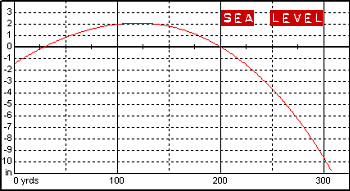
You can do your own experimental calculations using JBM Online Ballistics (free to use). Here is an extreme example, with two printouts (generated with Point Blank software), one showing bullet trajectory at sea level (0′ altitude) and one at 20,000 feet. For demonstration sake, we assigned a low 0.2 BC to the bullet, with a velocity of 3000 fps.
One of our readers asked “What effect does altitude have on the flight of a bullet?” The simplistic answer is that, at higher altitudes, the air is thinner (lower density), so there is less drag on the bullet. This means that the amount of bullet drop is less at any given flight distance from the muzzle. Since the force of gravity is essentially constant on the earth’s surface (for practical purposes), the bullet’s downward acceleration doesn’t change, but a bullet launched at a higher altitude is able to fly slightly farther (in the thinner air) for every increment of downward movement. Effectively, the bullet behaves as if it has a higher ballistic coefficient.
Forum member Milanuk explains that the key factor is not altitude, but rather air pressure. Milanuk writes:
“In basic terms, as your altitude increases, the density of the air the bullet must travel through decreases, thereby reducing the drag on the bullet. Generally, the higher the altitude, the less the bullet will drop. For example, I shoot at a couple ranges here in the Pacific Northwest. Both are at 1000′ ASL or less. I’ll need about 29-30 MOA to get from 100 yard to 1000 yards with a Berger 155gr VLD @ 2960fps. By contrast, in Raton, NM, located at 6600′ ASL, I’ll only need about 24-25 MOA to do the same. That’s a significant difference.
Note that it is the barometric pressure that really matters, not simply the nominal altitude. The barometric pressure will indicate the reduced pressure from a higher altitude, but it will also show you the pressure changes as a front moves in, etc. which can play havoc w/ your calculated come-ups. Most altimeters are simply barometers that read in feet instead of inches of mercury.”
As Milanuk states, it is NOT altitude per se, but the LOCAL barometric pressure (sometimes called “station pressure”) that is key. The two atmospheric conditions that most effect bullet flight are air temperature, and barometric pressure. Normally, humidity has a negligible effect.
It’s important to remember that the barometric pressure reported on the radio (or internet) may be stated as a sea level equivalency. So in Denver (at 6,000 feet amsl), if the local pressure is 24″, the radio will report the barometric pressure to be 30″. If you do high altitude shooting at long range, bring along a Kestrel, or remember to mentally correct the radio station’s pressure, by 1″ per 1,000 feet.”
The mainstream media hates guns. So you won’t find pro-firearm content on NBC, CBS, CNN, or ABC. Thankfully we have independent cable networks such as the Outdoor Channel. And Wednesday nights are a visual feast for shooting sports enthusiasts.
On Wednesday nights, from 7:30 to 11:30 pm, the Outdoor Channel delivers an entire evening of great gun programming. You can watch FIVE different shows: American Rifleman, Guns & Ammo, GunnyTime, Shooting USA, and Shootout Lane. Here are some popular samples from these shows:
Shooting USA — Understanding Parallax in Scopes This Shooting USA Pro Tip defines parallax and explains how to adjust your scope.
Guns & Ammo TV — Hornady Bullets, Nikon Black Force Scopes, Suppressors 101 This episode reviews multiple products — bullets, optics, and suppressors.
American Rifleman — The Guns of The Vietnam War, Part 3 Major John L. Plaster discusses Marine snipers in Vietnam and their rifles.
Sierra Bullets has recently released load data for the 6mm Creedmoor cartridge, a necked-down version of the 6.5 Creedmoor, a popular PRS, tactical, and hunting cartridge. Sierra has released very comprehensive 6mm Creedmoor load data, covering fifteen (15) different bullets from 55 to 110 grains. NOTE: Hornady-brand brass was used for Sierra’s 6mm Creedmoor load tests, not the newer, stronger Lapua 6.5 CM brass with small primer pockets. Hand-loaders using Lapua 6.5 Creedmoor brass necked to 6mm may have to adjust their loads.
Sierra writes: “As soon as the 6.5 Creedmoor was released in 2007, a 6mm version was being envisioned. After the 6mm Creedmoor demonstrated its worth at 1000 yards it began to catch the attention of Precision Rifle Series (PRS) competitors. The 6mm/6.5 Creedmoor is a great fit for those looking for an AR platform-friendly cartridge. It delivers velocities very similar to the .243 Win and yet fits the AR10 magazine length[.] The 30-degree shoulder makes this a very efficient case and helps prolong case life as well. The 6mm/6.5 Creedmoor works well with powders such as H4350, RE-17, and Ramshot Hunter for heavier long-range bullet weights. Slightly faster powders such as RE-15, Win 760, and Vihtavuori N540 work well with lighter weight bullets.”
Sierra Bullets Tested for 6mm Creedmoor Load Data
55gr BlitzKing (#1502)
60gr HP (#1500)
70gr HPBT (#1505)
70gr BlitzKing (#1507)
75gr HP (#1510)
In developing its 6mm Creedmoor load data, Sierra tested a very wide selection of propellants, two dozen overall. For the smaller bullets, fast-burning powders such as Benchmark, H4895, and CFE223 were tested. For the heavier 100+ grain bullets, Sierra tested a selection of medium-burn-rate powders including H4350, Reloder 16, Reloder 17, Varget, and Superformance. Sierra did a very thorough job. We know this information will be welcomed by 6mm Creedmoor shooters.
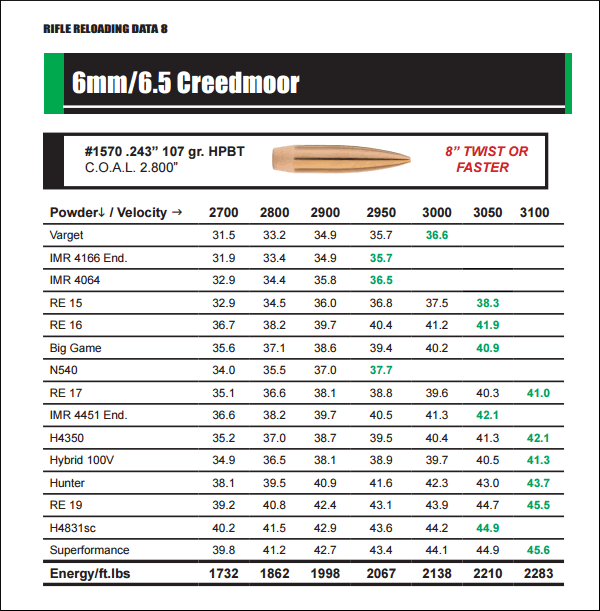
Don’t know what powder to try first? For the 107-110 grain bullets, if you want best accuracy and low ES/SD, our Forum members recommend Alliant Reloder 16 and Hodgdon H4350. If you are seeking max velocity with the 110-grainer, look at Hodgdon Superformance and Reloder 19.
Here are Sierra’s 6mm Creedmoor Load Data Charts for the 107gr MK and 110gr MK. There are a half-dozen other tables for lighter-weight bullets.
Tune in to the TV tonight (7/31/19) — there’s some impressive multi-gun action on the Outdoor Channel. Shooting USA features the NRA’s World Shooting Championship (WSC), held at the Peacemaker National Training Center in West Virginia. This unique, multi-discipline Pro-Am Competition draws 300 shooters, with all firearms provided by manufacturers. Designed to find the “best at everything that goes bang”, the WSC combines scores from a dozen disciplines to select the best all-around shooting champion. What’s at stake? Glory plus over $250,000 in cash and prizes!
Shooting USA airs Wednesday, 7/31/19 at: 9:00 PM Eastern and Pacific; 8:00 PM Central
WSC Highlight Video with Competitor Interviews:
To succeed at the WSC, competitors must be skilled with all types of firearms, bolt-action rifles, semi-auto rifles, shotguns, semi-auto pistols, and even single action six-guns. For every stage, the firearms are provided by match sponsors, so no competitor gains an advantage by using his or her own guns.
The challenges range from sporting clays, to PRS-style rifle stages, to Bianchi plate racks shot with handguns, and even a simulated Olympic Biathlon competition. That requires that competitors be fit and have a diverse skill set — you need to be outstanding with every type of firearm.
This episode also feature a history segment, a gun-building segment, and a Pro Tip from Maggie Reese. Shooting USA showcases the Crockett rifles from Tennessee that armed Andrew Jackson’s Militia on his way to stop the British in New Orleans. Then, John Scoutten finishes a JP Enterprises AR accuracy build. Lastly Maggie Reese shows how to start a pistol stage from a table with an empty gun.
Maggie Reese now shoots for Team Ruger along with Doug Koenig.
Maggie notes: “We spend a lot of time in competition working a draw from a holster position, but sometimes when you go to competition you will have to do an unloaded or loaded table start. So I want to take you through some techniques on how to maximize that first shot and get an efficient time.”
Looking downrange at the 600-yard targets. All Camp Perry photos courtesy Dennis Santiago.
Our friend Dennis Santiago is at Camp Perry this summer. Yesterday (7/29/2019) he competed in the historic National President’s 100 Match. This is a huge event. in recent years, there have been over 1000 ranked competitors from throughout the nation, making this one of the biggest rifle events of the year.
The President’s 100 Rifle Match is richly steeped in history. This unique match was first held in 1878. Here’s the view from the line at 600 yards:
The 2017 President’s 100 Rifle Match was a tightly-fought affair, with the top five shooters separated by just two points. SSG John Cogshall (ARNG) shot superbly to take the top position and President’s Rifle Trophy. The top 100 competitors overall in the President’s Rifle Match are designated as the President’s 100. They receive President’s 100 medallions and certificates. GET full match results.
Top Five Shooters at 2019 National President’s 100 Match
1. SSG John Cogshall (ARNG) 390-14X (Trophy Winner)
2. SGT Thomas Colyard (SC, USMC) 389-16X
3. Sean Prosser (PA) 389-12X
4. Greg Troxell (TX) 388-11X
5. John Hefner, (TX) 388-13X
Note: SFC Brandon Green, USAMU, who holds the course record at 400-20X, also shot a 388-13X but was ranked sixth by tie-breaker.
President’s 100 Shoot Off! — The Top 20 shooters face off while everyone watches, wishing the best for every one of them. This is what attending a family gathering is for us.
President’s 100 Course of Fire
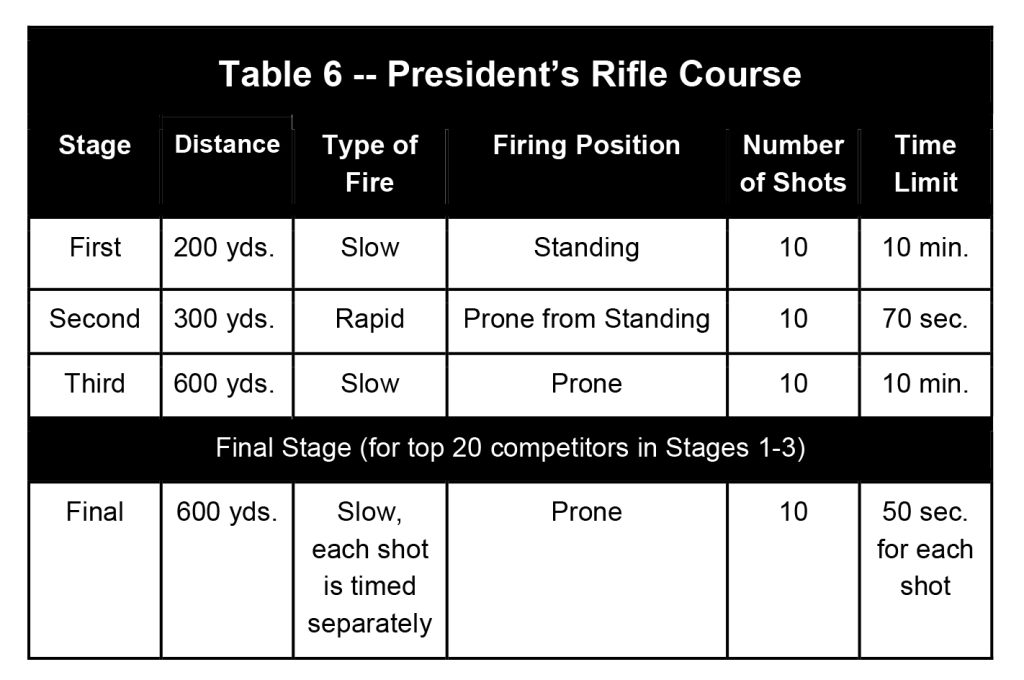
There is a three-yardage, four-stage Course of Fire for the President’s Rifle Match Course of Fire. Firing is done on the SR target at 200 and 300 yards and the MR target at 600 yards. Scores in stages 1-3 determine the President’s 100 and the final rankings of competitors in 21st place and below. Scores in stages 1-4 determine the match winner and the final rankings in places 1-20. If there is a tie for first place (equal total and X-count), the tied shooters will continue to fire one-shot-at-a-time until the tie is broken. No sighters are permitted in National Trophy Rifle Matches.
Origins of the President’s Match The National Rifle Association’s President’s Match was instituted in 1878, as the American Military Rifle Championship Match. In 1884, the name was changed to the President’s Match for the Military Rifle Championship of the United States. It was fired at Creedmoor, New York until 1891. In 1895, it was reintroduced at Sea Girt, New Jersey. Today, the match is held at Camp Perry, Ohio.
The President’s Match was patterned after the Queen’s Match for British Volunteers. That British competition was started in 1860 by Queen Victoria and the NRA of Great Britain to increase the ability of Britain’s marksmen following the Crimean War.
The tradition of making a letter from the President of the United States the first prize began in 1904 when President Theodore Roosevelt personally wrote a letter of congratulations to the winner, Private Howard Gensch of the New Jersey National Guard.
After a hiatus in the 1930s and 1940s, The President’s Match was reinstated in 1957 at the National Matches as “The President’s Hundred.” The 100 top-scoring competitors in the President’s Match were singled out for special recognition.





 One of our readers asked “What effect does altitude have on the flight of a bullet?” The simplistic answer is that, at higher altitudes, the air is thinner (lower density), so there is less drag on the bullet. This means that the amount of bullet drop is less at any given flight distance from the muzzle. Since the force of gravity is essentially constant on the earth’s surface (for practical purposes), the bullet’s downward acceleration doesn’t change, but a bullet launched at a higher altitude is able to fly slightly farther (in the thinner air) for every increment of downward movement. Effectively, the bullet behaves as if it has a higher ballistic coefficient.




 The National Rifle Association’s President’s Match was instituted in 1878, as the American Military Rifle Championship Match. In 1884, the name was changed to the President’s Match for the Military Rifle Championship of the United States. It was fired at Creedmoor, New York until 1891. In 1895, it was reintroduced at Sea Girt, New Jersey. Today, the match is held at Camp Perry, Ohio.


