Here’s a cool deal just in time for Father’s Day. Buy any new SIG Sauer P226 pistol now through June 30, 2019 and get a SIG STORE Rewards Coupon for a free X-FIVE Air Pistol. SEE DEAL HERE.
This special 2 for 1 Father’s Day Promotion offer runs from 06/01/2019 until 06/30/2019. Mail all required documentation to the address listed on the mail-in form or upload required documentation directly to SIG’s website. Submissions must be submitted or uploaded by 07/31/2019. Please allow up to 7 business days for processing. CLICK HERE for more details.
Claiming your rewards is easy, just visit Sigsauer.rebateaccess.com, follow the instructions to complete the form, and upload or mail your receipt. Once validated you will receive a promo code that can be redeemed at Sigsauer.com for an X-FIVE Air Pistol.
Applied Ballistics, LLC is proud to announce that its founder and owner Bryan Litz, has received the National Defense Industrial Association (NDIA) 2019 Carlos N. Hathcock II Award. Bryan was given this honor on June 4, 2019 at the NDIA Forum in Virginia.
The Hathcock Award honors an individual who, in the opinion of the Small Arms Committee Executive Board, has made significant contributions in operational employment and tactics of small arms weapons systems which have impacted the readiness and capabilities of the U.S. military or law enforcement.
Not just a brilliant ballistics expert, Bryan Litz is also a Championship-winning marksman.
Litz’s contributions to the U.S. Military include his numerous publications to help snipers understand complex external ballistic problems, promoting the advanced G7 ballistics model vs. the older G1 drag model, and developing Applied Ballistics solvers for Kestrel weather meters and other devices in widespread use by snipers for the U.S. Military and NATO allies. Bryan is also a frequent speaker at DoD forums and conducts ballistic seminars across the country.
Bryan stated: “It is truly humbling and deeply gratifying that my work has value to our nation’s Armed Forces. Being selected for the Hathcock award is the highest honor I’ve received in my career.”
Bryan received the award on June 4, at the NDIA 2019 Armament Systems Forum in Fredericksburg, Virginia. Past winners of the Hathcock Award include Todd Hodnett, Buford Boone, and SGM Pete Gould (U.S. Army Retired).
Bryan Litz helped develop global-leading ballistics solutions for civilian and military marksmen. Now Applied Ballistics solvers are integrated into Kestrel Weather Meters as well as advanced electro-optical devices. Bryan also helped create the successful Applied Ballistics APPs for iOS and Android smartphones.
Here’s the super-speedy way to turn case-necks. Our friend Erik Cortina figured out how to turn his match cartridge case-necks using his milling machine. Erik told us: “While in Raton, Mid Tompkins told me that he turns his brass on milling machine. He said he could do about 500 in two hours, so I decided to try it.”
Erik fitted a Don Nielson “Pumpkin” neck-turner to the mill, and he used a modified 21st Century case holder to secure the brass. As you can see from this video, Erik was very successful with the process. The tool spins at 1500 rpm, turning Lapua 6.5-284 cases that have been necked up to 7mm.
Video Shows Erik Cortina Neck-Turning Cases with Milling Machine:
Cartridge Brass: Lapua 6.5-284 necked up to 7mm
Lubricant: Lithium grease inside and outside of neck
Neck-Turner: Nielson Pumpkin running at 1500 RPM
It’s hard to argue with Erik’s results. Here are his turned Lapua cases, which have neck-wall thickness consistent to two ten-thousandths of an inch. Think you could do better turning manually?
Some of Erik’s Facebook friends had questions about this process:
Q: Who makes the shell-holder?
Erik Cortina: I did! The shell-holder you can get from 21st Century. I Tig-welded a punch as a handle.
Q: I love the idea of working smarter not harder! Any galling issues? What are your mitigation techniques?
Erik Cortina: No issues. I use lithium grease in spray can. Makes a foam that I dip necks into.
Q: Shouldn’t either the case or the cutter be floating to allow most precise neck turning?
Erik Cortina: Up until [I tried this] I believed the same thing. I was going to build a floating case holder but decided to try rigid setup on a few cases before I built it. Results were great. Neck thickness doesn’t vary more than .0002″, which is same as when I was doing it with floating case holder on the lathe.
Q: Any problems with the Pumpkin changing the cut as it heats up?
Erik Cortina: No — there were no issues with that.
NOTE: Erik Cortina is a very skilled machinist who custom-crafted fittings used for this process. This kind of neck-turning with a milling machine may not be for the everyday hand-loader!
Nielson “Pumpkin” Neck-Turner
The circular orange cutting fixture on Erik’s Milling Machine is a Don Nielson “Pumpkin” neck-turning tool. Don designed this tool to be used by hand or with power. The Pumpkin boasts an eccentric mandrel that allows the cut to be adjusted easily in precise .0001″ increments. Benchresters like this as it allows for very precise control of cut depth and neck-wall thickness.
Jason C., commenting on Erik’s YouTube video stated: “I have a couple of those too. Nothing cuts like a Pumpkin. [Don Nielson] made the best cutter tool ever.” These are still available if you ask around. The photo shows Don with a case-holder mounted to a power assembly. A talented machinist and tool-maker, Don has also been a successful short- and long-range benchrest shooter, who has won NBRSA 600-Yard Championships. CLICK HERE to read about Don’s success with the 6.5×47 Lapua.
Nielson Neck Turner with carbide mandrel. Photo Courtesy Butch’s Reloading.
Imagine if a man was asked to leave a restaurant for wearing a Gay Pride shirt. Or if a women was refused service because she was wearing a headband with a #MeToo message. The mainstream media would be in a frenzy. The incident would make national news. Liberal politicians would be holding angry press conferences, and CNN talking heads would be loudly demanding new legislation.
But guess what, there is another kind of discrimination in our society, a form of intolerance that the mainstream media actually emboldens — hatred towards gun owners. Intolerance towards those who support the Second Amendment — even those who have served their country in uniform.
Recently in Maui, HI, a restaurant manager demanded that disabled Vietnam veteran Jimmy Barber and his wife leave the establishment solely because Jimmy was wearing a shirt that said “Ultimate Reloader” and included a logo with the outline of a cartridge between the letters U and R.
Jimmy Barber served in Vietnam as a Navy Seabee “in-country” from 1970-71. He now suffers from heart disease because of exposure to agent orange. And the Maui eatery demanded that he (and his wife) leave the premises simply because his shirt said “Ultimate Reloader”. That’s despicable.
Isn’t it ironic that this intolerance occurred in Hawaii? Were it not for the sacrifice of American service men and women in the Pacific during WWII there is a good chance that the Hawaiian islands would no longer be part of the United States.
In a letter to Gavin Gear of UltimateReloader.com, Jimmy revealed: “My wife and I are in Maui. We were asked to leave a restaurant because I was wearing one of your t-shirts. I did not make a scene and I was very proud to leave.” Jimmy, by the way, is a dedicated pistol and rifle shooter who reloads a dozen cartridge types.
After learning of this incident, Gavin Gear contacted Starline Brass. Starline has decided to send Jimmy 250 new brass cases — just a way of saying “thanks” to Jimmy for his service to his country.
How to Stand Up for Your Rights
We all need to do our part to preserve our gun rights. Gavin Gear has collaborated with The Gun Collective on YouTube to explain what we can do to preserve our gun rights. Gavin states: “I do appreciate everyone out there in the gun community that is fighting for our rights. We need to stand together! And thanks Jimmy for ‘representing’ Ultimate Reloader!”
Folks have asked if there is a tool that can remove obstructions from a Lapua small, BR-sized flash hole without opening the hole size. The Lapua PPC/BR flash hole is spec’d at 1.5mm, which works out to 0.059055″. Most of the PPC/BR flash-hole uniforming tools on the market use a 1/16″ bit which is nominally 0.0625″, but these often run oversize — up to 0.066″.
If you want to just clear out any obstructions in the flash hole, without increasing the flash hole diameter, you can use an inexpensive, five-dollar “pin vise” with an appropriate drill bit. For $1.00, eHobbyTools.com sells a 1.5mm pin vise bit, item 79186, that matches the Lapua flash hole exactly. Other vendors offer a #53 pin vise bit that measures .0595″ or .060″ (depending or source). An 0.0595″ bit is close enough. You can find pin vises and bits at hobby stores, and eHobbyTools sells pin vises for $4.99 to $7.99.
Precision rifle shooters don’t have to hit a big-league fastball, or launch a top-fuel dragster in the blink of an eye. Nonetheless, reaction times are important in our sport — both for competitive shooters and hunters. Want to catch that prairie dog before he slips down his hole? You’ll need to be quick. Want to win at short-range benchrest? Then you’ll need to watch your windflags and respond quickly to a change. Miss a major wind-shift and you could ruin your whole weekend.
Here’s a fun test of reaction times from HumanBenchmark.com. The way it works is that, after clicking “Start”, you wait until the background color changes from red to green. The instant you see green, immediately click your mouse. The average (median) reaction time is 215 milliseconds.
Tips for Faster Times
Here are three tips to speed up your reaction times:
1) Respond to the color change, rather than wait to read “CLICK!”.
2) Try focusing at the corner of the colored box, rather than the center.
3) Have your index finger “poised and ready” over the left button–you can shave milliseconds by very slightly depressing the button before you actually click.
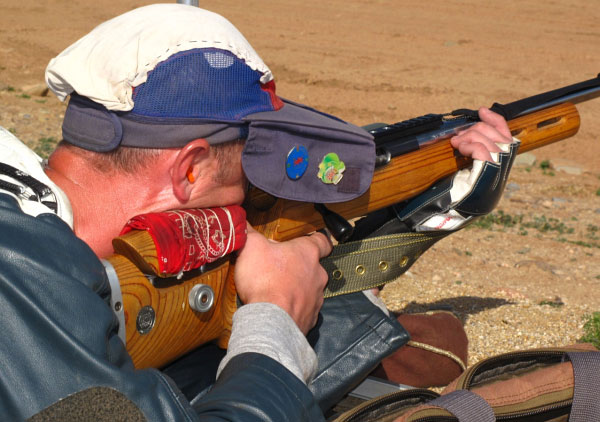
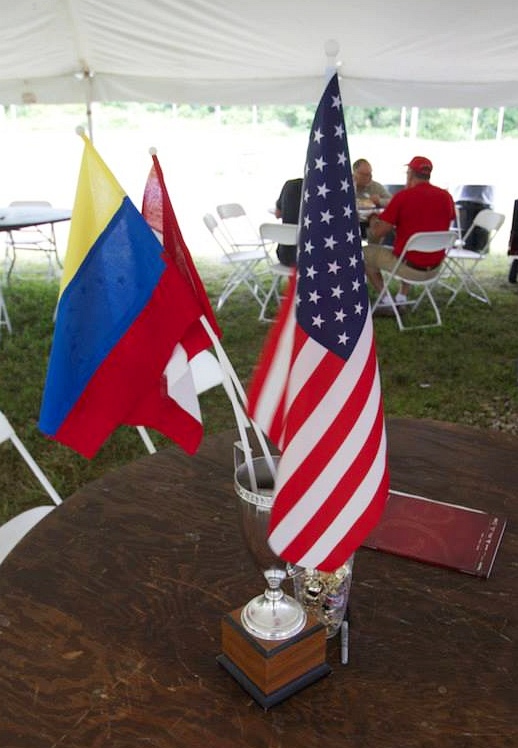
Shooters from across the nation and many foreign competitors will compete this year at the CAAFTC held at the Rochester Brooks Int’l Skeet and Trap Club.
Upstate New York heats up in the summer with the largest field target event in the country — the Crosman All-American Field Target Championship (CAAFTC). This very popular airgun event takes place June 21-23, 2019 in upstate New Yorkat the Rochester Brooks International Skeet and Trap Club in Rush, New York. 0ver 100 air rifle and air pistol competitors will participate in the big event hosted by Crosman. This event attracts top Airgunners from across the nation (and some foreign countries). Along with regular Field Target matches, there will be specialty side matches, plus a factory tour. The event is free to the public.If you are a Field Target Shooter and want to attend, don’t hesitate — registration closes soon.
After getting squared away with check-in and some practice rounds on Friday, take part in the pistol match and the Quigley Bucket Challenge (see video below). For the Quigley Bucket Challenge, competitors must try to hit a 1.75″ target from 55 yards away, using open sights (no scopes).
The three-day competition features multiple shooting matches including the main two-day rifle event. There are four divisions for competitors: Open, Hunter, WFTF, and Pistol. In addition to the main rifle event, this year will also feature a pistol match, the Quigley Bucket Match and the Pyramyd Air Gunslinger match. The Bucket match re-creates famous scene in the movie Quigley Down Under in which the lead character shoots a bucket at 700 yards. Here the distances are scaled down a wee bit (wink). Competitors, using iron sights only, get 5 shots at a 1.75″ bucket placed at 55 yards.
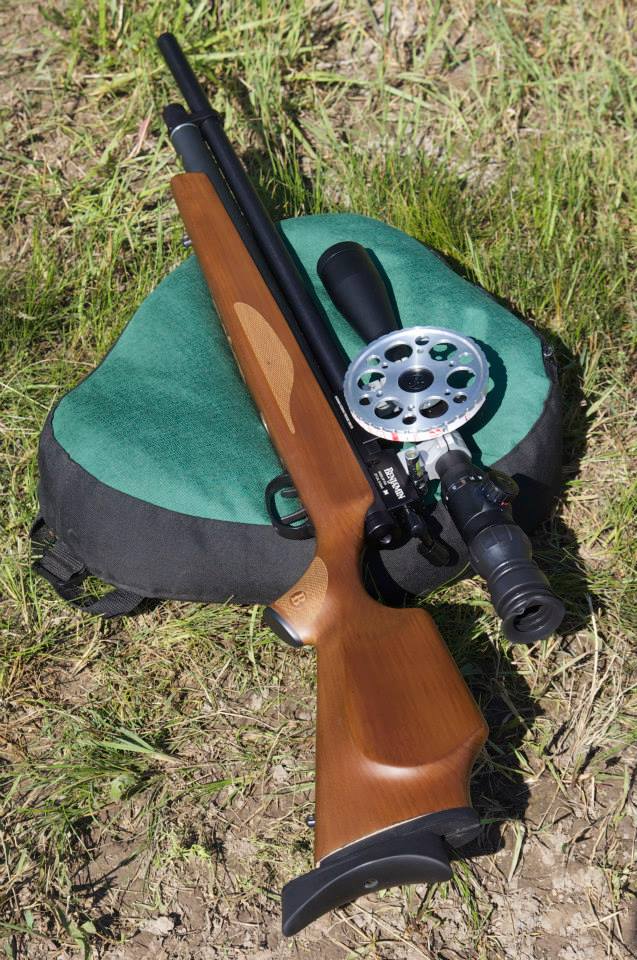
Tech Talk: Why the Big Side-Wheels on the Scopes?
Field Target rifles shoot pellets propelled by compressed air. These light-weight, low-BC projectiles drop very quickly, with a looping trajectory. In order to hit targets at distances out to 50 yards or so, you have to adjust your scope to compensate for pellet drop. But you can’t set the scope correctly without knowing the precise range to the target. This is the function of the big wheels on the side of the scope. Field Target Competitors use the parallax adjustment on high-magnification scopes to determine target range. The big wheel allows quick, yet precise parallax adjustment. Markings on the wheel show the shooter the scope settings required for the distance “dialed-in” via the over-size parallax wheel.
The CAAFTC is sanctioned by the American Airgun Field Target Association and is a featured AAFTA Grand Prix event. The 120-shot match has competitive rifle divisions based on allowable gun and support equipment. Here are the main air rifle classifications:
Hunter Division – rifle fires at a maximum 20 foot pounds of energy (FPE), shooter may use a non-attached bipod, non-restrictive clothing, and sitting stool. Open Division - maximum 20 FPE maximum rifle, shooter may wear a body harness, no bipod, 6″ maximum height seat. World Field Target Federation (WFTF) – similar to Open but shooters compete according to international standard of maximum 12 fpe for rifles. Freestyle Division – 20 FPE maximum rifle, no other restrictions. (This is new for 2016).
The pistol competition includes similar divisions based on shooting styles. Both rifle and pistol divisions include sub-classes based on the air rifle powerplant: piston driven or pre-charged pneumatic.
“If you want to see some of the country’s finest airgun shooters, this is the hottest event of the summer and it’s free for the public,” says Chip Hunnicutt, Marketing Manager for Crosman. “Alongside the world-class shooters, we’ll have enthusiasts simply having a good time and even parents bringing their kids for some good fun outdoors.” (NOTE: Click framed images below to zoom.)
Father’s Day is Sunday, June 16, 2019, so now’s the time to shop for a great gift for the “Old Man”. If your father enjoys the shooting sports and hunting, here are some recommended items. There are a couple items for home use as well. All selections cost less than $100.00. If you have an Amazon Prime membership, you can get two-day shipping in most areas of the country.
TEN Great Father’s Day Gifts for Dad Under $100.00
Protect Dad’s hearing — Howard Leight Impact Pro Electronic Muffs offer an impressive 30 dB Noise Reduction Rating (NRR). These high-tech muffs provide sound protection with the ability to still hear conversations and range commands. They also offer Headphone Functionality so Dad can listen to music.
Lyman’s new Ideal compact press works great as a second, lighter-duty press. It also is a good choice for loading at the range. It can easily be mounted to a bench with C-Clamps. This cast-iron press is stronger than other presses in its price class. The Lyman Ideal costs just $79.99 at Midsouth Shooters Supply.
The Fospower Battery Pack can charge your smartphone, tablet, and other USB-compatible devices. This is a great as a backup power source for a LabRadar chrono, or if you are using a tablet to monitor a TargetCam. Waterproof and shockproof, the rugged Fospower unit is built for outdoor use. On sale at Amazon.com for $24.99, this 10200 mAh Power Bank has been popular with our Forum members.
Plano’s AirGlide case is a unique, top-loading rifle case. Ideal for benchrest guns with wide forearms, the AirGlide case puts no side-pressure on scopes. We like the ease of loading. This fits rifles with barrel up to about 28″ max.
We’ve used Bog-Pod shooting supports on varmint hunts. They’re great for down-angle shots from a ridge or kneeling shots to get above terrain obstacles. Bog-Pods adjust from 17″ to 39″.
This Columbia Bahama II guide shirt is durable and comfortable. More importantly it provides UPF 30 protection from the sun’s damaging rays. The added cape over the shoulder area provides extra protection for shooters in the prone position. This is offered in 17 colors in breathable nylon. This is popular for fishing, sailing, hiking and other outdoors sports.
The versatile MTM Range Box includes cradles so you can do gun maintenance while at the range. A lift-out tray holds small items such as patches and jags. This is a durable product that can hold ammo and other gear.
Walkie-Talkies are “must-have” items for long-range shooting. The 22-CH Motorola T100 Two-Way Radio is an Amazon Favorite in FRS/GMRS Handheld Radios.
If you’re like most guys, you’re constantly looking for your smartphone and keys in the house. “Where’d I put it now?” we ask all too often. With this convenient Phone, Wallet, and Watch Station from Amazon, “Pops” can keep his most important items all in one place. This handy stand can also serve as a phone charging station.
This cleverly-designed Shotshell thermos will make Dad smile. Styled just like a 12ga shotgun shell, the Stansport thermal bottle holds 25 oz. of hot or cold liquids.
The NRA Blog ran an feature on Silhouette shooting by NRA Silhouette Program Coordinator Jonathan Leighton. Here are selections from Leighton’s story:
NRA Silhouette Shooting
The loud crack from the bullet exiting the muzzle followed by an even louder ‘clang’ as you watch your target fly off the railing is really a true addiction for most Silhouette shooters. There is nothing better than shooting a game where you actually get to see your target react to the bullet. In my opinion, this is truly what makes this game so much fun.
Metallic Silhouette — A Mexican Import
Silhouette shooting came to this country from Mexico in the 1960s. It is speculated that sport had its origins in shooting contests between Pancho Villa’s men around 1914. After the Mexican Revolution the sport spread quickly throughout Mexico. ‘Siluetas Metalicas’ uses steel silhouettes shaped like game animals. Chickens up front followed by rows of pigs, turkeys, and furthest away, rams. Being that ‘Siluetas Metalicas’ was originally a Mexican sport, it is common to hear the targets referred to by their Spanish names Gallina (chicken), Javelina (pig), Guajalote (turkey) and Borrego (ram). Depending on the discipline one is shooting, these animals are set at different distances from the firing line, but always in the same order.
Before Steel There Was… Barbeque
In the very beginnings of the sport, live farm animals were used as targets, and afterwards, the shooters would have a barbeque with all the livestock and/or game that was shot during the match. The first Silhouette match that used steel targets instead of livestock was conducted in 1948 in Mexico City, Mexico by Don Gonzalo Aguilar. [Some matches hosted by wealthy Mexicans included high-ranking politicians and military leaders]. As the sport spread and gained popularity during the 1950s, shooters from the Southwestern USA started crossing the Mexican border to compete. Silhouette shooting came into the US in 1968 at the Tucson Rifle Club in Arizona. The rules have stayed pretty much the same since the sport has been shot in the US. NRA officially recognized Silhouette as a shooting discipline in 1972, and conducted its first NRA Silhouette Nationals in November of 1972.
Now There Are Multiple Disciplines
The actual sport of Silhouette is broken into several different disciplines. High Power Rifle, Smallbore Rifle, Cowboy Lever Action Rifle, Black Powder Cartridge Rifle, Air Rifle, Air Pistol, and Hunter’s Pistol are the basic disciplines. Cowboy Lever Action is broken into three sub-categories to include Smallbore Cowboy Rifle, Pistol Cartridge Cowboy Lever Action, and regular Cowboy Lever Action. Black Powder Cartridge Rifle also has a ‘Scope’ class, and Hunter’s Pistol is broken into four sub-categories. Some clubs also offer Military Rifle Silhouette comps.
Where to Shoot Silhouette
NRA-Sanctioned matches are found at gun clubs nation-wide. There are also many State, Regional, and National matches across the country as well. You can find match listings on the Shooting Sports USA website or contact the NRA Silhouette Department at (703) 267-1465. For more info, visit SteelChickens.com, the #1 website dedicated to Silhouette shooting sports.
by Tommy Todd, Sierra Bullets Chief Ballistician for Sierra Bullets Blog
I have shot several disciplines of shooting competitions over the years and have learned a few things regarding ammunition and bullet function during this time. Frequently the matches I shoot require 40 to 100 shots before a person gets a chance to clean his rifle. Just as frequently, a good shooting match rifle will still shoot very good scores and groups with that many rounds fired through them. However, those guns do not deliver the same accuracy as when they were clean, but the drop-off in accuracy is not a huge change unless a set of accumulative issues arise.
In one situation, very dirty powder created more serious problems…
Pressure Issues — Extraction Problems Caused by Bad Fouling
Problem: Pressures Increased as Powder Fouled Barrel and Carbon Ring Formed
Solution: Clean Barrel Every Ten Rounds.
I witnessed a set of problems that occurred with a fellow competitor’s rifle at a recent F-Class match. He was using a large case capacity cartridge for the bore diameter and he was shooting a powder that was burning extremely dirty. As the match progressed, the carbon buildup caused most likely a carbon ring in the throat of the rifle and pressures kept increasing to the point that the cases were hard to extract, bolt lift was excessive, and eventually he quit shooting the rifle due to these issues. Accuracy also suffered as could be evidenced by the gun’s performance on target. This load looked fine when he was developing it, none of the excessive pressure signs appeared when he worked the load up, but he was cleaning the gun every ten shots.
When he was shooting multiple, 20-shot strings during the match is when the issues appeared. He was able to give the gun a thorough cleaning and the issues went away, for several rounds and then the pressures started appearing again. These pressure signs were not due to ambient temperatures as it was a cool spring morning and the temperature was in the low 40° range.
Accuracy Issues — Tune Lost with Higher Ambient Temps
Problem: Accuracy Lost When Outside Temp Much Hotter than When Load Developed
Solution: Pull Bullets, Reload Ammo with Lighter Charge
A couple of years ago, I attended a match early in the shooting season and it was unusually hot for that time period. I heard a competitor worrying before the match about his gun “blowing up”. At first I was concerned, but after thinking about what he had said I realized that he meant his “accuracy” blowing up, meaning he knowingly had loaded his ammunition at the top end of an accuracy tune that he established via a ladder test. The next day I asked him how his scores were and he said the gun was not shooting very well initially, but he had found enough equipment from friends that were at the match and had pulled the bullets, reduced the powder charge by a few tenths of a grain and re-seated the bullets and his gun was now shooting normally. The temperature difference between his home range the weekend before when he established his load and the match conditions was about 30 degrees and that was enough to cause an accuracy change at 1000 yards.
To learn more about how ambient temperature (and primer choice) affect pressures (and hence velocities) you should read the article Pressure Factors: How Temperature, Powder, and Primer Affect Pressure by Denton Bramwell. In that article, the author uses a pressure trace instrument to analyze how temperature affects ammo performance. Bramwell’s tests yielded some fascinating results.
For example, barrel temperature was a key factor: “Both barrel temperature and powder temperature are important variables, and they are not the same variable. If you fail to take barrel temperature into account while doing pressure testing, your test results will be very significantly affected. The effect of barrel temperature is around 204 PSI per F° for the Varget load. If you’re not controlling barrel temperature, you about as well might not bother controlling powder temperature, either. In the cases investigated, barrel temperature is a much stronger variable than powder temperature.”




 The circular orange cutting fixture on Erik’s Milling Machine is a Don Nielson “Pumpkin” neck-turning tool. Don designed this tool to be used by hand or with power. The Pumpkin boasts an eccentric mandrel that allows the cut to be adjusted easily in precise .0001″ increments. Benchresters like this as it allows for very precise control of cut depth and neck-wall thickness.


 Upstate New York heats up in the summer with the largest field target event in the country — the Crosman All-American Field Target Championship (CAAFTC). This very popular airgun event takes place June 21-23, 2019 in upstate New Yorkat the Rochester Brooks International Skeet and Trap Club in Rush, New York. 0ver 100 air rifle and air pistol competitors will participate in the big event hosted by Crosman. This event attracts top Airgunners from across the nation (and some foreign countries). Along with regular Field Target matches, there will be specialty side matches, plus a factory tour. The event is free to the public.If you are a Field Target Shooter and want to attend, don’t hesitate — registration closes soon.



 The
The 
 Metallic Silhouette — A Mexican Import
 Before Steel There Was… Barbeque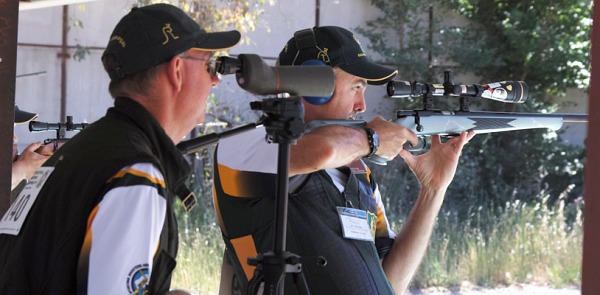


 To learn more about how ambient temperature (and primer choice) affect pressures (and hence velocities) you should read the article


