In recent months, Creedmoor Sports has expanded its selection of reloading tools and gear, under the guidance of Bill Gravatt, former President of Sinclair International. And Creedmoor recently launched the Creedmoor InfoZone, an online source for Shooting News, Reloading Tips, Gear Reviews and basic gunsmithing information. Visit CreedmoorInfoZone.com.
Bill Gravatt is an expert on reloading processes and gear. He developed many of the popular tools marketed by Sinclair Int’l, and now he’s lending that expertise to Creedmoor Sports. Bill is hosting a series of “how-to” videos produced for the Creedmoor InfoZone.
Here Creedmoor’s Bill Gravatt demonstrates several methods to clean your cases. Bill tells us: “Powder residue should be removed before you insert your cases into your reloading dies. There are several ways to clean your cases. Many shooters use a combination of various methods…”
1. Manual Cleaning — You can use 0000 Steel wool for the outside of the case and a Case Neck brush for the inside. A paper towel can remove any remaining residue. This is a handy way to clean if you load at the range.
2. Vibratory Tumbling — This traditional method works well, particularly for pistol brass. Experiment with both Corn Cob and Walnut media. You can get a brighter shine by putting a small amount of liquid brass polish in the media.
3. Wet Tumbling with Stainless Media — This process can get your brass clean inside and out. Do check to ensure no pins are stuck in the flash-holes. Watch for peening of case mouths that can occur over time.
4. Ultrasonic Cleaning — Ultrasonic cleaning works great for small parts as well as brass. The ultrasonic process removes all carbon and traces of lube, which can leave the inside of case necks too dry. To smooth bullet seating, try putting a tablespoon of Ballistol in the cleaning solution.
Cleaning Reloading Dies
Cleaning your reloading dies is something that many hand-loaders neglect. In this 60-second Tech Tip, Bill Gravatt provides some smart advice on cleaning your dies. Bill notes: “After heavy use, case lube and carbon can build up in your reloading dies. It’s important to keep them clean. Also, with new dies, give them a good cleaning before first use, because they ship with a corrosion inhibitor.”
1. Step 1 — Prior to cleaning, disassemble the die and spray it with a good degreaser. Do this with brand new dies too.
2. Step 2 – Take a patch and run it in the die to remove old lube and gunk. Don’t forget the decapping assembly and other internal parts.
3. Step 3 — After cleaning the die, but before reassembly, spray the die with a good corrosion inhibitor, such as Corrosion-X or Starrett M1.
As part of its online Load Data Center, Nosler offers very complete load data for the popular 6.5 Creedmoor cartridge. This medium-sized cartridge has become one of the most popular chamberings for tactical and PRS shooters. The 6.5 Creedmoor combines excellent accuracy, good mag-feeding, good barrel life, moderate recoil, and reasonable component cost. That’s why this cartridge has caught on quickly. GET ALL 6.5 Creedmoor Load Data.
How does barrel length affect 6.5 Creedmoor Muzzle Velocity? CLICK HERE for RifleShooter.com barrel cut-down velocity test.
According to the Sierra Load Manual: “Developed in 2007 by Dennis DeMille and Dave Emary, the 6.5 Creedmoor is a shortened and improved 30 TC cartridge case that was inspired by the .308 Winchester design. This short action design was created to maximize case capacity and a wide range of loading lengths, while still fitting in standard short action magazines. With the correct twist barrel, the versatile 6.5 Creedmoor can take advantage of the wide range of bullet weights available in 6.5 mm (i.e. .264 caliber). Reloaders should keep in mind that the 6.5 Creedmoor works best with medium to medium-slow powders such as H4350, Varget, Win 760, and RE-17.”
Click Image to Load PDF File for Listed Bullet Weights
The USA Shooting National Championships are underway at Fort Benning, Georgia. This is an elite event for Air Rifle, Smallbore Rifle, and Pistol. Thus far titles have been claimed in Men’s Three-Position Rifle, Women’s Air Rifle, Centerfire Pistol, Standard Pistol and Junior Men’s Sport Pistol. 2016 Olympian Lucas Kozeniesky won the overall Men’s Three-Position Rifle title, an Olympic event. He and eventual silver medalist George Norton shot the same Qualification scores yesterday and today (1166, 1174). Kozeniesky placed two positions higher in the Final to claim the overall gold medal.* Two-time Olympian Michael McPhail won the bronze medal.
In Women’s Air Rifle, Ole Miss Rebel Alison Weisz shared the lead after Day One with an impressive 419.8. Though her Qualification score of 416.6 wasn’t the highest among the competitors, her win in the Final secured her first National Championship title and nomination to the National Team – .1 point ahead of Sagen Maddalena who claimed silver. Emily Stith won bronze AND the women’s Junior title.
Six-time Olympian Emil Milev won the Men’s Standard Pistol competition in dominating fashion – winning the title by an astronomical 61 points. Kevin Bennett won silver and William Dutton won bronze.
Paralympic Sport Match
A World Shooting Para Sport-sanctioned match was held in conjunction with this year’s National Championship with nine countries participating. Some of these competitors shot from wheelchairs, while others shot from a bench with support for the rifles. Three American athletes earned medals and nominations to the National Paralympic Team with their performances today.
File photo 2016
*Here’s how the scoring worked. Athletes completed two days of Qualification matches, with competitors in the Olympic events (Women’s Air Rifle and Men’s Three-Position Rifle) also competing in a Finals match today. Points from the two Qualification matches, plus points earned based on rank in the Finals were combined to determine athletes’ final placements at these National Championships.
Alex Sitman of Master Class Stocks in Pennsylvania is widely considered one of the finest rifle-stock craftsmen in the country, if not the world. Alex’s workmanship and dedication to excellence is top-of-the-line. Alex normally custom-fits each stock to his customer precisely. Many hours are dedicated to stock prep and inletting, and his bedding jobs are flawless. Each stock is exactingly hand-crafted with great attention to detail, and then the stock is “dressed” in the customer’s choice of finishes.
Doing all that takes time — a lot of time. That’s why Master Class Stocks has a long waiting list, and it can take months before a big job is completed. But when Alex is involved, you can count on the final product being a work of stock-making art. Here’s an example. Alex recently stocked an F-Class rifle using eye-popping, exhibition-grade Bastogne walnut. The wood was sourced from Cecil Fredi of GunstockBlanks.com. Alex says: “Cecil’s wood is some of the best I’ve ever used. This blank cost over $1000.00, but it was truly spectacular.” Since the blank was less than 3″ wide, Alex (with assistance from 8-time NRA High Power Champion Carl Bernosky) laminated on the 3″-wide forearm “wings” using spare wood left after the blank was cut. See how Alex and Carl carefully matched the grain of the wood on the forearm. And note how perfectly the adjustable cheek-piece is fitted. If you want a stock like this on your next rifle, contact Alex Sitman at Master Class Stocks, (814) 742-7868.
The Bastogne Beauty — More Construction Details
Eric Kennard tells us: “This rifle was built for Mike Dana in Florida. Kelbly’s did the metal work. [The action is a Stolle Panda F-Class.] Barrel by Brux. Chambering? 6mmBR of course! Mike added a March 10 x 60 scope. Let me tell you this is beyond a work of art! The fit is absolutely perfect! There is not one flaw in the wood-work. The pillar bedding is also perfect! Did you notice the ebony inserts? Or Alex’s custom trigger guard? Alex out did-himself this time. Most of us would not dare to shoot [this gun]!”
Well folks, it’s July 1st already — the means we’re moving into “peak heat” summer conditions. It’s vitally important to keep your ammo at “normal” temps during the hot summer months. Even if you use “temp-insensitive” powders, studies suggest that pressures can still rise dramatically when the entire cartridge gets hot, possibly because of primer heating. It’s smart to keep your loaded ammo in an insulated storage unit, possibly with a Blue Ice Cool Pak if you expect it to get quite hot. Don’t leave your ammo in the car or truck — temps can exceed 140° in a vehicle parked in the sun.
To learn more about how ambient temperature (and primer choice) affect pressures (and hence velocities) you should read the article Pressure Factors: How Temperature, Powder, and Primer Affect Pressure by Denton Bramwell. In that article, the author uses a pressure trace instrument to analyze how temperature affects ammo performance. Bramwell’s tests yielded some fascinating results.
For example, barrel temperature was a key factor: “Both barrel temperature and powder temperature are important variables, and they are not the same variable. If you fail to take barrel temperature into account while doing pressure testing, your test results will be very significantly affected. The effect of barrel temperature is around 204 PSI per F° for the Varget load. If you’re not controlling barrel temperature, you about as well might not bother controlling powder temperature, either. In the cases investigated, barrel temperature is a much stronger variable than powder temperature.”
Powder Heat Sensitivity Comparison Test
Cal Zant of the Precision Rifle Blog has published a fascinating temp-stability comparison test of four powders: Hodgdon H4350, Hodgdon Varget, IMR 4451, and IMR 4166. The first two are Hodgdon Extreme powders, while the latter two are part of IMR’s new Enduron line of propellants.
The testers measured the velocity of the powders over a wide temperature range, from 25° F to 140° F. Hodgdon H4350 proved to be the most temp stable of the four powders tested.
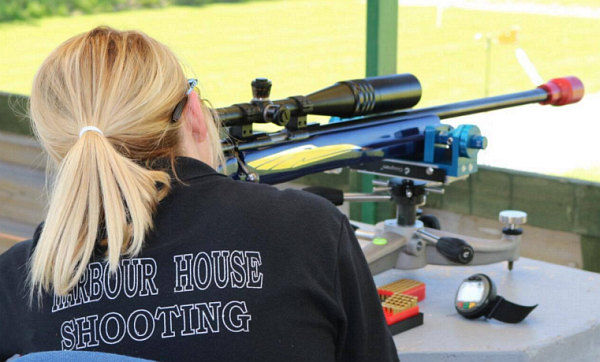
Rimfire Benchrest can be fun and rewarding. It can also be frustrating because sourcing superior lots of ammo is a never-ending challenge. Still we like rimfire benchrest because you don’t need to load at the range. Plus rimfire barrels last a very long time (our friend Joe Friedrich set an ARA Benchrest record with a 100,000+ round-count barrel). Here’s a great video from the National Rimfire Benchrest Association of Ireland (NRBAI). Production quality is excellent! We highly recommend you watch this video, which does a great job illustrating both the fun and challenge of rimfire benchrest competition.
If you’ve never seen 50m Rimfire Benchrest competition, this video is well worth watching:
“If you need to get your mind away from everything… then look down a scope, concentrate, and be disciplined.”
“Comradery is one of our organization’s key traits… there are no barriers of gender, age or mobility. Just a very diverse, bunch of good people enjoying a sport together.”
“The skill, in brief, is having the ability to hit the equivalent of the top of a pinhead at 50 meters, in all conditions with a .22 round. Not easy, especially when you have to do it 50 times to get a maximum score of 500 [points], 250 per sheet.”
Credit Boyd Allen for finding this NRBAI Benchrest Video, released on 6/28/17.
Many leading shooting sports online retailers are offering money-saving promotions this holiday weekend. With appropriate discount codes you can save 10%, get free shipping, or qualify for other significant savings. Here are some of the best current promotions we’ve found. Note — these promo codes change frequently. Check www.Retailmenot.com for new codes after these expire.
NOTE: MidwayUSA changes Promo Codes often, sometimes on a Daily Basis. Look for Promo links on MidwayUSA’s home page and check www.Retailmenot.com for the latest codes.
23rd Annual Bud Pryor Memorial Match, June 10-11, 2017 Match Report by Josh Shrum
For 23 years now, Benchrest Score shooters have flocked to the Thurmont Conservation & Sportsman’s Club outside of Frederick, Maryland for “The Bud”. This year, competitors from as far south as Georgia and as far north as Vermont came to try their hand against the always-challenging conditions of “The Bud”. Traditionally held in mid-June’s tricky conditions, the Bud Pryor Memorial is an event to challenge even the most skilled Benchrest competitor.
Day One started with the 100-Yard Aggregate, which pretty much set the tone for what was to come all weekend long. Of the 33 shooters competing in the Varmint For Score (VFS) class, thirteen shooters dropped at least one point at 100 yards. “The Bud” had begun.
100-Yard Winner Wayne France
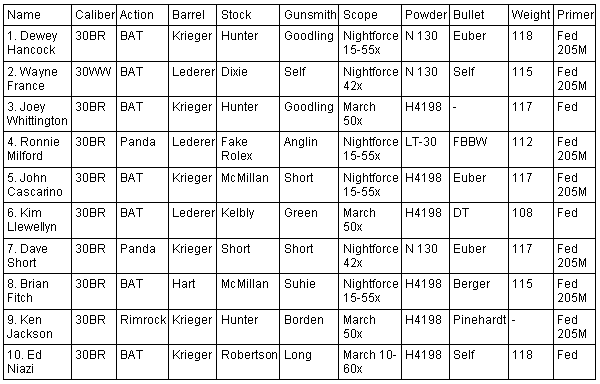
By the end of the 100-Yard Agg, five competitors finished with top scores of 250-21X, with Wayne France taking the win under Creedmoor tie-breaker rules. Wayne would continue to shoot well for the entire weekend, finishing in the Top 10 at 200 and taking second (by Creedmoor) at 300, shooting his Lederer-barreled BAT in a Dixie stock. Wayne does his own gunsmithing, makes his own bullets, and shoots his own cartridge design. He is truly a “Do-It-Yourselfer”.
200-Yard winner Ronnie Milford checking conditions…
Ronnie Rocks at 200, with an Impressive X-Count
Georgia shooter Ronnie Milford won the 200-Yard Agg with an impressive 250-13X. Ronnie was one of only six shooters to finish “clean” at 200, as traditional Bud weather was punishing even the smallest errors in judgment by shooters. Built by gunsmith Doyle Anglin, Ronnie’s Lederer-barreled Panda beat the field at 200 yards by three Xs, a significant margin. The next three shooters (places 2-4 at 200 yards) all shot 250-10X. Interestingly, Ronnie was shooting Accurate LT-30 powder, not the more widely used Hodgdon H4198 or Vihtavuori N130.
Of special note, Mrs. Carol Grosbier came on Saturday to visit during the match. Nearly every single shooter there stopped by to visit and offer their condolences on the passing of her husband Dick Grosbier, former IBS Vice President and Webmaster. It was great to see Carol and everyone’s actions showed just how great of a community of shooters the sport of Benchrest has.
The longest challenge, the 300-Yard Agg, was shot on Day Two. While conditions were not quite as “tough” as the previous day, they were anything but forgiving. High heat and gusting winds kept shooters on their toes as they strove for victory at 300 yards. A mere seven shooters would manage to stay clean through the first match, and only Maryland shooter Dewey Hancock managed to stay clean through Match Two. Dewey would go on to win the 300-Yard Agg shooting a 248-3X, beating 100-Yard winner Wayne France by Creedmoor and edging out Joey Whittington’s score of 248-2X. Dewey’s Goodling-built rifle uses a BAT action, Krieger barrel, and sits in a beautiful Roy Hunter stock.
Dewey Hancock Wins with Strong Performances at 100, 200, and 300
Dewey Hancock’s excellent performance at 300, coupled with his second-place finish at 200 and his Top Ten finish at 100 put him on the throne. Hancock won the Grand Aggregate for the 23rd Annual Bud Pryor with a score of 748-31X. Just one point behind, Wayne France took second with a score of 747-31X. Joey Whittington took third with 746-35X.
Hunter Class was contested by both K.L Miller and Brian Fitch (Brian competed in both VFS and Hunter) with K.L Miller taking the Grand Aggregate in Hunter with a 723-11X while Brian posted a 717-11X. Mark Ukishima shot the events only Factory Class gun. It was great to have so many different classes contested at this year’s Bud Pryor.
TOP 10 EQUIPMENT LIST:
About the Bud Pryor Memorial Match Bud Pryor was a fine gentleman who started shooting IBS matches in 1983. He was a machinest turned gunsmith who made friends and got many people started in shooting IBS registered matches over the next few years. Bud and Dick Grosbier ran the first IBS match at the Thurmont range in April 1983. CLICK HERE to see vintage photos of the 1983 match.
After Bud’s untimely passing a few years later, the club decided to put on a big match and dedicate it to him. As Thurmont is one of the few ranges around with 100/200/300 yard capabilities, we decided to put on a 3-yardage Grand Aggregate match. This was not as simple as it seems, since the three-yardage 100/200/300 was not an IBS-recognized Aggregate. After an agenda item was approved at an IBS winter meeting, 100/200/300 records were set at Thurmont. Over the years, most records have stayed at this scenic range. There are a total of four IBS ranges now holding 100/200/300 yard matches.
The Fourth of July is just four days away. Along with flags and fireworks, what better way to celebrate Independence Day than by shooting a Red, White, and Blue rifle? This limited-edition rifle makes a bold statement in support of the Second Amendment. We love it. But you pay a lot for those fancy graphics — this red, white, and blue rig costs $3149.99. Freedom doesn’t come cheap, right?
The Axelson Tactical Tribute Series Centerfire Rifle shows off both your American pride and love of the Second Amendment. This is a Limited Edition of one hundred (100) rifles. Each Tactical Tribute model features a forged 7075-T6 hardcoat-anodized aluminum receiver set with custom Cerakote™ “Stars & Stripes” coating end to end. Even the Magpul Mags are coated with a matching design. This rifle, a Cabela’s exclusive, is on sale this week (as a 4th of July Special) for $3149.99. CLICK HERE to order.
See Features of Freedom Tribute Rifle in this Video:
Along with Independence Day Tribute Rifle shown here, Axelson offers a Lone Star State Texas Tribute rifle as well as a Vietnam Era Tribute Rifle. SEE all Tribute Rifles HERE.
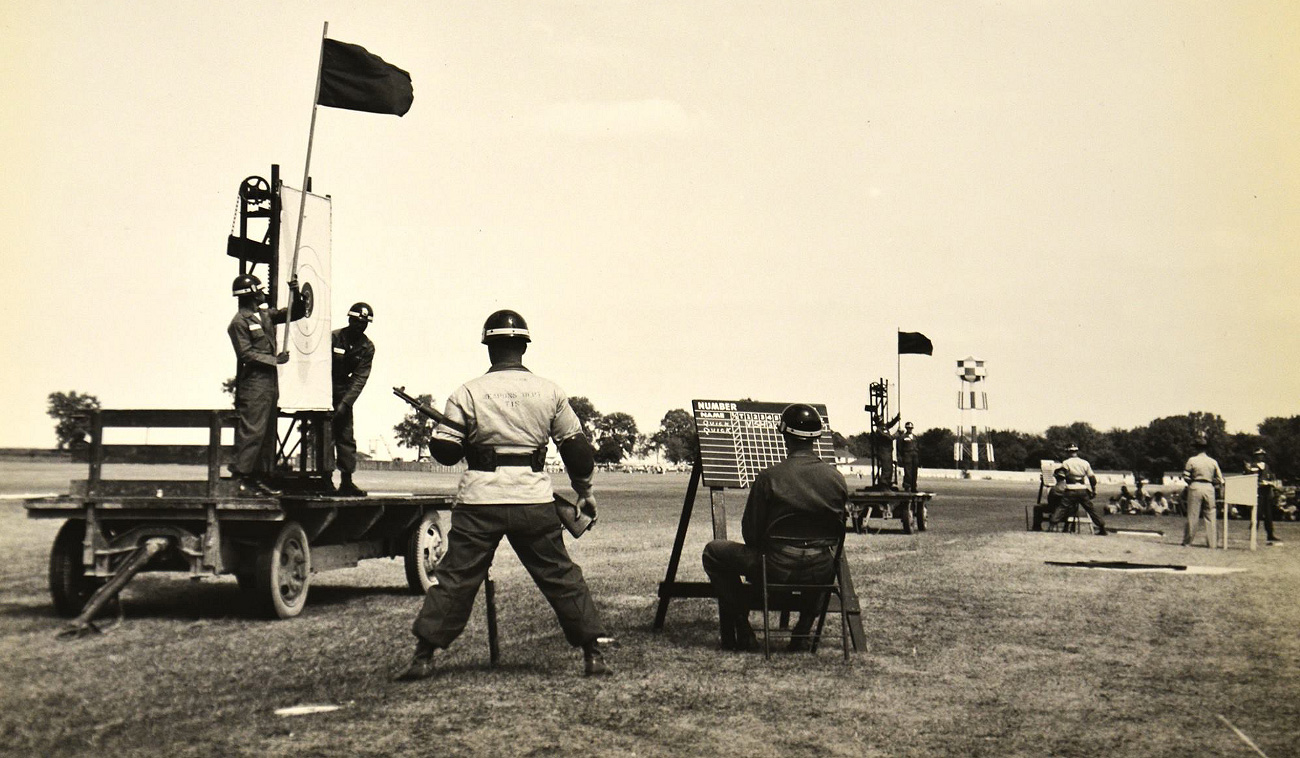
Ever wonder what “Maggie’s Drawers” means? Well, in the shooting community it means a complete miss on the target, as originally indicated by a large red flag. In this 1957 photo, the U.S. Army brought the targets to the students at the annual Small Arms Firing School. Wheeled carts with “demo” targets were positioned at the firing line, between shooting stations, so trainees could better see the procedures. Soldiers demonstrated firing a shot, scoring the target and scorecard on the Camp Perry firing line. Targets in use at the time were the “V” type. In this demonstration shot, the pit worker waves a red flag, known as “Maggie’s Drawers”, signifying a miss. This old photo comes from the Civilian Marksmanship Program (CMP) Archives.
If you click the gray tab to view the photo full-screen, you can see something extra. Look carefully at the horizon below the muzzle of the M1 Garand held by the shooter in the foreground. If you look carefully, you can see a crane being used to erect the beach tower that now watches over Lake Erie and the ranges when they are “hot”.
Origin of ‘Maggie’s Drawers’ Term Hap Rocketto, noted shooting historian, has explained the etymology of “Maggie’s Drawers”. This term “refers to the red flag waved vigorously across the face of the target to signify a complete miss of the target during practice”. The term came in use in the early 20th Century (prior to WWI) when flags were used to signal shot locations on long-range rifle targets.
Hap writes: “Since [the early 20th Century] the target has changed to the decimal bull and the marking system has been revised several times. Flags are no longer used, being replaced by value panels and chalk boards. However, one term from the flag days has held on with a tenacity that is indicative of the strong traditions of the high power community. If a shooter had the misfortune of firing a miss a red flag was waved across the front of the target. The flag is commonly known as ‘Maggie’s Drawers’ giving us the term now generally used to refer to a miss. The term ‘Maggie’s Drawers’ seems to be based on, as many things are in the military, a bawdy song. Prior to The Great War there was an old music hall song entitled The Old Red Flannel Drawers That Maggie Wore which [was creatively altered], as things tend to be by the troops, into something less delicate than might have been sung in vaudeville in the United States or in British music halls of the day.”


 Alex Sitman of

 To learn more about how ambient temperature (and primer choice) affect pressures (and hence velocities) you should read the article






 Bud Pryor was a fine gentleman who started shooting IBS matches in 1983. He was a machinest turned gunsmith who made friends and got many people started in shooting IBS registered matches over the next few years. Bud and Dick Grosbier ran the first IBS match at the Thurmont range in April 1983.


 Hap Rocketto, noted shooting historian, has explained the etymology of “Maggie’s Drawers”. This term “refers to the red flag waved vigorously across the face of the target to signify a complete miss of the target during practice”. The term came in use in the early 20th Century (prior to WWI) when flags were used to signal shot locations on long-range rifle targets.


