ZEISS, a world leader in optics, has released two very impressive new 15-power binoculars: the Conquest HDX and Conquest HDX LRP. These can be used with tripod supports for spotting duties, and with 56mm lenses they offer exceptional low-light performance. The all-new ZEISS Conquest HDX LRP 15×56 (LRP stands for “Long-Range Precision”) is an advanced optic developed specifically for use in Precision Rifle Series (PRS) and National Rifle League (NRL, NRL22, NRL Hunter) competition.
Developed with input from top competitors, the Conquest HDX LRP 15×56 incorporates an advanced milliradian reticle etched onto the internal lens. This reticle helps the spotter determine accurate leads for moving targets and evaluate down-range bullet impacts. This reticle also allows the spotter to make better wind calls and assess needed corrections more quickly and accurately if there is a miss. That all works to help secure maximum points in every stage.
CLICK HERE for full details on the impressive new Conquest HDX LRP and its MRAD reticle.
The Conquest HDX LRP 15×56 reticle — a combination of T-style and tree-style designs with a floating center dot — should be familiar to competition PRS/NRL shooters. It matches the reticle pattern commonly used in FFP MilRad riflescopes — especially so with ZEISS LRP riflescopes. That assists with ease of use and making quick calls. The ZEISS HDX LRP reticle design offers a good balance of reference marks and line thickness. The precise, low-center placement of the LRP reticle was selected after extensive testing. It helps reduce eyestrain and curvature distortion.
In this video top PRS competition shooters work with the new Conquest HDX LRP long-range binoculars with MRAD reticle. They show how the reticle can be used to range targets and evaluate shot accuracy to maximize scores during a match.
Also unique to the HDX LRP version are two locking diopter adjustments. One allows for razor-sharp focusing of the reticle. The second allows for an overall sharply focused image of the entire field of view. These adjustments are specific to the individual user’s eyes but are easily changed when necessary.
You’ll want a high-quality tripod for effective use of high-magnification binoculars in PRS/NRL competition. The ZEISS Conquest HDX LRP 15×56 incorporates a 1/4-20 tripod adapter port that allows easy installation of the standard ARCA-Swiss tripod adapter — also included with the HDX LRP model.
The basic 15X Conquest HDX has a retail price of $1,899.99 and is available now. The HDX LRP version with MRAD reticle will be available in mid-February with a retail price of $1,999.99. For more information on all ZEISS Conquest HDX binoculars, visit the ZEISS Conquest HDX INFO Page.
This thought-provoking article is one of the 15 most popular Daily Bulletin features over the last 12 months. We are republishing this story today for readers who may have missed it the first time around…
Here’s a little known fact that may startle most readers, even experienced gunsmiths: your barrel wears out in a matter of seconds. The useful life of a typical match barrel, in terms of actual bullet-in-barrel time, is only a few seconds. How can that be, you ask? Well you need to look at the actual time that bullets spend traveling through the bore during the barrel’s useful life. (Hint: it’s not very long).
Bullet-Time-in-Barrel Calculations
If a bullet flies at 3000 fps, it will pass through a 24″ (two-foot) barrel in 1/1500th of a second. If you have a useful barrel life of 3000 rounds, that would translate to just two seconds of actual bullet-in-barrel operating time.
Ah, but it’s not that simple. Your bullet starts at zero velocity and then accelerates as it passes through the bore, so the projectile’s average velocity is not the same as the 3000 fps muzzle velocity. So how long does a centerfire bullet (with 3000 fps MV) typically stay in the bore? The answer is about .002 seconds. This number was calculated by Varmint Al, who is a really smart engineer dude who worked at the Lawrence Livermore Laboratory, a government think tank that develops neutron bombs, fusion reactors and other simple stuff.
On his Barrel Tuner page, Varmint Al figured out that the amount of time a bullet spends in a barrel during firing is under .002 seconds. Al writes: “The approximate time that it takes a 3300 fps muzzle velocity bullet to exit the barrel, assuming a constant acceleration, is 0.0011 seconds. Actual exit times would be longer since the bullet is not under constant acceleration.”
We’ll use the .002 number for our calculations here, knowing that the exact number depends on barrel length and muzzle velocity. But .002 is a good average that errs, if anything, on the side of more barrel operating life rather than less.
So, if a bullet spends .002 seconds in the barrel during each shot, and you get 3000 rounds of accurate barrel life, how much actual firing time does the barrel deliver before it loses accuracy? That’s simple math: 3000 x .002 seconds = 6 seconds.
Gone in Six Seconds. Want to Cry Now?
Six seconds. That’s how long your barrel actually functions (in terms of bullet-in-barrel shot time) before it “goes south”. Yes, we know some barrels last longer than 3000 rounds. On the other hand, plenty of .243 Win and 6.5-284 barrels lose accuracy in 1500 rounds or less. If your barrel loses accuracy at the 1500-round mark, then it only worked for three seconds! Of course, if you are shooting a “long-lived” .308 Win that goes 5000 rounds before losing accuracy, then you get a whopping TEN seconds of barrel life. Anyway you look at it, a rifle barrel has very little longevity, when you consider actual firing time.
People already lament the high cost of replacing barrels. Now that you know how short-lived barrels really are, you can complain even louder. Of course our analysis does give you even more of an excuse to buy a nice new Bartlein, Krieger, Shilen etc. barrel for that fine rifle of yours.
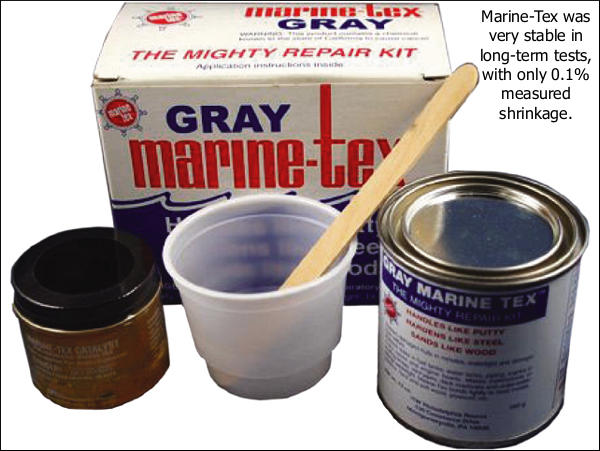
A customer of well-known gunsmith (and Hall-of-Fame shooter) Thomas “Speedy” Gonzalez recently asked Speedy about bedding compounds. Speedy offered some interesting advice based on long-term testing of various materials. Speedy favors Marine-Tex because it is very stable over time, while other materials can shrink up to 6% dimensionally. A good bedding job should be a perfect fit to your barreled action. If the bedding material shrinks over time, that is NOT a good thing….
Speedy’s customer asked: “I know you’re not a Devcon man in regards to bedding compounds but I respect your input in such matters and my question is this in regard to aluminum actions. If Devcon was considered, for an aluminum action, would you prefer aluminum compound formula or steel formula? I personally prefer Devcon steel and Marine-Tex for steel receivers but my experience with aluminum is limited. Also do you have a release agent preference that works better with aluminum?”
Speedy answered: “My only preference of one epoxy over another is their stability over time. My buddy who works for the Texas State Weights and Measures Department had me cast several of the most common types of epoxies used for bedding into 1.000″ machined blocks. After one year of being kept in a controlled climate and measured for shrinkage monthly, the Marine Tex shrunk only 1/10th of 1% (i.e. 0.1%) whereas almost all the others (including Devcon Steel formula, Devcon Aluminum formula…) shrunk 3% to 6%. The only other compounds that matched the Marine Tex were Araldite 1253 and Araldite 2014, with the latter being quite expensive for daily use.”
Speedy added: “The Marine Tex Grey has no atomized metal in its makeup even though it appears that it does. This can be proven by the use of a strong neodymium magnet. What is humorous to me is that people don’t like aluminum yet will bed their actions atop aluminum pillars that have twice the coefficient of expansion (COE) of steel. Like Devcon, it is what people have always done and used. Thus [they] perpetuate the same old stuff. That’s my two cents’ worth. But as I tell everyone, ‘I’ll tell you what I know or do, but it’s not my job to convince anyone to do it my way’.”
Release Agents — Try Shoe Polish
Regarding release agents, Speedy stated: “I use Kiwi Neutral or Tan shoe polish. This works great and you can find it anywhere. Do NOT use the black or brown as it will stick.”
View More Photos of Speedy Gunsmithing
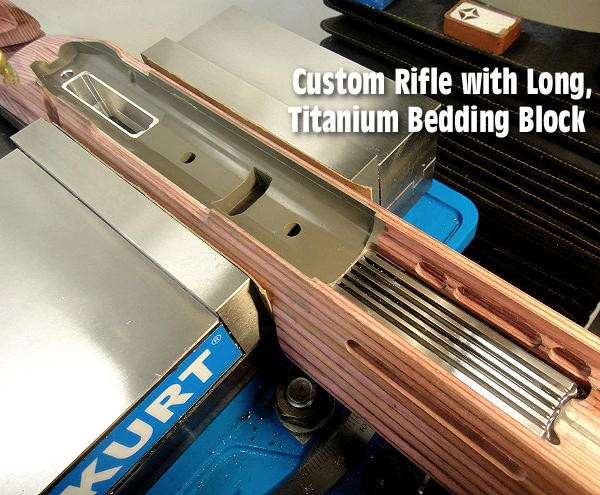
On his Facebook Page you can see a variety of other projects by Speedy. Some time ago, Speedy did a bedding job using a custom titanium bedding block. Speedy notes, “The stock was a raw blank requiring full inletting for the action to fit properly plus the titanium block. All the loading ports, bolt handle cut, bolt stop, and trigger guard cuts were done with diamond tooling to eliminate fraying and/or delamination of the wood.”
The following article by Tom Alves describes a very practical approach to physical training for those of us who are not as young and spry as we once were. Tom shows us how to give our bodies at least some of the maintenance we give our rifles. While we all realize that our rifles will outlive us, let’s see if we can’t narrow the margin a bit with some personal maintenance that just might help the shooting too!
This article originally appeared in German Salazar’s Rifleman’s Journal, and appears with permission. Sadly, German passed away in 2022. This was a very sad loss of a great marksman and a great shooting sports writer. This Editor also counted German as a close friend, who helped this site in many ways.
A Suggested Training Approach for Older Shooters
By Tom Alves Most articles and discussions regarding competitive shooting center around equipment. Now and then one will come across an article about physical training such as the USAMU piece on Physical Conditioning for Highpower Shooting. If you break the articles down they often discuss “core strength” and durability. The purpose of this paper is to elaborate on those points with a bit different perspective. Many of the articles you will read in books about position shooting and the one mentioned before are directed more toward the younger generation of shooters in their 20s. If you look down the line at a typical high power match these days you are likely to see quite a few folks who are in their middle 30’s and up. Many people in that age range have had broken bones and wear and tear on their joints so a training program needs to take that into account. For instance, while jogging for an extended period for heart and lung conditioning — often called cardio exercises — may be the recommended approach for younger folks, it may be totally inappropriate for older people. The procedure to repair meniscus tears in knees is one of the most frequently performed operations in this country. Another approach one often sees in training to improve core strength is the use of weight machines which isolate certain muscle groups in their operation. I would like to suggest an alternative approach that not only does not require special equipment but uses the body’s muscles in a coordinated fashion in the same way they are used in our natural movements. So, let’s set down some criteria:
1. The approach has to be low impact to conserve joints.
2. One goal is to improve the strength of the core muscles which are the muscles of our trunk that keep us erect and from where all movements initiate.
3. Along with core strength we need flexibility and full range of motion.
4. We want to improve our lung and heart function so we can have a good flow of oxygen going to our organs and muscles to reduce the rate at which we become fatigued during a competitive event.
Before I continue I believe it is appropriate for the reader to understand that I am a fellow shooter and this is a program I have designed for myself based on considerable reading and experience over a number of years. I am not a medical doctor, a formally trained exercise professional or any other type of specialist in the field. Consequently, this information is offered with the advice that you consult your medical advisor or similar authority before you embark on this or any similar regimen.
I will start with core strength and flexibility. Pilates exercises are resistance exercises that can incorporate the use of resistance bands, light weights and the weight of your body parts in order to strengthen the muscles in the abdomen, back, hips, chest and shoulders. The exercises can be performed alone but I recommend attending classes put on by a certified instructor who will ensure that you perform a balanced routine meaning you work on the front and back and both sides of your trunk. As to flexibility, yoga complements Pilates exercises and they are often taught together. In practical terms yoga strengthens through resistance using the weight of the body and increases flexibility by stretching the various muscle groups in a coordinated fashion. Some yoga exercises also work on balance which is helpful in position shooting and life in general. Again, I suggest attending formal yoga classes since an instructor can help you address such things as a joint misalignment. As an example, my right leg healed improperly after the femur was broken and my right foot splays out putting undue load on my left knee. There are a number of books available on Pilates and yoga and some of them get pretty involved; I leave that to the reader to explore. I will list some reference material at the end of the article that I have found useful.
Finally, heart and lung improvement. In order to exercise the heart and lungs while not abusing the joints, particularly the knees and hips, one has to resort to something other than jogging. Walking, bicycling, elliptical machines and swimming may be alternative methods you’d like to consider. Based on my reading, in order to get the most benefit it is important to exercise so that the pulse rate becomes elevated for periods of time rather than kept at a constant rate. The process I use, called PACE, is promoted by Al Sears, MD, http://www.alsearsmd.com/. It is interval training for the non-athlete. In simple terms one exercises, using whatever equipment one desires, to achieve a heart rate in which you are slightly above your ability to bring enough oxygen into your body to sustain the activity for an extended period. This is similar to wind sprints for a sprinter or a football player. After each episode you must rest until you have achieved recovery, meaning you can catch your breath easily. A series of three sets is recommended which covers a total time of about 20 minutes.
Report from the Author — Yes, Training Helps
As a result of this training program I have experienced increased strength in my legs and trunk, less joint stiffness, lower blood pressure, and lower resting pulse rate. The Pilates/yoga classes are usually attended 2 to 3 times a week and the interval training performed twice a week. [The author was 64 when this was first published. He is now 75, and still shooting Palma and Smallbore prone.]
Before I close I would like to touch briefly on two other related subjects: hydration and visual training. When one is exerting oneself, the body produces perspiration to keep the body’s temperature at an acceptable level. As one perspires the blood gets thicker and the ocular fluid in one’s eyes thickens as well. The heart has to work harder to supply oxygen and nutrients to the body so visual and cognitive functions degrade and fatigue sets in rapidly. Essential chemicals called electrolytes are also carried out of the body with the perspiration. As a result, it is necessary to replace moisture and electrolytes to maintain basic health and a competitive level of performance. If one goes on the Internet there is a multitude of articles on hydration. Due to the kindness of my lead Pilates/yoga instructor, Ms. Annette Garrison, I have a pretty comprehensive article on various aspects of hydration that I have included, http://www.ideafit.com/fitness-library/hyponatremia-other-side-hydration-story , for your information.
Last I want to mention visual performance training. The New Position Rifle Shooting, A How-To Guide for Shooters and Coaches by Bill Pullum and Frank Hanenkrat mentions sports vision training amongst other aspects of vision in competitive shooting. If one goes on the Internet you will find training programs directed at golfers, baseball and football players. There is one site that has a demo which, if one looks at it for long, it is obviously very similar to a shooting gallery video game. The training involves rapid recognition and hand-eye coordination. Another source of visual training exercises, along with a wealth of other information, is the book Prone And Long Range Rifle Shooting by Nancy Tompkins.
Hopefully, I have provided some information which will be helpful in improving shooting performance and extending the time you can participate at a competitive level. It is important that you proceed at your own pace. I have pushed myself too hard in the interval training and now have to back off a bit. In closing I would like to thank Annette Garrison and GS Arizona for their help, patience and encouragement.
Additional Reference Material
1. Framework by Nicholas A. DiNubile, MD This is required reading for anybody who has suffered an injury like a torn meniscus or has muscular skeletal issues. This is the book that led me to Pilates/yoga
2 P.A.C.E., The Twelve Minute Fitness Revolution by Al Sears, MD The approach I use to interval training. I am sure there are other sources.
Many Remington 700 rifle owners swap out the factory trigger. This is not a difficult task, but you need to follow the proper procedure so you don’t damage any important parts during installation, and so that you don’t interfere with the operation of the bolt and safety. This Do-It-Yourself video from Brownells leads you through step by step how to safely and correctly replace your Remington 700 trigger. This installation video covers the common methods used to install most of the popular after-market Rem 700 triggers. Importantly, the video also shows how to function test after installation, and how to make sure your safety is working properly.
Many Rem 700 owners fit Timney triggers to their rifles.
Video find by ELR Researcher. We welcome reader submissions.
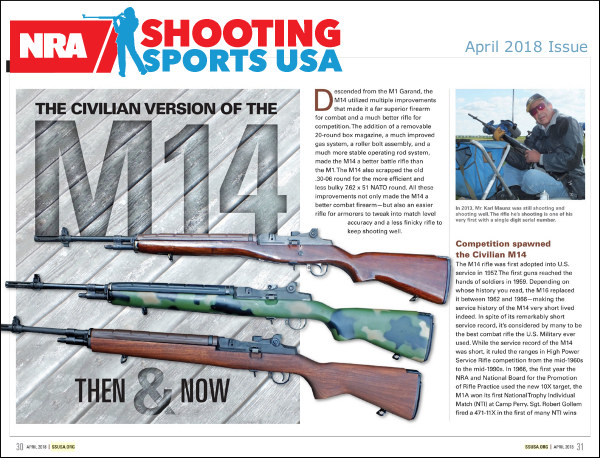
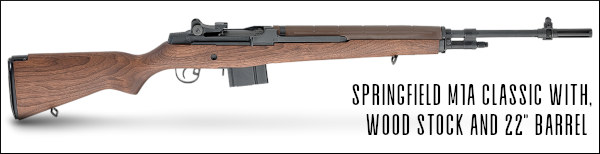
“Descended from the M1 Garand, the M14 utilized multiple improvements that made it a far superior firearm for combat and a much better rifle for competition.” — Dick Jones, Shooting Sports USA.
In the April 2018 issue of Shooting Sports USA, you’ll find a good article on the civilian version of the M14, now sold commercially as the Springfield M1A. An evolution of the battle-proven M1 Garand, the M14 was designed to shoot the 7.62×51 (.308 Win) round instead of the larger .30-06 Springfield cartridge used in WWI, WWII and Korea. While the vast majority of today’s M1As are chambered for .308 Win/7.62×51, Springfield Armory also produces a 6.5 Creedmoor version.
The CMP’s M14 Heritage Match will be held Sunday, August 3, 2025 at the Viale Range at Camp Perry.
Dick Jones reports that accurized M14/M1As could post remarkable scores: “The accuracy potential of the M14/M1A is unquestionable. During their reign as service rifles, they produced multiple perfect 200 scores at 600 and 1000 yards in the hands of top shooters. This is a difficult feat with a modern, scoped, magnum-caliber rifle and remarkable with an iron-sighted battle rifle. Good competition rifles can group 10 shots under one MOA, and the meticulously-massaged rifles used by the top shooters during my career would consistently put up 10 shots under an inch at 200 yards off a test cradle.”
Springfield M1A at Past Camp Perry National Matches
In years past, the CMP hosted a major M1A Match every summer at Camp Perry, sponsored by Springfield Armory. Significant prizes were awarded. In past years M1A Match competitors took home over $25,000 worth of cash and merchandise. This year M1As can compete in the general Garand, Springfield, Vintage and Modern Military match slated at Camp Perry for July 31 through August 2, 2025. There will also be a M14 Heritage Match on August 3, 2025.
For many years, the semi-auto version of the M14 was “top dog” in iron sights Service Rifle competition. Now that discipline is dominated by .223 Rem (5.56×45) AR-type rifles, but the bigger .308-caliber rifle, now sold as the Springfield M1A, remains popular.
In this video, YouTube Reviewer Hickok 45 compares the M1 Garand and the M14/M1A:
See how the modern M1A is built in this Springfield Armory Video:
As racing improves automobiles, competition improves firearms, and the current crop of Springfield M1As, from the Basic to the top-of-the-line Super Match and Loaded models, reflects the years of development. The M14 and its variants are still in service today and it’s still considered by many to be the best battle rifle in the history of the U.S. Military. — Dick Jones, Shooting Sports USA
At the request of our readers, we provide select “Deals of the Week”. Every Sunday afternoon or Monday morning we offer our Best Bargain selections. Here are some of the best deals on firearms, hardware, reloading components, optics, and shooting accessories. Be aware that sale prices are subject to change, and once clearance inventory is sold, it’s gone for good. You snooze you lose.
NOTE: All listed products are for sale to persons 18 years of age or older. No products are intended for use by minors.
1. EuroOptic — Tikka T3x Rifle Blow-Out Sale — Save 35%
⏺️ Tikka makes great hunting rifles now offered at major savings
With this Blow-Out Sale at EuroOptic.com, you can save $120-$530 on quality Tikka T3x hunting rifles, starting at just $599.99. Multiple models are on sale including T3x Lite, T3x Lite Compact, T3x Lite Stainless, T3x Hunter, T3x Laminated, and T3x RoughTech. Both right-hand and Left-hand versions are offered. The Hunter models feature a handsome wood stock. These rifles can deliver sub-MOA accuracy with good hand-loads.
2. Precision Reloading — 10% Off All Berger Bullets
⏺️ Great top-tier, high-demand bullets on sale through 1/17/2025
Berger bullets are used by top competitors in many disciplines — F-Class, Benchrest, PRS/NRL, Service Rifle, ELR and more. Now through 1/17/2025 you can get 10% off the full range of Berger match and hunting bullets. Precision Reloading has a large stock of Berger bullets currently, including high-demand 6mm, 6.5mm, 7mm, and .30-caliber bullets.
3. Sportsman’s WH — Flash Sale on Optics, Knives, and More
⏺️ Great deals — save up to 50% on optics, ammo, and knives
Get major savings on optics, ammo, knives, and some firearms with the January Flash Sale at Sportsman’s Warehouse. We saw some amazing deals on Leupold and Vortex optics. And there are some very good deals on knives with savings up to 50%. CLICK HERE to see all 36 current Flash Sale bargains.
4. Creedmoor Sports — ADG Brass Sale, Std. + Magnum Cartridges
⏺️ ADG makes great brass for larger F-Class, hunting, and ELR rifles
If you are a F-Open shooter or a hunter using a modern magnum cartridge, head over to Creedmoor Sports. Currently top-quality ADG brass is on sale with significant savings of 10% or more on notable cartridge types including 6.5 PRC, 7 SAUM, 7mm Rem UltraMag, 300 PRC, 300 WSM, and more. This ADG brass is very strong and consistent.
⏺️ Great products — Wipe-Out, Carb-Out, Patch Out — save time/effort.
Sharp-Shoot-R Precision makes fantastic barrel cleaning products including Wipe-Out Foam, Carb-Out, Patch Out, Wipe-Out Accelerator, Tactical Advantage, and No-Lead. In addition Sharp-Shoot-R makes Maxx and Slicker lubricants. We use Wipe-out, Carb-out, and Accelerator and these products have dramatically reduced the amount of brushing required and have detered hard carbon fouling. All Sharp-Shoot-R products are currently on sale at Precision Reloading. You can save on these truly outstanding cleaning items.
6. Midsouth — 2000 Rounds Aguila .22 LR ammo, $114.99
⏺️ Good reliable rimfire ammo for just six cents a round
Here is one of the best deals on rimfire ammunition that we’ve seen in years. Right now at Midsouth, you can get 2000 rounds of Aguila .22 LR Super Extra HV ammo for just $114.99 on sale. That works out to just $3.00 per box (6 cents per round). This would work great for pistol and rifle plinking.
7. Midsouth — LEE Breech Hand Press Kit, $68.99
⏺️ Compact hand press can do a number of key tasks — Great Sale
The LEE Breech Lock Hand Press Kit combines the popular LEE Hand-Held Press with a LEE Breech Lock System that allows reloaders to quickly change dies without having to readjust dies. This hand-held reloading press weighs only 1.5 lbs and works well for depriming tasks or bullet seating at the range. This kit, now just $68.99 on sale at Midsouth, includes Hand Press, Ram Prime Unit, Powder Funnel, and Resizing Lube.
⏺️ Great price on versatile rapid access 2-gun security safe
If you want handy storage for two handguns or one pistol, watches, and other valuables, consider this SnapSafe 2-Gun Keypad Vault, now just $59.99 at Grafs.com (54% off). Along with the keypad, there is a backup rotary key lock. The spring-loaded door opens immediately with your programmable code. A protective foam liner safeguards contents, the interior shelf is removable, and the base is pre-drilled so the vault can be bolted in place. This is a great deal — the very same SnapSafe 2-gun vault costs $134.99 right now at MidwayUSA — nearly twice as much.
⏺ Very comprehensive set covers huge range of calibers
Successful and safe reloading requires knowing your base to ogive measurement. The AltitudeCraft Bullet Comparator Kit (#ad) allows you to get that key measurement for a huge range of bullet sizes. The AltitudeCraft bullet comparator kit has 14 precision inserts that fit a carrier that attaches easily to your calipers. This allows you to measure calibers from 0.17 to 0.45, so this one kit will cover the vast majority of popular rifle and pistol cartridge types.
10. Amazon — Splatterburst Targets 50pk, $39.99
⏺️ Targets have fifteen 3″ bulls per sheet — bullet impacts show bright yellow
Splatterburst Targets make spotting bullet impacts easy, with hi-viz, bright yellow shot marks. With fifteen 3″ bullseyes, this Splatterburt target sheet is great for rimfire or centerfire practice. And you can see bullet impacts out to 400 yards. And right now you can get FIFTY (50) of these 15-bull target sheets for just $39.99 on Amazon (#ad) — that’s just 80 cents per target sheet. The BRIGHT yellow bullet holes are visible in all light conditions, great for people with weak vision.
As an Amazon affiliate, this site can earn revenues through sales commissions.
2024 is now behind us. We wondered: “What new firearms did Americans purchase the most last year?” Well Gunbroker, via the GunGenius.com site, answered that question based on Gunbroker’s 2024 sales data.
GunGenius.com publishes a monthly Top Sales Report featuring the Best Sellers for each major category of firearms on GunBroker.com. This culminates in a year-end report listing the Top Selling Firearms of the Year. Just recently, GunGenius.com released its year-end gun sales report for 2024. This reveals the Best Sellers for each category of firearms sold on GunBroker.com. Illustrated below are the 25 top-selling new firearms (rifles, pistols, shotguns) of all types. In addition, GunGenius has separate Top 10 lists for specific types of firearms — rifles, handguns, and shotguns:
Here Are the Top 10 in Each Major Category:
Top 10 Rifles (Semi-Auto, Bolt Action, Lever, Single Shot)
Here Are the 25 Top-Selling Firearms (All Categories) in 2024:
1. SIG Sauer P365
2. Ruger 10/22
3. Sig Sauer P320
4. Glock G19
5. Ruger American Pistols
6. Ruger American Rifle
7. Glock G43
8. CZ-USA CZ 75
9. Marlin Model 1895 Rifle
10. Browning X-Bolt Rifle
11. Ruger Mark IV
12. Mossberg Model 590
13. Springfield Hellcat
14. Smith & Wesson M&P9
15. Armscor/RIA Rock
16. Colt Python
17. Beretta Model 90
18. Henry Side Gate Lever Actions
19. Remington Model 700
20. Henry Big Boy Rifles
21. CZ-USA Model 457
22. Glock G17
23. Heritage Rough Rider
24. Colt Government
25. Savage 10/110 Rifles
Top 10 Best-Selling Bolt-Action Rifles of 2024
We know most of our readers favor very accurate bolt-action rifles. In 2024, on Gunbroker.com, the Top 10 best-selling new bolt-action rifles were, in order:
1. Ruger American Rifle
2. Browning X-Bolt
3. Remington Model 700
4. CZ-USA Model 457
5. Savage Model 10/110
6. Savage Axis
7. Tikka T3
8. Ruger Hawkeye
9. Howa M1500
10. Weatherby Vanguard
This video compares the top-selling Ruger American Rifle with seventh-ranked Tikka T3x:
The popular CZ 457, ranked #4 overall, is offered in various different configurations, including metal chassis and carbon-stocked versions. Here’s a field test.
CZ-USA 457 Varmint Precision Trainer and Chassis Models
See More Popular Guns in Firearms Sub-Categories
Along with the Top 25 Guns and Top 10 Bolt-Action Rifles listed above, there are additional GunGenius.com categories for: semi-auto rifles, lever-action rifles, single-shot rifles, pump rifles, semi-auto shotguns, pump shotguns, over-and-under shotguns and more. You can also filter for sales trends (upwards and downwards). Drill down to see detailed product specifications and current prices. You can also select the top-selling USED firearms in each category. CLICK HERE to access all gun sales categories.
Forum member Rich DeSimone uses a handy “Stub Gauge” for setting shoulder “bump” and seating depth. The gauge is made from a section of barrel lopped off when the muzzle is crowned. The chambering reamer is run in about 1/4 of the way, enough to capture the neck and shoulder area of the case. Rich then uses his full-length die to “bump” a master case with the ideal amount of headspace for easy feeding and extraction. He takes that case and sets it in this Stub Gauge, and measures from the front of the gauge to the rim. He can then quickly compare any fired case to a his “master” case with optimal headspace. Since the gauge measures off the shoulder datum, this tells him how much to bump his fired brass.
In addition, the Stub Gauge can be used to set bullet seating-depth. Rich has a channel cut transversely on one side of the gauge, exposing the throat area. Since the interior of the gauge is identical to the chamber in his gun, this lets him see where a seated bullet engages the rifling. He can tinker with bullet seating length until he gets just the right amount of land contact on the bullet, confirmed visually. Then he measures the case OAL and sets his seating dies accordingly. This is much handier than using a Hornady Tool to measure distance to the lands.
But what happens when the throat wears and moves out on your live barrel — making the actual length to lands different (slightly longer) than before. Well, the stub gauge is still valuable as a known starting point. As your barrel’s throat wears, you may seat your bullets out further to “chase the lands”, but the gauge provides a constant land engagement point, in the barrel’s “as new” condition. By measuring the difference between the land contact point on the gauge and the actual contact point on your barrel, you can determine throat “migration”.
Forum member Martin Tardif (aka “Killick” in our Forum) competes with a very accurate .284 Win F-Open rig fitted with a Barnard action, Brux barrel, and Eliseo F1 chassis. Unlike some F-Class shooters, Martin has tried many disciplines over the years, including service rifle and Mid-Range and Long Range sling competition. But he told us, “After experiencing arthritis in my hands and wrists, I decided I would dabble with F-Class. And that has turned into a happy obsession.” Today’s story features the object of that happy obsession — Martin’s tack-driving .284 Win he calls the “Red Rocket”.
F-Open Match Rifle — .284 Winchester “Red Rocket”
by Martin Tardif
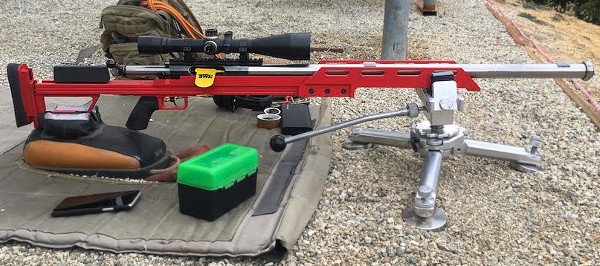
This is the story of the new “Red Rocket”, my new F-Open rifle. It’s chambered in .284 Winchester (.317″ neck, .220″ freebore). This rifle features Barnard P action, Barnard single-stage trigger (4 oz.), and Brux 30″ one-inch straight-taper, 1:8.5″-twist barrel fitted with Blake Tuner. The barreled action rides in a Gary Eliseo Competition Machine (CMI) F1 F-Open metal chassis with Marine Corps Red powder coat. On top is March 48x52mm fixed-power High Master scope. In a previous incarnation, this same Barnard action served in a wood-stocked F-Class rig, a Red Retromod built from a modified Anschutz stock. I still have the Barnard action (and trigger), but mostly everything else is new.
Here’s the .284 Win “Red Rocket” with CMI F1 Stock, Barnard action, Brux barrel, and Blake Tuner on my SEB Mini at Burbank Rifle and Revolver Club in SoCal.
My previous F-Class rifle started out as a Palma rifle back around 2008. With a modified Anschutz prone stock, that .308 Win Palma sling gun served me well, helping me earn the 2009 California State Palma Championship. Much later I grafted more wood on and whittled that same stock into an F-Open specimen (shown below). That did get me to Long Range High Master but it definitely had limitations. For one it had annoying flex in the fore-end and the buttstock was not aligned with the barrel channel.
I wanted to upgrade my stock to get a more consistent, better-shooting F-Open performer. So in April of 2020 I contacted Gary Eliseo of Competition Machine and ordered one of his streamlined, F1 “boom-stick” chassis units. These feature a very low Center of Gravity. I sent Gary my Barnard action and had Brux send him a barrel that I had won at the 2020 SWN raffle.
This video shows Martin shooting the “Red Rocket” in California
This rifle has been a success from the very start. At its first big match, the 2020 California State Championships, the Red Rocket tied for First Place on points but finished second overall on X-count.
Martin tells us: “The new red Eliseo stock is phenomenal and far surpasses the old red stock on my RetroMod project previously featured on the Daily Bulletin. The three things I like best about this Eliseo F1 chassis system are:
1. The lean, clean, efficient engineering and styling.
2. Easy manipulation of buttstock and cheek piece adjustments, ease of bolt removal.
3. Inherent confidence in its straightness and the durability of all the parts and finish.”
“I’m extremely impressed with the potential of this rig and I have still yet to fiddle with the tuner and test some of my Wolf/KVB primers. It’s all gravy now.” — Martin Tardif
I received the finished rifle in September and was impressed with its stark and consummate functionality and there is no doubt as to that function. The collinear aspect from any angle suggests a Red Rocket Car on the Bonneville Salt Flats, so that’s what I call this rig.
Reloading Methods and Load Development
My virgin brass prep starts with a .284 neck mandrel with the occasional squirt of WD-40, then to the drill press to turn the necks to 0.014″ wall thickness with my PMA Model B turner. After a quick dip in the media tumbler I run the whole batch through my DIY cake pan annealer and they’re ready for sizing. I like the Whidden Gunworks full length bushing dies. I use a .310″ bushing and a loaded round measures .312″. After sizing, I run the cases through the tumbler for 10-15 minutes to clean them up and then they are primed. I’m using my stash of S&B primers with an RCBS benchtop primer seater with a Holland Perfect Primer Seater add-on. I do point my 180-grain Berger Hybrid bullets with a Hoover die (see below).
Here is Martin’s reloading bench. From left to right: A&D FX-120i Force Restoration Scale with Auto-Trickler V3, Hoover Bullet-Tipping Die, Whidden .284 Win FL Sizing Die with PMA click-adjust lock ring, Hodgdon H4350 powder. Martin reports: “I’m also using some of F-Class John’s Auto Trickler Methods — using two powder cups to speed up the process, hash marks on Auto Trickler gear drive, and minimal openings on FX-120i wind guards. These all improve the powder measuring.
Load Development and Accuracy Testing in Competition
I started load testing in November 2020. I tried both H4831sc and H4350 at 100 yards. I usually have excellent results with H4831sc but the Brux tube stubbornly preferred H4350. So I took a preliminary recipe (52.2 grains) to the California Long Range Championship and tied for First Place on points but got beat on Xs. Having seen a little too much vertical at the state match, I went with a lighter load that looked good for vertical at 100 yards (51.8 grains — see photo below). That load got me an overall win at our 1000-yard club match.
I wanted to fine tune that load so I started a seating depth test. I did a final head to head test, comparing .015″ jump (away from first lands contact) and .018″ jump at 1000 yards. The .015″ jump load was the clear winner. This 15-round group was shot at 1000 yards with no flags on an overcast day with no mirage.
The ShotMarker screenshot above shows 15 shots at 1000 yards with bullets seated .015″ out, switching winds and no flags, just watching the mirage. I added .25 MOA up after the first round ‘9’ (me fighting a clean barrel on first shot) and went to town.
Advice for New F-Class Shooters — by Martin Tardif
1. Watch a Top Competitor — Find a good shooter that you respect and watch and take note of their equipment, how they set up to shoot, how they shoot, what conditions they shoot in or don’t. Ideally you should ask to be squadded with them (if possible) so you can score for them. That way you’re not dividing your attention from the shooter you’re supposed to be scoring for. Be mindful not to pester them while they are setting up. Best to wait until they have finished shooting and try to ask questions off the firing line, others still shooting need to concentrate.
2. Cartridge Selection for F-Open– Go to Accurate Shooter’s 7mm Cartridge Guide and scroll to the .284 Winchester section by Charles Ballard. You can read further about the 7mm WSM and 7mm SAUM but for a caliber that’s not fussy you should stick with the .284 Win.
3. Reloading Equipment — To win, you really need ammo as perfect as you can make it. You should be able to find out everything you need to know about reloading equipment via the Accurateshooter Forum’s Reloading and Competition areas. It’s a one-stop shopping brain trust for everything F-Class, Sling, and Benchrest. And the Forum Marketplace is literally a never ending ‘Gun Show’ of For Sale items. It’s a great place to buy quality used stuff for newbies.
As a final bit of advice — BELIEVE the wind — it’s smarter than you are!
Commentary on Metal Chassis vs Wood Stock
I previously had a wood F-Class stock so flexible you could easily pinch the barrel to the fore-end with one hand and hold it there. My Eliseo metal chassis is MUCH more rigid. I don’t think there is any argument that a metal stock is more rigid than wood. I also think a metal stock with its monolithic properties has a more consistent cross-sectional density along its length than a wood stock would have due to the vagaries of grain structure. However I have no experimental data to support that theory, or how that might positively affect shot to shot consistency. I CAN say that the gun shoots better, with smaller groups and higher scores, than the previous wood stock version.
The CMI F1 chassis has three main sections: rear assembly, main assembly, and fore-end. The main assembly is a 27″-long solid billet section with milled cavities for the rear assembly and trigger group. This also supports the action V-Block which cradles the full length of the action. The V-Block is mated to the top of the billet in a milled channel but doesn’t touch the sides to avoid uneven harmonics. The rear assembly hold the LOP-adjustable butt pad/bag rider and “easy off” cheek piece. The 3-piece fore-end is fitted to the main section with screws. The complete F1 chassis with grip and cheek piece weighs 6 pounds.
F1 Chassis Maker Gary Eliseo Talks about His Design
The F1 was designed to incorporate the most important features needed in an F-Open rifle system. Top priority was placed on how the rifle tracked. The chassis had to be perfectly straight, and immune to weather so it will stay straight. On the F1, the fore-end is designed to keep the centerline of the barreled action as low as possible. This super-low center of gravity, along with the tall vertical sides, keep torque to a minimum, so the gun doesn’t twist or hop, but instead comes straight back.
The F1 chassis can be fitted with bedding blocks to accommodate any action. These action bedding blocks are carefully epoxy-bedded to the chassis so the customer’s barreled action is perfectly in line with the central axis of the chassis. In addition to optimizing tracking, I also took a look at how the shooter interfaced with the rifle. I wanted the cheek piece to be narrow so that the shooter would not be forced into applying side pressure on the stock to get their eye behind the scope. The cheek piece is also easy to remove for those who shoot without one. This also facilitates bolt removal.
If you’re interested in an F1 F-Open Chassis, contact Gary via the Competition Machine eMail page. The current price for an F1 Chassis with Cerakote finish (any color) is $1295.00. Lead time is about 12 weeks.
Green Tools for Red Rocket — Martin uses an RCBS Rock Chucker single-stage press on an Inline Fabrication UltraMount. Primers are seated with an RCBS Bench Primer fitted with Holland’s Gunsmithing Perfect Primer Seater Adapter. This provides ultra-consistent primer seating.
F-Class Match Strategies for California Ranges
My strategy for a match clearly depends on the specific location. For instance, at my home range, the Burbank Rifle and Revolver Club, which has several cuts and gullies crossing the canyon, the wind comes primarily from NNE and since the range faces slightly NNE the predominant condition will be a head or right wind so I’m looking for R to L mirage and left angled flags.
By contrast, Coalinga CA is a much more open/exposed range which can make it much more challenging. When you see all the flags going against the mirage for the majority of the string (after you’ve gone for record of course) that can be tough. So I like to watch the wind while I’m scoring and for a few minutes during sighters and shoot them in a few ‘looks’ if I can get them. But sometimes you have to go with your gut if your sighters whisper “go-for-record-you-knucklehead” and so it’s off to the races. It often seems like I should have just chased the spotter when I’m waiting out a fishtail or let-up there.


 Gone in Six Seconds. Want to Cry Now?

 Most articles and discussions regarding competitive shooting center around equipment. Now and then one will come across an article about physical training such as the USAMU piece on
 Last I want to mention visual performance training. The





 Forum member Rich DeSimone uses a handy “Stub Gauge” for setting shoulder “bump” and seating depth. The gauge is made from a section of barrel lopped off when the muzzle is crowned. The chambering reamer is run in about 1/4 of the way, enough to capture the neck and shoulder area of the case. Rich then uses his full-length die to “bump” a master case with the ideal amount of headspace for easy feeding and extraction. He takes that case and sets it in this Stub Gauge, and measures from the front of the gauge to the rim. He can then quickly compare any fired case to a his “master” case with optimal headspace. Since the gauge measures off the shoulder datum, this tells him how much to bump his fired brass.