A while back we published an Introduction to .50-Caliber Shooting authored by James Patterson. James has written a companion piece for Sinclair’s Reloading Press that covers the “care and feeding” of the big .50 Cal match rifles.
Owning and Feeding ‘The Big Bore’
Is The Challenge Of Big Bore Extreme Range Shooting And Hunting Right For You? By James Patterson
Handling a 50 BMG
Is a 50 BMG caliber rifle difficult to shoot? Not at all. The relatively heavy weight of a standard rifle at 30 pounds or more combined with a very efficient muzzle brake makes it a pleasure to shoot. The typical recoil can be compared to a .243 rifle or a 12 gauge trap load. On the other hand, the burning of a typical load of 230 grains of powder combined with that muzzle brake makes the muzzle blast experience exhilarating. A first time shooter will fire, pause for a moment in awe at the muzzle blast, and then break out into what has become known as “The 50 caliber Grin”, almost impossible to wipe from ones face. My daughter started competing with the 50 BMG at 18 (115 lbs of tall skinny girl) and happily shoots 100+ rounds in the course of a match, her grin on the last round is as wide as on the first! Many members and competitors in the FCSA are women and many have distinguished themselves as excellent marksman having set world records on numerous occasions.
Cost of Big-Bore Shooting
Is owning and shooting a 50 BMG caliber rifle expensive? Relatively speaking yes, but one must put it into perspective. Rifles may run from $2500 to $7000, maybe even more for a top of the line custom rifle. A good scope will set you back $500 to $1500. And while excellent commercial ammo is available it runs from $3 to $5 a round. Most serious shooters start reloading for the rifle as soon as practical, not only for the economics of reloading but also for the ability to fine tune custom ammo for their specific rifle. It’s a very rare match that is won shooting commercial ammo. I recently compared the cost of my hobby — owning, shooting, and competing with the 50 BMG — with a friend whose hobby is snowmobiling. Factoring in the cost of equipment, licensing, gasoline, clothing, etc. it was soon obvious that my hobby was significantly less expensive than his.
Getting Started So how does one get started? You could do as I did, purchase a rifle not knowing what you were really getting into; or you could come out to a FCSA-sponsored event, shoot a number of different rifles, rub shoulders with those who have already taken the plunge, and see if this sport is right for you. While membership in the Fifty Caliber Shooters Association (FSCA) is required to compete at a FSCA event, membership is not required to come and experience first hand what is going on. If you have any inclination that you are interested in the extreme sport of long rang, big bore shooting then a year’s membership in the FCSA is only $60 ($20 for active duty military) a significant bargain if it helps you make just one well-informed equipment choice. In addition one of the primary functions of the FCSA is helping to identify active members near you who can help you understand just what is involved and help you ‘get your feet wet’ in this challenging sport.
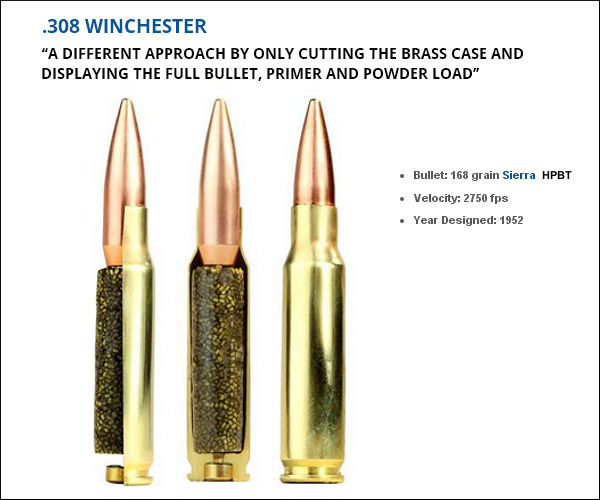
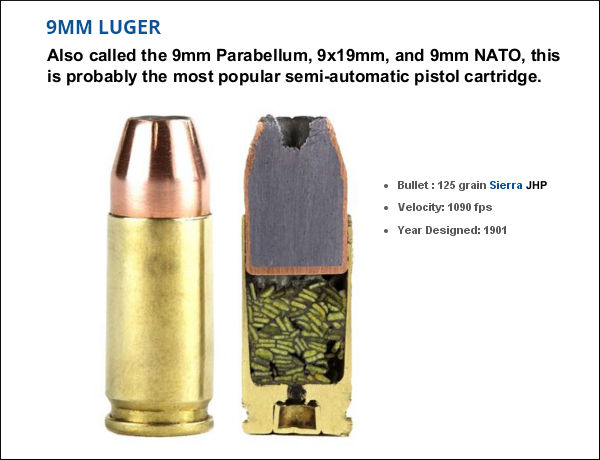
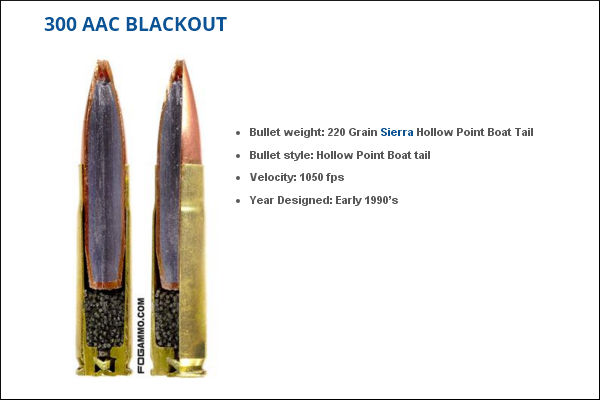
Here’s something you don’t see every day — the inside of loaded cartridges, sliced halfway through. This lets you see how bullet core, jacket, cartridge case, powder, and primer all fit together. Give credit to the folks at FOG Ammunition for creating this interesting series of cut-through ammo images. We show four cartridges here: the .308 Winchester, 9mm Luger, 300 BLK, and .50 BMG. You’ll find two more (the .223 Remington and .45 ACP) at www.FogAmmo.com.
This .308 Winchester model took on a different approach by only cutting the brass case and displaying the full bullet, primer and powder load. A spec amount of powder was used to create the model powder form. An estimated 10% volume was added during the forming process, along with an undetermined amount of air pockets.
This bisection is a 9mm Jacketed Hollow Point round with flake powder held together with super glue. After this self-defense round was cut by a trained professional the round was polished by hand. This might look like stick powder, but those are in fact flakes stacked up in cross-section. Designed in 1901 by Georg Luger, this popular cartridge is used by civilians, military, and law enforcement.
For this model of the .300 AAC Blackout (aka 300 BLK), a Dremel tool was used to create a pie cut within the bullet and brass case. A measured amount of power, roughly 65% of spec charge, was placed inside the case with super glue. This cartridge was originally optimized for subsonic use with a suppressor, so the amount of powder used is small relative to the nominal case capacity. That leaves more room for the relatively large .30-caliber bullet.
Last but definitely not least is the .50 Caliber BMG round (aka .50 Browning Machine Gun). Famed for its wartime use in the M2 Machine gun, the .50 BMG round is also used in civilian Long Range competitions. A typical .50 BMG cartridge holds over 225 grains of powder. That’s almost ten times the amount in a 5.56×45 NATO Round!
BAT .50 BMG Model EX– Now That’s an Action!, by GAS
A while back, I stopped into Bruno Shooters Supply for a jug of powder and looked into the display case where the new actions are kept. Amid the usual array of BAT Machine, Kelbly and other actions, there was something unlike any action I’d seen before — all I can call it is the BIG BAT (It’s officially the BAT Model EX 2.5). I wasn’t too surprised at the weight (a beefy 13.7 lbs.), but until you lift it it’s hard to appreciate how solid, chunky, hefty, massive (pick your favorite adjective) this thing really is. The action is a 2.5″-diameter, 12″-long BAT for the .50 BMG cartridge. It is simply the biggest, slickest custom action on the planet. In order to give you some sense of scale, I photographed the action alongside a conventional BAT action for short-range Benchrest shooting and I put a .220 Russian case and a .30-06 case into the picture. I’ve handled and fired other .50 BMG actions/rifles before, but this BAT puts them all to shame, as far as fit and finish go.
The action is actually quite conventional in design and execution. The bolt is fluted and has two front lugs with a conventional, although super-sized, firing pin assembly. Any Remington-style trigger will mount by way of a normal trigger hanger, allowing for simplified maintenance or replacement in the field. The loading port is 5.5″ long and the barrel threads are 1.5″ x 16 tpi — nothing about this beast is small! There is a conventional rocker-type bolt release on the left side of the receiver body and a recoil lug is built into the bottom of the receiver. In reality, the action is very similar to any other BAT except for the size and it adheres to all of BAT’s high standards for quality of design, manufacture, fit, finish and just plain good looks. Slide that bolt back and it feels as tight as a small Benchrest action!
Given the BIG BAT’s $3,125.00 sticker price (before options), not many of us will ever have the opportunity to own or shoot one of these beauties (I certainly won’t). However, it is nice to know they exist and can be bought and enjoyed in many places. CLICK HERE for BAT EX configuration options.
In this video Bryan Litz of Applied Ballistics offers tips on Big Bore shooting (i.e. .338 caliber and above). Bryan offers advice on bullet selection and he explains the challenge of handling the blast, noise, concussion, and recoil of big boomers such as the .416 Barrett and .50 BMG.
Bryan goes big … very big, shooting a monster .50 BMG bullpup.
Watch the recoil pulse shove Bryan backwards at 1:40 time-mark:
Big Bore Basics — Tips for Shooting Big Boomersby Bryan Litz
There are some unique things to consider with big-bore shooting. One is bullet design. For long-range shooting you want high-BC bullets. You get high BC from heavy bullets and bullets that have low drag. The interesting trade-off in big calibers is that there are a lot more lathe-turned solid bullets in copper and brass available than there are in the smaller calibers. You’ve got bullets that have slightly lower drag profiles but they are made of materials that are slightly less dense (than lead) so they are relatively light for their caliber. With that trade-off, the BCs might not be as high as you think for big calibers, although the bullets are heavy enough that they carry a lot of energy.
Energy really has a lot to do with shooting these big-caliber rifles. As with any kind of shooting, the fundamentals of marksmanship are the most important thing. However, it can be hard to maintain good fundamentals (e.g. trigger control and sight alignment) when you’re burning 100 grains of powder. There’s a lot of concussion (you want a muzzle brake no matter what your cartridge is above .338). It certainly can be challenging with all the muzzle blast and all the energy coming out of the barrel.
For long-range shooting with big bore rifles, you are still looking for the same things that you want with smaller-caliber rigs. You want a high-performance bullet, you want consistent ammunition, and you want a good fire solution to be able to center your group at long range. Basically you’re just dealing with the challenges that the high energy brings, and being smart about your bullet selection.
In the video above, Bryan is shooting the DesertTech HTI bullpup. This rifle can shoot four (4) big bore chamberings, with barrel conversion kits for: .375 CheyTac, .408 CheyTac, .416 Barrett, and .50 BMG. These can be quickly swapped in the HTI chassis, which employs an internal barrel-clamp system.
In the world of varmint cartridges, it’s all about speed. Higher velocity delivers flatter trajectories, and more dramatic impacts on critters. To achieve higher speeds, handloaders have experimented with many extreme wildcats — big cases necked down to a smaller calibers. Here we present what may be the most extreme wildcat cartridge of all, the .17 Incinerator — a .50 BMG necked down to .17 caliber. Created by Ammo-One, a custom cartridge company, the .17 Incinerator offers blistering performance. The special lathe-turned 33gr projectiles* exit the barrel at 5883 Feet Per Second — that’s over Mach 5, five times the speed of sound.
Mach 5 is 3836.35 mph at sea level, which equates to 5626.64 Feet Per Second (FPS). The remarkable .17 Incinerator achieves this stunning velocity by burning over 230 grains of powder in a highly modified .50 BMG case. The velocity of this cartridge (still well over Mach 5 at 100 yards) delivers an incredible amount of energy on target. A hit literally vaporizes a varmint, as you can see from the image below.
It takes a special barrel to shoot the .17 Incinerator. Kent Wilson of Ammo-One, who helped develop this extreme wildcat, explains: “The speeds are so great we had to use a custom 3-groove, polygonal-rifling 1:20″-twist barrel to keep the bullets from disintegrating on launch. The polygonal land/groove geometry reduces bullet engraving, which also helps keep the bullets in one piece. Also we must use solids — regular jacketed bullets can’t handle these speeds”.
Even More Speed — the .17 Incinerator Improved
While the .17 Incinerator is commercially available, there is an even more extreme “Improved” version of this case, with a radical 50-degree shoulder that yields even greater case capacity. The .17 Incinerator Improved (17 IN-IMP), shown below, can hold 20 grains more powder, promising velocities approaching Mach 5.5 or 6189.3 FPS. Now that’s really cookin’!
*Because of the ultra-high velocity generated by the .17 Incinerator, solid bullets must be used. Conventional jacketed projectiles would disintegrate before they reached the target.
Kelly McMillan with his lastest creation — the “ELR Beast”.
The design team at McMillan Fiberglass Stocks is working on a new heavy-duty stock for the Extreme Long Range (ELR) game. This beefy gunstock is designed to handle the heavy torque and recoil of big-caliber cartridges such as the .408 Cheytac and .50 BMG. The stock is also designed to balance the ultra-long barrels favored by ELR shooters and King of 2 Mile competitors. Shown above is the boss-man himself, Kelly McMillan, with the new ELR stock prototype. Kelly calls this “the ELR Beast”. Note how the cheekpiece is slotted to allow unimpeded movement of the extra-long bolt.
Kelly tells us: “Making headway on the ELR Beast. Using Paul Phillips’s barrel and action we have been able to make some progress in both the design and the cosmetics of the stock. I am pleased with where we are at this time. As is, this set up weighs 46 pounds, I suspect we can get this stock to weigh between 8 and 9 pounds maximum, and maybe 5 pounds minimum.”
This 50 Cal Days of Christmas video features some fantastic slow-motion footage of a Barrett .50 Caliber M82. This bad boy pumps out some serious muzzle flash. Watch carefully at the 1:05 mark and you can see the .50-caliber projectile exit the muzzle brake and spin through the ball of smoke and flame. For best viewing, you may want to change your video settings to 720p or 1080p High Definition and view full-screen (using the video controls).
The video carries “overkill” to the max, as the shooter uses his big Barrett to blast Christmas ornaments and a snow-globe. To top things off, at the 2:50 mark, the shooter fires the .50 cal at a pyro-equipped gingerbread house. (The gingerbread shot is taken from a standing hold no less!) The results (at 3:22) are impressive — gingerbread house becomes flaming gingerbread pudding.
Are you a died-in-the-wool .50 BMG fan? Got a hankerin’ for heavy artillery? Then visit the FCSA Photo Gallery page. There you’ll find hundreds of photos from Fifty Caliber Shooting Association (FCSA) matches and 50 Cal fun shoots in eleven states plus Australia, Switzerland, and the United Kingdom. To access the photos from the Gallery Page, start by selecting a state/country and then click on the colored buttons for the event date (e.g. 2015-04).
Photo sets go all the way back to 2002, so you can see the evolution of the hardware over the years. Sample multiple archives to see the differences in terrain from one range to another — from Raton’s alpine setting to the hot, dry Nevada desert. This Gallery is really a treasure-trove of .50-Cal history. Here are a few sample images.
Story Tip from EdLongrange. We welcome reader submissions.
Hey it’s the end of the work week, so we thought you guys might enjoy a little display of honest-to-goodness American .50-Cal firepower. Today’s video features the General Dynamics GAU-19/B Gatling, shown in a vehicle mount (Part 1) and helicopter side-mount (Part 2). The HumVee-mounted version of this bad boy delivers 1300 rounds per minute of .50 BMG ammo. The effect is awesome to behold. We wouldn’t want to be on the receiving end of a GAU. The original GAU-19/A had a selectable rate of fire — either 1,000 or 2,000 rounds per minute. The GAU-19/B, introduced in 2012, provides the same firepower in a much lighter platform, weighing 106 pounds (not counting ammo storage systems).
What could be more fun than decorating a Christmas tree? Well how about busting Xmas ornaments with a .50 BMG. Boys will be boys, right? This 50 Cal Days of Christmas video features some fantastic slow-motion footage of a Barrett .50 Caliber M82. This bad boy pumps out some serious muzzle flash. Watch carefully at the 1:05 mark and you can see the .50-caliber projectile exit the muzzle brake and spin through the ball of smoke and flame.
The video carries “overkill” to the max, as the shooter uses his big Barrett to blast Christmas ornaments and a snow-globe. To top things off, at the 2:50 mark, the shooter fires the .50 cal at a pyro-equipped gingerbread house. (The gingerbread shot is taken from a standing hold no less!) The results (at 3:22) are impressive — gingerbread house becomes flaming gingerbread pudding.


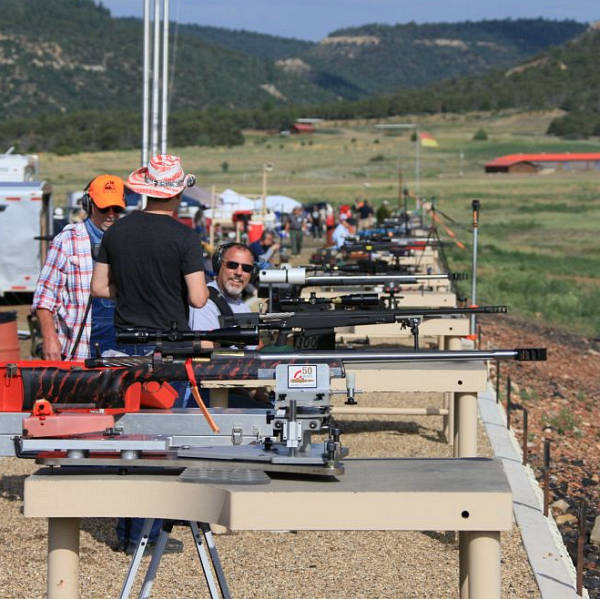


 So how does one get started? You could do as I did, purchase a rifle not knowing what you were really getting into; or you could come out to a FCSA-sponsored event, shoot a number of different rifles, rub shoulders with those who have already taken the plunge, and see if this sport is right for you. While membership in the Fifty Caliber Shooters Association (FSCA) is required to compete at a FSCA event, membership is not required to come and experience first hand what is going on. If you have any inclination that you are interested in the extreme sport of long rang, big bore shooting then a year’s membership in the FCSA is only $60 ($20 for active duty military) a significant bargain if it helps you make just one well-informed equipment choice. In addition one of the primary functions of the FCSA is helping to identify active members near you who can help you understand just what is involved and help you ‘get your feet wet’ in this challenging sport.



 Hey it’s the end of the work week, so we thought you guys might enjoy a little display of honest-to-goodness American .50-Cal firepower. Today’s video features the General Dynamics


