This is just one example. This deal works with ANY Lapua bullets purchased from Grafs.com. You can mix and match, as long as you buy at least $100 worth of Lapua bullets.
Lapua makes great bullets. Bryan Litz writes great books. And now you can get both with this special promotion from Graf & Sons. Here’s the deal — if you buy at least $100.00 worth of Lapua bullets at Grafs.com, you’ll get a free Applied Ballistics book authored by Bryan Litz.
You can mix and match any types of Lapua bullets — as long as the bullet order totals $100.00 or more. The book may be one of various Litz titles, such as Modern Advancements in Long Range Shooting or Ballistic Performance of Rifle Bullets. NOTE: You do NOT get to pick the book title — you get what’s available. You want to move quickly on this deal — books are limited to supply on hand.
If you order now, you can get the bullets to shoot, and give the book to Dad for a late Father’s Day gift.
Lapua Bullets — Accuracy & Consistency If you haven’t tried Lapua bullets yet you should. The Scenar-L bullets we have tested have proven extremely consistent in weight and base-to-ogive measurement.
And they shoot. We have a couple rifles that prefer Scenars over all other match bullets we have tried. We have won club matches with the 6mm Scenar-L 105s in a 6mmBR, while the 6.5mm 123gr Scenar and 136gr Scenar-L work superbly in our 6.5 Creedmoors.
Applied Ballistics, LLC is proud to announce that its founder and owner Bryan Litz, has received the National Defense Industrial Association (NDIA) 2019 Carlos N. Hathcock II Award. Bryan was given this honor on June 4, 2019 at the NDIA Forum in Virginia.
The Hathcock Award honors an individual who, in the opinion of the Small Arms Committee Executive Board, has made significant contributions in operational employment and tactics of small arms weapons systems which have impacted the readiness and capabilities of the U.S. military or law enforcement.
Not just a brilliant ballistics expert, Bryan Litz is also a Championship-winning marksman.
Litz’s contributions to the U.S. Military include his numerous publications to help snipers understand complex external ballistic problems, promoting the advanced G7 ballistics model vs. the older G1 drag model, and developing Applied Ballistics solvers for Kestrel weather meters and other devices in widespread use by snipers for the U.S. Military and NATO allies. Bryan is also a frequent speaker at DoD forums and conducts ballistic seminars across the country.
Bryan stated: “It is truly humbling and deeply gratifying that my work has value to our nation’s Armed Forces. Being selected for the Hathcock award is the highest honor I’ve received in my career.”
Bryan received the award on June 4, at the NDIA 2019 Armament Systems Forum in Fredericksburg, Virginia. Past winners of the Hathcock Award include Todd Hodnett, Buford Boone, and SGM Pete Gould (U.S. Army Retired).
Bryan Litz helped develop global-leading ballistics solutions for civilian and military marksmen. Now Applied Ballistics solvers are integrated into Kestrel Weather Meters as well as advanced electro-optical devices. Bryan also helped create the successful Applied Ballistics APPs for iOS and Android smartphones.
The Applied Ballistics 2019 Spring Seminar will be held at Snowbird Resort in Utah on June 1-2, 2019. The Seminar Fee is $625.00. However, now through April 21st you can use Code ABWIRE for $75 off registration. Note — Seminar fees do NOT include lodging! However, through May 4, 2019, attendees can reserve rooms at the Center-Cliff Lodge at the special seminar rate of $145.00 per night plus tax.
Primary speaker Bryan Litz will present material from his books, the Applied Ballistics Lab, and his experience shooting in various disciplines. Additional speakers addressing ballistics and long-range shooting topics will include Nick Vitalbo, Doc Beech, Alan Barnhart, Mitchell Fitzpatrick and other industry experts.
Seminar attendees will receive multiple Applied Ballistics products, all included in the registration fee:
1) Full library of Applied Ballistics Books and DVD set, valued at $275.
2) Applied Ballistics Analytics software, valued at $200.
3) Binder including hand-outs, articles, and worksheets.
2. Trajectory Features – Zeroing, Point Blank Range, Danger Space, and Uphill/Downhill Effects.
3. Sights – Tall Target Test (Sight Scale Factor and Cant), Aperture Sights, Turrets vs. Holding Reticles, and Extreme Adjustment for ELR.
4. Drag Modeling – What is a drag model, how is drag measured, how is a drag model used, and standard drag models.
5. Ballistic Coefficients – What is a BC, G1 and G7, Curve Fitting Challenges (averaged BCs, segmented BCs), and Estimating BCs.
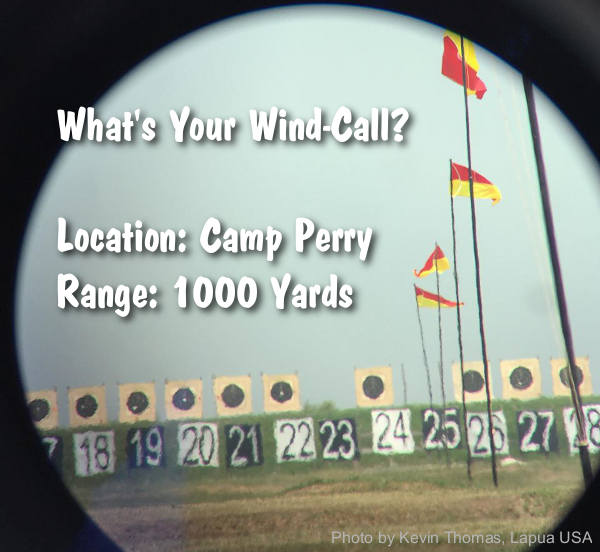
6. Wind – Nature of wind, Mechanism of wind deflection (velocity scaling, lag time, wind deflection), near vs. far wind, wind measurement, terrain and vertical wind, competition Wind strategies, Wind coaching.
10. ELR Shooting – Transonic effects, Secondary Effects, Critical Nature of (Ranging, MV Measurement, Drag Modeling, Wind), Equipment Currently Being Used and Bullet Selection.
12. Ballistic Solvers – Components (Interface, Solver/Simulation, Model), Potential Accuracy, and walk-through of use with technical explanation of inputs.
13. Other Topics – Technology, Laser RangeFinders, Non-Linear Divergence, and Much More.
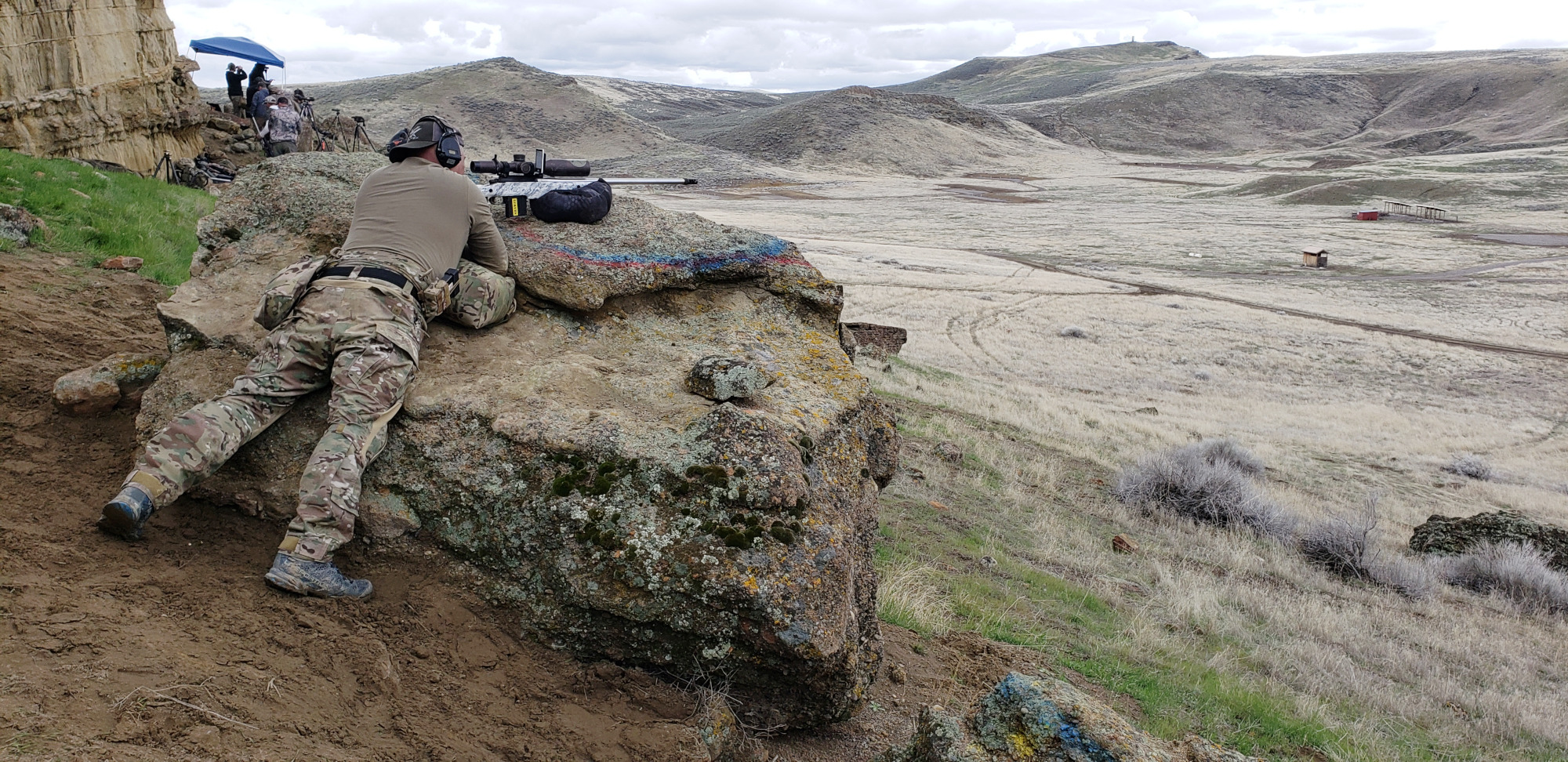
Vu Pham takes a shot at the Snake River Sportsman Range in Oregon. Click image for full-screen version.
Vu Pham recently attended a great practical/tactical match, the Gem State Stand Off. This NRL-sanctioned match drew 113 shooters, including many of the best PRS/NRL competitors in the country. Vu says this was a great event: “The 220-round, 22-stage course of fire was fun, yet challenging. Every stage had a two-minute par time requiring 10 rounds fired at multiple targets. 113 competitors fired about 24,000 rounds without a single target failure.”
2019 Idaho Gem State Stand Off AAR
Target Distances: 300 to 1200 yards
22 stages/220 round Course of Fire
113 Competitors
Match Directors: Nate Lauerman & Seth Howard
Range Officers: 21 Precision Rifle Shooters of Idaho
Event Date: March 23rd & 24th, 2019
Location: Snake River Sportsman Range in Vale, Oregon
“With technological advances in equipment, training, and ballistics, plus increased opportunities for competitors to fine-tune their skills, Practical Precision Rifle competition has become a perfectionist sport. The constant evolution of this discipline never ceases to amaze me. With competitors and manufacturers constantly pushing to gain an edge… there is no shortage of innovation.” — Vu Pham
Gem State Stand Off — After Action Report
Report by Vu Pham, NorCal Practical Precision Rifle Club
I was fortunate enough to snag a last-minute slot for the 2019 Gem State Stand Off hosted by the Precision Rifle Shooters of Idaho Club (PRSID). This is one of 17 National Rifle League events where competitors will battle for points hoping to secure a slot for the 2019 NRL Championship. The Snake River Sportsman Range is a beautiful venue in Vale, Oregon, near the Idaho border.
The digital display carries ballistics info and elevation/windage tables from Vu Pham’s Kestrel. He says the unit really helps his performance.
From the hills looking down-range. Click image for full-screen version.
Hardware Report — Top PRS/NRL Gear for 2019
Modern Precision Rifle Comp Gear — Stocks and Chassis Systems
The traditional rifle stock we know has now moved to more modular and customizable designs. One product that caught my eye is the new XLR Industries Envy JV Heavy Fill Chassis system. After seeing a lot of competitors use them with good results, I think I will be giving one a try soon. Not being able to borrow a piece of gear because the entire squad is running ARCA can be a drag. Picatinny forearm rails have gone the way of the dinosaur with ARCA Swiss becoming the standard for attaching accessories.
Those like myself who may not want to give up their traditional-style stocks do have the option of modifying their existing stock with a universal ARCA rail from Henderson Precision. That company makes a variety of rails that fit a number of stock platforms.
Rifle Support Options — Bags and Tripods
Tripods are also used a lot as front and rear support by the majority of the field as well. Support bags now come in every shape, size, weight, and material imaginable. Even the fundamentals of driving your rifle is being challenged by the evolution of “free recoil”. Instead of counting the number of hits for the day, the top echelon shooters count the number of shots they dropped.
Calibers of Choice — Small is Big — the 6mms Dominate
6mmBR Improved cartridges (6mm Dasher, 6BR Ackley) and mid-sized 6mms (such as 6mm Creedmoor) dominate the field. In addition we are seeing some guys running the 22 BR and 22 BRA, which work surprisingly well. [Editor: Run the ballistics with a .22 Cal 80-grainer and you’ll see why.]
Wind Monitoring and Ballistics
Kestrel Environmental Meters with Applied Ballistics are “must haves”. I have found my Really Right Stuff tripod and Vortex 12×50 Razor binoculars extremely useful for locating targets and going through the target shooting order before it was my turn to shoot. Watching what the wind and competitor’s rounds are doing before you are on the gun is a huge benefit.
Great Match with Great Shooters
Tough Competition with a Field of Ace Practical Marksmen
The field of competitors at this match was stacked. I heard there were 20 competitors in attendance who have won national-level PRS or NRL events. 20 top-echelon competitors mixed in with a solid field of shooters made it a tough for anyone looking to finish at the top.
Have you recently purchased a new scope? Then you should verify the actual click value of the turrets before you use the optic in competition (or on a long-range hunt). While a scope may have listed click values of 1/4-MOA, 1/8-MOA or 0.1 Mils, the reality may be slightly different. Many scopes have actual click values that are slightly higher or lower than the value claimed by the manufacturer. The small variance adds up when you click through a wide range of elevation.
In this video, Bryan Litz of Applied Ballistics shows how to verify your true click values using a “Tall Target Test”. The idea is to start at the bottom end of a vertical line, and then click up 30 MOA or so. Multiply the number of clicked MOA by 1.047 to get the claimed value in inches. For example, at 100 yards, 30 MOA is exactly 31.41 inches. Then measure the difference in your actual point of impact. If, for example, your point of impact is 33 inches, then you are getting more than the stated MOA with each click (assuming the target is positioned at exactly 100 yards).
How to Perform the Tall Target Test
The objective of the tall target test is to insure that your scope is giving you the proper amount of adjustment. For example, when you dial 30 MOA, are you really getting 30 MOA, or are you getting 28.5 or 31.2 MOA? The only way to be sure is to verify, don’t take it for granted! Knowing your scopes true click values insures that you can accurately apply a ballistic solution. In fact, many perceived inaccuracies of long range ballistics solutions are actually caused by the scopes not applying the intended adjustment. In order to verify your scope’s true movement and calculate a correction factor, follow the steps in the Tall Target Worksheet. This worksheet takes you thru the ‘calibration process’ including measuring true range to target and actual POI shift for a given scope adjustment. The goal is to calculate a correction factor that you can apply to a ballistic solution which accounts for the tracking error of your scope. For example, if you find your scope moves 7% more than it should, then you have to apply 7% less than the ballistic solution calls for to hit your target.
NOTE: When doing this test, don’t go for the maximum possible elevation. You don’t want to max out the elevation knob, running it to the top stop. Bryan Litz explains: “It’s good to avoid the extremes of adjustment when doing the tall target test.I don’t know how much different the clicks would be at the edges, but they’re not the same.”
Should You Perform a WIDE Target Test Too?
What about testing your windage clicks the same way, with a WIDE target test? Bryan Litz says that’s not really necessary: “The wide target test isn’t as important for a couple reasons. First, you typically don’t dial nearly as much wind as you do elevation. Second, your dialed windage is a guess to begin with; a moving average that’s different for every shot. Whereas you stand to gain a lot by nailing vertical down to the click, the same is not true of windage. If there’s a 5% error in your scope’s windage tracking, you’d never know it.”
Verifying Scope Level With Tall Target Test
Bryan says: “While setting up your Tall Target Test, you should also verify that your scope level is mounted and aligned properly. This is critical to insuring that you’ll have a long range horizontal zero when you dial on a bunch of elevation for long range shots. This is a requirement for all kinds of long range shooting. Without a properly-mounted scope level (verified on a Tall Target), you really can’t guarantee your horizontal zero at long range.”
NOTE: For ‘known-distance’ competition, this is the only mandatory part of the tall target test, since slight variations in elevation click-values are not that important once you’re centered “on target” at a known distance.
Why You CANNOT Rely on the MV Printed on the Ammo Box!
When figuring out your come-ups with a ballistics solver or drop chart it’s “mission critical” to have an accurate muzzle velocity (MV). When shooting factory ammo, it’s tempting to use the manufacturer-provided MV which may be printed on the package. That’s not such a great idea says Bryan Litz of Applied Ballistics. Don’t rely on the MV on the box, Bryan advises — you should take out your chrono and run your own velocity tests. There are a number of reasons why the MV values on ammo packaging may be inaccurate. Below is a discussion of factory ammo MV from the Applied Ballistics Facebook Page.
Five Reasons You Cannot Trust the Velocity on a Box of Ammo:
1. You have no idea about the rifle used for the MV test.
2. You have no idea what atmospheric conditions were during testing, and yes it matters a lot.
3. You have no idea of the SD for the factory ammo, and how the manufacturer derived the MV from that SD. (Marketing plays a role here).
4. You have no idea of the precision and quality of chronograph(s) used for velocity testing.
5. You have no idea if the manufacturer used the raw velocity, or back-calculated the MV. The BC used to back track that data is also unknown.
1. The factory test rifle and your rifle are not the same. Aside from having a different chamber, and possibly barrel length some other things are important too like the barrel twist rate, and how much wear was in the barrel. Was it just recently cleaned, has it ever been cleaned? You simply don’t know anything about the rifle used in testing.
2. Temperature and Humidity conditions may be quite different (than during testing). Temperature has a physical effect on powder, which changes how it burns. Couple this with the fact that different powders can vary in temp-stability quite a bit. You just don’t know what the conditions at the time of testing were. Also a lot of factory ammunition is loaded with powder that is meter friendly. Meter friendly can often times be ball powder, which is less temperature stable than stick powder often times.
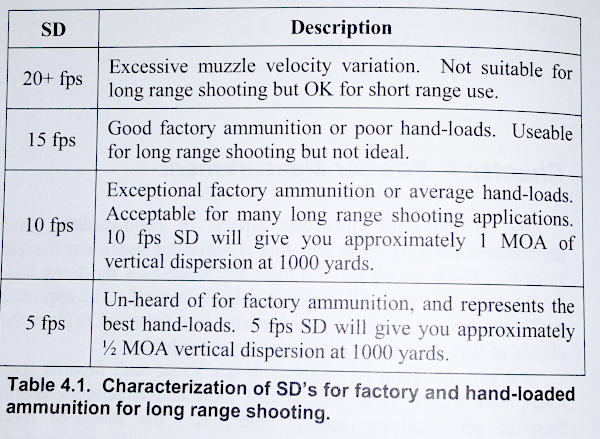
3. The ammo’s Standard Deviation (SD) is unknown. You will often notice that while MV is often listed on ammo packages, Standard Deviation (normally) is not. It is not uncommon for factory ammunition to have an SD of 18 or higher. Sometimes as high as 40+. As such is the nature of metering powder. With marketing in mind, did they pick the high, low, or average end of the SD? We really don’t know. You won’t either until you test it for yourself. For hand-loaded ammo, to be considered around 10 fps or less. Having a high SD is often the nature of metered powder and factory loads. The image below is from Modern Advancements in Long Range Shooting: Volume II.
4. You don’t know how MV was measured. What chronograph system did the manufacturer use, and how did they back track to a muzzle velocity? A chronograph does not measure true velocity at the muzzle; it simply measures velocity at the location it is sitting. So you need to back-calculate the distance from the chrono to the end of the barrel. This calculation requires a semi-accurate BC. So whose BC was used to back track to the muzzle or did the manufacturer even do that? Did they simply print the numbers displayed by the chronograph? What kind of chronograph setup did they use? We know from our Lab Testing that not all chronographs are created equal. Without knowing what chronograph was used, you have no idea the quality of the measurement. See: Applied Ballistics Chronograph Chapter Excerpt.
5. The MV data may not be current. Does the manufacturer update that data for every lot? Or is it the same data from years ago? Some manufacturers rarely if ever re-test and update information. Some update it every lot (ABM Ammo is actually tested every single lot for 1% consistency). Without knowing this information, you could be using data for years ago.
CONCLUSION: Never use the printed MV off a box of ammo as anything more than a starting point, there are too many factors to account for. You must always either test for the MV with a chronograph, or use carefully obtained, live fire data. When you are using a Ballistic Solver such as the AB Apps or Devices integrated with AB, you need to know the MV to an accuracy down to 5 fps. The more reliable the MV number, the better your ballistics solutions.
If you buy one book about Long Range Shooting, this should be it. Based on sophisticated testing and research, this 356-page hardcover from Applied Ballistics offers important insights you won’t find anywhere else. Modern Advancements in Long Range Shooting – Volume II, the latest treatise from Bryan Litz, is chock full of information, much of it derived through sophisticated field testing. As Chief Ballistician for Berger Bullets (and a trained rocket scientist), author Bryan Litz is uniquely qualified. Bryan is also an ace sling shooter and a past F-TR National Champion. Moreover, Bryan’s company, Applied Ballistics, has been a leader in the Extreme Long Range (ELR) discipline.
AUDIO FILE: Bryan Litz Talks about Modern Advancements in Long Range Shooting, Volume 2. (Sound file loads when you click button).
Volume II of Modern Advancements in Long Range Shooting ($39.95) contains all-new content derived from research by Applied Ballistics. Author Bryan Litz along with contributing authors Nick Vitalbo and Cal Zant use the scientific method and careful testing to answer important questions faced by long range shooters. In particular, this volume explores the subject of bullet dispersion including group convergence. Advanced hand-loading subjects are covered such as: bullet pointing and trimming, powder measurement, flash hole deburring, neck tension, and fill ratio. Each topic is explored with extensive live fire testing, and the resulting information helps to guide hand loaders in a deliberate path to success. The current bullet library of measured G1 and G7 ballistic coefficients is included as an appendix. This library currently has data on 533 bullets in common use by long range shooters.
Bryan tells us that one purpose of this book is to dispel myths and correct commonly-held misconceptions: “Modern Advancements in Long Range Shooting aims to end the misinformation which is so prevalent in long range shooting. By applying the scientific method and taking a Myth Buster approach, the state of the art is advanced….”
Bullet Dispersion and Group Convergence
Part 1 of this Volume is focused on the details of rifle bullet dispersion. Chapter 1 builds a discussion of dispersion and precision that every shooter will benefit from in terms of understanding how it impacts their particular shooting application. How many shots should you shoot in a group? What kind of 5-shot 100 yard groups correlate to average or winning precision levels in 1000 yard F-Class shooting?
Chapter 2 presents a very detailed investigation of the mysterious concept of group convergence, which is the common idea that some guns can shoot smaller (MOA) groups at longer ranges. This concept is thoroughly tested with extensive live fire, and the results answer a very important question that has baffled shooters for many generations.
Part 2 of this Volume is focused on various aspects of advanced hand-loading. Modern Advancements (Vol. II) employs live fire testing to answer the important questions that precision hand loaders are asking. What are the best ways to achieve MVs with low ES and SD? Do flash hole deburring, neck tension, primer selection, and fill ratio and powder scales sensitivity make a difference and how much? All of these questions are explored in detail with a clear explanation of test results.
One of the important chapters of Part 2 examines bullet pointing and trimming. Applied Ballistics tested 39 different bullet types from .224 through .338 caliber. Ten samples of each bullet were tested for BC in each of the following configurations: original out of the box, pointed, trimmed, pointed and trimmed. The effect on the average BC as well as the uniformity in BC was measured and tabulated, revealing what works best.
Part 3 covers a variety of general research topics. Contributing author Nick Vitalbo, a laser technology expert, tested 22 different laser rangefinders. Nick’s material on rangefinder performance is a landmark piece of work. Nick shows how shooters can determine the performance of a rangefinder under various lighting conditions, target sizes, and reflectivities.
Chapter 9 is a thorough analysis of rimfire ammunition. Ballistic Performance of Rifle Bullets, 2nd Edition presented live fire data on 95 different types of .22 rimfire ammunition, each tested in five different barrels having various lengths and twist rates. Where that book just presented the data, Chapter 9 of this book offers detailed analysis of all the test results and shows what properties of rimfire ammunition are favorable, and how the BCs, muzzle velocities and consistency of the ammo are affected by the different barrels.
Chapter 10 is a discussion of aerodynamic drag as it relates to ballistic trajectory modeling. You will learn from the ground up: what an aerodynamic drag model is, how it’s measure and used to predict trajectories. Analysis is presented which shows how the best trajectory models compare to actual measured drop in the real world.
Finally, contributing author Cal Zant of the Precision Rifle Blog presents a study of modern carbon fiber-wrapped barrels in Chapter 11. The science and technology of these modern rifle barrels is discussed, and then everything from point of impact shift to group sizes are compared for several samples of each type of barrel including standard steel barrels.
In today’s feature, Emil Praslick III of Team Applied Ballistics explains how to determine wind direction down range. Praslick, now retired from the U.S. Army, was an 18-time National and 2-time World Champion coach with the USAMU. Emil is consider by many to be one of America’s greatest wind readers — a master when is comes to identifying wind value and direction, and predicting wind cycles.
Video ONE: Determining the Direction of the Wind
Key Point in Video — Find the Boil
Emil explains how to determine wind direction using optic. The method is to use spotting scope, riflescope, or binoculars to look for the “Boil” — the condition in mirage when the light waves rising straight up. The wind will generate that straight-up, vertical boil in your optics when it is blowing directly at you, or directly from your rear. To identify this, traverse your scope or optics until you see the boil running straight up. When you see that vertical boil, the direction your optic is pointing is aligned with the wind flow (either blowing towards you or from directly behind you).
Video TWO: The No Wind Zero Setting
In this second video, Emil defines the “No-Wind Zero”, and explains why competitive shooters must understand the no-wind zero and have their sights or optics set for a no-wind zero starting point before heading to a match. In order to hit your target, after determining wind speed and direction, says Emil, “you have to have your scope setting dialed to ‘no wind zero’ first.”
Coach of Champions — Emil Praslick III
SFC Emil Praslick III, (U.S. Army, retired) works with Berger Bullets and Applied Ballistics. Emil served as the Head Coach of the U.S. National Long Range Rifle Team and Head Coach of the USAMU for several years. Teams coached by Emil have won 33 Inter-Service Rifle Championships. On top of that, teams he coached set 18 National records and 2 World Records. Overall, in the role of coach, Praslick can be credited with the most team wins of any coach in U.S. Military history.
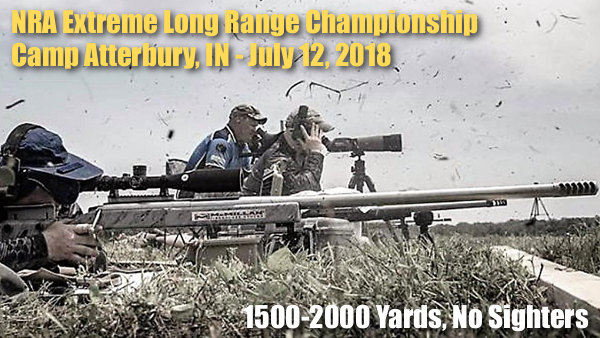
Competing at Camp Atterbury in mid-July, Paul Phillips of Team Applied Ballistics won the 2018 NRA Extreme Long Range (ELR) Championship. Shooting a McMillan-stocked .416 Barrett rifle with 550-grain Cutting Edge Bullets, Phillips won convincingly, finishing with 62627 points. Runner-up, shooting a .375, was Chase Stroud (56744 points).
Paul Phillips (holding rifle) with wind coach/spotter John Droelle. Rifle components included: McMillan ELR Beast Stock, BAT Action, Bartlein Barrel, Nightforce ATACR 7-35×56 mm scope, Phoenix Precision Bipod. Cartridges shown are similar .416 Barrett rounds used by Derek Rodgers in 2018 K02M event.
Caliber and Cartridge Choice:
Paul Phillips, shooting the .416 Barrett, was the only shooter in the Top Ten running a .416-caliber rifle. There were eight .375-caliber rifles (mostly .375 CheyTacs) and one .338-caliber in the Top Ten. Overall, there were 36 competitors registered for the Match, 30 of whom scored points. Fourteen of the 30 scoring competitors, nearly half, shot a .375-caliber cartridge. The .338 (mostly .338 LM) was the next most popular caliber choice.
Course of Fire — Three Extreme Yardages:
The 2018 NRA ELR Event included three stages, at progressively longer yardages: 1500, 1760 (mile), and 1961 yards. At each distance, starting at 1500, the competitors fired five (5) shots at a 36″x36″ steel plate. There were no sighters, practice shots, or ranging shots allowed. This meant the competition put a premium on precise ballistic solutions, and very consistent ammo.
Notable Competitors: There were 36 competitors registered for the match including some big names — David Tubb and Brian Litz. The field included F-Class aces Dan Pohlabel and Jeff Rorer. Capstone Precision President (and former Sinclair Int’l President) Bill Gravatt helped spot for Paul Phillips. Notably, both David Tubb AND his son-in-law Nate Stallter finished in the Top Ten shooting the new .37XC.
Successful Event with Many Sponsors: Shooting Sports USA noted: “Though only the second of these events, the match has experienced a real surge in popularity, well attended… and sponsored by some of the best in the business. Cutting Edge Bullets, Nightforce, McMillan Fiberglass Stocks, Holland’s Shooters Supply, Applied Ballistics, Vihtavouri Powder, and Crosstac, all of whom played a role in Paul’s big win, were also major sponsors of the event. Below is a banner listing all of the match’s sponsors.”
The 2018 King of 2 Miles (KO2M) event took place July 2-4 in Raton, New Mexico. Conditions were very challenging this year, yet three shooters managed to hit the most distant 3,525-yard plate at least once in five shots, a remarkable accomplishment. At that range the bullet was in flight about six seconds.
Robert Brantley of Team Manners Composite Stocks is the new King of 2 Miles. Congrats to Robert and his team-mates. Robert amassed 85178 points, finishing over 20,000 points ahead of runner-up John Buhay. Paul Phillips of Team Applied Ballistics finished third. FULL K02M 2018 RESULTS HERE.
Here’s Robert Brantley after his superb qualifying performance, which set a new 2018 King of 2 Miles qualifying round record. Going perfect on targets 1, 2, and 3, Robert missed just one shot on Target 4 of the qualifying phase, amassing 51355 points, a new K02M record.
CLICK HERE for a very complete and thorough KO2M report created by The Precision Rifle Blog (PRB). This excellent PRB Report contains complete load and rig specifications for the top five shooters. In addition, the PRB Report includes a full run-down on this year’s event.
Though the trigger pullers get the glory, this is really a three-man game. One guy shoots, a second team member spots for hits and calls corrections, and a third watches mirage and makes wind calls.
Multi-Day, Multi-Distance Competition with Farthest Target at 3525 Yards
The K02M Competition runs in stages, with the distances getting farther with each round. After five shots on target 1 at 1547 yards, there are then three shots per target for the remaining three parts of the Qualifying round. Then, in the three-target Finals phase, there are with five shots per target. You get more points for earlier hits in each string, and there are no sighters during the match. The event started with a tough Cold Bore Challenge — a single-shot at 1689 yards, just shy of one mile. Only three out of 62 competitors made that cold-bore mile shot on a 16″ plate, about 1 MOA at that distance. After that there are two rounds with the targets arrayed as follows.
KO2M Qualification Round
1,547 yards: 5 shots, 24” x 37” rectangle
1,719 yards: 3 shots, 24” x 37” rectangle
1,890 yards: 3 shots, 30” x 37” rectangle
2,095 yards: 3 shots, 30” x 37” rectangle
KO2M Finals Round — July 4
2,727 yards: 5 shots, 33” x 41” rectangle
3,166 yards: 5 shots, 42” x 54” rectangle
3,525 yards: 5 shots, 48” x 60” rectangle
Big Bore Rifles with High-BC Bullets
This year saw the continued evolution of equipment. Top shooter Brantley shot a .416 Barrett with 500gr Cutting Edge bullets. Robert’s massive 44-lb rifle featured a 39″ K&P barrel, McMillan action, and a Manners LRT (Long Range Tactical) stock designed expressly for this KO2M competition.
Second Place John Buhay shot an improved version of the .375 CheyTac, with 353gr Lehigh Defense Match Solid bullets. Buhay’s 37.6-lb rig bosted a BAT action and 36″ Krieger barrel along with a fairly conventional McMillan MBR 1K benchrest stock. Mark King built the rifle.
Third Place Paul Phillips campaigned a .416 Barrett with 550gr Cutting Edge Lazer bullets. Paul’s 42-lb rig featured a BAT action and McMillan Beast 1 stock. Shown below is the latest rifle of 2017 K02M champ Derek Rodgers, a .416 Barrett also in a McMillan Beast. Derek spotted for Phillips in the match.
Optics Options
There was quite a variety of scopes used by Top K02M competitors, evidence that a number of manufacturers now offer optics with abundant elevation and the ability to stand up to heavy recoil. Here are the optics choices for the Top Five Shooters:
1. Bushnell XRS II 4.5-30x50mm with G3 reticle in Badger UniMount
2. Nightforce ATACR 5-25x56mm with MOAR reticle, with ERA-TAC Inclined Mount
3. Nightforce ATACR 5-25×56mm, with Charlie TARAC external Prism System for Elevation
4. Leupold Mark 5HD 5-25×56mm, in Spuhr mount with Charlie TARAC
5. Burris XTR II 5-25x50mm in Barrett rings
Notably, two of the top five used the Charlie TARAC prism system. This provides a ton of extra elevation by essentially shifting the view seen through the scope. The unit fits to the scope’s front objective.


If you haven’t tried Lapua bullets yet you should. The Scenar-L bullets we have tested have proven extremely consistent in weight and base-to-ogive measurement.






 Verifying Scope Level With Tall Target Test


 Part 2 of this Volume is focused on various aspects of advanced hand-loading. Modern Advancements (Vol. II) employs live fire testing to answer the important questions that precision hand loaders are asking. What are the best ways to achieve MVs with low ES and SD? Do flash hole deburring, neck tension, primer selection, and fill ratio and powder scales sensitivity make a difference and how much? All of these questions are explored in detail with a clear explanation of test results.