This story, from our Gun of the Week Archives, offers a good intro to the 30 BR cartridge, which is still the leading chambering for short-range Score Benchrest.
What’s better than one custom-built 30 BR with gorgeous wood and top-shelf components? A matching pair of course. Just ask Australian shooter Greg Roche (“Caduceus” in our Forum). A decade ago, Greg spent two years living and working in the USA. While in America, he commissioned two matched custom rifles to bring back to Australia for Hunter Class BR matches. Though the look-alike rigs are both chambered in 30 BR, one is designed for the Australian “Traditional” centerfire Hunter Class (10-lb limit), while the other is purpose-built for the “Custom” centerfire Hunter Class (14-lb limit). The 10-lb Traditional rifle features a fully-functioning two-round magazine and a 6-power scope. In contrast the Custom Class rifle is a single-shot action, with a 45X Leupold scope. The Custom weighs 13.5 pounds so it can also be used in traditional Heavy Varmint Benchrest matches if desired.
Tale of Two Rifles Story and Photos by Greg Roche (“Caduceus”)
The USA boasts some of the finest precision rifle-builders and Benchrest parts suppliers in the world. Before returning to Australia after two years in the States, I decided to have two special BR rifles built using American components and skilled labor. I wanted a matched pair–twin guns that would be as handsome as they were accurate. The heavier gun of the pair, the 13.5-lb Custom Class rifle, features top-of-the-line (but well-proven) technologies and components. With the 10.5-lb Traditional Class rifle, we had to develop new solutions to allow the 30 BR cartridge to feed from a functional two-round magazine. Here is my saga of how my twin 30 BRs were conceived and built, and how they have performed in competition.
BACKGROUND — The 30 BR for Score Competition
The 30 BR is a wildcat cartridge based on a necked-up version of the 6mmBR Norma case. It originated in U.S. Benchrest circles where it found its niche in Varmint For Score (VFS) matches. Unlike traditional Benchrest, where group size determines the winner, VFS matches are shot on a target with multiple, concentric-ringed bullseyes. Point total is based on “best edge” shot location (one shot per bull). In score competition, the 30 BR’s “supersized” .308-diameter hole offers an advantage over the 6mm hole created by a 6 PPC, the dominant group BR chambering.
The starting point for loading the 30 BR wildcat is Lapua 6mmBR brass. These are necked up as a single-step operation using a .30 caliber tapered expander ball (or dedicated expander mandrel). This will leave a bulge in the neck, so the expanded case neck is normally turned to bring the thickness down to the correct dimension for the chamber. I turned these necks down to .010″ wall thickness using a Stiller neck-turning tool. It features an eccentric mandrel similar to the Nielson “Pumpkin”. Loaded rounds measure .328″ neck diameter. This gives minimum clearance in my .330″ neck chamber, so very little neck resizing is needed after firing. Cases are trimmed to 1.500″ prior to turning to ensure consistency since the Stiller tool indexes the length of cut off the case mouth. Other than that, cases are just chamfered, loaded and made ready to shoot. No special fire-forming is required.
17-Twist Barrels for Both Rifles
Texan gunsmith Mike Bryant chambered both barrels. Mike also polished both barrels to a high-gloss to match the receivers. In this game, barrels are consumables, much like powder and primers, so most owners wouldn’t bother to polish their barrels. However a 30 BR barrel can provide up to 5000 rounds of accurate life (unlike a 6PPC barrel which might be tossed after 800-1000 rounds.) So, these barrels are likely to be on the rifles for many seasons. Given the high-gloss finish of the Grizzly actions and the beauty of the Red Cedar stocks, it would have been an injustice to leave a dull finish on the barrels.
The chambers were both cut with the same reamer supplied by Dave Kiff of Pacific Tool and Gauge. Randy Robinett, one of the originators of the 30 BR wildcat, specified the reamer dimensions. Randy’s 118gr, 10-ogive custom BIB bullets and the 30 BR cartridge enjoy a winning track record in the USA. The 30 BR Robinette reamer has zero free-bore and a .330″ neck, and is optimized for the BIB 118s. The bullets perform best when seated far enough out to jam firmly into the rifling as the bolt is closed. The long ogive means the bullet’s bearing surface is very short.
Slow Twists for Maximum Accuracy
You may note the unusually slow twist rate of both barrels. In most .30-caliber chamberings, the barrel twist rate is 1:11 or 1:12 to stabilize 150gr to 200gr bullets. The 30 BR is optimized for 115gr to 118gr flat-base bullets and 1:17 provides sufficient stability at muzzle velocities around 2900-3000 fps. In competitive Benchrest, where every thousandth of an inch counts, over-stabilization of projectiles can hurt accuracy, so “just stable enough” is the goal; hence the 1:17 twist.
Case Forming, Case Prep, and Reloading Methods
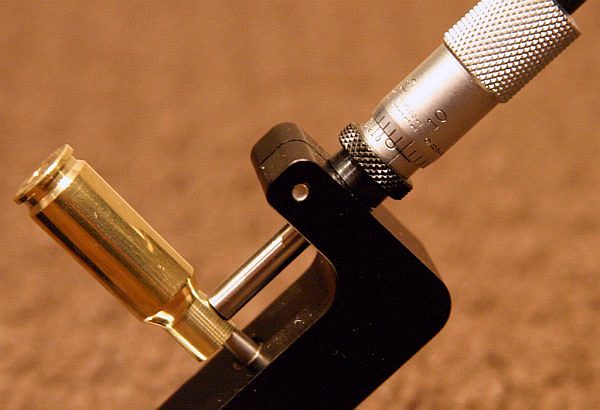
A Sinclair case neck micrometer indicates neck thickness of 0.010″ after neck turning.
30 BR dies are readily available from a number of manufacturers. I personally use Wilson neck and seating dies with a Sinclair Arbor press, but Redding and Forster both supply high-quality threaded dies for use in a conventional press. For under $100.00 US, custom full-length dies can be obtained from Hornady and CH Tool & Die by sending them reamer prints or a couple of fired cases. Harrell’s Precision offers “semi-custom” dies. Just send them some fired cases and they select a pre-made CNC-cut die that ideally fits your chamber. You can ask the Harrell brothers for a die that’s tighter at the shoulder or base, or otherwise customized to your preferences.
Load Development and Accuracy Testing
With cases formed and bullets selected, load development is simply a matter of choosing the right primer, powder and charge weight, and loading the most consistent ammunition possible. The Lapua BR cases use a small rifle primer. The choice here was Federal 205 Match primers vs. CCI BR4 Benchrest primers. Some shooters have also had success using CCI 450 Magnum primers but it is very unlikely the small case needs this much spark to light off regular extruded powders. In my case, I selected Federal primers because availability tends to be better in Australia.
The relatively large bore-to-capacity ratio of the 30 BR case means that fast burning powders are the order of the day. Once again, US experience suggests H4198 (the Hodgdon equivalent of ADI AR2207) is the choice of match winners. The fact that H4198/AR2207 is an Australian-made product is an added bonus. So, I loaded up test rounds with AR2207 from 32.5 grains to 35.0 grains in approximately 0.3 grain increments. All bullets were seated to jam +0.010″ into the lands. This places the bullet base about two-thirds of the way down the neck and well short of the neck-shoulder junction.
Want to learn long-range benchrest skills from the best in the business? Then head to Williamsport, PA this June. The registration period for the 2018 PA 1000 Yard Benchrest School is now open. This year’s session will be held Saturday and Sunday, June 16-17, 2018, with a “Meet and Greet” on Friday Night. Classes, taught by top 1K shooters, are held at the Original Pennsylvania 1000-Yard Benchrest Club Range, one of the best 1000-yard ranges in the country. The school will be limited to 25-30 students with one instructor for every two students.
Praise from a 1K Benchrest School Grad
Here’s a testimonial from a recent graduate: “I can attest to the knowledge that you gain. I went last year and loved it. Have renewed my membership in the Club and would love to go this year. I would love to take the course again. In the photo above I am in the back row, fourth from the right — sunglasses and blue shirt.” — Bob, Class of 2016
Participants will learn all aspects of long-range benchrest shooting from some of the most skilled marksmen in the country. Much time is spent at the loading bench and on the firing line. Classes cover load development, precision reloading, bench skills, and target analysis. You don’t even need guns and ammo — all equipment and ammunition will be provided.
School instructors tell us: “This year’s benchrest school will be a 2-day weekend event. (There is also an optional ‘Meet and Greet’ gathering Friday evening). The school is a beginner class designed to teach the fundamental skills needed to be competitive at at 600 and 1000 yards. Saturday will be spent in class covering a range of topics including reloading ‘dos and don’ts’, load development and equipment handling. Sunday we will shoot an actual match to see what you’ve learned.”
Cost for the class is $425.00 including lunches on Sat/Sun and dinner on Saturday. Act soon if you want to attend the 2018 school — the school fills quickly. NOTE: To secure your placement, payment must be made in full prior to May 25th, 2018.
Watch Williamsport Benchrest School Slideshow: Please enable Javascript and Flash to view this VideoPress video.
This slideshow was produced by Sebastian Reist an alumnus of the 2009 Williamsport 1000-yard BR school. SEE: www.sreistphotography.com.
We first ran this story in 2014, when Angelina was just ten years old. A Forum member recently asked if she was still shooting benchrest, and we can say the answer is yes — under the guidance of her grandfather Lou Murdica. So we are repeating the story today, to inspire all the other granddads who might encourage a little lady to take up the sport…
You have to love this story, supplied by our friend Lou Murdica. It seems that a petite little 10-year-old school girl finished fourth in a 100-Yard Benchrest match in Phoenix, beating some of the best in the business, including many Benchrest Hall of Famers. That’s right, shooting a remarkable 0.1612 Aggregate, little Angelina G. put a whupping on some very big names in the Benchrest game, including Lou Murdica himself. Angelina finished just .008 behind Hall of Famer Gary Ocock, beating other Benchrest superstars such as Bob Brackney, Lester Bruno, and Tom Libby. Angelina also beat legendary bullet-maker Walt Berger, but we’ll cut Walt some slack. Now in his 80s, Walt deserves praise for doing so well at the opposite end of the age spectrum.
Congratulations to Angelina on some great shooting in the Unlimited Class. Her five groups measured: 0.186, 0.172, 0.173, 0.121, 0.155. That’s impressive consistency. You go girl!
Point to ponder: If Angelina was shooting a Rail Gun, her rifle probably weighed more than she did.
Check out the big names who finished behind little Angelina.
Christmas is coming soon. Books have always been popular holiday gifts. If you haven’t completed your holiday shopping, here are some recommended titles that should please the serious shooters and firearms enthusiasts on your shopping list. For shooting clubs, books also make great end-of-season member awards. Most of us would rather have a useful book than one more piece of wood to toss in a box in the closet.
Here Are TEN BOOKS Recommended for Serious Shooters:
Glen Zediker’s latest book, Top-Grade Ammo, is a great resource for all hand-loaders — beginners through advanced. This 314-page guide covers every aspect of the reloading process — component sorting, priming, sizing, bullet seating and more. With 430 photos, Top-Grade Ammo is a richly-illustrated, step-by-step guide to producing high-quality handloads. Unlike many reloading books, Top-Grade Ammo is current and up-to-date, so it covers modern practices and the latest precision reloading tools. While Zediker focuses on producing match-grade ammo for competition, this book will also help novice reloaders on a budget. This book features a special “lay-flat” binding so it’s easy to use as a benchtop reference. To view Chapter List and sample pages visit ZedikerPublishing.com.
If you’re a serious long-range shooter, consider adding this book to your library. Relying on extensive ballistics testing, Modern Advancements contains some fascinating research results, including the effects of twist rate on muzzle velocity, BC, and precision. Other sections detail the evolution of modern rifle, bullet, and optics designs. And there is an important comparison test of chronographs. Laser rangefinders and wind measurement devices are explained in detail by contributing author Nick Vitalbo. This book is a valuable resource for anyone who wants to understand the current “state of the art” in today’s shooting world. There is a ton of “hard science” in this book — not just opinions.
Thinking of getting started in the Practical/Tactical shooting game? Looking for ways to be more stable when shooting from unconventional positions? Then you may want to read Marcus Blanchard’s Practical Shooter’s Guide (A How-To Approach for Unconventional Firing Positions and Training). Unlike almost every “how to shoot” book on the market, Blanchard’s work focuses on the shooting skills and positions you need to succeed in PRS matches and similar tactical competitions. Blanchard provides clear advice on shooting from barricades, from roof-tops, from steep angles. Blanchard says you need to train for these types of challenges: “I believe the largest factor in the improvement of the average shooter isn’t necessarily the gear; it’s the way the shooter approaches obstacles and how they properly train for them.”
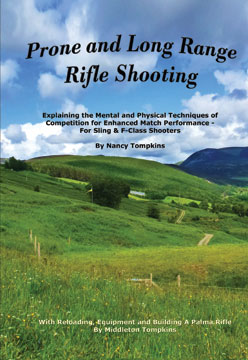
Nancy Tompkins is one of the greatest long-range shooters in American history. She has won five National Long-range Championships. Tompkins’ treatise is a must-read for serious Palma, F-Class, and High Power shooters. The revised Second edition includes F-Class equipment and techniques, and newly updated information. Color pictures. Topics include Mental & Physical training, Reading Wind & Mirage Shooting Fundamentals, International Competition, and Loading for Long Range. Nancy Tompkins is a 4-time winner of the National Long Range Championships, and has won countless other major events. Nancy has been on six Palma Teams (as both a shooter and a coach).
Ryan Cleckner is noted for his ability to explain complex topics in an easy-to-comprehend manner. Now Cleckner has authored a book, the Long Range Shooting Handbook, which expands on the topics covered in Cleckner’s popular NSSF video series. The Long Range Shooting Handbook is divided into three main categories: What It Is/How It Works, Fundamentals, and How to Use It. “What It Is/How It Works” covers equipment, terminology, and basic principles. “Fundamentals” covers the theory of long range shooting. “How to Use It” gives practical advice on implementing what you’ve learned, so you can progress as a skilled, long range shooter. You can view Sample Chapters from Ryan’s Book on Amazon.com.
Tony Boyer, the most successful shooter in the history of short-range benchrest competition, shares many of his match-winning tips in this 323-page book. The book covers all aspect of the benchrest discipline: loading, windflags, rest set-up, addressing the rifle, and match strategies. This is a high-quality publication, filled with valuable insights. Every serious benchrest shooter should read Tony’s book. Boyer has dominated registered benchrest in a fashion that will never be duplicated, having amassed 142 U.S. Benchrest Hall of Fame points. The next closest shooter, Allie Euber, has 47 Hall of Fame points. This handsome, full-color book is 323 pages long, with color photos or color illustrations on nearly every page.
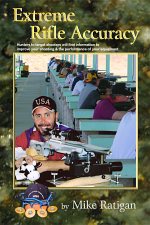
This book should be on the shelf of every short-range benchrest shooter. (Shooters in other disciplines will find the book helpful as well.) Butch Lambert says Mike’s book is “far and away the best Benchrest book written. Very comprehensive, it touches on every aspect of our game.” Mike’s 368-page book is dedicated to getting the most from modern rifle accuracy equipment with an emphasis on shooting 100-200-300 yard group benchrest tournaments. This book covers the most popular hardware plus new equipment offerings are covered, including external mount scopes, actions, triggers, stocks, wind flags, and more. Also covered are rifle handling techniques, note taking, tuning, bullet selection, goals, and match strategies. Mike provides many tips that will help active competitors update their own competitive program.
This book by 11-time National High Power Champion David Tubb focuses on position shooting and High Power disciplines. Section One covers fundamentals: position points, natural point of aim, breathing, triggering mechanics and follow-through, sling selection and use, getting started, getting better, avoiding obstacles. Section Two covers mechanics of offhand, sitting, and prone positions. Section Three covers shooting skills, including wind reading and mental preparation. Section Four covers the technical side of shooting, with extensive disuctions of rifle design, load development, reloading barrel maintenance, and rifle fitting. We consider this book a “must-read” for any sling shooter, and there is plenty of good advice for F-Class shooters too.
Bullseye Mind (Mental Toughness for Sport Shooting) by Dr. Raymond Prior, $14.00 (Softcover).
Having a Bullseye Mind means thinking in ways that create confidence and consistency, even under pressure. A “must-read” for competitive shooters, Bullseye Mind is a mental training book written specifically for the shooting sports. The book is well-organized, with handy highlighted lists and key “talking points”. Each chapter concludes with examples from a world-class shooters such as: Matt Emmons, 2004 Olympic Gold Medalist; Vincent Hancock, 2-time Olympic Gold Medalist; Jamie Corkish, 2012 Olympic Gold Medalist; Petra Zublasing, 2014 World Champion/ISSF Shooter of the Year; and Nicco Campriani, 2012 Olympic Gold Medalist, 2010 World Champion. This book has earned rave reviews from competitive shooters who found it really helped their “Mental Game”. One recent purchaser states: “This book is as though you had a coach in your back pocket…”
Cartridges of the World (15th Edition, 2016), belongs in every serious gun guy’s library. This massive 680-page reference contains illustrations and basic load data for over 1500 cartridges. If you load for a wide variety of cartridges, or are a cartridge collector, this book is a “must-have” resource. The latest edition includes 50 new cartridges and boasts 1500+ photos. The 15th Edition of Cartridges of the World includes cartridge specs, plus tech articles on Cartridge identification, SAAMI guidelines, wildcatting, and new cartridge design trends. In scope and level of detail, Cartridges of the World is the most complete cartridge reference guide in print. Cartridges of the World now includes a 64-page full-color section with feature articles.
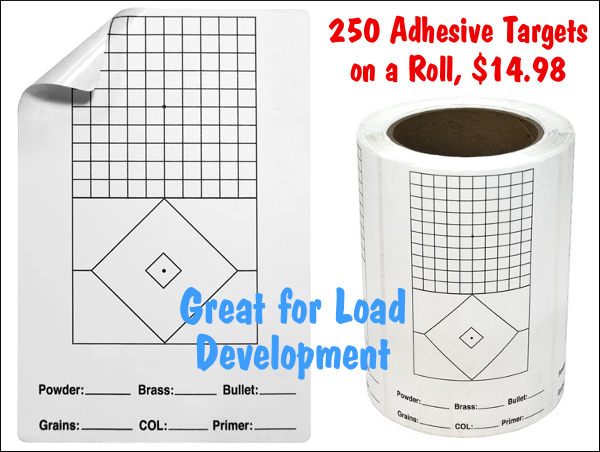
Here’s a smart new product from Midsouth Shooters Supply: 250 self-adhesive Benchrest Targets on a convenient roll. Not just for benchrest competitors, these stick-on targets work great for anyone doing load development. Each target offers a precision 1/4″ grid at the top with diamond aiming box below. This is similar to official targets used in Benechrest matches, with the addition of the upper grid lines which allow you to instantly estimate group size. These targets also include an area to list your load components. Midsouth sells the 250-target roll for $14.98.
This target was designed for benchrest shooting, developing new loads or cataloging existing ones. This easy-to-use target has a 1/4″ grid pattern at the top which helps measure groups. The vertical aiming square at the bottom helps align the cross hairs of your scope for consistent shot placement. At the very bottom of the target there is room to record your reloading information. Each Target sticker measures 6″ x 4″ with a 4.5″ x 2.5″ printed area.
Here’s one of the most popular videos from the Daily Bulletin archives. If you’ve ever wondered how a top-flight, custom rifle is built, watch carefully….
This video, produced for the folks at S&S Precision in Denton, Texas, shows a full custom 6.5×47 bench rifle being crafted from start to finish. It is a fantastic video, one of the best precision rifles video you’ll find on YouTube. It shows every aspect of the job — action bedding, chambering, barrel-fitting, muzzle crowning, and stock finishing.
You’ll be amazed at the paint job on this rig — complete with flames and four playing cards: the 6, 5, 4, and 7 of spades. Everyone should take the time to watch this 13-minute video from start to finish, particularly if you are interested in stock painting or precision gunsmithing. And the video has a “happy ending”. This custom 6.5×47 proves to be a real tack-driver, shooting a 0.274″ three-shot group at 400 yards to win “small group” in its first fun match. NOTE: If you have a fast internet connection, we recommend you watch this video in 720p HD.
We’re told that the founder of S&S Precision, the inimitable “Stick” Starks, is retiring from full-time gunsmithing duties. This video is a nice tribute to Stick’s dedication to his craft for so many decades.
Gary Ocock let the event’s youngest competitor, 12-year-old Gavin Lichtenwalter, shoot Gary’s new Railgun for the last three matches on Sunday afternoon. The day before Gary shot what should be a new IBS 100-yard, five-shot HB group record. Photo credit: Ben Zentner
Heavy Benchrest (Unlimited) rifles, also known as “Railguns”, are the most accurate competition firearms ever invented. And these amazing examples of shooting technology showed their capability recently, with potentially four (4) new records being set at an IBS Heavy Benchrest Invitational match in Visalia, California. If you are curious about the most accurate rifles on the planet, then read on…
2017 Visalia Invitational — IBS Heavy Benchrest Match
Report by Boyd Allen, IBS Exec. Vice President
There was some amazing shooting at a recent Invitational Heavy Benchrest match* held in Visalia, California on October 21-22, 2017. No less than FOUR new Heavy Benchrest (HB) records may have been set. Three individual targets were submitted for the 100-yard HB five-shot group record, a .039 by Gary Ocock (photo below), along with two targets by Jim Nicolas, a .040 and .041.
Multiple Aggregate records (at both 100 and 200 yards) may also have been set. Larry Boers shot a 100-yard, five-target 0.1232 Aggregate that will be submitted for the IBS HB 100-yard, five-shot group Agg record. And Gary Ocock may have set two additional HB Agg records. Gary’s five-target 200-yard Agg (0.1310) is a potential new five-shot-per-target record, as is his ten-target Grand Agg (0.1480) (that covers 100 AND 200 yards, five targets per yardage, ten targets total).
Top Guns Come to IBS Match in California
This California match attracted some of the best Railgun pilots in the game today. On the firing line were three current NBRSA Unlimited record holders: Larry Boers (one record), Steve Kostanich (two records), and Gary Ocock (three current NBRSA UNL records, plus one HV). All three shot well enough in this match that their targets are being submitted to the IBS for consideration as Group, Aggregate, or Grand Aggregate records. NOTE: The “Heavy Benchrest” IBS category is equivalent to “Unlimited” under NBRSA rules. CLICK HERE for Complete Match Results.
Top Shooters for the Match included: Larry Boers (Two Gun, HB GrAgg1, HB 100-yd); Gary Ocock (HB 200-yd and HB GrAgg2); Francis Lee (HB 200-yd).
Two-Gun Overall Results Note: The computer software shows the results for one Grand Agg as “Heavy Varmint”. In fact the SAME HB Railguns were used for both Grand Aggs, so the “Two-Gun Agg” is actually a pair of HB Aggs.
Top Equipment List
Saturday Winners: George Lozano, Larry Boers, Lawrence Weisdorn, Gary Ocock, Joe Stanovich, and Jim Nicolas. Photo by: Dan Lutke.
Conditions: It rained on Friday, but Saturday and Sunday were sunny and slightly cool at first and perfect after that. Saturday at 10:00 am it was 62°, 64%, and the wind was light, increasing slightly later in the day. Sunday’s conditions were similar with a slightly higher wind speed, but still light. The wind was from the West at 3-10 mph, generally stronger closer to the firing line than down range. This normally is more of a picker’s range than a runner’s venue. However, there was some “running” of groups this weekend since rail guns are particularly suited for that style of shooting.
Hall of Famer Helps Young Novice
Along with the seasoned veterans, there was a new competitor, a 12-year-old shooting his very first match. As with life, there were highs and lows. Young Gavin started out with an equipment failure — the rifle he brought wasn’t working, so shooter Bob Hatley let Gavin borrow Bob’s bag gun. Then Gavin got some expert assistance from one of the world’s best — Hall of Famer Gary Ocock. Gary let Gavin shoot the last three 200-yard matches with Gary’s new integral block, Jay Young-built Railgun, one of the most accurate firearms on the planet. Gary shot this rig on relay #1 and let Gavin shoot it in relay #2. How many of us will ever get this kind of opportunity, much less a first time 12-year-old competitor? It’s like a school kid getting to drive an Indy-winning race car.
This photo shows Gavin with family and friends: Grandmother Mary Oulrey, father Mark Lichtenwalter (second from left), grandfather Gary Oulrey (far right). Bob Hatley (extreme left) stepped up to share his bag rifle with Gavin, and Gary Ocock (right of Gavin) let Gavin shoot his Railgun. Note Gavin is wearing Gary’s Hall-of-Fame jacket.
The Facility at Visala — Dale Wimp Rifle and Pistol Range
The Visalia Range has a covered firing line with 28 fixed, monolithic steel-reinforced concrete benches. The direction of fire is north. The cover extends well past the front of the benches as does the concrete. There are covered loading areas both at the level of the benches, directly behind them, and one level up farther to the rear. The firing line and range are below the level of the surrounding land, having been excavated in flat ground with the material from the excavation surrounding the range on three sides, higher in the back, forming an impact berm. A major construction project is about to be finished that will extend the range to 300 yards, and provide a new 10-station, 25-yard pistol range.
Surrounded by fields, the Visalia Range is located in California’s Central Valley, a rich agricultural area.
Notables on the Visalia Firing Line
Three of the competitors at the match deserve special mention because of their recent accomplishments in the world of Benchrest shooting and the interesting equipment they had on display.
Jim Nicholas was on fire on Saturday. During Saturday morning’s 100-yard Aggregate he shot a .040 in the fourth match, and a .041 in the fifth. Both targets and the .039 that Gary Ocock shot were sent in to be measured for a record. All are substantially smaller than the current record, Hap Zeiser’s .063. In the photo above, note the tuner. Jim adjusted a little less than 8 degrees just before he shot .040 in the fourth match and .041 in the fifth. That must have been the “sweet spot”. Jim’s blue Railgun, built by Craig Kinsler, features a barrel block that is integral with the rig top. This is like the new Jay Young Railgun Ocock shoots.
Larry Boers owns the NBRSA Unlimited, 100-yard 10-shot group record (.097). This makes the fourth time that he has won the Two-Gun Overall for this match. Larry is not just a trigger-puller — he makes his own bullets and chambers his own barrels. This year he shot a bullet he still lists under his bullet-making mentor’s name (Del Bishop) a 65 grain, double radius 5/9 FB made from J4 .790 jackets, out of a Nemi point die. Del originally made the bullet and the story is that Nemi at first refused to make the die because he was sure that it wouldn’t shoot well. Later, after some cajoling by Del, he made it, tried a few and excitedly called Dell to tell him just how good the bullets shot. Larry set his record shooting a .750 jacket short BT (.040) bullet from the same die.
Steve Kostanich, a long-time competitor and highly-respected gunsmith from Washington State, recently received official confirmation that he will go in the record books with a pair of 10-shot Unlimited NBRSA world records. The first record is a 10-shot 200-yard 0.1839 Aggregate, while the second is Steve’s 100-200 yard 0.1951 Grand Aggregate.
Parting Shot — This is what happens when you set your Wind Flag stand too high.
* Course of Fire: This was a two-day Heavy Benchrest (aka HB or “Unlimited”) weekend match with targets at 100 and 200 yards, five shots per target. Saturday all shooting was at 100 yards. Sunday all shooting was at 200 yards. There were two (2) Grand Aggregates. One Grand Agg combined Saturday morning (100) with Sunday afternoon (200). The Second Grand Agg combined Saturday afternoon (100) and Sunday morning (200). The match had two HB Grand Aggs because only one class of gun (Heavy Benchrest or “Unlimited”) was shot. The computer software shows the results for one Grand Agg as “Heavy Varmint”, but all matches were for Heavy Benchrest (Unlimited) guns. NOTE: Some competitors did shoot bag guns as these are allowed under HB/Unlimited rules.
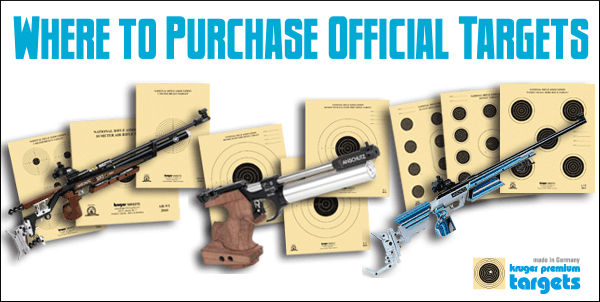
Need targets — not just any old targets, but the correctly-sized targets for specific shooting disciplines (such as NRA Smallbore, F-Class, and 1K Benchrest)? Well you won’t find them at your neighborhood Wally World store. Precise, dimensionally-correct competition targets are producted by a half-dozen specialty printers. In this article we provide links to the leading target sellers, with a chart showing “who’s got what”. Look for your particular discipline and the vendors will be specified.
Sources for Official Shooting Competition Targets:
AccurateShooter.com offers dozens of FREE, printable targets for target practice, load development, and fun shooting. We also offer a few of the most popular NRA Bullseye targets. One or more of these printable targets should work for most training purposes. However, some readers have asked: “Where can we get the real targets… exactly like the ones used in NRA, IBS, and NBRSA shooting matches?”
All these vendors carry nearly all the NRA High Power and Smallbore targets, including the new, smaller F-Class targets. National Target has the F-Class and High Power targets, including 100-yard reductions of the 200, 300, and 600-yard military targets. Germany’s Kruger Targets sells all the important NRA targets, and international (ISSF) air rifle and smallbore targets too.
Orrville Printing currently sells IBS targets for rimfire (50 yard) benchrest, short-range centerfire Benchrest (100, 200, 300 yards), Hunter BR Rifle (100, 200, 300 yards), plus the official 600-yard and 1000-yard IBS targets. National Target Company also has most of the IBS targets. NBRSA short-range, 600-yard, and 1000-yard benchrest targets are available directly from the NBRSA Business Office. Call (307) 655-7415 to order for the season.
The IBS Groups Nationals has a 4-man team competition based on the HV Grand Aggregate results. The 2017 winning team was a “Murderer’s Row” consisting of Wayne Campbell, Billy Stevens, Bart Sauter, and Larry Costa. Each boasts Hall of Fame and/or multiple World Team accomplishments. Hamming it up in the background is HOF shooter Jack Neary.
2017 IBS Group Benchrest National Championships
Holton Gun & Bow Club, Holton, Michigan
August 14-19, 2017
Report by Jeff Stover, IBS President
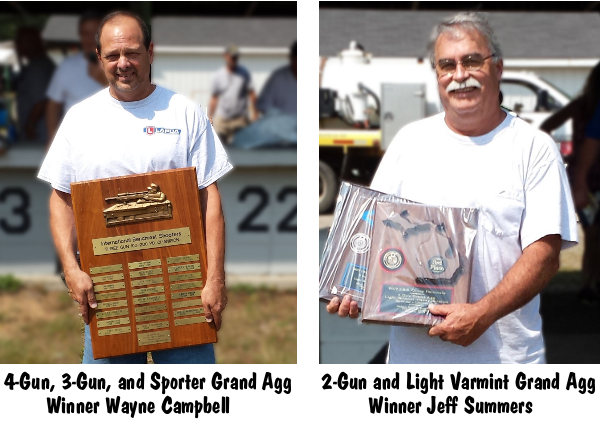
This year the 2017 IBS Group Benchrest Championship was held at the Holton Gun & Bow Club, in Holton, Michigan. This is a pretty facility boasting an impressive firing line with forty (40) concrete benches. Monday morning in western Michigan saw the Heavy Bench (HB) shooters hauling their big railguns to the line. Hall of Fame and multiple World Team shooter Wayne Campbell shot a nice .1858 aggregate for five 10-shot groups. The only other “Teen Agg” was Iowa’s Dave Coots with a .1978. Wayne’s win foretold what was to come the rest of the week.
Wayne Campbell and Jeff Summers Put on a Show
On Tuesday, the bag guns came out for Light Varmint (LV) and Sporter (SP). Mr. Campbell maintained his mojo, shooting yet another “Teen Agg”. Wayne’s .1788 edged fellow HOF member Larry Costa’s .1854. The Light Varmint 100 was also contested on Tuesday. Peter Smith shot a very fine .1658 to beat out Canadian Bill Mitchell at .1960.
Wednesday was reserved for Heavy Varmint (HV) at 100 yards. Holton is Bob Scarbrough’s home range, but he can shoot “lights out” anywhere. Nevertheless, his .1518 had to be satisfying. Wayne Campbell, still on fire, laid down a .1694. In third place, Tennessean Jeff Summers posted a .1800. Mr. Summers is always near the top of any benchrest leader board. He is coming off another Super Shoot win. Most of the time Jeff does not win the small group of the day, but he wins many Aggregates. He is one of the most mistake-free shooters in the game.
File photo courtesy Holton Gun & Bow Club
Benchrest for Group Basics — Four Classes at Nationals
IBS group competition is contested at 100 and 200 yards. At the National Championships, it takes thirty targets of five shots each and ten targets of 10-shot groups to win a “4 Gun Nationals”. That includes four (4) gun classes: Light Varmint, Heavy Varmint, Sporter, and Unlimited. For all practical purposes, the first three are known as “bag guns” while the heavy bench rifles are “railguns”.
In fact, most competitors shooting a bag gun opt for a single rifle, which has been benchrest standard for decades: a 10.5-lb rifle chambered in 6PPC. This can compete in three classes: Sporter, Light Varmint, and Heavy Varmint. The fourth class shot at the Nationals is Unlimited (aka Heavy Benchrest or “HB”). This class features the big, heavy railguns — the most sophisticated Benchrest rigs of all which shoot 10-shot groups at 100 and 200 yards.
For the IBS Nationals, group-shooting competition features 100-yard targets for the first three days followed by three days at 200 yards. Six days total. It is done this way to require only one change of wind flags. Nationals competition requires “full rotation”. That means that every time a shooter goes to the line for the next match target, he or she must move a requisite number of benches to the right. At the end of the day a shooter will shoot across the full width of the line. Some ranges offer unique properties that render some parts of the range harder or easier to shoot small groups. Bench rotation is important to even out those factors.
Thursday was set for 200 yards. Starting off was Heavy Bench (HB), the big railguns. Upper Midwest shooter, Mark Buettgen shot steadily for a .2406 Agg, aided by a small .378. His largest group was a .527. Consistency wins bench matches. Lee Hachigian drove in from the Detroit area with his railgun to be next to the winner with a .2608.
On Friday, two Aggs were shot, Light Varmint and Sporter. Larry Costa nearly nicked a Teen Agg to win LV 200 with a .2027. Lurking high in the standings once again was Jeff Summers and his .2352. Wayne Campbell was not asleep. He was merely third at .2480. The Sporter competition was won by the best benchrest shooter of all time, Tony Boyer. Tony shot a .2287 to edge Billy Stevens. Mr. Boyer added another Hall of Fame point. His 170 points are 120 more than the next shooter (Lester Bruno, no slouch!) in the ranking.
Benchrest legend Tony Boyer added another Hall of Fame point to his amazing total. (File photo from 2016 IBS Group Nationals in Weikert, PA)
The HV guns came out to contest 200 yards on the last day of the Nationals. Jeff Summers worked a .1868 to the winner’s circle. The always tough Larry Costa was close at .1929.
At the IBS Group Nationals, shooters compete for Grand Aggregate (100+200) honors in four classes: LV, HV, Sporter, and HB. In addition, there are multi-gun titles: 2-Gun (all HV and LV targets in 100 & 200); 3-gun (all HV, LV, SP in 100 & 200), and 4-gun (all HV, LV, SP and Heavy Benchrest in 100 & 200).
The Grand Aggregate (100+200) winners were:
Heavy Varmint: Bob Scarbrough, Jr. (.1824)
Light Varmint: Jeff Summers (.2313)
Sporter: Wayne Campbell (.2119)
Heavy Bench: Lee Hachigian (.2374)
In the prestigious multi-gun competition, Jeff Summers won the 2-Gun. Wayne Campbell added more HOF points by winning BOTH the 3-Gun AND the 4-Gun. With his impressive 3-Gun and 4-Gun victories, the talented Mr. Campbell claimed the title of Top Overall shooter after six days of trigger-pulling.
2017 IBS Nationals Powderpuff Exhibition Shoot
For decades, IBS hosts an exhibition shoot on the afternoon of a day when only one Aggregate is contested instead of two. It is called the Powderpuff and is intended to allow family members and others who do not shoot competitively to give benchrest shooting a try. Each shooter is assisted by a coach who instructs the shooter. World-class shooters such as Billy Stevens and Bob Scarbrough give their time and talents to assist the novice competitors. There is no time limit to rattle the inexperienced shooters.
File Photo from previous Powderpuff Event at 2015 IBS Group Nationals
The competition is financially supported by the IBS President’s Fund. This year, at Holton in Michigan, we had four youth and 11 adult competitors. Chris Jeffers won the adult category with a nice .204″ group, while Jake Henderson put his five shots into a .244″ to win the youth division. Congratulations to all the Powderpuff competitors — we hope this inspires them to get more involved in Benchrest shooting.
To get the best accuracy out of any benchrest rifle, you need to find the optimal position of front rest and rear bag. The important point to remember is that each rig is different. One gun may perform best with the front rest right at the tip of the forearm (Position ‘D’ in photo), while another gun will work best with the rest positioned much further back. This Editor’s own 6BR sits in a laminated stock that is pretty flexy in the front. It shoots best with the front rest’s sandbag located a good 6″ back from the forearm tip (position ‘A’).
Here’s some benchrest advice that can help you reduce vertical and shoot tighter groups… without spending another penny. Many benchrest shooters spend a fortune on equipment and devote countless hours to meticulous handloading, but they never experiment with their rifle’s position/balance on the bags. This article explains why you should test your rifle in various positions. What you learn may surprise you (and improve your scores).
Next time you go to the range, experiment with the position of your rifle on the front rest, and try a couple different positions for the rear bag. You may find that the rifle handles much better after you’ve made a small change in the placement of your gun on the bags. Recoil can be tamed a bit, and tracking can improve significantly, if you optimize the front rest and rear bag positioning.
This competitor has the front rest positioned fairly far forward but not all the way out. Note the stop on the front rest — this limits forward stock travel.
Balance Your Gun BEFORE You Spend Hours Tuning Loads
In the pursuit of ultimate accuracy, shooters may spend countless hours on brass prep, bullet selection, and load tuning. Yet the same shooters may pay little attention to how their gun is set-up on the bags. When you have acquired a new rifle, you should do some basic experimentation to find the optimal position for the forearm on the front rest, and the best position for the rear bag. Small changes can make a big difference.
Joel Kendrick, past IBS 600-yard Shooter of the Year, has observed that by adjusting forearm position on the front rest, he can tune out vertical. He has one carbon-fiber-reinforced stock that is extremely rigid. When it was placed with the front rest right under the very tip of the forearm, the gun tended to hop, creating vertical. By sliding the whole gun forward (with more forearm overhang ahead of the front sandbag), he was able to get the whole rig to settle down. That resulted in less vertical dispersion, and the gun tracked much better.
Fore/aft stock position is important even with very wide fore-ends.
Likewise, the placement of the rear bag is very important. Many shooters, by default, will simply place the rear bag the same distance from the front rest with all their guns. In fact, different stocks and different calibers will NOT behave the same. By moving the rear bag forward and aft, you can adjust the rifle’s overall balance and this can improve the tracking significantly. One of our shooters had a Savage 6BR F-Class rifle. By default he had his rear bag set almost all the way at the end of the buttstock. When he slid the rear bag a couple inches forward the gun tracked much better. He immediately noticed that the gun returned to point of aim better (crosshairs would stay on target from shot to shot), AND the gun torqued (twisted) less. The difference was quite noticeable.
A small change in the position of the forearm on the front rest, or in the placement of the rear bag, can make a big difference in how your gun performs. You should experiment with the forearm placement, trying different positions on the front rest. Likewise, you can move the rear bag back and forth a few inches. Once you establish the optimal positions of front rest and rear bag, you should find that your gun tracks better and returns to battery more reliably. You may then discover that the gun shoots smaller groups, with less vertical dispersion. And all these benefits are possible without purchasing any expensive new gear.


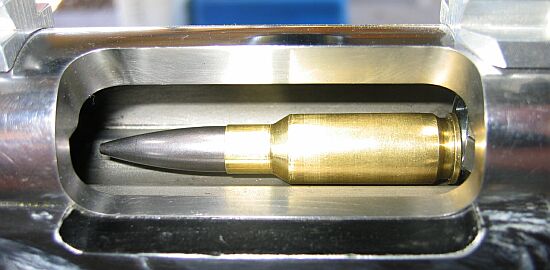
 30 BR dies are readily available from a number of manufacturers. I personally use Wilson neck and seating dies with a Sinclair Arbor press, but Redding and Forster both supply high-quality threaded dies for use in a conventional press. For under $100.00 US, custom full-length dies can be obtained from Hornady and CH Tool & Die by sending them reamer prints or a couple of fired cases. Harrell’s Precision offers “semi-custom” dies. Just send them some fired cases and they select a pre-made CNC-cut die that ideally fits your chamber. You can ask the Harrell brothers for a die that’s tighter at the shoulder or base, or otherwise customized to your preferences.
 Want to learn long-range benchrest skills from the best in the business? Then head to Williamsport, PA this June. The registration period for the 2018 PA 1000 Yard Benchrest School is now open. This year’s session will be held Saturday and Sunday, June 16-17, 2018, with a “Meet and Greet” on Friday Night. Classes, taught by top 1K shooters, are held at the Original Pennsylvania 1000-Yard Benchrest Club Range, one of the best 1000-yard ranges in the country. The school will be limited to 25-30 students with one instructor for every two students.

 You have to love this story, supplied by our friend Lou Murdica. It seems that a petite little 10-year-old school girl finished fourth in a 100-Yard Benchrest match in Phoenix, beating some of the best in the business, including many Benchrest Hall of Famers. That’s right, shooting a remarkable 0.1612 Aggregate, little Angelina G. put a whupping on some very big names in the Benchrest game, including Lou Murdica himself. Angelina finished just .008 behind Hall of Famer Gary Ocock, beating other Benchrest superstars such as Bob Brackney, Lester Bruno, and Tom Libby. Angelina also beat legendary bullet-maker Walt Berger, but we’ll cut Walt some slack. Now in his 80s, Walt deserves praise for doing so well at the opposite end of the age spectrum.








 This video, produced for the folks at