CCI and Federal Premium are both brands of Vista Outdoor. Most CCI rimfire is produced in Idaho, while other Federal-branded rimfire ammo is produced in Federal’s Anoka, Minnesota facilities. Here we feature videos from both CCI and Federal ammo plants. Watch and learn how rimfire ammo is made.
Field & Stream Tours Federal Ammo Plant in Minnesota
A reporter for Field & Stream recently got a chance to tour the Federal ammunition production facility in Anoka, Minnesota. This large plant produces both rimfire and centerfire ammunition. While touring the plant, the reporter was allowed to capture video showing the creation of .22 LR rounds from start to finish. This is a fascinating video, well worth watching.
Note to Viewers — After Starting Video, Click Speaker Icon to HEAR audio!
This revealing video shows all phases of .22 LR ammo production including cupping, drawing, annealing, washing, drying, head-stamping, priming, powder charging, bullet seating, crimping, waxing, inspection, and final packaging. We recommend you watch the video from start to finish. You’ll definitely learn some new things about rimfire ammo.
.22 LR Ammo Production at CCI Ammo Plant in Idaho
Back in 2016, YouTuber 22Plinkster was able to tour the CCI Ammo plant in Lewiston, Idado. Here is the rimfire production video he produced.
The Manufacturing Process for .22 LR Rimfire Ammunition Shooting Sports USA explains: “Rimfire cartridge cases are the oldest self-contained cartridge in existence, having been in continuous production since the mid-1850s. Rimfire cases are drawn from a thin piece of brass and formed with a hollow rim. A priming compound is then forced into the case using centrifugal force, where it is charged with powder and a bullet is seated in the mouth of the case. The case is then crimped around the bullet to ensure sufficient push and pull when the round is fired. When the firing pin strikes the thin brass rim of the case, the hollow rim is crushed and the primer is ignited.” Source: SSUSA.org 9/2/2017.
The ammunition and reloading component producing divisions of Vista Outdoor will become a new separate company under the name “The Kenetic Group” with NYSE ticker symbol “HUNT”. The Kinetic Group enterprise will make and sell CCI, Federal, Remington (ammunition), Speer, and Hevi-Shot products. The establishment of The Kinetic Group will follow the planned spin-off of Vista Outdoor’s Outdoor Products operations. The Kinetic Group will continue Vista Outdoor’s Sporting Products sales and manufacturing.
Vista Outdoor Inc. (NYSE: VSTO), the parent company of 41 brands that design, manufacture and market sporting and outdoor lifestyle products worldwide, has announced its new name and identity that will be effective following the planned spinoff of Vista Outdoor’s Outdoor Products business.
“The Kinetic Group will be our name moving forward after the separation…” stated Sporting Products President and CEO Jason Vanderbrink. “To hunters and shooters, their favorite brand of ammunition will take center stage as it always has — they’ll look for CCI, Federal, HEVI-Shot, Remington, and Speer on the shelf, at events and online.”
Vista Outdoor will become The Kinetic Group, a name that represents the energy behind the company and its leading ammunition brands. The Kinetic Group will trade on the New York Stock Exchange (NYSO) under the stock ticker “HUNT”, and the brand will feature a North American ram logo. Sporting Products leaders unveiled The Kinetic Group’s branding this week at the CCI-Speer ammunition factory in Lewiston, Idaho.
“The performance of our products is so often measured in energy on target. Kinetic energy is the force behind our world-class brands and exhibits the spirit of the 4,500 American workers who represent our company,” said Vanderbrink, who will be a director on The Kinetic Group’s board of directors post-spin. Joining Vanderbrink on The Kinetic Group’s leadership team are Andy Keegan (CFO) and Jeff Ehrich (General Counsel and Corporate Secretary). Gary McArthur will continue as interim CEO of Vista Outdoor until the completion of the spinoff.
On the new TheKineticGroup.com website, the company explained its company mission:
“Energy is what propels us and inspires us. It defines our products, drives our purpose, and champions our freedoms. Our brands and products give us the ability to unlock freedom, harvest game, protect us, and unite us. Our thirst and our passion to capture and build upon this energy is never extinguished. We are America’s ammunition. We are The Kinetic Group.”
There is an excellent article about primers on the Shooting Times website. We strongly recommend you read Mysteries And Misconceptions Of The All-Important Primer, written by Allan Jones. Mr. Jones is a bona fide expert — he served as the manager of technical publications for CCI Ammunition and Speer Bullets and Jones authored three editions of the Speer Reloading Manual.
This authoritative Shooting Times article explains the fine points of primer design and construction. Jones also reveals some little-known facts about primers and he corrects common misconceptions. Here are some highlights from the article:
Size Matters
Useful Trivia — even though Small Rifle and Small Pistol primer pockets share the same depth specification, Large Rifle and Large Pistol primers do not. The standard pocket for a Large Pistol primer is somewhat shallower than its Large Rifle counterpart, specifically, 0.008 to 0.009 inch less.
Magnum Primers
There are two ways to make a Magnum primer — either use more of the standard chemical mix to provide a longer-burning flame or change the mix to one with more aggressive burn characteristics. Prior to 1989, CCI used the first option in Magnum Rifle primers. After that, we switched to a mix optimized for spherical propellants that produced a 24% increase in flame temperature and a 16% boost in gas volume.
Foiled Again
Most component primers have a little disk of paper between the anvil and the priming mix. It is called “foil paper” not because it’s made of foil but because it replaces the true metal foil used to seal early percussion caps. The reason this little disk exists is strictly a manufacturing convenience. Wet primer pellets are smaller than the inside diameter of the cup when inserted and must be compacted to achieve their proper diameter and height. Without the foil paper, the wet mix would stick to the compaction pins and jam up the assembly process.
Primer Functionality and Primer Types Compared
This video looks at a variety of primer types from multiple manufacturers, foreign and domestic. The video explains the basics of how primers function, and then explains the key characteristics of standard primers, magnum primers, and mil-spec primers (designed for semi-auto rifles).
There is an excellent article about primers on the Shooting Times website. We strongly recommend you read Mysteries And Misconceptions Of The All-Important Primer, written by Allan Jones. Mr. Jones is a bona fide expert — he served as the manager of technical publications for CCI Ammunition and Speer Bullets and Jones authored three editions of the Speer Reloading Manual.
This authoritative Shooting Times article explains the fine points of primer design and construction. Jones also reveals some little-known facts about primers and he corrects common misconceptions. Here are some highlights from the article:
Size Matters
Useful Trivia — even though Small Rifle and Small Pistol primer pockets share the same depth specification, Large Rifle and Large Pistol primers do not. The standard pocket for a Large Pistol primer is somewhat shallower than its Large Rifle counterpart, specifically, 0.008 to 0.009 inch less.
Magnum Primers
There are two ways to make a Magnum primer — either use more of the standard chemical mix to provide a longer-burning flame or change the mix to one with more aggressive burn characteristics. Prior to 1989, CCI used the first option in Magnum Rifle primers. After that, we switched to a mix optimized for spherical propellants that produced a 24% increase in flame temperature and a 16% boost in gas volume.
Foiled Again
Most component primers have a little disk of paper between the anvil and the priming mix. It is called “foil paper” not because it’s made of foil but because it replaces the true metal foil used to seal early percussion caps. The reason this little disk exists is strictly a manufacturing convenience. Wet primer pellets are smaller than the inside diameter of the cup when inserted and must be compacted to achieve their proper diameter and height. Without the foil paper, the wet mix would stick to the compaction pins and jam up the assembly process.
In a recent Federal Season Podcast, Federal Ammunition’s President Jason Vanderbrink discusses the shortages of loaded ammunition we have experienced for many months now. And it’s not just loaded ammo — powder and primers are very hard to find and prices are crazy, with 1000 primers selling for $300 or more in recent Gunbroker auctions.
This Federal Podcast episode attempts to answer key questions about the unprecedented demand for ammunition. Ammo buyers want to know what caused the shortage, when supplies will become normal again, and what Federal and its sister brands are doing to meet consumer needs.
Click Green Arrow to Start Podcast Audio:
Fast forward to 00:45 to skip intro.
We applaud Federal for addressing the issue. Many shooters think there is some kind of conspiracy — suggesting that the Federal Government is buying all the ammunition, or that companies such as Federal or Hornady have halted production. That’s nonsense. In fact Federal, Hornady, and Olin (Winchester) are all running at full capacity.
However, consumer demand has increased dramatically. This is because of political developments, with tens of millions of gun owners fearful that the new Democratic administration will impose new taxes or restrictions on ammo. In addition, demand has been driven by new gun owners. The NSSF tells us that over 7,000,000 Americans purchased their first firearm in 2020. If each new gun buyer purchased just two, 50-round boxes of ammo, that equates to 700,000,000 rounds of ammo. Think about that… the gun industry would have to produce an additional 1.91 million rounds of ammo EVERY DAY just to fill the demands from new gun owners.
In the podcast Federal’s President Vanderbrink emphasized that Federal is running at full capacity. Vanderbrink also discusses the shortages of components, particularly primers, which are produced by both Federal and sister company CCI.
Vanderbrink pointed out that Federal had been at less than full capacity in 2017-2019, but Federal had also invested in new capacity over the last five years and that investment is now paying off: “We are investing where we need to invest… we have hired hundreds of new workers.”
Primers Are in Short Supply Because They Are Being Used in Loaded Ammunition
Vanderbrink explains why primers are not getting to retail outlets. The answer is that Federal is using a larger percentage of its own primer production for loaded ammunition. “We are making a lot more ammunition today. Our internal primer needs have gone up exponentially as we are shipping more ammunition. [Previously] we’d sell excess [primer] capacity to the reloading market. As the ammunition business picked up in March 2020, it came at the expense of the reloading primers. We are taking a bigger share just to make our ammunition” (Podcast 08:30 – 09:50)
Remington Bankruptcy DID Affect Ammo and Primer Supplies
Remington’s business problems HAVE reduced ammo supply said Vanderbrink: “When we acquired Remington, that factory wasn’t making hardly any ammunition, so that just starved that market already that was constrained. As we’re getting Remington up and going right now, we’re going to make more ammunition, so the market WILL have more ammunition[.] Along with the social unrest, along with the Pandemic fears that people had… you had Remington not making much ammunition, so that just added to the backlog.” Vanderbrink noted that Federal acquired the Remington factory in October and it plans to increase Remington ammo production significantly over previous levels.
(Podcast 10:20 -11:20)
Ammunition Shortage is NOT Caused by Federal Government Buying Everything
Vanderbrink also said flat out that the shortage has NOT been caused by huge new government ammo buys or Federal redirecting production to the government. The allocation to the commercial sector is actually higher than in recent years.
Vanderbrink asked for patience. While conceding that the pandemic has created challenges, Vanderbrink declares that the ammo plants are running at full capacity: “We know, ammo seems hard to come by right now. But rest assured, we are building and shipping more and more every day[.]”
Why is factory ammunition so hard to find? That’s the question on many gun owners’ minds. There are some crazy rumors — that production has been slowed on purpose — or that there is a secret warehouse somewhere, full of ammo. In fact, those rumors are nonsense — the major ammo production facilities of Vista Outdoor are running around the clock to meet demand.
That message was recently delivered in a video featuring Jason Vanderbrink, President of Vista Outdoor’s ammunition manufacturing division, which includes brands Federal, CCI, Speer, and Remington.
Millions of new gun owners have created an unprecedented demand for ammo in 2020.
Huge Demand from Millions of New Gun Owners
Vanserbrink points out some basic economics: “Seven million new shooters since March, times 2 boxes (a conservative estimate) is 700 MILLION new rounds of ammunition [that] our three factories have to produce. That is impossible to do in nine months.”
In this video, Vanderbrink asks for patience and seeks to quash rumors. While conceding that the pandemic has created challenges, Vanderbrink declares that the ammo plants are running at full capacity:
“We know, ammo seems hard to come by right now. But rest assured, we are building and shipping more and more every day[.] We are making ammunition every minute of every day … We are making more hunting ammo than we ever have. We are doing our damndest to meet the demand!”
Gander Outdoors in Kenosha, WI — reader-submitted photo on GMToday.com
The ammo and primer shortage is real, and it’s here to stay — well into 2021. That’s what industry experts tell us: “With [ammunition] demand far outstripping supply and inventory levels in the channel at all-time lows, we see strong demand continuing[.]” — Christopher Metz, CEO of Vista Outdoor
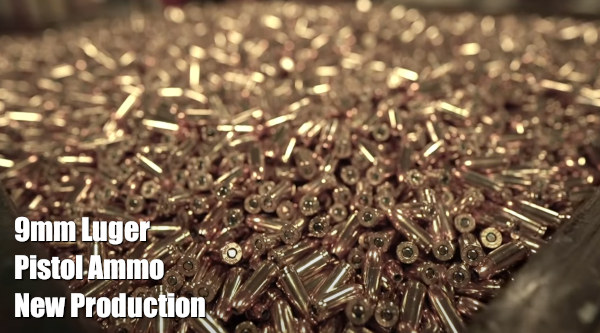
Certain types of ammunition, 9mm Luger for example, are very difficult to find these days. And what IS available is often marked up 300-400% over 2019 prices. Demand has far exceeded supply. And the ammo shortage won’t end any time soon. Vista Outdoor’s CEO Metz added: “Despite us producing flat-out for six months, there is no buildup of inventory at any of our customers. In fact, every one of them would like significantly more. Simply put, consumer demand continues to outpace our ability to supply.”
Ammunition Shortage Impacts Primer Supply
Rifle and pistol primers are nearly sold out everywhere, with some less-than-reputable vendors now charging 4-5 times the normal price. So what’s going on here — why can’t you find primers? One reason is that primer producers such as Federal and CCI are using the vast majority of the primers they make to complete their loaded ammunition, which is flying off the shelves.
What is causing the ammo panic buying and primer shortage?
There are a number of key reasons:
1. Concerns over the recent election and potential Democratic Party control of U.S. House of Representatives, U.S. Senate, and the White House;
2. General worry and paranoia caused by the COVID-19 pandemic;
3. Fear of new legislation banning guns and restricting ammunition purchases;
4. Social unrest and rioting led by BLM and left-wing activists and tolerated/encouraged by Blue State government officials; and perhaps most importantly,
5. The vast increase in the number of new gun buyers.
Huge Increase in Gun Purchasing in 2020
2020 will probably set an all-time record for gun purchasing in the USA. This spike in gun buying has been propelled by the greatest annual increase in gun ownership in U.S. history. According to data from the NSSF, roughly 6.2 million Americans purchased their first firearm in 2020. A NSSF dealer survey estimates that 40% of all gun sales were conducted to purchasers who have never previously owned a firearm. And women accounted for 40.2% of first-time gun purchases. We’ve never seen that kind of spike in gun ownership in a single year. This is unprecedented.
Ammo Shortage Will Continue for Many Months, Well into 2021
What are the prospects for greater availabilty of loaded ammo in the months ahead? Not so good according to Vista Outdoor CEO Christopher Metz whose company operates Federal, CCI, RCBS, Alliant, Blazer and many other shooting industry brands. Metz declared: “We currently have over a year’s worth of orders for ammunition.” That value of those back-orders exceeds ONE BILLION dollars. “This is unprecedented for our company. With demand far outstripping supply and inventory levels in the channel at all-time lows, we see strong demand continuing[.]”
There is some good news however — the former Remington ammo factory will start cranking out ammunition again. The American Rifleman reports: “Vista Outdoor has purchased the [Remington Outdoor] ammunition factory in Lonoke, Arkansas [and will resume] production at or near full capacity. The Northwest Arkansas Democrat Gazette reports 300 employees furloughed by the former owner of the plant will soon be recalled to join nearly 400 still working at the facility.”
YouTube gun video producer .22 Plinkster has unbridled curiosity when it comes to .22 LR performance. A while back he wanted to see how many Christmas ornaments could be penetrated by one .22 LR round. To answer that burning question, Mr. Plinkster lined up 40 plastic Xmas bulbs in a row and then fired a single round of CCI .22 LR Velocitor ammo through the bunch, using his Henry Golden Boy lever action rifle. Did the bullet penetrate a dozen ornaments? Two dozen? What do you think? Watch the video to find out the surprising answer. The CCI Velocitor ammo is rated at 1435 fps.
Christmas Ornament Penetration Test with Henry .22 LR Lever Action Rifle.
Big news for the shooting community! Just six years after it acquired Savage Arms, outdoor industry mega-corp Vista Outdoor is selling off Savage Arms. The firearms-maker will be acquired by a private investment group led by Savage’s current management. When the sale is complete, Vista Outdoor, parent company of dozens of outdoor brands such as Bushnell, Bell Helmets, CCI, Camelback, Federal, RCBS, and Weaver, will no longer produce firearms of any kind. The sell-back to the Savage management group will include Stevens Arms*, which primarily produces shotguns.
There were multiple reasons given for the sale, which include:
1. Cutting costs, reducing corporate debt, and consolidating operations at Vista Outdoor.
2. Focusing more on the ammunition brands Alliant, CCI, Speer, and Federal.
3. Giving Vista Outdoor’s “ammunition brands flexibility to work with any industry partner”.
In addition, we suspect that, given the current political climate and media antagonism towards gun-makers, Vista Outdoor’s leadership deemed that owning Savage was bad for the company’s overall image. The potential profits from Savage were simply not worth the negative press as well as the potential liabilities from gun-related lawsuits.
By the Numbers: Vista Outdoor acquired Savage Arms (and Stevens) in July 2013 for $315 million. The July 2019 sell-off of Savage Arms (and Stevens) for $170 million represents a $145 million loss for Vista Outdoor. That’s not a good business model.
Founded in 1894, Massachusetts-based Savage Arms is one of America’s oldest gun-makers. While it has produced a wide variety of firearms over the past 125 years, Savage is now best known for its affordable bolt-action hunting rifles that feature barrels attached by a barrel-nut. In recent years, Savage has also moved aggressively into the “black rifle” market producing its MSR series of AR-platform rifles in a variety of chamberings. Savage also produces a popular semi-auto Rimfire rifle, the Savage A17/A22 series.
Here is the official Press Release covering Vista Outdoor’s sale of Savage Arms to a group of investors headed by Al Kasper, Savage’s President and CEO (emphasis added):
Vista Outdoor Announces Sale of Savage Brand
Vista Outdoor Inc. (“Vista Outdoor”) (NYSE: VSTO) announced today that it has completed the sale of the legal entity operating its Savage Arms and Stevens firearms brands to a financial buyer for a total purchase price of $170 million, comprised of $158 million paid at closing and $12 million to be paid upon maturity of a five-year seller note issued by the buyer to Vista Outdoor in connection with the transaction.
The sale is part of Vista Outdoor’s previously announced transformation plan, which outlined the intent to reshape the company’s portfolio by cutting costs, consolidating leadership, paying down debt, and divesting certain brands, including both its eyewear brands and firearms brands, in order to pursue growth in product categories where the company believes it can be market leaders. As the company now looks forward, the focus is on ammunition, hunting and shooting accessories, hydration bottles and packs, outdoor cooking products, and cycling/ski helmets and accessories.
“Divesting our Savage brand was a key aspect of our transformation plan,” said Chris Metz, CEO of Vista Outdoor. “While it was a difficult decision to sell such an iconic brand, I remain confident that this was the correct choice to help Vista Outdoor grow in those categories where we can have leadership positions. Savage is a fantastic business, and it deserves to continue to evolve into other firearms categories. At this time, however, we simply do not have the resources to transform Savage into the full-service firearms company that it deserves to be and, therefore, we determined the brand would be better off with a different owner. We’re excited to see Savage reach its full potential under new ownership.”
Savage was acquired by Vista Outdoor’s predecessor, ATK, in 2013. ATK’s sporting business – which included Savage, Bushnell, Federal and CCI Ammunition, and dozens of other hunt/shoot accessories brands, spun off in 2015 to become Vista Outdoor.
“The Savage acquisition helped create Vista Outdoor, and we’re grateful for all the success the brand brought to our company over the past six years,” said Metz. “However, this divestiture now gives our ammunition brands flexibility to work with any industry partner to create the best products and meet our consumers’ needs.”
At closing, Vista Outdoor received gross proceeds from the divestiture of $158 million. Vista Outdoor will use the net after-tax proceeds of the sale to repay outstanding indebtedness.
“Reducing our debt is a key part of turning around our business,” said Metz. “Selling Savage and further reducing our overall leverage will improve our financial flexibility and better position the company for long-term growth. We’ve now rebuilt the company’s foundation to provide a more stable base upon which to grow. We have a portfolio of brands that all have the potential to be strong, market leaders in their respective categories and I’m proud of my team’s efforts in reshaping the portfolio over the course of the past year.”
*American firearms manufacturer J. Stevens Arms & Tool Company, now part of Savage Arms, introduced the .22 Long Rifle cartridge in 1887. Savage Arms was founded in 1894 by Arthur Savage in Utica, New York. Within 20 years Savage was producing rifles, handguns, and ammunition. Savage introduced the first hammerless lever-action rifle, the Model 1895, derived from Arthur Savage’s Model 1892 rifle that he had designed for Colt.
Story tip from EdLongrange. We welcome reader submissions.
Long-time site sponsor Powder Valley notified us about some great Rebate offers from Vista Outdoor companies Alliant, CCI, Federal, and Speer. If you need powder, primers, or bullets, now is a great time to buy. The rebated offers are good now through June 30, 2019. These rebates may also be available when you purchase qualifying products from other vendors Bruno’s, Graf’s, Midsouth, and Precision Reloading.
1. ALLIANT Powder — More Bang for your Buck$ Rebate
If you buy at least four (4) pounds of powder you get $2.00 back per pound, with a rebate limit of $20 (for ten pounds). Minimum purchase four (4) pounds required. This is a great deal when you combine the rebate with Powder Valley’s already low prices.
2. Federal — Handload and Save Rebate
Spend at least $100 on Federal® reloading components (including bullets, brass and primers) to get 20% of the purchase price back. Rebate amount calculated on purchase price only, does not include taxes and/or shipping/handling fees. Maximum rebate $100 per person or household. Minimum spend $100 required.
3. CCI — Primed for Action Rebate
Spend at least $100 on CCI® reloading primers to get 20% of the purchase price back. Rebate amount calculated on purchase price only, does not include taxes and/or shipping/handling fees. Reloading components only; offer does not apply to percussion caps. Maximum rebate $100 per person or household. Minimum spend $100 required.
4. Speer — More Bullets for your Benjamins Rebate
Spend at least $100 on Speer® component bullets to get 20% of the purchase price back. Rebate amount calculated on purchase price only, does not include taxes and/or shipping/handling fees. Maximum rebate $100 per person or household. Minimum spend $100 required.
Get up to $320 Total Rebate — Alliant, CCI, Federal, and Speer
These Rebate Offers are good through June 30, 2019. Powder Valley explains that these rebates are all separate programs: “Each of these brands have their own rebate, No Mixing and Matching of these brands unless you want to participate in all four rebates. If you have any questions please read the Terms or call us to explain.” To get any particular rebate you’ll need to buy the qualifying amount of product for that particular brand. If you do all four Rebates, you could get a total of $320.00 back.