Jessie Duff won her 8th Ladies Class Title at the 2017 U.S. Steel Nationals in Daytona, Florida.
It’s drag racing with guns! Draw your gun then shoot five steel targets as fast as humanly possible. The U.S. Steel Nationals is the fastest action pistol sport on the planet. Splits are blazing fast — in the top tier of shooters, standings are settled by hundredths of a second. The Steel Nationals has recently has also expanded to include rimfire firearms, and that’s lowered the cost of competing. In this week’s episode of Shooting USA, John Scoutten and Tony Pignato have the highlights of the final round of the 2016 U.S. Steel Nationals, held in Daytona, Florida.
Watch Full Episode of Shooting USA
Air Times by Time Zone
Eastern Time: Tuesday 3:00 PM; Wednesday 9:30PM, 1:00 AM
Central Time: Tuesday 2:00 PM; Wednesday 8:30 PM, Midnight
Mountain Time: Tuesday 1:00 PM; Wednesday 7:30 PM, 11:00 PM
Pacific Time: Tuesday Noon; Wednesday 6:30 PM, 10:00 PM
The show airs tonight on the Outdoor Channel on cable TV. If your cable service doesn’t include the Outdoor Channel, you can watch the entire episode on your computer or mobile device right here. Just click the above video to start the 47-minute show.
Pro Shooter Experience in Las Vegas
Along with the U.S. Steel Nationals Coverage, this week’s episode features the Pro Shooter Experience (PSE) in Las Vegas (starting at 32:22 in video above). Participants enjoy three days of training with three world Champions: Max Michel, JJ Racaza, and Travis Tomasie.
Max explains: “The whole premise was to get three world champion shooters together [who are] great ambassadors of the game, and really give back…” Max and Travis are both former USAMU shooters with multiple championship wins. JJ is one of the fastest pistoleros on the planet. The PSE features 1-on-1 training sessions, shooting competitions, speed drills, and some very impressive shooting by the pros.
TEN Shots in 0.303″ (0.289 MOA) at 100 Yards
How does Dan’s XP-100 pistol shoot? Look at that target showing TEN shots at 100 yards, with eight (8) shots in the main cluster at the top. The ten-shot group measures .303″ (0.289 MOA), as calculated with OnTarget Software. Not bad for a handgun! What do you think, can your best-shooting rifle match the 10-shot accuracy of this XP-100 pistol?
Report by Boyd Allen
This pistol belongs to Dan Lutke, a Bay Area benchrest shooter who publishes the results for the Visalia matches to the competitors and the NBRSA. He has been an enthusiastic competitor for an number of years, at various ranges, notably Visalia and Sacramento. The action is a Remington XP-100, to which a Kelbly 2 oz. trigger has been fitted. On top is an old Japanese-made Tasco 36X scope (these were actually pretty darn good). The Hart barrel (a cast-off from Dan’s Unlimited rail gun) was shortened and re-chambered for the 6x45mm, a wildcat made by necking-up the .223 Remington parent case. The custom stock/chassis was CNC-machined by Joe Updike from 6061 Billet Aluminum to fit the XP-100 action and mount a target-style AR grip with bottom hand rest. The gun was bedded and assembled by Mel Iwatsubu. In his XP-100 pistol, Dan shoots 65gr custom boat-tails with Benchmark powder.
This diagram shows the most common 6x45mm wildcat, which is a necked-up version of the .223 Remington parent cartridge. NOTE: The dimensions for Dan Lutke’s benchrest version of this cartridge may be slightly different.
ACAD drawing by Peter Gnanapragasam CC by SA 3.0, via Wikimedia Commons. Title Added.
Story tip from Boyd Allen. We welcome reader submissions.
TacticalWalls.com, producers of home security/concealment products, has introduced a new line of furniture with hidden gun storage. Tactical Walls’ new Coffee Table, End Table, and Night Stand provide “hidden in plain sight” solutions for defensive firearms. These tables all feature a clandestine metal gun compartment that can be instantly accessed via RFID card.
At first glance, the TacticalWalls tables appear to be nothing more than quality wood furniture pieces. (Each unit is made from hardwood and crafted in Shenandoah, Virginia.) But what’s special are the remote-activated hidden gun bays. By swiping a pre-programmed RFID card supplied with each unit, the hidden compartment underneath the table-top is unlocked, giving instant access to your handgun, shotgun, or rifle.
These products are nicely crafted, and RFID access is a smart use of modern technology. However, the TacticalWall tables are pretty expensive. The Coffee Table (49″L x 24″W x 19″H) costs $795.00! That will buy a pretty big gun safe. The two smaller units, the Night Table (above left, 23″L x 23″W x 31″H) and End Table (above right, 23″L x 23″W x 25″H) each cost $495.00. For that kind of money you have a variety of gun storage choices. Still, this could be a nice “instant access” bedroom option. You could keep your pistol right at your bedside, close at hand, but still completely secure.
Shotgun vs. Handgun — which is better for home defense? That’s a question that inspires strong opinions on both sides. We think the best answer may be “both”. There are some situations where a pistol is most handy, while there are other situations where the power (and lethality) of the shotgun clearly wins out. Some would argue that the shotgun offers an “intimidation” factor that may better resolve a threat without a shot being fired.
The NSSF, in cooperation with Thunder Ranch Training Center, has created an interesting video that examines the Shotgun vs. Handgun debate. As the Cheaper Than Dirt Blog notes: “The primary argument against the shotgun is a longer length leading to less maneuverability. On the other hand, the pistol offers better maneuverability, but lacks the stopping power of a shotgun”. Moreover, the pistol may be less accurate, according to some critics. This NSSF video looks at the question from a logical standpoint — making some surprising points.
As you can see in this still frame from the video, the shooting stance of the pistol shooter (Clint) is NOT much more compact than that of the two shotgunners (compare actual muzzle positions). So a shotgun may actually be more handy inside a home than some people realize. Clint concludes that the gun selection debate “is all very easily solved by only one question: ‘If someone was going to run across a bedroom at you and they had a big knife, would you rather shoot him one time with a pistol or one time with a shotgun?’ When you answer the question you figure out why this [shotgun length] doesn’t really bother us. We simply take these [shotguns] and use them in a slightly different manner…”
In this video, Thunder Ranch Director Clint Smith explains why the overall length of a shotgun, as held in firing position against the shoulder, is not really that much greater than the “shooting stance length” of a handgun held in a proper firing position (with arms extended). Accordingly gun length/size should not be the deciding factor when choosing a firearm for home defense.
Whatever Weapon You Choose — Train with It
Fundamentally, you should use the firearm that is 100% reliable, and with which you have trained regularly. Mastery of a defensive firearm — whether shotgun or handgun — needs to be second-nature. You should be able to operate all the controls (safety, pump, decocker, slide, bolt handle etc.) by “instinct” based on hours of training. Likewise you should know how to operate the light/laser if your defensive firearm is so equipped. Importantly, you should be able to reload in darkness, and clear malfunctions without panicking.
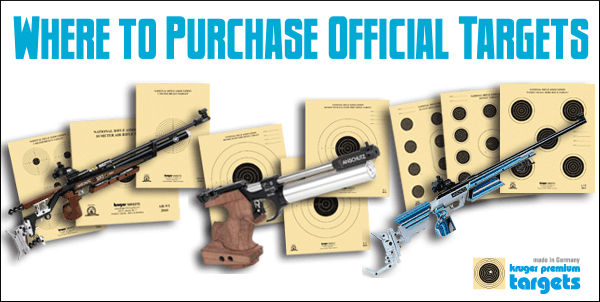
AccurateShooter.com offers dozens of FREE, printable targets for target practice, load development, and fun shooting. We also offer a few of the most popular NRA Bullseye targets. One or more of these printable targets should work for most training purposes. However, some readers have asked: “Where can we get the real targets… exactly like the ones used in NRA, IBS, and NBRSA shooting matches?”
All these vendors carry nearly all the NRA High Power and Smallbore targets, including the new, smaller F-Class targets. Germany’s Kruger Targets sells all the important NRA targets, and international (ISSF) air rifle and smallbore targets too.
Orrville Printing currently sells IBS targets for rimfire (50 yard) benchrest, short-range centerfire Benchrest (100, 200, 300 yards), Hunter BR Rifle (100, 200, 300 yards), plus the official 600-yard and 1000-yard IBS targets. National Target Company also has most of the IBS targets. NBRSA short-range, 600-yard, and 1000-yard benchrest targets are available directly from the NBRSA Business Office. Call (307) 655-7415 to order for the season.
Do you have a friend or family member who is just getting started in handgunning? The NSSF has created five Handgun 101 videos that cover the basics of handgun shooting, starting with key principles of firearms safety. Hosted by Top Shot Season 4 Champion Chris Cheng, these videos explain the important fundamentals of pistol shooting. If you will be taking a youngster (or novice adult) to the range for the first time, it would be a good idea to have him or her watch one or both of these videos. CLICK HERE to view all Handgun 101 videos.
Handgun 101: Rules for Safe Firearm Handling
Handgun 101: Single Action vs. Double Action Explained
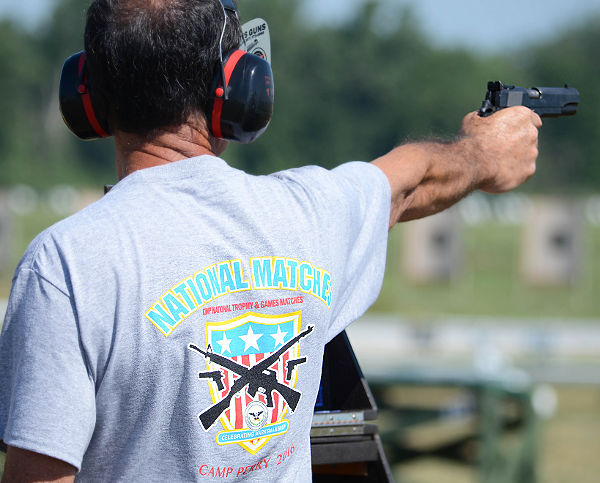
The nation’s top bullseye pistol shooters were at Camp Perry last week for the NRA National Trophy Pistol Championships. If you’ve every wondered what it takes to win a pistol match using the classic, one-handed hold, here are some tips from one of the best ever, Brian “Gunny” Zins, 12-Time NRA National Pistol Champion.
Brian has authored an excellent guide to bullseye pistol shooting. Brian’s Clinic on the Fundamentals recently appeared in The Official Journal of the New York State Rifle & Pistol Association. The CMP scanned the story so you can read it online. CLICK HERE to read full article.
Top Tips from Brian Zins:
Trigger Movement: If trigger control is ever interrupted in slow fire the shot needs to be aborted and the shot started over.
Relationship between Sight Alignment and Trigger Control: Often when the fundamentals are explained these two are explained as two different acts. Well, truth be told it’s really kind of hard to accomplish one without the other. They have a symbiotic relationship. In order to truly settle the movement in the dot or sights you need a smooth, steady trigger squeeze.
Trigger Finger Placement: Where should the trigger make contact on the finger? The trigger should be centered in the first crease of the trigger finger. Remember this is an article on Bullseye shooting. If this were an article on free pistol or air pistol it would be different.
Proper Grip: A proper grip is a grip that will NATURALLY align the gun’s sights to the eye of the shooter without having to tilt your head or move your or move your wrists around to do that. Also a proper grip, and most importantly, is a grip that allows the gun to return to the same position [with sights aligned] after each and every shot. The best and easiest way to get the proper grip, at least a good starting position… is with a holster. Put your 1911 in a holster on the side of your body[.] Allow your shooting hand to come down naturally to the gun.
After a rip-roaring Opening Ceremony, the 2016 National Matches at Camp Perry commenced with the handgun Small Arms Firing School (SAFS) on July 11th, followed by Excellence-In-Competition (EIC) pistol matches on July 12th. The SAFS was led by USAMU, Military Team, and CMP instructors. Following classroom instruction and practice on the range, SAFS participants fired a true M9 EIC Match with the goal of earning points towards the prestigious Distinguished Badge.
On July 12th, the CMP .22 Rimfire and Service Pistol EIC matches were held. These matches were hugely popular — with 480 Rimfire competitors and 400 Service Pistol shooters. This year, there was plenty of talent on the firing line. Of the top 50 Service Pistol shooters, 46 were Distinguished, including the top 18 competitors.
The USAMU’s SSG Greg Markowski won the Service Pistol EIC Match with a score of 293-11X. Fellow USAMU team members SFC Lawrence Cleveland (286-5X) and SFC James Henderson (284-9X) finished second and third respectively.
In the .22 Rimfire EIC Pistol Match a USAMU shooter again took top honors. SFC Michael Gasser shot 293-5X to become the overall winner. Close behind, with identical 292-11X scores, were Jonathan Shue and SGT Ryan Franks. It’s notable that both Shue and Franks had many more Xs than SFC Gasser, the overall winner.
Talented shooters stood shoulder to shoulder on the firing line…
The license plate says it all — perfection at Perry is a 10X.
There were 480 registered competitors in .22 Rimfire EIC match.
USAMU Shooters won both EIC pistol matches (.22 Rimfire and Service Pistol).
Many U.S. Military Service Personnel attended the EIC Matches
It took decades of competition to acquire all those patches — that’s dedication to the sport.
A California company, CaseCruzer, makes the nicest multi-pistol hard cases we’ve ever seen. With capacities from 3 pistols to 6 pistols, these lockable range cases hold handguns securely in angled “quick-draw” slots. In addition to the molded pistol carriers, there are slots for magazines together with a separate compartment for muffs, ammo, and other accessories. Starting at $240.00 MSRP for the Quick Draw 3-Pack, these boxes are expensive, but they offer great protection with great usability. Water-tight and dust-proof, CaseCruzer cases are airline approved (ATA 300).
4-Gun Case
The smart design of the “Quick Draw” CaseCruzer cases lets you keep your pistol locks in place during transport. There is enough clearance to stow the pistols securely even with bulky trigger-guard locks.
Do you have a concealed carry permit, or do you plan to carry a concealed handgun in the future? Then you can benefit from Beretta’s FREE 15-page e-book, Ten Essential Tips for CCW Holders. This eBook, in handy PDF format, helps gun owners select an appropriate handgun (and holster), understand legal obligations and responsibilities, and train effectively with the firearm. This short eBook offers many useful tips to consider, in particular for gunowners who are contemplating the pros and cons of everyday carry for themselves.
As the Beretta CCW booklet says, “Carrying a concealed handgun requires a certain amount of confidence. You need to be confident in your knowledge of laws and regulations. You have to have confidence in your accuracy, and you need to trust that you can carry a gun effectively, securely and comfortably. If a gun is a burden for you to carry, you probably won’t.”
Surprising Facts About Actual Defensive Handgun Use
You may be surprised to learn when and how handguns are actually used for self-defense. Most defensive uses are at very short range and the incident only lasts a matter of seconds. You need to be prepared, and train to be proficient drawing and aiming your weapon. And remember, shooting is a last resort, when a safe retreat is not available.
55% of gunfights take place in 0-5 feet.
20% of gunfights take place in 5-10 feet.
20% of gunfights take place in 10-21 feet.
95% of gunfights take place in 0-21 feet. (Source: FBI)
The average man can cover 21 feet of ground in 1.5 seconds.
The average gunfight is over in 3-5 seconds.
3 to 4 shots are usually fired.
Most gunfights take place in low-light conditions.
On average, one shot in four strikes someone.
Here are two (2) sample pages from Beretta’s CCW eBook.




 Do you have a friend or family member who is just getting started in handgunning? The NSSF has created five Handgun 101 videos that cover the basics of handgun shooting, starting with key principles of firearms safety. Hosted by Top Shot Season 4 Champion Chris Cheng, these videos explain the important fundamentals of pistol shooting. If you will be taking a youngster (or novice adult) to the range for the first time, it would be a good idea to have him or her watch one or both of these videos.
 The nation’s top bullseye pistol shooters were at Camp Perry last week for the NRA National Trophy Pistol Championships. If you’ve every wondered what it takes to win a pistol match using the classic, one-handed hold, here are some tips from one of the best ever, Brian “Gunny” Zins, 12-Time NRA National Pistol Champion.